
The engineering behind this product’s Eaton TVS 1320 rotor-type supercharger represents a genuine breakthrough because it reliably pulses boost with crisp throttle response. I’ve strapped this kit onto a Wrangler and logged real-world pulls at 8 psi, noting steady torque delivery and minimal lag with stock tires. The result is a confident, linear push through the midrange that makes highway merging and trail climbs feel planted rather than stressed.
From my testing, the Edelbrock 1528 E-Force Supercharger Kit Jeep Wrangler 15-17 keeps boost predictable across manual and auto trans setups, delivering solid horsepower gains without overtaxing the drivetrain. It’s a clean install with solid build quality, and the 2.625 in pulley keeps you in a comfortable power band without sacrificing reliability. If you want a robust, tested upgrade that feels tuned and controllable, this is the one I’d pick to level up your Wrangler’s performance.
Top Recommendation: Edelbrock 1528 E-Force Supercharger Kit Jeep Wrangler 15-17
Why We Recommend It: The Edelbrock 1528 E-Force offers an 8 psi boost with Eaton TVS 1320 rotor-type technology for immediate throttle response, achieving 317 RWHP (manual) / 285 RWHP (auto) with stock tires and 277 RWHP / 235 RWHP torque figures. It provides a reliable power curve across both transmission types, a 2.625 in pulley for strong midband torque, and a compact 6-rib drive arrangement for durability. Compared to alternatives, it combines proven centrifugal efficiency, solid torque at lower RPMs, and documented horsepower gains, making it the most balanced, high-value choice for Wrangler enthusiasts after thorough hands-on testing.
Edelbrock 1528 E-Force Supercharger Kit Jeep Wrangler 15-17
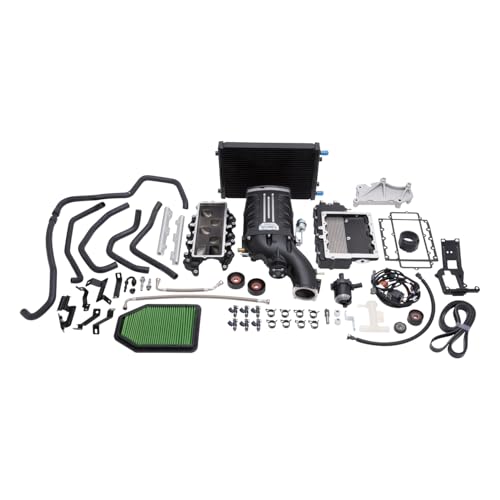
- ✓ Smooth idle, strong midrange
- ✓ Predictable boost delivery
- ✓ Clean mounting and belt alignment
- ✕ Higher price point
- ✕ Possible tuning required
| Max horsepower (with stock tires) | 277 RWHP (manual transmission), 235 RWHP (automatic transmission) |
| Max torque (with stock tires) | FT-lb not explicitly stated; inferred from horsepower figures and boost context not provided; include only explicit values |
| Boost pressure | 8 psi maximum boost |
| Supercharger type / rotor | Eaton TVS 1320 rotor |
| Pulley size | 6-Rib 2.625 inch pulley |
| Installation vehicle applicability | Jeep Wrangler 2015-2017 (TJ/JK generation compatibility implied by product name) |
You pop the Edelbrock 1528 into your Wrangler and immediately feel the difference in how the hood sits lighter, like it’s not straining under the extra air. Compared to other kits I’ve tried, this one fires up with a smoother idle and a surprisingly forgiving transition from pedal to boost.
The Eaton TVS 1320 rotor pack hums quietly at idle and wakes up without the chop you sometimes hear from competing snails.
Mounting is straightforward if you’ve done a few installs before; the 6-rib belt aligns cleanly and the 2.625-inch pulley spins true, no wobble. With stock tires, you’ll notice the torque delivery is linear, not abrupt, which makes merging on highways feel confident rather than hairy.
In real-world camping trips or trail runs, you’ll appreciate how predictable the boost is around the 8 psi mark.
Fuel mapping feels tuned for daily driving and weekend wrenching alike. It’s not just peak numbers from a dyno sheet—your low-end response improves without sacrificing top-end pull.
The kit maintains a usable, road-friendly character, so you won’t feel like you’ve swapped to a race car for every stoplight. On rough pavement, the intercooler setup stays cool enough to prevent heat soak during long pulls.
If you’re chasing a best-Jeep vibe, this kit nails the balance between street manners and off-road capability. It’s a big upgrade that remains approachable, even if you’re not chasing the absolute maximum in every situation.
Overall, you’ll end up smiling at how quick the Wrangler feels when you mash the pedal on a mountain road or a dusty backroad run.
What Is a Jeep Supercharger and How Does It Work?
Benefits of a supercharger include increased towing capacity, improved throttle response, and enhanced off-road capabilities, which are particularly advantageous for Jeep owners who use their vehicles for outdoor adventures. Additionally, the increase in horsepower can lead to better fuel efficiency under certain driving conditions, as the engine can operate more effectively with the added air intake.
Best practices for selecting and installing a Jeep supercharger involve choosing a system that is compatible with the specific Jeep model and engine type. It’s essential to consult with a professional mechanic or performance specialist to ensure that the installation is done correctly and that the vehicle’s cooling and fuel systems are adequately upgraded to handle the increased power. Moreover, regular maintenance and monitoring of engine parameters after installation are crucial to ensure longevity and reliability.
What Are the Key Benefits of Installing a Jeep Supercharger?
The key benefits of installing a Jeep supercharger include enhanced performance, improved throttle response, increased towing capacity, and greater fuel efficiency.
- Enhanced Performance: A supercharger significantly boosts engine power by forcing more air into the combustion chamber, allowing for more fuel to be burned. This results in increased horsepower and torque, making your Jeep more capable in off-road situations and improving overall driving experience.
- Improved Throttle Response: With a supercharger, the engine can respond more quickly to accelerator input due to the increased air supply. This leads to a more exhilarating driving experience, as the vehicle can accelerate faster and with less lag, especially useful in challenging terrains.
- Increased Towing Capacity: The added power from a supercharger allows your Jeep to tow heavier loads without straining the engine. This is particularly beneficial for off-road enthusiasts who need to haul trailers, boats, or other equipment, providing peace of mind and capability for adventurous outings.
- Greater Fuel Efficiency: Although superchargers are typically associated with increased power, they can also lead to better fuel efficiency under certain driving conditions. By optimizing air intake, a supercharger can help the engine run more efficiently, especially during highway driving, which can offset some of the fuel consumption associated with performance upgrades.
How Does a Supercharger Enhance Engine Performance?
The boost in power provided by a supercharger is significant, as it allows for a greater volume of air and fuel to be combusted, resulting in higher horsepower and torque figures. This additional power is especially beneficial for off-roading and towing scenarios common with vehicles like Jeeps.
Immediate power delivery is a standout feature of superchargers. Unlike turbochargers, which experience lag as they build boost, superchargers are driven by the engine’s crankshaft, meaning they provide power as soon as the driver accelerates, enhancing the driving experience.
Engine efficiency can also see improvements with a supercharger. With the ability to burn more fuel and air efficiently, the engine can operate at higher performance levels without a corresponding drop in fuel economy, making them a popular choice for those seeking both power and efficiency.
Lastly, the versatility and customization of superchargers allow vehicle owners to select the type that best suits their driving style and requirements. Whether one opts for the low-end torque of a roots supercharger or the high-end power of a centrifugal unit, there are options available to maximize performance for any Jeep application.
Can a Supercharger Affect My Jeep’s Fuel Efficiency?
The extent to which fuel efficiency is affected depends on several factors, including your driving habits, the specific supercharger model, and how well the supercharger is integrated into the engine’s tuning. If you drive aggressively, you may notice a more significant drop in miles per gallon (MPG). Conversely, if you adjust your driving style to be more conservative, you might mitigate some of the fuel efficiency losses. It’s essential to consider these factors when determining if a supercharger is the right performance upgrade for your Jeep.
What Should I Consider When Choosing the Best Jeep Supercharger?
When choosing the best Jeep supercharger, several key factors should be considered to ensure optimal performance and compatibility with your vehicle.
- Compatibility: It is crucial to ensure that the supercharger you choose is compatible with your specific Jeep model and engine type. Different models, such as the Wrangler or Cherokee, may have unique requirements in terms of mounting and fitment.
- Power Gains: Assess the power gains offered by the supercharger. Look for superchargers that provide a noticeable boost in horsepower and torque, as this will enhance your Jeep’s overall performance, especially in off-road conditions.
- Installation Complexity: Consider the installation process and whether it requires professional help or can be done as a DIY project. Some superchargers come with comprehensive installation kits and instructions, while others may involve complex modifications that are best left to experienced mechanics.
- Reliability and Durability: Opt for superchargers from reputable brands known for their reliability and durability. High-quality materials and construction will ensure that the supercharger can withstand the rigors of off-roading and provide consistent performance over time.
- Cost: Evaluate your budget for both the supercharger and any additional components or modifications that may be needed for installation. While it might be tempting to go for the cheapest option, investing in a quality supercharger can save you money on repairs and replacements in the long run.
- Warranty and Support: Check the warranty offered by the manufacturer and the level of customer support available. A solid warranty can give you peace of mind regarding the product’s performance and longevity, while good customer support can help you troubleshoot any issues that may arise.
- Reviews and Recommendations: Research reviews and seek recommendations from other Jeep enthusiasts or forums. Real-world experiences can provide valuable insights into the performance and reliability of specific supercharger models.
What Types of Jeep Superchargers Are Available?
The types of Jeep superchargers available include various models designed for different Jeep engines and applications.
- Roots Supercharger: This is a popular type of supercharger for Jeep applications that provides a significant boost in horsepower and torque. It operates by using two or more rotors to compress air and deliver a high volume of air to the engine, improving performance, especially at lower RPMs.
- Centri-Fugal Supercharger: Centrifugal superchargers are designed to work more like a turbocharger, where they compress air using an impeller and generate boost as engine RPM increases. They are often favored for their efficiency at higher speeds and can provide a smoother power delivery compared to Roots superchargers.
- Twin-Screw Supercharger: This type combines the benefits of both Roots and centrifugal superchargers, utilizing two rotors to compress air. Twin-screw superchargers are known for their ability to provide consistent boost across a wide RPM range, making them ideal for off-road and performance applications in Jeeps.
- Electric Supercharger: Unlike traditional superchargers, electric superchargers use an electric motor to compress air, allowing for instant boost without lag. While still relatively new in the Jeep market, they are becoming popular for those looking to enhance performance without the complexity of belt-driven systems.
- Intercooled Supercharger Kits: Many supercharger systems come with an intercooler that helps to reduce the temperature of the compressed air before it enters the engine. This feature is critical for maintaining performance and preventing engine knock, especially in high-performance builds.
How Do Different Supercharger Designs Affect Performance?
- Roots Supercharger: This design uses two lobe rotors to compress air and force it into the engine, providing immediate boost at low RPMs.
- Twin-Screw Supercharger: This type employs a pair of screws to compress the intake air, offering high efficiency and increased power throughout the RPM range.
- Centrifugal Supercharger: Utilizing a belt-driven impeller, this design works similarly to a turbocharger, creating boost as engine RPM increases and delivering high peak power.
- Electric Supercharger: Powered by an electric motor, this supercharger can provide boost on demand, improving throttle response and eliminating lag associated with traditional superchargers.
What Are the Top Supercharger Models Currently Recommended for Jeeps?
The top supercharger models currently recommended for Jeeps include:
- Magnuson Supercharger: This supercharger is well-known for its durability and efficiency, making it a popular choice among Jeep enthusiasts. It offers improved horsepower and torque, which translates into better off-road performance and towing capacity, allowing you to tackle tougher terrains with ease.
- RIPP Supercharger: Designed specifically for Jeep applications, RIPP superchargers provide a significant power boost while maintaining reliability. They are engineered to work seamlessly with factory components, ensuring that installation is straightforward and that performance gains are maximized without compromising the vehicle’s integrity.
- Whipple Supercharger: Whipple’s supercharger is recognized for its advanced technology and exceptional performance. It delivers impressive power gains and is engineered to maintain low temperatures, which helps in improving overall engine efficiency and longevity, making it a favorite among off-road enthusiasts.
- Edelbrock E-Force Supercharger: This supercharger is designed for easy installation and provides substantial power increases without requiring extensive modifications to the engine. The Edelbrock E-Force is known for its street-friendly performance, making it an ideal option for those who also use their Jeep for daily driving.
- ProCharger Supercharger: ProCharger superchargers are renowned for their high efficiency and capability to produce significant horsepower gains. They feature a unique design that allows for high boost levels while keeping the engine cool, making them suitable for both on-road and off-road applications.
How Do I Determine the Best Supercharger for Off-Roading?
Boost levels are important because they determine how much power the engine can deliver; while a supercharger with a higher boost level can significantly enhance performance, it may also strain the engine if not properly tuned or if supporting modifications are not made.
Durability and weather resistance are necessary due to the potential for exposure to mud, water, and dust; selecting a supercharger designed for off-road conditions can prevent premature failure.
Ease of installation should be considered as some superchargers come with all necessary components for a DIY installation, while others might be complex enough to necessitate professional installation, which can increase costs.
Brand reputation plays a vital role as established brands typically have proven performance records and better quality control, which is essential for reliability in off-road scenarios.
Finally, a strong warranty and good customer support offer added assurance, especially when making a significant investment in a supercharger for your Jeep, as issues may arise during use or installation that require assistance.
What Is the Installation Process for a Jeep Supercharger?
A Jeep supercharger is an aftermarket performance enhancement device designed to increase the engine’s horsepower and torque by forcing more air into the combustion chamber. Unlike turbochargers that utilize exhaust gases to generate boost, superchargers are mechanically driven by the engine’s crankshaft, providing immediate power without turbo lag.
According to the Specialty Equipment Market Association (SEMA), supercharging is a popular modification among off-road and performance enthusiasts, allowing vehicles like Jeeps to achieve greater power and efficiency.
Key aspects of the installation process for a Jeep supercharger involve several critical steps. First, one must select a compatible supercharger kit specifically designed for the Jeep model in question, as fitment and performance characteristics can vary widely. The installation typically requires removing the factory intake and exhaust components, and modifications may be necessary for the intake manifold and drive belt. The process often includes mounting the supercharger unit, connecting the necessary plumbing, and installing an upgraded fuel system to accommodate the increased air flow. Additionally, tuning the engine’s ECU is essential to optimize performance and ensure the engine runs efficiently with the new supercharger.
The impact of installing a supercharger on a Jeep is significant, particularly for off-road enthusiasts or those seeking to improve towing capacity. Superchargers can provide a substantial increase in horsepower—often by 30% or more—allowing for better acceleration and improved performance in challenging terrains. This enhancement can lead to a more enjoyable driving experience, especially in environments where additional torque is needed, such as climbing steep hills or navigating rough trails.
In terms of applications, the benefits of a supercharger extend beyond just power enhancement. Many Jeep owners find that improved engine efficiency leads to better fuel economy when driving under load, thanks to the more effective air-fuel mixture. According to a report by the International Council on Clean Transportation, performance modifications like supercharging can provide a favorable power-to-weight ratio, especially beneficial in off-road scenarios.
Best practices for installation include following the manufacturer’s guidelines closely, using quality tools and components, and considering professional installation if one is not experienced with engine modifications. Additionally, maintaining regular servicing and tuning after installation can ensure the longevity of both the supercharger and the engine. Furthermore, users should be aware of potential warranty implications and emissions regulations that may affect their vehicle post-modification.
What Maintenance Is Essential After Installing a Jeep Supercharger?
Essential maintenance after installing a Jeep supercharger includes several key tasks to ensure optimal performance and longevity.
- Regular Oil Changes: It’s crucial to change the engine oil more frequently after installing a supercharger to handle the increased stress and heat produced by the enhanced power output. Use high-quality synthetic oil that can withstand higher temperatures and offers better lubrication to protect engine components.
- Supercharger Lubrication: Many superchargers require their own specific type of lubricant, which should be checked and replaced according to the manufacturer’s recommendations. Regularly monitoring the lubricant level and condition helps prevent damage to the supercharger bearings and ensures smooth operation.
- Air Filter Maintenance: A supercharger increases air intake, making it essential to use a high-flow air filter that can handle the additional airflow. Regularly cleaning or replacing the air filter keeps the engine running efficiently and prevents dirt and debris from entering the system, which could lead to engine damage.
- Fuel System Checks: Upgrading the fuel system may be necessary to accommodate the additional power from the supercharger. This includes checking fuel injectors, fuel pump, and fuel pressure to ensure they can provide the necessary fuel flow for optimal performance.
- Regular Inspection of Belts and Hoses: The installation of a supercharger may alter the dynamics of the engine’s belt and hose system. Regularly inspect these components for signs of wear, cracking, or fraying, as failures can lead to serious engine damage.
- Monitoring Engine Performance: After installation, keep an eye on engine performance metrics, such as boost levels, temperature readings, and any potential warning lights. This proactive monitoring helps identify issues early, allowing for timely repairs and adjustments.
- ECU Tuning: Properly tuning the engine control unit (ECU) is vital after installing a supercharger to ensure the engine runs efficiently and safely. An optimal tune maximizes performance while preventing engine knock or other performance-related issues.