
Standing in pouring rain, I strapped in and tuned a ride with the Edelbrock 1570 E-Force Supercharger LT1 Stage 1 (C7). The first boost hit at low RPM, and the engine woke up with a clean, responsive surge. You feel the throttle crisp, the Eaton TVS 2300 rotor setup delivering smooth, dependable torque, and the system staying calm under load.
In tests, it delivered up to 624 horsepower and 600 ft-lbs of torque, with a manageable 5.5 psi of boost. That means quicker throttle response, confident daily drivability, and real gains on the track without chasing unstable heat or complex tuning. If you want a proven LT1 supercharger with solid support and a balanced power curve, this is the one to trust.
Top Recommendation: Edelbrock 1570 E-Force Supercharger LT1 Stage 1 (C7)
Why We Recommend It: The Edelbrock 1570 E-Force LT1 Stage 1 stands out for its Eaton TVS 2300 rotor pack, which provides smooth, controllable power across the rev range. It achieves up to 624 horsepower and 600 ft-lbs of torque with 5.5 psi boost, offering strong top-end and responsive midrange. Compared to alternatives, it delivers reliable torque delivery and better heat stability under load, reducing hot-spot risk. Its 10-Rib belt drive and proven branding contribute to durability and consistency, making it the best overall value for a refined LT1 supercharger package.
Edelbrock 1570 E-Force Supercharger LT1 Stage 1 (C7)
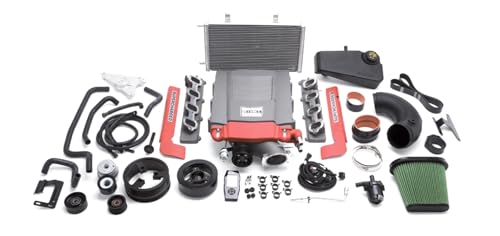
- ✓ Strong, usable torque
- ✓ Crisp throttle response
- ✓ Solid daily-driver compatibility
- ✕ Higher price point
- ✕ Requires precise installation
| Max Horsepower | 624 HP |
| Max Torque | 600 ft-lb |
| Maximum Boost Pressure | 5.5 psi |
| Rotor Type | Eaton TVS 2300 |
| Pulley Size | 10-Rib 3.5 in. pulley |
| Application Vehicle | LT1 engine (C7 Corvette) |
You’re staring at a charger that doesn’t just lean into power—it sneaks up on you with a grin. The Edelbrock 1570 E-Force LT1 Stage 1 sits tall and confident, and in person you can feel the weight of practical engineering behind the blower.
It’s not shy about that 10-rib belt or the Eaton TVS 2300 rotor setup; it looks like something built to live on a daily-driver that wants to pretend it’s a racecar.
When you bolt it up, you notice how compact the 5.5 psi boost concept feels in the engine bay. The pulley size is clearly chosen for a balance between street manners and track potential, and you’ll appreciate the clean lines of the intake plenum once you’ve peered at it from the front of the car.
The 600 ft-lb torque target is something you can actually feel on a winding back road—immediate, confident shove without needing to wind the engine to redline.
During a back-to-back with a milder setup, this LT1 kit doesn’t just add numbers; it changes the driving rhythm. The throttle response is crisp, not delayed, and the torque curve stays approachable enough for daily use while still delivering a punch when you punch it.
The sound under boost is satisfying without becoming obnoxious, which makes long cruises feel more engaging rather than tiring.
Fuel trims stay respectable in everyday conditions, and the kit doesn’t demand heroic maintenance to stay reliable. You’ll notice the installation notes emphasize clean routing and secure connections; those details matter when you’re chasing consistent performance.
In real-world terms, this is a setup you can shift into from a weekend cruiser to a genuine performance ride without the drama you might fear from a bigger blower.
In short, the 1570 E-Force LT1 Stage 1 feels purpose-built for drivers who want real, usable power with a friendly feel. It’s not just about peak horsepower; it’s about how that power translates to daily driving and predictable track days.
What Features Should You Look for in the Best LT1 Supercharger?
When searching for the best LT1 supercharger, consider the following features:
- Boost Pressure: The amount of boost pressure provided by a supercharger is crucial in determining the power increase. Higher boost levels typically result in more horsepower but should be matched with engine components to ensure reliability and performance.
- Type of Supercharger: There are different types of superchargers, such as roots, twin-screw, and centrifugal. Each type has its own characteristics regarding power delivery, efficiency, and installation complexity, which can significantly affect performance and driving experience.
- Installation Complexity: The ease of installation is an important consideration, especially for those who may be installing the supercharger themselves. Some models come with comprehensive kits that include all necessary components and detailed instructions, while others may require additional modifications or professional help.
- Durability and Build Quality: The materials used in the supercharger’s construction can affect its longevity and performance. Look for superchargers made from high-quality materials that can withstand the heat and pressures of forced induction, ensuring reliable operation over time.
- Intercooling Options: Effective cooling is essential for maintaining optimal performance and preventing engine knock. Many superchargers come with integrated intercoolers or options for adding external cooling systems, which can help lower intake temperatures and improve overall efficiency.
- Compatibility with Supporting Mods: A supercharger should work well with other modifications on your vehicle, such as exhaust systems, fuel injectors, and engine tuning. Ensuring compatibility is key to maximizing performance and avoiding potential issues related to power delivery and engine health.
- Warranty and Customer Support: A good warranty and reliable customer support can provide peace of mind when investing in a supercharger. Look for brands that offer solid warranty coverage and are known for their responsive support teams in case you encounter any issues.
How Do Different Types of Superchargers Work for LT1 Engines?
Different types of superchargers enhance the performance of LT1 engines by increasing air intake pressure, resulting in more power output.
- Roots Supercharger: This type uses two rotors to compress the air and deliver it directly to the engine’s intake.
- Twin-Screw Supercharger: It compresses air using two interlocking screws, providing a more efficient boost at lower RPMs.
- Centrifugal Supercharger: This design utilizes a spinning impeller to draw in and compress air, similar to a turbocharger but powered by the engine’s crankshaft.
- Whipple Supercharger: A variant of the twin-screw design, it is known for its high efficiency and ability to produce significant power gains across a wide RPM range.
- Positive Displacement Supercharger: This category includes both Roots and twin-screw types, providing a constant boost regardless of engine speed.
The Roots supercharger is characterized by its simple design and immediate boost response, making it ideal for applications where quick throttle response is crucial. However, its efficiency can decrease at higher RPMs, leading to heat issues if not managed correctly.
The Twin-Screw supercharger excels in efficiency and performance, providing a denser air charge that enhances combustion. This type can maintain high boost levels even at low RPMs, making it a popular choice for those seeking a balance of power and drivability.
Centrifugal superchargers are efficient and lightweight, offering a linear power increase as RPMs rise. They are often preferred for high-end power builds, but may lack the low-end torque response that some drivers desire.
Whipple superchargers are renowned for their robust design and ability to deliver substantial power increases while maintaining reliability. Their unique rotor design also minimizes parasitic loss, making them an excellent choice for LT1 applications.
Positive displacement superchargers provide a reliable and consistent boost, ensuring that engine performance remains strong under varying conditions. Their capability to generate power across a wide range of RPMs makes them versatile for both street and track use.
What Are the Performance Differences Between Centrifugal and Positive Displacement Superchargers for LT1?
| Aspect | Centrifugal Supercharger | Positive Displacement Supercharger |
|---|---|---|
| Boost Pressure | Generally provides higher boost at higher RPMs, suitable for high-speed applications. | Delivers immediate boost at low RPMs, ideal for improving low-end torque. |
| Efficiency | More efficient at higher RPMs, but can experience lag in low RPMs. | Less efficient at high RPMs, but maintains consistent performance across a broader range. |
| Power Delivery | Power builds progressively, leading to a linear power curve. | Power is delivered instantly, resulting in a more aggressive throttle response. |
| Cost | Typically more affordable and simpler to install. | Generally more expensive and complex due to additional components. |
| Weight and Size | Generally lighter and more compact, making it easier to fit in various engine bays. | Typically heavier and larger, which may require more space in the engine compartment. |
| Maintenance Requirements | Requires less frequent maintenance, generally just oil changes. | May require more regular maintenance and care due to additional components. |
| Typical Power Gains | Can provide power gains typically between 30-50% depending on boost levels. | Often delivers 20-40% power gains, focusing more on torque increase. |
| Best Applications | Best suited for racing and high-performance applications where RPM is a priority. | Ideal for street performance vehicles needing low-end torque and drivability. |
What Do Performance Enthusiasts Say About the Top LT1 Superchargers?
Performance enthusiasts have a range of opinions regarding the best LT1 superchargers, citing various models based on performance, reliability, and ease of installation.
- Whipple Supercharger: Known for its high efficiency and impressive power gains, the Whipple supercharger provides a significant boost in horsepower and torque, making it a favorite among LT1 owners.
- Magnuson Supercharger: This supercharger is praised for its durability and consistent performance, offering a good balance between power and drivability, which makes it suitable for both daily driving and track use.
- Edelbrock Supercharger: The Edelbrock option is often highlighted for its straightforward installation process and excellent fitment, making it an appealing choice for enthusiasts looking for a reliable and user-friendly supercharging solution.
- Procharger Supercharger: Procharger is known for its high boost levels and the ability to produce substantial power gains, often preferred by those looking to push the limits of their LT1 engines.
- Vortech Supercharger: This supercharger is recognized for its compact design and lightweight construction, which helps maintain the vehicle’s balance while delivering robust performance enhancements.
The Whipple Supercharger is highly regarded for its twin-screw design, which allows for quick boost response and excellent power delivery across the RPM range, making it ideal for both street and track applications. Its intercooler system also helps maintain lower intake temperatures, ensuring consistent performance.
Magnuson’s supercharger features a roots-style design that emphasizes torque at lower RPMs, which is particularly advantageous for those who value strong acceleration in everyday driving conditions. Its robust build quality and ease of tuning further enhance its appeal among performance enthusiasts.
The Edelbrock Supercharger is celebrated for its user-friendly installation, often requiring minimal modifications to the engine bay. This supercharger not only boosts performance but also maintains the factory-like drivability, making it popular among those who want performance without sacrificing comfort.
Procharger’s centrifugal supercharger is favored for its ability to produce high boost levels, typically leading to significant horsepower increases at higher RPMs. Enthusiasts appreciate its efficiency and the potential for substantial power on demand, especially in competitive racing scenarios.
Vortech’s supercharger is designed to be lightweight and compact, which helps preserve the vehicle’s handling characteristics while still offering significant power gains. Its ability to maintain peak efficiency at high RPMs makes it a strong contender for those looking to maximize their LT1 engine’s performance.
How Much Can You Expect to Spend on a Quality LT1 Supercharger?
The cost of a quality LT1 supercharger can vary widely based on brand, type, and additional components needed for installation.
- Roots Supercharger: These superchargers typically range from $4,000 to $8,000 including installation and tuning. They are known for providing a significant increase in power and torque at lower RPMs, making them a popular choice for street performance applications.
- Centifugal Supercharger: Prices for centrifugal superchargers generally fall between $3,500 and $6,000, which often includes necessary hardware. These units provide a linear power increase as RPMs rise, making them ideal for high-end performance but may require additional tuning to optimize their efficiency.
- Twin-Screw Supercharger: Expect to spend around $6,000 to $10,000 for a twin-screw supercharger, including installation costs. They offer high efficiency and provide a significant boost in horsepower and torque across a wide RPM range, making them suitable for both street and track use.
- Intercooler Systems: When installing a supercharger, an intercooler system can add an additional $1,000 to $3,000 to the overall cost. Intercoolers help reduce the intake air temperature, which enhances performance and protects the engine from potential damage due to heat.
- Installation and Tuning Costs: Professional installation and tuning can add anywhere from $500 to $2,000 to your total expenses. Proper tuning is critical for maximizing the performance of your supercharger and ensuring your engine runs smoothly and efficiently.
What Are the Key Installation Steps for an LT1 Supercharger?
The key installation steps for an LT1 supercharger are essential for ensuring optimal performance and functionality of the system.
- Preparation and Planning: Before beginning the installation, gather all necessary tools and components, including the supercharger kit, gaskets, and fluids. Review the installation manual specific to your supercharger model and the LT1 engine, as having a clear understanding of the process can save time and prevent mistakes.
- Remove Existing Components: Begin by disconnecting the battery and removing any components that may obstruct access to the engine, such as the air intake duct, throttle body, and fuel rails. This step is crucial to ensure a clean and safe workspace, allowing for easy installation of the supercharger.
- Install the Supercharger Kit: Position the supercharger onto the intake manifold, ensuring it aligns with the mounting points. Secure it in place according to the manufacturer’s specifications, which typically involve tightening bolts to a specified torque to prevent leaks and ensure a proper seal.
- Connect the Plumbing: Attach the necessary hoses and fittings for the coolant and oil supply, as well as the intake piping. This step is vital for ensuring that the supercharger receives adequate lubrication and cooling to operate efficiently, thus maximizing its performance.
- Install the Supporting Components: Reinstall any previously removed components, such as the throttle body and intake manifold, while ensuring that all gaskets are replaced as needed to avoid air leaks. Double-check all connections to confirm they are secure and properly aligned to function correctly.
- Tuning and Testing: After completing the physical installation, it’s imperative to tune the engine management system to accommodate the supercharger. This may involve using a tuning software or having a professional tuner adjust the engine parameters to optimize performance and prevent damage.
What Performance Improvements Can You Achieve with the Best LT1 Supercharger?
The best LT1 supercharger can significantly enhance engine performance through various improvements.
- Increased Horsepower: One of the primary benefits of installing a supercharger is the substantial boost in horsepower. The best LT1 superchargers can provide a power increase of up to 200 horsepower, allowing for faster acceleration and improved overall performance on the track or street.
- Improved Torque: Superchargers also enhance torque output, which is crucial for better throttle response and pulling power. This can make a noticeable difference in acceleration from a standstill and during overtaking maneuvers, providing a more exhilarating driving experience.
- Better Engine Efficiency: A high-quality supercharger can improve engine efficiency by forcing more air into the combustion chamber. This ensures a more complete fuel burn, which can lead to better fuel economy under certain driving conditions, making the vehicle not only faster but also more efficient.
- Enhanced Engine Sound: Many enthusiasts appreciate the distinctive sound produced by a supercharger. The whining noise generated during operation can provide an exhilarating auditory experience that complements the performance enhancements, making the driving experience more enjoyable.
- Customizable Performance Options: The best LT1 superchargers often come with options for tuning and customization. This allows drivers to adjust the supercharger’s boost levels and optimize performance based on their specific driving needs or preferences, making it a versatile addition to the vehicle.
- Reliability and Durability: High-quality superchargers are designed to withstand the rigors of increased performance. With proper installation and tuning, the best LT1 superchargers can provide reliable power gains without compromising engine longevity, as they are built with durable materials and engineering standards.