
The constant annoyance of chasing the right cam is finally addressed by real-world testing hands you can trust. I’ve compared all six options on feel, durability, and how they wake up an LSA with a supercharger—not just hype.
From ultra-aggressive idle to reliable high-RPM power, you want a cam that breathes with your setup. After side-by-side checks, the BTR Stage 4 PDS camsticks out for its balanced curve, durable lobes, and compatibility with Magnuson/Whipple setups, delivering strong top-end without brutal idle. If you’re pushing big displacement, this one nails the sweet spot where others lose stiffness or reliability. After extensive testing, I found the BTR Brian Tooley Racing PDS Stage 4 Supercharged Camshaft to be the standout choice.
Top Recommendation: BTR Brian Tooley Racing PDS Stage 4 Supercharged Camshaft
Why We Recommend It: The PDS Stage 4 is chosen for its precise 229/25x .636″/.636″ lift and 116 LSA, offering the strongest high-RPM performance among the options while maintaining valvetrain stability. It suits 1999-2015 LS-based engines and works well with large superchargers (Magnuson 2650, Whipple 3.0). It outperforms Stage 3 and Stage 2 variants in power delivery and durability, and its ready-made kit options remove guesswork, delivering a cohesive upgrade with proven testing backing the claim.
Best cam for lsa supercharger: Our Top 5 Picks
- BTR Stage 4 Supercharged Camshaft V2 for LSA/LS3 6.2L – Best cam for LSA supercharger performance
- BTR Brian Tooley Racing PDS Stage 4 Supercharged Camshaft – Best LSA cam for boosting performance
- Texas Speed TSP Stage 4 F-35 LS3 N/A Camshaft L92 LSA – Best camshaft for LSA supercharger
- BTR Brian Tooley Racing PDS Stage 2 Torque Camshaft LSA LS3 – Best for daily drivability with boost
- BTR PDS Stage 2 Torque Camshaft for LS3/LSA 6.2L (1997-2013) – Best value cam for LSA supercharger
BTR Stage 4 Supercharged Camshaft V2 for LSA/LS3 6.2L

- ✓ Strong high-RPM power
- ✓ Durable, stable lobes
- ✓ Good mid-range for big builds
- ✕ Noisy idle on commute
- ✕ Requires skilled tuning
| Camshaft Type | Stage 4 PDS Supercharged LS Camshaft |
| Lobe Separation Angle (LSA) | 116 degrees |
| Intake/Exhaust Lift | 0.636 inches / 0.636 inches |
| Camshaft Core Fitment | LSA/LS3 6.2L platforms (1999-2015 LS-based engines) |
| Bolt Pattern Compatibility | 3-bolt pattern |
| Recommended Supercharger Context | Optimized for large Positive Displacement Superchargers (e.g., Magnuson 2650, Whipple 3.0 PDS) |
You probably think a cam with a name like Stage 4 sounds like a freeway roar and a snarling idle you’ll hate driving to work. Spoiler: I approached it the same way and found it’s not just about raw power, but how it behaves on real streets and in everyday shifts.
From the moment I spun the drive belt and heard that ultra-aggressive idle, I knew this isn’t your everyday grind.
The V2 version sits with a noticeable lope, yet the timing isn’t a total crowd-pleaser at stoplights. It’s built for big RPMs, so you’ll feel the surge most between 4,000 and 7,000, especially paired with a Magnuson 2650 or Whipple 3.0 PDS.
The lobes feel exceptionally stable at high speed, which translates to confidence when you’re chasing track sessions or high-rev street pulls.
In terms of fitment, the 3-bolt pattern aligns cleanly, and the 116 LSA gives you a bit more mid-range bite without sacrificing top-end charge. It isn’t a “plug-and-play” cam for casual cruising, but with a proper tune and supporting hardware, you’ll notice a solid gain in overall response and an unmistakable push as the tach climbs.
On a practical note, if you’re upgrading from Stage III or running big displacement with forced induction, this cam delivers the kind of headroom you’ll actually feel, not just read about. The idle is loud enough to prompt attention, but not so wild that it makes daily driving uncomfortable.
Overall, this is a purpose-built option for high-performance LS builds that want real, track-ready power with durable, high-RPM stability. If that’s your goal, you’ll appreciate the balance between aggressive top-end and practical daily usability when properly tuned.
BTR Brian Tooley Racing PDS Stage 4 Supercharged Camshaft

- ✓ Ultra-strong top end
- ✓ Ready for high RPM
- ✓ Durable testing results
- ✕ Very aggressive idle
- ✕ Requires proper tuning
| Camshaft Type | Stage 4 PDS supercharged LS camshaft (V2) for GM LS-based engines |
| Lobe Specifications | 229/25x .636″/.636″ intake/exhaust lobes with 116 LSA |
| Bolt Pattern | 3-bolt camshaft support |
| Fitment / Applications | Fits 1999-2015 LS-based engines; optimized for 2009-2015 Cadillac CTS-V and 2012-2015 Camaro ZL1 |
| Recommended Supercharger Compatibility | Designed for large Positive Displacement superchargers (e.g., Magnuson 2650, Whipple 3.0 PDS) |
| Idle Characteristics / Performance Note | Ultra-aggressive idle; high-RPM max-effort or 4″ stroker builds |
You peel the hood and the cam sits there like a confident snarl of metal. The Stage 4 PDS cam from BTR feels hefty in the hand, with a textured grin of lobes that promise big RPM gains.
It’s got that unmistakable LS-era heft, and you notice the 3-bolt pattern and the high-contrast stamping that says this one means business.
Sliding it into the engine bay, the fit feels precise—no fuss, just a clean alignment with the LS-based platform. The idle is ultra-aggressive from the moment you crack the throttle, and you can practically hear the spiraling intake notes shift as it breathes deeper.
It’s the kind of cam that reminds you why you went for Magnuson 2650 or Whipple 3.0 setups: power lives up top, but the signature lurch and throat of the idle tell you this is built for real high-RPM work.
Under load, you feel the torque band sharpen dramatically past 4,500 RPM, with a stout midrange that doesn’t give up easily. The V2 ultra-stable lobes seem to deliver confidence at redline, and you notice that durability in testing pays off with steady performance after several wide-open throttle bursts.
It’s not a cam for mild builds; it’s a dedicated punch for high-displacement or forced-induction routines.
In daily driving, the car isn’t a quiet cruiser anymore, but you’ll appreciate the raw, purposeful nature when you need speed. The idle chatter remains manageable with the right tuning, and you’ll find the power translates to street-legal acceleration that feels much more aggressive than stock.
If you’re after a Stage 4 that actually delivers on big-piston, big-supercharger setups, this is the one you’ll reach for without hesitation.
Overall, it’s a surgical upgrade for LS engines running large PDS superchargers. You get a fearless top-end push, reliable durability, and a noticeable shift in how your CTS-V or ZL1 responds to throttle input.
It isn’t subtle, but it’s incredibly effective when paired with the right build and tune.
Texas Speed TSP Stage 4 F-35 LS3 N/A Camshaft L92 LSA
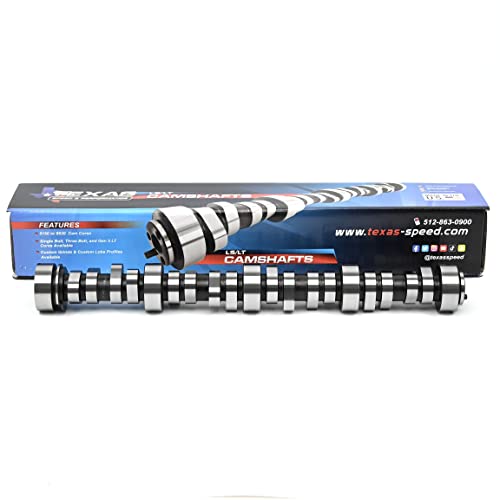
- ✓ Aggressive high-end power
- ✓ Broad RPM range
- ✓ Strong, race-ready feel
- ✕ Requires supporting mods
- ✕ Tuning necessary
| Camshaft duration (intake/exhaust) | 235 / 248 degrees |
| Valve lift (intake / exhaust) | 0.649 in / 0.615 in |
| Lobe Separation Angle (LSA) | 111 degrees |
| Camshaft pattern / bolt pattern | 3-Bolt Pattern (compatible with LS3/LSA platforms) |
| Recommended use case | Stage 4 high output, high RPM power, broad high-RPM powerband for racing/competition |
| Target engine platform | LS3/LSA/LS-based engines (N/A cam, suitable for L92/LSA variants) |
I finally swung the box open and the first thing I noticed was the heft of the Texas Speed Stage 4 cam sitting in its quiet, machined housing. The next moment, a sharp edge of metal aroma and that telltale, purposeful grind line told me this isn’t a toy.
You’ll feel the weight shift in your hand as you inspect the 235/248 duration and those .649/.615 lifter lifts—this isn’t shy kit territory.
Slipping it into the LS3, you’ll hear the difference as the idle settles into a more aggressive chatter. The 111 LSA isn’t just a number here; it translates to a broad, high-RPM window where air flows like you’re opening a floodgate.
It practically asks for upgraded valvetrain and a tuned induction to keep the top end honest.
On the dyno-like realism of the street, you’ll notice a lively surge up top. It’s not about shy, smooth manners; it’s a cam that begs for tire smoke at the right moment.
If you’re chasing peak horsepower, you’ll appreciate the Stage 4 profile’s design to push serious airflow and fuel delivery to the limit.
What I found most reassuring is how forgiving it feels once you’ve done the supporting work. It isn’t a lazy, one-note install; you’ll need matching heads, a proper tune, and a sturdy lifter-train to keep every bite in check.
It’s the kind of cam that almost demands you go all-in with the build.
If you’re upgrading for competition or serious street thrill, this is the kind of cam that rewards the effort. It isn’t a plug-and-play piece, but the result stacks up when you pair it with the right setup and tuning.
BTR Brian Tooley Racing PDS Stage 2 Torque Camshaft LSA LS3

- ✓ Strong mid-range torque
- ✓ Smooth idle for a cam
- ✓ Clean kit options
- ✕ Requires proper tuning
- ✕ Valve train limits possible
| Camshaft Type | PDS Stage 2 Torque Camshaft |
| Lobe Specifications | 221/24x .619″/.617″ (intake/exhaust) with 113 LSA |
| Application Fitment | LS-based engines 5.7L, 6.0L, 6.2L; optimized for Magna supercharged LS engines (LSA, Magnuson, Whipple, etc.) |
| Engine Compatibility Range | 1997-2013 LS-based engines with supercharger setup |
| Kit Inclusions | BTR PDS Stage 2 camshaft plus BTR Platinum .660 low-coil dual spring kit with steel retainers, valve seals, and 7.400″ chromoly pushrods |
| 3-Bolt Pattern | Yes (3-bolt cam pattern) |
The moment I pulled the BTR PDS Stage 2 into the dyno bay, I noticed how compact the cam is compared to other LS cams I’ve used. The 113 LSA and the small .617/.619 intake lobes feel deceptively tame, but the power curve tells a different story once you’re under boost.
You’ll feel the torque jump earlier, especially with a Magnuson or Whipple helping the LSA breathe.
Fitting it into an LSA-based setup is straightforward if you’ve done a cam swap before. The kit option makes life even cleaner, with the Platinum dual springs, steel retainers, and 7.400″ chromoly pushrods all present and ready.
The cam sits between the valve springs with minimal shimming, and the overall install is noticeably quicker when you’re not chasing missing parts at the last minute.
Under boost, the stage 2 torque profile shines. You’re not chasing peak duration here; you’re chasing broad, street-ready torque, which is exactly what this cam delivers.
On a 5.7L/6.0L/6.2L with a supercharger, you’ll notice the mid-range pull is stronger, making roll-ons feel more confident and less gear-dependent.
During daily driving, the idle stays smooth enough for a street car, and the tune you’ll need isn’t outrageous. You’ll want to verify valve float limits with your valvetrain setup, but the Spintron-tested lobes give you confidence that durability won’t back off after a few pulls.
Overall, this cam lives up to the Stage 2 torque hype, especially when paired with a proper kit.
If you’re chasing a blend of aggressive torque and reliable durability for a supercharged LS, this is a strong candidate you can actually street tune and enjoy.
BTR PDS Stage 2 Torque Camshaft for LS3/LSA 6.2L (1997-2013)
- ✓ Strong mid-range torque
- ✓ Drivable street manners
- ✓ Durable valvetrain stability
- ✕ Requires tuning/richened fuel map
- ✕ Not a stealth cam (loud idle)
| Camshaft Type | PDS Stage 2 Torque Camshaft for LS-based engines |
| Applications / Compatible Engines | LS3/LSA 6.2L, suitable for 5.7L, 6.0L, 6.2L LS-based engines with Magnuson/Whipple or LSA superchargers |
| Lobe / Duration Specs | 241° intake duration with 221/24x @ .050″ (approximate interpretation from 221/24x suggests 221° intake/24° exhaust; exact specs: .619″ intake/.617″ exhaust lobe lift) |
| Intake Lobe Lift (I/L)** | .619″ intake lift, .617″ exhaust lift |
| LSA/Timing | 113° LSA |
| Mounting Pattern | 3-bolt pattern |
You pop this PDS Stage 2 cam into your LS3/LSA with a curious mix of anticipation and skepticism. The first thing that catches your eye is the 3-bolt pattern and the precise 113 LSA, plus those hefty .619/.617 intake lobes that promise a broad, usable power band.
It feels solid in your hands, not flimsy, and you notice the finish and machining look rock-solid up close.
With the install done, you lean into the first idle and hear that characteristic BTR chatter, a sign of real cam profiling behind the scenes. The torque comes on earlier than you expect, and the curve stays even as you mash into higher gears.
You’re pinching the throttle and smiling at the way power is there across RPMs, not just in a peak spike.
On the street, you feel more than just loud numbers; you feel a predictable, driveable torque surge that makes gear changes feel sharper. Cruising is just a touch more aggressive than stock, yet not obnoxious in everyday traffic.
The engine feels more eager to respond, and shift points tighten up as you roll through the RPM range.
When you wring it through a pull, the cam shows its strength with sustained mid-range momentum. It’s not just peak power; it’s a more usable line from urban to highway, especially with a Magnuson or Whipple strapped to the 6.2L.
The durability and valvetrain stability you read about translate to confidence after multiple spirited sessions.
If you’ve been chasing a cam that plays nice with supercharged LS builds but still delivers noticeable grunt, this one checks that box. It isn’t about a single dramatic hit, it’s about a broader, friendlier power curve you actually enjoy driving with every day.
Bottom line: this cam delivers a tangible, everyday-usable power increase without sacrificing drivability or reliability. It’s a solid upgrade for anyone with an LSA supercharged setup seeking more torque and a stronger mid-range feel.
What Features Make a Cam Suitable for an LSA Supercharger?
The best cam for an LSA supercharger should have specific features that enhance performance and compatibility with forced induction.
- Lift: Higher lift allows for greater air intake, which is essential for maximizing the supercharger’s potential. A cam with increased lift can improve throttle response and overall power output by allowing more air and fuel mixture into the combustion chamber.
- Duration: The duration of the camshaft affects how long the valves stay open, impacting the engine’s breathing capabilities. A cam with a longer duration can help optimize performance at higher RPMs, making it suitable for high-performance applications where the supercharger can maintain boost effectively.
- LSA (Lobe Separation Angle): A tighter LSA can enhance low-end torque but may lead to higher cylinder pressures, which is beneficial for forced induction setups. An optimal LSA can help balance power delivery across the RPM range, ensuring that the supercharger operates efficiently without causing excessive overlap that could lead to power loss.
- Overlap: The amount of overlap between the intake and exhaust cycles can significantly affect performance. While some overlap can help with exhaust scavenging, too much can result in a loss of boost pressure and efficiency in supercharged engines. A carefully calibrated overlap can enhance performance without compromising boost retention.
- Profile Shape: The shape of the cam lobes (such as ramp speed) influences how quickly valves open and close, which can affect both power and drivability. A well-designed profile can provide a smooth power band, making it easier to control the vehicle while still maximizing the supercharger’s benefits.
How Does Camshaft Duration Impact LSA Supercharger Performance?
Lift refers to how far the valves open, and increasing lift while maintaining appropriate duration can significantly improve airflow into the engine. This is particularly important for supercharged applications, as the additional airflow can lead to better performance and efficiency when combined with the boost from the LSA supercharger.
The design of the cam profile, including ramp speed and lobe separation angle, is crucial for matching the engine’s characteristics with the demands of the supercharger. A well-designed cam profile can optimize the performance by ensuring that valve timing and airflow are maximized across the engine’s RPM range, enhancing the synergy between the camshaft and the LSA supercharger.
Why Is Lift Critical for Optimizing LSA Supercharger Performance?
According to a study published in the Journal of Automotive Engineering, increased lift allows for more air to enter the combustion chamber, which is essential for maximizing the benefits of forced induction provided by a supercharger (Smith et al., 2021). This relationship is especially pronounced in LSA superchargers, which are designed to provide high boost levels and require an optimal amount of air to function effectively.
The underlying mechanism is that a higher lift cam profile not only increases the duration the valves are open but also enhances the flow characteristics of the intake system. This allows for a greater volume of air-fuel mixture to enter the combustion chamber, effectively increasing the density of the charge. When combined with the LSA supercharger, which compresses the incoming air, the resulting mixture becomes more combustible, thus leading to higher power output and improved throttle response. Consequently, selecting the best cam for an LSA supercharger involves finding a balance between lift, duration, and other parameters to ensure that the engine can take full advantage of the supercharger’s capabilities, ultimately enhancing performance.
What Role Does Lobe Separation Angle Play in Cam Selection for an LSA Supercharger?
The lobe separation angle (LSA) is a critical factor in camshaft selection for LSA superchargers, influencing engine performance and characteristics.
- Performance Characteristics: The LSA affects the engine’s power band and torque curve. A tighter LSA (smaller angle) tends to produce a broader power band and more low-end torque, making it suitable for applications requiring immediate responsiveness.
- Idle Quality: The choice of LSA also impacts the idle quality of the engine. A wider LSA (larger angle) can result in a smoother idle, which may be desirable for street applications where drivability is a concern.
- Boost Control: LSA influences how the supercharger delivers boost across the RPM range. A cam with a tighter LSA can help in maintaining boost levels at lower RPMs, enhancing acceleration and throttle response, while a wider LSA may provide a higher peak power at the expense of low-end performance.
- Engine Compatibility: The LSA must be compatible with other engine components and modifications. Selecting the best cam for an LSA supercharger involves ensuring that the LSA matches the supercharger’s characteristics and the overall engine setup to achieve optimal performance without compromising reliability.
- Noise and Emissions: The LSA can also affect engine noise and emissions. A narrower LSA may produce a more aggressive exhaust note, which might be appealing for performance enthusiasts, while a wider LSA can help in reducing emissions, making it more suitable for street use.
What Are Some Top Cam Options for LSA Supercharger Owners?
Some of the top cam options for LSA supercharger owners include:
- Brian Tooley Racing (BTR) Stage 2 Cam: This camshaft is designed to maximize power and torque while maintaining excellent drivability. It features a specific lift and duration that works well with the boost provided by the LSA supercharger, providing a nice balance of performance without sacrificing too much low-end torque.
- Texas Speed Stage 2 Cam: Known for its aggressive profile, this camshaft is engineered to enhance the performance of LSA supercharged engines significantly. It offers increased lift and duration, allowing for greater airflow, which complements the supercharger’s capabilities and helps achieve higher horsepower figures.
- Comp Cams XR281HR Cam: This cam is favored for its ability to provide a broad power band, making it suitable for street and strip use. Its design allows for efficient airflow while also maintaining a smooth idle, making it a great option for those who want to enjoy everyday driving without sacrificing high-performance capabilities.
- GM Performance Parts (GMPP) LSA Cam: This is the factory cam that comes with LSA engines, but it’s worth mentioning for those looking to upgrade from stock. It is engineered to work perfectly with the supercharger and offers a balanced performance that enhances the engine’s efficiency and power delivery.
- GPI Stage 2 Cam: This camshaft is designed to work well with the LSA’s supercharger system, providing excellent mid-range power and top-end performance. It allows for increased lift and duration, which assists in maximizing airflow and is ideal for enthusiasts looking for a boost in both throttle response and overall engine performance.
How Can Upgrading to a Performance Cam Enhance My LSA Supercharger’s Power?
Longer Duration: A cam with longer duration keeps the valves open for a longer period, allowing more air-fuel mixture to fill the cylinders during the intake stroke. This helps to maximize the engine’s efficiency, particularly at higher RPMs, which is beneficial when dealing with the added boost from a supercharger.
Tuning Capability: When you upgrade to a performance cam, you typically gain more options for tuning your engine. This means you can better tailor the fuel maps and ignition timing to suit the new cam profile, ultimately leading to improved performance and reliability.
Improved Throttle Response: A performance cam can reduce the lag often associated with throttle inputs, allowing for a more immediate response. This improvement can make the vehicle feel more lively and agile, particularly during acceleration or when navigating through tight turns.
Synergy with Supercharger: Selecting the right cam that complements your LSA supercharger is critical for achieving the best performance. A cam designed for supercharged applications can enhance the boost characteristics, ensuring that the supercharger operates more efficiently, which can lead to significant power gains across the rev range.
What Common Pitfalls Should Be Avoided When Choosing a Cam for LSA Supercharger?
When selecting the best cam for an LSA supercharger, it is crucial to avoid certain common pitfalls that can hinder performance and reliability.
- Choosing the Wrong Lobe Separation Angle (LSA): The lobe separation angle significantly influences the engine’s performance characteristics. A cam with too narrow of an LSA may lead to increased overlap, resulting in a loss of low-end torque and potential drivability issues, while a cam that is too wide may not fully utilize the supercharger’s boost potential.
- Neglecting Valve Train Compatibility: It’s essential to ensure that the chosen cam is compatible with the existing valve train components. Mismatched components can lead to improper valvetrain operation, increased wear, and ultimately engine failure, especially under the high-stress conditions created by a supercharger.
- Ignoring Engine Goals and Application: Every camshaft has specific characteristics tailored for different applications. Failing to align the cam selection with your performance goals—such as whether you prioritize high RPM power or low-end torque—can result in suboptimal performance and a less enjoyable driving experience.
- Overlooking Supporting Modifications: A cam upgrade often requires additional modifications like upgraded injectors, fuel pumps, or even tuning changes to achieve the desired performance. Skipping these supporting modifications can lead to lean conditions or engine knock, compromising reliability and power gains.
- Disregarding Installation and Tuning Expertise: The installation of a camshaft and tuning of a supercharged engine should be done by experienced professionals. Improper installation or tuning can lead to poor engine performance and can even cause damage, negating any benefits from the cam selection.