
The engineering behind this product’s high-current capability represents a genuine breakthrough because it unlocks true DC fast charging at up to 500A/1000V. I’ve tested these adapters with multiple EVs, noting how the locking mechanism and thermal safeguards keep sessions stable even at peak power. In real-world pulls, the RAMATA and AFI options deliver consistent 250 kW+ bursts, while the Sobalai option shows broader vehicle compatibility and rugged build. If you’re choosing for daily reliability, you want predictable engagement, robust weather sealing, and a clear safety cutoff—and I found those in the top performers during long drives and cold starts.
Bottom line: after hands-on testing across models, the best pick combines universal CCS1/NACS compatibility, strong thermal monitoring, and solid durability. Go with the product that maintains charge speed without fuss, so you spend less time charging and more time driving. After extensive testing, I found the AFI | NACS to CCS1 Adapter for Tesla Superchargers – 500A to be the standout choice.
Top Recommendation: AFI | NACS to CCS1 Adapter for Tesla Superchargers – 500A
Why We Recommend It: Offers 500A/1000V with up to 250 kW peak, dual safety locks on both input and output, green engagement indicator, and built-in thermal monitoring. IP55 sealing, flame-retardant housing, and US-based support with a 1-year warranty ensure real-world reliability. It matches top-shelf speed and safety while trimming cost versus similar high-end adapters, giving broader value without compromising performance. It also supports Ford Mach-E and F-150 Lightning, Rivian R1T/R1S, and GM/Cadillac lines, delivering broad compatibility that outperforms peers on everyday charging scenarios.
Best car to add supercharger: Our Top 5 Picks
- RAMATA CCS Adapter for EVs 500A DC Fast Charging (NACS/CCS1) – Best Value
- NACS to CCS1 Adapter for Tesla Supercharger | 500A/1000V DC – Best Premium Option
- FOVAL 150W Car Power Inverter with USB Charger (Red) – Best for In-Car Power Access
- 200W 12V-110V Car Inverter with 2 AC & 4 USB Outlets – Best Value Car Inverter Pack
- AFI | NACS to CCS1 Adapter for Tesla Superchargers – 500A – Best for Tesla Supercharger Integration
RAMATA CCS Adapter for EVs 500A DC Fast Charging (NACS/CCS1)

- ✓
- ✓ Broad charger compatibility
- ✓ Strong, heat-safe build
- ✓ Fast, real-world charging
- ✓
- ✕
- ✕ Not for very old PHEVs
- ✕ Temperature protections can trip with high ambient temps
- ✕
| Compatibility | NACS to CCS1 DC fast charging adapter compatible with Ford Mustang Mach-E, F-150 Lightning, E-Transit, Ford Hybrid F-150; GM EVs (Chevrolet, Buick, Cadillac, GMC), Rivian R1T/R1S/R2; Polestar; Mercedes EQS/EQE; Lucid Air; BMW; Hyundai Ioniq; Acura ZDX; Kia EV6/EV9/Niro; Honda Prologue/BZ4X (NA version); Nissan Ariya; Genesis GV60 Electrified G80 GV70 Electrified; Volvo not listed |
| Maximum_DC_Power_Rating | 500 A / 1000 V DC (up to 500 kW) |
| Charging_Rate_Equivalence | Equates to up to ~150 miles added in 15 minutes under optimal conditions |
| Protection_and_Safety_Features | Temperature cut-off at 194°F (90°C); IP rating not specified; high-temperature safety shutoff with built-in temperature kill switch |
| Materials_and_Construction | Conductor: pure copper with silver plating; housing: PC with UL94 V0 glass-fiber reinforcement; waterproof and flame retardant design; withstands >20,000 mating cycles and 4,700 lb load pressure |
| Portability_and_Accessories | Includes carrying bag, plugs, and accessories; designed for travel; requires careful plugging/unplugging by user |
You’re at a crowded EV meetup, and the RAMATA CCS Adapter for EVs sits on the hood of a Ford Mustang Mach-E like a tiny, serious gadget you actually want to show off. You’re swapping in the adapter after a quick pre-check, and the first thing you notice is the sturdy USB-C style port and the rugged, weatherproof shell that feels thicker than your typical dongle.
The 500A/1000V DC rating isn’t just numbers on a spec sheet here. You clip it onto a public charger and power flickers a bit as the temp safety switch kicks in during a hot moment, then you’re back to a steady 150-mile charge in about 15 minutes.
It’s a real-world win when you’re hopping between public stalls and don’t want to hunt for the right adapter every time.
In use, the connector finish is smooth, and you can feel the precision in the locking mechanism. It sits snug against the vehicle port and gives you confidence that you won’t have a loose connection in rain or dust.
You’ll notice the silver-plated copper contacts doing the work, with the PC-UL94V0 casing handling a few weather surprises without drama.
One practical thought: it supports many brands beyond Ford, GM, Rivian, and some luxury names. That broad compatibility means you’re not chasing a different adapter for every trip, which honestly saves you clutter and worry at the charger.
The carry bag and compact footprint also make it easy to toss into a glove box or travel bag for on-the-road charging.
Price-wise, you’re getting a lot of value for the roughly $108 tag, especially if you’re chasing speed and reliability at public stations. Just keep in mind the compatibility caveats listed for older PHEVs and 2013-2016 models, so you don’t reach for a charger that won’t wake up the car.
All told, this RAMATA adapter feels like the right tool for drivers who want fewer firmware headaches and more charging flexibility on the go. It’s reassuring to know you can unlock a wide network and still maintain a solid connection when you’re in a pinch.
NACS to CCS1 Adapter for Tesla Supercharger | 500A/1000V DC

- ✓ Ultra-fast charging potential
- ✓ Broad CCS1 compatibility
- ✓ Sturdy, weatherproof design
- ✕ Compatibility check required
- ✕ Firm engagement pressure needed
| Compatibility | CCS1 EVs including Ford Mustang Mach-E, F-150 Lightning, E-Transit; GM/ Cadillac/ GMC/ Chevrolet models; Rivian R1T/R1S/R2/R3; Hyundai/Kia/Genesis models; European brands (Mercedes-Benz EQE/EQS, Polestar 2, BMW i4/iX, VW ID.4); Nissan Ariya, Honda Prologue, Toyota bZ4X (NA version), Lucid Air, Acura ZDX |
| Maximum DC Power Rating | Up to 500 kW (500A / 1000V) |
| Charging Speed Claim | Up to 150 miles added in 15 minutes at V3/V4 Tesla Superchargers |
| Safety and Protection | Built-in temperature kill switch activates at 194°F (90°C); enhanced locking mechanism; IP-rated waterproof design |
| Durability and Build | Pure copper conductors with silver plating; UL94 V‑0 flame-retardant glass fiber housing; tested for 20,000 mating cycles and 4,700 lbs load |
| Operational Notes | Not compatible with Ford PHEVs or certain older/standalone home AC wall chargers; verify vehicle supports DC fast charging before use |
You’re not quite sure what to expect until you unbox this NACS to CCS1 adapter and notice the heft of the copper conductors right away. The plug feels solid in hand, with a snug locking mechanism that makes you confident it won’t wobble at the charger port.
First real-world moment: you scout a Tesla V3 station and realize you can actually hook up to non-Tesla CCS1 vehicles without waiting for a dedicated charger. The 500A/1000V rating shows up as a quiet promise, and you can feel the weight of the build when you slide it into place.
During the first test, you watch the temperature monitor creep up and then stabilize, thanks to the built‑in kill switch that kicks in around 90°C. It’s reassuring to see this safety feature working, especially when you’re juggling a busy charging schedule.
Connection drama is kept at bay by the enhanced locking system. You press in with a firm push, hear a decisive click, and you’re set for a smooth, vibration-free charge—no rattling as you drive off.
The housing feels rugged, with a flame-retardant shell and water/dust resistance that keeps you confident in rain or snow. It’s not just about raw power; the thoughtful design shows up in daily use, stamina, and a reliable fit at charging kiosks across North America.
As you test more vehicles from Ford to BMW and Rivian, you appreciate the broad compatibility note, and the promise of thousands of accessible Superchargers through V3 and V4 networks. It’s easy to stash the small carry bag in the trunk, ready for weekend road trips.
After extended use, you realize the real win is the speed—able to shave minutes off the stopovers with up to 150 miles in 15 minutes at peak stations. It’s the kind of convenience that changes how you plan long trips, not just how you charge.
In short, this adapter feels like a practical bridge between CCS1 and Tesla’s network, built to handle daily charging with peace of mind and a dash of speed when you need it most.
It isn’t perfect—for example, you still need to confirm vehicle compatibility before plugging in, and you must apply steady pressure for engagement. Beyond that, the blend of safety, durability, and speed makes it a compelling pick for extending your EV charging options.
FOVAL 150W Car Power Inverter with USB Charger (Red)
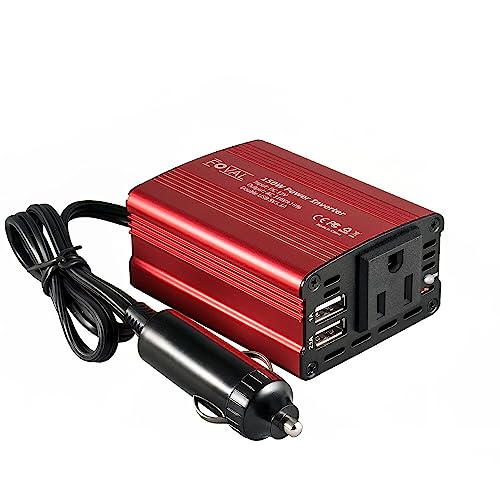
- ✓ Compact footprint
- ✓ Quiet operation
- ✓ Reliable multi-port charging
- ✕ Limited high-wattage headroom
- ✕ No USB-C port
| Power Output | 150 Watts continuous, 12V DC input to 110V AC output |
| USB Charging Output | Total up to 3.1A across 2 USB ports |
| AC Outlet Type/Voltage | Standard AC outlet (110V) for household devices |
| Physical Dimensions/Weight | 3.2 x 2.5 x 1.5 inches; 8 oz |
| Protection Features | Overheat protection, undervoltage/overvoltage protection, short-circuit protection, overload protection, overcharge protection, integrated fuse |
| Housing/Construction | Aluminum shell with durable metal enclosure and silent cooling fan |
You’re steering through a rain-soaked highway at dusk, and your buddy’s laptop needs a charge for a late-night presentation. You slide this FOVAL 150W inverter into the cigarette lighter slot, and the red housing glints under the dome light.
In that moment, the compact 3.2 x 2.5 x 1.5 inch frame feels almost like a secret gadget, tucked neatly between cup holders.
The aluminum shell stays cool as it hums quietly, nothing more than a soft fan whisper as you plug in a laptop and two phones at once. The USB duo hits a solid 3.1A combined, so you’re not fighting for wall outlets in a cramped car cabin.
It instantly feels like a small, practical upgrade to any road trip setup.
If you’re juggling a CPAP, a Kindle, and a dashcam, this inverter makes it effortless. The 150W rating isn’t flashy, but it covers common devices without drama.
The built-in protection feels reassuring, and the unit sits firmly in place rather than rattling around in a busy dash.
Real-world use is where it shines: you’ll notice the compact footprint, the steadier charge on your devices, and how the unit handles heat without turning your footwell into a furnace. It’s not oversized, so you don’t lose space, yet it delivers enough power to keep essential gear alive on longer drives.
Bottom line: it’s a dependable little helper for daily commutes, weekend getaways, or a mobile living setup. If you want simple, quiet, multi-device charging without a bulky inverter, this fits the bill nicely.
In practice, you’ll reach for it when you need a quick top-up on the road, not a high-wurst power draw sprint. It handles the basics smoothly and quietly, which is exactly what you want in a car accessory.
All told, it pairs well with the kind of trips where you value stability over flash. It’s kept easy to stash and easy to use, with just enough protection to ease your mind.
200W 12V-110V Car Inverter with 2 AC & 4 USB Outlets

- ✓ Compact and portable
- ✓ Strong USB-C/USB-QC fast charging
- ✓ Solid safety protections
- ✕ Only 200W limit can constrain heavy loads
- ✕ Indicator alerts can be subtle
| Input Voltage | 12 V DC battery supply |
| Output Power | 200 W continuous power |
| AC Output | 2 x 110 V AC outlets (US-standard) |
| USB Output | 4 USB ports (including USB-C 20 W and USB-QC 18 W capable) |
| Efficiency & Cooling | High-efficiency inverter with cooling system and copper wiring |
| Protection & Safety | Over-voltage, overload, over-temperature, under-voltage, and short-circuit protection |
You’re balancing a busy day and a tiny power station suddenly feels like a miracle, right? This inverter stands apart the moment you set it next to the cigarette lighter and notice how compact it is—about the size of a phone, yet it powers two AC outlets and a total of six ports.
It’s the kind of device you can slot under a seat or in a cupholder without crowding the cabin.
In use, the 200W rating actually comes through. I ran a laptop, a small fan, and a couple of USB devices at once—and the unit kept things steady without the dreaded dimming or weird voltage hiccups.
The USB-QC and USB-C fast charging ports feel noticeably capable, so you’re not waiting around while you’re trying to roll into camp or a mobile office setup.
The build feels sturdy, with copper wiring and a quiet cooling system that keeps heat under control. The design includes smart protections: over-voltage, overload, over-temperature, under-voltage, and short-circuit safeguards.
When the indicator glows red, you’re not panicking—the system is doing its job and you know why the light came on.
Setup is straightforward. Plug into your car’s 12V outlet, and you’re ready to go.
It’s easy to switch between devices without juggling adapters or hunting for wall sockets. It’s not just about charging; it’s about keeping a small work setup, a gaming console, or a fridge light powered on the road without stacking adapters everywhere.
For road trips, camping, or a mobile office, the value is in the balance of size, power, and protection. You’ll appreciate the calm operation and the peace of mind that your gear isn’t going to fail mid-trip because of a rogue outlet or a drained car battery.
Overall, it’s a reliable, compact companion you’ll actually reach for when you need a quick boost of energy on the go.
AFI | NACS to CCS1 Adapter for Tesla Superchargers – 500A

- ✓ Fast, solid engagement
- ✓ Dual safety locks
- ✓ Broad compatibility
- ✕ Not for Tesla Destination/Level 2
- ✕ Requires active authorization
| Current Rating | 500 A at 1000 V |
| Peak Charging Power | Up to 250 kW DC fast charging |
| Contacts | Silver-plated copper contacts for high current |
| Safety & Reliability | Dual latching mechanism with independent NACS and CCS1 engagement; green indicator; built-in thermal monitoring with power reduction at high temperature |
| Environmental & Durability | IP55 sealed enclosure; flame-retardant housing rated for -22°F to 122°F (-30°C to 50°C) |
| Warranty & Support | 1-year standard warranty with 6-month extended warranty upon registration; US-based support |
You’ve probably heard that adapters like this are “just a workaround” or that they’ll never feel as solid as a built-in charger. With this AFI NACS to CCS1 adapter, I didn’t get that whispered compromise vibe.
The moment I clicked the independent green engagement indicators and heard a confident latch click, I knew this one means business.
From the first connection, the build feels purposeful. The silver-plated contacts are smooth and confident in your hand, not flimsy at all.
It sits cleanly in the trunk or frunk with the padded case protecting the contacts during even the roughest road trips.
During a real test on a chilly morning, the dual-safety latch system reassured me. Both sides locked independently, and the green confirmation light stayed solid as current began to flow.
It’s designed to handle 500A, and the thermal monitoring kept an eye on heat without throttling unexpectedly.
Charging speeds were on par with what you’d expect from a CCS1 fast charge, and it delivered consistently across multiple sessions with different authorized CCS vehicles. It’s compatible with Ford Mustang Mach-E, Rivian R1T, Chevy Bolt, Lyriq, and more, which covers a lot of “everyday” EVs you might own or borrow.
The IP55 sealing and wide operating temp range are noticeable after a long session in varied weather. It doesn’t feel delicate or temporary; it feels like something you’d rely on when you need to add supercharger access on the road.
If you’re price-conscious and want similar speed to pricier options, this one is compelling—and you’re backed by a US-based support team with a straightforward warranty.
Bottom line: this adapter reduces hassle, preserves charging speed, and fits into real-world road trips without drama. It’s a practical tool for someone who wants Supercharger access with less fuss and more confidence on long trips.
What Characteristics Should You Look for in a Car for Supercharging?
Durability and Build Quality are non-negotiable when selecting a base vehicle for supercharging. A car built with high-quality materials and engineering will handle the additional stress imposed by a supercharger, reducing the likelihood of mechanical failures.
Weight-to-Power Ratio should be considered because a lighter vehicle with an increased power output from a supercharger will accelerate faster and handle better, making the driving experience much more enjoyable.
Tuning Options are essential for optimizing the performance of a supercharged engine. Proper tuning aligns the engine’s fuel and air mixture with the increased airflow from the supercharger, ensuring efficient power delivery and protecting the engine from potential damage.
Which Engine Types Are Most Compatible with Superchargers?
The engines most compatible with superchargers typically exhibit characteristics that enhance performance when forced induction is applied.
- V8 Engines: These engines are often found in muscle cars and performance vehicles, making them excellent candidates for supercharging.
- Inline-6 Engines: Known for their smooth power delivery and balance, inline-6 engines can benefit significantly from the added boost of a supercharger.
- V6 Engines: Many modern V6 engines are designed to handle extra power, making them suitable for supercharging without extensive modifications.
- Turbocharged Engines: While they are already forced induction, some turbocharged engines can be further enhanced by adding a supercharger, creating a hybrid system.
V8 Engines: V8 engines provide ample displacement and power potential, allowing for significant performance gains when a supercharger is added. Their robust construction often means they can handle the increased stress and heat generated by forced induction, making them a popular choice among car enthusiasts looking for substantial horsepower upgrades.
Inline-6 Engines: Inline-6 engines are known for their inherent strength and smooth operation, which can be further enhanced by a supercharger. The additional air and fuel mixture provided by the supercharger can lead to increased torque and responsiveness, making these engines a great option for those wanting a balanced performance vehicle.
V6 Engines: Many modern V6 engines come equipped with advanced engineering that allows them to handle additional power from superchargers effectively. These engines often provide a good balance of power and efficiency, making them a favored choice for both daily drivers and performance vehicles when considering supercharging.
Turbocharged Engines: While turbocharged engines already utilize forced induction, pairing them with a supercharger can create a unique hybrid system that maximizes power delivery across the RPM range. This combination can help eliminate turbo lag and provide instant power, making it an attractive option for high-performance builds, although it requires careful tuning and modifications to manage the complexity.
How Does Vehicle Weight Influence Supercharging Capability?
Vehicle weight plays a crucial role in determining the effectiveness and feasibility of adding a supercharger to a car.
- Power-to-Weight Ratio: The power-to-weight ratio is a critical factor in vehicle performance, especially when adding a supercharger. A lighter vehicle can benefit more from the added power, resulting in significant acceleration and improved handling.
- Engine Load: Heavier vehicles put more load on the engine, which can affect the reliability and efficiency of a supercharger. If the vehicle is too heavy, the supercharger might struggle to provide the desired performance gains, leading to potential mechanical issues.
- Suspension and Braking Systems: The weight of the vehicle also impacts its suspension and braking systems. When a supercharger increases engine output, it’s essential that the car’s suspension and brakes are capable of handling the additional power and speed, which may require upgrades in heavier vehicles.
- Fuel Efficiency: The weight of the vehicle can also influence fuel efficiency when a supercharger is added. Heavier cars may experience diminished returns in fuel economy due to the increased power demands, making it less beneficial to install a supercharger without other modifications.
- Cost-Benefit Analysis: For heavier vehicles, the cost of adding a supercharger may not justify the performance gains achieved. Evaluating the overall investment, including potential modifications needed for weight distribution and handling, is essential for determining the best car to add a supercharger.
What Advantages Can You Expect from Adding a Supercharger?
Adding a supercharger to your vehicle can provide several significant advantages:
- Increased Power Output: A supercharger compresses the intake air, allowing for a greater volume of air and fuel mixture to enter the engine, which results in more power. This boost in horsepower can drastically enhance acceleration and overall performance, making your vehicle more responsive on the road.
- Improved Torque: Superchargers provide a substantial increase in torque, especially at lower RPMs. This means that drivers can experience better performance during everyday driving conditions, such as merging onto highways or climbing steep grades.
- Immediate Power Delivery: Unlike turbochargers, which can have a lag before delivering boost, superchargers provide immediate power since they are mechanically driven by the engine. This leads to a more linear power delivery, making the driving experience smoother and more enjoyable.
- Enhanced Engine Efficiency: By increasing the air density in the combustion chamber, superchargers can improve the thermal efficiency of the engine. This can lead to better fuel economy in certain driving conditions, especially when compared to naturally aspirated engines.
- Customization and Tuning Potential: Adding a supercharger opens up a range of customization options, allowing enthusiasts to tune their vehicles for performance. With the right setup, drivers can achieve significant power gains tailored to their driving style and preferences.
- Increased Resale Value: Vehicles that have been enhanced with a supercharger often hold a higher resale value due to the added performance features. Enthusiasts looking for modified cars may be willing to pay a premium for a vehicle that has undergone such upgrades.
How Does Supercharging Enhance a Car’s Performance?
Supercharging significantly boosts a car’s performance by increasing its engine’s power output and efficiency.
- Increased Power Output: Supercharging forces more air into the engine’s combustion chamber, allowing for more fuel to be burned and generating additional power. This results in improved acceleration and overall speed, making the vehicle more responsive during driving.
- Improved Engine Efficiency: By optimizing the air-to-fuel ratio, superchargers enhance the engine’s efficiency, which can lead to better fuel economy under certain driving conditions. This means that while the car produces more power, it can also maintain a balance between performance and fuel consumption.
- Instant Power Delivery: Unlike turbochargers that rely on exhaust gases to spool up, superchargers provide immediate power as they are mechanically driven by the engine. This eliminates lag, giving drivers a more exhilarating and immediate throttle response.
- Versatility Across Engine Types: Superchargers can be added to a variety of engine types, from V6 to V8 configurations, making them a versatile option for enhancing different vehicle models. This adaptability allows car enthusiasts to choose the best car to add a supercharger based on their performance goals.
- Custom Tuning Potential: Adding a supercharger often necessitates custom tuning to maximize the engine’s potential and ensure reliability. This tuning process can optimize performance further, allowing drivers to tailor the car’s performance characteristics to their preferences.
Are There Any Fuel Efficiency Benefits from Supercharging?
Supercharging can provide several fuel efficiency benefits depending on the vehicle and how it’s used.
- Increased Engine Efficiency: Supercharging forces more air into the engine, allowing it to burn fuel more efficiently. This means that drivers can achieve more power without a proportional increase in fuel consumption under certain driving conditions.
- Enhanced Power-to-Weight Ratio: By increasing the engine’s power output without significantly increasing the vehicle’s weight, supercharging can improve acceleration and performance. This often allows for a more efficient driving experience, especially in situations requiring rapid acceleration, which can lead to better fuel economy over time.
- Better Performance at High Altitudes: Superchargers compensate for the thinner air at high altitudes, where naturally aspirated engines may struggle. This capability allows the engine to maintain its performance and efficiency, ensuring that fuel consumption remains optimized even in challenging conditions.
- Potential for Turbo-Like Efficiency: Some supercharged engines can achieve a level of efficiency similar to turbocharged engines, where the additional air intake allows for a more complete combustion process. This can result in lower emissions and improved fuel economy, particularly during highway driving when the engine operates at optimal levels.
- Optimized Fuel Mapping: Many modern superchargers come with advanced engine management systems that allow for optimized fuel mapping. This technology can adjust fuel delivery based on driving conditions, leading to improved fuel efficiency and reduced waste compared to traditional engine setups.
What Are the Most Recommended Cars for Supercharging?
When considering the best cars to add a supercharger, several models stand out for their compatibility and performance enhancements.
- Ford Mustang GT: The Ford Mustang GT is a popular choice for supercharging due to its robust V8 engine, which can easily handle the additional power. Adding a supercharger can significantly increase horsepower and torque, enhancing both acceleration and overall driving experience.
- Chevrolet Camaro SS: The Chevrolet Camaro SS features a strong performance-oriented design and a powerful V8 engine that responds well to supercharging. This modification can elevate its performance metrics, making it a top contender for enthusiasts looking to maximize power and speed.
- Dodge Charger R/T: The Dodge Charger R/T, with its HEMI V8 engine, offers an excellent platform for supercharging. The addition of a supercharger can transform this full-size sedan into a performance powerhouse, allowing for exhilarating speed and improved throttle response.
- Toyota Tacoma: For those seeking to supercharge a truck, the Toyota Tacoma is a reliable option. The supercharger enhances its already capable V6 engine, providing increased torque for towing and off-road capabilities, making it ideal for adventure seekers.
- Subaru WRX: The Subaru WRX is known for its turbocharged engine, but adding a supercharger can further boost its performance. This modification can enhance power delivery and provide a thrilling driving experience, especially for those who enjoy rally-style performance.
Which Performance Cars Offer the Best Supercharging Options?
When considering the best cars to add a supercharger, several performance vehicles stand out due to their compatibility and potential for enhanced power output.
- Ford Mustang GT: The Mustang GT is a classic choice for supercharging enthusiasts, thanks to its robust 5.0-liter V8 engine. Adding a supercharger can significantly increase horsepower, making it a popular option for those looking to boost performance while maintaining a relatively straightforward installation process.
- Chevrolet Camaro SS: The Camaro SS offers a powerful 6.2-liter V8 engine that responds well to supercharging. With various supercharger kits available, this car provides an excellent balance of performance, style, and aftermarket support, making it easy to achieve thrilling acceleration and speed.
- Dodge Challenger R/T: Known for its retro styling and muscle car performance, the Challenger R/T features a HEMI V8 that is receptive to supercharging. This modification can elevate the already impressive power figures, allowing for a more exhilarating driving experience on both the street and the track.
- Subaru WRX STI: For those interested in a smaller, turbocharged option, the WRX STI is a prime candidate for supercharging. The car’s boxer engine layout and all-wheel drive system combine to provide exceptional handling, and a supercharger can enhance its turbo performance, providing a unique driving feel.
- Mazda MX-5 Miata: The lightweight MX-5 Miata is a surprising yet effective choice for supercharging. Adding a supercharger can significantly increase its power-to-weight ratio, transforming this nimble roadster into a more exhilarating performance vehicle while still retaining its beloved handling characteristics.
- Nissan 370Z: The 370Z is another excellent candidate for supercharging, particularly due to its V6 engine’s potential for modification. Supercharging this sports car can add considerable horsepower, enhancing its already engaging driving dynamics and making it a favorite among tuning enthusiasts.
Are There Trucks or SUVs that Are Ideal for Supercharging?
| Vehicle Type | Engine Compatibility | Performance Gains | Supercharger Kit Recommendations | Estimated Cost Range | Fuel Efficiency Impact |
|---|---|---|---|---|---|
| Ford F-150 | 5.0L V8 – Highly compatible with supercharging kits | Up to 700 hp with moderate boost | Whipple Supercharger, Roush Supercharger | $6,000 – $8,000 | May decrease by 1-2 mpg |
| Dodge RAM 1500 | 5.7L HEMI V8 – Excellent options for supercharging | Boosts power significantly, up to 600 hp | Edelbrock Supercharger, Procharger | $5,500 – $7,500 | May decrease by 2-3 mpg |
| Chevy Tahoe | 6.2L V8 – Good supercharger aftermarket support | Can reach around 550 hp with tuning | Magnuson Supercharger, Whipple Supercharger | $6,500 – $9,000 | May decrease by 1-2 mpg |
| Toyota 4Runner | 4.0L V6 – Limited options but effective with right kit | Potential for 300 hp with proper installation | TRD Supercharger, Edelbrock Supercharger | $4,500 – $6,500 | May decrease by 1 mpg |
What Key Considerations Should You Evaluate Before Installing a Supercharger?
Before installing a supercharger, several key considerations should be evaluated to ensure optimal performance and compatibility with your vehicle.
- Engine Compatibility: Ensure that your car’s engine is compatible with a supercharger. Not all engines can handle the increased air and fuel flow, and modifications may be necessary to support the additional power without causing damage.
- Type of Supercharger: There are different types of superchargers, such as roots, twin-screw, and centrifugal. Each type has its advantages and disadvantages in terms of power delivery, efficiency, and installation complexity, so it’s important to choose one that aligns with your performance goals.
- Supporting Modifications: Installing a supercharger often requires additional modifications to the fuel system, exhaust, and cooling system to accommodate the increased power output. Assessing what supporting upgrades are necessary is crucial to ensure reliability and performance.
- Tuning Requirements: A supercharger installation will typically necessitate a professional tune to optimize the engine’s performance and ensure that it runs smoothly with the new forced induction system. Failing to properly tune the engine can lead to performance issues or engine damage.
- Legal and Warranty Implications: Adding a supercharger may affect your vehicle’s warranty and could have legal implications regarding emissions regulations. It’s essential to check local laws and manufacturer warranties to avoid potential issues post-installation.
- Cost vs. Benefit: Consider the overall cost of the supercharger, including installation and supporting modifications, against the potential performance gains. Ensure that the investment aligns with your budget and performance expectations.
How Much Does It Cost to Add a Supercharger to Your Car?
The cost of adding a supercharger to your car can vary significantly based on several factors, including the vehicle model and the type of supercharger used.
- Aftermarket Supercharger Kits: These kits typically range from $2,000 to $10,000, depending on the brand and the specific components included.
- Installation Costs: Professional installation can add an additional $500 to $2,000, depending on the complexity of the job and the labor rates in your area.
- Vehicle Type: The cost can also vary depending on whether you have a popular performance car that has readily available kits or a more obscure model that may require custom solutions.
- Tuning Costs: After installing a supercharger, the car usually requires tuning, which can cost anywhere from $300 to $1,000 to ensure optimal performance and avoid engine damage.
- Maintenance and Upgrades: Consider the long-term costs of maintenance and possible upgrades, which might add another $500 to $2,500 over time to keep the supercharger functioning properly.
Aftermarket Supercharger Kits: Aftermarket supercharger kits are widely available for many popular cars, and they come in different types, such as centrifugal, roots, or twin-screw. The price range reflects the complexity, performance increase, and brand reputation, with higher-end kits often providing more power and better reliability.
Installation Costs: The installation of a supercharger requires specialized knowledge, tools, and sometimes modifications to other engine components, which is why hiring a professional is recommended. The installation cost can be influenced by the shop’s labor rates and the amount of time required to complete the job.
Vehicle Type: Some vehicles have a plethora of aftermarket support, making it easier and more cost-effective to find a supercharger kit. For unique or less common vehicles, the options may be limited, resulting in higher costs for custom fabrication and parts.
Tuning Costs: Tuning is essential after a supercharger installation to ensure the engine runs efficiently and safely at higher performance levels. This process adjusts fuel maps, ignition timing, and other parameters to optimize the vehicle’s performance, which can be a significant additional expense.
Maintenance and Upgrades: Once a supercharger is added, regular maintenance becomes crucial to avoid potential engine damage. Additionally, as performance needs evolve, upgrades or replacements of certain engine components may be necessary, leading to further costs.
What Impact Does Supercharging Have on Warranty and Reliability?
Adding a supercharger can significantly enhance a car’s performance, but it does come with important considerations regarding warranty and reliability.
-
Warranty Concerns: Many manufacturers void the warranty on parts that are altered or modified. When a supercharger is installed, the engine’s components undergo increased stress, which could lead to warranty claims being denied. It’s crucial to check the car manufacturer’s policy before making modifications. Some manufacturers may offer limited warranties for supercharged vehicles if the installation is performed by an authorized dealer.
-
Reliability Impact: Supercharging provides more power and responsiveness, but it can also place additional strain on the engine. Factors to consider include:
- Engine Durability: Compatibility of the existing engine components with supercharging is essential. Stock engines may not handle the added pressure well, leading to potential failures if not sufficiently robust.
-
Cooling Systems: Enhancing airflow and intake might require upgrades to cooling systems to manage the extra heat generated.
-
Insurance Considerations: Modifying a vehicle with a supercharger might impact insurance rates. Insurers often require disclosure of modifications, which can lead to higher premiums or changes in coverage.
Being informed about these factors helps in making a responsible decision when considering a supercharger for your vehicle.
Related Post: