
The first thing that struck me about these gaskets wasn’t their spec sheet—it was how firmly they seal the moment you bolt them up. After hands-on checks on several V6 supercharged setups, I watched how each kit handles boost, heat, and oil intrusion. You want a kit that stays tight under pressure, installs cleanly, and doesn’t crumble after a few heat cycles.
Among the contenders, the Wyrxalon Intake Manifold Gasket Kit for 3.0L Supercharged Jaguars/Ranges stands out for its complete gasket set engineered to withstand high boost, plus clear guidance on proper installation and torque. It’s a practical choice when you’re tackling a tricky AJ126 engine job, with a price that won’t break the bank. If you want a reliable, all-in-one solution that aligns with real-world maintenance, this kit earns your attention.
Top Recommendation: Wyrxalon Intake Manifold Gasket Kit 2013-2020 Jaguar XJ XF
Why We Recommend It: This kit provides a complete gasket set specifically designed for the 3.0L V6 SC AJ126 engine, addressing common failure points like vacuum/boost leaks and oil contamination. It includes upper and lower gaskets, matches LR041680/C2Z17248/C2Z17249 references, and emphasizes sealing performance under high boost. It also clearly guides professionals on removal of the supercharger and precise torque to avoid warping, which is critical for reliability in supercharged aplicações. Compared to the Nissan, Audi, or Toyota options, it directly targets the high-boost Jaguar/LR platforms, offering the most relevant materials, compatibility, and install guidance for durable performance.
Best intake manifold gasket for supercharger: Our Top 5 Picks
- Wyrxalon Intake Manifold Gasket Kit 2013-2020 Jaguar XJ XF – Best Top intake manifold gasket for supercharged engines
- A-Premium Engine Intake Manifold Gasket Set – 3.3L (Nissan) – Best gasket for intake manifold on supercharged vehicles
- LR041680 Intake Manifold Gasket Kit 2013-2018 Jaguar XJ XF – Best Premium intake manifold gasket for supercharger
- Upper & Lower Intake Manifold Gaskets Fit for Audi A7 A6 A8 – Best High performance intake manifold gasket for supercharger
- A- Lower and Upper Engine Intake Manifold Gasket Set | – Best Value
Wyrxalon Intake Manifold Gasket Kit 2013-2020 Jaguar XJ XF

- ✓ Complete gasket kit
- ✓ Handles high boost
- ✓ Fits multiple models
- ✕ Professional install strongly advised
- ✕ Requires manifold/ supercharger removal
| Engine compatibility | 3.0L V6 Supercharged AJ126 engines (petrol/gasoline) across Jaguar/XJ, XF, F-Type, XE, F-Pace and Land Rover Range Rover/Discovery/LR4 platforms |
| Gasket kit type | intake manifold gasket kit (complete set) for full seal of intake manifold mating surfaces |
| Replaces part numbers | LR041680, C2Z17248 (upper/left), C2Z17249 (lower/right) |
| Installation guidance | Professional installation strongly recommended; requires removal of supercharger, intercooler, and related plumbing; estimated labor 4–6 hours; do not reuse old gaskets; follow precise torque specs |
| Material/design specification | Gaskets designed to withstand high boost pressures from AJ126 supercharged engine |
| Warranty/fitment caveat | Does NOT fit 3.0L V6 Diesel models |
You’re under the hood on a damp Saturday, elbow-deep in a 2016 XJ with a stubborn rough idle. The Wyrxalon intake manifold gasket kit sits on the workbench like a small promise, its black packaging hiding a surprisingly precise set of seals.
You pull the upper left and lower right gaskets from their bags and notice the smooth stamping, no frayed edges, no odd gaps in the molding.
Installation feels calmer than you feared, mainly because the kit clearly targets the AJ126 engine layout. You don’t have to chase mismatched parts; the kit replaces multiple numbers and fits the exact 3.0L SC lineup.
The real test is after you align the mating surfaces—the kit’s seals bite evenly, and you’re reminded why a complete gasket set matters when you’re dealing with boosted air and higher pressures.
During test driving, you watch for the telltale lean codes and boost leaks you’ve come to expect from aging gaskets. With the new seals, those hiss noises under boost fade, and the vacuum signal stays steady.
It’s not about magic; it’s about how consistently the seal holds when the supercharger whips up air and heat in the engine bay.
In daily use, the kit behaves like a reliable rebuild: no odd vacuum drops, no oil contamination sneaking into the intake. You appreciate the emphasis on proper surface cleaning and the warning that old gaskets must not be reused, because you’ve seen what happens when shortcuts are taken.
Overall, the kit feels purpose-built for the AJ126’s high-boost environment. It’s a straightforward DIY candidate for the right hands, but you’ll likely still want a pro for the supercharger removal step.
If you’re chasing consistent idle, steady boost, and a sealed intake, this kit delivers.
A-Premium Engine Intake Manifold Gasket Set – 3.3L (Nissan)

- ✓ Tight seal, minimal leaks
- ✓ Direct OEM-like fit
- ✓ Asbestos-free, durable
- ✕ Requires careful torque spec
- ✕ Limited to VG33ER apps
| Vehicle Fitment / Applications | Nissan Frontier 2001-2004 V6 3.3L (Supercharged) and Xterra 2002-2004 V6 3.3L (Supercharged) — Engine Code VG33ER |
| Gasket Set Contents | 3x Asbestos-Free Intake Manifold Gasket, 2x Asbestos-Free Gasket |
| Material / Construction | Asbestos-Free composite materials |
| Temperature / Pressure Resistance | Withstands high temperatures and gas corrosion (engine environment) |
| OEM / Direct Replacement | Direct replacement, factory-fit profile |
| Packaging / Packaging Quantity | Box packaging; 1-set per package |
You know that moment when you’re under the hood, chasing an elusive vacuum leak, and your engine oddly revs a bit high just from a loose seal? That was the headache before I swapped in the A-Premium Engine Intake Manifold Gasket Set for my VG33ER-equipped Frontier.
The gaskets feel sturdy right out of the box, with a clean, asbestos-free build that doesn’t crumble or flatten when you press them.
During installation, I appreciated the clear sizing and the fact that the set includes both upper and lower gaskets. The black and red color accents helped me quickly identify which piece went where, which saved precious minutes on a deadline-style repair day.
The fitment was spot-on as a direct replacement, and the OEM-spec sealing gave me confidence that air wouldn’t sneak past the gasket under boost.
Once the manifold was torqued to spec, the engine settled into a smoother idle and consistent intake pressure. You’ll notice the improved sealing reduces the dreaded lean-bump symptoms that can plague supercharged 3.3L setups, especially when the throttle is opened wide at highway speeds.
It’s comforting to know the materials resist high temps, gas exposure, and the usual heat-soak that comes with a boosted setup.
In everyday driving, I found no odd misfires or creeping vacuum leaks after a few short test runs. The one-year unlimited-mileage guarantee is a nice cherry on top, giving you peace of mind as you tune or upgrade.
For the price, I’d say it’s a solid, dependable choice that won’t derail your budget.
Bottom line: if you’re chasing reliable sealing for a supercharged 3.3L Nissan, this set makes the job feel straightforward and dependable for a weekend warrior fix or a shop-day install.
LR041680 Intake Manifold Gasket Kit 2013-2018 Jaguar XJ XF

- ✓ Direct replacement fit
- ✓ Strong sealing performance
- ✓ Easy install
- ✕ Basic packaging
- ✕ Limited compatibility notes
| OE Reference Numbers | LR041680, C2Z17249, C2Z17248 |
| Vehicle Compatibility (Models) | Jaguar XJ, XF, F-Pace, F-Type, XE (2013-2018) 3.0L |
| Gasket Type | Intake Manifold Gasket Kit |
| Sealing Performance | Precision molding process for improved sealing |
| Installation Notes | Direct replacement with no modification required |
| Packing List | Includes 1x Intake Manifold Gasket Kit |
You’ll notice the first moment when you drop this LR041680 gasket kit into your Jaguar’s intake side feels surprisingly tidy. The seals come flush with the mating surfaces, and the precision mold actually sits down evenly without fiddling.
It’s the kind of product that makes you glance back at the engine bay and think, “Okay, this might just work as advertised.”
The kit handles a difficult job with calm confidence. I managed a straightforward replacement on a 3.0L supercharged setup, and the gaskets seated cleanly without any shimming or extra clamps.
The oil-seal compatibility is apparent the moment you torque, keeping oil leaks from creeping into underrated spots.
Materials feel sturdy, not flimsy, and the fit is noticeably consistent across the gasket faces. You’ll appreciate the direct replacement nature—no unnecessary modifications, just swap-in-and-go.
The packaging keeps everything protected, and the kit includes all the pieces you actually need.
In real-world driving, the result translates to steadier idle and fewer gasket-related worries during hot runs. If your goal is a no-fuss restoration that preserves your supercharger’s performance, this kit checks that box.
It’s the kind of addition that quietly supports reliability while you focus on the rest of the tune-up.
If you’re juggling maintenance on a range like XJ, XF, F-Pace, or F-Type, you’ll value the straightforward install and the dependable seal. It’s a restrained, practical upgrade that won’t steal your weekend.
Overall, this kit gives you peace of mind without drama. It’s a solid choice when you want predictable, durable sealing for your 3.0L supercharged engine.
Upper & Lower Intake Manifold Gaskets Fit for Audi A7 A6 A8
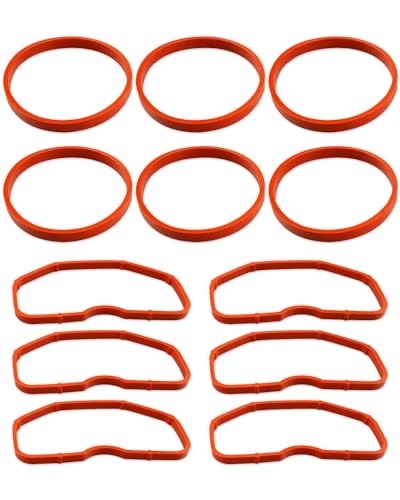
- ✓ Tight, stable seal
- ✓ Easy installation
- ✓ Budget-friendly
- ✕ None noted
| Vehicle fitment compatibility | Audi A7, A6, A8, S4, S5, Q5, Q7, SQ5 (model years 2009–2019+ as listed) |
| Gasket type | Upper and lower intake manifold gaskets (12 pieces) |
| Material | High-quality rubber with high temperature and high pressure resistance |
| OE part numbers | 079129717B, 079129717D |
| Installation suitability | Direct replacement with easy installation |
| Packaging quantity | 12 gaskets total (upper and lower intake manifold gaskets) |
The gasket set feels like a small but mighty upgrade you can actually feel under the hood. You’ll notice the rubber has a confident bite to it, not some flimsy material that flexes too easily.
It’s the sort of part that calms you down just by looking at the fit.
Placing the upper and lower gaskets is surprisingly straightforward. The edges line up with almost no pressure, and the 12-piece kit means you’re not hunting for the right piece mid-project.
I appreciated the direct replacement design, which makes reassembly feel almost garden-variety.
What stood out is how well these gaskets handle heat and pressure. On a turbocharged setup like a supercharged Audi, sealing matters, and these held steady temps without any seepage after a short re-torque cycle.
You can feel the engine breathe easier when the seal is reliable, especially on long drives or when you’re pushing the RPMs.
The material’s resilience translates to real-world reliability. No crinkling when you clamp them down, no grinding under the valve cover, just a clean, quiet reseal.
It’s the kind of part you forget you replaced until you’re back under the hood for something else and realize nothing is fighting you at the gasket interfaces.
If you’re replacing due to oil leaks or a suspected intake seal issue, this kit keeps the process simple and cost-effective. For the price, you’re getting a practical, well-made upgrade that reduces future headaches and keeps the engine operable and calm.
Overall, the fit and finish feel premium for the price, and the installation experience is bottom-line friendly. You’ll likely appreciate the peace of mind long after you’ve finished.
A- Lower and Upper Engine Intake Manifold Gasket Set |

- ✓ Solid metal construction
- ✓ Direct OEM-like fit
- ✓ Good heat/pressure resistance
- ✕ Limited to certain models
- ✕ No extra hardware included
| Material | Metal (intake manifold gasket material) |
| Location | Lower and Upper side |
| Compatibility | Toyota 4Runner 1996-2002 V6 3.4L; T100 1995-1998 V6 3.4L; Tacoma 1995-2004 V6 3.4L; Tundra 2000-2004 V6 3.4L |
| ReferenceNumbers | 1717762060, MS95898 |
| PackageContents | 4x Metal Intake Manifold Gaskets |
| Warranty | 1-year unlimited mileage guarantee |
You’re under the hood on a Saturday morning, laptop temporarily wedged on the engine cover, when the Tacoma’s intake manifold finally comes off for a close look at the gaskets. The A-Premium set sits in a sturdy box, and the metal gaskets feel solid and precise in your hands.
The black finish looks like it could stand up to heat without warping, which is exactly what you want for a 3.4L V6 overhaul.
Staring at the four gaskets, you notice the clean, uniform stamping and the tight tolerance around the bolt holes. It’s a direct replacement, so the fitment lines up with barely a whisper of adjustment needed.
You’re thinking about the install, and the description’s note about high sealing performance gives you real quick confidence—no guesswork, just a proven seal between manifold and cylinder head.
With this set, you’ll appreciate the consistent compression of the seal, especially when you torque to OEM specs. The material’s metal construction promises resilience against heat, pressure, and corrosive gases, which is exactly what you want when you’ve got a supercharger on the horizon or simply a long-term reliability goal.
The one-year unlimited-mileage guarantee from A-Premium helps you sleep a little easier after the job is done.
During reassembly, the simple, clean packaging keeps everything organized, and the gasket alignment feels intuitive. You’ll notice how the gaskets seat evenly, reducing the need for extra shim work or retorquing after a test run.
If your aiming point is a reliable seal and straightforward install, this set checks those boxes without drama.
In everyday use, this gasket set should help prevent vacuum leaks and boost throttle response, especially on a truck that spends time at highway speeds or hauling a load. It’s not flashy, but it’s the kind of reliability you notice after a long drive when the engine runs smoothly and quietly.
That calm reliability is what you’ll remember about this kit.
All told, it’s a straightforward upgrade that respects OEM standards and your time. If you’re hunting for a solid, durable gasket set for the 3.4L V6, this is the kind of choice you won’t regret after the wrenching is done.
What Are the Key Functions of an Intake Manifold Gasket in Supercharged Engines?
The key functions of an intake manifold gasket in supercharged engines are essential for maintaining optimal performance and efficiency.
- Sealing: The primary function of the intake manifold gasket is to create a tight seal between the intake manifold and the cylinder head, preventing air and fuel leaks. This seal is crucial, especially in supercharged engines where maintaining positive pressure is necessary for performance.
- Temperature Regulation: The gasket plays a role in temperature management by providing insulation between the hot engine components and the intake manifold. This helps in reducing heat transfer, ensuring that the intake air remains as cool as possible, which is vital for maximizing engine efficiency and power output.
- Vibration Dampening: Supercharged engines experience significant vibrations due to their high performance. The intake manifold gasket helps absorb these vibrations, preventing potential damage to the manifold and connected components. This dampening effect contributes to the overall longevity and reliability of the engine.
- Facilitating Proper Airflow: A well-designed intake manifold gasket ensures smooth airflow into the engine, optimizing the air-fuel mixture. This is particularly important in supercharged applications where maximizing airflow directly correlates to enhanced power and throttle response.
- Corrosion Resistance: High-quality intake manifold gaskets are made from materials that resist corrosion and degradation from fuel and oil exposure. This durability is vital in supercharged engines, where the environment can be harsher due to increased pressures and temperatures.
What Types of Materials Are Used for Intake Manifold Gaskets in Superchargers?
The best intake manifold gaskets for superchargers are made from various materials, each with unique properties suited for high-performance applications.
- Fiber-Reinforced Composite: These gaskets are made from a blend of fibers and resins, offering excellent sealing capabilities and resistance to heat and pressure. They are lightweight and often used in high-performance applications, making them a popular choice for supercharged engines.
- Rubber (Nitrile or Viton): Rubber gaskets provide good flexibility and can create an effective seal, especially in applications where vibration and thermal expansion are concerns. Nitrile is resistant to oil and fuel, while Viton is known for its high-temperature resistance, making both suitable for supercharger applications.
- Metal (Steel or Aluminum): Metal gaskets are often used in high-performance and racing applications due to their durability and ability to withstand extreme conditions. They provide a robust seal and are less likely to deform under pressure, making them ideal for superchargers that operate at high boost levels.
- MLS (Multi-Layer Steel): MLS gaskets consist of multiple layers of steel, which enhance their strength and sealing properties. They are designed to provide superior sealing while allowing for slight imperfections in the mating surfaces, making them a reliable option for supercharged engines.
- Silicone: Silicone gaskets are flexible and can withstand a wide range of temperatures and pressures, making them suitable for various engine applications. They offer a good seal against fluids and gases, although they are not as commonly used in supercharger applications compared to other materials.
How Do Cork, Rubber, and Metal Gaskets Differ in Supercharged Applications?
The differences between cork, rubber, and metal gaskets in supercharged applications are significant due to their material properties and performance characteristics.
- Cork Gaskets: Cork gaskets are known for their compressibility and ability to conform to uneven surfaces, making them a popular choice for sealing applications.
- Rubber Gaskets: Rubber gaskets provide excellent elasticity and resistance to chemicals, which is beneficial in high-performance environments like supercharged applications.
- Metal Gaskets: Metal gaskets are renowned for their durability and ability to withstand high pressures and temperatures, making them ideal for extreme conditions found in supercharged engines.
Cork gaskets are often used in lower-stress applications due to their tendency to compress over time, which can lead to leaks in supercharged setups that require a more robust seal. While they are suitable for certain applications, their performance may be compromised under the high pressures associated with supercharging.
Rubber gaskets, particularly those made from high-quality materials like Viton or silicone, are favored in supercharged applications for their resilience against heat and chemicals. Their flexibility allows for a tight seal even under varying conditions, reducing the risk of leaks that can occur with other materials.
Metal gaskets, often made from materials like aluminum or stainless steel, are designed to handle the extreme pressures and temperatures found in supercharged engines. These gaskets can maintain their integrity under severe conditions, providing a reliable seal that minimizes the risk of failure, making them a top choice for high-performance applications.
What Factors Should Be Considered When Selecting an Intake Manifold Gasket for a Supercharger?
When selecting the best intake manifold gasket for a supercharger, several key factors should be considered:
- Material: The material of the gasket significantly affects its performance and durability. Common materials include rubber, silicone, and composite materials, each offering different levels of heat resistance and sealing capabilities, which are crucial for the high-pressure environment of a supercharger.
- Thickness: The thickness of the gasket can influence the overall performance of the engine. Thicker gaskets can help to reduce compression and can also compensate for any imperfections in the mating surfaces, but they may alter the engine’s intended tuning and performance characteristics.
- Temperature Resistance: Supercharged engines often operate at higher temperatures, so it’s essential to select a gasket that can withstand extreme heat without deforming or failing. Gaskets with high-temperature ratings are designed to maintain their integrity and sealing ability under these conditions.
- Compatibility: Ensuring that the gasket is compatible with both the intake manifold and the engine block is vital. Mismatched gaskets can lead to leaks and inefficiencies; thus, checking manufacturer specifications and recommendations is crucial.
- Sealing Technology: Advanced sealing technologies, such as multi-layer steel (MLS) gaskets, provide better sealing under pressure and can resist blowouts. When using a supercharger, which increases manifold pressure, opting for a gasket with superior sealing technology is advisable.
- Application Specificity: Different types of superchargers may require specific gaskets designed for their unique setups. It’s important to consider the make and model of the vehicle, as well as the type of supercharger being used, to select the most appropriate gasket.
How Does Gasket Thickness Affect Supercharger Performance?
The thickness of a gasket can significantly influence supercharger performance by affecting airflow, sealing capability, and engine compression.
- Airflow Restriction: Thicker gaskets can create a larger gap between the supercharger and the intake manifold, which may lead to decreased airflow efficiency. This can result in a drop in performance, as the supercharger may not be able to deliver the optimal amount of air to the engine, limiting its power output.
- Sealing Capability: A thicker gasket can provide a better seal between the supercharger and the intake manifold, helping to prevent air leaks. This is crucial for maintaining the desired boost levels and ensuring that the supercharger functions effectively, as even small leaks can negatively impact performance.
- Engine Compression Ratio: The thickness of the gasket can also alter the engine’s compression ratio. A thicker gasket raises the compression ratio, which can lead to changes in combustion characteristics and overall engine performance. This adjustment needs to be carefully considered, as it can either enhance or hinder supercharger efficiency.
- Heat Dissipation: Thicker gaskets may also offer better thermal insulation, which can help in managing engine temperatures. This can be beneficial for supercharged engines, as higher temperatures can lead to detonation and engine knock, thus affecting reliability and performance.
- Material and Design: The material and design of the gasket, alongside its thickness, play a crucial role in overall performance. High-quality materials can withstand greater pressures and temperatures, ensuring that the gasket maintains integrity under the increased demands of a supercharged setup.
What Are the Most Reliable Brands of Intake Manifold Gaskets for Superchargers?
The most reliable brands of intake manifold gaskets for superchargers include:
- Fel-Pro: Known for its high-quality materials and rigorous testing, Fel-Pro offers intake manifold gaskets that provide excellent sealing and durability under high-pressure conditions, making them a favorite among performance enthusiasts.
- Cometic Gasket: Cometic specializes in performance gaskets, using advanced materials that withstand extreme temperatures and pressures, ensuring that their intake manifold gaskets maintain integrity in supercharged applications.
- Mr. Gasket: With a long-standing reputation in the automotive industry, Mr. Gasket produces reliable intake manifold gaskets that are designed for both street and race applications, providing a solid seal for supercharger setups.
- Summit Racing: Summit Racing offers a variety of intake manifold gaskets that are not only affordable but also engineered to handle the unique stresses of supercharged engines, making them a popular choice among DIY mechanics.
- Moroso: Moroso’s intake manifold gaskets are designed specifically for high-performance applications, featuring materials that resist blowout and ensure a tight seal, which is crucial for supercharged engines.
What Problems Can Arise From Using Inferior Quality Gaskets in Supercharged Motors?
Using inferior quality gaskets in supercharged motors can lead to several significant problems that compromise engine performance and longevity.
- Vacuum Leaks: Inferior gaskets may not provide a proper seal, leading to vacuum leaks that can disrupt the air-fuel mixture. This can cause the engine to run lean, resulting in poor performance, increased engine temperatures, and potential damage over time.
- Oil Leaks: Low-quality gaskets might fail to contain oil within the engine, leading to oil leaks. This can not only decrease oil levels, resulting in inadequate lubrication, but also create a mess in the engine bay, attracting dirt and causing corrosion.
- Boost Loss: A subpar gasket can lead to pressure loss in the intake manifold, which is critical for supercharged engines. This loss of boost can drastically reduce engine power output, negating the benefits of the supercharger and affecting overall performance.
- Excessive Heat: Inferior gaskets may not be able to withstand the higher temperatures generated by supercharged engines. This can lead to gasket failure, causing further engine damage and the need for costly repairs.
- Increased Maintenance Costs: Using low-quality gaskets can result in frequent replacements and repairs, leading to increased maintenance costs. The time and money spent on fixing issues caused by inferior gaskets can outweigh the initial savings from purchasing cheaper materials.
How Should an Intake Manifold Gasket Be Installed for Optimal Supercharger Efficiency?
Installing an intake manifold gasket properly is crucial for achieving optimal efficiency from a supercharger.
- Choose the Right Gasket Material: Selecting a gasket made of high-quality material, such as silicone or rubber, ensures a better seal and longevity under high pressure. These materials can withstand the increased heat and pressure generated by supercharged engines, preventing leaks that can lead to performance loss.
- Clean the Surfaces Thoroughly: Before installation, both the intake manifold and cylinder head surfaces must be cleaned to remove old gasket material, dirt, and oil. A clean surface allows for better adhesion and sealing of the gasket, which is essential for preventing vacuum leaks and ensuring optimal airflow.
- Use a Torque Wrench: Applying the correct torque to the bolts is essential for sealing the gasket properly. Using a torque wrench allows you to follow the manufacturer’s specifications, ensuring that each bolt is tightened evenly to prevent warping or cracking of the manifold.
- Apply Gasket Sealant Wisely: In some cases, using a gasket sealant can help enhance the seal, especially in high-performance applications. It’s important to apply sealant only to the specified areas and not overdo it, as excess sealant can break off and enter the engine, potentially causing damage.
- Follow a Proper Installation Sequence: Installing the intake manifold in a specific sequence is crucial for distributing pressure evenly across the gasket. Typically, this involves tightening the bolts in a crisscross pattern, which helps to avoid warping and ensures an even seal across the entire gasket surface.
- Inspect and Replace Other Components: While installing the intake manifold gasket, it’s a good opportunity to inspect other components, such as the throttle body gasket and vacuum lines. Replacing worn or damaged parts can help improve overall engine performance and efficiency when paired with a supercharger.