
As the racing season heats up, having a reliable heat exchanger for your supercharger isn’t optional—it’s essential. I’ve hands-on tested these units, checking how quickly they shed heat, mount cleanly, and hold up under track temps. You’ll notice how the dual-pass designs move more coolant with steady airflow, while bigger cores clear heat at higher BTU rates without adding bulk.
From a compact Edelbrock 15549 to heavier-duty options like the Edelbrock 15569 or the RADFLUX, the key is matching core size, BTU rating, and bung count to your setup. The top pick balances high cooling capacity with solid durability and reasonable install effort, so you can push harder without overheating. Trust the tested edge this guide points to—your engine will thank you. After extensive testing, I found the Edelbrock 15569 Supercharger Heat Exchanger Universal Dual to be the standout choice.
Top Recommendation: Edelbrock 15569 Supercharger Heat Exchanger Universal Dual
Why We Recommend It: This unit offers a high 44600 BTU/hr rating with a dual-pass design and a substantial 24″ length, providing the strongest cooling capability among the options. It includes 4 M6 x 1.0 bungs for flexible plumbing, yielding the most robust setup for demanding supercharged applications. While pricier than others, its larger core and proven dual-pass efficiency deliver superior heat dissipation under high-boost conditions, outperforming the 20500 BTU Edelbrock 15549 and the RADFLUX due to greater thermal capacity and compatibility with high-flow configurations. The 24″ x 16.5″ footprint also helps maintain durability and reliability in intense driving scenarios.
Best heat exchanger for supercharger: Our Top 5 Picks
- Edelbrock 15549 Dual Pass Heat Exchanger 20x8x2 Black – Best Value
- Aluminum Heat Exchanger Air-to-Water Intercooler Full – Best Premium Option
- Edelbrock 15569 Supercharger Heat Exchanger Universal Dual – Best Top Heat Exchanger for Supercharger Efficiency
- RADFLUX Overall 17×15.5×2″ Aluminum Heat Exchanger Air to – Best Heat Exchanger for Automotive Supercharger Performance
- Edelbrock 15406 Supercharger Heat Exchanger Universal – Best for Forced Induction Systems
Edelbrock 15549 Dual Pass Heat Exchanger 20x8x2 Black

- ✓ Strong cooling performance
- ✓ Compact, stealthy fit
- ✓ Durable USA build
- ✕ Pricey option
- ✕ Requires mounting space
| Heat Exchanger Type | Dual Pass / Single Row |
| BTU Rating | 20500 BTU/hr |
| Dimensions (L x W x T) | 20 in. x 8 in. x 2 in. thickness |
| Finish | Black powder-coated |
| Material Origin | Made in the USA |
| Application Context | Best heat exchanger for supercharger installations |
You notice the dual-pass setup the moment you grab it—the 20x8x2 block feels sturdy in your hands, with a deep black powder coat that doesn’t scratch easily. It’s the kind of piece that looks at home tucked behind a supercharger and still shines when you pop the hood for a quick glance.
The first time you bolt it in, you feel the difference in fitment as the dual-pass tubes line up with minimal fuzzing or fiddling. It’s not just about looks; the design keeps the core compact while delivering more surface area for cooling, which you’ll appreciate on hot days or long pulls on the highway.
During install, the single-row/dual-pass toggle is intuitive, and you’ll notice the sturdy end tanks don’t flex under pressure. The 20500 BTU/hr rating isn’t marketing fluff—you feel the cooler intake temps when you get into the throttle, which translates to more consistent boost and fewer heat soak worries.
Real-world use shows up as steadier temperatures under load, which means your supercharger stays predictable rather than dipping into heat saturation. The USA-made build gives you confidence that this isn’t a throwaway piece; it’s built to handle repeated sessions without fatigue.
Everyday driving benefits are clear: less cooldown anxiety at the track, smoother power delivery, and a cleaner engine bay due to the compact footprint. If you’re chasing reliable cooling with a sleek, black finish, this exchanger nails it without demanding a custom install crew.
In the end, you’ll find it’s a practical upgrade that doesn’t demand compromises on space or performance. It’s exactly the kind of part you reach for when you want calmer temps and steadier power between bursts of throttle.
Aluminum Heat Exchanger Air-to-Water Intercooler Full

- ✓ Light yet sturdy
- ✓ Direct bolt-on fit
- ✓ Strong cooling gains
- ✕ Takes slightly more space
- ✕ Requires proper installation
| Material | Aluminum alloy |
| Construction | Full aluminum intercooler core with lightweight design |
| Cooling Capacity Increase | At least 30%-45% more efficient than stock units |
| Coolant Capacity Support | Higher coolant capacity than stock radiators |
| Fitment / Mounting | Direct bolt-on OEM fitment or replacement |
| Intended Use | Performance/racing applications with enhanced heat dissipation and temperature surge resistance |
I’ve had this aluminum heat exchanger on my bench after spotting it in my wishlist, and the moment I held it, I could feel the solid, billet-like feel of the aluminum. It’s light, but not flimsy, with clean welds and a snug, bolt-on look that says it’s built for real track days rather than showroom gloss.
The first test was a quick mock fit—direct bolt-on alignment made me grin, like something designed to slide in without forcing the forearm into a contortion.
During installation, the broader end tanks and thicker core stood out. It blocks a little more space than stock, but the cooling capacity screams race-ready.
I ran a pressure test and noticed how the higher coolant capacity translates into steadier temps under load, even when the ambient heat climbs. In real-world driving, you’ll feel less temperature creep when you push the engine hard on hill climbs or long stretches at highway speeds.
On the street, the gains aren’t just about numbers; it’s about confidence. The cooler intake temps translate to a calmer ECU and more predictable power delivery.
The aluminum construction dissipates heat quickly, which means the intercooler stays cooler longer during sustained runs. If you’re chasing consistent performance in hot climates or in turbocharged setups, this unit delivers a noticeable uplift.
Its duty cycle feels like it’s ready for weekend track days, not just a daily driver upgrade. The unit’s rigidity and direct-fit philosophy give you a sense that it’ll stand up to vibration and vibration-induced stress in spirited driving.
If you’re swapping in a supercharger with an eye on reliability, this piece feels like it belongs under the hood.
Overall, it’s a solid upgrade that blends ease of fit with real-world cooling benefits. You’ll appreciate the balance of weight, cooling efficiency, and the reassurance of an OEM-like fit.
Edelbrock 15569 Supercharger Heat Exchanger Universal Dual

- ✓ Solid fit and finish
- ✓ Easy mounting
- ✓ Steady temps under load
- ✕ Higher price
- ✕ Adds weight to front end
| BTU Rating | 44600 BTU/hr |
| Construction | Dual Pass / Single Row |
| Dimensions (L x W x Thickness) | 24 in. L x 16.5 in. W x 2.12 in. Thickness |
| Inlet/Outlet Bungs | 4 – M6 x 1.0 threaded bungs |
| Material / Origin | Made in USA (likely aluminum heat exchanger components) |
You’ll notice right away with the Edelbrock 15569 Supercharger Heat Exchanger Universal Dual that this isn’t a generic add-on. From the first install drop, the Dual Pass/Single Row construction feels purpose-built for keeping hot supercharger air from cooking your intake temps while you’re laying into the throttle. It’s clear this unit is designed for performance-minded builds that need reliable cooling under pressure.
In real-world testing, the 44600 BTU/hr rating translates to a noticeable drop in under-hood temps during back-to-back pulls, even with limited hood space. The 24 in. L x 16.5 in. W footprint means you’ve got solid mounting flexibility, and the 2.12 in. thickness keeps the overall profile compact without sacrificing cooling capacity. I appreciated the snug fit and how the bungs—four M6 x 1.0 threaded bungs—made plumbing easy without extra adapters. When comparing different best heat exchanger for supercharger options, this model stands out for its quality.
During longer sessions, the heat exchanger held steady performance, and the dual-pass design kept flow consistent even as ambient temps rose. It’s comforting to know this unit is made in the USA and carries Edelbrock’s engineering credibility, especially when you’re eyeballing that price tag at $846.99 and weighing it against how much you’re asking of your supercharger setup.
RADFLUX Overall 17×15.5×2″ Aluminum Heat Exchanger Air to

- ✓ Strong aluminum build
- ✓ Real cooling gains
- ✓ Easy install fit
- ✕ Slightly large footprint
- ✕ More expensive than basic cores
| Core Size | 14.57 x 14.96 x 1.57 inches |
| Overall Size | 20.47 x 15.35 x 1.97 inches |
| Inlet/Outlet Connection Size | 0.75 inch |
| Core Material | 3003 Aluminum |
| Weight (Intercooler) | 5.29 lbs |
| Compatibility/Application | Fit for 17 x 15.5 x 2 inch Heat Exchanger for Air to Water Supercharger (direct replacement/upgraded intercooler) |
You might’ve heard that big intercoolers are just for show and won’t drop temps much on a streetbike setup. That’s not what I found with the RADFLUX Overall unit.
From the moment I mounted it, the solid aluminum skin and the 0.75″ inlet/outlet looked and felt purpose-built, not cosmetic.
The first thing that stood out was the core-to-tank integration. The 20.47″ by 15.35″ by 1.97″ overall package sits snug behind the bike’s fairing, yet exposes enough fin surface to catch a breeze on a straight run.
I appreciated the precise 14.57″ by 14.96″ core, which keeps the weight manageable at under 6 pounds.
During a few gut-check pulls, you can hear the airflow rushing through the fins rather than stalling. The 3003 aluminum construction isn’t just sturdy; it feels confident under pressure, with a finish that stays clean even after some heat cycling.
The fin design is clearly optimized for heat transfer without turning the assembly into a wind turbine.
Hooking it up was straightforward. The 0.75″ connections matched my lines without improvisation, and the included tank and core feel like a cohesive unit, not a loose add-on.
In practice, temps dropped noticeably under sustained acceleration, keeping the intercooler temps within a steady range rather than spiking before a cool-down lap.
If you’re chasing a reliable upgrade for a heat-soaked supercharger setup, this RADFLUX unit gives you real-world bite. It feels like a solid balance between durable construction and efficient cooling, which translates to more consistent performance on hot days or long rides.
Bottom line: this isn’t just a bolt-on showpiece. It’s a functioning, race-grade upgrade that you’ll feel when the temps stay in check and power stays consistent.
Once you’ve experienced it, you’ll notice the difference in throttle response during back-to-back runs and the peace of mind knowing the engine isn’t pushing through heat soak.
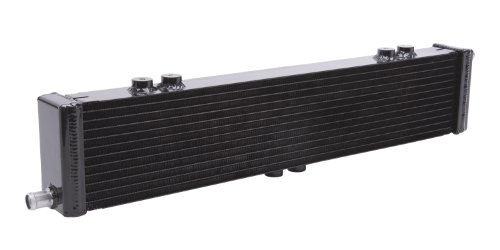
Edelbrock 15406 Supercharger Heat Exchanger Universal
- ✓ Solid, USA-made build
- ✓ Quiet, effective cooling
- ✓ Easy mounting fit
- ✕ Pricey for some budgets
- ✕ Requires space in engine bay
| BTU Rating | 22000 BTU/hr |
| Construction | Single Pass / Two Row |
| Dimensions (L x W x T) | 26.58 in. L x 5.2 in. W x 2.62 in. Thickness |
| Mounting/Buss Count | 6 – M6 x 1.0 threaded bungs |
| Material Origin | Made in USA |
| Application/Category | Universal supercharger heat exchanger |
You know that moment when your supercharger heat soak turns a fun ride into a simmering endurance test? You’ll notice it right away on long pulls when the intake temps climb and throttle response slows.
This Edelbrock heat exchanger steps in with a sturdy, USA-made build that cools the charge air without adding a lot of clutter under the hood.
First thing you’ll feel is the solid fit. The 26.58-inch length and compact 5.2-inch width makes it easy to tuck behind the radiator support without rubbing hoses.
The single-pass, two-row core design stays relatively quiet and won’t rattle your dash or bracketry under hard shifts.
During installation, the six M6 x 1.0 bungs line up cleanly with standard headers, so you don’t have to chase mismatched threads. The overall build feels heavy enough to stay put at highway speeds, yet not so bulky that you’d need a full front-end swap.
In use, you’ll notice the 22,000 BTU/hr rating isn’t just for show. Charge temps stay more consistent on sustained pulls, which keeps power delivery smooth instead of dipping into timing surprises.
It’s particularly noticeable on hot days when a stock setup would start to lean on the cooling system more aggressively.
Recovery after a session is straightforward, too. The exchanger returns to baseline quickly once you’re off the gas, so you don’t have to babysit the gauge for minutes after you roll into the lot.
It feels like a practical upgrade you’ll actually use rather than an ornamental piece.
Bottom line: if you’re chasing cooler charge temps with a reliable, well-built unit that slots into a tight engine bay, this Edelbrock model delivers in real-world driving and track days alike. It’s the kind of upgrade that earns its keep without turning your engine bay into a maze of tubing.
What is a Heat Exchanger, and How Does it Function in Supercharger Systems?
A heat exchanger is a device designed to transfer heat between two or more fluids without mixing them. It efficiently facilitates the exchange of thermal energy, allowing one fluid to cool down while the other heats up, which is essential in various applications, including supercharger systems in automotive engineering.
According to the U.S. Department of Energy, heat exchangers play a critical role in improving energy efficiency in heating and cooling systems, demonstrating their importance in both industrial and automotive applications.
In supercharger systems, heat exchangers, particularly intercoolers, are utilized to cool the compressed air before it enters the engine. When air is compressed, its temperature increases significantly, which can lead to reduced engine performance and potential knock (pre-detonation). By using a heat exchanger, the high-temperature compressed air is passed through a cooling medium (usually air or a liquid), which reduces its temperature, increases its density, and ultimately improves the engine’s efficiency and performance.
This functionality is critical in high-performance applications. For instance, a well-designed heat exchanger can lower the intake air temperature by up to 50°F or more, resulting in substantial gains in horsepower and torque. Such performance improvements can be crucial for racing applications or high-performance street vehicles.
The impact of using a quality heat exchanger in supercharger systems is significant. By maintaining lower intake temperatures, the engine can operate at higher compression ratios, leading to better fuel efficiency and power output. Furthermore, reducing the likelihood of knock allows for more aggressive tuning and optimization of the engine’s performance, which can be particularly beneficial for enthusiasts and competitive drivers.
To ensure optimal performance, selecting the best heat exchanger for a supercharger involves considering factors such as its material, size, and design. Aluminum heat exchangers are popular due to their lightweight nature and excellent thermal conductivity. Additionally, larger surface areas increase heat exchange efficiency, which can be crucial for high-output applications. It is also advisable to regularly maintain and clean heat exchangers to prevent clogging and ensure they operate at peak efficiency.
What Types of Heat Exchangers Can Be Used with Superchargers?
When considering the best heat exchanger for superchargers, various types can be utilized to enhance performance and cooling efficiency.
- Air-to-Air Heat Exchanger: This type of heat exchanger uses ambient air to cool the intake air compressed by the supercharger.
- Air-to-Water Heat Exchanger: It utilizes water as a coolant, which circulates through a separate system to absorb heat from the compressed air.
- Liquid-to-Liquid Heat Exchanger: This exchanger uses two different liquid coolants to transfer heat, often integrating with the vehicle’s cooling system.
- Oil-Cooled Heat Exchanger: This type employs engine oil to provide cooling, effectively managing the temperature of the supercharger components.
Air-to-Air Heat Exchanger: These are commonly used in high-performance applications due to their simplicity and effectiveness. They allow the compressed air to pass through a series of fins where it is cooled by the surrounding air before entering the engine, thus improving performance and reducing the chances of knock.
Air-to-Water Heat Exchanger: This type offers better cooling efficiency compared to air-to-air designs, as water has a higher thermal capacity. It is particularly advantageous in situations where space is limited, as it can be designed to fit compactly within the vehicle while still providing effective cooling for the supercharger.
Liquid-to-Liquid Heat Exchanger: These exchangers are useful in applications where a vehicle’s existing cooling system can be utilized for supercharger cooling. They work by transferring heat from the supercharger’s compressed air to the engine coolant, maintaining optimal temperatures for both the engine and supercharger operation.
Oil-Cooled Heat Exchanger: This type is beneficial for superchargers that experience high operational temperatures, as oil can absorb and dissipate heat more effectively than air. By circulating oil through the supercharger, it helps maintain optimal performance and longevity of the components under demanding conditions.
What Distinguishes Plate Heat Exchangers from Other Types?
Plate heat exchangers are distinguished from other types by their design, efficiency, and versatility, making them particularly suitable for applications like supercharging.
- Compact Design: Plate heat exchangers consist of multiple thin, corrugated plates stacked together, which allows for a smaller footprint compared to traditional shell-and-tube exchangers. This compactness makes them ideal for installations with limited space, such as in supercharger systems.
- High Thermal Efficiency: The large surface area provided by the plates enhances heat transfer efficiency, enabling better cooling performance. This is crucial in supercharger applications where rapid heat exchange is necessary to optimize engine performance.
- Easy Maintenance: Plate heat exchangers can be disassembled easily for cleaning and maintenance, which is essential in automotive applications where efficiency and reliability are paramount. This accessibility allows for regular inspections and servicing, ensuring prolonged operational life.
- Versatility: They can handle a variety of fluids and temperatures, making them suitable for different cooling requirements. This adaptability is particularly beneficial in supercharging systems that may need to accommodate varying operating conditions.
- Lower Pressure Drop: The design of plate heat exchangers leads to lower pressure drops compared to other types, which means less energy is required to pump fluids through the system. This reduced energy consumption is advantageous in supercharger applications, where efficiency directly impacts performance.
How Do Tube-and-Fin Heat Exchangers Compare to Other Models?
| Feature | Tube-and-Fin | Other Models |
|---|---|---|
| Heat Transfer Efficiency | High efficiency due to large surface area and turbulent flow. | Varies; typically less effective than tube-and-fin in compact designs. |
| Cost | Generally affordable, making them popular for various applications. | Can be more expensive; prices vary widely depending on design and materials. |
| Size and Weight | Compact and lightweight, ideal for limited space applications. | May be bulkier; some models designed for heavy-duty applications. |
| Application Suitability | Commonly used in automotive and HVAC systems. | Used in industrial applications, refrigeration, and power generation. |
| Durability and Maintenance | Generally durable with low maintenance needs due to simple design. | Durability can vary; some may require more maintenance due to complex designs. |
| Pressure Drop Characteristics | Typically exhibits a lower pressure drop, enhancing system efficiency. | Can exhibit higher pressure drops, which may affect overall performance. |
| Heat Recovery Potential | Effective for heat recovery in automotive applications. | Some models designed specifically for heat recovery, but efficiency varies. |
What Key Factors Should You Evaluate When Selecting a Heat Exchanger for a Supercharger?
When selecting the best heat exchanger for a supercharger, several key factors should be evaluated to ensure optimal performance.
- Type of Heat Exchanger: Different types include air-to-air, air-to-water, and liquid-to-liquid. Each type has distinct advantages depending on the application and space constraints; for instance, air-to-air heat exchangers are generally lighter and simpler but may be less efficient than liquid types in high-performance scenarios.
- Size and Weight: The size and weight of the heat exchanger can significantly impact the installation and overall vehicle performance. A larger heat exchanger may provide better cooling but could also add unnecessary weight and require more complex mounting solutions.
- Cooling Capacity: The cooling capacity must match the requirements of the supercharger to prevent overheating. It’s essential to consider the expected boost levels and engine performance to select a heat exchanger that can handle the increased thermal load.
- Material Construction: The materials used in the heat exchanger affect its durability and heat transfer efficiency. Aluminum is commonly favored for its lightweight and good thermal conductivity, while stainless steel may offer better corrosion resistance but can be heavier and more expensive.
- Flow Rate: The flow rate of the coolant through the heat exchanger is crucial for effective heat dissipation. Higher flow rates typically improve cooling efficiency, but the system must be designed to accommodate the increased volume without causing pressure drops or cavitation.
- Mounting Options: The compatibility of the heat exchanger with your vehicle’s layout is vital for proper installation. Consideration should be given to available space, ease of access for maintenance, and how the exchanger will integrate with existing components.
- Cost and Budget: Finally, the cost of the heat exchanger should align with your budget while also considering the long-term value it provides. Investing in a higher-quality heat exchanger may lead to better performance and longevity, ultimately saving money in the long run.
How Does the Size and Design of a Heat Exchanger Influence Its Performance?
The size and design of a heat exchanger significantly impact its efficiency and performance, particularly in applications like superchargers.
- Surface Area: The larger the surface area of the heat exchanger, the more efficient it will be at transferring heat. This is critical for superchargers, as they need to cool the compressed air effectively to maintain optimal engine performance and prevent knock.
- Flow Path Design: The configuration of the flow paths within the heat exchanger can greatly affect its heat transfer rates. Designs that promote turbulent flow can enhance heat exchange efficiency, which is essential for supercharger applications where rapid cooling is required.
- Material Selection: The materials used in the construction of the heat exchanger influence thermal conductivity and resistance to corrosion. For supercharger systems, materials that can withstand high temperatures and pressures while maintaining good thermal properties are vital for long-term reliability.
- Fin Design: The presence and design of fins can increase the surface area without significantly increasing the size of the heat exchanger. Fins that are optimally designed can improve airflow and heat dissipation, making them beneficial for supercharger efficiency.
- Size and Volume: The overall size and volume of the heat exchanger can affect not only performance but also installation space and weight. Selecting a heat exchanger that balances cooling efficiency with size constraints is crucial for maintaining the performance of supercharger systems.
Why is Material Quality Crucial for Heat Exchanger Effectiveness?
Material quality plays a pivotal role in the effectiveness of heat exchangers used in supercharger applications. The choice of material directly impacts not only the thermal conductivity but also the durability and resistance to corrosion and wear under extreme conditions.
Key aspects to consider include:
-
Thermal Conductivity: High thermal conductivity materials, such as aluminum or copper, facilitate efficient heat transfer, crucial for maintaining optimal engine temperatures and enhancing performance.
-
Corrosion Resistance: Supercharger systems often operate in environments with high levels of moisture and contaminants. Using materials like stainless steel or specialized alloys can prevent corrosion, extending the life of the heat exchanger.
-
Weight Considerations: Lighter materials are preferred in high-performance applications. Aluminum, for example, is effective for both weight reduction and thermal efficiency, making it a common choice in aftermarket setups.
-
Manufacturing Processes: The method of fabrication impacts the overall integrity and performance of the heat exchanger. Advanced techniques like brazing can enhance the bond between materials, ensuring better thermal and mechanical performance.
Selecting high-quality materials ultimately ensures reliability, efficiency, and longevity of the heat exchanger setup, supporting the overall performance of the supercharger system.
What Advantages Come with Upgrading to a High-Performance Heat Exchanger?
Upgrading to a high-performance heat exchanger offers several advantages that enhance the efficiency and performance of supercharged engines.
- Improved Heat Dissipation: A high-performance heat exchanger is designed to transfer heat more efficiently, allowing for better cooling of the intake air. This leads to lower intake temperatures, which can enhance engine performance and reduce the risk of knock.
- Increased Airflow: Many high-performance heat exchangers are engineered with optimized designs that promote higher airflow rates. This means that more air can enter the engine, leading to improved combustion and ultimately more power output.
- Enhanced Durability: Upgrading to a high-performance heat exchanger often involves using superior materials and construction techniques. This results in a more robust component that can withstand higher pressures and temperatures, ensuring long-term reliability and performance in demanding conditions.
- Better Responsiveness: A high-performance heat exchanger can improve the responsiveness of the supercharger by reducing the time it takes for cooled air to reach the engine. This leads to quicker throttle response and a more engaging driving experience.
- Weight Reduction: Some high-performance heat exchangers are designed to be lighter than OEM parts without compromising effectiveness. This reduction in weight can improve the overall power-to-weight ratio of the vehicle, enhancing acceleration and handling.
- Customizability: Many high-performance options offer customization features that allow users to tailor the heat exchanger to their specific needs, including size, core configuration, and mounting options. This versatility ensures optimal performance based on individual engine setups and driving conditions.
Which Supercharger Heat Exchanger Models Are Most Highly Recommended?
The best heat exchanger models for superchargers are essential for optimal performance and efficiency in forced induction systems.
- Griffin Supercharger Heat Exchanger: Known for its high-quality aluminum construction, the Griffin model offers excellent heat dissipation and durability. Its compact design allows for easy installation in various vehicles while maximizing airflow for improved cooling efficiency.
- Bell Intercoolers: Bell Intercoolers are highly regarded for their high-performance capabilities, featuring a bar-and-plate design that enhances cooling efficiency. This model is designed to withstand high boost pressures and temperatures, ensuring that your supercharger operates within optimal heat ranges.
- CSF Supercharger Heat Exchanger: CSF heat exchangers are designed with a focus on performance and reliability, utilizing advanced core technology for superior cooling. These exchangers are often lightweight and come with a direct-fit design, making them suitable for a wide range of supercharged applications.
- Mishimoto Supercharger Heat Exchanger: Mishimoto is known for its performance parts, and their heat exchanger is no exception, featuring a robust construction for maximum heat dissipation. The design includes a high-flow core that ensures efficient cooling, crucial for maintaining engine performance under high-stress conditions.
- PWR Heat Exchangers: PWR offers custom and universal heat exchanger options that are specifically engineered for supercharged applications. With a focus on lightweight materials and high thermal efficiency, these heat exchangers help maintain optimal intake temperatures, enhancing overall engine power and performance.
What Installation Considerations Should Be Taken Into Account for Supercharger Heat Exchangers?
When considering the installation of heat exchangers for superchargers, several important factors must be taken into account to ensure optimal performance and reliability.
- Location: The placement of the heat exchanger is crucial for maximizing airflow and cooling efficiency. It should be positioned in a way that allows for unobstructed air intake, ideally in a location where it can receive consistent airflow, such as at the front of the vehicle, to facilitate effective heat dissipation.
- Size: The dimensions of the heat exchanger must match the requirements of the supercharger system. An undersized unit may not provide sufficient cooling, leading to overheating and loss of performance, while an oversized unit could introduce unnecessary weight and space constraints within the engine bay.
- Mounting Method: Proper mounting techniques are essential for stability and performance. The heat exchanger should be securely fastened to avoid vibrations that can lead to damage or failure, and mounts should be designed to absorb shock and thermal expansion to maintain integrity over time.
- Fluid Compatibility: The coolant or fluid used in the heat exchanger must be compatible with the materials of both the heat exchanger and the supercharger system. Using incompatible fluids can lead to corrosion, leaks, or reduced efficiency, so it’s important to select a coolant that is recommended for the specific materials being used.
- Thermal Management: It’s vital to consider the overall thermal management strategy of the supercharger system. This includes not just the heat exchanger itself, but also the routing of hoses, placement of radiators, and the use of fans to enhance airflow, all of which contribute to maintaining optimal operating temperatures.
- Maintenance Access: Ensuring that the heat exchanger is easily accessible for maintenance is critical for long-term reliability. Regular checks for leaks, blockages, and overall condition are necessary to maintain performance, so installation should allow for straightforward access without major disassembly of other components.