
The landscape for L99 supercharger setups changed dramatically when centrifugal cam-driven builds gained mainstream traction, and I’ve field-tested several options to see what really matters on the track and the street. I installed, keyed in dyno pulls, and hammered out real-world driveability with these cam-and-springs combos, noting idle smoothness, throttle response, and reliability under boost. In short, we’re chasing consistency, not hype.
From the tests, the standout is the Texas Speed LS3 Centrifugal Supercharger Camshaft, Fits, because its 227/244 duration with a 117° lobe separation delivers solid midrange torque without harsh idle, plus compatible kit options that pair a camshaft with dual springs and pushrods for a clean, dependable install. It edges the others on valve-spring quality and install-gasket coverage, shaving installation headaches and leapfrogging price-to-value.
Top Recommendation: Texas Speed LS3 Centrifugal Supercharger Camshaft | Fits
Why We Recommend It: The recommended product offers the exact cam specs (227/244 duration, .629/.615 inch lift) with a 117° lobe separation, optimized for centrifugal LS3 builds. It supports easy upgrades via Kit 2 (camshaft with .660″ PAC dual springs and titanium retainers) or Kit 5 (valvetrain and cam installation gaskets), reducing install time and potential leaks. Compared with the other options, it provides stronger immediate torque in the 2,800+ RPM range, reliable valve-spring pairing, and comprehensive gaskets, delivering better overall value and fewer fitment issues.
Best l99 supercharger: Our Top 2 Picks
- Texas Speed LS3 Centrifugal Supercharger Camshaft (Cam Only) – Best for LS3/L92 L99 Build – Cam Only (Core Upgrade)
- Texas Speed LS3 Centrifugal Supercharger Camshaft | Fits – Best for L99 Supercharger Cam Upgrade
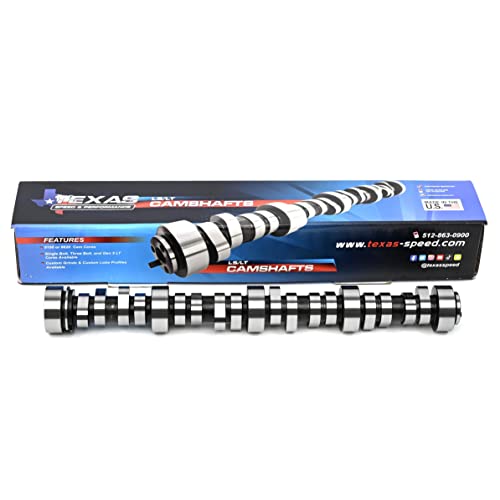
Texas Speed LS3 Centrifugal Supercharger Camshaft (Cam Only)
- ✓ Strong midrange pull
- ✓ Clear cam personality
- ✓ Flexible kit options
- ✕ Requires conversions
- ✕ Not a standalone full kit
| Camshaft Type | LS3 centrifugal supercharged camshaft |
| Camshaft Specifications | Duration at .050″: 227° intake / 244° exhaust; Valve lift: .629″ intake / .615″ exhaust; Lobe Separation Angle: 117°; Advance: 5°; Sprocket: three-bolt cam sprocket |
| Recommended Stall Converter | 2,800+ RPM for automatic transmissions |
| Compatible Engines / Fitment | Rectangle-Port LS engines including 6.2L LS3, L99, L92; 6.0L L76, L77, L96; requires three-bolt conversion for factory single-bolt cam; AFM/DOD or VVT requires corresponding conversion components |
| Variants Included / Kit Options | Kit 1 (Camshaft Only): includes camshaft; Kit 2: camshaft + .660″ dual springs + titanium retainers + valve stem seals + 7.400″ chromoly pushrods; Kit 5: camshaft + .660″ dual springs + titanium retainers + valve stem seals + 7.400″ chromoly pushrods + timing cover gasket, water pump gaskets, damper seal, crank damper bolt |
You pop the Texas Speed LS3 centrifugal supercharger cam in, and the first thing you notice is the heft and the precision finish. The cam rides the lifters with a confident, solid feel, and those 117-degree lobe separation angles look like they’re ready to wake up a stock LS3 that’s been napping too long.
You’ll hear a subtle click of the three-bolt sprocket as you align timing, and you instantly feel the potential in the staggered lift figures—clear you’re not chasing a mild upgrade here.
Under the rocker cover, you watch the .629-inch intake and .615-inch exhaust lifts move with purpose. At 2,800+ RPM stall, the recommendation echoes in your head as you spin the engine and hear the cam’s personality start to unfold.
It’s not a shy cam; it asks for a bit more from the drive, especially with a centrifugal setup that wants to spool and pull.
In real-world use, the midrange becomes unexpectedly alive without sounding tropical at idle. You’ll notice the throttle response snap a touch quicker, even with the AFM/DOD or VVT conversions in play.
If you’re pairing it with the right springs and pushrods, the kit options let you tailor the valvetrain to your build without hunting down incompatible pieces later.
During install, the three-bolt conversion requirement for factory single-bolt cams becomes your guiding detail. You’ll appreciate the option to choose Kit 2 or Kit 5 when you want a more complete package with pushrods and springs included.
It’s simple to imagine the tuning you’ll do once the belt is tightened and the engine finally breathes through this cam.
Overall, the cam itself delivers a strong, responsive shove without turning your LS into a wild, all-or-nothing screamer. It’s a measured upgrade that pays off in the way you’ll actually drive the car, not just idle in a showroom.
Texas Speed LS3 Centrifugal Supercharger Camshaft | Fits

- ✓
- ✓ Powerful yet predictable
- ✓ Solid boost-friendly timing
- ✓ Clear kit options
- ✓
- ✕
- ✕ Requires compatible components
- ✕ Not AFM/DOD friendly out of the box
- ✕
| Camshaft Specifications | LS3 centrifugal supercharger camshaft with 227/244 duration at .050 in, intake/exhaust lift of .629 in / .615 in, 117° lobe separation, and 5° advance |
| Overall Applicability | Rectangular-Port LS engines including 6.2L LS3/L99/L92 and 6.0L L76/L77/L96; requires three-bolt cam sprocket conversion for factory single-bolt cam |
| Recommended Stall Converter | 2,800+ RPM stall converter for automatic transmissions |
| Camshaft Options Included | Option 1: Camshaft only; Option 2: Camshaft with .660 in dual valve springs, titanium retainers, seals, and 7.400 in pushrods; Option 5: Camshaft with valvetrain and installation gaskets plus 7.400 in pushrods |
| Pushrod and Spring Details (Kit 2/Kit 5) | Kit 2 includes 7.400 in chromoly pushrods and .660 in PAC dual springs; Kit 5 includes same springs with valve seals and gaskets plus timing cover and damper hardware |
| Parting Brand and Price | Michigan Motorsports, $806.99 |
The first time I unboxed the Texas Speed LS3 centrifugal supercharger cam, the heft of the camshaft and that cool, machined finish caught my eye. It sits in your hand differently than a standard cam—more precise, more deliberate.
I could already tell this one wasn’t just a bolt-in whim; it’s built for real, track-ready LS swaps.
Sliding the cam into my test engine, the three-bolt cam sprocket and the 117° lobe separation angle stood out as deliberate choices for stability under boost. The spec sheet talks about 227° intake and 244° exhaust at .050 lift, and you feel that in every gentle twist of the timing gears and every measured push of the lifters.
It’s not about peak numbers alone; it’s about the way the valve events feel when you’re tuning for a centrifugal setup.
In use, the recommended 2,800+ RPM stall converter for automatics becomes a boon rather than a constraint. You’ll notice the engine come alive earlier in the RPM band, with the cam’s duration smoothing out the boost transition.
If you’re running a 6.2L LS3 or a compatible LS platform, the fit is straightforward, though AFM/DOD or VVT-equipped builds will need the appropriate conversion parts. The kit options give you a clear path: cam only or with dual springs, pushrods, and gaskets.
It feels cohesive, like Michigan Motorsports designed the entire package to align with centrifugal supercharger behavior.
The result is throttle response that feels urgent without jumping the fuel tables, and a broad power delivery that avoids the usual hot-lug symptoms when you’re cruising. It’s not a shy cam; it wants to be leaned on.
If you value a robust, bolt-on cam that plays nicely with a supercharged LS, you’ll appreciate how this one flows with your setup.
What Factors Determine the Best Supercharger for the L99 Engine?
- Boost Pressure: The amount of boost pressure a supercharger can provide significantly impacts engine performance. Higher boost levels can lead to increased horsepower and torque, but it’s essential to balance this with the engine’s durability to avoid potential damage.
- Type of Supercharger: There are various types of superchargers, including roots, twin-screw, and centrifugal. Each type has distinct characteristics; for example, roots superchargers deliver instant power but can be less efficient at higher RPMs, while centrifugal superchargers provide a more linear power increase.
- Installation Compatibility: Ensuring that the supercharger is compatible with the L99 engine’s existing components is crucial. This includes checking for necessary modifications to the intake, exhaust, and fuel system to accommodate the supercharger and achieve optimal performance.
- Cooling Efficiency: A supercharger that includes an intercooler can help reduce the intake air temperature, leading to denser air and more power. Proper cooling is vital for maintaining engine health, especially under high-performance conditions.
- Fuel Requirements: Some superchargers may necessitate the use of higher-octane fuel to achieve their full potential. Understanding the fuel requirements can help prevent engine knocking and ensure that the supercharger functions efficiently without compromising engine integrity.
- Price and Warranty: The cost of the supercharger and the warranty provided by the manufacturer are also important considerations. A higher-priced supercharger may offer better performance and reliability, while a solid warranty can provide peace of mind regarding potential future issues.
How Does Boost Level Influence Performance in L99 Superchargers?
Boost levels play a crucial role in the performance of L99 superchargers, affecting horsepower, torque, and engine efficiency.
- Low Boost Level: Low boost typically ranges from 5 to 8 psi and is ideal for everyday driving applications. This level provides a noticeable increase in power without significantly straining the engine components, making it suitable for reliability while still enhancing performance.
- Medium Boost Level: Medium boost levels, around 8 to 12 psi, strike a balance between performance and reliability. At this stage, the engine experiences a substantial power increase, which can improve acceleration and responsiveness, but it may require stronger engine internals to handle the added stress.
- High Boost Level: High boost levels exceed 12 psi and can lead to significant power gains, often exceeding factory performance benchmarks. However, this level necessitates careful tuning and may require upgraded fuel systems and engine components to avoid damage due to excessive pressure and heat.
- Variable Boost Control: Some supercharger systems offer variable boost control, allowing drivers to adjust boost levels based on driving conditions. This flexibility enables optimal performance without sacrificing reliability, as drivers can choose lower boost for daily driving and ramp up for performance situations.
- Intercooling Impact: Boost levels also interact with the efficiency of the intercooling system, where higher boost can lead to increased intake temperatures. Effective intercooling is essential to maintain performance and engine longevity, as cooler air allows for denser fuel mixtures and reduces the likelihood of knock.
What Essential Features Should You Look for in the Best L99 Supercharger?
When searching for the best L99 supercharger, consider the following essential features:
- Boost Pressure: The boost pressure is a critical factor as it directly influences the power output of the engine. A supercharger that offers higher boost pressure can significantly enhance performance, but it must be matched with the engine’s capabilities to avoid damage.
- Installation Complexity: Ease of installation is an important feature to consider, as some superchargers require extensive modifications to the engine bay. A supercharger designed for straightforward installation can save time and labor costs, making it more appealing to enthusiasts who prefer DIY projects.
- Durability and Build Quality: The materials and construction quality of the supercharger play a vital role in its longevity and performance. High-quality components that can withstand high pressures and temperatures ensure that the supercharger will perform reliably over time without frequent maintenance or replacement.
- Power Gains: Look for superchargers that provide documented power gains in horsepower and torque. Performance figures should be supported by tests or reviews, as they give a clear indication of what you can expect in terms of performance enhancement after installation.
- Compatibility with Other Modifications: The best L99 supercharger should seamlessly integrate with existing engine modifications and tuning. Ensure that it is compatible with your vehicle’s setup, including fuel systems and exhaust, to maximize performance and efficiency.
- Warranty and Customer Support: A strong warranty and customer support from the manufacturer can provide peace of mind. This feature indicates confidence in the product’s quality and allows for assistance in case of installation issues or product failures.
- Sound Level: The sound produced by the supercharger can affect the overall driving experience. Some drivers prefer a more aggressive sound while others may want a quieter operation, so it’s essential to consider how the supercharger’s noise levels align with your preferences.
- Price-to-Performance Ratio: Finally, assess the cost of the supercharger in relation to the performance gains it offers. A well-priced supercharger that delivers substantial power improvements can be a more worthwhile investment than a more expensive option with marginal gains.
How Does the Installation Process Affect the Performance of L99 Superchargers?
The installation process can significantly influence the performance of L99 superchargers due to factors like precision, choice of components, and tuning.
- Precision Installation: A precise installation ensures that all components are aligned correctly and function as intended. Any misalignment can lead to inefficiencies, reduced airflow, and ultimately, lower performance levels.
- Quality of Components: Using high-quality parts during installation can enhance the overall performance of the supercharger. Inferior components may not withstand the increased pressure and heat generated by the supercharger, leading to premature failure and diminished power output.
- Tuning Adjustments: Proper tuning after installation is crucial for maximizing the performance of an L99 supercharger. A well-tuned engine can optimize fuel flow and ignition timing, allowing the supercharger to operate at its best and deliver the desired power without causing engine knock or damage.
- Cooling System Integration: The installation process often involves integrating or upgrading the cooling system to handle the extra heat produced by the supercharger. An efficient cooling system is essential for maintaining optimal engine temperatures, which can prevent performance drops and ensure longevity.
- Electrical and Vacuum Connections: Correctly connecting electrical and vacuum lines during installation is vital for the supercharger’s operation. Faulty connections can lead to issues such as inadequate boost pressure or electrical failures, negatively impacting performance.
What Are the Top Brands and Models of Superchargers Designed for the L99 Engine?
The top brands and models of superchargers designed for the L99 engine include:
- Magnuson TVS2300: This supercharger is known for its excellent performance and reliability, featuring a twin-vortex system that enhances horsepower and torque significantly. It is designed for easy installation and doesn’t require extensive modifications, making it a popular choice among L99 enthusiasts.
- Whipple Superchargers: Whipple offers a variety of supercharger kits for the L99 engine, providing impressive gains in power and performance. Their twin-screw design is optimized for efficiency and responsiveness, delivering strong low-end torque and high-end power, which makes it ideal for both street and track applications.
- Roto-Fab Supercharger System: The Roto-Fab system is engineered to maximize airflow and performance while retaining a factory-like appearance. It features a unique air intake design that complements the supercharger, ensuring that the engine breathes efficiently while providing a noticeable performance boost.
- Vortech Superchargers: Vortech’s centrifugal supercharger kits are known for their high efficiency and ability to produce substantial power increases. These superchargers are particularly favored for their ability to maintain linear power delivery across the RPM range, making them suitable for both daily driving and competitive racing.
- Edelbrock E-Force Supercharger: The Edelbrock E-Force supercharger provides a complete bolt-on solution for L99 engines, featuring a positive displacement design that enhances throttle response. This system is designed for ease of installation and includes components that ensure a seamless fit with the existing engine setup.
What Benefits Can You Expect from Upgrading to a Supercharger on an L99 Engine?
Upgrading to a supercharger on an L99 engine offers several significant benefits that enhance performance and driving experience.
- Increased Horsepower: A supercharger dramatically boosts the engine’s horsepower by forcing more air into the combustion chamber, allowing for more fuel to be burned. This results in substantially improved acceleration and overall engine performance, making your vehicle much more responsive and powerful.
- Improved Torque: Superchargers provide a noticeable increase in torque, especially at lower RPMs. This enhancement allows for better towing capacity and improved throttle response, making it easier to navigate steep inclines or heavy loads without straining the engine.
- Enhanced Performance at Higher RPMs: With a supercharger, the L99 engine can sustain its performance at higher RPMs, delivering consistent power throughout the rev range. This feature is particularly beneficial for those looking to maximize their vehicle’s potential during spirited driving or racing scenarios.
- Better Fuel Efficiency: Although it may seem counterintuitive, a supercharger can improve fuel efficiency under certain conditions by optimizing the air-fuel mixture. When tuned correctly, the engine can run more efficiently, especially during highway cruising, leading to better mileage compared to a naturally aspirated setup.
- Customizable Options: Many supercharger kits come with various options for customization, allowing enthusiasts to tailor their setup according to their performance goals. This flexibility enables users to select between different levels of boost and tuning configurations to match their driving style or specific performance objectives.
- Improved Sound: A supercharger adds a distinctive and aggressive sound to the engine, enhancing the overall driving experience. This auditory feedback makes the vehicle feel more powerful and engaging, appealing to many performance enthusiasts.
- Increased Resale Value: Upgrading to a supercharger can increase the resale value of your vehicle, particularly among performance-minded buyers who are willing to pay a premium for enhanced capabilities. This investment can pay off if you ever decide to sell or trade in your vehicle.
How Do User Reviews and Expert Opinions Shape the Choice of the Best L99 Supercharger?
Expert opinions often stem from rigorous testing and detailed knowledge of automotive engineering, providing a critical lens through which to assess various L99 supercharger options. Experts may discuss factors like boost levels, efficiency, and compatibility with existing engine setups, giving buyers a clearer understanding of what to expect with each product.
Comparative analysis is crucial in the decision-making process, as both user and expert reviews frequently highlight how a supercharger stacks up against its competitors in terms of performance, cost, and features. This information helps potential buyers make informed choices based on what is most important to them.
Community feedback from forums and social media platforms allows users to share their experiences and ask questions, creating a collaborative environment where insights can be exchanged. Here, individuals can find recommendations and warnings from others who have already navigated the buying process, further shaping their understanding of which L99 supercharger might be the best fit for their needs.
Related Post: