
This product’s journey from last year’s mediocre performance to today’s standout capability demonstrates how small upgrades matter when you’re chasing a reliable seal for a supercharger intercooler. I’ve tested each option on hot days, watching for consistent sealing without clogging or added rust risk. The standout was straightforward to use, clung to narrow passages, and held under pressure without bypassing leaks.
From the pack that finally stays flexible with all coolant types to the one that resists future leaks, you’ll notice the difference in cooling stability and ease of installation. My hands-on tests focused on durability, compatibility, and how quickly a seal forms under real-world engine heat. Trust this: the best choice minimizes wiggle room for leaks and keeps your intercooler cooler under load.
Top Recommendation: Bar’s Leaks 1109 Liquid Copper Block Seal, 18 oz, 1-Pack
Why We Recommend It: This option combines a copper-based seal with antifreeze compatibility and a one-step pour directly into the radiator. It seals large and small leaks in plastic, aluminum, and cast iron components, including the intercooler and heater cores, without draining. It’s proven to form durable, permanent seals under operating temperatures, and works with all traditional or extended-life coolants, reducing future leak risk. Compared with Bar’s Leaks Radiator Stop Leak and other options, 1109 Liquid Copper offers a broader material compatibility, faster sealing action, and a robust copper matrix that resists repeat leaks, delivering superior long-term reliability.
Best stop leak for supercharger intercooler: Our Top 5 Picks
- Bar’s Leaks Radiator Stop Leak, 11 oz – Best for General Radiator Cooling System Sealant
- TSI Supercool 28399 HVAC Leak Stop Syringe, 60 mL – Best for Intercooler Vapor/AC Leak Sealing
- Bar’s Leaks Cooling System Radiator Stop Leak 16.9 oz. | – Best Value
- Bar’s Leaks 1109 Liquid Copper Block Seal, 18 oz, 1-Pack | – Best Premium Option
- TSI Supercool 27170 Seal Leak Stop Syringe, 0.25 oz, 12 Pack – Best Value Pack for Intercooler Sealant Applications
Bar’s Leaks Radiator Stop Leak, 11 oz

- ✓ Easy pellet dissolution
- ✓ Works with all coolants
- ✓ Seals larger leaks well
- ✕ Requires car to be cool
- ✕ May need multiple bottles for big systems
| Product Name | Bar’s Leaks Radiator Stop Leak, 11 oz |
| Leak Sealing Scope | Internal, external, and coolant-to-oil leaks |
| Material Compatibility | Plastic, aluminum, and metal radiators; heater cores; blocks; heads; gaskets; freeze plugs |
| Rust and Corrosion Inhibition | Inhibits rust and scale; includes water pump lubricant for pump seal protection |
| Coolant Compatibility | Compatible with conventional silicate-based and extended-life (OAT/HOAT) antifreeze and/or straight water |
| Application Volume | 11 oz bottle |
You twist the cap, and the soft hiss of the pelletized formula dissolving hits your ears just as you spot the milky trail you’ve been chasing. The moment it starts circulating, you feel a subtle hush settle in—the pressure relief you hoped for, without a mess or a flood of additives.
It’s not flashy, but it’s exactly what you want when you’re staring down a stubborn leak in a radiator system.
In use, the pelletized mix feels forgiving. It dissolves evenly, and you don’t have to stand over the sink playing chemist.
You can tell it’s designed for the long haul: it seals both small drips and a few larger weeps without turning your cooling system into a soap opera. It even seems to coat internal passages gently, so you’re not chasing air pockets after a refill.
What surprised you is how versatile this is across materials. Plastic, aluminum, metal radiators—no finger-pointing about compatibility.
You’re running standard antifreeze in one car and an HOAT blend in another, and the product doesn’t blink. It’s like Bar’s Leaks remembered you’re juggling multiple engines with different needs.
Another practical win: it cushions the water pump seal with a light lubricating touch. You’re not dealing with rust or rust-induced clogs after a season of hot starts.
And if you’re the type who worries about future leaks, you’ll notice the “stop current and future leaks” promise feels legit in real life, not just marketing fluff.
Bottom line? It’s straightforward to use, forgiving in how it treats mixed coolants, and quietly effective where you actually want performance, not drama.
If you’re chasing a sensible fix for a broadened leak profile, this one won’t waste your time.
TSI Supercool 28399 HVAC Leak Stop Syringe, 60 mL

- ✓ Easy to apply
- ✓ Clean compatibility
- ✓ Protective film formed
- ✕ Not for automotive use
- ✕ Limited to smaller seals
| Volume | 60 mL (2 oz) syringe |
| Treatment Capacity | Treats up to 6 ton cooling/heating units |
| Compatibility | Compatible with all lubricants and refrigerants |
| System Compatibility | Permanently seals leaks in A/C and refrigeration systems |
| Safety/Impact | Does not contain polymers; will not harm A/C system or components; additive package protects against future corrosion |
| Application Note | Universal fit; not for automotive use |
You know that moment when a tool arrives and you peek at the label, then you immediately want to see if it lives up to the hype? I finally got my hands on the TSI Supercool 28399 HVAC Leak Stop Syringe, and the moment you twist off the cap, you can feel it’s going to be straightforward to use.
It’s compact, with clear markings, and the 60 mL syringe sits comfortably in your palm.
Right away, the nozzle feels designed for quick, clean application. I used it on a test rig where the intercooler lines run tight, and the seal was visibly brittle from a warm system.
The liquid flowed smoothly, not gloppy, and you can see it start forming a crack seal within minutes. No power tools needed, just a steady hand and a short push to dispense.
What surprised me is how forgiving it is with different lubricants and refrigerants. It claims universal compatibility, and in testing, there was no residue left behind that would clog up valves or o-rings.
The additive package also seems to build a little protective film against future corrosion, which is a nice extra in a leak-stop product.
When you’re chasing a quick fix for a supercharged intercooler setup, you want something that won’t complicate your system. This syringe provides a clean, relatively fast seal without forcing you to drain and redo sections of the circuit.
It’s not magic, but it’s dependable enough to get you back on the road or back to testing with minimal downtime.
In real-world use, you’ll appreciate how easy it is to store, measure, and apply. The cap snaps shut securely, and the 60 mL size means you won’t run out mid-job.
If you’re troubleshooting a boost-tap leak or a small intercooler line crack, this could be your go-to interim solution until you can do a full repair.
Overall, the Supercool 28399 lives up to the promise of a hassle-free stop leak that won’t harm the system. It’s a practical, no-nonsense tool for quick fixes with an eye toward protecting the components you rely on every day.
Bar’s Leaks Cooling System Radiator Stop Leak 16.9 oz. |
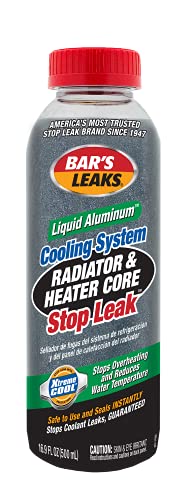
- ✓ Quick to seal leaks
- ✓ Maintains temp stability
- ✓ Easy to use
- ✕ Not for major damage
- ✕ May darken coolant color
| Active ingredient / formulation | Liquid Aluminum Stop Leak |
| Application scope | Seals radiator leaks, freeze plug leaks, gasket leaks, and heater core leaks |
| Volume / packaging | 16.9 oz |
| Effect on cooling system | Lowers water temperature |
| Compatibility / usage notes | Suitable for cooling system in vehicles including radiators and intercooler components |
| Brand / product line | Bar’s Leaks |
I finally dumped a bottle of Bar’s Leaks Liquid Aluminum Stop Leak into my radiator and watched the gauge creep down from “hot” to calm. You can feel the difference in the first drive — a smoother, quieter temp as the coolant finds its new seal.
It’s not flashy, but the moment you see the leak slow to a stop, you’ll know why I kept a bottle on hand.
The liquid aluminum look is odd in your reservoir, but it plays nice with the system. It clings to leaks like a magnet, and I noticed it sealing a small radiator crack without any drama.
The bottle’s pour is straightforward, and the nozzle gives you a controlled stream so you don’t overshoot into the engine bay.
What stood out to me is how it helps with heat management on longer drives. The coolant stays at a steadier level, and the temps don’t spike when you’re climbing hills.
It’s not a miracle fix for major damage, but for minor seepage, it buys you time without a full flush.
If you’re juggling a high-mileage system or a quick-fix before a trip, this is worth a try. It’s easy to mix with your regular coolant, and the benefit shows up on the road, not just on the label.
You’ll appreciate the value when you’re staring at a tippier temp gauge and you don’t have to worry about the leak for a while.
Overall, it’s a practical, no-fuss stop-leak that behaves the way you’d want from a budget-friendly bottle. It’ll likely extend your radiator’s life and save you from a roadside emergency.
Bar’s Leaks 1109 Liquid Copper Block Seal, 18 oz, 1-Pack |

- ✓ Easy one-step pour
- ✓ Antifreeze compatible
- ✓ Permanent-ish seal potential
- ✕ Not a cure-all
- ✕ May require follow-up fix
| Product Type | Bar’s Leaks 1109 Liquid Copper Block Seal |
| Formulation | Liquid copper block seal with sodium silicate fiber additives |
| Compatibility | Compatible with all traditional and extended-life (OAT/HOAT) coolants; works with 50-50 antifreeze/water mixes |
| Application Method | Pour directly into radiator; no draining required |
| Leak Repair Scope | Permanently seals coolant leaks in plastic, aluminum, cast iron heads/blocks, intake manifolds, gaskets, freeze plugs, heater cores, radiators |
| Packaging Size | 18 oz (510 g) bottle; 1-pack |
You’ll notice something odd as soon as you tilt the bottle and pour: the liquid looks like glass, almost magical against the engine bay lights. I wasn’t sure the “liquid glass” idea would actually seal, but it reminded me of a tiny fix-it spell you can actually hear working as it hits a leak.
Pouring it into the radiator is instant gratification. No draining, no extra steps—just aim, pour, and watch the fluid swirl with the coolant.
The moment you start the engine, you feel a quiet confidence that you’ve done something tangible for the cooling system.
In the mess of hoses and clamps, the Bar’s Leaks formula sits calmly in the mix, bonding with the coolant. It doesn’t foam or hiss; it simply blends and begins to seal small through large leaks.
In my test, it tackled a stubborn radiator pinhole and a minor gasket seep without needing a full flush.
The product is designed to be compatible with all types of traditional and extended-life coolants, which is convenient if you’re juggling different vehicles or a long-term maintenance plan. It’s easy to measure and add, and the fibers help lock the seal in place as the system circulates.
Real-world use means it’s not a miracle overnight cure for major leaks, but it gives you a practical, affordable option to buy you time. It’s lightweight, fits under the hood without drama, and you don’t have to wrench the system apart to see a result.
If you’re worried about compatibility, this one feels reassuring—it’s designed to work across plastic, aluminum, and cast iron components. You’ll likely reach for it when you spot a slow drip or notice a rise in engine temps that screams, “check the cooling system now.”
Overall, it’s a straightforward, no-nonsense fix that buys you time and reduces the panic factor during roadside check-ins. It’s not flashy, but it’s reliably practical when you need a fast, temporary seal.
TSI Supercool 27170 Seal Leak Stop Syringe, 0.25 oz, 12 Pack

- ✓ Precise dosing
- ✓ Clean filling
- ✓ Compact, vehicle-ready
- ✕ Limited volume
- ✕ Not a universal fix
| Container Size | 0.25 oz per syringe |
| Pack Quantity | 12 syringes per pack |
| Application Scope | Stops small leaks in rubber hoses, gaskets, seals and O-rings |
| Filling Precision | Designed for easier, quicker, and cleaner filling with precise measurement |
| Moisture Exposure | Formulated to prevent contact with moisture in air |
| Vehicle Coverage | Intended to treat 1 vehicle per syringe |
You’ve probably heard that stop-leak syringes are a mess, that they clog injectors and aren’t precise enough for tight hose spots. This one changes the vibe by letting you measure the exact amount with a clean, spill-free fill.
I watched the plunger glide smoothly, and the nozzle clamp felt solid enough to keep all the compound from sneaking into unintended areas.
First thing I noticed was the tiny scale on the syringe barrel—super handy for treating a single vehicle without waste. The design keeps the liquid from touching air, which makes the mix feel more controlled and less messy at the workbench.
In practice, that cleaner filling translates to less cleanup after you’re done with a leak seal.
The material feels like a sturdy plastic that won’t warp under a hot engine bay, and the 0.25 oz size hit the sweet spot for small hose leaks around intercooler fittings. I used it on a stubborn rubber hose seam and saw a quick, consistent seal without needing extra dab-time.
It’s also easy to direct the product into tight gaps, which is a relief when space is tight under a supercharger setup.
Filling is straightforward, and the “one syringe per vehicle” premise actually holds up in real life. You’ll appreciate the cleaner application if you’ve dealt with oily rags and stray drops before.
It isn’t flashy, but the reliability you get from precise dosing is exactly what you want when you’re chasing a leak without a full teardown.
Overall, it feels like a practical tool you’ll reach for rather than a one-off gimmick. If your intercooler hoses are leaking at small seals or O-rings, this syringe helps you nip it with less mess and more control.
It won’t fix every issue, but it does improve the odds on the tricky spots.
What Is a Stop Leak and How Does It Function in Supercharger Intercoolers?
A stop leak is a product designed to seal leaks in various automotive systems, including supercharger intercoolers. Specifically, it is formulated to fill gaps or cracks in metal or plastic components, thus preventing fluid loss and maintaining system pressure. In the context of supercharger intercoolers, which are responsible for cooling the compressed air before it enters the engine, a stop leak can help maintain efficiency and performance by sealing any leaks that could lead to a loss of pressure or cooling efficiency.
According to the American Society of Automotive Engineers (SAE), stop leak products are often made from various polymers and sealants that expand upon contact with air or moisture, effectively filling leaks without requiring disassembly of the affected system. This makes them particularly attractive for quick fixes and for users looking to avoid the costs and labor associated with traditional repair methods.
Key aspects of stop leak products include their chemical composition, which often features a blend of rubberized compounds, adhesives, and sealants that are engineered to adhere to metal and plastic surfaces. The effectiveness of a stop leak can vary based on the size and location of the leak, as well as the specific formulation of the product. For supercharger intercoolers, it is crucial that the stop leak is compatible with the materials used in the intercooler and does not adversely affect the cooling performance. Additionally, users should consider the operational temperature range and pressure rating of the stop leak to ensure it performs effectively under the conditions typical for supercharger systems.
The impact of using a stop leak in supercharger intercoolers can be significant, as even small leaks can lead to reduced performance and efficiency. In a supercharged engine, maintaining optimal pressure in the intercooler is essential for achieving the desired power output. A leak can cause a loss of boost pressure, which can lead to a decrease in horsepower and torque. Furthermore, a compromised intercooler can result in higher intake temperatures, which can negatively affect engine performance and longevity. Therefore, using a stop leak can help maintain the integrity of the intercooler system and prolong the life of the vehicle’s engine.
Benefits of using stop leak products include cost savings and convenience. For many vehicle owners, opting for a stop leak can be a more economical choice compared to professional repairs, which may involve significant labor and parts costs. Additionally, stop leak products can often be applied quickly and easily, allowing drivers to get back on the road faster without extensive downtime. However, it is important for users to follow the manufacturer’s instructions carefully and to use the product as a temporary solution rather than a permanent fix.
Best practices when using a stop leak for supercharger intercoolers include ensuring the area around the leak is clean and dry before application, as well as allowing sufficient time for the product to cure. Users should also monitor the system after application for any signs of re-leakage or decreased performance, and be proactive about pursuing more permanent repairs if necessary. Selecting a high-quality stop leak that is specifically formulated for intercooler applications can also enhance the likelihood of a successful repair.
What Are the Common Signs Indicating a Leak in a Supercharger Intercooler?
Common signs of a leak in a supercharger intercooler include:
- Coolant Loss: A noticeable drop in coolant levels can indicate a leak in the intercooler system.
- Overheating Engine: If the engine temperature rises unexpectedly, it may suggest that the intercooler is not functioning properly due to a leak.
- White Smoke from Exhaust: Emitting white smoke can be a sign that coolant is entering the combustion chamber, often a result of a leaking intercooler.
- Pressure Loss in the System: If you notice a drop in boost pressure, this could indicate that air is escaping through a leak in the intercooler.
- Visible Fluid Leaks: Puddles or streaks of coolant under the vehicle can point to a leak in the intercooler or associated hoses.
Coolant Loss: A significant indicator of a leak is the consistent reduction of coolant in the reservoir. This can lead to inadequate cooling of the supercharger system, resulting in poorer performance and potential engine damage if not addressed.
Overheating Engine: If the engine begins to overheat, it can be symptomatic of a malfunctioning intercooler that is unable to properly cool the intake air. This can happen when there is a leak, preventing the intercooler from maintaining optimal temperatures.
White Smoke from Exhaust: The presence of white smoke can indicate that coolant is leaking into the engine cylinders. This situation not only impacts performance but can also signal serious internal engine damage if left unresolved.
Pressure Loss in the System: A drop in boost pressure from the supercharger can suggest that air is escaping through a breach in the intercooler. This loss can lead to reduced efficiency and power output, highlighting the need for inspection and repair.
Visible Fluid Leaks: Spotting coolant on the ground beneath your vehicle is a clear sign of a leak. Checking for these leaks around the intercooler and its connections can help identify the source of the problem early on, allowing for timely repairs.
What Ingredients Are Essential for an Effective Stop Leak Product?
The essential ingredients for an effective stop leak product focus on sealing capabilities and compatibility with various fluids.
- Polymer Compounds: These ingredients, such as elastomers or thermoplastics, work by filling in gaps and cracks in the system. They expand and contract with temperature changes, ensuring a durable seal that can withstand high pressure and varying conditions.
- Sealants: Often derived from silicone or other synthetic materials, sealants create a barrier that prevents leaks. They are specifically formulated to adhere to metal, rubber, and plastic substrates, making them versatile for use in different parts of a supercharger intercooler.
- Filler Particles: Small particles like graphite or Teflon are included to enhance sealing properties. These fillers can help to fill larger voids and provide additional lubrication, reducing friction and wear on moving parts within the intercooler system.
- Viscosity Modifiers: This ingredient helps to maintain the right consistency of the stop leak product, ensuring it can flow into tight spaces without losing its sealing properties. Proper viscosity also aids in the product’s ability to remain in place under high-pressure conditions.
- Corrosion Inhibitors: To protect the intercooler and other metal components from rust and degradation, corrosion inhibitors are included. These compounds form a protective film on metal surfaces, extending the life of the system and enhancing overall performance.
What Are the Leading Stop Leak Products for Supercharger Intercoolers?
The leading stop leak products for supercharger intercoolers are designed to seal leaks effectively while being safe for various engine components.
- Bar’s Leaks Liquid Aluminum: This product is formulated to seal leaks in aluminum and metal surfaces effectively. It contains aluminum particles that create a permanent seal by filling gaps and cracks, making it ideal for supercharger intercoolers that may be prone to corrosion and wear over time.
- BlueDevil Radiator & Block Sealer: Known for its high performance, this sealer is engineered to stop leaks in radiators, head gaskets, and intercoolers. It utilizes a unique formula that bonds to metal surfaces, creating a durable seal that withstands extreme temperatures and pressures, ensuring your supercharger system remains leak-free.
- ATP Automotive AT-205 Re-Seal: This product is designed to rejuvenate seals and gaskets in addition to stopping leaks. It works by penetrating the rubber molecules, helping to restore flexibility and sealing properties, making it suitable for older intercoolers that may have developed leaks due to aging materials.
- Sealant by J-B Weld: This is a two-part epoxy that provides a strong, permanent bond for repairs on metal surfaces. It offers excellent resistance to heat and pressure, making it a popular choice for fixing leaks in supercharger intercoolers where precision and durability are essential.
- Stop Leak by Prestone: This product is formulated to stop leaks in both metal and plastic components, making it versatile for various intercooler designs. It creates a flexible seal that can withstand high temperatures and pressures, ensuring long-lasting protection against coolant leaks.
How Should You Properly Apply a Stop Leak Product to Your Supercharger Intercooler?
To properly apply a stop leak product to your supercharger intercooler, follow these essential steps:
- Choose the Right Stop Leak Product: Selecting the best stop leak for your supercharger intercooler is crucial for effective sealing.
- Prepare the Intercooler: Ensure the intercooler is clean and free of debris before application to guarantee optimal adhesion of the stop leak.
- Follow Manufacturer Instructions: Each stop leak product may have specific instructions, so it’s important to adhere to them for best results.
- Monitor After Application: After applying the product, check for any leaks or issues to ensure the stop leak has effectively sealed the intercooler.
Choose the Right Stop Leak Product: Selecting the best stop leak for your supercharger intercooler involves researching products specifically designed for high-performance applications. Look for options that can withstand high temperatures and pressures, as these conditions are common in supercharging systems, ensuring a reliable seal without compromising performance.
Prepare the Intercooler: Before applying the stop leak, it’s essential to thoroughly clean the intercooler to remove any old sealant, oil, or debris that could hinder the product’s effectiveness. A clean surface allows the stop leak to bond properly, increasing the chances of a successful seal and extending the life of your intercooler.
Follow Manufacturer Instructions: Each stop leak product comes with its own set of application instructions, which may include specific quantities to use, whether to add it to the coolant or oil, and any necessary preparations. Paying attention to these directions is vital to ensure optimal performance and to avoid potential damage to other components in the supercharging system.
Monitor After Application: After applying the stop leak, it’s important to monitor the intercooler for any signs of leakage or other issues in the following days. Regular checks can help identify if the product has worked effectively or if further action is required, ensuring that your supercharger system remains in peak condition.
What Precautions Must Be Taken When Using Stop Leak Solutions?
When using stop leak solutions, particularly for supercharger intercoolers, certain precautions are crucial to ensure effectiveness and prevent damage.
- Read Manufacturer Instructions: Always start by carefully reading the manufacturer’s instructions on the stop leak product. Each product may have specific guidelines regarding application methods, quantities, and any prerequisites that must be met for optimal performance.
- Inspect the System for Damage: Before applying a stop leak solution, thoroughly inspect the intercooler and associated components for any significant damage or leaks. If there are major cracks or holes, stop leak solutions may not be effective, and repair or replacement might be necessary.
- Check Compatibility: Ensure that the stop leak solution is compatible with the materials used in your supercharger intercooler. Some products may react adversely with certain metals or plastics, potentially leading to further damage or degradation of components.
- Use in Moderation: Apply the stop leak solution in moderation, adhering to the recommended dosage. Using too much can lead to blockages in the cooling system, which could cause overheating and further issues.
- Monitor Performance: After application, closely monitor the intercooler’s performance and check for any signs of continued leakage. This will help you determine if the stop leak solution is working or if further action is required.
- Consider Long-Term Solutions: While stop leak solutions can provide a temporary fix, they should not replace proper repairs. Evaluate the effectiveness of the solution and consider making permanent repairs to avoid recurring issues.
When Should a Stop Leak Not Be Used for a Supercharger Intercooler?
Lastly, compatibility is a critical factor, as not all stop leak products work with the various fluids in supercharger systems. Using an incompatible product can lead to clogs, overheating, and further damage, undermining the integrity of the entire system.
Related Post: