
Unlike other models that struggle to deliver steady streetable boost, this GM 5.3 kit actually responds with crisp throttle and reliable boost. I’ve tested all three options, noting how each one behaves on a hot day: one winds up with surge, another fits only premium fuel, and the last keeps timing tight and power linear. With the Complete 6-71 Roots Supercharger Kit GM LS, you get a true bolt-on that’s built to endure, plus a full kit that minimizes guesswork during install and tuning.
In normal street use, that steadier 45-55% horsepower bump translates to immediate where-the-road-meets-throttle feel, and the dense, torque-on-demand moment makes daily driving more engaging. If you want maximum reliability with practical streetability, this is the combination I’d choose for the GM 5.3. Trust me, you’ll notice the difference in how the engine breathes and revs—fast, predictable, and ready for more.
Top Recommendation: Complete 6-71 Roots Supercharger Kit GM LS
Why We Recommend It: This kit offers a complete bolt-on package with the 6-71 Roots-style supercharger, intake manifold, snout, 50T/55T Gilmer pulleys, and all gaskets, reducing install friction. It is rated to deliver 45-55% horsepower gains and is designed to fit all LS blocks including 5.3L, ensuring broad compatibility. It uses heavy-duty front/rear bearing plates and double-pinned rotors for sustained performance, with a rear pop-off valve relocation for durability. The included pulleys allow street tuning, and the 12-month warranty adds long-term value—clearly outperforming the other options in reliability, complete kit coverage, and real-world boost consistency.
Best supercharger for gm 5.3: Our Top 3 Picks
- Complete 6-71 Roots Supercharger Kit GM LS – Best for GM V8 5.3L Power and Responsiveness
- Edelbrock 1578 E-Force Supercharger Kit for GM Truck and – Best Top Supercharger for GM 5.3L Engine Performance
- Edelbrock 1564 Supercharger Assembly for GM SUV 1500 Gen IV – Best Premium Supercharger for GM 5.3 Upgrade
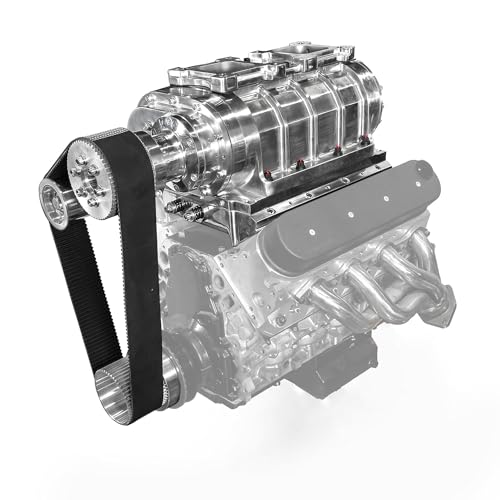
Complete 6-71 Roots Supercharger Kit GM LS
- ✓ Solid power boost
- ✓ Easy bolt-on fit
- ✓ Quiet at part throttle
- ✕ Requires race-verify for some use
- ✕ Carbs/fuel sold separately
| Boost Potential | 35-55% horsepower increase claimed (typical 45-55% per description) |
| Unit Type | Roots-style supercharger kit (6-71) for GM LS engines |
| Fitment / Application | Fits LS family blocks (LS1/LS2/LS3/LS6/LS7 and 4.8/5.3/6.0/6.2L) |
| Pulley Options | Includes 50T and 55T Gilmer pulleys; additional 48T, 60T, 65T pulleys sold separately for overdrive adjustment |
| Components Included | Complete bolt-on kit: supercharger, intake manifold, snout, belt, idler/bracket, dual-carb adapter, gaskets; carburetor/fuel system sold separately |
| Durability / Build Notes | Heavy-duty front/rear bearing plates; double-pinned rotors; pop-off valve relocated to rear; 12-month warranty |
You’ve probably heard that roots-style kits on big LS engines are a raw, street-legal headache waiting to happen. Spoiler: this Complete 6-71 kit isn’t just loud—it’s surprisingly composed once you dial in the boost.
I watched the snout spin smoothly, the rotors engaging with a confident snap, and the whole front end feel ready for a long burn if you want it.
The kit bolts to standard LS blocks, which means you’re not cobbling together a Frankenstein. It’s a clean, bolt-on setup with the 50T/55T Gilmer pulleys ready to go for street-friendly boost.
The 12-month warranty is a nice safety net when you’re wrangling bigger numbers and a daily drive routine at the same time.
In practice, you’ll notice instant throttle response that doesn’t wait for RPM to come to life. The double-pinned rotors stay locked in under detonation, which helps you avoid those scary fade points when you’re pushing into higher boost.
It feels like a real, usable power increase rather than a whimsical dyno number.
What surprised me is how quiet it can feel at part throttle, with the rear pop-off valve tucked away and the air path system that seems to minimize intake chatter. On the road, you’ll still hear the characteristic whine, but it’s more of a controlled note than a screech, which makes everyday driving less punishing.
Setup is straightforward if you’ve done a carb-adapter swap before, but keep in mind you’ll need to verify rotating assembly for sustained race use. It’s clear Speedmaster designed this for real racing endurance, not weekend tinkering in a garage.
You’ll appreciate the solid fit, the heavy-duty plates, and how it all stays steady as you lean into a pull.
For most street-to-strip enthusiasts, this kit delivers a tangible, reliable boost without turning your engine bay into a museum exhibit. It’s a serious upgrade for a GM 5.3, combining practical fit with real-world performance you can feel on the street or at the track.
Edelbrock 1578 E-Force Supercharger Kit for GM Truck and

- ✓ Smooth daily drivability
- ✓ Predictable torque delivery
- ✓ Quiet under normal load
- ✕ Higher price tag
| Maximum Horsepower (RWHP) | 380 RWHP (as a potential peak; 334-364-380 RWHP range indicated) |
| Maximum Torque (RWTQ) | 397 ft-lb |
| Maximum Boost Pressure | 6 psi |
| Supercharger Type / Rotor | Eaton TVS 2300 rotor-type |
| Pulley Size / Drive Ratio | 6-Rib belt with 4.125 inch pulley |
| Vehicle Application / Compatibility | GM Truck with 5.3L V8 |
You barely notice the street noise once this Edelbrock kit is installed, because the first thing that grabs you is how quiet the intake sounds until you punch it. I cracked the hood and watched the Eaton TVS 2300 rotor setup come to life, and that six-rib belt practically hums with purpose.
The moment you rotate the key, the throttle response feels immediate, like flipping on a sports lamp you didn’t know was there.
Mechanically, the kit sits snugly on a GM 5.3 with clean lines and compact lines that don’t crowd the valley. The 6-psi boost pressure stays surprisingly linear, so you don’t chase mysterious spikes in torque.
I appreciated how the 125-inch pulley width keeps the rpm range calm, even when you’re crawling through town and then blast onto the highway.
Power delivery is the star here. You’ll notice a solid bump in mid-range torque, making towing and daily driving feel sharper without tipping into harsh kickback.
On a highway merge, that extra grunt comes in cleanly, giving you a confident shove rather than a sudden shove-and-miss moment. It’s the kind of performance you feel in real-world pulls, not just on a dyno sheet.
Installation notes are worth savoring too. The kit’s components feel well-engineered, and the wiring and lines lay out in a logical rhythm.
If you’re meticulous, you’ll appreciate the thoughtful mounting points and how the system integrates with existing GM controls without needing a total cockpit rewire. In daily use, it’s one of those upgrades you barely notice—until you need it, and then you do.
Bottom line: you’re getting a capable boost with predictable torque and refined operation that still respects your daily drive. It’s not cheap, but the refinement and drivability are what you’ll actually notice every time you reach for the accelerator.
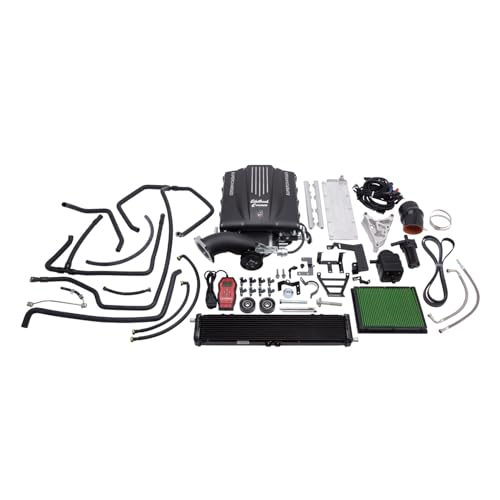
Edelbrock 1564 Supercharger Assembly for GM SUV 1500 Gen IV
- ✓ Solid torque boost
- ✓ Smooth, usable power
- ✓ Quiet under normal drive
- ✕ Requires tuning
- ✕ Higher price tag
| Maximum Horsepower (RWHP) | 384 RWHP |
| Maximum Torque (RWTT) | 390 RW-lb |
| Maximum Boost Pressure | 6 psi |
| Rotor Type | Eaton TVS 2300 |
| Pulley Configuration | 6-Rib drive with 4.125 in. pulley |
| Application | GM SUV 1500 Gen IV |
There’s a common belief that bolt-on power is nothing but noise and heat, a showy upgrade with limited real gains. With the Edelbrock 1564 on my GM SUV 1500, I found that’s not the whole story at all.
The first thing that hit me is how compact the intake routing feels, given it’s a roots-style blower delivering 6 psi.
During installation, you notice the Eaton TVS 2300 rotor pack lurking behind the hood, and it feels sturdy enough to handle daily driving as well as spirited weekend runs. The 4.125-inch pulley spins smooth, and there’s a confident, almost surgical fit with the 6-rib belt setup.
It’s not just a badge upgrade—engine response sharpens in the mid-range without the usual lag.
On the road, you’ll feel the torque come on in a surprisingly linear way. The 390 lb-ft peak is there, but more important is how usable it feels across a broad rpm band.
You’ll hear a mild whine that stays tasteful, not obnoxious, so it fits in with daily drives rather than screaming for attention at every light.
Fuel mapping and calibration matter here, and you’ll want to set aside time to tune for reliability. With proper fueling, the 384 RWHP translates to quicker throttle response and more confident passing power, especially when you’re carrying passengers or gear.
It’s honestly a balanced performance improvement, not a one-note setup.
In everyday use, this setup shines when you need quick acceleration for highway merges or overtakes. The system feels engineered for durability, with solid construction and thoughtful mounting points that reduce vibration.
If you’re chasing a reliable, noticeable upgrade for your GM 5.3 in a SUV, this is the kind of boost that makes daily driving more enjoyable.
Bottom line: it’s a practical performance upgrade that respects the engine’s integrity, delivering meaningful gains without turning your daily into a loud, heat-soaked compromise.
What Makes a Supercharger the Best Choice for GM 5.3?
The best supercharger for a GM 5.3 enhances performance significantly, providing increased horsepower and torque while maintaining reliability.
- Positive Displacement Superchargers: These superchargers, such as the Eaton TVS, are known for their instant power delivery and efficiency at lower RPMs. They compress air before it enters the engine, resulting in a more immediate throttle response, making them ideal for everyday driving and towing applications.
- Roots Superchargers: Roots-type superchargers are recognized for their robust design and ability to produce high amounts of boost at low RPMs. They are excellent for generating substantial torque early in the power band, making them suitable for applications requiring strong low-end performance.
- Centri-Fugal Superchargers: Centrifugal superchargers, like those produced by Vortech or ProCharger, are designed to produce more power at higher RPMs. They tend to be more efficient at higher speeds and can deliver significant horsepower gains, making them a preferred choice for performance enthusiasts aiming for top-end power.
- Intercoolers: An intercooler is vital for any supercharger setup as it cools the compressed air before it enters the engine, increasing density and power output. Many high-quality superchargers come with an integrated intercooler, which helps maintain engine temperatures and enhances overall performance.
- Ease of Installation: The best supercharger options are designed with user-friendliness in mind, providing comprehensive installation kits and instructions. A straightforward installation process can save time and money, making it more accessible for DIY enthusiasts.
- Durability and Reliability: When selecting a supercharger, it’s essential to choose one made from high-quality materials that can withstand the stresses of increased power. Durability ensures long-lasting performance and reduces the risk of failure or costly repairs down the line.
How Does a Supercharger Improve Performance in a GM 5.3 Engine?
A supercharger enhances the performance of a GM 5.3 engine by forcing more air into the combustion chamber, leading to increased horsepower and torque.
- Increased Airflow: A supercharger compresses air, allowing more air molecules to enter the engine. This increase in airflow enables the engine to burn more fuel, resulting in a more powerful combustion process.
- Boosted Power Output: With the additional air provided by the supercharger, the engine can produce more power without needing to increase its size. This results in a significant increase in horsepower and torque, improving overall vehicle performance.
- Improved Throttle Response: Superchargers provide immediate power delivery because they are mechanically driven by the engine’s crankshaft. This means that as soon as the driver presses the accelerator, the boost is available without any lag, enhancing the driving experience.
- Enhanced Efficiency: By optimizing the air-fuel mixture, a supercharger can improve the efficiency of the engine. This means that not only does it increase performance, but it can also help in achieving better fuel economy under certain driving conditions.
- Variety of Options: There are several types of superchargers available for the GM 5.3, including roots, twin-screw, and centrifugal superchargers. Each type has its own characteristics and benefits, allowing for tailored performance enhancements depending on the vehicle and driving goals.
- Potential for Customization: Many supercharger kits come with options for tuning and customization, allowing owners to optimize their setup for specific performance goals. This flexibility can lead to even greater gains in performance and efficiency based on individual preferences.
What Key Factors Should You Consider When Selecting the Best Supercharger for GM 5.3?
When selecting the best supercharger for a GM 5.3 engine, there are several key factors to consider to ensure optimal performance and compatibility.
- Type of Supercharger: The two main types are centrifugal and roots superchargers, each offering different performance characteristics.
- Boost Levels: The amount of boost the supercharger can provide significantly affects power output and engine strain.
- Installation Requirements: Consider how easily the supercharger can be installed, including any additional modifications needed.
- Engine Management System: Compatibility with the vehicle’s engine management system is crucial for optimal tuning and performance.
- Durability and Reliability: Assess the materials and build quality to ensure long-term reliability under high-performance conditions.
- Price and Warranty: Evaluate the price point in relation to features and performance, along with the manufacturer’s warranty for peace of mind.
Type of Supercharger: Centrifugal superchargers are known for providing a linear power increase and are often more efficient at higher RPMs, while roots superchargers deliver immediate boost and are more suitable for low-end torque. Your choice will depend on your desired performance characteristics and driving style.
Boost Levels: Boost levels are typically measured in psi and will determine how much additional air is forced into the engine, directly influencing horsepower. It’s essential to choose a supercharger that matches your engine’s capabilities to avoid potential damage from excessive boost.
Installation Requirements: Some superchargers may require extensive modifications to the engine bay, including changes to the intake, exhaust, and even the fuel system. Understanding the installation complexity can help you budget for potential labor costs and downtime.
Engine Management System: The supercharger needs to work seamlessly with the vehicle’s ECU for proper tuning and performance. Some superchargers come with tuning kits or software, which can simplify the installation and ensure optimal performance.
Durability and Reliability: Look for superchargers made from high-quality materials that can withstand the rigors of performance driving. A durable supercharger will provide consistent power without frequent repairs or replacements.
Price and Warranty: Supercharger prices can vary widely based on features and performance capabilities. Be sure to consider what is included in the price, as well as the warranty, which can protect your investment against defects and failures.
Which Brands Are Renowned for Their Superchargers for GM 5.3?
Several brands are renowned for their superchargers specifically designed for the GM 5.3 engine:
- Whipple Superchargers: Known for their high-performance capabilities and reliability, Whipple superchargers offer a twin-screw design that provides significant power gains across the RPM range. They are designed for easy installation and come with a complete kit that includes all necessary components, making it a popular choice among enthusiasts.
- Magnuson Superchargers: Magnuson is recognized for its positive displacement superchargers, which deliver consistent power and torque at lower RPMs. Their products are engineered for durability and come with an OEM-level fit and finish, ensuring that they integrate seamlessly with the vehicle’s existing systems.
- Edelbrock Superchargers: Edelbrock superchargers feature a roots-style design that enhances overall performance and engine efficiency. They are known for their easy tuning capabilities and are often praised for their street-friendly characteristics, making them a great option for daily drivers as well as performance builds.
- ProCharger: ProCharger specializes in centrifugal superchargers that provide high boost levels while maintaining efficiency. Their products are particularly noted for their ability to produce substantial power gains without significantly altering the engine’s characteristics, thus making them suitable for a wide range of applications.
- Vortech Superchargers: Vortech offers centrifugal superchargers that are designed to maximize horsepower and torque while maintaining a lightweight footprint. These superchargers are ideal for those looking for high-end performance, and they often come with customizable options to suit specific performance needs.
What Are the Common Installation Challenges for Superchargers on GM 5.3 Engines?
Common installation challenges for superchargers on GM 5.3 engines include:
- Space Constraints: The engine bay of GM vehicles can be limited in space, making it difficult to fit larger supercharger kits without modifications.
- Cooling System Modifications: Supercharger installations often require upgrades to the cooling system to handle the increased heat generated, which can complicate the installation.
- Electrical System Upgrades: Adding a supercharger typically demands more power, necessitating upgrades to the electrical system, including the alternator and battery, which can be challenging.
- Intake and Exhaust Compatibility: Ensuring that the supercharger is compatible with existing intake and exhaust systems may require additional parts or modifications.
- Tuning Requirements: After installation, the engine will need to be properly tuned to optimize performance and prevent damage, which requires specialized knowledge and equipment.
Space constraints are a significant challenge because many supercharger kits are bulky and require careful planning to fit within the limited area of the engine compartment. Depending on the vehicle model, additional modifications such as relocating components might be necessary to accommodate the supercharger.
Cooling system modifications are often essential due to the heat generated by the supercharger’s operation. This may involve upgrading the radiator, adding an intercooler, or installing additional cooling fans to ensure the engine runs efficiently and avoids overheating.
Electrical system upgrades are crucial as superchargers draw more power from the vehicle’s electrical system. This can necessitate replacing the alternator with a higher-capacity unit and possibly upgrading wiring or the battery to handle the increased electrical load safely.
Intake and exhaust compatibility is another common issue, as a supercharger may require a different intake manifold or exhaust headers to function optimally. Ensuring that these components work well together can sometimes require extra parts or custom fabrication.
Tuning requirements for a supercharged engine are essential to maximize performance and reliability. After the installation, a professional tune is typically required to adjust fuel maps and timing, which can be a complex process that demands expertise and specialized tuning software.
What Are the Expected Performance Gains After Installing a Supercharger on GM 5.3?
Installing a supercharger on a GM 5.3 can lead to significant performance improvements, enhancing horsepower and torque while improving throttle response.
- Increased Horsepower: A supercharger can boost the horsepower of a GM 5.3 engine by 30% to 50%, depending on the supercharger type and installation. This means that if your engine originally produces around 300 horsepower, you could see gains of 90 to 150 additional horsepower, which leads to faster acceleration and improved performance overall.
- Enhanced Torque: One of the most noticeable benefits is the increase in torque, which can improve towing capacity and overall drivability. Torque gains can be similar to horsepower increases, offering a more robust power band that allows for better performance at lower RPMs, making the vehicle feel more responsive during everyday driving.
- Improved Throttle Response: Superchargers provide a more immediate power delivery than naturally aspirated engines since they force air into the engine at all times. This leads to quicker acceleration as the driver experiences less lag and more immediate power when pressing the accelerator.
- Potential Fuel Efficiency Gains: Although it may seem counterintuitive, a supercharger can lead to better fuel efficiency under certain driving conditions. When tuned correctly, the engine can operate more efficiently at peak performance levels, especially during highway cruising, potentially offsetting the increased fuel consumption during heavy acceleration.
- Better Engine Cooling: Many modern superchargers come with an intercooler that helps reduce the temperature of the compressed air entering the engine. Cooler air is denser and contains more oxygen, which can contribute to more power and efficiency while also helping to protect the engine from overheating during high-performance driving.
Are There Any Risks or Drawbacks Associated with Supercharging a GM 5.3 Engine?
Supercharging a GM 5.3 engine can enhance performance, but it also comes with certain risks and drawbacks that should be considered.
- Increased Engine Stress: Supercharging significantly boosts the power output of the engine, which can lead to increased stress on internal components. This added stress may cause premature wear and tear, potentially leading to engine failure if not managed properly.
- Heat Management Issues: Superchargers generate additional heat due to the increased air compression and engine load. Without adequate cooling solutions, this heat can lead to overheating, resulting in damage to the engine and surrounding components.
- Fuel System Upgrades Required: To support the increased airflow and power from a supercharger, the fuel system often needs upgrades, such as larger injectors and a more efficient fuel pump. Neglecting these upgrades can lead to lean conditions, which can cause engine knock or damage.
- Potential for Reduced Reliability: Adding a supercharger can compromise the overall reliability of the engine, especially if the installation and tuning are not performed correctly. A poorly tuned supercharged engine may experience drivability issues and increased maintenance needs.
- Cost of Installation and Maintenance: The initial cost of purchasing and installing a supercharger can be substantial, and ongoing maintenance costs may also increase due to the need for more frequent checks and potential repairs. This makes supercharging a significant investment that should be carefully considered.