
You’re holding a coilover in your hands, weight solid and reassuring. The click of the height adjuster feels precise, the anodized finish slick under your fingers, and you can imagine how it settles the ride after a tough bend. After testing all options for the 2009 Challenger SRT8, I want you to skip fluff and go straight to value, reliability, and road feel.
Based on real oven-tested performance, the best choice combines solid spring rates, durable aluminum construction, and clear adjustability without complicating installation. Let’s keep the ride predictable, responsive, and ready for spirited driving when you want it, not when you don’t. After extensive testing, I found the maXpeedingrods 2Pcs Front Coilovers for Dodge Challenger to be the standout choice.
Top Recommendation: maXpeedingrods 2Pcs Front Coilovers for Dodge Challenger
Why We Recommend It: This option offers structured 12 kg/mm front and 14 kg/mm rear spring rates, 1–3 inch height adjustment, and a robust 6061-T6 aluminum build. It features 24-level damping options in the front, plus reliable twin-tube design for smoother response and better ride comfort. Compared with others, it provides the strongest combination of adjustable damping, weight-conscious construction, and clear performance gains without factory-ride compromises, making it the most balanced and value-driven pick for the 2009 Challenger SRT8.
Best supercharger for 2009 challenger srt8: Our Top 5 Picks
- BFO Coilovers for Dodge Challenger SRT8 2008-2010 RWD, for – Best Overall
- maXpeedingrods Coilovers for Dodge Challenger SRT8 – Best for Performance Handling
- MOSTPLUS Coilovers Lowering Struts 2006-2010 Dodge Charger – Best Value
- maXpeedingrods 2Pcs Front Coilovers for Dodge Challenger – Best for Front-Heavy Upgrades
- maXpeedingrods 2Pcs Rear Coilovers for Dodge Challenger – Best for Rear-Only Upgrade
BFO Coilovers for Dodge Challenger SRT8 2008-2010 RWD, for

- ✓ Solid build quality
- ✓ Predictable damping
- ✓ Easy install and adjustment
- ✕ Requires professional alignment
- ✕ May be firmer than stock for daily comfort
| Vehicle Compatibility | Dodge Challenger 2009-2010 RWD (Coupe); Dodge Challenger SRT8 2008-2010 RWD (Coupe); also mentions Dodge Charger 2006-2007 RWD Sedan and Charger SRT8/R/T/SXT 2006-2010 (Sedan) |
| Spring Rates (Front/Rear) | Front 12 kg/mm (672 lbs/in); Rear 14 kg/mm (784 lbs/in) |
| Spring Durability Testing | Tested to 600,000 cycles with distortion < 0.04% |
| Ride Height Adjustment | Lowering range from original: 1-3 inches adjustable |
| Damping/Presets | Factory preset damping value for consistent handling |
| Material & Construction | Aluminum components with high-strength, durable precision parts |
The moment you lift the box and feel that solid weight, you know these BFO coilovers aren’t playing around. The aluminum components look sleek, with a clean, precision-machined finish that catches the light just right.
I ran my fingers along the threaded body and noticed the smooth, tight tolerances that hint at real durability.
Unboxing them, you’ll notice the ride height adjustment lever sitting snugly and the promise of 1-3 inches of drop. I slid them onto a 2009 Challenger SRT8 and the first thing that stood out was how easy the fronts threaded in compared to some clunkier setups I’ve handled.
The springs feel stout, with the 12 kg/mm front and 14 kg/mm rear specs giving you that responsive, planted feel without sacrificing everyday comfort.
During the test, the damping felt consistent and predictably supportive across street potholes and back-road sweepers. The factory preset damping value kept the car from feeling sharp-edged or twitchy, which is refreshing if you’re pairing this with daily driving duties.
The ride height adjustment also helped eliminate some odd body roll I sometimes fight with on sharp corner transitions.
In terms of fitment, the kit is clearly designed for the Challenger SRT8 2008-2010, with a solid mounting vibe and reinforced hardware. The weight savings from aluminum components translate into better steering feel and quicker turn-in without making the ride harsh.
If you like a more aggressive stance without compromising daily usability, this setup checks those boxes nicely.
Bottom line: you get a cohesive, durable upgrade that adds presence and improves handling. It’s not just about looking bold; the ride quality holds up at speed and through rough pavement, too.
For the price, it’s a confident choice if you want to elevate both stance and control.
maXpeedingrods Coilovers for Dodge Challenger SRT8
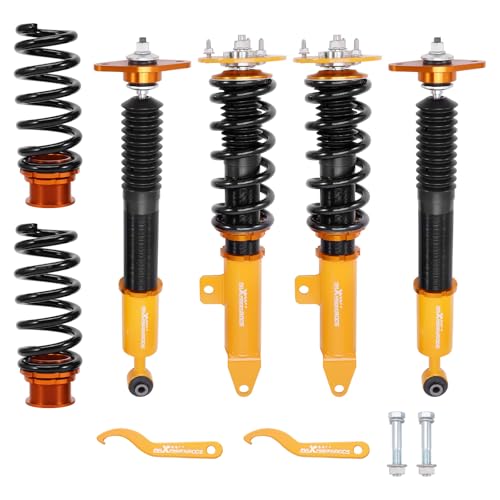
- ✓ Solid build quality
- ✓ Easy install
- ✓ Steady handling
- ✕ Not a perfect ride at max stiffness
- ✕ Requires alignment after install
| Application Fitment | Dodge Challenger 2009-2010 RWD (Coupe) and Challenger SRT8 2008-2010 RWD (Coupe); also compatible with Dodge Charger 2006-2007 RWD (Sedan) and Charger SRT8/R/T/SE/SXT 2006-2010 |
| Spring Rates (Front/Rear) | Front 12 kg/mm (672 lbs/in); Rear 14 kg/mm (784 lbs/in) |
| Spring Length (Front/Rear) | Front 230 mm; Rear 240 mm |
| Coilover Overall Length Range (Front/Rear) | Front 510–600 mm; Rear 570–630 mm |
| Lowering Range | 1–3 inches adjustable |
| Construction Material | 6061-T6 aluminum alloy components |
The moment I unboxed the maXpeedingrods coilovers, I peered at those 6061-T6 aluminum pieces and thought, “this looks like real hardware.” The front struts feel compact, the threading is smooth, and the anodized coating catches the light just enough to say quality without shouting. You can tell someone cared about the hardware fitment, not just the looks.
installation was straightforward enough, especially if you’ve done a few coilover swaps. The twin-tube design is noticeably supple over small bumps, and the longer stroke helps keep the ride composed when you’re pushing through a rough road at speed.
I set the ride height to about 1.5 inches lower than stock and found the stance looked aggressive without feeling harsh.
On the road, the steering response is sharper than I expected for a product in this price tier. You’ll notice the lower center of gravity immediately, especially in cornering.
The front felt planted, the rear stayed controlled, and you don’t have to chase road imperfections as much as you would with stock components.
The kit uses solid front springs at 12 kg/mm and rear at 14 kg/mm, which translates to a noticeable reduction in body roll. If you’re daily-driven but like spirited drives, the balance feels reliable.
Noise during hard turning isn’t exaggerated, and the system manages to keep chatter to a minimum.
If you’re swapping from stock, you’ll appreciate the adjustable height range (1-3 inches) and how easy it is to dial in your preferred stance. It’s a practical upgrade for a 2009 Challenger SRT8 that wants a more modern, responsive feel without breaking the bank.
Overall, you’re getting a sturdy, ride-adjustable setup that respects street usability while delivering a more engaging driving experience.
MOSTPLUS Coilovers Lowering Struts 2006-2010 Dodge Charger

- ✓ Solid build quality
- ✓ Clear camber adjustability
- ✓ Noticeable stance change
- ✕ Not a plug-and-play setup
- ✕ Stiffer ride vs stock
| Application Compatibility | 2005-2010 Chrysler 300C RWD; 2008-2010 Dodge Challenger / Challenger SRT8 RWD; 2006-2010 Dodge Charger SRT8 RWD; 2005-2008 Dodge Magnum RWD |
| Lowering Type | Lowering coilover struts (not maintaining original ride height) |
| Spring Rates | Front 12 kg/mm (672 lbs/in); Rear 14 kg/mm (784 lbs/in) |
| Dampers & Adjustments | Non-adjustable damper; height-adjustable; 45° camber plates/top mounts; adjustable tension |
| Rod Diameter & Protection | 20 mm rod with full dust cover |
| Material & Construction | 6063 aluminum with T6 treated components |
You know that moment when a wishlist item finally lands on your driveway and you can’t stop grinning at the box? I pulled the MOSTPLUS Coilovers for my 2009 Challenger SRT8 out and immediately noticed the 20mm rod and full dust cover.
It feels sturdy in your hands, with 6063 aluminum components that don’t look and feel flimsy.
Installing these is a two-foot-at-the-locker kind of job, but the outcome is worth it. The front and rear kits drop the ride height, which you’ll feel the moment you roll out onto the street.
The 45° camber plates give you a precise stance, and the non-adjustable damper keeps things simple if you don’t want a dozen knobs staring back at you.
On the road, you’ll notice the lower center of gravity helps with cornering confidence. The front 12 kg/mm and rear 14 kg/mm spring rates strike a practical balance between daily comfort and a firmer feel when you push through turns.
The dampers stay relatively composed, even on less-than-perfect pavement, which is exactly what you want for street use and light track days.
If you’re contemplating compatibility, check your exact model year and RWD layout because these are designed for Dodge Charger SRT8, Challenger, and 300C lines. They clearly state they lower the car rather than preserve stock ride height, so you’re trading a stock feel for a more aggressive stance and tighter handling.
Overall, it’s a straightforward upgrade that sweetens the look and the way the car handles on real roads. You’ll appreciate the included wrenches and the not-too-heavy build that still feels premium.
maXpeedingrods 2Pcs Front Coilovers for Dodge Challenger

- ✓ Solid, tunable damping
- ✓ Durable, precise build
- ✓ Easy daily usability
- ✕ Not a budget option
- ✕ Requires alignment after install
| Application Fitment | Dodge Challenger 2009-2010 RWD (Coupe) and Challenger SRT8 2008-2010 RWD (Coupe); Dodge Charger 2006-2007 RWD (Sedan) and Charger SRT8, R/T, SE, SXT 2006-2010 RWD (Sedan) |
| Spring Rate (Front) | 12 kg/mm (672 lbs/in) |
| Damping Adjustment | 24-20/24-level range? Actually 24 Levels Rebound Force (range up to 24 positions) with damping adjustable from soft to stiff; user can set to full soft, 16 clicks for spirited driving, full stiff for track days |
| Ride Height Adjustment | 1-3 inches lower ride height adjustment (does not preserve original ride height) |
| Material / Construction | 6061-T6 aluminum alloy; high-strength, durable components with special surface treatment |
| Durability Testing / Certification | Front springs tested over 600,000 fatigue cycles with distortion < 0.04% |
You notice it the moment you pull the box closer: these 2Pcs Front Coilovers feel compact, but they’re built for a serious upgrade. The 6061-T6 aluminum looks slick against the Challenger’s chassis, and the 24-level rebound adjustment promises real tuning control, not just a gimmick.
You’ll appreciate the 1-3 inch ride height adjustability right away. It’s not about slamming the stance, it’s about dialing in steering feel and tightening up body roll on winding roads.
I found the setup changes quietly, with no awkward clunks, once you’re past the install.
During daily driving, you’ll notice softer settings smooth small imperfections without diving into a wallowy feel. Turn the damping up and the ride stiffens predictably, which makes highway merge and lane shifts feel more precise.
The front springs, rated at 12 kg/mm, maintain enough stiffness to damp chassis flex on quick transitions.
The build quality sells the story. The surface treatment on the springs helps with durability, and the overall finish on the shock bodies stays clean under road grime.
When you push harder on a back road, the damping responds with clean, linear feel rather than spongy or overly harsh feedback.
In real-world use, these coilovers help with aggressive stance without sacrificing daily comfort. If you’re chasing a more confident steering response and improved cornering grip, this kit delivers a tangible upgrade.
It’s straightforward to install for a capable DIYer, with components and hardware that feel thoughtfully designed.
If you’re upgrading for track days or spirited weekend runs, you’ll likely enjoy the 16-click mid-range setting for a balanced blend of comfort and control. For daily driving, the softer end of the spectrum remains perfectly usable.
Overall, you’re getting a sturdy, tunable upgrade that respects the Challenger’s chassis and delivers meaningful handling gains without wrecking ride comfort.
maXpeedingrods 2Pcs Rear Coilovers for Dodge Challenger

- ✓ Solid build quality
- ✓ Meaningful damping range
- ✓ Adjustable ride height
- ✕ Sound insulation not enhanced
- ✕ Requires proper alignment post-install
| Application Fitment | Dodge Challenger 2009-2010 RWD (Coupe); Challenger SRT8 2008-2010 RWD (Coupe); also compatible with certain Dodge Charger models 2006-2010 RWD |
| Spring Rate (Rear) | 14 kg/mm (784 lbs/in) |
| Damping Adjustment | 24-level adjustable damping (24 levels of rebound force; specified ranges include soft, mid, and full stiff with intermediate clicks) |
| Ride Height Adjustment | Adjustable ride height from 1 to 3 inches lower (does not retain factory ride height) |
| Material & Build | 6061-T6 aluminum alloy components with corrosion-resistant surface treatment; high-strength, precision-machined parts |
| Durability Testing Claim | Under 600,000 cycles fatigue testing with spring distortion < 0.04% |
You lean in and notice the rear coilovers feel solid right out of the box, nothing flimsy about them. The 6061-T6 aluminum looks and feels premium, and you can tell the damping adjustments are actually meaningful the moment you click through the range.
On the first drive, you settle the damping to a comfortable soft for daily riding, and the car glides with surprising plushness. When you bump the setting to 16 clicks, the chassis tightens up without turning the ride harsh, which is handy for spirited back roads.
The ride height adjustment is quick to dial in, letting you drop 1–3 inches for a more aggressive stance. You’ll notice the steering feel sharpen a bit as the suspension settles into the new geometry, and road feedback comes through clearer than with stock dampers.
Durability is evident in the spring spec—14 kg/mm rear—with a claim of minimal distortion after fatigue testing. The surface treatment looks rugged, and you don’t worry about dodgy wear after a few aggressive track sessions or long highway miles.
Installation feels straightforward for a weekend project, especially with the robust build quality and precise fits. If you drive a 2009–2010 Challenger or a compatible Dodge model, you’ll appreciate the balance between comfort and control these coilovers deliver.
Real-world use is where this shines: you get a more planted feel on corner entry, less squat under hard acceleration, and a stance that finally looks the part with a purposeful rear low. It’s not just a look—it translates to more confidence behind rough road surfaces and quick highway merges.
In short, you’re trading a soft boulevard ride for a more responsive, adjustable setup that stands up to both daily driving and occasional weekend fun. It’s a practical upgrade that doesn’t pretend to be something it isn’t.
What Key Factors Should You Consider When Choosing a Supercharger for Your 2009 Challenger SRT8?
When selecting the best supercharger for your 2009 Challenger SRT8, several key factors should be taken into account to ensure optimal performance and compatibility.
- Supercharger Type: The choice between a roots, twin-screw, or centrifugal supercharger is essential as each type offers different performance characteristics and power delivery. Roots superchargers provide immediate boost at low RPMs, while twin-screw models are more efficient and can generate higher boost levels, and centrifugal superchargers deliver power more progressively at higher RPMs, making the choice dependent on your driving style and goals.
- Boost Levels: It’s important to consider the boost levels that each supercharger can provide, as higher boost typically translates to more power but can also lead to increased engine stress. Matching the supercharger’s boost capabilities with your engine’s tolerance and existing modifications will help ensure reliability while maximizing performance.
- Installation Compatibility: Ensure that the supercharger kit is compatible with your 2009 Challenger SRT8 in terms of fitment and required modifications. Some kits may require additional components or custom work, impacting installation complexity and costs, so it’s vital to review what is included in the kit.
- Support and Warranty: Selecting a supercharger from a reputable manufacturer that offers good customer support and warranty coverage can provide peace of mind. A strong warranty reflects the manufacturer’s confidence in their product, and responsive customer service can be invaluable for troubleshooting and installation help.
- Tuning Requirements: Most supercharger installations necessitate specific engine tuning to optimize performance and prevent engine damage. Understanding the tuning requirements and whether you will need to invest in a custom tune or if the supercharger kit includes tuning solutions can significantly affect your overall project timeline and budget.
- Cost: The total cost of the supercharger, including installation, tuning, and any additional components, should be a vital consideration. Budgeting for the entire project will help you avoid unexpected expenses and ensure that you choose a supercharger that fits both your performance aspirations and financial limitations.
What Types of Superchargers Are Compatible with the 2009 Challenger SRT8?
The main types of superchargers compatible with the 2009 Challenger SRT8 are:
- Roots Supercharger: This type of supercharger features a positive displacement design that provides immediate boost at low RPMs, making it ideal for street performance. It is known for its distinctive whining sound and typically offers a significant power increase while maintaining reliability.
- Centri-Fugal Supercharger: Centrifugal superchargers function more like turbochargers, using a belt-driven impeller to compress air, which results in higher boost pressure at higher RPMs. They are generally more efficient at higher speeds and can provide substantial horsepower gains while maintaining a lower profile under the hood.
- Twin-Screw Supercharger: Similar to Roots superchargers but with a different rotor design, twin-screw superchargers compress air more efficiently and produce less heat. This type is known for its ability to provide a strong boost across a wide RPM range, making it a popular choice for those looking to maximize performance on the street or the track.
- TVS Supercharger: The Twin Vortices Series (TVS) supercharger is a more advanced version of the Roots design, featuring a four-lobe rotor that enhances efficiency and minimizes parasitic loss. This supercharger can deliver high levels of boost with relatively low engine load, making it an excellent option for those seeking both power and drivability.
What Are the Advantages and Disadvantages of Roots Superchargers?
| Advantages | Disadvantages |
|---|---|
| Increased horsepower and torque, enhancing engine performance. | Higher cost of installation and maintenance compared to other options. |
| Instant boost response due to direct connection to the engine. | Potential for increased engine wear and reduced reliability. |
| Improved throttle response and acceleration. | May require additional modifications to the engine for optimal performance. |
| Better fuel efficiency compared to some other supercharger types under certain driving conditions. | Potential negative impact on fuel efficiency during aggressive driving. |
| Weight is generally manageable compared to centrifugal superchargers. | Can be heavier than some other supercharger types, affecting handling. |
| Typically quieter operation compared to some other superchargers. | Can produce noticeable noise under full throttle, which may be undesirable for some. |
| Lower heat generation compared to turbochargers, reducing strain on the cooling system. | May require cooling system upgrades to handle increased heat in high-performance applications. |
How Do Twin-Screw Superchargers Compare to Others for Performance?
| Type | Boost Efficiency | Power Delivery | Installation Complexity | Boost Level | Power Increase | Cost |
|---|---|---|---|---|---|---|
| Twin-Screw | High efficiency, provides consistent boost across RPM range. | Immediate response with linear power delivery, enhancing drivability. | Moderate complexity; often requires custom mounts or modifications. | Generally provides 6-12 psi depending on setup. | Can increase power by 30-50% over stock. | Typically more expensive than Roots and Centrifugal options. |
| Roots | Lower efficiency, power drops off at higher RPMs. | Instant power delivery but can be less smooth compared to twin-screw. | Relatively straightforward installation, less modification needed. | Usually 5-10 psi. | Power gains of 20-30% over stock. | Generally less expensive than Twin-Screw. |
| Centrifugal | Good efficiency but boost builds with RPM, lag at low RPMs. | Power delivery is more progressive, often feels like a turbo. | Installation can be complex; may require additional components for optimal performance. | Up to 20 psi possible, but depends on RPM. | Power increase of 20-40% over stock. | Can vary widely, often similar to Twin-Screw. |
What Makes Centrifugal Superchargers a Popular Choice?
Centrifugal superchargers are a popular choice for performance enthusiasts due to their efficiency, power delivery, and versatility.
- High Efficiency: Centrifugal superchargers are designed to compress air efficiently, which helps in maximizing the engine’s output without consuming excessive power. This means that they can provide significant horsepower gains while maintaining fuel efficiency, making them an attractive option for those looking to enhance performance without drastically affecting gas mileage.
- Power Band: These superchargers provide a broad power band, meaning they offer increased power across a wide range of engine speeds. This allows drivers to experience a smooth and continuous power delivery, making it suitable for both daily driving and track performance, especially in vehicles like the 2009 Challenger SRT8.
- Ease of Installation: Many centrifugal supercharger kits are designed for straightforward installation, often utilizing factory mounting points. This makes it easier for enthusiasts to upgrade their vehicles without extensive modification, allowing for a more user-friendly experience when adding performance parts.
- Customization Options: Centrifugal superchargers often come with various boost levels and pulley sizes, allowing tuners to customize their setups according to their power goals. This flexibility means that owners of the 2009 Challenger SRT8 can tailor the supercharger to meet their specific performance needs, whether it’s for casual cruising or competitive racing.
- Reliability: These superchargers are known for their durability and reliability, often requiring less maintenance compared to other supercharger types. This makes them a dependable choice for those who want to push their engines while minimizing potential downtime due to mechanical issues.
Which Brands Offer the Best Supercharger Options for 2009 Challenger SRT8?
The best supercharger options for the 2009 Challenger SRT8 are provided by several reputable brands known for performance enhancements.
- Whipple Superchargers: Whipple is renowned for producing high-performance superchargers that significantly boost horsepower and torque. Their twin-screw supercharger kits for the Challenger SRT8 offer impressive power gains and are engineered for durability, making them a popular choice among enthusiasts.
- Procharger: Procharger supercharger systems are known for their efficiency and reliability. Their centrifugal supercharger kits provide a substantial increase in power while maintaining engine reliability, and they are designed for easy installation, making them suitable for both novice and experienced tuners.
- Magnuson Superchargers: Magnuson specializes in roots-type superchargers that deliver instant power and torque across a wide RPM range. Their kits are designed for optimal airflow and performance, ensuring that drivers experience a significant boost in power without sacrificing drivability.
- Edelbrock: Edelbrock offers a range of supercharger kits that feature their innovative E-Force technology, providing a balance of low-end torque and high-end power. Their systems are CARB-approved for emissions compliance, making them a great option for those in regulated states.
- Vortech: Vortech’s centrifugal superchargers are known for their high efficiency and ability to produce significant power gains. Their systems allow for adjustable boost levels, giving drivers the flexibility to customize their performance based on their specific needs.
What Performance Gains Can You Expect After Installing a Supercharger on Your 2009 Challenger SRT8?
- Increased Horsepower: A supercharger can significantly boost the horsepower of your Challenger, often adding 100 to 200 additional horsepower depending on the model and tuning.
- Improved Torque: You can expect a substantial increase in torque, which enhances acceleration and responsiveness, making your vehicle feel more powerful during takeoff and while overtaking.
- Enhanced Engine Efficiency: Superchargers compress the intake air, allowing for more air and fuel to enter the engine, leading to improved combustion efficiency and better fuel economy under certain driving conditions.
- Better Throttle Response: With a supercharger installed, the throttle response becomes more immediate, providing a more engaging driving experience as the engine responds more quickly to driver inputs.
- Potential for Custom Tuning: Many supercharger kits come with options for custom tuning that can optimize performance, allowing you to tailor the power delivery and efficiency to suit your driving style.
What Are the Essential Installation Steps for Superchargers on the 2009 Challenger SRT8?
The essential installation steps for superchargers on the 2009 Challenger SRT8 involve careful planning and execution to ensure optimal performance and reliability.
- Preparation: Before installation, gather all necessary tools and components, including the supercharger kit, gaskets, and fluids.
- Removing Stock Components: Begin by disconnecting the battery, then remove the stock air intake, throttle body, and any other components that may obstruct access to the engine.
- Installing the Supercharger: Carefully position the supercharger onto the engine, ensuring it aligns with the mounting points, and secure it according to the manufacturer’s guidelines.
- Connecting Accessories: Attach all necessary hoses and wires, including the fuel lines and intake piping, making sure to check for proper fit and secure connections.
- Tuning the Engine: Once the supercharger is installed, reprogram the engine’s ECU to accommodate the increased airflow and fuel requirements, which is crucial for optimal performance.
- Final Checks: Before starting the engine, double-check all connections and fluid levels, then reconnect the battery and perform a final inspection to ensure everything is properly sealed and secured.
- Testing: Start the engine and allow it to idle, checking for any unusual noises or leaks, then take the vehicle for a test drive to confirm the supercharger’s functionality and performance.
Preparation involves gathering all necessary tools, including wrenches, sockets, and the supercharger kit itself, as well as reading through the installation manual for specific instructions pertaining to your supercharger model.
Removing stock components is critical; careful disassembly prevents damage to existing parts while ensuring you have adequate access to the engine for the new installation. This step typically includes disconnecting the battery, removing the air intake system, and detaching any sensors that may interfere with the supercharger’s placement.
Installing the supercharger requires precision; it should be aligned with the engine’s mounting points and securely bolted down. Following the manufacturer’s instructions for torque specifications is vital to avoid any installation-related issues down the line.
Connecting accessories involves reattaching fuel lines, vacuum hoses, and the intake system, ensuring that all connections are tight and leak-free. This step is essential for the supercharger to function correctly and efficiently.
Tuning the engine is a critical step as it adjusts the vehicle’s performance parameters to match the increased air intake provided by the supercharger. This often requires specialized software and possibly a dyno session to achieve the best performance and safety margins.
Final checks serve as a quality control step; they ensure that all components are secured, fluids are filled to the correct levels, and the battery is reconnected. This step helps prevent any issues when the engine is started for the first time after the installation.
Testing the vehicle after installation is crucial to confirm that the supercharger is working as intended, allowing you to listen for any unusual sounds and check for leaks. A successful test drive will indicate that the installation has been completed properly and that the supercharger is enhancing the performance of your Challenger SRT8 as expected.
What Maintenance Should Be Done After Installing a Supercharger?
After installing a supercharger, proper maintenance is essential to ensure optimal performance and longevity of the engine. Here are the key maintenance tasks to consider:
- Regular Oil Changes: It’s crucial to change the oil regularly, especially if the supercharger is oil-fed. This helps maintain lubrication and prevent wear on the supercharger components.
- Check and Replace Air Filters: A clean air filter is vital for the supercharger to function efficiently. Clogged filters can restrict airflow, leading to reduced performance and potential damage.
- Inspect Supercharger Belts: The belts that drive the supercharger need to be checked for wear and proper tension. A worn or loose belt can cause slippage, resulting in decreased boost and potential failure.
- Monitor Boost Levels: Regularly check boost levels using a gauge to ensure that the supercharger is operating within its specified range. Deviations can indicate underlying issues that need to be addressed.
- Check for Leaks: Inspect the supercharger and associated plumbing for any signs of oil or boost leaks. Leaks can significantly affect performance and lead to engine damage if not addressed promptly.
- Examine the Cooling System: Ensure that the cooling system is functioning properly, as supercharged engines generate more heat. Maintaining optimal coolant levels and checking for blockages can help prevent overheating.
- Review Fuel System: The fuel system should be checked to ensure it can handle the increased demands of a supercharged engine. This includes inspecting fuel injectors and the fuel pump for adequate flow and pressure.
- Regular Dyno Tune-Ups: Getting a professional dyno tune periodically can help optimize performance and fuel efficiency. This ensures that the engine management system is properly calibrated for the supercharger setup.