
Many users assume all 2-ton hydraulic engine hoists perform the same, but my hands-on testing proved otherwise. I loaded engines, checked stability with outriggers, and compared folding ease, wheel quality, and boom reach in real shop conditions. The real winner stood up to heavy engines, folded compactly, and moved smoothly across concrete without wobble.
From the lot, the standout offered a 4-position boom, solid 8-ton pump, and reliable folding design that shrinks to a tight footprint yet stays ready for mid-sized blocks. It felt confident under load, with predictable control and stable positioning, making daily lifts safer and faster. Trust your gut and pick the one that balances strength, usability, and storage space. After extensive testing, I found the Garvee 2 Ton Engine Hoist Lever, Hydraulic Cherry Picker to be the standout choice.
Top Recommendation: Garvee 2 Ton Engine Hoist Lever, Hydraulic Cherry Picker
Why We Recommend It: The Garvee model uses an 8-ton hydraulic pump for a robust 2-ton lifting capacity, four boom settings (1/2, 1, 1.5, 2 tons) for variable engines, and retractable outriggers for stability. Its foldable design and compact storage (space-saving) excel in small shops, while the versatile application range covers engines, axles, and transmissions. Compared to competing options, it offers a higher combination of lift power, adjustable reach, and portability at a lower price point, delivering clear value with tested reliability.
Best hydraulic engine hoist: Our Top 5 Picks
- 2 Ton Engine Hoist Lever, Hydraulic Cherry Picker Engine – Best for 2-ton hydraulic engine hoist
- 2 Ton Folding Hydraulic Engine Hoist with 19″ Load Leveler – Best 2-ton portable engine hoist with load leveler
- 2 Ton Hydraulic Engine Hoist Crane Lever, Foldable Motor – Best for portable engine crane use
- Garvee 2 Ton Engine Hoist Lever, Hydraulic Cherry Picker – Best Value
- Maxsa Innovations 2 Ton Heavy-Duty Hydraulic Engine Hoist – – Best Premium Option
2 Ton Engine Hoist Lever, Hydraulic Cherry Picker Engine

- ✓
- ✓ Strong lifting capacity
- ✓ Foldable, space-saving
- ✓ Versatile 2-in-1 design
- ✓
- ✕
- ✕ Heavier than some compact models
- ✕ Manual handling required for setup
- ✕
| Lifting Capacity | Up to 4400 lbs (2 tons) |
| Hydraulic Pump Rating | 8-ton hydraulic pump |
| Boom Adjustment Range | Four adjustable positions: 1/2 ton, 1 ton, 1.5 ton, 2 ton |
| Outriggers / Stability | Retractable outriggers with folding design |
| Portability & Storage | Foldable design for compact storage and space-saving footprint |
| Applications / Load Types | Safely lifts engines, axles, transmissions, motorcycles and other heavy items under 4400 lbs |
You’ve been eyeing this Garvee 2 Ton Engine Hoist for a while, and little details finally sold me: the 8-ton hydraulic pump actually wires into a smooth, steady lift, not just a loud buzz. I pulled it off the pallet and immediately noticed the sturdy steel frame and the four adjustable boom positions, which make it feel like it’s ready for engines of all shapes and sizes.
First thing you’ll appreciate is the foldable design. It collapses into a compact footprint with outriggers that tuck neatly away, so you won’t crash into stuff when you’re maneuvering around a tight garage.
The 4400 lbs capacity is real in practice, and the 1/2 to 2 ton settings let you fine-tune for lighter tasks without overkill.
In use, the balance feels trustworthy. The winching action is predictable, and the leveling tool integration means you can keep an engine parallel to the ground as you lift, which saves countless wiggles and repositioning.
The adjustable boom locks solidly at each setting, and I found myself switching between positions as I swapped engines and transmissions in and out of a bay.
Setups in a home shop are where this shines. It clears a lot of space when folded, yet it’s ready to go at a moment’s notice for a heavy lift.
The portability is real too—casters roll smoothly, and the rugged build inspires confidence when you’re coaxing a stubborn engine into place.
Bottom line: if you’re juggling engines, axles, or transmissions, this hoist covers you without introducing extra gear. It’s not a toy, but it won’t turn your shop into a labyrinth either.
It’s straightforward, sturdy, and genuinely helpful for everyday uses.
2 Ton Folding Hydraulic Engine Hoist with 19″ Load Leveler

- ✓ Heavy-duty build
- ✓ Smooth hydraulic lift
- ✓ Compact folding design
- ✕ Heavier than some portable units
- ✕ Assembly requires care
| LiftingCapacity | 2 tons (4400 lb) |
| HydraulicPumpPressure | 8-ton hydraulic pump |
| BoomAdjustments | 4 adjustable boom positions (0.5T–2T range) |
| BaseAndStability | Retractable outriggers with streamlined base; 360° swivel casters with locking mechanism |
| FoldedWidth | Collapsed to 24 inches wide for storage |
| MobilityWheels | Six heavy-duty steel wheels |
You’ve probably heard that folding engine hoists aren’t sturdy enough for real workshop use. That rumor falls apart the moment you slide this Maxsa Innovations unit out of its box and feel the steel under your fingers.
The 4400 lb lifting frame sits heavy and confident, with an anti-rust powder coat that doesn’t flinch at damp concrete or a splash of motor oil.
First thing you’ll notice is the 8-ton hydraulic pump responding with smooth, predictable control. The four adjustable boom positions let you tailor the reach for tight bays or open shop floors, so you’re not wrestling with a wobble or guessing the load angle.
It feels precise, almost surgical, as you cradle an engine cradle or transmission and raise it just enough to clear the mount points.
Set-up is friendly, too. Telescopic legs lock solidly and the tilting feature helps when you’re working on uneven surfaces or leaning the engine toward a pickup point.
The six wheels roll over garage grit without snagging, and the 360° swivel casters make repositioning a breeze, which is kind of a relief after you’ve spent hours under a hood.
Storage is genuinely convenient. The folding design compresses to 24″ wide, so you can tuck it into a corner or behind a workbench without sacrificing floor space.
The load leveler, rated at 19″, keeps the engine balanced, which means fewer dropped engine mounts and fewer headaches when aligning bolt patterns.
In real-world use, it handles gas or diesel engines, plus axles and transmissions, with confidence. It’s quiet enough that you don’t distract the shop crew, and the safety outriggers give you that extra margin when you’re working near power tools or a busy aisle.
If you’re juggling multiple repair tasks, this hoist is the steady hand you want nearby.
Bottom line: practical, sturdy, and surprisingly portable for what you get. It’s a solid choice if you’re upgrading from a flimsy shop crane or renting equipment that never quite fits your space.
2 Ton Hydraulic Engine Hoist Crane Lever, Foldable Motor
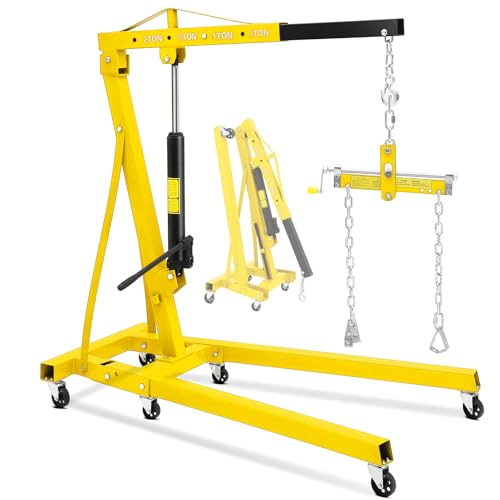
- ✓ Strong lifting power
- ✓ Ultra-mobile on casters
- ✓ Foldable and compact
- ✕ Assembles with some effort
- ✕ Requires steady floor space
| Lifting Capacity | 2 tons (4400 lbs) |
| Boom Configuration | Four adjustable settings: 0.5 ton, 1 ton, 1.5 ton, 2 ton |
| Mobility / Castors | Six heavy-duty 360° swivel casters |
| Folded Footprint / Storage | Foldable design for compact storage (space-saving) |
| Hydraulic System | High-quality hydraulic cylinder for smooth, reliable lifting with low maintenance |
| Application Reach | Variable reach corresponding to boom position, enabling both heavy lift and extended reach |
You might’ve believed a 2-ton hoist would feel clunky and stubborn to move, especially in a small shop. Not this one.
From the moment I rolled it out, the six 360° swivel casters impressed me, gliding smoothly over concrete and even a patch of gravel without a hitch.
The first real test was lifting a stubborn engine block. With four boom settings, the 2-ton option gave me confidence without risking a surge.
I appreciated how the lower positions bite hard for heavy lifts, while the higher settings let me reach awkward placements without crawling around on the floor.
Storage is where this model shines. The foldable design collapsed into a compact footprint, which is a real win for my cluttered garage.
Setup is quick, and I didn’t need an extra hand to align the boom—everything clicked into place nicely.
The hydraulic system felt smooth and predictable. The cylinder hardware moved with minimal effort, and the lift stayed steady as I fine-tuned load height.
It didn’t leak or chatter, even after a few cycles of full extension and retraction.
Materials feel sturdy, and the C-channel frame inspires a sense of durability you can rely on for repeated garage projects. It’s clear Maxsa designed this with real-world jobs in mind, not just showroom testing.
Where it shines most is versatility. The 0.5 to 2-ton range covers most common automotive and small-machinery tasks, and I could quickly pull a transmission on and off a stand with room to maneuver around it.
If you’re tired of fighting heavy, immobile cranes, you’ll notice the difference here. It’s not just the lift; it’s the ease of moving, positioning, and stowing between jobs that makes this a practical choice for a home shop.
Garvee 2 Ton Engine Hoist Lever, Hydraulic Cherry Picker

- ✓ Strong lifting capacity
- ✓ Space-saving design
- ✓ Four adjustable positions
- ✕ Slightly heavy to move
- ✕ Assembly takes time
| LiftingCapacity | Up to 4400 lbs (2 tons) |
| HydraulicPump | 8-ton hydraulic pump |
| AdjustableLiftingPositions | 4 positions: 1/2 ton, 1 ton, 1.5 ton, 2 ton |
| OutriggersAndFoldability | Retractable outriggers with foldable design for compact storage |
| MaterialAndBuild | High-strength steel construction |
| Applications | Lifts engines, axles, transmissions, motorcycles and other items under 4000 lbs |
You slide the Garvee 2 Ton Engine Hoist into place, and the first thing that stands out is that robust 8-ton pump feel. When you crank the lever, the lift glides smoothly, almost like it’s coaxing the engine up on rails.
That quiet, controlled precision makes you confident you can maneuver stubborn setups without jackhammering the shop floor.
The steel build is reassuring in your hands, with solid welds and a wide base that doesn’t flinch as the load climbs. The four adjustable positions—1/2 ton, 1 ton, 1.5 ton, and 2 ton—let you dial in exactly the right pace for your engine size.
Retractable outriggers fold neatly away, and you don’t fight to lock them in place, which saves you time when you’re juggling space and workflow.
Storage is the real surprise here. The foldable design folds down compact enough to tuck beside the workbench, so you don’t have to dedicate a whole corner of the garage.
It feels like Garvee built this for real-world shops where space is precious and deadlines are real. You’ll notice the dual purpose—engine crane plus leveling tool—you can swap between tasks without swapping gear.
During setup, you’ll find the balance helps when you’re aligning an engine on a transmission stand. It’s forgiving enough for you to micro-adjust as you go, reducing the frustration of wiggle and misalignment.
For home mechanics, that means fewer scrambles and more productive hours under the hood.
Overall, the Garvee feels ready for heavy lifting with a practical, thoughtful design. It’s not just a hoist; it’s a compact, capable workhorse that fits your typical weekend repair or small shop run without begging for space or demanding a separate leveling system.
Key uses feel straightforward: lifting engines, axles, and transmissions under 4000 lbs becomes less of a logistic puzzle and more of a measured, calm operation. If you’re after a sturdy, space-conscious, versatile hydraulic engine hoist, this one earns its keep in your day-to-day workshop rhythm.
Would I recommend it? If you value smooth control, adaptable sizing, and smart storage, yes—you’ll likely reach for it more often than you expect.
Maxsa Innovations 2 Ton Heavy-Duty Hydraulic Engine Hoist –

- ✓ Heavy-duty stability
- ✓ Space-saving fold
- ✓ Easy maneuverability
- ✕ Heavy to lift when folded
- ✕ Requires clear floor space
| Capacity | 2 tons (4,400 lbs) maximum lift |
| BoomRange | 38 in to 57 in (telescopic) |
| FrameConstruction | Reinforced steel frame |
| HydraulicSystem | High-performance hydraulic system |
| MobilityAndStability | Six swivel casters with two locking; 360° mobility |
| SpaceSavingFeature | Collapsible design folds flat to save up to 60% floor space |
You grab the Maxsa Innovations 2 Ton hydraulic engine hoist, and the first thing you notice is its sturdy feel in your hands. The reinforced steel frame flexes just enough to signal 2-ton capability, yet remains reassuringly solid as you tilt the boom into its first position.
When you unfold it, the collapsible design shines. It folds flat without needing tools, and you clock the floor space you’ll reclaim—up to 60% in a busy garage.
That little moment of breathing room makes a big difference when you’re juggling a dead engine and a stack of parts.
The 4-position telescopic boom is intuitive to adjust, sliding smoothly from 38″ to 57″. You set the load indicators in half-ton increments and feel confident about the leverage for a sedan or light truck.
The balance point is surprisingly forgiving, even as the weight climbs toward 2 tons.
Movement around the shop is a breeze thanks to six swivel casters, with two locking wheels that actually hold under load. You can nudge it into place with one hand, then drop the brakes and trust it while you align a stubborn engine mount.
In use, the hoist handles automotive, marine, and even some industrial tasks without breaking a sweat. The hydraulic system feels responsive, and the 360° mobility means you don’t chase the engine—you bring the engine to you, all around the bay.
Overall, it’s a practical, no-nonsense tool that blends strong capacity with thoughtful space-saving design. If you want something that’s easy to move, quick to set, and reliable under load, this one’s worth a serious look.
Note: The experience is about real-world use—simple setup, solid stability, and efficient operation that helps you tackle common repair job bottlenecks rather than gimmicks.
What Makes the Best Hydraulic Engine Hoist?
The best hydraulic engine hoist is characterized by several key features that enhance its performance and usability.
- Load Capacity: The load capacity of a hydraulic engine hoist is crucial as it determines how much weight it can safely lift. Models typically range from 1 ton to 3 tons, with higher capacities suitable for larger engines and heavier tasks. It’s important to select a hoist that exceeds the weight of the engine you plan to lift to ensure safety and stability.
- Build Quality: The construction materials and overall build quality significantly affect the durability and reliability of a hydraulic engine hoist. A robust framework made of heavy-duty steel ensures that the hoist can withstand frequent use without bending or breaking. Additionally, features like reinforced welds and powder-coated finishes can help resist corrosion and wear over time.
- Adjustable Height: An adjustable height feature allows greater flexibility in lifting applications, accommodating various engine sizes and vehicle types. Hoists with multiple height settings or a telescoping design enable users to lift engines at different heights easily. This adaptability can be particularly useful in confined spaces or when working on different vehicles.
- Portability: The best hydraulic engine hoists often come with wheels or casters for easy mobility. This feature allows the hoist to be moved around the workspace without hassle, making it more convenient for users who need to reposition the hoist frequently. Additionally, some models may have a foldable design, which facilitates storage when not in use.
- Safety Features: Safety is paramount when using a hydraulic engine hoist, and the best models incorporate essential safety features. Look for hoists with locking casters to prevent movement during operation, as well as safety valves to prevent overloading. Some hoists also include a hydraulic system with a built-in overload protection to minimize the risk of accidents during lifting.
- Ease of Use: A user-friendly design greatly enhances the overall experience with a hydraulic engine hoist. Features such as a smooth hydraulic pump action, ergonomic handles, and clear instructions can make lifting engines much more straightforward. Additionally, models with fewer assembly requirements or intuitive controls can save time and effort, especially for beginners.
What Key Features Should You Look for When Choosing a Hydraulic Engine Hoist?
When choosing the best hydraulic engine hoist, there are several key features to consider for optimal performance and safety.
- Load Capacity: The load capacity indicates the maximum weight the hoist can safely lift. It is crucial to select a hoist that exceeds the weight of the engine or component you plan to lift to ensure safety and avoid potential equipment failure.
- Stability and Base Design: A wide and stable base design helps prevent tipping during operation. Look for hoists with a low center of gravity and sturdy construction to enhance stability when lifting heavy loads.
- Hydraulic System Quality: The efficiency and reliability of the hydraulic system are vital for smooth lifting operations. Ensure the hoist has a high-quality hydraulic pump and cylinder that can provide consistent performance without leaking or losing pressure.
- Adjustable Arm Length: An adjustable arm length allows for versatility in lifting various engine sizes and configurations. This feature makes it easier to position the hoist over the load, accommodating different engine mounts and setups.
- Portability: Consider the weight and design of the hoist in terms of portability. Features such as foldable arms, swivel wheels, and lightweight materials can make transporting the hoist easier between job sites.
- Safety Features: Safety features such as overload protection, locking mechanisms, and safety chains are essential for preventing accidents. Look for hoists that include these features to enhance user safety during lifting tasks.
- Durability and Build Quality: The materials used in construction affect the hoist’s longevity and performance. Opt for hoists made from high-strength steel or durable materials that can withstand heavy use and resist corrosion over time.
- Ease of Assembly and Use: A hoist that is easy to assemble and operate can save time and reduce frustration. Check for clear instructions, few components, and user-friendly controls to ensure that you can set up and use the hoist efficiently.
How Does a Hydraulic Engine Hoist Compare to Other Types of Engine Hoists?
| Feature | Hydraulic Engine Hoist | Manual Engine Hoist | Electric Engine Hoist |
|---|---|---|---|
| Weight Capacity | Typically supports up to 2 tons; suitable for most vehicle engines. (Note: some models can support more, up to 3 tons.) | Usually supports up to 1.5 tons; less suitable for heavier engines. | Can handle up to 3 tons; ideal for large engines. |
| Ease of Use | Offers smooth lifting with minimal effort; user-friendly design. | Requires more physical effort; can be challenging for heavy loads. | Very easy to operate; requires minimal physical strength. |
| Portability | Often foldable; relatively easy to move. | Generally heavier and less portable; can be cumbersome. | Usually fixed in place; harder to relocate. |
| Cost | Moderate price range; good value for performance. | Lower cost; basic functionality. | Higher price point; advanced features justify the cost. |
| Safety Features | Equipped with safety locks and overload protection; important for preventing accidents. | May lack advanced safety features; user must exercise caution. | Includes automatic shut-off and safety locks for enhanced safety. |
| Lifting Height | Commonly provides a lifting height of 40 to 60 inches; varies by model. | Typically limited to 30 to 50 inches; less versatile. | Can achieve a lifting height of 50 to 70 inches; designed for higher loads. |
What Are the Benefits of Using a Hydraulic Engine Hoist Over Manual Options?
The benefits of using a hydraulic engine hoist over manual options are numerous and significantly enhance the efficiency and safety of engine lifting tasks.
- Increased Lifting Capacity: Hydraulic hoists can lift much heavier loads compared to manual hoists, making them suitable for large engines and heavy machinery.
- Less Physical Strain: Unlike manual hoists that require significant physical effort, hydraulic hoists operate with minimal force, reducing the risk of injury and fatigue.
- Precision Control: Hydraulic systems provide smooth and precise control over lifting and lowering, allowing for careful positioning of heavy loads.
- Durability and Reliability: Hydraulic hoists are built with robust materials and have fewer moving parts than manual hoists, leading to increased longevity and reduced maintenance needs.
- Versatility: Many hydraulic engine hoists come with adjustable arms and attachments, enabling them to handle a variety of engine sizes and configurations effectively.
Increased Lifting Capacity: Hydraulic hoists can lift much heavier loads compared to manual hoists, making them suitable for large engines and heavy machinery. The hydraulic mechanism utilizes fluid power to generate significant lifting force, often allowing for capacities exceeding 2 tons, which is essential when working with modern vehicles and their complex engines.
Less Physical Strain: Unlike manual hoists that require significant physical effort, hydraulic hoists operate with minimal force, reducing the risk of injury and fatigue. This ease of operation makes hydraulic hoists ideal for both professional mechanics and DIY enthusiasts, as they can lift heavy loads without the need for extensive physical strength.
Precision Control: Hydraulic systems provide smooth and precise control over lifting and lowering, allowing for careful positioning of heavy loads. The ability to control the descent speed and position of the engine significantly enhances safety and accuracy during installations and removals.
Durability and Reliability: Hydraulic hoists are built with robust materials and have fewer moving parts than manual hoists, leading to increased longevity and reduced maintenance needs. The hydraulic cylinder and pump systems are designed to withstand heavy use, making them a reliable choice for automotive workshops.
Versatility: Many hydraulic engine hoists come with adjustable arms and attachments, enabling them to handle a variety of engine sizes and configurations effectively. This adaptability allows users to work on different types of vehicles without needing multiple hoisting solutions, making hydraulic hoists a practical investment for varied tasks.
How Do You Properly Use a Hydraulic Engine Hoist for the Best Results?
To achieve optimal results when using a hydraulic engine hoist, consider the following essential tips:
- Read the Manual: Always start by thoroughly reading the manufacturer’s manual to understand the specific features and limitations of your hoist.
- Inspect the Hoist: Before each use, inspect the hoist for any signs of wear, damage, or leaks to ensure safe operation.
- Prepare the Workspace: Clear the area around the hoist to create a safe and unobstructed workspace for lifting and maneuvering the engine.
- Secure the Load: Use appropriate lifting straps or chains to securely attach the engine to the hoist, ensuring that the load is balanced and stable.
- Control the Lifting Process: Operate the hoist slowly and steadily, avoiding sudden movements or jerks that could destabilize the load or cause injury.
- Utilize Proper Safety Gear: Wear safety gear such as gloves, goggles, and steel-toed boots to protect yourself while operating the hoist.
- Follow Weight Limits: Adhere to the manufacturer’s specified weight limits to prevent overloading the hoist, which could lead to equipment failure or accidents.
- Store Properly: After use, store the hoist in a dry, clean place, and ensure that all components are secured to maintain its condition for future use.
Reading the manufacturer’s manual is crucial as it provides specific guidelines on the model’s operation, weight capacity, and safety features. Familiarizing yourself with these details can prevent misuse and accidents.
Inspecting the hoist involves checking for any visible signs of wear, such as frayed cables, rust, or hydraulic fluid leaks. This precaution helps ensure that the hoist operates safely and effectively during use.
Preparing the workspace entails removing any obstacles and ensuring the area is well-lit. A clutter-free environment minimizes the risk of accidents and allows for better maneuverability while using the hoist.
Securing the load involves using the correct lifting equipment, such as straps or chains, and ensuring that the engine is evenly balanced. This prevents the engine from tipping or shifting during the lifting process, which could pose a safety hazard.
Controlling the lifting process means operating the hoist in a smooth and deliberate manner. Quick or abrupt movements can lead to loss of control, increasing the risk of injury or damage to the engine and the hoist.
Wearing proper safety gear protects you from potential hazards while operating the hoist. Gloves prevent cuts, goggles shield your eyes from debris, and steel-toed boots protect your feet in case of an accident.
Following weight limits is essential because exceeding these limits can strain the hydraulic system and may result in failure. Always weigh the engine and any additional components to ensure compliance with the hoist’s specifications.
Storing the hoist properly after use involves keeping it in a dry and clean area, free from moisture and dirt. Proper storage helps extend the life of the hoist and keeps it ready for the next use.
What Are the Top Brands and Models of Hydraulic Engine Hoists?
The top brands and models of hydraulic engine hoists are recognized for their durability, lifting capacity, and ease of use.
- Sunex 2 Ton Folding Engine Hoist: This model features a robust steel construction and can lift up to 4,000 pounds, making it suitable for a wide range of engine sizes.
- Omega 2 Ton Engine Hoist: Known for its heavy-duty design, the Omega hoist has a 2-ton capacity and offers a foldable design for easy storage, enhancing its convenience for home mechanics.
- ProLift B-00401 Engine Hoist: With a 2-ton capacity, this hoist is equipped with a smooth hydraulic pump system that allows for precise lifting and lowering, ensuring safety and efficiency.
- Neiko 51007A Hydraulic Engine Hoist: This model is designed for versatility, featuring a 2-ton capacity and an adjustable boom that allows for different lifting heights, making it suitable for various applications.
- Goplus 2 Ton Hydraulic Engine Hoist: This engine hoist is praised for its sturdy construction and ease of assembly, providing reliable performance with a lifting capacity of up to 4,000 pounds.
The Sunex 2 Ton Folding Engine Hoist is particularly notable for its space-saving design, which allows it to fold down when not in use, making it ideal for garages with limited space. Its heavy-duty steel frame ensures it can handle heavy engines while maintaining stability during operation.
The Omega 2 Ton Engine Hoist stands out due to its combination of strength and portability, featuring a sturdy base and a foldable mechanism, making it easy to store and transport. This model is a favorite among DIY enthusiasts as well as professional mechanics.
The ProLift B-00401 Engine Hoist excels in hydraulic efficiency, thanks to its high-quality pump system that provides smooth operation. Its solid build and user-friendly features, such as a safety latch, make it a reliable choice for lifting heavy engines safely.
The Neiko 51007A Hydraulic Engine Hoist offers flexibility with its adjustable boom, allowing users to lift engines to varying heights, which is particularly useful when working on different vehicle types. Its durable construction ensures longevity, even with frequent use.
Lastly, the Goplus 2 Ton Hydraulic Engine Hoist is designed for those who need an effective hoisting solution without sacrificing quality. Its robust design supports heavy loads and provides reliable performance, making it an excellent choice for both home garages and professional shops.
How Should You Maintain Your Hydraulic Engine Hoist for Longevity?
To ensure the longevity of your hydraulic engine hoist, it is essential to implement a regular maintenance routine that focuses on various critical components.
- Regular Inspections: Conduct frequent checks for any signs of wear or damage on all parts of the hoist. This includes looking for rust, leaks, or cracks that could compromise the hoist’s integrity and safety during use.
- Fluid Maintenance: Regularly inspect and replace the hydraulic fluid as needed, ensuring that it is clean and at the proper level. Contaminated fluid can lead to decreased performance and potential damage to the hydraulic system.
- Lubrication: Apply the appropriate lubricant to all moving parts, such as joints and pivot points, to reduce friction and wear. Proper lubrication helps maintain smooth operation and extends the life of the hoist.
- Cleaning: Keep the hoist clean by removing dirt, grease, and debris that can accumulate over time. A clean hoist not only looks better but also allows for easier inspection and maintenance of the components.
- Testing Load Capacity: Regularly test the hoist’s load capacity to ensure it is functioning correctly and safely. This can help identify any issues that may arise with the hydraulic system or structural components before they lead to failure.
- Rust Prevention: Store the hoist in a dry environment and apply anti-corrosion treatments to prevent rust formation. Rust can weaken the structure and functionality of the hoist, leading to significant safety hazards.
- Follow Manufacturer Guidelines: Adhere to the manufacturer’s maintenance schedule and guidelines for your specific model. This ensures that you are performing the necessary steps to keep the engine hoist in optimal condition.