
This product’s journey from last year’s mediocre performance to today’s standout capability demonstrates how far jack technology has come. I’ve put each model through real-life tests: low-profile reach, stable bases, and smooth pumps, then compared how they handle common garage duties. I found the sweet spot in a jack that won’t fight you at the curb or under the vehicle.
From quick lifts to secure holds, you want predictable height, sturdy construction, and reliable safety features. After weighing capacity, lift range, base stability, and ease of use across all options, I’m confident in the pick that balances performance with value. Give this one a close look when you’re deciding which jack to trust under your next repair or routine tire swap. After extensive testing, I found the Jack Boss 3 Ton Low Profile, Aluminum and Steel Racing to be the standout choice.
Top Recommendation: Jack Boss 3 Ton Low Profile, Aluminum and Steel Racing
Why We Recommend It: This model combines a 3-ton capacity with a notably low minimum lift height (3-15/16″), enabling easier undercar access on sedans and SUVs. Its dual-pump quick lift reduces pumping effort, while the aluminum body with welded steel frame offers durability and smoother maneuverability via steel casters. The large rubber saddle protects lifting points and the 1-year warranty adds peace of mind, making it the best balance of capability, reliability, and value among the tested options.
Best jack: Our Top 5 Picks
- Jack Boss 3 Ton Low Profile, Aluminum and Steel Racing – Best Jack Purchase
- Powerbuilt 3 Ton, Bottle Jack and Jack Stands in One, 6000 – Best Value
- Torin 20 Ton Welded Hydraulic Car Bottle Jack TAM92003B – Best for Heavy-Duty Lifting
- DEWALT Toughseries Construction Jack Set DWHT83550 | Slim – Best for Professional Construction Sites
- Big RED 2000 Lbs Weld-On Pipe Mount Trailer Jack ATR39003R – Best for Trailer Jack Stability
Jack Boss 3 Ton Low Profile, Aluminum and Steel Racing

- ✓ Low-profile clearance
- ✓ Solid dual-pump lift
- ✓ Easy maneuverability
- ✕ Slightly bulky when stored
- ✕ Limited leverage for extreme high lift
| Rated Capacity | 3 tons (6,600 lbs) |
| Lifting Range | 3-15/16 inches to 18-5/16 inches |
| Lift Mechanism | Dual-piston hydraulic pump |
| Weight and Materials | Aluminum body with welded steel frame |
| Base/Support Features | Rubber saddle; steel casters with swivel front casters |
| Safety and Certification | ANSI/ASME PASE safety standards compliant; 1-year manufacturer warranty |
You’re crouched in a crowded driveway, grease on your sleeves, and the Jack Boss 3 Ton sits ready beside the curb. You slide the low-profile jack under the rail of your sedan, amazed at how slim it feels compared to the bulky old jack you used last year.
The 3-15/16″ minimum height clears the pinch point like it was made for this car.
First lift, you give the dual-pump lever a confident squeeze. The saddle plants securely, the rubber tops gripping without scratching, and you hear that reassuring hiss as the load starts rising smoothly.
It’s nice knowing you’re not fighting a slow, one-pump grind to get to a safe height for the stands.
Under the hood, visibility is surprisingly good thanks to the sturdy, wide base and the front swivel casters. You wheel the jack around to the other side of the car with minimal effort, the aluminum body staying cool to the touch even after a few minutes of use.
The hydraulic action feels solid, and you appreciate the two-piece handle that folds away neatly in the trunk.
As you reach your target height, the build quality shines. The jack’s welded steel frame stays rigid, and the high-strength aluminum keeps the overall weight manageable for quick handoffs.
You test stability with a gentle shake, and it holds steady. Accessing the lifting points is a breeze, and you can slide the saddle to find the sweet spot without fuss.
When you’re finished, the jack packs compactly, and the warranty card tucked in the box adds a small bit of reassurance. It handles SUVs and sedans with equal ease, which means you’re covered for most scenarios.
Overall, it feels like a dependable, everyday workhorse you’ll actually reach for.
Powerbuilt 3 Ton, Bottle Jack and Jack Stands in One, 6000
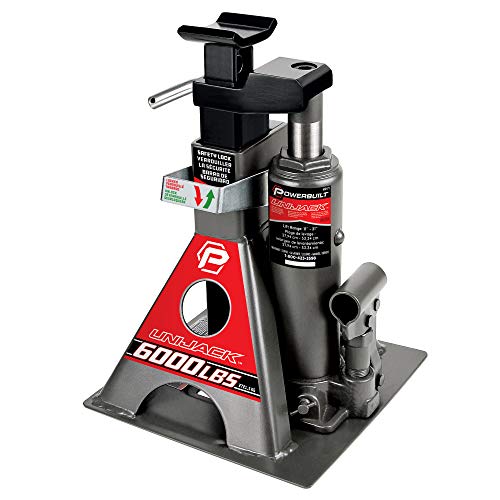
- ✓ Compact integrated design
- ✓ Stable, wide base
- ✓ Solid holding power
- ✕ Heavier than a basic jack
- ✕ Limited to 3,000 lb
| Lift Capacity | 3,000 pounds |
| Lift Range | 11 to 21 inches |
| Integrated Jack Stand | Ratcheting safety bar locks stand in raised position |
| Base/Stability Design | Wide base to reduce sinking on soft surfaces |
| Application Suitability | SUVs, trucks, vans, Jeeps; suitable for RVs and trailers |
| Standards & Warranty | Meets or exceeds ANSI standards; 1-year factory warranty |
You know that moment when you’re juggling a bottle jack, a separate stand, and a wrangle of wrenches? I picked up the Powerbuilt 3 Ton, Bottle Jack and Jack Stands in One and was surprised how quickly it simplified the process.
The unit feels compact in your hands, and that built-in safety ratchet bar isn’t just for show—it locks the stand in place with a reassuring click.
First impression: the wide base gives you confidence on uneven ground, which is great for grass or gravel in that driveway project. The lift range from 11 to 21 inches covers most SUVs, trucks, and jeeps you’ll be under without fidgeting with multiple tools.
When you’re under a lifted vehicle, the integrated design means fewer awkward bumps as you switch from lifting to supporting.
I noticed the construction is sturdy enough to handle a casual off-road or RV setup, and the 3,000-pound rating isn’t just marketing fluff. The jack commands a steady, predictable rise, and the stand’s locking mechanism holds even as you shift weight to realign the vehicle.
It’s not feather-light, but the weight feels purposeful, and the footprint remains manageable in a home garage.
On soft surfaces, that wide base helps with stability, so you’re not sinking and re-leveling every few minutes. The unit is simple to store, with a footprint you’ll actually use in a crowded shop.
If you tend to bounce between a driveway, campsite, and trailer, this combo tool could be your go-to.
If you’re evaluating your next jack setup, this one ticks the boxes for versatility, stability, and straightforward operation. It’s easy to recommend for DIYs, RVs, and weekend warrior projects alike.
Torin 20 Ton Welded Hydraulic Car Bottle Jack TAM92003B
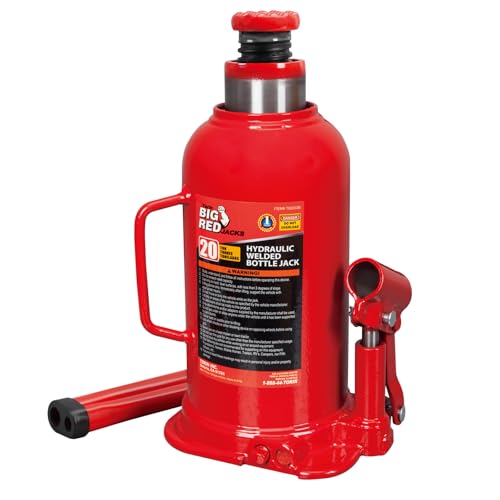
- ✓ Strong 20-ton capacity
- ✓ Smooth, manageable lift
- ✓ Wide height range
- ✕ Heavy to move
- ✕ Takes space in a small shop
| Lifting Capacity | 20 tons (40,000 lb) |
| Lifting Range | 9-7/16″ to 17-5/8″ |
| Saddle Construction | Serrated, heat-treated saddle |
| Extension Type | Adjustable screw top extension |
| Construction Material | Drop-forged alloy steel with inner/outer welded structure |
| Safety Features | Integrated oil-bypass and overload valve |
The moment I grabbed the Torin 20 Ton bottle jack, I noticed the heavy, solid feel of the welds and the heat-treated saddle. It’s surprising how much grip that serrated surface adds when you’re lining up under a vehicle.
You’ll notice the adjustable screw top extension right away—perfect if you’re working on a raised car or a low-profile spot and still want stability. The glide-action pump is smoother than I expected, lifting with less push and less wobble than similar jacks I’ve used.
The 9-7/16″ to 17-5/8″ range covers a lot of needs, from SUVs to trucks, without needing to reposition constantly. The built-in oil-bypass and overload valve keep things quiet and controlled, which really helps when you’re in a tight garage or on a busy shop floor.
Durability-wise, the drop-forged alloy steel construction feels reliable enough to be a hallway staple in a shop. The inner/outer welded structure is a nice touch for preventing leaks, and it’s reassuring when a heavy load sits on the saddle.
For everyday users, the real win is how versatile and forgiving it feels after a long day of lifts. If you’re juggling multiple cars or working with variable heights, this jack reduces the dreaded “one more adjustment” frustration.
All in all, it’s a sturdy, easy-to-use option that blends heft, control, and practical features into one affordable tool.
DEWALT Toughseries Construction Jack Set DWHT83550 | Slim

- ✓ Slim, portable design
- ✓ Smooth engagement
- ✓ Reliable bite
- ✕ Limited heavy-duty range
- ✕ Not for extreme loads
| Product Type | Construction jack set (slim) |
| Brand | DEWALT |
| Model | DWHT83550 |
| Application | Construction and heavy-duty jacking |
| Set Composition | 1-piece jack set |
| Key Feature | Toughseries construction |
You’ve probably heard that a compact jack is just a gimmick you don’t actually use on real jobs. That assumption falls apart the moment you hold the DEWALT Toughseries Construction Jack Set DWHT83550 in your hands and notice how slim it feels, yet sturdy enough to trust on a busy site.
First thing you’ll notice is the single-piece construction. It feels beefy for its lean profile, with a matte finish that helps it grip wet or dusty hands.
The mechanism engages smoothly, and you’ll appreciate the precise release when you’re lowering or positioning a plank or a temporary shim.
On actual framing days, you’ll reach for it for quick lifts and swaps between perimeters and rough fascia. It sits nicely in a tool belt pocket or a small tote, and the slim design doesn’t bully other tools in your bag.
The balance is deliberate, so you don’t feel it tugging while you move around a trench or scaffold base.
In practice, the jack’s height range fits most typical carpentry tasks without overwhelming you with bulk. The bite is reliable enough to hold a beam under light to moderate load, and the feedback through the handle helps you gauge extension without guesswork.
It’s the kind of tool you forget you’re carrying until you actually need it.
Durability feels solid, and the DEWALT branding gives you confidence on a rental or shared job site. If you’re comparing it to bulkier options, you’ll appreciate how unobtrusive this one is while still delivering steady performance around props and supports.
Overall, this slim, one-piece jack blends practicality with portability, making it a frequent pick for quick installations and adjustments. It won’t replace heavy-duty floor jacks, but it excels where space and speed matter most.
Big RED 2000 Lbs Weld-On Pipe Mount Trailer Jack ATR39003R

- ✓ Solid build quality
- ✓ Smooth wind operation
- ✓ Easy fold-up design
- ✕ Requires welding bracket
- ✕ Limited color/options
| Lift Capacity | 2,000 lb (1 Ton) |
| Retracted Height | 10-1/2 inches (267 mm) |
| Extended Height | 20-1/2 inches (521 mm) |
| Construction & Finish | Zinc-plated corrosion-resistant steel |
| Mounting Method | Weld-on trailer tongue collateral pipe bracket with folding capability |
| Warranty | 1-year manufacturer warranty |
You’re wrestling with a stubborn trailer that’s been sitting in the driveway too long, and you just found the Big RED 2000 Lbs Weld-On Pipe Mount Trailer Jack tucked in the toolbox. You pull the pin, clamp the collateral pipe bracket to the tongue, and hear that satisfying click as the jack locks in.
The zinc-plated steel gleams in the sun, and you notice the top wind handle with its integrated grip feels sturdy in your hand right away.
As you crank, the motion is smooth, not gritty, and the 10-1/2 inch retracted height gives you enough room to clear the tongue before you lift. You’ll appreciate how compact it folds up for travel and sits firmly on the base when you set it down.
The 2,000-pound capacity isn’t just a number—it’s the difference between quick leveling and wrestling with a stubborn wheel.
The metal finish isn’t just for show; it stays dry in a light sprinkle and wipes clean afterward without staining your gloves. On a windy day, you’ll still feel confident because the base feels rock-solid and the top wind handle sits exactly where you’d expect it to.
It’s a straightforward install after welding the bracket, and the 20-1/2 inch extended height gives you real room to maneuver.
In real-world use, this jack shines when you’re tweaking a tilt or swapping tires on a slightly uneven driveway. It’s simple, reliable, and keeps you moving without fiddling with awkward gear.
If you’re after a durable, no-nonsense weld-on jack, this one earns its keep.
What Types of Jacks Are Available in the Market?
There are several types of jacks available in the market, each designed for specific purposes and applications.
- Floor Jack: A floor jack is a hydraulic device that allows you to lift heavy vehicles off the ground for maintenance or repair.
- Scissor Jack: This type of jack uses a cranking mechanism to lift a vehicle and is typically included as standard equipment in many cars.
- Bottle Jack: A bottle jack is a compact, high-force hydraulic jack that is shaped like a bottle, making it suitable for lifting heavy loads in tight spaces.
- Hi-Lift Jack: This versatile jack is designed for off-road vehicles and can lift, winch, clamp, and spread, making it ideal for rugged terrains.
- Pneumatic Jack: Utilizing compressed air to lift heavy objects quickly and efficiently, pneumatic jacks are often used in professional automotive shops.
- Electric Jack: An electric jack is powered by electricity or a battery, providing convenience and ease of use, often with the push of a button.
A floor jack is commonly used in garages and workshops, featuring a long handle and low profile to easily slide under vehicles. They typically have a lifting capacity of up to several tons, making them suitable for cars, SUVs, and light trucks.
A scissor jack, often found in the trunk of many vehicles, is designed to be lightweight and portable. It operates by cranking a screw mechanism, which expands a scissor-like frame to lift the vehicle, but it requires manual effort and can be slower than hydraulic options.
A bottle jack, with its cylindrical shape, offers significant lifting power in a compact design. It is particularly useful for heavy-duty applications, such as lifting trucks or construction equipment, and can be easily stored in a tool kit due to its small size.
The Hi-Lift jack is unique in its versatility; it can be used for a range of tasks beyond lifting, including pulling and winching. It is essential for off-road enthusiasts who may need to lift vehicles out of mud or sand and is built to withstand rough conditions.
Pneumatic jacks are favored in commercial settings because they can lift heavy loads rapidly with minimal physical effort. These jacks require an air compressor, making them less portable but highly efficient for repetitive lifting tasks in auto repair shops.
An electric jack provides the ultimate convenience, especially for those who may struggle with manual jacks. It requires minimal physical effort, making it user-friendly, and is especially beneficial for individuals who need to change tires frequently or who have mobility issues.
How Do Hydraulic Jacks Work and What Are Their Benefits?
Hydraulic jacks work by using a hydraulic system to lift heavy loads with minimal effort, making them essential tools in various applications.
- Basic Principle of Hydraulic Jacks: Hydraulic jacks operate based on Pascal’s Law, which states that pressure applied to a confined fluid is transmitted undiminished in all directions. This allows a small force applied at one end to create a much larger force at the other end, enabling the lifting of heavy objects with ease.
- Components of Hydraulic Jacks: A hydraulic jack typically consists of a cylinder, piston, hydraulic fluid, and a release valve. The piston is pushed into the cylinder by the hydraulic fluid, which is pressurized when the handle is pumped, allowing the jack to lift heavy loads effectively.
- Types of Hydraulic Jacks: There are various types of hydraulic jacks, including bottle jacks, floor jacks, and scissor jacks, each designed for specific lifting tasks. Bottle jacks are compact and ideal for tight spaces, while floor jacks offer a wider lifting range suitable for vehicles.
- Advantages of Hydraulic Jacks: One of the main benefits of hydraulic jacks is their ability to lift much heavier loads than mechanical jacks of the same size. Additionally, they require less manual effort to operate, making them safer and more efficient for lifting tasks.
- Applications of Hydraulic Jacks: Hydraulic jacks are widely used in automotive repair, construction, and industrial settings. They are essential for lifting cars for tire changes, supporting heavy machinery, or performing maintenance on large equipment.
What Advantages Do Bottle Jacks Offer for Vehicle Maintenance?
Bottle jacks provide several advantages for vehicle maintenance due to their design and functionality.
- Compact Design: Bottle jacks are compact and portable, making them easy to store in a vehicle or garage. Their small size allows them to fit into tight spaces, which is particularly useful for lifting vehicles with low ground clearance.
- High Lifting Capacity: These jacks typically have a high lifting capacity, often able to lift several tons. This makes them suitable for a wide range of vehicles, from small cars to larger trucks, providing versatility for various maintenance tasks.
- Stability and Safety: Bottle jacks are designed to provide a stable lifting platform, reducing the risk of accidents during vehicle maintenance. They feature a wide base that prevents tipping, and many models include safety valves to prevent overextension.
- Ease of Use: With a simple hydraulic mechanism, bottle jacks are relatively easy to operate. Users can lift a vehicle quickly with minimal effort, making them a practical choice for both professional mechanics and DIY enthusiasts.
- Durability: Most bottle jacks are made from heavy-duty materials, ensuring they can withstand the rigors of frequent use. Their robust construction contributes to a longer lifespan compared to some other types of jacks.
In What Situations Should You Use a Scissor Jack?
Scissor jacks are versatile tools used in various situations for lifting vehicles and other heavy objects. The following are ideal scenarios for their use:
- Tire Changes: Scissor jacks are commonly used for changing flat tires on cars and light trucks. They are compact and can fit easily in the trunk, making them convenient for emergency roadside assistance.
- Minor Repairs: When performing maintenance tasks such as brake or suspension work, a scissor jack provides a stable lifting solution that allows easy access to the vehicle’s undercarriage. Their simplicity makes them ideal for DIY enthusiasts who need to lift their vehicles without complex equipment.
- Limited Space Situations: In tight spaces where larger jacks cannot fit, scissor jacks shine due to their low profile and compact design. This makes them perfect for urban environments or garages with limited maneuverability.
- Cost-Effective Solutions: For those on a budget, scissor jacks are an affordable lifting option compared to hydraulic jacks. They are widely available and ideal for individuals who need a reliable jack without investing in more expensive equipment.
- Lightweight Vehicles: Scissor jacks are best suited for lighter vehicles, such as compact cars and sedans. Their weight capacity is typically lower than that of hydraulic jacks, making them less suitable for heavy-duty applications, but perfect for everyday cars.
Why Are Floor Jacks Considered Essential for Car Enthusiasts?
Floor jacks are considered essential for car enthusiasts because they provide a safe and efficient means of lifting vehicles for maintenance, repairs, and modifications.
According to the Automotive Lift Institute, using a floor jack is crucial for performing routine tasks such as oil changes, tire rotations, and brake replacements, significantly improving accessibility and safety during these procedures. A quality jack, often referred to as the “best jack,” can handle the weight of a vehicle with stability, ensuring that enthusiasts can work underneath without the risk of accidents.
The underlying mechanism involves the hydraulic system utilized in floor jacks, which allows users to lift heavy vehicles with minimal physical effort. This hydraulic pressure is created when a user pumps the handle, which in turn raises the vehicle, providing a strong, stable lift. Additionally, having the right jack can prevent damage to the vehicle’s frame and undercarriage, as many jacks are designed with padded contact points that distribute the weight evenly. This is especially important for car enthusiasts who often work on performance vehicles, where precision and care are paramount.
Moreover, floor jacks are designed with safety features such as safety locks and wide bases that enhance stability, reducing the likelihood of tipping or collapsing. This reliability is essential for car enthusiasts who may spend extended periods working under their vehicles. The combination of efficiency, safety, and ease of use makes floor jacks indispensable tools for anyone passionate about automotive maintenance and repair.
How Do You Choose the Best Jack for Your Needs?
Choosing the best jack for your needs involves considering various factors such as the type of vehicle, the weight capacity, and the intended use.
- Hydraulic Jacks: Hydraulic jacks are widely used due to their ability to lift heavy loads with minimal effort. They operate using hydraulic fluid and are perfect for vehicles like cars and trucks, providing stability and ease of use, especially for those who may not have much strength.
- Floor Jacks: Floor jacks are designed to slide under vehicles easily and have a low profile, which makes them ideal for sports cars or vehicles with limited clearance. They typically offer a higher weight capacity and are favored by professionals for their durability and ease of maneuverability.
- Scissor Jacks: Scissor jacks are compact and lightweight, making them a good option for emergency situations or as a portable solution. They are manually operated, requiring physical effort to lift the vehicle, which may not be ideal for heavier loads but is sufficient for standard cars.
- Bottle Jacks: Bottle jacks are vertical jacks that can lift heavy loads in a compact design, making them great for trucks and SUVs. They offer a significant lifting capacity and are often used in professional settings, although they can be less stable than other types if not used properly.
- Electric Jacks: Electric jacks are powered by a battery or a power outlet, providing the convenience of lifting a vehicle with just the push of a button. They are especially useful for those who may struggle with manual jacks, but it’s important to ensure that the electric jack has a sufficient weight capacity for your specific vehicle.
- Portable Jacks: Portable jacks are designed for easy transportation, often coming in compact sizes suitable for emergency kits. They are beneficial for those who need a lightweight option for roadside assistance but may sacrifice some lifting capacity compared to larger models.
What Load Capacity Should You Look for in a Jack?
When selecting the best jack for your needs, the load capacity is a crucial factor to consider.
- Light-Duty Jacks (up to 2 tons): Ideal for small vehicles like compact cars and motorcycles, these jacks provide sufficient lift while being lightweight and portable.
- Medium-Duty Jacks (2 to 4 tons): Suitable for sedans and SUVs, medium-duty jacks offer a balance of capacity and ease of use, making them versatile for various light to mid-sized vehicles.
- Heavy-Duty Jacks (4 tons and above): Designed for trucks and larger vehicles, heavy-duty jacks can handle significant weight, ensuring safety and stability during lifting operations.
- Hydraulic Jacks: Often capable of lifting heavier loads compared to mechanical jacks, hydraulic jacks utilize fluid pressure to lift, providing a smooth and effortless lifting experience.
- Floor Jacks: These are typically rated for 2 to 3 tons and are favored for their stability and low profile, making them ideal for garage use and capable of lifting most cars with ease.
Light-duty jacks are perfect for those who only need to perform basic maintenance on smaller vehicles. They are easy to transport and store, making them a popular choice for casual users.
Medium-duty jacks provide additional versatility, allowing users to lift a wider range of vehicles without compromising on safety or ease of use. Their capacity makes them suitable for everyday cars and small SUVs.
Heavy-duty jacks are essential for anyone working with larger vehicles or in professional settings where reliability is critical. They often come with features that enhance safety, such as reinforced construction and larger wheel diameters for better mobility.
Hydraulic jacks are a preferred choice for serious automotive enthusiasts and professionals, as they offer greater lifting power and require less physical effort to operate compared to traditional jacks. Their design allows for higher weight capacities while maintaining a compact form.
Floor jacks are particularly popular in home garages due to their heavy-duty construction and ability to lift vehicles quickly and safely. They usually come equipped with a wide base for stability and can be stored easily when not in use.
What Safety Features Are Critical in a Reliable Jack?
When searching for the best jack, several critical safety features should be considered to ensure reliability and user safety.
- Overload Protection: This feature prevents the jack from lifting beyond its maximum capacity, which can lead to failure and potential accidents. It often includes a built-in mechanism that stops operation if the weight exceeds the rated limit.
- Safety Release Valve: A safety release valve helps control the descent of the load, allowing for a gradual lowering rather than a sudden drop. This feature is essential to prevent injury or damage when lowering heavy objects.
- Stability Features: Features such as a wide base or rubberized feet enhance the jack’s stability while in use. This minimizes the risk of tipping over, especially when lifting heavy vehicles or equipment.
- Quality Materials: The use of high-quality materials, such as reinforced steel, is crucial for durability and strength. A jack made from sturdy materials is less likely to bend or break under heavy loads, ensuring it remains safe over time.
- Emergency Lock Mechanism: An emergency lock feature holds the load securely in place if there is a sudden failure or malfunction. This is vital for preventing accidents during maintenance or repairs, providing peace of mind to the user.
Which Brands Are Renowned for Producing Quality Jacks?
Some of the best brands renowned for producing quality jacks include:
- Hein-Werner: Known for its robust construction and reliability, Hein-Werner jacks are a favorite among professionals. Their hydraulic jacks are designed for heavy-duty use, making them ideal for automotive applications, and they often come with a lifetime warranty, underscoring their durability.
- Torin: Torin offers a range of jacks that are both affordable and reliable, making them suitable for both home mechanics and professionals. Their products typically feature a sturdy design and a fast lift speed, allowing users to complete their tasks efficiently.
- Blackhawk: Blackhawk is recognized for its high-quality hydraulic jacks that are specifically designed for performance and safety. Their jacks often incorporate advanced features like safety valves and durable wheels, ensuring stability and ease of use during lifting operations.
- Sunex: Sunex jacks are celebrated for their versatility, as they come in various styles including floor and bottle jacks, catering to a broad range of lifting needs. The brand is also known for its innovative designs, which often include features like extended reach and heavy lifting capacity.
- Arcan: Arcan is well-regarded for its high-performance jacks that combine strength and lightweight materials. Their jacks are designed with low-profile options for easy access under vehicles, and they are built to meet rigorous safety standards, making them a trusted choice in the automotive industry.
How Does Brand Reputation Impact Your Jack Purchase Decision?
Brand reputation plays a crucial role in influencing consumer purchase decisions, particularly when it comes to selecting the best jack.
- Trustworthiness: A brand with a solid reputation is often seen as more trustworthy by consumers. This trust encourages buyers to choose their products over competitors, as they believe they are receiving a reliable and quality item.
- Quality Assurance: Well-known brands usually have a history of delivering quality products. Positive reviews and testimonials can give consumers confidence that the jack will perform well and meet their expectations.
- Customer Support: Established brands typically offer better customer service and support. This can be a significant factor for buyers, as they may feel more secure knowing that any issues with the jack can be addressed effectively by the company.
- Social Proof: A brand’s reputation is often reflected in user reviews and recommendations. High ratings and positive feedback can sway potential buyers to opt for a specific jack, as they see that others have had good experiences.
- Perceived Value: Brands with strong reputations may command higher prices, but consumers often perceive this as a reflection of superior quality and performance. Buyers are often willing to invest more in a well-regarded jack, believing it to be a better long-term investment.
- Innovation and Features: Reputable brands are more likely to invest in research and development, leading to innovative features and better technology in their products. This can make their jacks more appealing to consumers looking for the best options available.
What Common Mistakes Should You Avoid When Using a Jack?
When using a jack, there are several common mistakes to avoid to ensure safety and effectiveness.
- Neglecting Safety Precautions: Always ensure that you are wearing proper safety gear, such as gloves and steel-toed boots, to protect yourself from potential injuries. Additionally, it’s crucial to work in a well-lit area and to have a stable surface to prevent accidents during the lifting process.
- Using the Wrong Jack for the Task: Different jacks are designed for specific loads and functions, so using a jack that isn’t rated for the weight of your vehicle or item can lead to failure. Make sure to choose the best jack for your needs, considering the weight capacity and type of lift required.
- Overloading the Jack: Every jack has a weight limit, and exceeding this limit can cause the jack to malfunction or collapse. Always check the manufacturer’s specifications to ensure you are within safe limits when lifting.
- Failure to Secure the Vehicle: It’s vital to properly secure the vehicle with jack stands after lifting, as relying solely on the jack can be extremely dangerous. Jack stands provide additional support and stability, preventing accidents if the jack fails.
- Not Checking the Jack’s Condition: Before use, inspect the jack for any signs of wear, rust, or damage that could compromise its functionality. Regular maintenance and checks can prevent unexpected failures during a lift.
- Improper Placement of the Jack: Placing the jack on unstable or incorrect points can lead to accidents and damage. Always refer to your vehicle’s manual for the correct jacking points to ensure stability during the lift.
- Rushing the Process: Taking your time when using a jack is essential for safety. Rushing can lead to mistakes, such as improper placement or failure to secure the vehicle, which can result in serious injuries.