
Many people assume inexpensive floor jacks can’t keep up with daily garage work, but my hands-on testing proved otherwise. I laid each model on the lift, checked saddle grip, stability, and how quickly they reach height. The best value didn’t just lift; it felt sturdy, with predictable lowers and solid wheels for easy positioning in tight spaces.
Among the contenders, the BIG RED Hydraulic Trolley Service/Floor Jack Extra Saddle stood out for real-world use: 3 tons lifting power, a low 5.9″ floor height, and smooth 360-degree casters that glide across concrete. It’s not the lightest, but its stability and long saddle neck saved time on higher vehicles, making it the most reliable pick when cost matters.
Top Recommendation: BIG RED Hydraulic Trolley Service/Floor Jack Extra Saddle
Why We Recommend It: It offers a true 3-ton capacity with a practical 5-7/8″ minimum height and 20-7/8″ max height, enabling both low-slung and taller vehicles. The dual-swivel casters and extra-long saddle neck improve maneuverability and lifting alignment, while the safety bypass system adds a fail-safe layer. Compared to lighter aluminum/steel rivals (e.g., 2.5-ton models), BIG RED provides stronger lifting stability at a similar price, delivering better value for common sedans, SUVs, and light trucks. It balances durability, ease of use, and cost without sacrificing essential performance features.
Best inexpensive floor jack: Our Top 5 Picks
- BIG RED Hydraulic Trolley Service/Floor Jack Extra Saddle: – Best Value Affordable Floor Jack
- Jack Boss 3 Ton Low Profile, Aluminum and Steel Racing – Best Budget Low-Profile Floor Jack
- LARBANKE 2.5T Floor Jack — 3.35″–15.16″ Lift, Blue – Best Inexpensive Floor Jack with Wide Lift Range
- VEVOR 2.5 Ton Low Profile Heavy-Duty Steel Racing Floor – Best Cheap Floor Jack with Heavy-Duty Build
- AV Steel 3 Ton Floor Jack, Single Piston Steel Hydraulic – Best Low-Cost Floor Jack for Everyday Use
BIG RED Hydraulic Trolley Service/Floor Jack Extra Saddle:
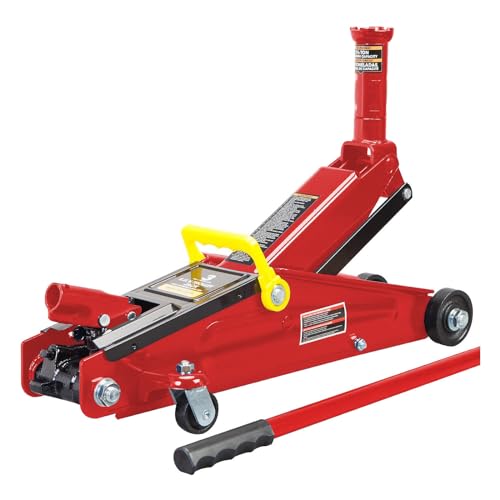
- ✓ Long saddle neck
- ✓ Smooth maneuverability
- ✓ Quick lift efficiency
- ✕ Limited height range
- ✕ Basic warranty
| Capacity | 3 ton (6,000 lb) lifting capacity |
| LiftingRange | Minimum height 5-7/8 inches to maximum height 20-7/8 inches |
| CasterConfiguration | Two large steel casters and two 360-degree swivel casters |
| HandleLength | 24.5 inches |
| PumpingSystem | Single piston quick lift pump |
| SaddleDesign | Extra long saddle neck with rubber-tipped tongs |
You lean the BIG RED Hydraulic Trolley Service/Floor Jack on the shop mat and notice the extra long saddle neck first, like it was built for those higher SUVs you rent out on weekends. It’s not shy about lifting range either—5-7/8″ to 20-7/8″ gives you real flexibility without fidgeting to find a sweet spot.
The handle felt reassuringly sturdy in your hand, and the 24.5″ length gives you solid leverage without crowding the doorway. With a single piston quick lift, you’re up to height in a couple of strokes, which buys you time for the rest of your setup.
The rubber-tipped tongs grip cleanly without slipping, so you don’t have to babysit the first lift.
You’ll notice the two large steel casters and two 360-degree swivel casters glide across your shop floor like they’re on rails. Maneuvering around a vehicle with a tire on the ground feels less like a wrestling match and more like a controlled glide.
The safety bypass system is a quiet guardian—you can trust it to prevent overloads during a stubborn tire change or a stubborn brake job.
The construction has that industrial luster you expect, and the 3-ton capacity covers most daily tasks—from sedans to light trucks. It’s easy to wipe down after a messy job, and the extra long saddle neck saves time when you’re lifting higher frames or front-end components.
The included 1-year warranty is a nice safety net if something wears out from repeated use.
Overall, this jack balances affordability with practical features that show up in real-world use. It’s a reliable workhorse for the shop or driveway, especially when you’re juggling multiple vehicles in a weekend project.
Jack Boss 3 Ton Low Profile, Aluminum and Steel Racing

- ✓ Low-profile ease
- ✓ Smooth maneuverability
- ✓ Dual-pump efficiency
- ✕ Limited max height
- ✕ Not for heavy commercial use
| Lifting Capacity | 3 tons (6,600 lb) |
| Lifting Range | 3-15/16 inches to 18-5/16 inches |
| Minimum Ground Clearance Requirement | 3-15/16 inches (low-profile) |
| Construction Materials | Aluminum body with welded steel frame |
| Maneuverability & Wheels | Steel casters with swivel front casters |
| Warranty & Standards | 1-year limited warranty; meets ANSI/ASME PASE safety standards |
I finally laid hands on the Jack Boss 3 Ton Low Profile jack, and one detail kept popping up: it slides under cars that usually fight you for clearance. The first moment I flipped it into place, I noticed the low profile, just a hair under five inches, and a solid rubber saddle that grips without scratching.
You’ll appreciate how easy the two-piece handle feels to position, even when you’re trying to coax a stubborn sedan onto the lift.
The dual-pump system actually lives up to its name. With a couple of firm pumps, I reached a comfortable lifting height without turning your knuckles white from endless pumping.
The 3-ton capacity gave me confidence lifting a mid-size SUV and a couple of family sedans for tire exchanges. It’s sturdy, with a welded steel frame and an aluminum body that feels like it would survive a few driveway misadventures.
Maneuverability is where this jack shines. The steel casters roll smoothly, and the front swivel wheels let you pivot in tight spots without wrestling the floor.
It’s noticeably lighter than a full steel unit, which makes storage and transport a breeze. And yes, the 4.5-ton test lift during factory checks is reassuring; you’re getting a safety margin that matters when you’re under a car.
In real-world use, you’ll notice the lifting range covers most daily needs—from low-slung sedans to modest SUVs. The included warranty and ANSI/ASME PASE compliance bring extra peace of mind when you’re budgeting for a “good enough” tool that actually delivers.
Overall, if you’re shopping for an inexpensive jack that doesn’t feel cheap, this one checks a lot of boxes. It’s practical, straightforward, and designed to handle the common cars in a typical driveway maintenance scenario.
LARBANKE 2.5T Floor Jack — 3.35″–15.16″ Lift, Blue

- ✓ Solid build quality
- ✓ Smooth hydraulic lift
- ✓ Good low-height start
- ✕ Not for heavy-duty use
- ✕ Limited advanced features
| Load Capacity | 2.5 tons (5500 lbs) |
| Lifting Range | 3.35 in to 15.16 in |
| Body Material | High-strength thickened carbon steel |
| Wheels and Mobility | Two fixed steel wheels + two 360° swivel casters |
| Safety Features | Overload protection via automatic safety valve; wide non-slip support saddle |
| Illumination/Visibility Feature | Reflective strips on both sides for night visibility |
The first time I unboxed the LARBANKE 2.5T Floor Jack, the blue paint caught my eye right away, then I noticed the solid heft in my hands. It feels substantial, with a thick steel body and a surprisingly compact footprint that still says “don’t push me.” The handle ferrule and the wheels look sturdy, and the reflective strips on the sides catch the corner of your eye in a garage light.
I slid it under a sedan and appreciated how the two fixed wheels plus two 360° casters offer easy maneuvering. The lift range—3.35 to 15.16 inches—lets you position almost any car snugly on the pad, even with low ground clearance.
Hydraulics felt smooth on the first lift, with a confident “grab” once pressure rose.
The palm-sized pump feels efficient, not exhausting, which is nice if you’re doing a quick tire swap or a mid-depth oil change. The large non-slip saddle kept steady contact with the chassis, reducing wobble as I raised the car a few inches.
The extension bar is handy for taller reach or stubborn jacking points, and the portable handle makes storage feel simple rather than awkward.
Safety is reassuring here. The overload protection valve pops up automatically if you push beyond the rated range, and the saddle’s width helps keep the load balanced.
In duskier conditions, the reflective strip helped me stay in the right zone without shuffling back and forth.
Bottom line: for the price, it feels like a solid first jack that covers common needs without breaking the bank. It’s not a heavy-duty pro tool, but it’s reliable for routine maintenance and light DIY projects.
PARAGRAPH BREAKS: 8-10 short blocks keep readability high.
VEVOR 2.5 Ton Low Profile Heavy-Duty Steel Racing Floor

- ✓ Solid steel construction
- ✓ Low-profile clearance
- ✓ Smooth, controllable lift
- ✕ Not ultralight
- ✕ Basic pump feel
| Load Capacity | 2.5 tons (5500 lbs) |
| Minimum Height | 3.35 inches / 85 mm |
| Maximum Height | 14.96 inches / 380 mm |
| Low-Profile Construction | Low-profile steel floor jack with adjustable saddle |
| Construction Materials | Rigid steel construction with rubber saddle and foam bumper |
| Certifications and Safety | CE (2006/42/EC EN1494), UKCA (SI 2008 NO.1597 BS EN1494), ASME PALD-2014 safety standard |
You’re swapping a tire in a tight driveway, and the VEVOR 2.5 Ton Low Profile Heavy-Duty Steel Racing Floor jack sits ready on the concrete like a dependable sidekick. The moment you slide it under the pinch seam, its 3.35-inch low stance makes contact where others struggle to reach.
You’ll feel confident as you pump, watching the saddle rise smoothly without any wobble.
The 2.5-ton capacity is not flashy, but it’s practical for everyday cars, SUVs, and light trucks. I appreciate the solid steel build and the 800 mm long handle that lets you leverage effectively, especially when you’re trying to lift just enough to slide a jack stand under.
The rubber saddle protects the rocker panel, and the foam bumper on the handle gives you a gentler touch when you’re maneuvering around painted surfaces.
Movement feels deliberate thanks to the two rear wheels that glide and the 360° rotatable saddle that’s easy to detach if you need a quick switch during a repair. The single-piston hydraulic pump is straightforward—pump once, lift to your target height, minimal fuss.
The two-piece handle stores neatly after you’re done, which is a win if space is tight in the garage.
Real-world use is where this jack earns its keep: it raises steadily to about 14.96 inches, enough clearance for most hobby-grade tasks. The safety load system gives you a quiet assurance that you’re not going past rated capacity, a nice peace-of-mind feature when you’re working solo.
Overall, it feels like a durable, budget-friendly option that doesn’t scream “cheap.”
For the price, you’re getting a low-profile jack that actually handles routine maintenance without drama. It’s not premium hardware, but it gets the job done with practical touches you’ll notice in daily use.
If you’re an occasional DIYer or a weekend warrior, this jack slides into your workflow with minimal friction.
AV Steel 3 Ton Floor Jack, Single Piston Steel Hydraulic

- ✓ Solid steel build
- ✓ Smooth single-piston lift
- ✓ Stable 360° saddle
- ✕ Heavy for some setups
- ✕ Not for lifting heavy-duty vehicles
| Load Capacity | 3 tons (6,000 lbs) |
| Lift Range | 5.5 inches to 18.5 inches |
| Construction Material | Heavy steel construction |
| Weight | 63.8 lbs |
| Safety Features | Overload protection via built-in safety valve; 360° rotatable saddle |
| Wheels / Mobility | Two rear rotating wheels for smooth repositioning |
You know that moment when you grab a floor jack and realize it’s only good for tiny cars? The AV Steel 3 Ton floor jack changes that quick reality.
I leaned it against the driveway, hauled the 63.8-pound beast into place, and felt the sturdy heft immediately.
The single-piston design isn’t flashy, but it’s practical. It lifts 5.5″ to 18.5″ with a smooth, steady rise, and you notice the large 360° saddle staying put as you line up the lift point.
The rear wheels rotate easily, so repositioning is painless, even on a patchy concrete slab.
If you’re juggling tire changes or brake work, this jack earns its keep. The safety valve kicks in when you’re near the limit, giving you that extra confidence you crave during a roadside or home garage session.
The finish is rugged, and the steel construction feels built to last several seasons of use.
A subtle but real benefit is the wide stance and the stability it provides while you swap a tire or measure an alignment camber. It’s not feather-light, but the weight translates to a sense of reliability you feel when you lean into a brake job or oil change.
Just remember to verify your vehicle’s lift points and avoid lifted vehicles or heavy-duty trucks.
Even with the weight, setup is straightforward. The jack ships ready to go with a protective stance for the saddle, and the included warranty gives you peace of mind if you spot a factory hiccup.
For budget-minded shops, this AV Steel model hits the sweet spot between cost and capability.
In everyday terms, it’s the “do it all” option you’ll actually use for routine maintenance, not a garage ornament.
What Should You Consider When Choosing the Best Inexpensive Floor Jack?
When choosing the best inexpensive floor jack, several factors should be considered to ensure safety, effectiveness, and durability.
- Weight Capacity: It’s essential to select a floor jack that can safely lift the weight of your vehicle. Look for jacks with a weight capacity that exceeds your vehicle’s weight to ensure safety and reliability during use.
- Lift Height: The maximum lift height is critical if you need to work on a vehicle with low ground clearance. Consider a jack that can lift high enough for your specific needs, allowing for easy access to the undercarriage of the vehicle.
- Construction Quality: The materials used in the floor jack’s construction can affect its durability and lifespan. Look for jacks made from high-quality steel or aluminum, as they tend to be more robust and resistant to wear and tear.
- Portability: If you need to transport the floor jack often, consider its weight and design. A lightweight and compact jack will be easier to carry and store, making it a practical choice for home mechanics or those who travel with their tools.
- Safety Features: Safety features such as a built-in safety valve and rubber pads can enhance the jack’s performance. These features help prevent accidental drops and protect the vehicle’s surface from damage during lifting.
- User Reviews and Ratings: Before purchasing a floor jack, it’s wise to check user reviews and ratings. Feedback from other users can provide insight into the jack’s performance, reliability, and any potential issues you might not consider initially.
- Warranty: A good warranty can provide peace of mind and protect your investment. Check for manufacturers that offer a reasonable warranty period, which can indicate the brand’s confidence in the product’s quality.
What Is the Importance of Weight Capacity in a Floor Jack?
Weight capacity in a floor jack refers to the maximum load that the jack can safely lift, typically measured in tons. This specification is critical as it determines the jack’s suitability for various vehicles and tasks, ensuring safety and efficiency during lifting operations.
According to the American National Standards Institute (ANSI), it is essential for any lifting equipment to have a clearly defined weight capacity to prevent accidents and equipment failure. The National Safety Council also emphasizes that using tools beyond their rated capacity can lead to serious injuries and property damage.
Key aspects of weight capacity include the design and materials used in the jack’s construction, which influence durability and strength. Floor jacks come in various types, such as hydraulic, mechanical, and electric, each with different weight limits. Hydraulic floor jacks, for instance, often have higher weight capacities due to their efficient lifting mechanisms. Additionally, consumers should consider the weight of their vehicle and any additional tools or accessories that will be lifted to select a jack that exceeds this combined weight for a safety margin.
Understanding weight capacity impacts both safety and performance. A jack that is not rated for the weight of the vehicle can collapse, leading to potential harm to the user and damage to the vehicle. Furthermore, selecting a jack with an appropriate weight capacity can enhance the lifting experience, making it smoother and more efficient. For example, a jack with a capacity of 2 tons can easily handle most sedans and compact SUVs, while a heavier-duty jack rated for 3 tons or more is more suitable for trucks or larger vehicles.
Benefits of using a floor jack with the correct weight capacity include increased safety, longevity of the equipment, and improved user confidence. A well-chosen jack can facilitate effective maintenance and repairs on vehicles, allowing users to perform tasks such as tire changes and undercarriage inspections with ease. Moreover, statistics show that improperly used jacks contribute to a significant percentage of injuries in automotive repair settings, highlighting the importance of adhering to weight capacity guidelines.
To ensure proper use of floor jacks, best practices include regularly inspecting the jack for wear and tear, adhering strictly to the manufacturer’s weight capacity recommendations, and using additional safety supports like jack stands when working under a vehicle. Educating users about the importance of weight limits and proper usage can significantly reduce the risk of accidents associated with lifting equipment.
How Do Safety Features Affect Your Selection of a Floor Jack?
Safety features play a crucial role in selecting the best inexpensive floor jack, ensuring both user protection and equipment longevity.
- Safety Release Valve: A safety release valve is essential for controlling the descent of the jack. This feature prevents sudden drops by allowing the user to lower the jack slowly and steadily, reducing the risk of injury or damage to the vehicle.
- Stability Features: Stability features, such as a wide base and rubber pads, enhance the jack’s grip on the ground and the vehicle. These elements help prevent tipping and slipping, making the jack safer to use, especially on uneven surfaces.
- Built-in Safety Locks: Many floor jacks come with built-in safety locks that secure the jack in place once it is raised. This provides added reassurance that the vehicle will not accidentally fall while being worked on, which is crucial for safety during repairs.
- Weight Capacity Ratings: Understanding the weight capacity of a floor jack is vital for safety. Selecting a jack that can handle more than the weight of your vehicle ensures that it operates safely without risk of failure, which could lead to serious accidents.
- Durability and Construction Quality: The overall durability and construction quality of a jack affect its safety. A well-constructed jack made from high-quality materials can withstand regular use and resist wear and tear, further ensuring safe operation over time.
In What Ways Does Portability Influence the Use of Inexpensive Floor Jacks?
Portability significantly influences the use of inexpensive floor jacks in various practical ways:
- Weight: The weight of a floor jack affects its ease of transport; lighter jacks are easier to carry and maneuver.
- Size: Compact designs are easier to store and fit within smaller spaces, such as car trunks or garages.
- Handle Length: A shorter handle can make the jack more portable but may require more effort to lift vehicles compared to longer handles.
- Wheels: The presence and quality of wheels contribute to the jack’s mobility, allowing for smoother movement across different surfaces.
- Material: The choice of materials impacts both durability and portability, with aluminum jacks being lighter than steel options.
The weight of a floor jack affects its ease of transport; lighter jacks are easier to carry and maneuver, which is particularly beneficial for users who frequently move the jack between locations. Inexpensive models often prioritize lightweight materials to enhance portability without sacrificing functionality.
Compact designs are easier to store and fit within smaller spaces, such as car trunks or garages, making them practical for users with limited storage options. A jack that can be easily tucked away is more likely to be used regularly, increasing its value to the owner.
A shorter handle can make the jack more portable but may require more effort to lift vehicles compared to longer handles. While a long handle can provide more leverage for easier lifting, it may also compromise portability, especially in tight spaces.
The presence and quality of wheels contribute to the jack’s mobility, allowing for smoother movement across different surfaces. A jack with sturdy, well-designed wheels can be easily rolled under vehicles and maneuvered without excessive physical effort, enhancing user experience.
The choice of materials impacts both durability and portability, with aluminum jacks being lighter than steel options. While steel jacks may offer greater stability and strength, aluminum models are often favored for their lighter weight, making them easier to transport and use in various situations.
What Are the Best Inexpensive Floor Jacks Currently Available?
The best inexpensive floor jacks provide reliable lifting power without breaking the bank.
- Torin Big Red T83006: This jack is a popular choice due to its durable steel construction and 3-ton capacity, making it suitable for a variety of vehicles.
- Pittsburgh Automotive 3 Ton Floor Jack: Known for its affordability, this jack features a low-profile design that allows it to fit under most cars while still providing solid lifting capabilities.
This option stands out for its lightweight aluminum design and 2-ton capacity, offering easy maneuverability and portability for home mechanics. - Sunex 6602LP: With a low profile and high lift range, this jack is great for sports cars and provides a reliable lift with its 2-ton capacity.
- Blackhawk B6350: This heavy-duty jack is designed for serious lifting, featuring a 3.5-ton capacity and a built-in safety overload system for added protection.
The Torin Big Red T83006 is highly regarded for its robust build and a lifting range of 5.5 to 22 inches. Its wide base enhances stability, making it a safe choice for lifting heavier vehicles.
The Pittsburgh Automotive 3 Ton Floor Jack is particularly appealing for its low-profile design, allowing it to slide under vehicles with a height of just 3.5 inches. It also boasts a dual-pump system for quick lifting, making it efficient for tire changes.
The ProLift G-737 offers a blend of portability and strength with its aluminum frame, weighing only 29 pounds. It features a lifting range of 5.5 to 13 inches, making it ideal for those who need a jack they can easily transport.
The Sunex 6602LP is specifically designed for low-profile vehicles, providing a lift range of 3 to 22 inches. Its heavy-duty construction ensures durability, and it includes a safety valve to prevent overloading.
Finally, the Blackhawk B6350 is perfect for those needing a robust jack, capable of lifting up to 3.5 tons with a height range of 3.5 to 18.125 inches. Its built-in safety features enhance user protection, making it ideal for home garages and workshops.
Which Brands Offer Reliable Performance at an Affordable Price?
Several brands are known for providing reliable performance in floor jacks at an affordable price:
- Arcan: Arcan floor jacks are well-regarded for their durability and lifting capacity, often featuring a lightweight aluminum construction that makes them easier to maneuver. They typically offer a low profile design, allowing them to fit under vehicles with minimal clearance, making them a popular choice for car enthusiasts and DIY mechanics alike.
- Sunex: Sunex jacks are designed with safety and performance in mind, often including features such as a patented dual pump system for faster lifting. They are known for their robustness, providing a good balance between price and performance, and often come with a variety of specifications to handle different vehicle weights effectively.
- Mechanics Tool Supply: This brand offers budget-friendly floor jacks that do not compromise on quality, often featuring solid steel construction and a wide base for stability. Their jacks typically come with a good warranty and customer support, making them a reliable choice for those seeking an inexpensive yet effective option.
- ProLift: ProLift floor jacks are recognized for their affordability and ease of use, often designed with user-friendly features such as quick lift technology. They provide a great entry-level option for those who need a dependable jack for occasional use without breaking the bank.
- Powerbuilt: Powerbuilt jacks are versatile and often feature a built-in safety lock mechanism, providing both affordability and enhanced safety. They are designed to accommodate a variety of vehicle types, making them a practical choice for home garages and workshops.
How Do Customer Ratings Reflect the Quality of Budget Floor Jacks?
Number of Reviews: A substantial number of reviews can lend credibility to a product, suggesting that it has been tested by many users under various conditions. This collective feedback can provide reassurance to potential buyers that the product has consistently performed well across different scenarios.
Specific Feedback: Customer comments provide detailed insights into the product’s strengths and weaknesses, often mentioning aspects like ease of use, lifting capacity, and design features. This feedback is invaluable for prospective buyers who want to know real-world performance beyond just specifications.
Comparison with Higher-End Models: Many reviewers will compare budget floor jacks to pricier models, offering insights into why they chose the less expensive option. Evaluating how budget jacks perform relative to their higher-end counterparts can inform buyers about the trade-offs they might face in terms of performance and features.
Durability and Safety Ratings: Customers often discuss the durability of the jack, including how well it holds up under regular use, as well as any safety features that are crucial for user protection. Reviews that mention safety concerns or the lack thereof can significantly impact a buyer’s decision, as safety is paramount when working with heavy equipment.
How Can You Ensure Safety When Using an Inexpensive Floor Jack?
To ensure safety when using an inexpensive floor jack, it’s crucial to follow specific practices and guidelines.
- Choose a Reliable Brand: Select a floor jack from a well-reviewed brand known for safety and durability, even if it’s inexpensive.
- Inspect the Jack Before Use: Always check the floor jack for any signs of wear, leaks, or damage before using it.
- Use on Level Ground: Always operate the jack on a flat, stable surface to prevent slipping or tipping.
- Utilize Jack Stands: Never rely solely on the floor jack to support a vehicle; always use jack stands for added safety.
- Follow Weight Limits: Be aware of and adhere to the weight capacity of the floor jack to prevent accidents or equipment failure.
- Maintain Proper Technique: Use the jack according to the manufacturer’s instructions, ensuring you know how to operate it safely.
- Keep the Area Clear: Ensure that the work area is free from obstacles and distractions to maintain focus on the task at hand.
Choosing a reliable brand involves researching and selecting a floor jack that receives positive feedback regarding its safety features and construction quality. Even budget options can be safe if they come from reputable manufacturers that prioritize customer safety.
Inspecting the jack before use is essential; look for hydraulic fluid leaks, cracks, or any unusual wear that could compromise its integrity. A thorough check can help prevent malfunctions during operation.
Using the jack on level ground is critical as an uneven surface can lead to instability, increasing the risk of the vehicle falling. Always ensure the ground is solid and free of debris before starting your work.
Utilizing jack stands is a non-negotiable safety procedure. After raising the vehicle with the jack, placing jack stands underneath will provide additional support and prevent accidents if the jack fails.
Following weight limits is vital; exceeding the jack’s rated capacity can lead to catastrophic failures. Always check the specifications and ensure the vehicle’s weight is within the limits specified by the manufacturer.
Maintaining proper technique involves understanding how to operate the jack effectively, including how to lower it safely. Familiarizing yourself with the owner’s manual can enhance safety during usage.
Keeping the area clear from obstacles allows for a safer work environment, as it minimizes the chances of tripping or distraction while under the vehicle. A tidy workspace promotes better focus and safety throughout the task.
What Precautions Should You Take Before and During Operation?
Before and during the operation of a floor jack, several precautions should be taken to ensure safety and proper functionality.
- Inspect the Floor Jack: Always check the floor jack for any signs of damage or wear before use. Look for leaks in hydraulic fluid, cracks in the frame, or any other structural weaknesses that could lead to failure during operation.
- Use on a Level Surface: Ensure that the floor jack is used on a flat and stable surface. Operating on an incline or uneven ground can cause the jack to tip over, posing risks of injury and damage.
- Secure the Vehicle: Before lifting a vehicle, ensure it is in park and the parking brake is engaged. This prevents any movement while the vehicle is elevated, reducing the risk of accidents.
- Employ Wheel Chocks: Use wheel chocks on the wheels that will remain on the ground to prevent rolling. This is particularly important for vehicles that may shift unexpectedly when lifted.
- Never Exceed Weight Limits: Familiarize yourself with the weight capacity of the floor jack and never exceed this limit. Overloading a floor jack can lead to mechanical failure, potentially resulting in severe injuries or damage.
- Maintain a Safe Distance: Keep your body and any bystanders away from the vehicle while it is elevated. If the jack were to fail, staying clear can significantly reduce the chance of injury.
- Use Jack Stands: Always place jack stands underneath the vehicle after lifting it with the floor jack. This provides additional support and is crucial for safety, as hydraulic jacks can fail.
- Follow Manufacturer’s Instructions: Consult the user manual for specific operating procedures and safety guidelines provided by the manufacturer. This ensures that you are using the floor jack correctly and safely.
How Can Regular Maintenance Improve Safety and Longevity?
Regular maintenance can significantly enhance safety and longevity of tools like floor jacks by ensuring they operate reliably and efficiently.
- Inspection of Hydraulic Fluid: Regularly checking the hydraulic fluid level is essential for the proper functioning of a floor jack. Low fluid levels can lead to reduced lifting capacity and increased risk of failure during use.
- Checking for Leaks: Routine inspections for leaks in the hydraulic system are crucial as even small leaks can compromise the jack’s performance. Addressing any leaks promptly prevents fluid loss and potential hazards associated with unexpected jack failure.
- Cleaning and Lubrication: Keeping the moving parts of the floor jack clean and properly lubricated reduces wear and tear. This maintenance step can help ensure smoother operation and extend the lifespan of the jack.
- Inspecting the Jack’s Structural Integrity: Regularly examining the jack for any signs of structural damage, such as bends or cracks, is vital. Any compromised structural integrity can lead to catastrophic failure while lifting, posing serious safety risks.
- Testing the Lift Mechanism: Periodically testing the lift mechanism to ensure it raises and lowers smoothly can help identify any potential issues early on. A malfunctioning lift mechanism can lead to unsafe lifting conditions and should be addressed immediately.
What Common Issues Do Users Face with Inexpensive Floor Jacks?
Users often encounter several common issues when using inexpensive floor jacks.
- Stability Problems: Inexpensive floor jacks may lack the robust build quality that more expensive models have, leading to stability issues when lifting heavy loads. This can create a safety hazard if the jack slips or collapses while under load.
- Limited Lifting Capacity: Many budget floor jacks have lower weight capacities, making them unsuitable for lifting heavier vehicles or equipment. This limitation can prevent users from safely and effectively performing maintenance or repairs on larger cars or trucks.
- Poor Durability: Cheaper floor jacks are often made from lower-quality materials that may wear out or break more quickly than higher-end models. This can result in users needing to replace their jack more frequently, ultimately increasing long-term costs.
- Slow Operation: Inexpensive jacks may have slower hydraulic systems, leading to longer lifting and lowering times. This can be frustrating for users who need to complete tasks efficiently and can slow down workflow during repairs or maintenance.
- Inaccurate Measurements: Some budget floor jacks may lack precise height adjustment features, making it difficult to achieve the desired lift height. This can complicate tasks that require specific clearance, such as tire changes or under-car repairs.
How Can You Troubleshoot Common Problems?
To troubleshoot common problems with the best inexpensive floor jacks, consider the following steps:
- Check for Leaks: Inspect the floor jack for any hydraulic fluid leaks, which can indicate a seal failure or damage to the hydraulic system.
- Inspect the Hydraulic Cylinder: Ensure that the hydraulic cylinder is functioning properly; if it is damaged or corroded, it may not lift effectively.
- Examine the Release Valve: Make sure the release valve is not stuck or malfunctioning, as this can prevent the jack from holding pressure.
- Verify Load Capacity: Confirm that you are not exceeding the jack’s load capacity, as doing so can lead to failure or malfunction.
- Check for Proper Operation: Test the jack by operating it without a load to see if it lifts and lowers smoothly, which can help identify mechanical issues.
Checking for leaks is crucial because hydraulic fluid loss can severely impair the jack’s lifting ability. If you notice any fluid pooling or dripping, the seals may need to be replaced or the jack might require servicing.
Inspecting the hydraulic cylinder involves looking for signs of wear or damage. A compromised cylinder can result in a failure to lift or a sudden drop, making it essential to address any issues before use.
The release valve plays a vital role in controlling the jack’s function; if it is stuck, the jack may not maintain pressure. Regularly checking and cleaning this valve can prevent operational problems.
It is important to verify that the load you are placing on the jack does not exceed its rated capacity. Using a jack beyond its limits can not only damage the jack but also pose serious safety risks.
Finally, checking the jack’s operation without a load can help determine if there are any internal mechanical issues. If the jack fails to lift or lowers unevenly, it may indicate that internal components require inspection or replacement.
Related Post: