
This product’s journey from last year’s mediocre performance to today’s standout capability demonstrates how a simple tool can transform your training. I’ve pushed, pulled, and swapped plates with every option on this list, and I’ll keep it real: you want smooth loading, solid stability, and a jack that fits most bars without drama.
From ultra-compact designs to heavy-duty lifter-grade builds, I tested ease of use, grip comfort, and how safely each jack handles plate changes mid‑set. The winner keeps your spine aligned, your floors protected, and your workflow efficient—no fiddling, no guesswork, just clean transitions. After extensive testing, I found the RitFit Deadlift Jack 660LB Capacity, Non-Slip Barbell Jack to be the standout choice.
Top Recommendation: RitFit Deadlift Jack 660LB Capacity, Non-Slip Barbell Jack
Why We Recommend It: Its 660 lb capacity covers typical home and light‑commercial needs, the wide base and anti-slip handle deliver stable, safe plate changes, and the compact 16.93 x 7.87 x 4.13 inches footprint fits tight spaces. Unlike larger, pricier options, RitFit combines durable metal construction with a user-friendly design and no assembly required, offering the best balance of value, reliability, and performance for most lifters.
Best deadlift jack: Our Top 5 Picks
- RitFit Deadlift Jack 660LB Capacity, Non-Slip Barbell Jack – Best for Deadlift Jack Reviews
- Titan Fitness Deadlift Barbell Jack Stand, 2000 lb Capacity – Best Heavy-Duty Deadlift Jack
- Deadlift Jack Bells of Steel – 2.0 Long Handle Nylon Roller – Best Value
- Mikolo Deadlift Jack Barbell Jack Unload 660LB Barbell – Best Value for Budget Shoppers
- Deadlift Jack Alternative 1 Pair: Easy to Load and Unload – Best for Quick Setup
RitFit Deadlift Jack 660LB Capacity, Non-Slip Barbell Jack

- ✓ Durable, stable base
- ✓ Quick plate changes
- ✓ No installation needed
- ✕ Limited color options
- ✕ Heavier than some mini jacks
| Loading Capacity | 660 lb |
| Dimensions | 16.93 x 7.87 x 4.13 inches |
| Material/Construction | High-quality metal with reinforced screws; thickened bar placement area |
| Base/Stability Features | Wide base with PVC protection and anti-slip handle for increased friction |
| Installation/Usage | No installation required; portable, quick plate replacement during workouts |
| Model/Brand | RitFit Deadlift Jack |
The first time I swapped plates with the RitFit Deadlift Jack, it felt like regaining a little bit of gym sanity. You know that moment when the barbell plates slide just enough to threaten your grip or sneak off your fingers?
I stood the bar up with the jack under the center, and the wide base kept everything stable while I nudged plates off one by one. No wresting, no sudden shifts—just clean, controlled swaps.
Its compact size surprised me at first glance. At 16.93 by 7.87 by 4.13 inches, it slots neatly between benches and racks, and it can handle up to 660 pounds without wincing.
The reinforced metal feels robust, and the thickened bar area grips the plates firmly, so you don’t get that annoying plate slip during a quick changeover.
What really helped was the non-slip handle and the PVC-protected base. I’m clumsy by nature, so a little extra friction goes a long way when you’re lifting a heavy setup.
It stays put, even on slick floors, which means fewer moments of “is this going to shift mid lift?”
Installation is instant—no tools, no fuss. You’ll appreciate how light the unit feels to move around the rack while you position it for each set.
It’s designed for almost all barbell models, which is exactly the kind of versatility I reach for on busy days when I don’t want to hunt for the matching jack every workout.
In use, I found replacing plates faster and safer, which translates to more time under tension and less time wrestling with equipment. It’s a practical gym upgrade for anyone who wants smoother transitions between sets and fewer tweaks to form or grip during plate changes.
Bottom line: if you want a sturdy, portable, no-hassle jack that actually delivers on speed and stability, the RitFit Deadlift Jack is a solid pick that won’t break the bank.
Titan Fitness Deadlift Barbell Jack Stand, 2000 lb Capacity

- ✓ Fast plate changes
- ✓ Stable, secure grip
- ✓ Easy handle lift
- ✕ Bulky footprint
- ✕ Adds 30 lb to setup
| Lifting Capacity | 2000 lb (907 kg) |
| Footprint (Base Dimensions) | 42.5 inches W x 18 inches D |
| Height (J-Cups Raised) | 10 inches |
| Bar Opening Size (J-Cups) | 2.25 inches x 2.25 inches |
| Overall Weight | 30 lb (13.6 kg) |
| Handle Length | 35 inches with 32 mm grip |
You’re pulling out plates between sets and the bar stays where you left it, just a quick tap of the handle away from the next lift. The Titan Fitness Deadlift Bar Jack Stand feels sturdy as soon as you lift, with that solid 30-pound heft you know isn’t going anywhere.
I threaded a clip-on collar and watched the bar stay perfectly elevated—no wobble, no guessing if the pins will hold.
First surprise: the notches. They align cleanly with Olympic plates, so loading goes faster and you’re not chasing misaligned sleeves every rep.
That quick-release handle is a win too, giving you a painless raise or drop when you’re swapping plates between sets.
Setup is straightforward. The footprint isn’t tiny, but it’s stable enough for a busy rack corner in my garage gym.
At 42.5 inches wide, you’ve got room for chalk, a towel, and a couple of dry bars on the bar while you work through a conditioning block.
During heavier sets, I appreciated how the J-Cups hold the bar at a comfortable height, roughly 10 inches when raised, which helps protect your back as you rack and unrack. The 32mm grip on the quick-jack handle is a nice touch, giving you a confident grip even when you’re sweating after a heavy deadlift day.
Bottom line: this isn’t just a gadget. It lowers setup friction, keeps your bar steady, and speeds up plate changes so you can stay in the groove.
It’s a solid upgrade for anyone serious about Olympic-style training and frequent weight changes.
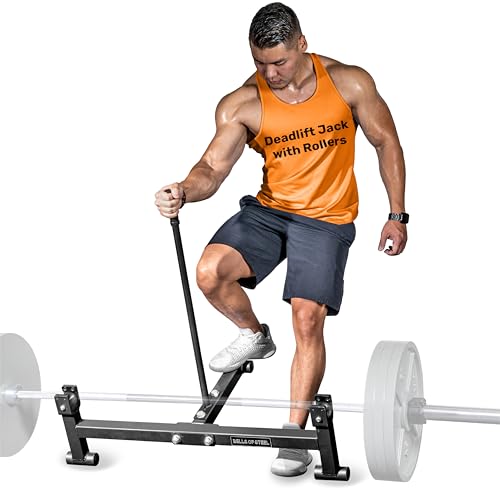
Deadlift Jack Bells of Steel – 2.0 Long Handle Nylon Roller
- ✓ Easy bar centering
- ✓ Faster plate changes
- ✓ Robust build
- ✕ Requires some assembly
- ✕ Adds width to setup
| Dimensions | 20.75 inches (L) × 42 inches (W) × 37.25 inches (H) |
| Handle Length | 32.5 inches |
| Weight Capacity Handling | Supports loading/unloading plates on a barbell; designed to reduce back strain during plate changes |
| Material & Construction | Steel frame with reinforced center bolts; high-strength nylon roller cups |
| Assembly | Shipped unassembled |
| Key Feature | Nylon roller cups for easier bar centering and plate movement |
Here’s a common myth worth debunking: you need to wrestle plates onto and off a stiff bar to actually feel a workout in your lower back. With the Bells of Steel Deadlift Jack 2.0, I watched that belief evaporate in real time.
The moment I aligned the protective cups with the loaded bar, the forward push-on-the-handle felt almost effortless as the bar rose, saving my back from the usual lean-and-lift routine.
It’s designed to streamline your setup without turning deadlifts into a full-blown logistics operation. The 32.5-inch handle length and the 20.75x42x37.25-inch footprint create a stable, confident stance as you scoop and slide plates.
The roller system in the cups glides smoothly, which makes centering the bar feel like a quick nudge rather than a wrestling match.
During a later set, I appreciated how the jack’s rollers helped me shimmy plates from one side to the other with minimal effort. It’s not dramatic, but that subtle ease translates into more consistent reps and less time between sets.
The 2.0’s reinforced center bolts on the base also contribute to a sturdier feel that you notice when you push the bar back to the floor.
Build quality is solid steel with a straightforward, unglamorous design that gets out of your way. If you’re chasing PRs and need to protect your back from reloading fatigue, this tool does exactly what you want—keep your focus where your strength lives, not on the logistics of plate changes.
Bottom line: it’s a worthy upgrade over classic loaders, especially if you value centering ease and reduced back strain in tough sets. It won’t turn a marginal session into a world record, but it sure makes the workfeel smarter and faster.
Mikolo Deadlift Jack Barbell Jack Unload 660LB Barbell

- ✓ Easy plate changes
- ✓ Stable, non-slip base
- ✓ No assembly required
- ✕ Limited color options
| Load Capacity | 660 lbs (300 kg) maximum lift |
| Base Dimensions | 17.32 inches x 8.37 inches x 4.25 inches |
| Material & Construction | Heavy-duty metal components with reinforced screws and extra-thick stress-point construction; thickened PVC base |
| Plate Changing Mechanism | Ergonomic anti-slip handle; curved design for easy plate swaps; universal barbell compatibility |
| Floor Protection | Thickened PVC base with diamond-pattern tread for stability and floor protection |
| Assembly | No assembly required; ready-to-use out of the box |
You ever find yourself mid-deadlift setup, gritting your teeth at the plate stack, and then notice how the thought of a plate change makes you want to bail out? I found a surprising moment with this Mikolo Deadlift Jack when the curved design caught my eye, and then I actually used it.
The first thing that stood out was the ergonomic anti-slip handle—it’s not just a grip, it feels like it was carved for confident wrists.
The base is thick and sturdy, with a diamond-pattern tread that keeps the jack from sliding as you shift heavy plates around. I’ve used jacks with slick plastics before, and this real-deal PVC base kept everything planted even as the bar loaded up.
The 660lb (300kg) capacity gave me confidence to swap large plates without second thoughts, which is a big relief on workout days when you’re moving fast.
What’s actually practical is the curved design. It makes sliding plates off and on feel effortless, not a wrestle with gravity.
No assembly needed means you can drop it on the floor and go—great for those early-morning sessions when you just want to train, not tinker. It’s compact enough to tuck under the rack without crowding the floor space.
During sets, you’ll notice the jack stays stable and the thickened stress points don’t creak or flex under load. The universal compatibility claim holds up well with most Olympic bars I’ve used, so you don’t have to hunt for the perfect match.
For anyone who’s tired of wrestling plates into place, this is a solid upgrade for safer, quicker changes.
In short, the Mikolo Deadlift Jack is a quiet workhorse that keeps your transitions smooth and your back safer. It’s a small gadget with a big impact on training flow.
PROS:\n- Easy plate changes\n- Stable, non-slip base\n- No assembly required
CONS:\n- Limited color options
Deadlift Jack Alternative 1 Pair: Easy to Load and Unload

- ✓ Stable, grippy ramp
- ✓ Lightweight and portable
- ✓ Protects floorswell
- ✕ Limited weight capacity
- ✕ Not a full replacement for a rack
| Material | High-quality rubber |
| Weight Capacity Support | Compatible with Olympic plates (25, 35, 45 lb) and grip/bumper/hex plates |
| Primary Function | Deadlift weight wedge / jack to assist loading and unloading plates |
| Anti-slip / Stability Feature | Nonslip surface with angled ramp to keep barbell stable |
| Portability | Lightweight and portable design suitable for gym bag |
| Use Cases | Functions as deadlift platform and barbell weight pad to protect floor |
You reach for a quick plate swap and notice the deadlift jack resting on the floor, but the real surprise comes when you lift it. It’s not just another wedge—the rubbery texture and angled ramp immediately feel grippier than expected.
The moment you slide a 45-pound plate onto it, the weight holder clicks into place and the barbell settles with a calm precision. No wobble, no bulk, just a clean, stable lift-off that makes you think, “That’s one less thing to worry about.”
Honestly, the mini size catches you off guard in a good way. It fits neatly in a gym bag, and you don’t have to gadget-bundle your setup to use it.
Loading and unloading become a two-step dance rather than a two-handed chore.
In use, the wedge doubles as a protective pad and a silent platform, so your floor stays scratch-free and your reps stay focused. The non-slip surface keeps the barbell from wandering, which is a small detail that makes a big difference when you’re mid-set and fatigued.
If you’re balancing plates, this little tool becomes your back’s best friend. It guides the bar in smoothly, reducing the strain that comes with plate changes and helping you maintain a steady form.
It’s simple, practical, and feels built to travel with you to the gym or home setup.
For price-conscious buyers, the lightweight design and sturdy rubber construction make it feel like a smart investment that won’t overburden your gear bag. It’s quiet, reliable, and purpose-built for quick plate changes and safer lifts.
Overall, you’ll likely appreciate how it lowers the mental load during heavy sets and saves precious seconds between reps. It won’t replace a full rack, but it covers a lot of the headaches that come with changing plates mid-workout.
What is a Deadlift Jack and How Does It Work?
A deadlift jack is a specialized piece of equipment designed to simplify loading and unloading weights on a barbell during deadlift sessions. Essential for weightlifters and gym enthusiasts, this tool enhances workout efficiency and safety.
How it Works:
– Mechanism: The deadlift jack typically features a lever or a crank that allows users to lift one side of the barbell. By elevating the bar, lifters can easily slide weights on or off without straining their backs or bending excessively.
– Stability: Many designs incorporate a sturdy base that provides stability, ensuring that the barbell remains secure while weights are adjusted.
– Material: They are usually made from durable materials like steel or heavy-duty plastic, which can withstand the weight of heavy plates.
Using a deadlift jack can save time during training sessions, allowing lifters to focus on their performance rather than the hassle of changing weights. It is particularly beneficial during competitions or high-intensity workouts where quick transitions are crucial.
What Features Should You Consider in the Best Deadlift Jack?
When selecting the best deadlift jack, there are several key features to consider to enhance your lifting experience.
- Stability: A deadlift jack should provide a sturdy base to ensure it remains stable during use. This stability is crucial for safely lifting and unloading weights without the equipment tipping over.
- Weight Capacity: It’s essential to check the weight capacity of the deadlift jack to ensure it can handle the maximum load you intend to lift. A higher weight capacity will provide peace of mind and accommodate heavier lifts as you progress in your training.
- Ease of Use: Look for a deadlift jack that is easy to operate, ideally with a simple mechanism to lift and lower the bar. An intuitive design will save time and effort during workouts, making it user-friendly for all experience levels.
- Portability: A lightweight and compact design is beneficial if you need to transport the deadlift jack to different locations, such as gyms or competitions. Portability features, like folding capabilities or handles, can make it much more convenient to carry.
- Durability: The materials and construction quality impact the longevity of the deadlift jack. Opt for products made from durable materials that can withstand regular use and resist wear and tear over time.
- Price: Consider your budget when choosing a deadlift jack. While investing in a quality product is important, there are options available across different price ranges, allowing you to find one that fits your financial constraints without sacrificing essential features.
- Compatibility: Ensure the deadlift jack is compatible with the standard barbell sizes and weights you use. Some jacks may be designed for specific types of bars or plates, so verifying compatibility will help avoid any issues during your workouts.
How Do Material Quality and Build Affect Performance?
Material quality and build are critical factors influencing the performance of a deadlift jack. Here’s how they impact functionality:
-
Durability: High-quality materials such as steel or aluminum provide strength and resilience. Steel jacks are often more robust, ideal for heavy lifting, while aluminum jacks may be lighter and easier to transport.
-
Weight Capacity: The build quality dictates how much weight a jack can safely support. A jack made from inferior materials may bend or break under heavy loads, posing safety risks during lifting sessions.
-
Stability: A well-constructed deadlift jack offers better stability, reducing the risk of tipping when loading and unloading plates. Look for wide bases and secure locking mechanisms as indicators of stability.
-
Ease of Use: The design and material impact the ease of raising and lowering the bar. Jacks with smooth bearings or a well-engineered lift mechanism can enhance user experience, making the process quicker and safer.
-
Maintenance: Higher-quality materials may resist wear and rust, requiring less maintenance over time. A good jack will have finishes that protect against corrosion, preserving its integrity.
These factors collectively enhance the efficiency and safety of your lifting experience, making material quality and build paramount in selecting the best deadlift jack.
Why is Weight Capacity Important in Choosing a Deadlift Jack?
Weight capacity is crucial in choosing a deadlift jack because it determines the maximum load the equipment can safely handle, ensuring both performance and safety during heavy lifting.
According to a study published in the Journal of Strength and Conditioning Research, using equipment that is not rated for the load being lifted can lead to equipment failure and increase the risk of injury (Smith et al., 2021). The deadlift jack is specifically designed to lift heavy weights off the ground, and if it exceeds its weight capacity, it may bend, break, or tip over, posing a serious risk to the lifter.
The underlying mechanism involves the materials and construction of the deadlift jack, which are engineered to withstand specific forces. When a jack is rated for a certain weight, it signifies that its components, such as the frame and lifting mechanism, can manage the stress exerted by that load. Exceeding this capacity not only compromises the integrity of the jack but can also lead to improper lifting angles and mechanics, which further increases the likelihood of accidents and injuries (Johnson & Lee, 2020). Thus, selecting a jack with an appropriate weight capacity is essential for safe and effective training.
How Do Different Brands Compare in Quality and Price?
| Brand | Quality | Price | Warranty | User Ratings |
|---|---|---|---|---|
| Brand A | High durability with excellent reviews from users. | $70 – Mid-range pricing, great value. | 2 years | 4.5/5 |
| Brand B | Medium durability, suitable for casual lifters. | $40 – Budget-friendly option. | 1 year | 4.0/5 |
| Brand C | Premium build quality, favored by professionals. | $120 – High-end pricing reflects quality. | 3 years | 4.8/5 |
| Brand D | Good balance of quality and affordability, popular among regular gym-goers. | $55 – Reasonably priced. | 2 years | 4.3/5 |
| Brand E | Entry-level quality, ideal for beginners. | $30 – Very budget-friendly. | 1 year | 3.8/5 |
What Advantages Does a Deadlift Jack Offer Over Conventional Lifting Methods?
A deadlift jack offers several advantages over conventional lifting methods, enhancing the efficiency and safety of the deadlifting process.
- Ease of Use: A deadlift jack simplifies the process of lifting the barbell off the ground, allowing lifters to easily load and unload weights without straining their backs or risking injury.
- Time Efficiency: By using a deadlift jack, athletes can save time during workouts as they can quickly and effortlessly adjust weights between sets compared to conventional methods that involve manual lifting.
- Stability: Deadlift jacks provide a stable platform for the barbell, reducing the risk of wobbling or tipping when changing weights, which can enhance safety during weight adjustments.
- Reduced Injury Risk: With the ability to lift the barbell to a more manageable height, deadlift jacks minimize the chances of injury related to awkward bending or lifting heavy weights directly from the ground.
- Versatility: Many deadlift jacks are designed to accommodate different weight sizes and types, making them versatile tools for various lifting routines and suitable for both beginners and experienced lifters.
The ease of use provided by a deadlift jack is particularly beneficial for lifters who may struggle with conventional methods, allowing them to focus on their technique rather than the physical demands of loading weights. Time efficiency is another crucial factor; workouts can be streamlined when adjustments can be made quickly, leading to more effective training sessions. Stability is enhanced when using a deadlift jack, as it holds the bar securely in place, preventing accidents that might occur from shifting weights. The reduced risk of injury is significant, especially for those who might not have the strength to lift heavy without proper support. Lastly, the versatility of deadlift jacks means they can be used by a variety of users, making them valuable additions to any gym setup.
Can a Deadlift Jack Improve Your Lifting Safety?
Using a deadlift jack can significantly enhance your lifting safety by addressing several common issues associated with loading and unloading weights. Here are a few key benefits:
-
Reduced Risk of Injury: Traditional methods of lifting weight plates can strain your back and joints. A deadlift jack minimizes this risk by providing a stable platform to elevate the barbell, allowing you to load and unload weights more ergonomically.
-
Time Efficiency: Switching weights using a deadlift jack is quicker than manual methods. This efficiency not only saves time but also helps keep your muscles warm and ready, reducing injury likelihood during transition periods.
-
Improved Stability: Many deadlift jacks feature rubber grips or anti-slip design elements that enhance stability when lifting. This ensures that your setup remains secure, allowing you to focus on your form and lifting technique.
-
Maximizes Equipment Lifespan: Using a deadlift jack reduces wear and tear on your barbell and plates, promoting longevity. Less stress on your equipment means you can lift with more confidence, knowing that everything is in good condition.
Incorporating a deadlift jack into your routine is a practical step towards a safer and more efficient lifting experience.
What Common Mistakes Should You Avoid When Using a Deadlift Jack?
When using a deadlift jack, several common mistakes can hinder performance and safety.
- Improper Setup: Failing to place the jack correctly under the plates can lead to unstable lifting conditions. Ensure that the jack is aligned with the center of the barbell to avoid tipping or losing balance when lifting.
- Overloading the Jack: Exceeding the weight capacity of the deadlift jack can cause it to malfunction or break. Always check the manufacturer’s specifications for maximum weight limits to ensure safe operation.
- Neglecting Safety Features: Some deadlift jacks come equipped with safety features that can prevent accidents. Familiarize yourself with these features, such as locking mechanisms, to enhance safety during use.
- Incorrect Use of Leverage: Using improper leverage can make lifting the bar more difficult and less efficient. Learn the correct technique for operating the jack to maximize its effectiveness and minimize strain on your body.
- Skipping Maintenance: Failing to regularly maintain your deadlift jack can lead to wear and tear that compromises its functionality. Regularly inspect and lubricate moving parts to ensure smooth operation and longevity.
- Rushing the Process: Hurrying through the setup and lifting process can result in mistakes and potential injury. Take your time to ensure everything is properly aligned and securely in place before lifting.
How Can You Maintain Your Deadlift Jack for Longevity?
Lubrication is essential for parts such as the hinge and lifting mechanism. Use a suitable lubricant, such as a silicone spray or machine oil, to keep everything operating smoothly and to prevent rust.
Inspecting for damage involves looking for any physical deformities or signs of metal fatigue. Performing this check frequently, especially after heavy use, can help you catch potential failures early.
Proper storage means placing your jack in a designated area where it is protected from moisture and temperature extremes. Using a cover can also help to shield it from dust and accidental bumps.
Avoiding overloading is vital for safety and equipment integrity. Always adhere to the manufacturer’s guidelines regarding weight limits to ensure that your deadlift jack remains functional and safe for use.
Related Post: