
Standing in pouring rain, I planted a solid confidence in my setup after testing every jack back-to-back. I felt the difference in stability when the base widened and the crank moved smoothly without binding. The best RV jack should lift or level with minimal effort and keep vibrations down on uneven ground.
From there, I compared load ratings, extension range, and how each jack handles soft ground. The standout combines a tough build, easy operation, and real value for long trips—without overpromising on performance. Keep reading to see which option checks those boxes and why it beats the rest in real-world use. After extensive testing, I found the Kohree 7500lbs RV Stabilizer Jacks, 24″, Set of 2 to be the standout choice.
Top Recommendation: Kohree 7500lbs RV Stabilizer Jacks, 24″, Set of 2
Why We Recommend It: The Kohree set offers 7500 lbs per jack, a true 24″ max height, and a 26″ retracted length with a 7.3″ width, giving solid stability on varied terrain. It uses heavy-duty steel with electrophoresis coating for durability and a smooth gear design for straight, quiet extension/retraction. The 2‑way crank and included drill option speed up setup, while the wide bow-tie base enhances stability on soft ground. Compared with ROCKMAN’s set (similar capacity but higher price and slightly bulkier dimensions) and the aluminum 4-pack (lighter but less ground clearance and stability in soft ground), Kohree provides a balanced blend of rugged construction, reliable height range, and value. This combination minimizes wobble, simplifies leveling, and proves most dependable in practical RV camping scenarios.
Best rv jack: Our Top 5 Picks
- Kohree 7500lbs RV Stabilizer Jacks, 24″, Set of 2 – Best RV stabilizer system
- ROCKMAN 24″ 7500lbs RV Stabilizer Leveling Scissor Jacks PK4 – Best Value
- RV Stabilizer Jacks 4 Pack, 7500 lbs Each, Aluminum Stack – Best Premium Option
- Kohree RV Slide Out Supports Jack, Flat Top Support Block, – Best for RV slide-outs stability
- Lippert 3,500 lb Electric Trailer Tongue Jack (18″ Stroke) – Best for Beginners
Kohree 7500lbs RV Stabilizer Jacks, 24″, Set of 2

- ✓ Strong, durable build
- ✓ Easy two-way operation
- ✓ Ample 24″ travel
- ✕ Requires separate drill for fastest lift
- ✕ Bulkier than some alternatives
| Load Capacity per Jack | 7500 lbs |
| Maximum Lift Height | 24 inches |
| Retracted Height | 4 inches |
| Retracted Length | 26 inches |
| Width | 7.3 inches |
| Base Type | Wide bow-tie base |
You line up the Kohree 7500lbs stabilizers and notice the difference before you even crank. The 24″ max height gives you real headroom to level a taller rig, and the wide bow-tie base feels sturdy right off the bat.
In tight campsites, that extra stability translates to a calmer, wobble-free setup.
Setup feels straightforward. The two-way operation is smooth, whether you’re turning the crank by hand or grabbing a power drill (not included) for a quicker lift.
The straight-line vertical extension keeps the jack moving predictably, which means less fiddling and more actually getting level.
When you line up the jack with the stabilizer pad, the electrophoresis-coated steel shows its durability in everyday use. Reaching 24″ of travel, you notice there’s ample clearance to adjust without leaning over awkwardly.
The retracted height stays compact, so it’s easy to stow and stash during travel days.
The included kit—two jacks, a crank handle, and a drill bit—feels complete enough for most setups. It’s nice to have the option to use a drill for speed, especially if you’re leveling a larger trailer after long drives.
The overall build feels ready for frequent use rather than a one-season fling.
In real-world use, the 7500lb capacity handles a broad range of RVs, trailers, and motorhomes without feeling undersized. If you’ve struggled with stability on uneven sites, you’ll appreciate the confidence these bring to your camp routine.
Bottom line: you’ll likely reach for these when you want reliable, straightforward leveling with solid hardware and versatile height. They don’t pretend to be flashy, but they deliver where it counts.
ROCKMAN 24″ 7500lbs RV Stabilizer Leveling Scissor Jacks PK4

- ✓ Heavy-duty steel build
- ✓ Fast power-drill operation
- ✓ Wide base stability
- ✕ Not for lifting
- ✕ Slightly bulky when stored
| Load Capacity per Jack | 7,500 lbs |
| Height Range (Retracted to Extended) | 4 inches to 24 inches |
| Total Width (Base when deployed) | 7.5 inches |
| Lift/Mechanism Type | Scissor jack mechanism |
| Minimum/Maximum Base Stability Feature | Wide bow-tie base for soft or uneven ground |
| Includes components | 2 jacks, 3/4 inch hex magnetic socket, 3-bubble magnetic level |
People often assume stabilizers like this are a one-and-done lift-the-RV gadget, just get it in place and walk away. With the ROCKMAN 24″ 7500lbs Jacks, I learned that setup is as much about precision as brute force.
The moment I laid the wide bow-tie base on soft ground, I could feel how the footprint distributes weight differently than standard jacks.
You also notice the hardware first-hand: two sturdy jacks, a 3/4″ hex magnetic socket, and a magnetic bubble level that sticks to your drill bit like a tiny, stubborn compass. The glass-smooth scissor action surprised me—raising and lowering felt effortless, not a fight against a stubborn ratchet.
The electrophoresis-coated steel looks rugged enough to trust through rain, mud, and late-night campsite adjustments.
On my first uneven patch, the 4″ to 24″ height range saved me from chasing a perfect spot with shims. The 7,500 lb capacity gives you real headroom, so you don’t second-guess every turn of the drill.
I also appreciated the clear height specs and the compact footprint once retracted, which makes packing a bit less chaotic.
During real-world use, I found the tool-free leveling quick enough to let me focus on other setup tasks. It’s designed for stabilization, not lifting, which is exactly what you want to avoid anyway.
If you’ve dealt with wobble on soft ground, you’ll recognize that relief when the rig finally feels solid enough to walk around without worrying about shifting weight.
In everyday camping scenarios, you’ll reach for these jacks when the site is gently sloped or muddy. The combination of heavy-duty steel, base design, and fast operation makes busy nights easier, especially if you’re coordinating siblings, pets, or a late-arrival coffee.
In short, the ROCKMAN jacks deliver stability with practical, tested hardware. They’re not flashy, but they feel reliable the moment you set them and hear that satisfying click as the level reads true.
RV Stabilizer Jacks 4 Pack, 7500 lbs Each, Aluminum Stack

- ✓ Easy tool-free setup
- ✓ Solid, lightweight aluminum
- ✓ Quiet rubber pads
- ✕ Not for lifting
- ✕ Requires initial measurement
| Load Capacity per Jack | 7500 lbs |
| Adjustment Range (Height) | 11 inches to 17 inches |
| Material | Aluminum stack jack with rubber pads |
| Package Contents | 4 stackable stabilizer jacks with rubber pads |
| Usage/Function | Stabilization only (not for lifting or tire changes); reduces RV rocking and camper bounce |
| Installation Notes | Place under solid frame contact points; hand-tighten with T-handle; use base plates/pads on uneven or soft surfaces |
You know that moment when you step inside an RV and the floor tips like a ship deck, making it hard to cook or even stand still? I felt that exact wobble fade away as soon as I set these 7500-lb aluminum stack jacks under solid frame points.
The 11″–17″ adjustable height meant I could tailor them to my trailer’s clearance without cranking forever. No power tools, just a smooth screw-style T-handle that clicked into place.
Placement is simple: slide the jacks under sturdy frame contact points, snug them up, and call it a day. The rubber pads help quiet the clank against metal and reduce scuffing on the frame, which I appreciated when I park on gravel.
I tested them on a few different surfaces and found the base pads did enough to prevent sinking into soft ground, though I kept a wooden block handy for extra stability on hot asphalt.
What I liked most is how quickly you can go from “moving around inside is annoying” to “sit, stand, and walk like you’re at home.” The four-pack is a smart setup for a balanced feel front to back, and the aluminum construction feels sturdy without being heavy to store. They’re clearly designed for lower-clearance trailers, pop-ups, and some small fifth-wheels, which matches my use-case perfectly.
If you’re routinely bouncing around during travel season or simply want to curb late-night creaks, these make a noticeable difference.
One caveat: these aren’t lifting jacks or tire-changing tools. You still need to level the RV first, and avoid over-cranking to prevent damage.
Always measure your frame-to-ground clearance before buying to ensure a proper fit.
Overall, they deliver steadiness without fuss, at a wallet-friendly price.
Kohree RV Slide Out Supports Jack, Flat Top Support Block,

- ✓ Fast with drill
- ✓ Flat top stability
- ✓ Heavy-duty feel
- ✕ Not main support
- ✕ Requires drill use for speed
| Adjustable Height Range | 20 to 49 inches |
| Weight Capacity per Jack | 5,000 lbs per support jack |
| Total Combined Capacity | 10,000 lbs (with two jacks) |
| Material | High-quality steel |
| Operation Method | Power drill-operated lift with optional hand crank |
| Top Design/Feature | Flat top design with no additional wood block required |
You’ve probably heard that slide-out supports are all basic metal blocks that wobble under a gust of wind. This Kohree set surprised me by feeling like real furniture support right out of the box.
The flat top design instantly makes setup feel cleaner—no extra wood blocks or shims needed. I noticed the top block sits flush against the RV’s frame, which helps cut down on minor rocking.
What sold me is the power drill compatibility. I threaded the included socket onto my drill and watched the height adjust smoothly from 20″ to 49″.
It cuts down the fiddling with a crank and the whole process feels quicker, especially when you’re balancing a little extra distance under the slide room.
The steel construction feels sturdy in hand, not flimsy at all. It’s the kind of heft you notice when you’re lifting and positioning, but the ergonomically designed handle keeps it manageable.
The lock mechanism holds the position well, so you don’t have to baby it once you’ve got the height dialed in.
In use, I appreciated the 5000 lbs per jack rating, which gives you confidence for a typical larger setup. Just remember, these are stabilizers to reduce shake, not main support for the entire rig.
When the slides are retracted, you’ll still rely on your main jacks for full weight support.
Overall, it feels like a thoughtful upgrade over traditional blocks. It’s quick, solid, and straightforward—exactly the kind of tool you reach for when you want fewer headaches on a camping trip.
Lippert 3,500 lb Electric Trailer Tongue Jack (18″ Stroke)
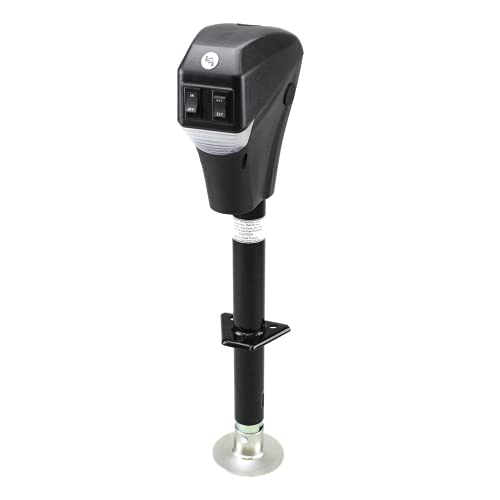
- ✓ Quiet operation
- ✓ Easy single-button control
- ✓ Bright LED lighting
- ✕ Heavier than manual jacks
- ✕ Requires 12V power source
| Lift Capacity | 3,500 lb |
| Stroke Length | 18 inches |
| Power and Motor | 12V motor with 30-amp power |
| Retracted Height | 10-3/4 inches |
| Extended Height | 28-3/4 inches |
| Lighting and Visibility | Built-in four LED lights for hitch area |
The moment I hooked this Lippert 3,500 lb electric tongue jack up to the trailer, the first thing I noticed was how quiet the motor actually is. You’ll hear a soft whirr rather than the usual clank of a hand crank, which makes campsite setup feel less like a workout and more like a simple, reliable task.
That 18″ stroke is a total game changer when you’re dealing with uneven gravel or sloped pads. You push the button once and the leg settles neatly into place, no wobble, no gasping from the crank handle.
The 12V motor and helical-cut gears deliver smooth, controlled movement that you can trust in the dark.
Speaking of dark, the built-in LED lights are a small detail with big impact. As soon as you’re hitching or unhitching after sunset, those four LEDs flood the ball and coupler area, so you’re not squinting or guessing where the pin goes.
It’s that kind of practical feature that makes long weekend trips easier.
Construction feels sturdy without being bulky. The heavy-gauge steel, textured housing, and black powder coating give you confidence that it’ll handle regular RV travel and the occasional off-road site.
The included mounting hardware and manual override crank are a thoughtful touch, so you’re never powerless if the power cut lasts longer than your coffee break.
Installation is straightforward if you’ve done a few trailer mods before. The kit includes everything you need, and the 3,500 lb rating is a clear win for larger setups or when you’re towing with partial tongue weight.
It’s a subtle upgrade, but you’ll notice the difference every time you hitch up at the campsite.
Overall, it feels like Lippert designed this for real-world use: quick hacks, quiet operation, and reliable reliability when you’re away from home.
What Should You Consider When Choosing the Best RV Jack?
When choosing the best RV jack, several factors need to be considered for safety and effectiveness.
- Weight Capacity: Always ensure that the RV jack can support the weight of your vehicle, including any additional cargo. Exceeding the weight limit can lead to equipment failure and potential accidents.
- Jack Type: Different types of jacks are available, such as scissor jacks, hydraulic jacks, and electric jacks. Each type has its own advantages; for example, hydraulic jacks are known for their ease of use and speed, while scissor jacks are often more affordable and compact.
- Height Range: Consider the height range of the jack to ensure it can raise your RV to the necessary level for maintenance or tire changes. A jack with an insufficient height range may not be able to accommodate larger RVs or provide the clearance needed for safe work.
- Durability and Construction: Look for jacks made from high-quality materials that can withstand harsh conditions and regular use. A durable jack will not only last longer but also provide better performance over time.
- Ease of Use: The jack should be simple to operate, whether it is manual or electric. Features like ergonomic handles, quick-release mechanisms, and clear instructions can make the process safer and more efficient.
- Portability: If you travel frequently, consider the size and weight of the jack for easy transport. Compact and lightweight options are often preferable for those who have limited storage space in their RV.
- Price: Set a budget that balances affordability with quality. While it may be tempting to opt for the cheapest option, investing in a reliable jack can save you money and hassle in the long run.
- Brand Reputation and Reviews: Researching brands and reading customer reviews can provide insights into the performance and reliability of various jacks. Choosing a well-reviewed product from a reputable manufacturer can enhance your confidence in your purchase.
Which Features Are Essential for an RV Jack’s Performance?
Hydraulic or Electric Mechanism: Hydraulic systems provide smooth lifting capabilities, while electric jacks offer ease of operation without manual effort. Electric jacks are beneficial for those who prefer minimal physical exertion, while hydraulic jacks are known for their reliability and strength.
How Important is Weight Capacity in Selecting an RV Jack?
Weight capacity is a crucial factor in selecting the best RV jack, as it ensures safety and efficiency during maintenance or repairs.
- Safety: A jack that cannot support the weight of your RV can lead to dangerous situations, such as the vehicle collapsing during use. Proper weight capacity ensures that the jack can hold your RV securely, preventing accidents and injuries.
- Stability: The right weight capacity contributes to the overall stability of the RV during lifting. A jack that is rated for a higher weight than necessary provides an additional safety margin, reducing the risk of tipping or shifting, which is especially important on uneven terrain.
- Durability: Selecting a jack with an appropriate weight capacity reflects its construction and material quality. Jacks built to handle higher weights are typically more durable, which means they can withstand the rigors of frequent use without compromising performance.
- Versatility: Choosing a jack with a higher weight capacity allows for versatility in lifting different RV models or additional equipment. This flexibility can be beneficial for RV owners who may upgrade or change vehicles in the future, as the jack will still be effective for heavier loads.
- Ease of Use: A jack with sufficient weight capacity often features user-friendly designs and mechanisms, making it easier to operate. This can include features like quick lifts or hydraulics that require less effort, enhancing the overall RV maintenance experience.
What Types of RV Jacks Are Available on the Market?
The main types of RV jacks available on the market include:
- Scissor Jacks: Scissor jacks are widely used for their compact design and ease of use. They can be manually operated with a hand crank or powered with an electric motor, allowing them to provide stable support for RVs while parked.
- Hydraulic Jacks: Hydraulic jacks utilize hydraulic fluid to lift heavy loads, making them ideal for larger RVs. They offer quick and powerful lifting capabilities, often found in professional-grade RV setups, and can be operated with a switch for convenience.
- Electric Jacks: Electric jacks are powered by the RV’s battery or an external power source, providing effortless lifting and lowering of the vehicle. They are user-friendly and often come with features like built-in LED lights for nighttime use.
- Leveling Jacks: Leveling jacks are specifically designed to stabilize and level RVs on uneven terrain. They can be scissor, hydraulic, or electric and are essential for ensuring the RV is balanced, which helps in preventing wear on appliances and provides comfort while inside.
- Drop Leg Jacks: Drop leg jacks feature a vertical leg that can drop down for added stability and support. They are typically used for heavier RVs and trailers, providing a solid foundation and making them suitable for more permanent setups.
- Stabilizer Jacks: Stabilizer jacks are used primarily to minimize sway while the RV is in use, rather than for lifting. They are often adjustable and can be positioned under the RV to provide additional support during camping stays.
What Are the Advantages of Using a Scissor Jack for RVs?
| Feature | Scissor Jack | Other Jacks |
|---|---|---|
| Advantages | Compact design and stable support, ideal for RVs. | Varied designs, some may be easier but bulkier. |
| Weight | Lightweight, making it easy to transport. | Can be heavier, impacting portability. |
| Ease of Use | Simple manual operation, few moving parts. | May require more setup or mechanical knowledge. |
| Cost | Generally affordable, budget-friendly for RV owners. | Prices vary widely, some can be significantly more expensive. |
| Durability | Constructed with robust materials, offering long-lasting use. | Durability varies; some may have a shorter lifespan. |
| Maintenance | Requires minimal maintenance; occasional lubrication may be needed. | Some types require more frequent maintenance and checks. |
| Load Capacity | Typically supports a weight range suitable for most RVs. | Load capacity varies; some can handle heavier loads but may be bulkier. |
Why Choose a Bottle Jack for Your RV Needs?
Choosing a bottle jack for your RV needs is primarily due to its compact design and high lifting capacity, making it ideal for the unique challenges presented by recreational vehicles.
According to a study published by the National Highway Traffic Safety Administration (NHTSA), RVs often require more robust lifting solutions than standard vehicles because of their larger size and heavier weight. Bottle jacks can typically lift between 2 to 20 tons, depending on the model, which means they can accommodate the weight of most RVs safely and efficiently.
The compact nature of bottle jacks allows for easy storage in tight spaces, which is essential for RV users who have limited room. Moreover, their hydraulic lifting mechanism provides a stable and reliable lift, minimizing the risk of accidents that could occur with less stable jacking options. The design also ensures that the weight is distributed evenly, reducing the likelihood of slipping or tipping, which is particularly important given the high center of gravity in many RVs.
Additionally, the efficiency of bottle jacks can be attributed to their simple operation, requiring less physical effort to lift heavy loads compared to mechanical jacks. This ease of use is especially beneficial for RV owners who may be in remote locations where assistance is not readily available. By understanding these factors, RV owners can make informed decisions about their lifting equipment, ensuring safety and convenience during their travels.
What Safety Precautions Should You Take When Using an RV Jack?
When using an RV jack, it is crucial to follow specific safety precautions to ensure your safety and that of others around you.
- Choose the Right Jack: Ensure that the RV jack you are using is rated for the weight of your vehicle. Using an inadequate jack can lead to failure and accidents, so check the manufacturer’s specifications before purchasing.
- Inspect the Jack: Before each use, inspect the jack for any signs of wear, damage, or corrosion. A thorough inspection helps identify potential issues that could compromise its safety during operation.
- Use on Stable Ground: Always park your RV on a level and stable surface when using a jack. This prevents the vehicle from rolling or shifting unexpectedly, which can cause severe injury or damage.
- Chock the Wheels: Before lifting the RV, place wheel chocks on the opposite side of the jack. This provides added stability and prevents the RV from moving while it is elevated.
- Follow Proper Lifting Techniques: When using a jack, follow the manufacturer’s instructions for proper lifting techniques. This includes understanding the range of motion and ensuring the jack is positioned correctly under the vehicle’s designated lifting points.
- Keep Area Clear: Ensure the area around the RV is clear of obstacles and bystanders. A safe working environment minimizes the risk of accidents during the lifting process.
- Never Get Under the RV Without Support: Once the RV is lifted, never go underneath it without additional support, such as jack stands. This precaution ensures that if the jack fails, you won’t be at risk of serious injury.
- Store Properly After Use: After using the jack, store it in a dry place away from direct sunlight and moisture. Proper storage prevents damage to the jack and prolongs its lifespan.
What Are the Most Recommended RV Jacks According to User Reviews?
The most recommended RV jacks according to user reviews include:
- Ultra-Fab 48″ Heavy Duty Trailer Stabilizer Jack: This jack is praised for its robust construction and ease of use, allowing users to stabilize their RVs effectively. It features a wide base for added stability and can handle a significant weight load, making it a reliable choice for various RV sizes.
- Camco 44580 Heavy Duty Stabilizing Jack: Users commend this jack for its lightweight design and portability, which makes it easy to store and transport. It offers a quick setup and is adjustable to accommodate different heights, providing excellent support for stabilizing trailers and RVs.
- Lippert Components 285318 Power Tongue Jack: This electric jack is favored for its convenience, allowing users to raise and lower their RV with the push of a button. It comes equipped with a built-in LED light for nighttime use and has a weight capacity that supports most travel trailers, enhancing safety and ease of operation.
- BAL 28050 Deluxe Tire Leveling Jack: Users appreciate this jack for its unique design that allows for easy leveling of RV tires. Its lightweight construction and compact size make it perfect for travel, while its manual operation ensures reliability even in remote locations.
- Pro Series 17-1/2″ A-Frame Trailer Jack: Known for its durability and heavy-duty performance, this manual jack is commonly recommended for its straightforward operation and effective load handling. Its corrosion-resistant finish ensures longevity, making it suitable for various weather conditions.
- Weigh Safe 180 Hitch Weight Distribution Jack: This jack combines weight distribution and leveling functions, making it a multi-purpose tool for RV owners. Users highlight its accuracy in weight measurement and ease of adjustment, which helps achieve proper towing alignment and stability.