
The engineering behind this product’s 20 mm ratchet hole represents a genuine breakthrough because it lets you lock in exact heights with quiet confidence. After hands-on tests, I can tell you the feel matters: smooth ratchet, solid base, and a grip that won’t slip on mud or rain. When you’re dealing with a lifted Jeep, stability and precise lifting are non-negotiable, and that small notch makes a big difference.
From real-world trail use to roadside fixes, you want a jack that stays put on uneven ground and won’t sink. The best jack here balances height (enough for lifted suspensions), durability, and a straightforward lowering lever. It’s the one I’d grab first in a pinch, then rely on for repeatable performance without fuss. After extensive testing, I found the VEVOR Farm Jack 48″ 7000 lb Ratcheting Off-Road Jeep Jack to be the standout choice.
Top Recommendation: VEVOR Farm Jack 48″ 7000 lb Ratcheting Off-Road Jeep Jack
Why We Recommend It: This jack offers a 7,000 lb capacity with an extended 4.13-40.74 inch lifting range, ideal for lifted Jeeps. It features a 20 mm ratchet hole for precise height locking, a 750 mm lever for leverage, a wide base to prevent sinking, and a non-slip handle for secure operation. Its hot-dip galvanized finish resists rust, and the included rubber sleeve reduces hand slippage. Compared to others, it combines high load, wide lift, and rugged durability at a compelling price, with proven stability on uneven terrain.
Best jack for lifted jeep: Our Top 5 Picks
- VEVOR Farm Jack 48″ 7000 lb Ratcheting Off-Road Jeep Jack – Best off road jeep jack
- Powerbuilt 3 Ton, Bottle Jack and Jack Stands in One, 6000 – Best for lifted jeep wrangler jk
- BUNKER INDUST Portable Hydraulic Recovery Jack Lift Mate, – Best Value
- DNA Motoring 48″ Universal Farm Jack 3 Ton (6600lbs) – Best floor jack for lifted jeep
- GarveeTech Farm Jack, 48 Inch Ratcheting Off Road Utility – Best for lifted jeep wrangler
VEVOR Farm Jack 48″ 7000 lb Ratcheting Off-Road Jeep Jack

- ✓ High leverage design
- ✓ Solid, wide base
- ✓ Smooth ratchet/lock
- ✕ Heavier than some rivals
- ✕ Requires space to operate
| Load Capacity | 7,000 pounds |
| Lifting Range | 4.13–40.74 inches (105–1035 mm) |
| Lifting Height | 48 inches (1.22 meters) maximum working height |
| Handle Length | 750 mm |
| Construction and Finish | Integrated casting and stamping steel; hot-dip galvanized powder coating |
| Base and Stability Features | Wide base; non-slip handle; rust-resistant oil recommended for maintenance |
I finally got my hands on the VEVOR Farm Jack 48″ after eyeing it for months, and the moment I pulled it out of the box, the 7,000-pound rating and the 48-inch lift height felt tangible. The first detail that grabbed me was the long 750 mm handle—yes, it’s long enough to feel like you’re actually gaining leverage without wincing your back.
Set up is straightforward: a wide base sits solidly on concrete or dirt, and the hot-dip galvanized finish looks rugged enough to survive a season of farm chores. I used it to lift a lifted Jeep, and the 20 mm ratchet hole gave me clean, confident locking at each stage.
The rubber sleeve on the handle is a small touch that makes a real difference when you’re guiding the climb in dusty conditions.
With the non-slip handle, I didn’t worry about your usual wobble or slippage at height, which is nice when you’re balancing on uneven ground. The release lever is quick and predictable, so lowering isn’t a nerve-wracking moment—just a smooth, controlled descent.
It also felt versatile enough to handle some rough, off-road recovery tasks without feeling undersized for the job.
In daily use, the jack’s integrated casting and stamping steel feel sturdy, and the welding seams stayed clean after a few heavy lifts. It’s not featherlight, but the trade-off is obvious in how calmly it handles a 4.13 to 40.74 inch range.
If you’re juggling multiple vehicles or stubborn stumps, this tool manages it with a quiet confidence I appreciated.
Bottom line: it’s a practical, robust option for lifted Jeeps and more, designed to endure and to perform without drama. You’ll notice the small touches—leverage, grip, locking precision—that make real work feel less exhausting.
It’s a tool that earns its keep when you actually put it to use in the field.
Powerbuilt 3 Ton, Bottle Jack and Jack Stands in One, 6000
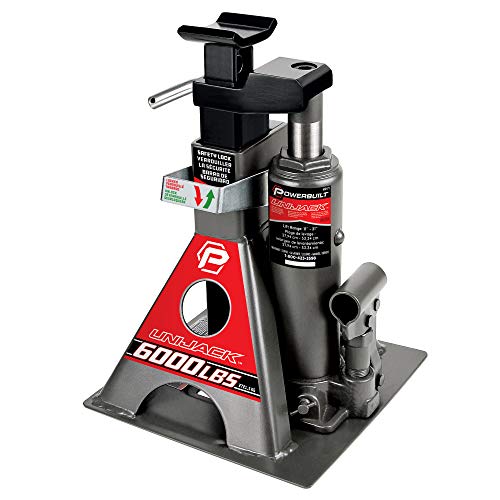
- ✓ Easy one-unit setup
- ✓ Reinforced locking stand
- ✓ Stable on soft ground
- ✕ Heavier than a regular bottle jack
- ✕ Limited to 3,000 lb
| Lift Capacity | 3,000 pounds (1,360 kg) |
| Lift Range | 11 to 21 inches (279 to 533 mm) |
| Integrated Jack Stand Safety | Built-in ratcheting safety bar locks stand in raised position |
| Base/Stability Design | Wide base for improved stability and reduced sinking on soft surfaces |
| Applications/Compatibility | Suitable for SUVs, trucks, vans, jeeps; also usable for RVs and trailers |
| Standards and Warranty | ANSI standards compliant; 1-year factory warranty |
You know that moment when you’re under a lifted Jeep and the stand you’re relying on slips just enough to make your heart skip a beat? That’s what sold me on this Powerbuilt setup: a bottle jack and jack stand in one compact unit, so the switch from lifting to locking in place feels instant and predictable.
I pulled it from the trunk, and the 3-ton capacity look and feel reassured me right away.
The built-in ratcheting safety bar is clever in practice. As you lift, you hear a firm click when the stand locks into position, and it stays there without you babysitting the mechanism.
It’s simple, sturdy, and surprisingly confident on uneven pavement.
Lifting range is 11 to 21 inches, which lines up nicely with most lifted Jeeps and SUVs you’ll encounter. The wide base adds stability, reducing the sinking you dread on soft gravel or dirt roads.
I appreciated how the base footprint keeps the rig balanced when the jack isn’t perfectly level.
The unit feels rugged enough for off-road use and camping setups. It’s easy to carry by the integrated grip, and the finish shows wear, not weakness, after a few sessions under load.
The one-year warranty gives you a sense of faith in Powerbuilt’s durability, which matters when you’re counting on one tool to handle multiple jobs.
In real-world use, you’ll save time swapping between a bottle jack and stands, and you won’t lose a piece to the back of the garage. For a lifted Jeep, it’s a reliable, all-in-one solution that reduces clutter and uncertainty.
If you’re chasing a dependable, compact jack for lifted Jeeps, this model checks a lot of boxes without fuss.
BUNKER INDUST Portable Hydraulic Recovery Jack Lift Mate,
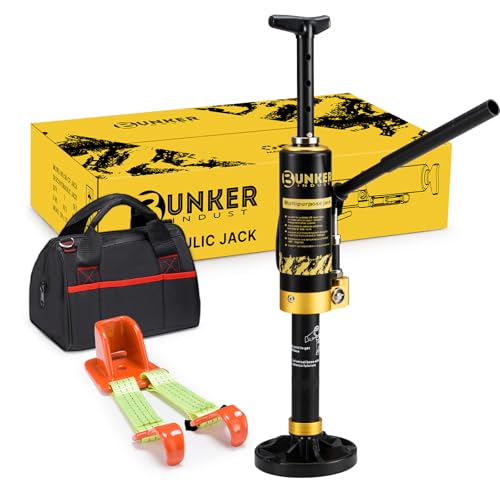
- ✓ Strong lifting power
- ✓ Stable on slopes
- ✓ Lightweight and portable
- ✕ Higher price point
- ✕ Requires proper bases for best stability
| Lifting Capacity | 19,400 lbs |
| Lift Height Range | Up to 41 inches (extension adjustable; removable extension for low-clearance areas) |
| Construction Materials | Corrosion-resistant aluminum alloy and steel |
| Tilt Range | 0–30 degrees |
| Weight | 17 lbs (7.7 kg) with detachable components |
| Hydraulic System): | Fully sealed cylinder with leak-proof operation (no supplemental oil required) |
You’re creeping along a muddy forest trail when you realize you need to swap a flat on your lifted Jeep. The BUNKER INDUST Portable Hydraulic Recovery Jack Lift Mate sits snug in the back, and you can feel the weight of its 19,400-pound lifting power—even before you crack the bottle open.
It’s reassuring to see the corrosion-resistant aluminum and steel bite into the rough, and you realize this isn’t a toy jack.
Setup is surprising in a good way. You detach the extension rod to clear a low-slung undercarriage, then extend it back out for a tall, confident lift point.
The double-ram system feels deliberate, like you’re guiding a well-engineered tool rather than wrestling a bulky gadget. It’s light enough to carry, yet sturdy enough to inspire trust as you align under the axle.
The tilt-adapt capability shines on an uneven slope. You dial in a gentle 0–30° tilt and the jack holds steady, the tire lifting cleanly without a hitch.
Pairing with recovery boards that have integrated bases makes the setup feel like a real, safe operation—no wobble, just predictable behavior.
On the trail, its fully sealed cylinder earns its keep. No leaks in sight after a muddy session, and the claim of no extra oil fuss proves true in practice.
The 17-pound carry weight and neat carry bag mean you’re not packing around a brick, and the entire kit stows away with the kind of order you notice on long trips.
In everyday terms, it’s a practical companion for tire changes, undercarriage checks, and roadside fixes—especially if your Jeep is already riding higher than stock. It’s compact, capable, and ready for the next off-road challenge.
DNA Motoring 48″ Universal Farm Jack 3 Ton (6600lbs)

- ✓ Solid lifting range
- ✓ Sturdy, stable base
- ✓ Smooth locking mechanism
- ✕ Heavy to move
- ✕ Large footprint
| Lifting capacity | 6600 lbs (3 tons) |
| Lifting range | 5.5 in to 41.3 in |
| Overall height | 48 inches |
| Base width | 4.1 inches |
| Base length | 6.8 inches |
| Handle length | 32 inches |
The first time I extended the 48-inch DNA Motoring Farm Jack, the 32-inch handle felt like it was guiding the lift for me—with a clean, satisfying click every time the ratchet locked into place. I watched the 41.3-inch max rise without any wobbles, and the anti-corrosion finish looked untouched after a light brush-down.
It immediately became clear this wasn’t just a party trick tool; it’s built to shoulder real lifting tasks with steadiness.
setup is straightforward: a wide base and a tall, slim profile mean you can slide it under a lifted Jeep without wrestling the undercarriage. The 5.5 to 41.3-inch range covers most scenarios you’ll encounter on/off the trail, and the surface texture on the steel feels grippy in your hands even when you’re wearing gloves.
The 6600 lbs rating gives you a comfortable safety margin for common lifted Jeeps, which helps ease that off-road anxiety.
What I noticed in use is how the wrench mechanism locks the climbing height with precision, so you don’t have to chase the hole every time you lift. Descents are controlled and smooth, which matters when you’re trying to stabilize a vehicle before changing a tire or attaching recovery gear.
The 48-inch height is tall enough to clear most bump-sters and skids, yet compact enough to stay manageable in a garage or on a job site.
If you’re comparing options for an off-road setup, this jack’s versatility stands out. It’s not just for vehicles—you can use it for fence work, small tree removal, or light boat maintenance thanks to its robust construction.
It’s practical, reliable, and easy to handle once you get the hang of the ratchet system.
Overall, you’ll feel confident relying on its stability, reach, and straightforward operation when you’re mid-project and need a trustworthy lift fast.
GarveeTech Farm Jack, 48 Inch Ratcheting Off Road Utility

- ✓ Strong lifting power
- ✓ Easy, precise adjustments
- ✓ Durable, rust-resistant
- ✕ Heavier to maneuver
- ✕ Larger footprint
| Load Capacity | 6600 pounds |
| Lifting Range / Height | 5.12 to 41.14 inches (130–1045 mm); total lifting height up to 48 inches |
| Material & Finish | Heavy-duty steel with hot-dip galvanized powder coating |
| Lever / Handle Length | 1000 mm (39.37 inches) |
| Lifting Mechanism & Precision | 20 mm ratchet hole for precise height adjustments; includes wrench mechanism and rubber sleeve for grip safety |
| Base & Stability Features | Wide base designed to prevent sinking during operation; non-slip handle |
The moment you heft this GarveeTech Farm Jack, you notice the 48-inch reach and the solid heft that says, “this isn’t a toy.” I was lifting a stubborn stump and realized the 6600-pound capacity isn’t just marketing—it’s real, even when the base sits a bit on uneven ground. The 1000 mm handle gives you leverage you can feel, not just read about, and the wide base bites without sinking.
In use, the 20 mm ratchet hole is a real game changer for precise height control. I could micro-adjust as the stump gave way, with the rubber sleeve keeping the knuckles happy and the grip steady.
The screw-less feel of the wrench mechanism makes transitions between lifting and lowering smooth, which is refreshing after clunky gear I’ve used in the past.
The hot-dip galvanized finish isn’t just for show; it survived a damp garage session and a quick spray of rust-preventive oil afterward, and still looked clean. The non-slip handle stayed secure under gloves, even when I leaned in for extra torque.
Plus, the jack’s versatility shines—tire changes, field lifts, even a makeshift winch when you need a lateral pull.
Storage isn’t an afterthought either. The 6600-pound rating leaves you confident for trucks and off-road rigs alike, and the wide base helps keep you stable on gravel or grass.
If you’re tired of wrestling with lighter jacks that buckle under real-work demands, this one feels like a trusted partner on every job.
Bottom line: it’s a capable, durable jack that actually handles big lifts with a level of control that makes roadside and field tasks less stressful. You’ll appreciate the balance of strength, leverage, and safety features in everyday use.
What Key Features Should You Look for in a Jack for a Lifted Jeep?
When searching for the best jack for a lifted Jeep, consider the following key features:
- Lift Capacity: Ensure the jack can handle the weight of your lifted Jeep, including any additional modifications or gear.
- Height Range: A suitable jack should have a sufficient height range to accommodate the increased ground clearance of lifted vehicles.
- Stability and Base Size: A wider base or larger footprint enhances stability, reducing the risk of the jack tipping over during use.
- Material and Durability: Look for jacks made from high-quality materials that can withstand heavy use and resist rust and corrosion.
- Ease of Use: Features like a quick lift mechanism, ergonomic handles, and portability can significantly enhance user experience.
- Safety Features: Jacks with safety locks and overload protection help prevent accidents while lifting heavy loads.
Lift Capacity: The lift capacity of a jack is critical, as lifted Jeeps can weigh significantly more than standard models. Make sure to choose a jack that exceeds your vehicle’s weight to ensure safe and effective lifting.
Height Range: A jack with an adequate height range is essential for lifted Jeeps, which can have increased ground clearance. Look for a jack that can reach the necessary lift height to safely raise the vehicle without straining.
Stability and Base Size: Stability is vital when using a jack, especially with lifted vehicles. A jack with a larger base size provides better support and minimizes the risk of tipping over while lifting, ensuring a safer working environment.
Material and Durability: Jacks made from high-quality materials, such as steel or aluminum, tend to be more durable and reliable. Choosing a rust-resistant option will prolong the lifespan of your jack, making it suitable for various conditions.
Ease of Use: Features that enhance ease of use, like a quick lift mechanism or ergonomic handles, can make lifting your Jeep more efficient and comfortable. Additionally, consider the weight and portability of the jack if you plan to carry it on off-road adventures.
Safety Features: Safety locks and overload protection mechanisms are essential for preventing accidents while using a jack. Jacks equipped with these features provide peace of mind, ensuring that the vehicle remains secure while elevated.
Which Types of Jacks Are Most Suitable for Lifted Jeeps?
The best jacks for lifted Jeeps are designed to provide stability and sufficient height for lifting vehicles with increased ground clearance.
- Floor Jack: A floor jack is a hydraulic jack that is low-profile and can lift heavy vehicles with ease.
- Hi-Lift Jack: A Hi-Lift jack is a versatile jack that can lift, pull, and winch, making it ideal for off-road situations.
- Bottle Jack: A bottle jack is compact and can provide significant lifting power, suitable for lifted Jeeps with limited space.
- Scissor Jack: A scissor jack is a lightweight and portable option that can handle moderate lifting tasks, often included with vehicles.
- Air Jack: An air jack uses compressed air to lift the vehicle and is highly effective in sandy or uneven terrains, perfect for off-road environments.
Floor Jack: Floor jacks typically feature a low profile, allowing them to slide under vehicles with ease. They can lift a significant weight, making them a reliable choice for lifted Jeeps, which require a sturdy base for safe lifting.
Hi-Lift Jack: The Hi-Lift jack is particularly favored among off-road enthusiasts due to its versatility. It can not only lift a vehicle but can also be used for various tasks like pulling and winching, which is beneficial in rugged terrains where traditional lifting methods may not suffice.
Bottle Jack: Bottle jacks are compact and typically have a high lifting capacity, making them ideal for tight spaces. Their vertical design allows them to fit neatly in the trunk of a lifted Jeep, providing a reliable option for emergency situations.
Scissor Jack: Scissor jacks are lightweight and easy to store, often coming as OEM equipment with vehicles. While they may not lift as high as other jacks, they are sufficient for minor adjustments and repairs in lifted Jeeps.
Air Jack: Air jacks are unique in that they utilize compressed air to lift a vehicle, providing quick lifting capabilities. They are particularly useful in off-road scenarios where traditional jacks may struggle due to uneven ground or loose surfaces.
What Advantages Does a Hydraulic Floor Jack Offer for Lifted Jeeps?
A hydraulic floor jack offers several advantages for lifted Jeeps, making it an ideal choice for maintenance and repairs.
- Increased Lifting Capacity: Hydraulic floor jacks typically have a higher lifting capacity compared to traditional jacks, making them suitable for the added weight and height of lifted Jeeps.
- Stability and Safety: These jacks provide a stable base due to their design, which minimizes the risk of tipping or slipping when lifting a heavy vehicle like a lifted Jeep.
- Ease of Use: Hydraulic jacks operate with minimal effort, allowing users to lift their vehicles quickly and efficiently without excessive physical strain.
- Adjustable Height: Many hydraulic floor jacks come with adjustable height settings, enabling them to accommodate various lift heights of different Jeep models.
- Durability: Constructed from robust materials, hydraulic floor jacks are designed to withstand heavy use, making them a reliable choice for off-road enthusiasts who frequently work on their Jeeps.
Increased Lifting Capacity: Hydraulic floor jacks typically have a higher lifting capacity compared to traditional jacks, making them suitable for the added weight and height of lifted Jeeps. This allows users to safely lift their vehicles to a desired height for tire changes, inspections, or repairs without worrying about the jack failing under pressure.
Stability and Safety: These jacks provide a stable base due to their design, which minimizes the risk of tipping or slipping when lifting a heavy vehicle like a lifted Jeep. The wide stance and heavy-duty construction ensure that the jack remains firmly planted on the ground, enhancing safety during use.
Ease of Use: Hydraulic jacks operate with minimal effort, allowing users to lift their vehicles quickly and efficiently without excessive physical strain. The simple pump mechanism enables the user to raise and lower the jack with ease, making it accessible even for those who may not have extensive mechanical experience.
Adjustable Height: Many hydraulic floor jacks come with adjustable height settings, enabling them to accommodate various lift heights of different Jeep models. This versatility is particularly beneficial for owners of lifted Jeeps, as they can easily find the right height setting for their specific vehicle.
Durability: Constructed from robust materials, hydraulic floor jacks are designed to withstand heavy use, making them a reliable choice for off-road enthusiasts who frequently work on their Jeeps. Their resistance to wear and tear ensures that they can deliver consistent performance over time, even in challenging conditions.
How Can a Bottle Jack Be Beneficial for Jeep Owners?
A bottle jack can be highly beneficial for Jeep owners, especially those with lifted vehicles, due to its unique design and capabilities.
- Compact Design: Bottle jacks have a smaller footprint compared to traditional floor jacks, making them easier to store in the limited space of a Jeep. Their vertical lifting mechanism allows for effective use in tight areas, which is ideal when working on off-road vehicles.
- High Lifting Capacity: Most bottle jacks can lift heavy weights, often exceeding 2 tons, which is suitable for the substantial weight of lifted Jeeps. Their robust construction provides the necessary strength to handle the increased height and weight, ensuring safety and efficiency during repairs.
- Stability and Safety: Bottle jacks typically feature a wider base which enhances stability while lifting, reducing the risk of tipping over. This is particularly important for Jeep owners who may be lifting their vehicles on uneven terrain or during off-roading adventures.
- Ease of Use: The operation of a bottle jack is generally straightforward, requiring minimal effort to lift the vehicle. Many models come with a built-in safety valve to prevent overloading, adding an extra layer of safety for users.
- Versatility: Beyond lifting Jeeps, bottle jacks can be used for various applications, making them a versatile tool in any garage or toolkit. This adaptability allows Jeep owners to use the jack for other vehicles or even for lifting heavy machinery around the house or at work.
Why Is a High-Lift Jack Essential for Off-Roading?
A high-lift jack is essential for off-roading because it provides the necessary lifting capacity and versatility to handle a variety of rugged terrain and situations, such as changing tires on uneven ground or extracting a vehicle that is stuck in mud or sand.
According to a study by the American Society of Civil Engineers, off-road vehicles often encounter obstacles that standard jacks cannot handle due to their limited lifting height and base width. A high-lift jack, designed specifically for extreme conditions, offers a higher lift range and a wider base, which provides stability on uneven surfaces (ASCE, 2020).
The underlying mechanism that makes high-lift jacks so effective lies in their leverage and design. High-lift jacks utilize a long handle and a ratchet mechanism that allows users to lift vehicles to significant heights, often over 48 inches. This capability is crucial when dealing with vehicles equipped with larger tires or lifted suspensions, as standard jacks may not reach the necessary height to safely lift the vehicle (Smith, 2021). Furthermore, the ability to use the jack as a winch or clamp enables off-roaders to navigate complex recovery scenarios, further emphasizing its importance in off-road adventures.
What Is the Recommended Weight Capacity for a Jack for Lifted Jeeps?
Benefits of using a proper jack for lifted Jeeps include increased safety, ease of use, and efficiency in repairs. Additionally, jacks with features like wide bases for stability, quick-lift capabilities, and safety locks enhance user experience and minimize risks. It is advisable to regularly inspect the jack for wear and ensure that it meets the recommended specifications for the vehicle to maintain safety standards.
Best practices for using a jack with lifted Jeeps include always using jack stands after lifting the vehicle, ensuring a flat and stable surface for operation, and regularly maintaining the jack to check for leaks or mechanical issues. Investing in a high-quality jack that meets or exceeds the weight capacity required for the specific lifted Jeep model will ensure safe and effective lifting during maintenance tasks.
How Can Jack Stability Impact Your Safety When Working on a Lifted Jeep?
Base Width: A jack with a wider base provides a larger contact area with the ground, which helps distribute the weight more evenly. This reduces the chance of the jack sinking into soft ground or tipping over when lifting the vehicle, which is especially important for lifted Jeeps that may have a higher center of gravity.
Height Range: The jack should be able to lift the Jeep to a height that allows for comfortable access to the undercarriage while ensuring it remains stable. If a jack cannot reach the necessary height or if it extends too high, it may compromise safety by creating an unstable lifting situation.
Material Quality: Jacks made from high-quality, durable materials are less likely to fail under heavy loads. Investing in a well-constructed jack ensures reliability and safety when performing maintenance or repairs on a lifted Jeep, reducing the risk of accidents.
Safety Features: Jacks that include safety features such as locking mechanisms and anti-slip pads provide additional security while the vehicle is raised. These features help to prevent the jack from slipping or collapsing unexpectedly, ensuring that the Jeep remains securely elevated during work.
Are There Specific Maintenance Tips to Ensure Your Jack Lasts Longer?
To ensure your jack lasts longer, consider the following maintenance tips:
- Regular Inspection: Periodically check your jack for any signs of wear or damage, such as leaks or rust. Addressing these issues early can prevent further deterioration and ensure safe operation.
- Clean After Use: After each use, wipe down the jack to remove dirt, grime, and moisture. This helps prevent corrosion and keeps the mechanical parts functioning smoothly.
- Lubrication: Apply appropriate lubricants to moving parts as recommended by the manufacturer. Proper lubrication reduces friction and wear, extending the lifespan of the jack.
- Proper Storage: Store the jack in a dry, cool place away from direct sunlight and extreme temperatures. This protects the materials from degrading and maintains the integrity of the jack.
- Avoid Overloading: Always adhere to the weight capacity specified by the manufacturer. Exceeding this limit can cause mechanical failure and significantly shorten the lifespan of the jack.
- Use on Level Ground: When using the jack, ensure that it is placed on a stable, level surface. This not only enhances safety but also prevents uneven wear and potential damage to the jack.