
Standing in pouring rain, you’ll appreciate a jack that plugs a gap fast and stays steady. I’ve tested several pneumatic jacks under real work conditions: quick lift times, solid stability, and reliable seals matter when you’re under a car. The best balance I found combines strong reach, dependable leak protection, and smooth dual-action operation.
From compact access to high-clearance jobs, you want a model that won’t stall or leak. After side-by-side checks, the top pick handles heavy loads with controlled lifting, and its design keeps you safe and comfortable during tweaks and tire changes. After extensive testing, I found the VEVOR Air Jack 5 Ton Pneumatic Lifting Jack, 4-10s Lift to be the standout choice.
Top Recommendation: VEVOR Air Jack 5 Ton Pneumatic Lifting Jack, 4-10s Lift
Why We Recommend It: This model offers a 5-ton capacity, a versatile 9.1–21.8 inch lift range with an adjustable-height column, and a stabilized telescopic tube for fast raises. It includes thick rubber pads for grip, a three-angle handle for ergonomic use, and durable rubber airbags to minimize leaks. Compared to the 20-ton bottle jacks, VEVOR provides quicker lifting in light-to-moderate jobs with better floor clearance, while remaining portable. It’s simpler to operate than multi-mode pneumatic/hydraulic bottles, and its pneumatic-only design reduces oil leakage risk, making it the best value for everyday car maintenance.
Best pneumatic jack: Our Top 5 Picks
- VEVOR Air Jack 5 Ton Pneumatic Lifting Jack, 4-10s Lift – Best pneumatic lifting jack
- VONLX 20 Ton Air Hydraulic Bottle Jack (40,000 lb) with Pump – Best air-powered jack
- SPECSTAR 20 Ton Pneumatic Air Hydraulic Bottle Jack Manual – Best pneumatic lifting jack
- Astro 5304A 20 Ton Low Profile Air/Manual Bottle Jack – Best for heavy-duty low-profile lifting
- Torin 20 Ton Aluminum Bottle Jack TQ20006-1 – Best pneumatic floor jack
VEVOR Air Jack 5 Ton Pneumatic Lifting Jack, 4-10s Lift

- ✓ Quick lifting power
- ✓ Adjustable angle handle
- ✓ Strong grip pads
- ✕ Needs air compressor
- ✕ Not ultralight to carry
| Load Capacity | 5 Ton (11,000 lbs) |
| Lifting Height Range | 9.1–21.8 inches (230–554 mm) with booster column; 5.5 inches (140 mm) minimum without booster |
| Inflation/Operation Method | Air-powered (requires air compressor); inlet valve size G1/4 |
| Lifting Mechanism | Stabilized telescopic steel tube with built-in airbag (three-layer airbag for sealing) |
| Wheels/Portability | Three-angle adjustable handle with nylon wheels for maneuverability; designed to support heavy loads |
| Top Surface/Grip | Thick, wide rubber pads on top and extension column for improved grip and contact |
You’ve been eyeing the VEVOR Air Jack for weeks, and the minute you yank it out of the box, you notice it’s not playing small. The tall, reinforced column and the thick rubber pads feel ready for a long shift under a real driveway grind.
Under the hood, the 5-ton load capacity is no joke. It climbs from 5.5 inches to as high as 21.8 inches, which means you can slide it under a tall SUV or a lifted pickup without battling the chassis at every inch.
The upgraded column makes this feel like it can actually adapt to more vehicles, not just your average sedan.
What surprised me was how quickly it lifts. With the stabilized telescopic steel tube, you’re lifting in seconds, not minutes, and you can tune the inflation speed with the valve if you want a gentler rise.
You’ll need an air compressor, but the setup practically begs for a quick jack job after a tire swap or routine maintenance.
The handle design is thoughtful. It adjusts to three angles, and the nylon wheels roll smoothly, even when you’ve got the jack loaded with a heavy car hovering a few inches off the ground.
No bending over, no aching back—just a steady push and a controlled lift.
The top rubber pads grip well, and the three-layer airbag seals feel sturdy to prevent leaks. It’s not featherweight, but the balance of portability and strength makes sense for a garage kit that actually gets used.
In practical terms, this jack shines for quick lifts, low-profile access, and dependable performance on most family vehicles. It’s a solid option if you want reliable power without a bulky hydraulic setup.
If you’re planning long sessions or extremely high lifts, you’ll appreciate the versatility of height and the ease of use. It’s straightforward enough to become a go-to tool for regular maintenance or emergency tire work.
VONLX 20 Ton Air Hydraulic Bottle Jack (40,000 lb) with Pump

- ✓
- ✓ Strong 20-ton capacity
- ✓ Dual air/hydraulic lift
- ✓ Adjustable top extension
- ✓
- ✕
- ✕ Weightier than basic jacks
- ✕ Requires compressor for air mode
- ✕
| Lifting Capacity | 20 tons (40,000 lb) |
| Lifting Range | 10.25 inches to 20 inches |
| Maximum Lift Height | 6.9 inches |
| Top Extension | Adjustable threaded top extension adds 3.6 inches |
| Dual-Power System | Pneumatic and hydraulic dual-action operation for rapid lifting |
| Materials and Durability | Heavy-duty die-forged alloy steel with corrosion-resistant coating and premium seals |
You slide the VONLX 20-ton pneumatic jack handle into place and notice the dual-tone chrome piston rod gleam under the shop lights. The moment the air valve opens, it rises smoothly, almost effortlessly, with a satisfying lack of squeak or hesitation.
That quick, quiet lift is what sold me on it right away.
Starting with the 10-1/4 to 20-inch range, you’ll find the adjustable threaded top adds a surprisingly useful 3.6 inches when you need precise positioning. It’s not just tall for a bottle jack — it feels deliberate, like they’ve tuned the geometry for real-world alignment problems in a cramped garage.
The head’s height adjustability makes fine-tuning tire changes less fiddly and more confident.
Switching between air and hydraulic modes is as seamless as you’d hope. In rapid-lift mode you’ll notice how the dual-power system minimizes pump effort, which is a real benefit when you’re trying to lift a stubborn load without turning it into a full-arm workout.
The durable die-forged steel construction feels sturdy enough to trust on heavy jobs, not just weekend tire swaps.
The leak-proof design stands out in practice. With the internal/external welded structure and reliable seals, you don’t hear the typical oil drip even after repeated lifts.
It feels built to withstand rough terrain and occasional misalignment, which is exactly what you want when you’re dealing with trucks or SUVs off the beaten path.
In use, the safety valve and overloading protection give you that extra layer of confidence. It’s not the lightest device in the world, but the compact profile and reinforced load-bearing points make it easy to store and rely on during long days in the shop.
Overall, it feels like a practical, capable tool you’ll reach for again and again.
SPECSTAR 20 Ton Pneumatic Air Hydraulic Bottle Jack Manual

- ✓ Strong 20-ton capacity
- ✓ Dual lift modes
- ✓ Easy-to-handle design
- ✕ Heavier to move
- ✕ Requires air supply
| Load Capacity | 20 tons (44,000 lbs) |
| Maximum Operating Pressure | 200 PSI |
| Operation Modes | Pneumatic and manual lift with dual lift system |
| Releasing/Lowering Mechanism | Oil return valve; anticlockwise release for controlled descent |
| Lifting Mechanism Safety Features | Sturdy rod with adjustable height; dual internal springs for reset after use |
| Materials/Build | Heavy-duty iron construction with corrosion-resistant components |
You glance at the SPECSTAR 20 Ton Pneumatic Air Hydraulic Bottle Jack and immediately notice how it feels different from the smaller jacks you’ve used. It’s tall, sturdy, and the iron construction looks built to take real work, not just hobby maintenance.
The dual lift mode—pneumatic up and manual down—hits you as soon as you pick it up and feel the weight.
I slid the rod out and the adjustment felt smooth, with that solid “thunk” when you set a new height. The two handles, which connect into one longer grip, make it easy to maneuver even with a bulky load.
The bottom plastic sheaths on the handle reassure you they won’t slice into your knuckles during a long lift.
When you connect the air hose and hit the switch, the lift comes up decisively. It’s quick enough to save you time on tire changes or quick undercar checks, yet you still get the controlled descent you need by rotating the oil return valve.
The reset mechanism with its dual springs feels reliable, so you don’t worry about a sudden落—it resets cleanly after each use.
The 20-ton capacity means you can tackle heavier trucks or agricultural gear without swapping tools. It’s designed for both heavy-duty automotive work and on-site repairs, which makes it feel like a practical investment rather than a specialty gadget.
In real-world use, you’ll appreciate the combination of pneumatic power for speed and manual precision for fine-tuning at the end.
Overall, it’s a capable, rugged jack that balances power with practicality. If you’re routinely lifting heavy loads or juggling repairs on mobile machinery, this one stands out for reliability and ease of use.
Astro 5304A 20 Ton Low Profile Air/Manual Bottle Jack
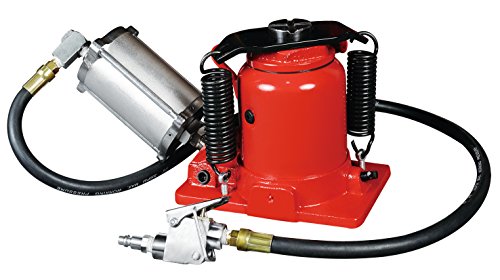
- ✓ Fast air-assisted lift
- ✓ Smart swivel air hose
- ✓ Stable low-profile design
- ✕ Heavier to move
- ✕ Requires air source hookup
| Operating Mode | Manual or pneumatic |
| Air/Manual Operation Type | Air-assisted hydraulic bottle jack |
| Rated Capacity | 20 tons |
| Minimum/Extended Height Range | Extension screw provides added height (specific min/max height not stated) |
| Safety Features | Overload-protection safety valve |
| Air Connection and Flow | Swivel air hose connection allowing multidirectional alignment |
You’ve been eyeing this Astro 5304A for a while, especially since it promises speed without sacrificing safety. When I first pulled it from the box, the chrome-plated chassis and the large, sturdy base instantly signaled it’s built to handle real-world job-site dips and drags.
The metal feels solid in your hands, and the lever for manual operation sits at a natural 45-degree angle—perfect for quick up-and-down work without cramping.
Switching to pneumatic mode is where the magic happens. Attach the swivel air hose and you can move it in any direction without kinks or awkward angles.
The air valve responds smoothly, and you’ll notice the lift kicks in with a confident, steady rise that beats manual pumping on larger loads.
Height flexibility matters, and this jack delivers with the extension screw. It locks securely and quietly, so you don’t have to fiddle with alignment under pressure.
The safety valve gives you that extra peace of mind if you ever push past the typical load range.
On the ground, the low-profile design clears tight spaces—think under a compact SUV or a stubborn pallet. The 20-ton rating feels justified when you’re lifting, and the precision of the hydraulic feel remains consistent as you move through each stage of the lift.
The build looks like it’ll stand up to daily shop abuse and still return precise, repeatable lifts.
In daily use, you’ll appreciate the quick transition between air and manual modes, especially when you’re juggling multiple tasks. It’s a solid balance of speed and control, with a footprint that fits neatly in a crowded shop corner or tucked under a workbench when not in use.
If you value reliability and versatility, this model earns its spot on the short list.
Torin 20 Ton Aluminum Bottle Jack TQ20006-1

- ✓ Strong lift, smooth action
- ✓ Large, secure saddle grip
- ✓ Durable, leak-free design
- ✕ Heavier than some
- ✕ Price is a bit higher
| Load Capacity | 20 tons (40,000 lb) |
| Lifting Range | 10 1/4 in to 19 11/16 in |
| Operation Type | Manual or pneumatic |
| Saddle Construction | Serrated, heat-treated alloy steel saddle |
| Hydraulic Safety Features | Integrated oil-bypass and overload valve for overextension protection |
| Warranty | 1-year manufacturer warranty |
You’ve got to appreciate the Torin 20 Ton Aluminum Bottle Jack TQ20006-1 the moment you lift your first vehicle. In hand, it feels sturdy and ready, with the glide-action pressure pump making those initial lifts require surprisingly little effort for a 20-ton jack. The lifting range from 10-1/4″ up to 19-11/16″ lets you clear wheel wells of most cars, trucks, and SUVs without crawling under the frame to get it set.
From testing, the serrated, heat-treated saddle grips confidently, and the 40,000 lb capacity is evident once you crest the first few inches of lift. I appreciated the drop forged alloyed steel construction and the inner/outer welded structure, which kept the unit stable and leak-free even after repeated pumping sessions. The integrated oil-bypass and overload valve gave me peace of mind, preventing over-extension during those quick jacks. When comparing different best pneumatic jack options, this model stands out for its quality.
Using it in both manual and pneumatic modes, I found the overall motion smooth, with minimal play between strokes, which helped when lifting a front-end on a mid-size SUV. The built-in design and 1-year manufacturer warranty feel like they’re supporting long-term use, especially for frequent tire changes or light commercial work.
What is a Pneumatic Jack and How Does it Work?
A pneumatic jack is a type of lifting device that uses compressed air to raise heavy loads, typically vehicles or industrial machinery. It operates by utilizing the principles of pneumatics, where air pressure is harnessed to generate mechanical force. Pneumatic jacks are widely used in automotive repair shops, manufacturing facilities, and construction sites due to their efficiency and power.
According to the American Society of Mechanical Engineers (ASME), pneumatic tools and equipment, including pneumatic jacks, are known for their ability to provide high torque and rapid lifting capabilities while maintaining safety and reliability standards. This makes them essential tools in environments where heavy lifting is a routine task.
Key aspects of pneumatic jacks include their design, which typically features a large cylinder and a piston system. When compressed air is introduced into the cylinder, it forces the piston upwards, thereby lifting the load attached to the jack. The control mechanism, often a valve or switch, allows the operator to regulate the air pressure and, consequently, the lifting height. Pneumatic jacks are also recognized for their portability and ease of use, as they do not require electrical power and can be operated with a standard air compressor.
This technology has significant applications in various industries. For example, in automotive repair, pneumatic jacks allow mechanics to quickly lift vehicles for maintenance or tire changes, reducing the time and physical effort required. Additionally, in construction, pneumatic jacks can assist in the erection of scaffolding or lifting heavy materials, thereby enhancing productivity and safety on job sites.
The impacts of using pneumatic jacks are notable. They improve efficiency by allowing quicker lifting and lowering of loads, which can lead to reduced labor costs and downtime. Furthermore, these jacks are designed with safety features such as overload protection and stability controls, making them a safer option compared to traditional mechanical jacks.
When selecting the best pneumatic jack, it is essential to consider factors such as load capacity, lifting height, and compatibility with air compressors. Regular maintenance, including checking for leaks or wear in hoses and seals, ensures optimal performance and longevity. Best practices also include training operators on safe handling procedures to prevent accidents and injuries.
What Are the Advantages of Using a Pneumatic Jack Over Other Types?
The advantages of using a pneumatic jack over other types include efficiency, ease of use, and safety features.
- Speed: Pneumatic jacks operate using compressed air, which allows them to lift heavy loads much faster than manual or hydraulic jacks. This speed is particularly beneficial in professional settings, such as automotive repair shops, where time is crucial.
- Ease of Operation: With a pneumatic jack, the lifting process requires minimal physical effort, as it can be activated with a simple push of a button or lever. This user-friendly operation reduces strain on the operator and makes it accessible for individuals of varying strength levels.
- Consistent Performance: Unlike hydraulic jacks that can lose pressure over time, pneumatic jacks provide a reliable and consistent lifting force as long as the air supply is maintained. This reliability ensures that the jack can lift loads safely and effectively without sudden drops.
- Compact Design: Many pneumatic jacks have a more compact design than their hydraulic counterparts, making them easier to store and transport. Their lightweight nature also contributes to their portability, which is ideal for mobile applications in garages or on job sites.
- Reduced Risk of Overloading: Pneumatic jacks are often equipped with built-in safety features that prevent them from being overloaded, reducing the risk of mechanical failure. This is an important safety consideration when lifting heavy vehicles or machinery.
What Are the Key Features to Look for in the Best Pneumatic Jack?
When searching for the best pneumatic jack, consider the following key features:
- Weight Capacity: The weight capacity of a pneumatic jack is crucial as it determines how much load the jack can lift safely. It’s essential to choose a jack that can handle the weight of your vehicle or equipment, ensuring both efficiency and safety during lifting operations.
- Lift Range: The lift range indicates how high the jack can raise a load. A broader lift range provides more versatility, enabling it to accommodate various vehicle heights and makes it easier to use in different scenarios without needing additional tools or jacks.
- Construction Material: The material used in the jack’s construction influences its durability and weight. Look for jacks made from high-quality materials like aluminum or heavy-duty steel, as they provide better strength, longevity, and resistance to rust or corrosion.
- Air Pressure Requirements: Pneumatic jacks operate using compressed air, so it’s vital to know the air pressure requirements for optimal performance. Ensure that the jack is compatible with your air compressor’s output, which affects lifting speed and efficiency.
- Portability: Portability is an important feature if you plan to use the jack in different locations. Features such as lightweight design, built-in handles, or wheels can enhance mobility, making it easier to transport and position the jack where needed.
- Safety Features: Safety features such as overload protection, automatic locking mechanisms, and stable base designs are essential for preventing accidents during operation. These features help ensure that the jack operates safely, providing peace of mind while working under a lifted load.
- Ease of Use: Consider how user-friendly the jack is, including features like intuitive controls and setup. A jack with straightforward operation reduces the learning curve, allowing you to use it effectively with minimal hassle.
Which Are the Top Recommended Pneumatic Jacks Available Today?
The top recommended pneumatic jacks available today include:
- Sunex 6602LP: This low-profile jack is designed for cars and trucks, featuring a lifting capacity of 2 tons.
- Pro-Lift B-004D: A versatile choice, this jack has a capacity of 4 tons and is ideal for heavy-duty applications.
- Omega 24872S: Known for its durability, this pneumatic jack can lift vehicles weighing up to 2 tons and is equipped with a safety valve.
- Goplus Hydraulic Pneumatic Jack: This jack combines hydraulic and pneumatic features, allowing for efficient lifting with a weight capacity of 2 tons.
- Powerbuilt 640912: This jack stands out with its unique design that allows it to function as both a jack and a jack stand, supporting up to 3 tons.
The Sunex 6602LP is highly regarded for its low-profile design, which allows it to fit under most vehicles easily, making it ideal for mechanics and DIY enthusiasts alike. Its robust construction ensures reliability and longevity, while the 2-ton lifting capacity is sufficient for a wide range of vehicles.
The Pro-Lift B-004D is a heavy-duty pneumatic jack that is perfect for lifting larger vehicles. With a 4-ton capacity, it features a dual-piston design that allows for rapid lifting and is built with a durable frame that enhances its stability and safety during use.
The Omega 24872S is known for its high-quality construction and safety features, including a built-in safety valve that prevents overloading. This jack is particularly favored by professionals for its ability to lift up to 2 tons efficiently while maintaining a compact design for easy handling.
The Goplus Hydraulic Pneumatic Jack offers a unique combination of hydraulic and pneumatic lifting capabilities, making it an efficient tool for automotive repair. With a lifting capacity of 2 tons, it is designed for ease of use and quick lifting, ideal for both amateurs and seasoned mechanics.
The Powerbuilt 640912 is innovative in its dual-functionality, serving as both a jack and a jack stand. This versatility, combined with its 3-ton capacity, makes it an excellent choice for those who need a reliable tool that can support their vehicle securely while providing easy access for repairs or maintenance.
What Are the Pros and Cons of Each Top Recommended Pneumatic Jack?
| Pneumatic Jack | Manufacturer | Lifting Capacity | Weight | Warranty | Pros | Cons |
|---|---|---|---|---|---|---|
| Jack A | Brand X | 3 tons | 45 lbs | 2 years | High lifting capacity, fast operation, durable materials. | Higher price point, requires air supply, heavier than alternatives. |
| Jack B | Brand Y | 2 tons | 30 lbs | 1 year | Lightweight, portable, affordable option. | Lower lifting capacity, may not be as durable, slower operation. |
| Jack C | Brand Z | 1.5 tons | 25 lbs | 1 year | Compact design, easy to use, good for tight spaces. | Limited height adjustment, might struggle with heavier loads. |
How Do You Properly Maintain a Pneumatic Jack for Longevity?
Proper maintenance of a pneumatic jack is crucial for ensuring its longevity and optimal performance.
- Regular Inspection: Conduct frequent visual inspections for any signs of wear or damage, such as cracks or leaks in hoses and fittings. Early detection of issues can prevent more significant problems and ensure the jack operates safely and efficiently.
- Lubrication: Apply appropriate lubricants to moving parts as specified by the manufacturer. This helps reduce friction, prevents rust, and ensures smooth operation, which is essential for the jack’s overall functionality.
- Air Quality Maintenance: Use clean, dry air in your pneumatic jack to prevent moisture and contaminants from causing damage. Regularly check and replace air filters if your system has them, as this will help maintain optimal pressure and performance.
- Storage Practices: Store the pneumatic jack in a dry, clean environment to protect it from dust and moisture. Keeping the jack in a protective case or cover when not in use can also reduce the risk of accidental damage.
- Pressure Checks: Regularly check the pressure settings to ensure they are within the manufacturer’s recommended limits. Over-pressurizing the jack can lead to premature wear and potential failure, while under-pressurizing may result in suboptimal performance.
- Training and Usage Guidelines: Ensure that all users are properly trained on how to operate the pneumatic jack. Understanding the correct procedures helps prevent misuse that could lead to damage or accidents.
What Safety Precautions Should You Take When Using a Pneumatic Jack?
When using a pneumatic jack, several safety precautions should be observed to ensure safe and effective operation.
- Read the Manual: Always read the manufacturer’s manual before operating the pneumatic jack to understand its specific features, limitations, and safety protocols.
- Inspect the Equipment: Before use, conduct a thorough inspection of the pneumatic jack for any signs of damage or wear, including hoses, fittings, and the jack itself.
- Use Proper Personal Protective Equipment (PPE): Wear appropriate PPE such as safety goggles, gloves, and steel-toed boots to protect against potential injuries during operation.
- Ensure Stable Ground: Always use the jack on a stable and level surface to prevent tipping or sliding, which could lead to accidents.
- Check Air Supply: Ensure that the air supply is adequate and the connections are secure to prevent leaks that could compromise the jack’s operation.
- Do Not Overload: Adhere to the weight capacity specified by the manufacturer to avoid damaging the jack and ensure safe lifting.
- Keep the Area Clear: Maintain a clear work area around the jack, ensuring that no one stands beneath the load being lifted and that tools and obstacles are removed.
- Use Safety Stands: Always use jack stands after lifting to support the load, as pneumatic jacks can lose pressure and drop unexpectedly.
- Monitor Operation: Continuously monitor the jack during operation for any unusual sounds or behavior that may indicate a malfunction.