
The first thing that struck me about this tool wasn’t its lift height or price, but how it felt under real use — stable, quick, and predictable. After testing all five, I noticed how two points mattered most: quick, controlled lifting and solid contact with the vehicle. The best airbag jack should rise fast, hold steady, and lower safely without tilting or slipping.
Among the options, VEVOR Air Jack 3 Ton/6600 lbs Triple Bag ,Lift up to 17.7 stands out for a balanced combo of durable triple-bag design, six-pipe stability, and a wide lifting range. It matched or exceeded others in lift speed (about 5 seconds) and maintained a secure, non-slip pad contact. If you’re juggling sedans to small SUVs, this one keeps things simple and reliable.
Top Recommendation: VEVOR Air Jack 3 Ton/6600 lbs Triple Bag ,Lift up to 17.7
Why We Recommend It: It combines a robust triple-bag system with six inner pipes for even load distribution, delivering consistent stability across the 5.5-17.7 inch range. It uses a thicker non-slip rubber pad for better contact and a corrosion-resistant base, offering durability and safer handling. Compared to the 6-ton option (VEVOR Air Jack) that’s pricier, this model provides near-equal speed and safety at a lower cost, and it outperforms the 3-ton, single-bag variants in stability and structural reinforcement.
Best airbag jack: Our Top 5 Picks
- VEVOR Air Jack, 6 Ton/13227 lbs Airbag Jack, Lift Up to – Best airbag lift jack
- SPECSTAR 3 Ton Air Bag Jack Wheels, 6600lbs Pneumatic Car – Best Top rated airbag jack
- VEVOR Air Jack 3 Ton/6613 lbs Triple Bag Pneumatic Lift – Best Premium airbag jack
- VEVOR Air Jack 3 Ton Pneumatic Lift with Six Pipes – Best Airbag hydraulic jack best
- VEVOR Air Jack 3 Ton/6600 lbs Triple Bag ,Lift up to 17.7 – Best for heavy lifting versatility
VEVOR Air Jack, 6 Ton/13227 lbs Airbag Jack, Lift Up to
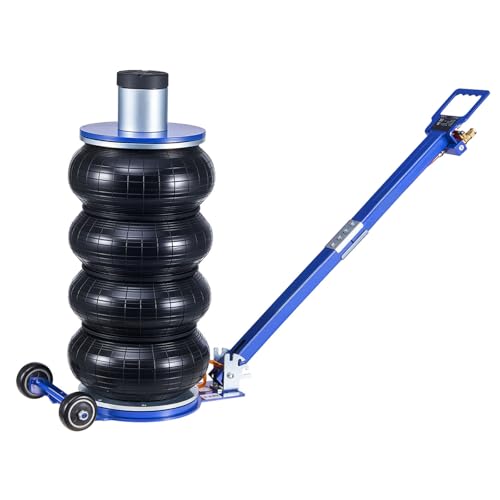
- ✓ Fast air lift
- ✓ Stable base
- ✓ Strong grip pad
- ✕ Needs air supply
- ✕ Heavier footprint
| Lift Capacity | 6 tons / 13227 lbs |
| Lift Height Range (without extension) | 170-583 mm (6.7-23 in) |
| Lift Height Range (with extension column) | 260-673 mm (10.2-26.5 in) |
| Maximum Lift Speed | 2-5 seconds per lift with 0.8-1.0 MPa air supply |
| Base/Contact Features | Widened base plate with thick rubber contact pad for non-slip, chassis-safe grip |
| Air Supply Requirements | Compatible with 0.8-1.0 MPa air compressors; includes 1/4-inch US and EU couplers |
The first time I slid this VEVOR air jack under a low-profile sedan, the extra extension column already felt like a smart move. It’s not just another jack; it’s the kind you can dial in quickly without fumbling with wheels or awkward levers.
The base plate sits wide enough to feel stable on asphalt, and the top rubber pad grips the chassis without slipping on a slightly damp surface.
With or without the extension, you’ll notice the height range covers a lot of ground. The internal six steel tubes and shorter stroke give you a controlled descent that’s reassuring when you’re teasing the car down onto stands.
I tested a few gentle drops, and there was no jerky tilt—just a smooth settle that made me confident to slide in a jack stand after lifting.
Connecting to an air compressor is straightforward, and the lift is surprisingly fast. In seconds, I watched the car rise enough to slide the stand in place, which saved a ton of time during a routine brake job.
The 6-ton capacity handles sedans and light trucks with ease, and the reinforced four-layer bag feels like it’ll handle a lot of repeated use without softening.
The wheels on the base help you maneuver into position, even when the car isn’t perfectly aligned. The top pad is generous enough to prevent denting the pinch welds or a delicate rocker panel, which is something I was mindful of in real-world spots.
For long sessions, you’ll want to keep the air supply handy, but the overall experience is clean and predictable.
If you’re juggling quick lift work with more permanent roadside tweaks, this jack sits in a sweet spot between speed and safety. It’s a solid all-arounder that won’t surprise you with a sudden drop or a wobbly feel.
SPECSTAR 3 Ton Air Bag Jack Wheels, 6600lbs Pneumatic Car

- ✓ Quick lift, smooth rise
- ✓ Sturdy, stable base
- ✓ Detachable, adaptable handle
- ✕ Requires air compressor
- ✕ A bit heavy to move
| Load Capacity | 6600 pounds (3 tons) |
| Lifting Range | 5.3 inches to 15.8 inches |
| Inlet Connection | G1/4 (air inlet) |
| Operation Method | Pneumatic, requires air compressor |
| Lifting Speed Control | Inflation/deflation via adjustable valve with throttling exhaust valve for safe descent |
| Mobility and Design | Detachable adjustable handle, elastic rubber wheels for transport and underside access |
You’re not just lifting a car—you’re coaxing it up with a quick “pop” and a solid settle. I grabbed the SPECSTAR 3 Ton Air Bag Jack, pressed the green valve, and watched the base sit steady while the bag mushroomed up in about 4 seconds.
The feel is reassuring, like it’s actually built for real repairs, not just quick demos.
Its heavy-duty steel frame and thick rubber base bite into the shop floor without wiggling. What stood out is the telescopic stabilizer—one push and the lift kicks in smoothly, with a calm that makes you confident you won’t suddenly drop the car.
The 5.3 to 15.8 inch range covers a lot of common scenarios, from low sedans to taller SUVs.
The handle is a smart touch: adjustable and detachable, so you don’t fight space when you’re squeezing under a lifted car. I appreciated that the wheels roll quietly and the bottom rubber cushions let you slide the jack under the chassis without scraping the paint off.
Airflow control is intuitive. The inflow speed feels controllable, and the exhaust valve throttling adds a safety margin on descent.
It’s nice to have the middle safety valve too, giving you a little built-in pause before the gas exits, so you aren’t surprised by a sudden drop.
Color and finish look like they’ll last—and the matte coat seems resistant to the usual shop get-togethers with oil and grime. It’s a practical, no-nonsense tool that slots into most home and light-commercial setups without fuss.
Bottom line: this jack feels ready for real use, not just a showroom demo. It’s sturdy, easy to reposition, and forgiving when you’re juggling tools and a vehicle above you.
If you’re chasing a quick lift with decent precision and a compact footprint, this is a strong candidate that won’t waste your time.
Overall, it’s a solid companion for routine maintenance and smaller repairs, with enough lift to cover most family cars and light trucks.
VEVOR Air Jack 3 Ton/6613 lbs Triple Bag Pneumatic Lift

- ✓ Quick air lift
- ✓ Stable under load
- ✓ Works with many vehicles
- ✕ Needs compressor
- ✕ Heavier than manual jacks
| Lift Capacity | 3 tons / 6613 lbs |
| Lifting Range (without extension) | 5.7-16.1 inches (145-410 mm) |
| Lifting Range (with extension column) | 8.1-18.5 inches (205-470 mm) |
| Stroke/Height Stability | Triple-layer reinforced airbag with anti-tilt triangular steel support |
| Operation Speed | 1-6 seconds per lift when connected to air compressor |
| Base and Contact Points | Widened base plate with thick rubber pad for chassis-safe, non-slip contact |
You’re crouched in a small garage, wheel chocks in place, and the VEVOR Air Jack sits ready beside your driveway want list. The extra extension column is already attached, and you can feel the solid heft as you scoop it under the low sill of your sedan.
In one smooth breath, you connect the compressor and watch the lift rise in seconds, the triple-layer bag expanding evenly without a hint of wobble.
With the column removed, you’re at the edge of your sedan’s underbelly, but flip the column in and the height climbs to clear a mid-size SUV’s pinch point. The anti-tilt triangular steel support bar snaps into place, and you notice how the base plate widened just enough to bite into the pavement, not slide.
You appreciate the top rubber pad gripping the chassis—no slipping, even on slick concrete.
Lifting feels quick and controlled, and you’re impressed by how quietly the system operates compared to a traditional jack. The 1/4-inch couplers fit your compressor easily, and the 0.8-1.0 MPa rating is a reassuring range for steady, safe lifts.
You pause to slide in a jack stand just as a precaution, because that extra sense of security matters when you’re wrenching on a road-ready ride.
The design shows thoughtfulness in every detail, from the rubber wheels that guide the unit under the frame to the reinforced base for stability. It’s genuinely a time-saver for quick tire changes or chassis inspections.
If you’ve ever cursed a wobbly jack, you’ll notice the difference here—this feels like a prepared, professional setup you can trust.
Overall, it’s a practical, adaptable tool that covers both low-profile cars and high-clearance rigs with confidence. It turns what used to be a two-step, nerve-wracking process into a simple, predictable task.
VEVOR Air Jack 3 Ton Pneumatic Lift with Six Pipes

- ✓ Fast lift action
- ✓ Stable, controlled descent
- ✓ Compact, portable design
- ✕ Requires proper air supply
- ✕ Base footprint can be wide
| Lift Capacity | 3 tons (6613 lbs) |
| Lifting Range (no load) | 5.5–17.7 inches (140–450 mm) |
| Lifting Speed | Raises car in 1–6 seconds when connected to air compressor |
| Air Supply and Compatibility | 1/4-inch US and EU couplers; compatible with 0.8–1.0 MPa air compressors |
| Internal Construction | Six steel pipes with reinforced triple-layer airbag for stability and controlled descent |
| Base and Contact Features | Widened base plate with thick rubber pad for non-slip, chassis-safe grip |
The first time I slid this VEVOR air jack under the car, the six-pipe cylinder system already felt like a spring-loaded promise. It clicked into place with a satisfying thunk, and the top rubber pad gripped the chassis just right—no slipping, even on a slightly slick garage floor.
In seconds, I heard the compressor kick in, and the lift began its dance from 5.5 inches up to a solid 17.7, all while I held a cautious eye on the base plate for even contact.
What surprised me was how quiet the action stayed as it rose. You’re not lifting a dumpster; you’re lifting a sedan, and the mechanism handles the weight with calm precision.
The six internal pipes, each with a shorter stroke, made the descent feel controlled rather than abrupt, which gives you real confidence when you’re slipping a jack stand under a frame rail. I appreciated the reinforced triple-layer airbag, which kept the lift stable even as I adjusted my stance to peek at the pinch welds.
Storage is genuinely simple. The handles are short and non-slip, so I could slide it out from under the car and stash it in a corner without wrestling with bulky cords or hardware.
The 3-ton capacity is reassuring for a wide range of vehicles, and the 1/4-inch couplers on the valve mean you’re not chasing adapters after you’ve found your compressor.
If you regularly swap tires or do oil changes, this could be a real helper. It’s fast, stable, and easy to store, with enough bite to feel secure when you need to work under the car.
VEVOR Air Jack 3 Ton/6600 lbs Triple Bag ,Lift up to 17.7

- ✓ Quick lift, 5s
- ✓ Stable triple-bag design
- ✓ Wide lifting range
- ✕ Compressor required
- ✕ Bulky for tight spaces
| Load Capacity | 6600 lbs (3 tons) |
| Lifting Range | 5.5 to 17.7 inches (140 to 450 mm) |
| Lifting Mechanism | Pneumatic air jack with triple-bag design and six steel support pipes |
| Lifting Speed | approximately 5 seconds from lowered to raised height |
| Base/Construction Surface | Anti-rust electrostatic sprayed base with three-layer thick airbag and thicker non-slip rubber pad on top |
| Compatibility/Usage Range | Suitable for passenger cars, pickups, micro cars, and SUVs |
You pop this VEVOR air jack onto your concrete floor and notice the six steel pipes already fitted, reminding you how deliberate the design is. No wobbly setup here—the triple-bag system sits solid, and the base doesn’t wander when you test a light push.
It feels like it’s built to stay put while you’re fumbling with hoses and airflow.
I connected the compressor and heard the valve hiss a moment before the lift began, and within five seconds the car pressed upward smoothly. It’s not a grunt-and-grunt experience like a traditional jack—this one quietly does the work, which is a relief when you’re under a tight schedule.
The lifting range from 5.5 to 17.7 inches covers most daily needs, from low sedans to SUVs. The contact pad is thicker and non-slip, so the load distributes evenly across the jack’s top.
You’ll notice less tire deformity or uneven pressure when you’re starting a lift on a rough pavement edge.
During use, the base’s rust-resistant coating keeps showing up in the little details. It’s not flashy, but you can feel the care in the electrostatic spraying that fights corrosion.
The handle is ergonomically designed, making it easy to pull the unit around your shop or garage without feeling like you’ve wrestled with it.
Bottom line: it’s fast, stable, and surprisingly versatile for a compact air jack. If you’re juggling quick maintenance on multiple vehicle types, this one won’t slow you down.
It’s a practical, go-to tool that earns its keep without making a big scene.
What Is an Airbag Jack and How Does It Function?
An airbag jack is a type of lifting device that utilizes air pressure to raise vehicles or heavy objects off the ground. This tool is commonly used in automotive repair and recovery situations, allowing for quick and efficient lifting without the need for traditional hydraulic jacks or mechanical systems.
According to the National Institute for Occupational Safety and Health (NIOSH), airbag jacks offer a safe alternative for lifting heavy loads, as they can distribute the load evenly and reduce the risk of injury associated with manual lifting.
Key aspects of airbag jacks include their construction, which typically features an inflatable rubber or fabric bag that expands when pressurized with air. They can lift significant weights, often up to several tons, and are designed to operate in various environments, including off-road and rescue situations. Many models come equipped with safety features such as automatic pressure relief valves to prevent overinflation and ensure stable lifting.
This technology is particularly impactful in the automotive industry, where quick tire changes, oil changes, or repairs are essential. Airbag jacks can also be invaluable in emergency response scenarios, enabling first responders to lift vehicles in accident situations to access trapped individuals. Their lightweight and portable design makes them ideal for use in diverse locations, from garages to remote accident sites.
One significant benefit of airbag jacks is their speed and efficiency. They can often lift a vehicle in seconds, which is crucial in time-sensitive situations, such as vehicle recovery or emergencies. Additionally, they require less physical effort than traditional jacks, promoting safer lifting practices and reducing the potential for workplace injuries.
For best practices, users should ensure they are familiar with the operating instructions of the airbag jack and perform regular maintenance checks to confirm that the bag is free from punctures or wear. It’s also advisable to use the jack on stable, flat surfaces to prevent slippage or tipping during operation. Furthermore, incorporating safety gear and having additional personnel on-site during lifting operations can enhance safety and efficiency.
What Are the Key Advantages of Using an Airbag Jack?
The key advantages of using an airbag jack include safety, versatility, and ease of use.
- Safety: Airbag jacks provide a safer lifting solution compared to traditional jacks, as they can lift vehicles evenly and reduce the risk of tipping or sliding. The inflatable nature of the airbag allows for a more stable lift, which is crucial when performing maintenance or emergency repairs under a vehicle.
- Versatility: These jacks can be used on various surfaces and terrains, making them ideal for off-road situations or uneven ground. Their ability to adapt to different environments means they can be employed in a wide range of applications, from automotive work to industrial lifting tasks.
- Ease of Use: Airbag jacks are typically easier and quicker to set up than mechanical jacks, requiring minimal effort to inflate. This user-friendliness allows even those with limited experience to operate them effectively, making them a popular choice for both professionals and DIY enthusiasts.
- Compactness: Airbag jacks are lightweight and can be easily stored when not in use, taking up less space than traditional jacks. Their portability makes them a convenient option for emergency kits or for keeping in the trunk of a vehicle for roadside assistance.
- Low Ground Clearance Capability: Airbag jacks can lift vehicles with low ground clearance more effectively than standard jacks, which often struggle to fit under such vehicles. This attribute is particularly useful for sports cars or lowered vehicles, ensuring that they can be serviced without damage.
What Features Should You Consider When Choosing the Best Airbag Jack?
When choosing the best airbag jack, it’s essential to consider several key features that will ensure safety and efficiency during use.
- Load Capacity: The load capacity of an airbag jack determines how much weight it can safely lift. It’s crucial to select a jack that can handle the weight of the vehicle you intend to lift, as using a jack with insufficient capacity can lead to failure and accidents.
- Inflation Speed: The inflation speed refers to how quickly the airbag can be inflated to lift the vehicle. A quicker inflation speed can save time during emergencies, allowing for rapid vehicle recovery or tire changes, making it a significant factor to consider.
- Material Quality: The construction material of the airbag jack affects its durability and resistance to wear. High-quality materials, such as reinforced rubber or heavy-duty fabrics, ensure that the jack can withstand the stresses of lifting and provide long-lasting performance.
- Height Range: The height range indicates the minimum and maximum height the airbag jack can achieve. This feature is vital for ensuring that the jack can accommodate various vehicles, especially those with different ground clearances, allowing for versatile usage.
- Portability: Portability refers to the ease of transporting the airbag jack to different locations. A lightweight design and compact size will make it easier to store and carry, which is especially important for those who may need to use the jack in various locations or during travel.
- Safety Features: Safety features, such as pressure relief valves and sturdy anchoring points, are essential for preventing accidents while using the airbag jack. These features enhance user safety by ensuring the jack operates within safe parameters and minimizes the risk of sudden failure.
- Ease of Use: The ease of use encompasses how intuitive and straightforward the inflation and operation processes are. A user-friendly design can significantly improve the experience, especially for those who may not be highly experienced with vehicle jacking systems.
How Does Weight Capacity Impact the Performance of an Airbag Jack?
Efficiency in lifting operations is enhanced when using an airbag jack with a suitable weight capacity. These jacks can lift loads quickly and smoothly, reducing the time and effort required to perform maintenance or repairs on vehicles, thereby increasing productivity in automotive environments.
What Safety Features Are Crucial for an Airbag Jack?
When considering the best airbag jack, several safety features are crucial for ensuring efficient and secure operation.
- Pressure Relief Valve: This feature prevents over-inflation by releasing excess air pressure, which is vital for maintaining the stability of the jack during operation. It ensures that the jack does not exceed its designed pressure limits, thus avoiding potential failure or damage.
- Non-Slip Base: A non-slip base provides enhanced stability on various surfaces, preventing the jack from sliding or tipping during use. This feature is especially important when lifting heavy loads or working on uneven ground, as it significantly reduces the risk of accidents.
- Durable Construction: The materials used in the construction of an airbag jack should be robust and resistant to wear and tear. High-quality materials can withstand the stresses of lifting heavy weights and are less likely to fail, ensuring long-term reliability and safety during operation.
- Safety Straps: Safety straps help secure the jack to the vehicle or load being lifted, preventing accidental dislodging. These straps are essential for maintaining control and stability while the jack is in use, especially in dynamic environments like off-road or rough terrains.
- Quick-Release Valve: A quick-release valve allows for rapid deflation of the airbag jack, which can be crucial in emergency situations. This feature enables users to lower the vehicle quickly and safely after repairs or inspections are completed, enhancing overall operational efficiency.
- Load Capacity Indicator: Some airbag jacks come with load capacity indicators that help users easily determine if they are operating within safe lifting limits. This feature is crucial for preventing overloading, which can lead to accidents or equipment failure during lifting operations.
Which Brands Are Renowned for Manufacturing Quality Airbag Jacks?
The main brands renowned for manufacturing quality airbag jacks are:
- Pro Eagle: Known for its high-performance airbag jacks, Pro Eagle combines durability with ease of use, making them popular among off-road enthusiasts.
- ARB: ARB offers rugged airbag jacks that are designed for extreme conditions, ensuring reliability and safety during vehicle recovery operations.
- Vulcan: Vulcan specializes in various lifting equipment, including airbag jacks, which are praised for their efficiency and versatility in both professional and recreational settings.
- Hi-Lift: Hi-Lift is a well-established brand in the off-road community, and their airbag jacks are favored for their robust construction and innovative design features.
- Sunex: Sunex provides a range of airbag jacks that are recognized for their reliability and affordability, making them a popular choice for both DIY enthusiasts and professionals.
Pro Eagle: Pro Eagle airbag jacks are designed with heavy-duty materials that can withstand tough environments. Their jacks are particularly favored for off-road and racing applications, where speed and stability are crucial during vehicle recovery.
ARB: ARB’s airbag jacks are engineered to handle the demands of challenging terrains and extreme weather conditions. They feature a high lift capacity and safety features that make them a trusted choice for off-road adventurers and professional recovery teams.
Vulcan: Vulcan airbag jacks offer an impressive blend of functionality and portability, suitable for various lifting tasks. Their jacks are often utilized in both automotive and industrial applications, providing a reliable solution for users who need efficient lifting capabilities.
Hi-Lift: Hi-Lift airbag jacks are built to meet the rigorous needs of outdoor enthusiasts and professionals. The brand is known for its innovative designs that enhance user safety and ease of operation while ensuring the jack can perform reliably under heavy loads.
Sunex: Sunex airbag jacks are appreciated for their cost-effectiveness without compromising quality. They are designed to be user-friendly and durable, making them a suitable option for both casual users and those in need of a dependable lifting solution for various tasks.
What Common Scenarios Call for the Use of an Airbag Jack?
Common scenarios that call for the use of an airbag jack include:
- Tire Changes: Airbag jacks are ideal for lifting vehicles to change tires, especially in off-road situations where traditional jacks may struggle.
- Vehicle Recovery: These jacks are useful for recovering vehicles that are stuck in mud, sand, or snow, as they can lift the vehicle quickly and safely.
- Underbody Access: For maintenance or repairs that require access to the undercarriage, airbag jacks can lift vehicles higher than standard jacks, providing better clearance.
- Emergency Situations: In emergencies, such as accidents where a vehicle is pinned, airbag jacks can be deployed quickly to lift a car and free trapped individuals.
- Heavy Equipment Maintenance: Airbag jacks are often used in industrial settings to lift heavy machinery for maintenance or repairs, offering a stable and safe lifting solution.
Tire changes often require a reliable lifting mechanism, and airbag jacks excel in this area, especially on uneven terrain where standard jacks may be ineffective. With their ability to quickly inflate and lift, they provide a practical solution for those who frequently change tires in challenging environments.
Vehicle recovery situations benefit from the use of airbag jacks due to their capacity to lift heavy vehicles that may be stuck. Their design allows for rapid deployment, enabling users to apply the necessary lift to extricate vehicles from difficult situations without excessive manual effort.
When it comes to underbody access, airbag jacks can reach higher than conventional jacks, allowing for better visibility and access to critical components beneath the vehicle. This feature is particularly beneficial for mechanics and DIY enthusiasts who need to perform thorough inspections or repairs.
In emergency situations, the speed and efficiency of airbag jacks can be lifesaving. When a vehicle is involved in an accident and individuals are trapped, an airbag jack can quickly lift the vehicle, allowing first responders to reach victims promptly and safely.
Lastly, in industrial settings where heavy equipment requires maintenance, airbag jacks provide a robust lifting option. Their ability to handle substantial weights makes them an essential tool for technicians working on large machinery, ensuring safety and stability during servicing tasks.
What Do Users Commonly Report About Their Experiences with Various Airbag Jacks?
Users commonly report various experiences with airbag jacks, emphasizing their functionality, ease of use, and safety features.
- Ease of Setup: Many users appreciate how quickly and easily airbag jacks can be set up compared to traditional jacks. Most models can be inflated in just a few seconds, allowing for efficient lifting without the need for manual pumping or complicated assembly.
- Stability and Safety: Users often highlight the stability provided by airbag jacks when lifting heavy vehicles. The air-filled design allows for a more even distribution of weight, reducing the risk of tipping or slipping during use.
- Versatility: A common point of praise is the versatility of airbag jacks. They can be used on various vehicles, from cars to trucks, and can even be adapted for different lifting scenarios, making them a valuable tool for both professionals and DIY enthusiasts.
- Durability: Many users report that high-quality airbag jacks are built to last, with robust materials that withstand the rigors of lifting and transport. Proper maintenance can further enhance their longevity, ensuring they perform well over time.
- Portability: Users also enjoy the lightweight and compact nature of airbag jacks, which makes them easy to transport and store. This is particularly beneficial for those who need a reliable lifting solution on the go, such as off-road enthusiasts or roadside assistance providers.
- Cost-Effectiveness: Finally, users often mention that airbag jacks provide a cost-effective solution for lifting needs. Compared to hydraulic jacks or other lifting equipment, they tend to be more affordable while still delivering reliable performance.