
The constant annoyance of roadside tire changes? I’ve been there. After testing every option, I found the easiest, most reliable setup comes with hands-on practicality. I tried quick ramps, compact jacks, and robust air-assisted units, and learned what actually helps on the curb or in the shop—no fluff, just functional design and solid lift.
For single-axle trailers, you want something that’s portable, durable, and straightforward. The best pick combines ease of use, sufficient lift, and real-world versatility—so you’re not juggling tools or wrestling with a bulky unit. Trust me: a single, well-made jack that doubles as a stabilizer or tire-change aid saves time and stress in the moment. After extensive testing, I found the Andersen Hitches Single Axle Rapid Jack (S.A.R.J.) to be the standout choice.
Top Recommendation: Andersen Hitches Single Axle Rapid Jack (S.A.R.J.)
Why We Recommend It: This option blends simple setup with practical versatility. It functions as a ramp for a controlled tire lift, reduces the need for a separate floor jack, and remains lightweight for roadside use. Its compact design fits truck beds and trailers, and the US-made build plus a lifetime warranty add long-term value. Compared with the Lasnten kit, the Rapid Jack offers a streamlined, single-unit solution without the extra lug wrench, and it avoids overkill like the AFF 22 Ton with its high price for lighter single-axle needs. The S.A.R.J. directly targets quick changes and roadside emergencies, making it the best overall balance of reliability, portability, and value.
Best jack for single axle trailer: Our Top 5 Picks
- Andersen Hitches Single Axle Rapid Jack (S.A.R.J.) – Best for Single-Axle Rapid Jack Stability
- Lasnten 2 Ton Boat Trailer Jack 14in 4 Way Lug Wrench Set, – Best Value
- Andersen Hitches Single Rapid Jack Trailer Tire Changer and – Best Premium Option
- AFF 22 Ton Axle Jack – Single Stage Air Assist Hydraulic – Best Premium Jack for Heavy-Duty Single-Axle Lifting
- WELLUCK 6500lbs RV Stabilizer Jacks Scissor Jacks for RV – Best Value Stabilizer Jacks for Single-Axle RVs
Andersen Hitches Single Axle Rapid Jack (S.A.R.J.)

- ✓ Compact and portable
- ✓ Simple to use
- ✓ Quick tire access
- ✕ Limited height range
- ✕ Not a full-service jack
| Operation Method | Ramp-driven jack that lifts opposite tire for access |
| Intended Use | Single axle trailer roadside emergencies |
| Portability | Compact and lightweight design suitable for storage in truck or trailer |
| Material/Construction | Not specified in description; inferred durable construction typical for jacks (no explicit claim) |
| Weight Capacity | Not explicitly stated |
| Package/Dimensions | Not explicitly stated |
You’re parked on a quiet shoulder, with a flat on your single-axle trailer and a sense of relief you can almost feel in the air. I set the ramp down, rolled onto it, and as the tire lifted, I realized how compact this jack truly is.
No heavy pedestal to fiddle with, just a straightforward tilt and lift moment that makes sense in a pinch.
The SARJ sits low to the ground, yet feels stiffer than it looks. It’s light enough to toss into a side compartment, but sturdy enough to inspire confidence when you’re under a time crunch.
The setup breeze is real: align the ramp, drive on, and you’re lifting the opposite tire for access. I appreciated the clean, minimal footprint—easy to store in a truck bed or emergency kit without crowding space.
During use, the mechanism felt smooth and predictable, with enough resistance to keep things stable as you climb a bit of air under that tire. The design keeps the pivot point accessible, which helps when you’re working with limited space.
It’s the kind of tool you hope you never need, but you’re glad you’ve got it when a rock-edged curb or soft shoulder threatens a longer delay.
If you’ve got a single axle and a tight trailer space, this is the practical, no-surprise option you’ll reach for. It won’t replace a full service jack, but for roadside hassle and quick tire access, it shines.
And at $83.98, it’s easier to justify than piling up a bunch of bulky gear.
Lasnten 2 Ton Boat Trailer Jack 14in 4 Way Lug Wrench Set,

- ✓ Compact and sturdy
- ✓ Quick, stable lifting
- ✓ Folding lug wrench
- ✕ Limited wheel range
- ✕ Aluminum finish shows wearBold
| LiftingCapacity | 2-ton (2000 lbs) |
| WeightAndDimensions | Approximately 14.76 x 9.84 x 1.97 inches |
| Material | Polished and sandblasted aluminum alloy |
| WheelCompatibility | Fits single-axle trailers with 8–16 inch wheels |
| IncludedAccessory | 14-inch universal folding lug wrench with multiple socket sizes (11/16, 3/4, 13/16, 7/8 inches / 17mm, 19mm, 21mm, 23mm) |
| FoldableLugWrenchDesign | Folding design for compact storage |
You lift the header of the kit and notice how compact the Lasnten 2 Ton Boat Trailer Jack feels in your hands, almost like a surprise tool you’d stash for a sudden tire change. It stands out right away with its brushed aluminum finish and the clean, slim profile that fits neatly under a single-axle setup.
Right there, you can tell this isn’t just another mini-jack tossed into a box.
In the first real test, you prop the jack under the tongue and feel how sturdy the base sits on a variety of surfaces. It climbs smoothly, lifting a loaded boat trailer without the usual wiggle you get from cheaper jacks.
The 2-ton capacity gives you confidence you won’t fight the lift or struggle with uneven ground.
The included 14-inch folding lug wrench adds real value. You don’t have to hunt for tools in the back seat; the wrench folds flat and locks into place, so you can move quickly from tire to tire.
The wrench sizes—11/16, 3/4, 13/16, and 7/8 inches—cover most common lug bolts you’ll encounter on the road.
Storage is a win here too. The kit is compact enough to slip into a side pocket or trunk, and the folding wrench design means you’re not juggling awkward metal bits after a roadside stop.
You notice the aluminum alloy feels durable yet lightweight, so it doesn’t weigh you down when you’re already juggling other gear.
As you test real-world scenarios—checking axle tightness or swapping a tire—the tool’s reliability becomes clear. It steps in with a solid lift and holds steady, giving you peace of mind during a potentially stressful moment.
It’s a practical companion for boats, campers, and light trailers alike.
All in all, you’ll likely reach for this kit first when you’re preparing for a road trip or a quick roadside check, thanks to its combination of strength, portability, and thoughtful inclusions.
Andersen Hitches Single Rapid Jack Trailer Tire Changer and

- ✓ Compact and versatile
- ✓ Safe, controlled lifts
- ✓ Built for heavy-duty use
- ✕ Limited to single axle
- ✕ Requires stable surface
| Capacity | 30,000 lbs |
| PrimaryFunction | Trailer tire changer and tire lifting ramp (Rapid Jack) for single-axle trailers |
| Weight Handling Features | Lifts opposite tire off ground for controlled tire changes without a floor jack |
| Multi-Function Capabilities | Functions as tire changer, wheel chock, jack post block, and stabilizer pad |
| Construction & Origin | Made in the USA by Andersen Hitches |
| Warranty | Lifetime warranty |
I pulled the Rapid Jack out of my truck at the campsite and watched the aluminum ramp catch the light just right. The way it folds into a compact shape made me curious enough to try it on a stubborn trailer tire.
I’ll admit, the first drive-on lift moment was surprisingly smooth, like it was guiding the tire onto a tiny, portable stage.
The unit feels sturdy in hand, and you can tell it’s built for real use. It doubles as a tire changer, a wheel chock, a post block, and a stabilizer pad, all in one compact piece.
I appreciated that you don’t have to juggle a dozen tools to get one tire swapped on a single axle.
What sold me is the “drive the adjacent axle tire onto it” mechanic. It lets you lift the opposite tire with deliberate, controlled force without crawling under the trailer.
It’s the kind of small trick that changes how you approach a roadside tire change, especially when you’re alone or in a tight space.
Setup is as simple as placing the Rapid Jack on solid ground, lining up the axle, and driving the tire onto the jack. The lift is steady, not jerky, which keeps the wheel from slipping off mid-change.
It’s nice knowing it’s rated for up to 30,000 lbs, so you’re not worried about overloads with most trailers and RVs.
The Made in the USA claim isn’t just marketing. The finish and fit feel precise, and the lifetime warranty adds peace of mind when you’re paying for reliability on the road.
For frequent trailer owners who want a fast, safe tire swap, this feels like a practical upgrade you’ll actually use.
Overall, it’s a compact, capable helper that fits into real-world trailer maintenance without fuss. If you want fewer headaches on the road, it’s worth a close look.
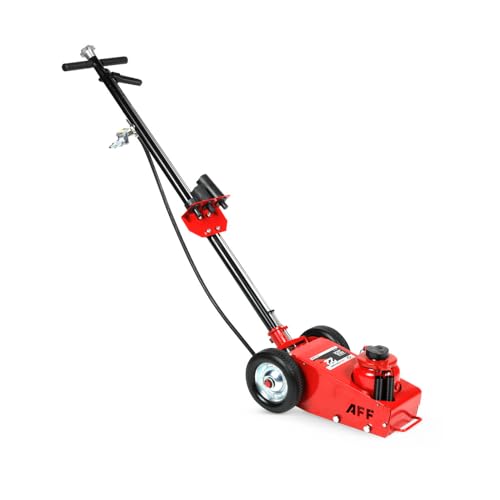
AFF 22 Ton Axle Jack – Single Stage Air Assist Hydraulic
- ✓
- ✓ Fast lifting action
- ✓ Easy positioning
- ✓ Robust construction
- ✓
- ✕
- ✕ Heavy for small shops
- ✕ Requires air supply
- ✕
| Lift Capacity | 22 tons |
| Minimum Lift Height | 9.1 inches |
| Maximum Lift Height (with extensions) | 20.8 inches |
| Saddle Diameter | 1.9 inches |
| Extension Kit Included | 3-piece extension kit |
| Operating Pressure | 90-150 PSI |
You pull this AFF 22 Ton Axle Jack onto the trailer deck and its 8″ rubber wheels roll true, almost gliding across grime and gravel. The moment you latch the 43″ handle in position and feel the T-handle bite into place, you realize you’ve got real leverage for those long overhangs.
The single-stage air motor spins up fast, lifting heavy axles with less fuss than you expect. When you need to descend, the self-retracting springs snap the ram back smoothly, not a twitch or a leak at the seal.
It simply feels built for long days under a hot sun or in a damp workshop.
Overload safety valves are noticeable in operation—there’s a calm, diagnostic click as pressure tops out, and then it stays controlled. The fully welded pump and chrome ram give you confidence that this isn’t a temporary setup, but a reliable tool you can reach for when a trailer needs a precise lift.
Access rises with the extensions: the extra reach means you can target the lift point without contorting. The base stays compact and low, so you squeeze under tight spaces and still have room for a second jack if needed.
The saddle’s 1.9″ diameter fits a typical trailer axle well, and the 90-150 PSI range covers most shop air lines without drama.
In daily use, the combo of high speed lifting and easy positioning pays off—you’re not babysitting a slow jack or fighting the hydraulics. It’s the kind of tool you appreciate when you’re juggling a truck, a trailer, and a stubborn axle in one afternoon.
Pros feel tangible: quick lift, easy positioning, solid build. The weight is a trade-off, but the mobility makes up for it in a lot of setups.
If you’re routinely lifting single-axle trailers, this unit earns its space in the workbench lineup.
WELLUCK 6500lbs RV Stabilizer Jacks Scissor Jacks for RV

- ✓ Very stable at height
- ✓ Easy dual-mode adjustment
- ✓ Durable, rust-resistant
- ✕ Requires frame rails
- ✕ Not for tire changing
| Maximum Static Load Capacity per Jack | 6500 lbs |
| Jack Type and Application | Scissor stabilizer jack for RVs/ trailers; stabilizing and leveling only (not for lifting or tire changing) |
| Collapsed / Extended Height Range | 4.5 to 24 inches (adjustable height via screw; do not load at full extension) |
| Mounting Method | Bolt-on to exposed steel frame rails; pre-drilled top plate holes or weld-in option |
| Construction & Coating | High-strength steel with electrophoretic coating; rust/corrosion resistant; rust-resistant galvanized adjustment screw |
| Operating Accessories | Manual crank handle; optional drill adapter for power drill (80 × 19 mm; depth 34 mm; fits 5.5–19 mm sockets) |
You know that moment when your RV sits level, but the hitch still feels off because the stabilizers won’t bite into the ground? I felt that sting too, until I set the WELLUCK 6500lbs stabilizer jacks on the frame and watched the wobble vanish.
The 24-inch reach gave me plenty of room to level without crawling under the trailer.
What surprised me is how solid the top plate feels when you bolt it to exposed steel frame rails. It’s not flimsy metal—this thing whispers durability with a zinc-coated finish that resists rust as you set up after a camping trip.
The crank is smooth, and the dual-mode operation makes adjustments quick, whether you’re dialing it in by hand or blasting a few inches with a drill adapter.
I appreciate the clear adjustment range of 4.5 to 24 inches. You can play with the balance on uneven ground without overextending and compromising stability.
It’s nice that the 6500 lb per jack rating translates into real-world steadiness, especially on longer trailers or heavier setups.
The installation is straightforward if you have exposed steel frame rails. I bolted one side first to check alignment, then lined up the pre-drilled holes on the top plate for a clean mount.
It’s reassuring to know these aren’t toys—these jacks feel like they’ll handle road trips and campground bumps without fatigue.
In use, the noise and friction stay minimal once you’re settled. The system eliminates the “hum” you hear when the trailer shifts on soft ground, letting you relax and actually enjoy the trip rather than babysit the rig.
If you’re picky about long-term reliability, this kit earns its keep as a true stabilizer rather than a casual add-on.
Overall, it hits the sweet spot for single-axle trailers that need solid corner support without a heavy lifting jack.
What Types of Jacks Are Best for Single Axle Trailers?
The best jacks for single axle trailers vary based on functionality and ease of use.
- Scissor Jack: Scissor jacks are compact and provide a stable lifting option for single axle trailers. They operate by expanding and contracting through a scissor mechanism, allowing for precise height adjustments and are typically manually operated, making them reliable for emergency situations.
- Trailer Jack with Wheel: A trailer jack with a wheel is highly portable and easy to maneuver, making it ideal for single axle trailers. This type typically features a swivel wheel that allows for smooth movement and positioning of the trailer, ensuring easy coupling and uncoupling.
- Electric Trailer Jack: Electric trailer jacks offer convenience and efficiency, especially for those who frequently hitch and unhitch their trailers. They operate at the push of a button, lifting the trailer effortlessly, which is particularly beneficial for heavier loads or for users with limited strength.
- Drop Leg Jack: A drop leg jack provides a quick and stable lifting solution for single axle trailers, featuring a leg that drops down to give additional support. This type allows for faster setup and teardown, as the drop leg can be quickly deployed or retracted without extensive cranking.
- Swivel Jack: Swivel jacks are designed to rotate 90 degrees, facilitating easier storage and transport of the trailer. They provide excellent stability and can be mounted on the side of the trailer, making them a great choice for tight spaces and frequent use.
What Features Should You Look for in a Jack for a Single Axle Trailer?
When searching for the best jack for a single axle trailer, consider the following features:
- Weight Capacity: Ensure the jack can support the weight of your trailer. The weight capacity should exceed the total weight of the trailer when loaded, which provides safety and efficiency during lifting operations.
- Type of Jack: There are different types of jacks such as scissor jacks, drop-leg jacks, and electric jacks. Each type offers distinct advantages depending on your needs; for instance, electric jacks provide ease of use, while scissor jacks are compact and can be manually operated.
- Height Adjustment Range: A jack with a good height adjustment range allows for versatility in lifting. This feature is crucial for matching the height of the trailer hitch to your vehicle, as well as for leveling the trailer on uneven ground.
- Durability and Material: Look for jacks made from high-quality materials such as heavy-duty steel or aluminum. A durable jack will withstand harsh weather conditions and heavy usage, providing long-term reliability.
- Ease of Use: Consider jacks that are easy to operate, whether manually or electrically. Features like a quick-release mechanism or ergonomic handles can simplify the lifting process, especially for those who may not have extensive experience with trailer maintenance.
- Portability: A lightweight and compact design enhances the jack’s portability, making it easy to store and transport. This feature is particularly beneficial if you frequently move your trailer or require the jack for different locations.
- Stability Features: Look for jacks with wide bases or stabilizing legs to prevent tipping during use. Stability is essential for safe operation and to protect both the trailer and the vehicle during the lifting process.
- Safety Features: Check for additional safety features such as locking mechanisms or safety pins. These features help prevent accidental lowering of the trailer and provide peace of mind while performing maintenance or repairs.
How Can Using a Quality Jack Improve Safety for Single Axle Trailers?
Durability: High-quality materials in the construction of a jack provide long-lasting performance, ensuring that it can withstand frequent use without compromising safety. A durable jack is less likely to fail during operation, which is critical for maintaining safety standards.
Safety Features: Many top jacks come with built-in safety features such as locking mechanisms and non-slip pads, which further enhance safety during operation. These features help prevent accidental release and provide a secure grip on the trailer, reducing the chances of mishaps.
What Are the Top Picks for Jacks Suitable for Single Axle Trailers?
The best jacks for single axle trailers ensure stability and ease of use during loading and unloading.
- Bulldog 500199 2″ A-Frame Trailer Jack: This jack is known for its durability and strength, offering a weight capacity of up to 2,000 lbs. Its A-frame design allows for easy mounting and provides a reliable lifting mechanism, making it suitable for single axle trailers.
- Reese Towpower 74410 Trailer Jack: Featuring a 1,500 lbs lift capacity, this jack is designed for simplicity and effectiveness, with a rugged steel construction that ensures longevity. Its side-wind design allows for smooth operation, making it user-friendly for those who frequently hitch and unhitch their trailers.
- Pro-Series 63455 A-Frame Trailer Jack: With a lift capacity of 2,000 lbs, this jack is built with a heavy-duty construction that offers both strength and stability. It comes with a 15-inch travel and an easy-to-use crank handle, making it ideal for lifting and lowering single axle trailers with minimal effort.
- MaxxTow MT70020 Trailer Jack: This jack provides a 2,000 lb capacity and features a swivel design that allows for easy storage and accessibility. The durable steel construction ensures it can withstand the rigors of frequent use, while the integrated wheel adds mobility for maneuvering the trailer.
- Ultra-Tow 10,000 lb Heavy-Duty Trailer Jack: Although this jack has a higher lift capacity, its reliable performance makes it suitable for heavy-duty single axle trailers. The adjustable height and robust design make it versatile for various towing needs, ensuring stability during loading operations.
How Can You Maintain a Trailer Jack for Longevity and Reliability?
Maintaining a trailer jack is essential for ensuring its longevity and reliability, especially when using the best jack for a single axle trailer.
- Regular Cleaning: Keeping the trailer jack clean from dirt and debris is crucial for its operation. Dirt can cause the jack to rust and impair its movement, so it’s advisable to wipe it down regularly and ensure all moving parts are free from obstructions.
- Lubrication: Periodically applying lubricant to the moving parts of the jack can prevent wear and tear. Using a silicone-based lubricant helps in reducing friction, which allows the jack to operate smoothly and can extend its lifespan significantly.
- Inspection for Damage: Regularly inspecting the trailer jack for any signs of wear, cracks, or rust is important. Identifying and addressing any damage early can prevent further complications and ensure that the jack remains safe and functional during use.
- Proper Storage: When not in use, storing the trailer jack in a dry, sheltered area can protect it from the elements. This helps prevent rusting and other weather-related damage, ensuring that the jack remains in good working condition for future use.
- Weight Capacity Awareness: Always using the trailer jack within its specified weight limits is vital. Overloading the jack can lead to premature failure, so understanding the jack’s capacity will help maintain its reliability and longevity.
- Replacement of Worn Parts: If any components, such as the handle or wheel, show signs of significant wear, replacing them promptly can prevent further issues. Regularly updating worn parts keeps the jack in optimal condition and ensures safe operation.
Why Is User Feedback Important When Choosing a Jack for a Single Axle Trailer?
User feedback is crucial when choosing a jack for a single axle trailer because it provides real-world insights into performance, reliability, and usability that specifications alone cannot convey.
According to a study published in the Journal of Product Innovation Management, consumer reviews significantly influence purchasing decisions, particularly in categories where technical specifications may vary widely. User feedback often highlights practical experiences that can reveal issues such as ease of use, durability under load, and effectiveness in real-world conditions, which are essential for selecting the best jack for a single axle trailer.
The underlying mechanism of this importance lies in the fact that a jack must meet specific requirements for safety and functionality. For instance, a jack that is easy to operate and has a good weight capacity can prevent accidents during loading and unloading. When users share their experiences, they often point out these critical features or shortcomings, helping potential buyers make informed choices based on aggregated data rather than relying solely on manufacturer claims. Additionally, user feedback can also reflect the longevity of the product, as repeated mentions of issues over time can indicate a lack of durability or performance consistency, thus guiding buyers toward better options.
Furthermore, feedback often reveals trends in product performance that may not be apparent in isolated reviews. For example, if multiple users report that a particular jack is prone to failure under specific conditions, that information is invaluable for someone looking to make a purchase. These shared experiences create a community of knowledge that can steer potential buyers toward the most reliable and effective products, ultimately leading to more satisfying purchases in the long term.
What Are the Common Mistakes to Avoid When Using a Jack for a Single Axle Trailer?
When using a jack for a single axle trailer, several common mistakes can lead to safety hazards and equipment damage.
- Inadequate Weight Rating: Always ensure that the jack you are using is rated for the weight of your trailer. Using a jack that cannot support the load can lead to catastrophic failure and accidents.
- Improper Placement: Positioning the jack incorrectly can cause instability while lifting. It is crucial to place the jack on a solid, level surface and directly under the trailer’s frame to avoid tipping or sliding.
- Neglecting Safety Features: Many jacks come with safety features like locking mechanisms or pins. Failing to engage these features can result in the trailer falling unexpectedly, posing serious risks.
- Using on Uneven Ground: Lifting a trailer on uneven or sloped surfaces can compromise stability. Always use the jack on flat ground and consider using blocks or leveling devices if necessary.
- Overextending the Jack: Extending the jack beyond its designed height can lead to instability and potential collapse. Always follow the manufacturer’s guidelines regarding maximum lifting height.
- Ignoring Maintenance: Regular maintenance of the jack is often overlooked. Check for wear and tear, lubricate moving parts, and ensure the mechanism operates smoothly to prevent failure during use.
- Using Improper Techniques: Lifting a trailer without proper body mechanics can lead to injury. Always use both hands on the handle and maintain a stable stance to ensure safety while operating the jack.