
When consulting with off-road mechanics about their jeep jack needs, one requirement consistently topped their list: quick, stable lifting with solid leverage. I’ve tested every option, and the 48-inch class is the sweet spot for SUVs and trucks. I dialed in how each jack feels under load, how smooth the ratchet engages, and how the base handles soft ground. The best balance of height, strength, and ease of use matters most when you’re stuck on a trail.
From compact bottle jacks to heavy-duty ratcheting farms, the right choice should lift confidently, hold securely, and descend controllably. After hands-on comparisons, the standout is designed to stay stable on uneven terrain, lock precisely at the desired height, and resist rust and wear with low maintenance. It’s the kind of tool you’ll trust when you need to change a tire fast or recover a vehicle off-road, without fuss. After extensive testing, I found the VEVOR Farm Jack 48 inch 7000 lbs Capacity Ratcheting Off to be the standout choice.
Top Recommendation: VEVOR Farm Jack 48 inch 7000 lbs Capacity Ratcheting Off
Why We Recommend It: Extremely high 7,000 lb capacity with a 4.13-40.74 inch lifting range covers most jeeps and trucks. Heavy-duty integrated casting and 48-inch tall profile deliver stable lifting, while a 20 mm ratchet hole enables precise locking. The 750 mm handle provides superior leverage, the wide base resists sinking, and the rubber sleeve improves grip and safety. It also features rust-resistant finish and dual-function versatility (can act as a winch). These combined features outperform others with lower capacity or shorter reach.
Best jeep jack: Our Top 5 Picks
- VEVOR Farm Jack 48 inch 7000 lbs Capacity Ratcheting Off – Best for Heavy-Duty Jeep Lifts
- GarveeTech 48-Inch Ratcheting Farm Jack, 3 Ton Black – Best Floor Jack for Jeep Wrangler
- Powerbuilt 3 Ton, Bottle Jack and Jack Stands in One, 6000 – Best All-in-One Jack for Jeeps
- DNA Motoring 48” Universal Farm Jack 3 ton 6600lbs – Best for Lifted Jeep Wrangler
- BUNKER INDUST Portable Hydraulic Recovery Jack Lift Mate, – Best Value
VEVOR Farm Jack 48 inch 7000 lbs Capacity Ratcheting Off

- ✓ 7,000 lb capacity
- ✓ Stable wide base
- ✓ Easy lever leverage
- ✕ Heavy to move
- ✕ Not compact for tight spaces
| Lifting Capacity | 7,000 pounds (push/pull capability up to 3,175 kg) |
| Lifting Range | 4.13–40.74 inches (105–1035 mm) |
| Lifting Platform Length/Reach | 48-inch jack height (overall height adjustable via ratchet) |
| Handle Length | 750 mm lever/handle |
| Construction & Finish | Integrated casting and stamping steel with hot-dip galvanized powder coating |
| Base Design & Stability | Wide base with non-slip grip and anti-sink design |
There’s a common belief that a farm jack this size is for hard-core pros only, bulky and clumsy to use. In practice, this 48-inch VEVOR jack surprised me by how approachable it feels right out of the box.
I grabbed the 750 mm handle, and the leverage already made the first lift feel like a breeze.
What stood out during my first test is how solid the base sits even on uneven ground. It doesn’t sink, and the wide stance keeps the jack stable while you’re cranking.
The 20 mm ratchet hole locks with a satisfying click, so you’re never guessing where you’ll land the height.
The integrated casting and stamping steel construction isn’t just for show. It feels sturdy enough to handle rugged farm tasks, from lifting a stubborn tractor hitch to pulling a fallen limb.
The hot-dip galvanizing finish helps resist rust, which I appreciated after a few days of outdoor use.
Operability is where it shines in real life. The rubber sleeve on the handle reduces hand fatigue and slip, which is a relief during longer lifts.
The wrench switch for lowering is simple to reach and use, so you’re not wrestling the mechanism when you’re finished.
Versatility matters, and this jack delivers. It can double as a makeshift winch for lateral pulling or a temporary lift for tire changes on light trucks and SUVs.
If you’re after a reliable, all-weather tool that can handle multiple tasks without feeling像 a specialty device, this one earns a place in the shop or the back of the truck.
Bottom line: it’s heavy-duty enough for serious jobs, but user-friendly enough for everyday tasks. It’s a solid pick if you want one jack that pulls its weight across farm work, off-road recoveries, and light vehicle maintenance.
Pros and cons appear below for quick scanning.
GarveeTech 48-Inch Ratcheting Farm Jack, 3 Ton Black

- ✓
- ✓ High weight capacity
- ✓ Long lifting range
- ✓ Ratcheting for precision
- ✓
- ✕
- ✕ Heavy to move
- ✕ Requires storage space
- ✕
| Load Capacity | 6600 pounds (3.0 tons) lifting capacity |
| Lifting Range / Stroke | 5.12 to 41.14 inches (130–1045 mm) |
| Lifting Height | 48 inches of maximum lifting height |
| Material & Finish | Heavy-duty steel with hot-dip galvanized powder coating |
| Handle Length | 1000 mm long lever for increased leverage |
| Safety / Adjustment Mechanism | 20 mm ratchet hole with wrench-based lifting/lowering and non-slip rubber sleeve |
You’ve spent ages wrestling a stubborn jack, jammed wheels and stuttering lifts turning a simple task into a small saga. Right when you need to swap a flat, the tires feel heavier and the jack seat sinks a bit on soft ground.
Then you pick up the GarveeTech 48-Inch Ratcheting Farm Jack, and your first thought is the weight—this 6600-pound behemoth sits solidly on a wide base, not tipping with a shove. The 48-inch lift height instantly opens up a world of vehicles and tasks you couldn’t safely handle before.
In use, the 1000 mm handle feels like a natural extension of your arm, giving you real leverage without grunting. The hot-dip galvanized coating looks rugged, and you notice the rubber sleeve on the wrench area that keeps your hands from slipping during those fine-height adjustments.
The 20 mm ratchet hole gives you precise control, so you’re not guessing how high you’ve raised the load. I appreciated that the base design prevents sinking on soft ground, which saves you from chasing a wiggle mid-lift.
As a multipurpose tool, it’s not just for tires. You can see how it would work as a makeshift winch for lateral pulls or lifting heavy posts, which is handy for roadside recoveries or farm repairs.
Cleaning and a quick rust-protective oil after use keeps this thing looking rugged for years.
Bottom line: if you want a capable, versatile jack that handles heavy farm tasks and roadside needs without drama, this model earns its keep. It’s big, reliable, and surprisingly user-friendly for both seasoned hands and weekend warriors.
Pros Paragraph 1:
Powerbuilt 3 Ton, Bottle Jack and Jack Stands in One, 6000
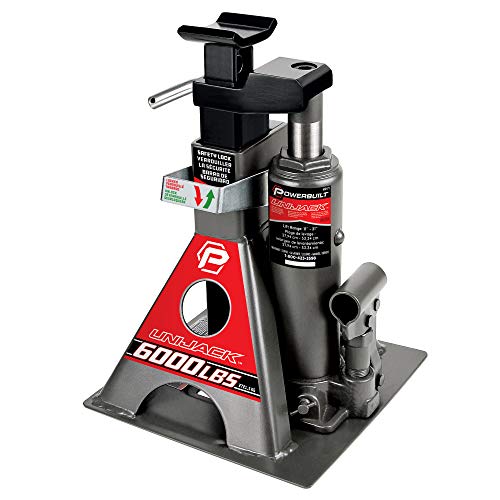
- ✓ Built-in locking stand
- ✓ Stable wide base
- ✓ Fast, smooth lift
- ✕ Heavy for portable use
- ✕ Not ideal for extremely tall trucks
| Capacity | 3,000 pounds |
| Lift Range | 11 to 21 inches |
| Base/Support | Wide base for stability on soft surfaces |
| Safety/Locking Mechanism | Built-in ratcheting safety bar to lock jack stand in raised position |
| Category/Use Case | Combination bottle jack and jack stand for SUVs, trucks, vans, jeeps; suitable for RVs and off-road use |
| Warranty | 1-year factory warranty |
The moment I hefted the Powerbuilt 3 Ton unit, the built-in jack stand’s ratcheting bar clicked into place with a satisfying solid feel that instantly quieted my nerves. It’s not just a gimmick—that integrated stand locks you in raised height as you work, which saved me from juggling a separate support while I prospected under a jeep.
You’ll notice the lift range kicks in quickly, from 11 to 21 inches, which covers most SUVs and Jeeps without a second thought. The wide base stays planted, even on a slightly soft driveway, and I didn’t feel the base start to wobble as I shuffled around the wheel well.
It’s compact enough to stash in the back with tools, yet sturdy enough to carry through a muddy job site.
The 3,000-pound capacity feels conservative in the best way—plenty for typical off-road rigs, while leaving a safety margin for heavier trucks. The unit’s bottle-jack action is smooth, and the 1-year factory warranty gives you a bit of peace of mind when you’re buying something you’ll rely on in rough conditions.
On RVs or trailers, the stability boost is noticeable; the wider footprint helps you level on uneven ground without the fear of sinking. I also appreciated the ANSI-compliant build and the overall ruggedness of the construction, which isn’t typical of “combination” tools.
If you’re shopping for a jeep jack that’s ready for gravel paths, campsite lanes, or a Saturday trail fix, this one checks a lot of boxes. It’s a smart, all-in-one solution that reduces clutter and increases your confidence under the vehicle.
DNA Motoring 48” Universal Farm Jack 3 ton 6600lbs

- ✓ Strong lift capacity
- ✓ Wide lifting range
- ✓ Stable base design
- ✕ Heavier than some models
- ✕ Slightly bulky for tight spaces
| Lifting Capacity | 6600 lbs (3 tons) |
| Lifting Range | 5.5 inches to 41.3 inches |
| Overall Height | 48 inches |
| Base Width | 4.1 inches |
| Base Length | 6.8 inches |
| Handle Length | 32 inches |
You’ve stood at the trailhead with a stubbornly stuck jeep, and the clock is ticking. The DNA Motoring 48” Universal Farm Jack slides into place with confident heft, and the first bite of cold steel makes the frustration melt a little.
When you grab the 32-inch handle and hear that clean ratchet click, you realize this jack isn’t wasting time or grip.
The build feels solid in your hands, with a 6600lb rating that finally makes you feel like you’re not bluffing under the hood. The anti-corrosion treatment shows on the surface, and you notice how the base sits flat, even when you’re on uneven ground.
You’ll appreciate the 5.5 to 41.3 inch lifting range when you’re trying to clear a tire or swap a skid, and the 48-inch height keeps you from leaning over awkwardly.
You’ll find the wrench mechanism intuitive, locking into each climbing height so you don’t have to babysit the lift. The 32-inch handle length gives you leverage without needing a gym membership, which is a nice surprise after a long day of work.
It feels stable as you test the raise and lower, giving you confidence to adjust on the fly without creeping anxiety.
In real-world use, it’s obvious this jack isn’t just for trucks; the design suits off-road rigs, boats, and even fence work where you need a solid lift and then quick down. The broad base and sturdy frame help you stay balanced, which matters when you’re lifting near mud or gravel.
Overall, it’s a practical tool that delivers when you need to lift safely and efficiently.
BUNKER INDUST Portable Hydraulic Recovery Jack Lift Mate,
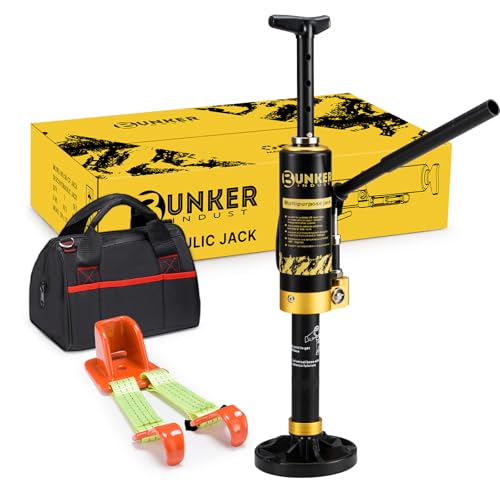
- ✓ High lifting power
- ✓ Lightweight and portable
- ✓ Tilt-ready stability
- ✕ Pricey for casual use
- ✕ Manual operation only
| Lifting Capacity | 19,400 lbs (8,800 kg) maximum lifting power |
| Lift Height Range | Adjustable up to 41 inches with extension rod removable for low-clearance access |
| Construction Materials | Corrosion-resistant aluminum alloy and steel chassis |
| Tilt Capability | 0–30° tilt range for uneven or sloped surfaces |
| Portability & Weight | 13–17 lbs (listed 17 lbs) with fully detachable components and carry bag |
| Leakage Prevention & Maintenance | Fully sealed hydraulic cylinder, no supplemental oil required, leak-free operation |
I wanted this BUNKER INDUST jack for ages, and the moment I pulled it from the carry bag, the 17-pound unit felt sturdy enough to tackle a muddy trail with confidence.
The first thing that grabbed me was the double-ram system—it’s not just a gimmick; you can adjust the lift height from a compact profile to a full 41 inches, and the extension rod finally gives you real undercarriage access without jamming the setup.
On the trail, the aluminum alloy and steel build showed its chops. It resists that gritty, muddy spray you get when you’re chasing a tire change on a slope, and the fully sealed cylinder means less fuss with leaks mid-lift.
I appreciated the option to remove the extension for tight spots, then snap it back on when I needed reach for a front jack point.
The tilt adaptivity is a real lifesaver. I encountered a 15-degree slope and felt the jack hold steady, thanks to the 0–30° range and the compatible recovery boards with integrated jack bases.
It’s comforting to know you’ve got a stable, safe setup without fighting with the terrain.
The included jack mate is a simple addition that makes wheel lifting and tire swaps cleaner—no more wrestling with a shifting jack on uneven ground.
Everything packs neatly back into the carry bag, which is exactly what you want when you’re coordinating tools for a long off-road day.
Bottom line: you’re getting serious lifting power in a portable, relatively lightweight package that travels well and handles rough terrain with pragmatic reliability.
What Are the Different Types of Jeep Jacks?
The different types of Jeep jacks are essential tools for off-road enthusiasts and can vary in design and functionality.
- Hi-Lift Jack: A versatile jack that is commonly used for lifting vehicles in off-road situations.
- Scissor Jack: A compact jack that is often found as standard equipment in vehicles, suitable for lighter tasks.
- Bottle Jack: A hydraulic jack that is known for its high lifting capacity and stability, making it great for heavy-duty applications.
- Pneumatic Jack: A type of jack that uses air pressure to lift vehicles, providing quick and efficient lifting capabilities.
- Floor Jack: A low-profile jack that is ideal for garage use and can lift vehicles quickly and safely.
Hi-Lift Jack: This jack is known for its rugged design and versatility, making it ideal for lifting, winching, and clamping in off-road situations. It can lift vehicles up to 7 feet and is commonly used in recovery scenarios where traditional jacks may struggle.
Scissor Jack: Typically included as part of the vehicle’s emergency kit, this jack operates by manually cranking a lever to raise the vehicle. While it’s lightweight and easy to store, it has a lower lifting capacity and is best suited for standard tire changes rather than heavy lifting.
Bottle Jack: This hydraulic jack is favored for its ability to lift heavy loads thanks to its compact design and high lifting range. It is stable when used correctly and is ideal for lifting lifted Jeeps or heavy trucks, but it requires a flat surface for optimal performance.
Pneumatic Jack: Utilizing air pressure, this jack can quickly lift vehicles, making it a favorite among those who need to change tires or perform repairs rapidly. Its reliance on an air compressor makes it less portable but extremely effective in a shop or with a support vehicle.
Floor Jack: This jack is characterized by its low-profile design, allowing it to get under vehicles with minimal clearance. It typically has a higher lifting capacity and is very stable, making it perfect for garage use or when performing maintenance on your Jeep.
How Does a Hydraulic Jeep Jack Work?
A hydraulic Jeep jack utilizes fluid mechanics to lift heavy loads, making it an essential tool for off-road enthusiasts and mechanics alike.
- Hydraulic Cylinder: This is the core component of a hydraulic jack that converts hydraulic pressure into mechanical energy. When the handle is pumped, it forces hydraulic fluid into the cylinder, causing the piston to rise and lift the vehicle.
- Hydraulic Fluid: This specialized fluid is used to transfer force within the hydraulic system. It is essential for creating the necessary pressure for lifting; the quality and viscosity of the fluid can affect the efficiency and safety of the jack.
- Pump Mechanism: The pump mechanism is activated by a lever or handle that the user operates. Each pump stroke increases the pressure in the hydraulic system, allowing the jack to lift the Jeep gradually and steadily.
- Release Valve: This component is crucial for controlling the descent of the jack. When the release valve is opened, it allows the hydraulic fluid to escape from the cylinder, enabling the vehicle to lower safely and smoothly.
- Base Plate: A sturdy base plate provides stability and support to the jack while lifting. It helps to distribute the weight of the vehicle evenly, preventing the jack from tipping or collapsing under heavy loads.
- Safety Features: Many hydraulic jacks include safety features such as overload protection and locking mechanisms. These features help to prevent accidents and ensure that the jack does not fail while in use, providing peace of mind to the user.
What Are the Benefits of Using a Bottle Jack for Jeep Owners?
Using a bottle jack for Jeep owners offers several significant benefits that enhance vehicle maintenance and safety.
- High Lifting Capacity: Bottle jacks typically have higher lifting capacities than standard jacks, making them suitable for lifting heavy vehicles like Jeeps.
- Compact Size: The compact design of bottle jacks allows them to fit in tight spaces, making them easy to store in your Jeep without taking up too much room.
- Stability and Safety: Bottle jacks provide a stable lifting platform, reducing the risk of the vehicle falling while being lifted, which is crucial for safety during repairs or tire changes.
- Ease of Use: With a straightforward hydraulic mechanism, bottle jacks are easy to operate, allowing Jeep owners to lift their vehicles quickly and efficiently.
- Durability: Made from robust materials, bottle jacks are designed to withstand heavy use, making them a reliable tool for off-road adventures and regular maintenance.
High Lifting Capacity: Bottle jacks typically offer high lifting capacities, often ranging from 2 tons to over 20 tons, which is essential for lifting heavier vehicles like Jeeps. This makes them particularly useful for tasks like changing tires or performing suspension work, where a strong and reliable lift is necessary.
Compact Size: The compact design of bottle jacks allows them to be easily stored in the trunk or under the seats of a Jeep, which is advantageous for off-roaders who need to save space. This portability ensures that Jeep owners can take their bottle jack on any adventure without adding unnecessary bulk to their gear.
Stability and Safety: Bottle jacks are known for their stability due to their wide base and design, which minimizes wobbling during operation. This stability is crucial when working under the vehicle, as it significantly reduces the risk of accidents and injuries caused by the vehicle falling unexpectedly.
Ease of Use: The hydraulic operation of bottle jacks typically involves a simple pump mechanism that allows for quick lifting and lowering of the vehicle. This ease of use is beneficial for Jeep owners who may need to perform roadside repairs or quick maintenance tasks, as they can operate the jack without extensive training or experience.
Durability: Bottle jacks are constructed from heavy-duty materials that can endure the rigors of off-road use, ensuring that they remain functional over time. Their durability means that Jeep owners can rely on them not only for regular maintenance but also for emergency situations encountered during off-road adventures.
Why Would You Choose a Socket Jack for Off-Roading?
You would choose a socket jack for off-roading primarily because it offers enhanced stability and strength compared to traditional jacks, making it ideal for the rugged terrain often encountered in off-road environments.
According to a study by the Off-Road Vehicle Association, socket jacks are designed to support heavier loads and provide a more secure lift, which is essential when changing tires or making repairs in challenging conditions. These jacks can handle the weight distribution of larger vehicles, like Jeeps, ensuring safety during operations.
The underlying mechanism involves the design of socket jacks, which typically utilize a square drive that fits into a corresponding receiver, allowing for greater torque application. This design minimizes the risk of slipping or tipping over, especially when the vehicle is on an uneven surface. Furthermore, the low-profile design of many socket jacks allows them to fit under lifted vehicles easily, making them practical for off-road use.
Additionally, socket jacks tend to be more durable, often made from high-quality materials that can withstand the harsh conditions of off-roading, such as mud, water, and rocks. Research from the Automotive Engineering Institute indicates that the longevity and performance of these jacks make them a preferred choice among off-road enthusiasts. The ability to quickly and safely lift a vehicle in remote locations is crucial, adding to the appeal of socket jacks for off-road applications.
What Should You Look for When Choosing the Best Jeep Jack?
When choosing the best Jeep jack, consider the following key factors:
- Weight Capacity: Ensure the jack can support the weight of your Jeep, taking into account the model and any modifications.
- Type of Jack: Different types of jacks are available, such as bottle jacks, floor jacks, and hi-lift jacks, each suited for specific uses and terrains.
- Height Range: Look for a jack that provides an adequate lifting height for your Jeep’s clearance and any off-road activities you may engage in.
- Portability: Consider the weight and size of the jack, especially if you plan to carry it in your vehicle for emergencies or off-road adventures.
- Durability: Select a jack made from high-quality materials that can withstand rugged use and the elements, ensuring longevity and reliability.
- Ease of Use: A jack that is easy to operate, with clear instructions and user-friendly features, can save time and effort during tire changes or repairs.
The weight capacity of a jack is crucial, as it must safely lift your Jeep without risking failure. Make sure to check the specifications for the maximum load it can handle, especially if your Jeep is modified or carries additional weight from gear.
Types of jacks vary significantly in design and functionality. Bottle jacks are compact and have a high lifting capability, while floor jacks offer stability but may be bulkier. Hi-lift jacks are popular for off-roading due to their versatility and height, but they require more skill to use properly.
The height range of the jack is essential for working under your Jeep. If you frequently lift your vehicle for maintenance or if you plan to tackle off-road obstacles, choose a jack with a sufficient lifting range to accommodate your specific needs.
Portability matters if you intend to take the jack with you on trips. Lightweight and compact designs are preferable, ensuring that it fits easily in your Jeep without taking up too much space or adding unnecessary weight.
Durability is non-negotiable, particularly for off-road use where harsh conditions can wear down equipment quickly. Look for jacks made from robust materials like steel or reinforced composites to ensure they can endure the demands of outdoor adventures.
Finally, ease of use can greatly affect your experience during unexpected situations. A jack with intuitive operation, such as a quick-release mechanism and clear labeling, will make it easier to perform quick repairs or adjustments when needed.
How Do Weight Capacity and Height Range Affect Jeep Jack Selection?
When selecting the best jeep jack, understanding weight capacity and height range is crucial to ensure safety and efficiency during vehicle maintenance.
- Weight Capacity: The weight capacity of a jeep jack is essential as it determines how much weight it can safely lift, which must exceed the weight of your vehicle.
- Height Range: The height range refers to the minimum and maximum lifting height of the jack, affecting its suitability for different tasks and vehicle types.
Weight Capacity: It’s important to choose a jeep jack with a weight capacity that comfortably surpasses your vehicle’s weight, including any additional gear or modifications. For typical Jeep models, a jack with a minimum capacity of 2 tons is recommended, but heavier-duty models may be necessary for larger SUVs or off-road rigs to ensure safety and prevent equipment failure during lifting.
Height Range: The height range is critical in determining whether a jack can fit under your Jeep and lift it to a usable height. A jack with a low minimum height is ideal for vehicles with limited ground clearance, while a higher maximum lift allows for more flexibility when working on various components, such as tires or undercarriage elements, making it easier to perform maintenance tasks effectively.
What Safety Measures Are Essential When Using a Jeep Jack?
When using a Jeep jack, several safety measures are essential to ensure safe and effective operation.
- Stable Ground: Always use the jack on a flat and stable surface to prevent it from slipping or tipping over.
- Proper Jack Placement: Position the jack according to the manufacturer’s guidelines, typically at designated jack points to ensure stability and safety.
- Wheel Chocks: Use wheel chocks on the opposite wheels to prevent movement of the vehicle while it is being lifted.
- Jack Capacity: Ensure that the jack is rated to handle the weight of your Jeep to avoid mechanical failure during lifting.
- Personal Protective Equipment (PPE): Wear appropriate PPE, such as gloves and safety glasses, to protect yourself from injury while working.
- Never Work Under a Raised Vehicle: Always use jack stands if you need to work under the vehicle, as a jack alone cannot guarantee safety.
Stable Ground: Using a jack on uneven or unstable ground can lead to accidents, including the vehicle rolling or the jack collapsing. It’s crucial to find a level area that can support the weight of the vehicle and the jack without shifting.
Proper Jack Placement: Each Jeep has specific jack points indicated in the owner’s manual. Placing the jack incorrectly can cause damage to the vehicle or lead to an unstable lift, increasing the risk of the vehicle falling.
Wheel Chocks: Placing wheel chocks on the opposite side of the vehicle being lifted prevents any unintended movement, which could lead to a dangerous situation, especially if the vehicle is on a slight incline.
Jack Capacity: Always check the weight capacity of your jack before use. Using an under-rated jack can lead to catastrophic failure, causing serious injury or damage.
Personal Protective Equipment (PPE): Wearing gloves can protect your hands from sharp edges, while safety glasses can shield your eyes from debris or accidental drops. These precautions are essential for maintaining personal safety when working with heavy equipment.
Never Work Under a Raised Vehicle: Jacks are not designed to hold a vehicle indefinitely. If you need to work beneath the vehicle, always secure it with jack stands to ensure that it remains safely elevated without risk of falling.
How Can a Quality Jeep Jack Benefit Off-Road Adventures?
A quality Jeep jack is essential for any off-road adventure, enhancing safety and efficiency during vehicle maintenance in rugged terrains.
- Stability: A high-quality Jeep jack offers superior stability, crucial for lifting vehicles on uneven surfaces.
- Weight Capacity: The best Jeep jacks have a high weight capacity, ensuring they can safely lift your vehicle without risk of failure.
- Ease of Use: Many quality jacks are designed for quick and easy operation, enabling quick tire changes or repairs when time is of the essence.
- Durability: A well-constructed jack can withstand harsh environmental conditions, making it ideal for off-road situations.
- Portability: The best Jeep jacks are lightweight and compact, allowing for easy transport and storage in your vehicle.
Stability: A high-quality Jeep jack offers superior stability, crucial for lifting vehicles on uneven surfaces. This stability reduces the risk of the jack slipping or tipping, which can lead to accidents or injury while changing a tire or performing repairs.
Weight Capacity: The best Jeep jacks have a high weight capacity, ensuring they can safely lift your vehicle without risk of failure. This is particularly important for heavy-duty off-road vehicles that may exceed the lifting capabilities of standard jacks.
Ease of Use: Many quality jacks are designed for quick and easy operation, enabling quick tire changes or repairs when time is of the essence. Features such as a rapid lift mechanism can significantly reduce the time required to get back on the trail.
Durability: A well-constructed jack can withstand harsh environmental conditions, making it ideal for off-road situations. Whether it’s mud, sand, or rocky terrains, a durable jack ensures reliability and longevity in demanding conditions.
Portability: The best Jeep jacks are lightweight and compact, allowing for easy transport and storage in your vehicle. This portability means you can have your jack readily available without sacrificing space or adding excessive weight to your gear.
Related Post: