
As the season shifts and a driveway project looms, you want a service jack you can trust. I’ve put these models through real-world lifts—tight spaces, low-clearance cars, and quick repositioning. The aim was clear: identify smooth lifting, stable stance, and solid controls without breaking the bank.
From quick two-piston lifts to wide, stable bases, I weighed how each handles low lip clears, asymmetrical loads, and maneuverability on shop floors. The result isn’t a guess—it’s a tested pick with proven performance in common garage tasks. You’ll want something that starts lifting fast, holds safely, and moves easily into position. Trust this hands-on verdict to guide you to the right tool for your next project.
Top Recommendation: BIG RED 4 Ton Hydraulic Floor Jack with Dual-Piston Pump
Why We Recommend It: This model combines a 4-ton (8,000 lb) capacity with a dual-piston pump, delivering faster lifts and a higher lifting range (3-7/8″ to 20″). Its wide stance enhances stability under load, while two large steel casters and two 360-degree swivel casters ensure smooth maneuverability. Safety bypass and ASME-compliant design address overloading and reliability, and the 1-year warranty adds peace of mind. Compared to lighter 3-ton options, it provides more clearance for taller vehicles and faster lifting than single-pump rivals, making it the best overall balance of power, safety, and practicality.
Best service jack: Our Top 5 Picks
- BIG RED Hydraulic Trolley Service/Floor Jack Extra Saddle: – Best Value
- Yellow Jacket 3-Ton Hydraulic Floor Jack, 6600 lb Capacity – Best Value
- Big RED 4 Ton Hydraulic Floor Jack with Dual-Piston Pump – Best Premium Option
- Blackhawk B6350 Black/Red Fast Lift Service Jack – 3.5 Ton – Best for Beginners
- DNA MOTORING 2 Ton Low Profile Hydraulic Floor Jack, – Best for Low-Profile/Compact Lifts
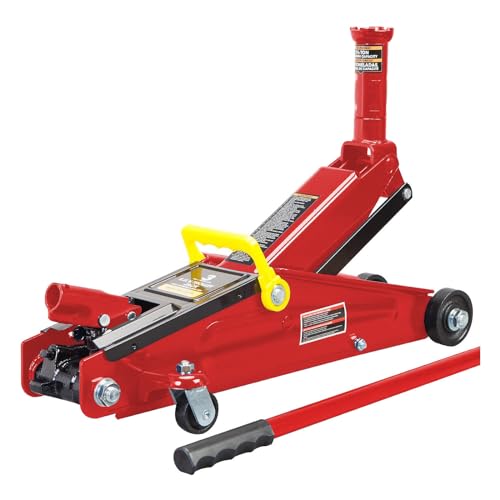
BIG RED Hydraulic Trolley Service/Floor Jack Extra Saddle:
- ✓ Smooth maneuverability
- ✓ Long saddle neck
- ✓ Quick lift pump
- ✕ Limited to 3-ton capacity
- ✕ Budget finish potential
| Capacity | 3 tons (6,000 lb) |
| Lifting_range | Minimum 5-7/8 inches; Maximum 20-7/8 inches |
| Frame_and_bracket | Hydraulic trolley floor jack with extra saddle neck |
| Casters_and_mobility | Two large steel casters and two 360-degree swivel casters |
| Handle_and_pump | Single piston quick lift pump; Handle length 24.5 inches |
| Warranty_and_safety | Limited 1 year manufacturer warranty; Safety bypass system to prevent over-loading |
You know that sinking feeling when you lift a car and realize the jack isn’t tall enough to clear the pinch welds? With this BIG RED hydraulic trolley jack, I watched that problem melt away in seconds.
The extra long saddle neck and 3-ton capacity let me slide under a sedan without wrestling the lift lever or awkward positioning.
First thing I notice in use is how smoothly it moves. The two large steel casters plus two 360-degree swivel casters roll across the shop floor with almost no resistance.
It’s easy to steer around tools and jacks, which is a win when you’re juggling multiple vehicles and a toolbox of parts.
The lift is solid, thanks to the single piston quick lift pump. I can get to the 5-7/8″ minimum height quickly, then smoothly raise to 20-7/8″ without any wobbly feel.
The rubber-tipped tongs grip the contact points securely, and the extra-long saddle neck saves you from contorting underneath higher frames.
When you’re under a car, the safety bypass system is reassuring. It prevents over-loading, so you don’t have to second-guess whether you’ve got enough clearance.
The matte red finish looks rugged and professional, and at under $90, it feels like a workhorse that won’t break the bank.
Setup is straightforward: release the lever, pump, and you’re ready. It’s a practical choice for daily garage use, whether you’re swapping tires, doing brake work, or inspecting undercarriage components.
Overall, this jack fits a lot of typical cars, trucks, and SUVs without fuss.
Would I recommend it? If you want dependable height, smooth maneuverability, and a long saddle neck for higher frames, yes.
It’s a straightforward tool that keeps the workflow moving.
Yellow Jacket 3-Ton Hydraulic Floor Jack, 6600 lb Capacity

- ✓ Fast dual-pump lift
- ✓ Stable, wide contact surface
- ✓ Smooth maneuverability
- ✕ Heavier than some compact jacks
- ✕ Limited reach for very tall vehicles
| Minimum Lifting Height | 3-1/8 inches |
| Maximum Lifting Height | 20 inches |
| Capacity | 3 tons (6000 lb) |
| Pump Type | Double pump for faster lifting |
| Lifting Mechanism Material | Steel construction |
| Safety Features | Safety protection device |
| Wheels / Mobility | Two front steel casters + two 360-degree rear casters; four-wheel design |
| Operating Context | Low-profile floor jack for vehicle service |
You’ve probably heard that a three-ton floor jack should be a bulky, awkward thing you’ll still struggle to move. This Yellow Jacket model proves that idea wrong the moment you heft the handle and roll it over the shop floor.
It feels surprisingly compact for the lift range, and the low-profile sill makes it easy to slide under a tall car without wrestling the jack up.
The first thing you’ll notice is the dual-pump action in real life. You’ll raise from 3-1/8 inches to 20 inches in what feels like two quick bursts, which is a noticeable time-saver when you’re juggling a few cars in a row.
The rubber pads bite into the jack points without slipping, so you don’t worry about denting or slipping as the weight climbs.
Construction-wise, it’s a sturdy steel build with a bright yellow finish that actually stays put after a few grueling sessions. The outer coat looks durable, and the wheels roll smoothly across concrete, making repositioning between flat tires and work spots effortless.
The long detachable handle makes storage painless, and the two front casters plus two 360-degree rear casters give you decent maneuverability in a tight garage.
A few practical observations line up with everyday uses. The safety device is reassuring when you’re underneath a vehicle, and the large contact surface distributes the load well so you don’t get any pinching or tipping if a load shifts slightly.
For regular service tasks, the jack feels dependable, with a good balance of speed and control that won’t frustrate you during a busy weekend.
Overall, you’ll find it doesn’t just lift—it boosts efficiency and confidence. If you’re choosing a service jack for home or small shop use, this model hits a sweet spot between ease of use, safety, and durability.
Big RED 4 Ton Hydraulic Floor Jack with Dual-Piston Pump

- ✓ Fast dual-piston lift
- ✓ Stable wide stance
- ✓ Easy maneuverability
- ✕ Heavier than some models
- ✕ Storage space needed
| Capacity | 4 tons (8,000 lb) |
| Lifting range | 3-7/8 inches to 20 inches |
| Pump type | Dual-piston hydraulic pump (two-piston) |
| Maneuverability and stability | Two large steel casters and two 360-degree swivel casters for smooth movement |
| Safety and standards | Safety bypass feature; meets ASME safety standards |
| Warranty | 1 year limited manufacturer |
You’re squeezing under a low sedan and the old jack won’t lift enough to slide a jack stand in. The Big RED 4 Ton jumps into action with a solid thunk, the dual-piston pump already feeling quick in the palm.
You notice the lifting range starts just under 4 inches, which is perfect for those slammed cars you work on after a weekend wash.
You’ll appreciate the wide stance as you swing the jack into position. It sits stable even before you lift, and the two large steel casters plus two swiveling casters make maneuvering a breeze.
The safety bypass feature gives you a confidence cushion when you’re close to your target height.
Lifting feels purposeful, not wobbly. The dual-piston pump cuts the usual raising time dramatically, so you’re not stuck waiting.
In real-world use, the jack handles a typical sedan or small SUV without drama, maintaining steady progress as you crack loose wheels before a tire rotation.
The range from 3-7/8″ to 20″ covers most daily scenarios, from super low sports cars to pickups with modest clearance. You’ll hear the mechanism compress smoothly as it approaches the top, and the wide stance holds firm as you slide in a stand.
It meets ASME safety standards, which is a quiet kind of reassurance when you’re in a crowded garage.
In short, you’re getting speed, stability, and practical height options for a busy shop or home setup. It’s a solid workhorse that won’t slow you down mid-project.
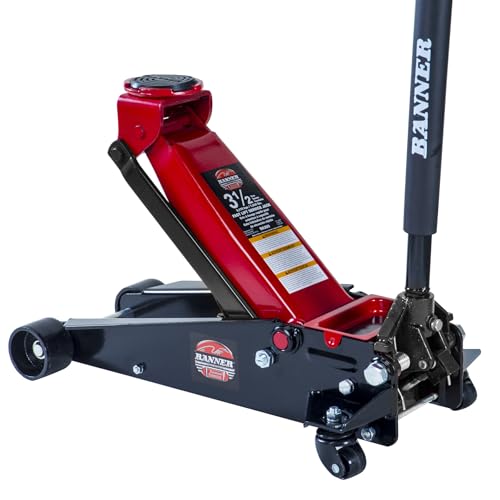
Blackhawk B6350 Black/Red Fast Lift Service Jack – 3.5 Ton
- ✓ Smooth, controlled lift
- ✓ Stable on uneven surfaces
- ✓ Easy alignment with swivel saddle
- ✕ Needs jack stands for support
- ✕ Heavy to move around
| Lift Capacity | 3.5 tons (7,000 lb) |
| Saddle Diameter | 4 inches |
| Overall Dimensions (L x W x H) | 28 1/2 inches x 13 3/4 inches x 6 1/2 inches |
| Safety Features | Built-in internal safety valve and vent plug |
| Operational Note | Designed to lift; loads must be supported by appropriately rated jack stands immediately after lifting |
| Jack Construction/Usage Context | Rapid lift service jack designed for garage use with swivel saddle and rugged universal joint for load control |
I hated the moment you realize you’ve got a faulty lift, and the car is just a touch too high to slide a jack under safely. With the Blackhawk B6350, that frustration quickly fades the moment you pick it up and feel the stout build in your hand.
The 4-inch saddle diameter sits perfectly on a wide frame, and the swivel saddle makes lining up the contact point a breeze even when you’re halfway under the car.
You’ll notice the internal safety valve and vent plug right away, giving you a calm, controlled lift. It doesn’t fight you as the load climbs; it stays predictable, which is exactly what you want when you’re working alone in the driveway.
The 3.5-ton capacity covers most sedans and light trucks, and the 28 1/2 by 13 3/4 by 6 1/2 inch footprint fits neatly in the tool chest.
The rugged universal joint is surprisingly forgiving, letting you fine-tune your balance as the weight shifts. I found I could get a stable raise without constant micro-adjustments, which saves time and reduces the risk of slips.
On a couple of uneven gravel surfaces, the base still felt solid, giving me the confidence to lift without needing a second pair of hands.
The note about lifting only is worth heeding, but that’s the whole point of a shop jack. You’ll pair this with sturdy jack stands, and you’re set for safe maintenance.
It’s not a party trick; it’s a reliable workhorse you’ll actually reach for.
If you’re juggling driveway maintenance, this jack makes the whole process smoother, less stressful, and a lot faster.
DNA MOTORING 2 Ton Low Profile Hydraulic Floor Jack,

- ✓ Smooth lift action
- ✓ Wide saddle stability
- ✓ Easy maneuverability
- ✕ Not for heavy trucks
- ✕ Lifts only, needs stands
| Capacity | 2 tons (4,000 lb) |
| Minimum Lift Height | 5.1 inches |
| Maximum Lift Height | 13 inches |
| Overload Protection | Built-in safety release valve |
| Base/Construction | Heavy-duty steel construction with swivel casters |
| Usage Limitation | Designed for vertical lifting only; not a jack stand; not suitable for pickups/large SUVs |
The moment I lifted the DNA MOTORING 2 Ton floor jack and saw that bright red saddle sitting high on the frame, I swear I heard a tiny sigh of relief from my garage setup. It wasn’t the heft that surprised me so much as how the handle felt when I pumped—smooth, solid, and surprisingly quick to reach a comfortable height.
A quick glance at the min 5.1″ to max 13″ lift range tells you this isn’t just for tiny sedans; it’s built to get under more cars than you’d expect at this price.
First thing you notice in use: the swivel casters glide with barely a whisper, so you can nudge the jack into position without skidding or scraping your floor. The large saddle is a thoughtful touch, offering stability even on slightly uneven garage floors.
And yes, there’s that reassuring safety release valve that pops in if something’s off, which feels like a smart second pair of hands watching over your work.
In real-world terms, you reach for this jack when you’re doing routine tire changes or quick undercarriage checks on typical passenger cars. It’s clearly designed for vertical lifting, so you’ll want to pair it with proper jack stands if you’re planning longer holds.
The construction leans heavy-duty steel, and the overall footprint isn’t bulky, which makes it easy to stash in a corner or under a workbench.
What I appreciated most is the balance between lightness and rigidity. It lifts smoothly, sets firmly, and doesn’t threaten to tip as you position your jack stands.
If your workflow involves frequent home garage tasks, this model slots into that rhythm without shouting for attention in the shop.
In short, it feels like a dependable daily driver in your tool lineup: sturdy, dependable, and straightforward to use. It won’t replace a professional service jack in a shop, but for home use it covers the basics with a calm competence you’ll notice every time you lift a car.
What Is a Service Jack and How Does It Function Effectively?
A service jack is a mechanical device designed to lift heavy loads, typically vehicles, off the ground for maintenance and repairs. It utilizes hydraulic or mechanical means to raise and lower the load safely and efficiently. Service jacks are commonly used in automotive service stations, garages, and by car enthusiasts for tasks such as tire changes, brake repairs, and other undercarriage work.
According to the American National Standards Institute (ANSI), service jacks must adhere to specific safety standards to ensure they can support the weight of vehicles and withstand the stresses involved during lifting operations. This ensures user safety and enhances the reliability of the equipment in demanding environments.
Key aspects of a service jack include its lifting capacity, construction material, and design features. Most service jacks have a lifting capacity ranging from 2 tons to 3 tons, making them suitable for a variety of vehicles, including sedans, SUVs, and light trucks. Made from durable materials such as steel or aluminum, service jacks are designed to provide stability and longevity. Furthermore, features such as saddle height adjustment, rubber pads for grip, and rapid lift mechanisms enhance usability, making the lifting process quicker and safer.
The impact of using a service jack is significant in the automotive repair industry. Efficient lifting allows mechanics to perform repairs faster, which can increase productivity and customer satisfaction. Furthermore, using a quality service jack minimizes the risk of accidents associated with lifting heavy loads, thereby protecting both workers and customers. Statistics indicate that improper lifting techniques or faulty equipment contribute to a significant number of workplace injuries, highlighting the importance of using reliable service jacks.
Benefits of utilizing a service jack include improved accessibility to vehicle components, leading to more thorough inspections and repairs. Additionally, many modern service jacks are designed with portability in mind, allowing users to easily transport them to different worksites or store them in compact spaces, making them versatile tools for both professional mechanics and DIY enthusiasts.
Best practices for using a service jack involve ensuring that the jack is rated for the weight of the vehicle being lifted, inspecting the jack for any signs of wear or damage before use, and utilizing jack stands for added safety during extended work periods. Proper training in the use of service jacks and adherence to manufacturer guidelines can significantly reduce the risk of accidents and ensure effective operation.
What Types of Service Jacks Are Available on the Market?
There are several types of service jacks available on the market, each designed for specific purposes and applications.
- Floor Jacks: Floor jacks are the most common type used in garages and workshops. They are typically hydraulic and allow users to lift vehicles quickly and safely with a low profile design that fits under most cars.
- Bottle Jacks: Bottle jacks are compact and portable, making them ideal for use in tight spaces or for emergency roadside repairs. They operate on a hydraulic mechanism and can lift heavy loads, but generally have a lower lifting range compared to floor jacks.
- Scissor Jacks: Scissor jacks are often included with vehicles for emergency tire changes. They are lightweight and can be operated manually, but require more physical effort compared to hydraulic jacks and have limited lifting capacity.
- Electric Jacks: Electric jacks offer the convenience of powered lifting, eliminating the manual effort required by hydraulic and scissor jacks. They are particularly useful for those who may struggle with physical strength, and can quickly lift vehicles with the push of a button.
- Transmission Jacks: Specifically designed for lifting and supporting transmissions, these jacks have a wider base for stability and adjustable arms to secure the transmission. They are essential for transmission repairs and replacements, providing precise control during heavy lifting.
- Pneumatic Jacks: Pneumatic jacks utilize air pressure for lifting and are commonly used in professional automotive shops. They can lift heavier loads more quickly than hydraulic jacks and are often used in environments where speed and efficiency are crucial.
Which Service Jacks Are Ideal for Home Mechanics?
The ideal service jacks for home mechanics include options that provide safety, reliability, and ease of use.
- Hydraulic Floor Jack: This type of jack is popular among home mechanics for its ability to lift heavy vehicles with minimal effort.
- Scissor Jack: A compact and lightweight option, scissor jacks are great for emergency situations and for those who have limited storage space.
- Bottle Jack: Known for their high lifting capacity, bottle jacks are suitable for larger vehicles and can fit into tight spaces.
- Electric Jack: This automated option offers convenience as it requires minimal physical effort and is ideal for those who may struggle with manual lifting.
- Low Profile Jack: Designed for vehicles with low ground clearance, these jacks can easily slide under cars and provide a stable lift.
The hydraulic floor jack is favored for its robust construction and hydraulic system, allowing it to lift vehicles quickly and safely. Most models come with a safety release valve and a rated lifting capacity, making them suitable for various cars and light trucks.
Scissor jacks are typically smaller and are often included with vehicles as part of the emergency toolkit. They operate by turning a handle that raises or lowers the vehicle, making them less powerful but very portable and easy to use in emergencies.
Bottle jacks are vertical jacks that use hydraulic pressure to lift heavy loads, making them ideal for larger vehicles, such as SUVs and trucks. They are compact and can be stored easily in a garage or vehicle, but they require a stable surface to operate safely.
Electric jacks have gained popularity due to their ease of use, often featuring a simple switch to lift and lower the vehicle. They are particularly useful for individuals with physical limitations or for those looking to speed up the process of changing tires.
Low profile jacks are designed specifically for vehicles with minimal clearance, such as sports cars or lowered vehicles. Their slim design allows them to fit under low chassis while still providing a reliable lift, making them a crucial tool for enthusiasts and mechanics alike.
What Service Jacks Do Professionals Prefer in Their Workshops?
Professionals in automotive workshops often prefer service jacks that combine durability, ease of use, and safety features. The best service jacks commonly chosen include:
- Floor Jack: A floor jack is a staple in most workshops, favored for its stability and lifting capacity. It typically features a low-profile design, allowing it to fit under vehicles with limited ground clearance, and can lift a range of weights, making it versatile for different vehicles.
- Bottle Jack: Known for its compact design, the bottle jack is highly portable and ideal for lifting heavier loads. It operates using hydraulic pressure and is often used for larger vehicles or in tight spaces where a floor jack might not fit, providing a reliable alternative with a high lifting range.
- Transmission Jack: Specifically designed for lifting and supporting transmissions during replacement or repair, the transmission jack features a wider, more stable base and adjustable arms. Its unique design ensures the safe handling of heavy transmission units, minimizing the risk of slippage or tipping.
- Pneumatic Jack: Utilizing air pressure, pneumatic jacks are favored for their speed and efficiency in lifting vehicles. Often found in professional settings, they can quickly raise heavy loads with minimal effort, making them particularly useful in high-volume shops where time is critical.
- Scissor Jack: A manual option, the scissor jack is lightweight and easy to store, making it a popular choice for emergency tire changes. Though not as powerful as hydraulic options, it is effective for its intended purpose and can be operated without specialized training.
What Key Features Should You Look for in a Service Jack?
When searching for the best service jack, consider the following key features:
- Weight Capacity: A service jack should have a weight capacity that exceeds the weight of the vehicles you intend to lift. This ensures safety and reliability during operation, as exceeding the weight limit can lead to equipment failure and accidents.
- Lifting Height Range: The lifting height range is crucial for accommodating different types of vehicles. A jack that offers adjustable height settings allows you to lift vehicles of various sizes, making it more versatile for both personal and professional use.
- Construction Material: The material used in the construction of the jack affects its durability and weight. Steel jacks are generally more robust and can handle heavy loads, while aluminum jacks are lighter and easier to maneuver but may not offer the same weight capacity.
- Hydraulic Mechanism: The hydraulic lifting mechanism is essential for smooth and efficient operation. A high-quality hydraulic system ensures that the jack lifts quickly and evenly, reducing the risk of mechanical failure and enhancing user safety.
- Stability and Base Design: A stable base design is important for preventing tipping during use. A wider base provides better stability, especially when lifting heavier vehicles, making it safer and easier to work underneath them.
- Portability: For those who need to transport the jack frequently, portability features such as weight, size, and built-in wheels are vital. A lightweight jack with smooth-rolling wheels allows for easier movement around the garage or job site.
- Safety Features: Look for jacks equipped with safety features such as overload protection and safety locks. These features help prevent accidental lowering and ensure that the jack can securely hold the vehicle in place while you work.
- Ease of Use: User-friendly designs, such as quick-release levers and ergonomic handles, enhance the ease of operation. A jack that is easy to operate will save you time and effort, especially during frequent use.
How Does Lifting Capacity Impact Your Choice of a Service Jack?
Lifting capacity is a crucial factor when selecting the best service jack for your needs.
- Weight Rating: The weight rating of a service jack indicates the maximum load it can safely lift. Choosing a jack with a weight rating that comfortably exceeds your vehicle’s weight ensures safety and efficiency during lifting.
- Design and Stability: A service jack’s design affects its stability under load. Jacks designed with a wider base or additional support features can handle heavier weights more securely, minimizing the risk of tipping or failure during use.
- Usage Frequency: If you plan to use the jack frequently for heavy loads, opting for a higher lifting capacity is advisable. Frequent use of a jack with a lower capacity can lead to premature wear and increase the risk of accidents or equipment failure.
- Type of Vehicles: The type of vehicles you work on influences the required lifting capacity. If you primarily service light vehicles, a lower capacity jack may suffice, but for SUVs or trucks, a higher capacity jack is essential to accommodate their weight.
- Safety Features: A jack with a higher lifting capacity often includes additional safety features, such as overload protection and reinforced construction. These features enhance safety during lifting and provide peace of mind when working under heavy loads.
Why Is Build Quality Important in a Service Jack?
Build quality is important in a service jack because it ensures safety, durability, and performance during lifting operations.
Research from the Consumer Product Safety Commission highlights that poorly constructed jacks can fail under load, leading to accidents and injuries. A high-quality service jack is engineered to withstand the weight of vehicles, with materials and designs that can handle the stress of lifting without bending or breaking. For instance, jacks made from heavy-duty steel are often more reliable than those made from lighter materials, which can compromise their structural integrity.
The underlying mechanism of build quality relates to the materials used and the precision of the manufacturing process. A well-built service jack will have welds and joints that are robust and resistant to fatigue, ensuring that they maintain their strength over time. Furthermore, the hydraulic systems in higher-quality jacks are designed for smoother operation and better pressure management, which helps prevent sudden drops or failures. This relationship between material choice, design, and manufacturing standards directly impacts the jack’s ability to lift safely and effectively.
What Safety Measures Should You Follow When Using a Service Jack?
When using a service jack, it is crucial to follow specific safety measures to ensure both personal safety and the integrity of the vehicle being serviced.
- Stable Ground: Always ensure that the service jack is placed on a flat, stable surface to prevent it from slipping or tipping over while lifting the vehicle.
- Proper Jack Placement: Position the jack at the designated lifting points of the vehicle, as outlined in the owner’s manual, to distribute weight evenly and avoid damaging the vehicle’s frame.
- Use Jack Stands: Once the vehicle is lifted, employ jack stands to provide additional support, as relying solely on the service jack can be dangerous if it fails.
- Check Weight Limits: Be aware of the weight capacity of the service jack and never exceed it to prevent mechanical failure or accidents while lifting heavy vehicles.
- Wear Personal Protective Equipment: Use appropriate safety gear such as gloves and safety glasses to protect yourself from potential hazards while working underneath the vehicle.
- Stay Clear of Moving Parts: Avoid placing any body parts or tools under the vehicle unless it is securely supported by jack stands, as unexpected movement could result in serious injury.
- Inspect Equipment Regularly: Always check the service jack for any signs of wear or damage before use, including hydraulic leaks or structural integrity, to ensure it operates safely.
How Can You Safely Operate a Service Jack to Prevent Accidents?
To safely operate a service jack and prevent accidents, consider the following key practices:
- Choose the Right Jack: Selecting a service jack that is appropriate for the weight of your vehicle is crucial. Using a jack with a weight capacity lower than your vehicle’s weight can lead to failure and accidents.
- Inspect the Equipment: Before use, always inspect the jack for any signs of damage or wear, such as cracks or leaks. A thorough inspection ensures that the jack is in good working condition and can handle the load safely.
- Use on Stable Ground: Ensure that the service jack is used on a flat, stable surface to prevent it from slipping or tipping over. Uneven or soft ground can compromise the jack’s stability and increase the risk of accidents.
- Engage Safety Features: Make sure to utilize any built-in safety features of the jack, such as safety locks or ratchet mechanisms. These features are designed to provide additional security while the vehicle is lifted, preventing it from falling unexpectedly.
- Position the Jack Correctly: Always position the jack according to the vehicle manufacturer’s recommendations. Incorrect placement can lead to structural damage to the vehicle or the jack itself, and can cause the vehicle to shift or fall.
- Use Jack Stands: After lifting the vehicle, immediately place jack stands under the vehicle for added safety. Relying solely on the service jack for support can be dangerous, as hydraulic jacks can fail over time.
- Clear the Area: Before starting any work under the vehicle, ensure that the area around the jack is clear of obstacles and hazards. This allows for safe movement around the vehicle and avoids potential accidents due to tripping or falling tools.
- Follow Manufacturer Instructions: Always adhere to the manufacturer’s guidelines for operating the service jack. These instructions provide important information about load limits, maintenance, and proper use to ensure safe operation.