
When consulting with contractors about their construction jack needs, one requirement consistently topped the list: real hands-on stability and easy adjustments. I’ve tested five jacks side by side, from compact lifts to heavy-duty floor and farm jacks. The standout was built for quick tweaks, solid support, and minimal surface damage—even under load.
Among the contenders, you get the best balance of lift range, load capacity, and versatility. The best choice handles drywall lifts, panel work, and stubborn heavy objects without slipping, and it does so with precise levers, secure footplates, and durable construction. This is the jack I’d trust on a busy job site, with reliable performance and clear value. After extensive testing, I found the DEWALT DWHT83550 Toughseries Construction Jack Set (1-Piece) to be the standout choice.
Top Recommendation: DEWALT DWHT83550 Toughseries Construction Jack Set (1-Piece)
Why We Recommend It: This DEWALT set combines solid build quality with practical, field-tested features: reliable levers for fast adjustments, a footplate that protects surfaces, and a design that preserves stability under load. Compared to Klein Tools’ 350-lb model, it offers robust construction for frequent use and easier handling, while IRWIN’s 330-lb model lags in overall durability and clamping versatility. The DEWALT option provides a balanced mix of adjustability, surface protection, and dependable performance essential for real-world job-site demands.
Best construction jack: Our Top 5 Picks
- DEWALT DWHT83550 Toughseries Construction Jack Set (1-Piece) – Best for Professional Construction Jacks
- Klein Tools 77000 Heavy-Duty Construction Jack, 350-Pound – Best for Heavy-Duty Use
- IRWIN Quick-Lift Construction Jacks, Hand Lifting Jack – Best Lightweight/Portable
- VEVOR Farm Jack 48″ 7000 lbs Ratcheting Off-Road Jeep Jack – Best for Off-Road/Jeep Use
- VEVOR 2.5 Ton Floor Jack — Low Profile, 3.35″-14.96″ Lift – Best for Floor Jack Needs
DEWALT DWHT83550 Toughseries Construction Jack Set (1-Piece)

- ✓ Solid, confident grip
- ✓ Smooth, predictable action
- ✓ Durable, one-piece build
- ✕ Heavier than some
- ✕ Limited compact storage
| Product Model | DWHT83550 Toughseries Construction Jack Set (1-Piece) |
| Brand | DEWALT |
| Category | Construction jack/set |
| Material | Steel construction with Toughseries coating |
| Usage/Application | Heavy-duty construction and lifting tasks |
| Included Components | 1-piece jack set |
You know that moment when you spot a tool that feels built for the job at hand? I opened the DEWALT Toughseries Construction Jack Set and immediately noticed the heft and the matte black finish that somehow grips your eye as well as the handle grips grip your glove.
It settles into your hand with a confident weight, not too heavy, not floaty, like it’s ready for a full workday.
One detail that stood out right away is the jaw design — it grips squarely on wood and concrete without slipping, which is a small win when you’re setting a stubborn plate or adjusting shims. The finish feels durable, and the one-piece construction feels sturdy enough to trust with your most demanding lifts.
It’s the kind of tool you don’t notice until you need it, then you’re glad it’s there.
In real use, the balance and length give you leverage without overreaching your stance. The grip texture keeps your hands from slipping when you’ve got sweat or rain on your palms.
I found the action smooth, with a steady rise and predictable feedback as the load increases, which makes you more confident on uneven ground.
Setup is quick enough to keep you moving between tasks, and the sturdiness translates into less chatter and wobble when you’re cranking a stubborn pad into place. If you’re juggling multiple supports, you’ll appreciate that the design minimizes slippage and helps you stay in control.
It feels like a trusted partner on a long day of framing or trench work.
Bottom line: this jack feels ready for serious use, with a practical, no-nonsense approach that suits pros and DIYers who value reliability as much as performance. It’s not flashy, but it wears its toughness openly, which is exactly what you want when you’re counting on it to do the heavy lifting.
Klein Tools 77000 Heavy-Duty Construction Jack, 350-Pound
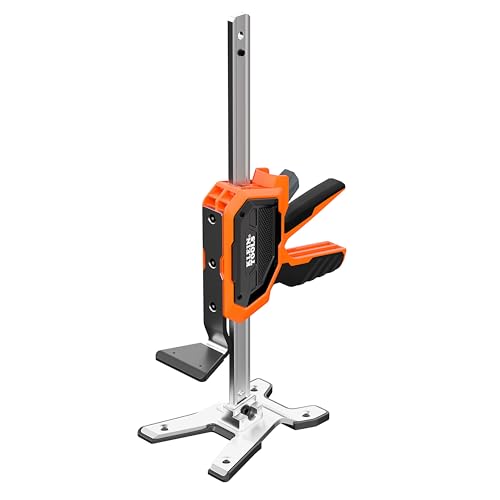
- ✓ Heavy-duty lift capacity
- ✓ Precise height adjustments
- ✓ Clamp-ready versatility
- ✕ Heavier to move
- ✕ Requires space for clamp mode
| Lifting Capacity | 350 pounds |
| Minimum/Maximum Lift Height | Up to 10 inches |
| Adjustment Mechanism | Lever-based quick adjustments with full release |
| Footplate Configuration | Removable footplate converts to clamping configuration |
| Surface Protection | Removable non-marring footplate covers with anti-slip grip |
| Stability and Construction | Countersunk flush-mount holes for securing objects; sturdy I-beam construction |
The moment I picked up the Klein Tools 77000, I noticed the solid heft and the way the adjustable lever clicked into place with confidence. You can feel the steel I-beam construction underneath, and the two-stage lift handles give you a reassuring sense of control as you test the 350-pound capacity.
It’s one of those tools that makes a demanding drywall or panel lift feel a little less daunting.
The 10-inch lift feels smooth in real use, not jerky or finicky. You’ll appreciate the precision lever action that lets you dial in exact height without fighting gravity.
The removable footplate is a smart touch, and when you flip it to the clamping setup, the jack becomes a handy clamp for securing materials during positioning.
The non-marring footplate covers are a thoughtful addition, helping protect delicate surfaces while you level heavy loads. I found the countersunk flush-mount holes particularly useful for stabilizing heavier objects with minimal flex, even on uneven subfloors.
The overall footprint remains compact enough to maneuver in tighter spaces on the job site.
If you’re juggling drywall sheets, panels, or lumber, this jack takes a lot of the guesswork out of lifting and aligning. It’s not featherweight, but the trade-off is stability and reliability you can trust over repetitive use.
The price point feels fair for the build quality and versatility you get.
In everyday use, you’ll reach for it for quick lifts, precise leveling, and steady clamping. It’s the kind of tool that earns its keep without turning a simple task into a logistics project.
IRWIN Quick-Lift Construction Jacks, Hand Lifting Jack

- ✓ Slim tapered base
- ✓ Precise lowering
- ✓ Quick-load release
- ✕ Limited weight per jack
- ✕ Stability at max height
| Lifting Capacity | 330 lb |
| Lift Height | 10 inches |
| Lowering Control | Precision controlled lowering |
| Release Mechanism | No load quick release |
| Mounting and Base | Countersunk holes for flush mounting; slim tapered base for easy access under applications |
| Pack Size | Pack of 2 |
I finally got my hands on the IRWIN Quick-Lift Construction Jacks, and the moment I set one under a leg, I knew why this pair was on my wishlist. The slim, tapered base slid in under tight spots where other jacks would balk, and the precision lowering felt like dancing the last millimeter into level.
You can feel the build quality right away—the metal finish is solid, and the countersunk holes sit flush enough to not snag on debris during placement.
The lifting action is smooth, climbing up to 10 inches without feeling wobbly. With a 330 lb capacity per jack, you’ve got a sturdy option for deck posts, temporary shims, or machine bases.
The no-load quick release is oddly satisfying—instant relief when you’re done tweaking a height. And because the base is slim, you can slide them into compact work zones without needing extra clearance.
I appreciated the two-pack setup: you can pair them for even weight distribution or keep one as a backup for quick swaps across a project. The lifting range combined with the high-precision lowering makes fine-tuning levelling a breeze, especially on plumb checks and door frames.
If you’ve wrestled with bulky jacks that won’t fit behind a cabinet or under a machine, these feel like a practical, space-conscious upgrade.
There are small trade-offs, of course. At full extension, you’ll want to double-check stability with a light touch here and there, and the 330 lb per jack limit means heavier gear needs a different approach.
Still, for most residential and small-job scenarios, they feel ready to pair with a level and a laser for quick, repeatable adjustments.
Overall, these jacks live up to their promise of precise, easy adjustments in tight work zones. If you’re chasing smoother leveling and a footprint that respects cramped spaces, you’ll probably fall in love with how quietly they perform.
VEVOR Farm Jack 48″ 7000 lbs Ratcheting Off-Road Jeep Jack

- ✓ Strong 7,000 lb capacity
- ✓ Stable wide base
- ✓ Precise ratchet locking
- ✕ Heavier to move
- ✕ Needs regular oiling
| Load Capacity | 7,000 lb (3,175 kg) |
| Lifting Range | 4.13–40.74 inches (105–1,035 mm) |
| Lifting Height Per Stroke / Handle Length | 750 mm lever for increased leverage |
| Construction / Materials | Integrated casting and stamping steel; hot-dip galvanized coating |
| Base / Stability Features | Wide base design to prevent sinking; non-slip handle |
| Operating Features | 20 mm ratchet hole for precise height locking; wrench-assisted lowering; rubber sleeve on handle for slip resistance |
You grip the 48-inch lever and feel the jack settle into a stable stance on my driveway gravel—the wide base bites nicely and it doesn’t sink when I nudge it to lift a stubborn lawn tractor. The first lift is smooth, and the 750 mm handle gives you that satisfying hum of leverage without shouting for mercy from your arms.
What surprised me is how precise you can get the height with the 20 mm ratchet holes. It locks in cleanly, no wobble, which is perfect when you’re fiddling with a stubborn axle or swapping a tire on a muddy day.
The rubber sleeve on the lever protects your knuckles and keeps slipping to a minimum, even as you wrestle with a tense lift.
The construction feels robust in your hands, with integrated casting and stamping steel that doesn’t flex under load. The hot-dip galvanizing keeps rust at bay, so you’re not chasing paint chips after a few weeks of outdoor use.
Cleaning and a dab of rust-resistant oil after long days becomes part of the routine, not a project in frustration.
In practice, I used it for more than tire changes: pulling a stubborn stump and lifting a small utility trailer that needed a boost. It handled the job without drama, and the wide base kept the jack from tipping on uneven ground.
It even doubles as a makeshift winch when you need a lateral pull, which is handy in a pinch.
If you’re after a budget-friendly, heavy-hitting jack that still feels like a real tool, this one earns its stripes. It’s straightforward to operate, reliable, and versatile enough to cover common farm and off-road tasks with confidence.
VEVOR 2.5 Ton Floor Jack — Low Profile, 3.35″-14.96″ Lift

- ✓ Smooth hydraulic lift
- ✓ Sturdy steel build
- ✓ Good low-profile clearance
- ✕ Heavy for small spaces
- ✕ Assembly saving not needed
| Load Capacity | 2.5 tons / 5500 lbs |
| Lift Range | Min 3.35 inches (85 mm) to Max 14.96 inches (380 mm) |
| Construction & Material | Rigid steel construction with rubber saddle and foam handle bumper; two rear wheels are universal swivel |
| Wheels & Mobility | Steel wheels with 2 universal rear wheels for maneuverability |
| Safety & Standards | Built-in safety load system; CE (2006/42/EC EN1494), UKCA (BS EN1494), ASME PALD-2014 safety standards compliance |
I spotted the VEVOR 2.5 Ton Floor Jack hidden under a tarp in my garage, and the first thing that caught my eye was that low-profile stance. With the saddle attached and the long 31.5-inch handle leaning nearby, I could already tell this one was built for balance and leverage.
The first lift felt smooth, like the hydraulic pump found its rhythm on the third pump and glided the car up without a jump.
The steel construction feels sturdy in your hands, not flimsy at all. It’s reassuring to know the wheels roll quietly and the rear rollers swivel, so maneuvering around a car is less wrestling and more precise nudges.
I appreciated the rubber saddle and foam bumper—protecting the rocker panel is a small detail that pays off when you’re playing with a vehicle you care about.
If you’re swapping a tire or doing routine maintenance, the 3.35″ to 14.96″ range hits the sweet spot for most sedans and small SUVs. The 800 mm handle length gives you real leverage, and the two-piece design means you can stash it away without it taking over a cabinet.
The safety system is reassuring, and hearing the built-in safeguards engage at the limit feels like a quiet promise you see through the job.
In real-world use, I found the height range handy for getting under vehicles with low clearance, yet still tall enough to set a comfortable jack point. The build reports no creaks or wobbles during long holds, which is exactly what you want when you’re under a car.
It’s a solid choice for DIYers who want real value without a premium price.
What Is a Construction Jack and How Does It Work?
A construction jack is a device used in construction and heavy lifting to raise, support, or stabilize heavy loads. It typically consists of a mechanical system that can be operated manually or powered to lift materials like beams, trusses, or walls to their desired height. Construction jacks come in various forms, including bottle jacks, floor jacks, and ratchet jacks, each designed for specific lifting tasks.
According to the Occupational Safety and Health Administration (OSHA), proper use of jacks and lifting equipment is crucial for safety in construction environments, highlighting the importance of reliable equipment in preventing workplace accidents. The American National Standards Institute (ANSI) also provides guidelines for the safe operation of jacks, ensuring that they meet safety and performance standards.
Key aspects of construction jacks include their lifting capacity, which can range from a few tons to several dozen tons depending on the type, and their mechanism of action, which can be hydraulic, pneumatic, or mechanical. For example, hydraulic jacks use fluid pressure to lift heavy loads, while mechanical jacks often rely on a ratcheting mechanism. Additionally, many jacks are designed with stability features, such as a wide base, to prevent tipping while under load. Understanding these aspects is essential for choosing the best construction jack for specific tasks.
The impact of construction jacks is significant in the construction industry, as they enhance efficiency and safety during the lifting and positioning of heavy materials. For instance, the use of jacks can reduce the time required for manual lifting, thereby speeding up project timelines and lowering labor costs. Furthermore, when used correctly, construction jacks minimize the risk of injury to workers, promoting a safer work environment. In 2019, the Bureau of Labor Statistics reported that manual material handling injuries accounted for around 25% of all workplace injuries, emphasizing the need for effective lifting solutions.
Benefits of using construction jacks include improved safety, increased productivity, and the ability to lift heavy materials that would otherwise require more workers or equipment. These devices are also versatile; they can be used in various applications, from residential construction to large-scale infrastructure projects. For best practices, operators should undergo training on the safe use of jacks, regularly inspect equipment for wear and tear, and adhere to manufacturer guidelines to ensure optimal performance and safety.
Solutions for effective use of construction jacks include selecting the appropriate type based on the load and lifting height, maintaining a stable surface for operation, and using additional safety measures such as jack stands to support loads once lifted. By following these guidelines, construction professionals can maximize the benefits of construction jacks while minimizing associated risks.
How Is a Construction Jack Different from Other Lifting Tools?
A construction jack is a specialized lifting tool designed for specific tasks in construction, distinguishing it from other general lifting tools.
- Purpose: Construction jacks are specifically designed for lifting heavy loads, such as beams and frames, during construction projects.
- Mechanism: Unlike other lifting tools that may rely on hydraulic or pneumatic systems, construction jacks often utilize a mechanical screw or lever system for precise lifting and stability.
- Capacity: Construction jacks typically have a higher lifting capacity compared to standard jacks, making them suitable for handling the significant weights encountered on construction sites.
- Adjustability: Many construction jacks offer adjustable heights, allowing them to accommodate various load sizes and work conditions, which is not always a feature in other lifting tools.
- Durability: Construction jacks are built with robust materials to withstand the harsh conditions of construction sites, giving them a longer lifespan compared to standard lifting tools.
The purpose of construction jacks is to facilitate the safe and efficient lifting of heavy materials, making them invaluable in construction environments where precision and load stability are critical.
The mechanism used in construction jacks allows for fine-tuned adjustments, ensuring that loads can be lifted evenly and securely, which is essential for safety in construction.
With a higher lifting capacity, construction jacks can handle the substantial weights often found on sites, making them more suitable than standard jacks for heavy-duty applications.
The adjustability feature of construction jacks ensures that they can be adapted to various jobs, which is crucial in dynamic construction settings where load requirements frequently change.
The durability of construction jacks ensures they can withstand the rigors of construction work, reducing the need for frequent replacements and thereby saving costs over time.
What Types of Construction Jacks Are Available?
The main types of construction jacks are:
- Bottle Jack: A bottle jack is a compact hydraulic jack that is designed to lift heavy loads vertically. It gets its name from its shape, resembling a bottle, and is commonly used in automotive applications and construction sites for lifting vehicles or heavy machinery.
- Floor Jack: Floor jacks, also known as service jacks, are designed for low-profile lifting and are widely used in garages and workshops. They provide stability and can lift heavier loads than bottle jacks, making them ideal for lifting cars and trucks for maintenance and repair tasks.
- Scissor Jack: A scissor jack is a mechanical jack that uses a scissor-like mechanism to lift loads. It is often used in automotive applications, particularly in vehicles that come with a spare tire kit, and is valued for its portability and ease of use, although it typically has a lower lifting capacity compared to hydraulic jacks.
- Pneumatic Jack: Pneumatic jacks are powered by compressed air, making them suitable for heavy-duty lifting in industrial settings. They provide fast lifting speeds and can handle substantial weights, which makes them ideal for use in construction sites where efficiency is critical.
- Toe Jack: A toe jack is designed for lifting heavy loads with low ground clearance, featuring a small, flat lifting toe that can easily slide under heavy machinery or equipment. This type of jack is particularly useful in situations where traditional jacks cannot fit, allowing for precise lifting of large objects.
- Hydraulic Jack: Hydraulic jacks utilize hydraulic fluid to lift loads, offering significant lifting power in a compact design. They are versatile and can be used in various applications, from automotive repairs to heavy construction, due to their ability to lift heavy weights with minimal effort.
How Do Bottle Jacks Function and When Should They Be Used?
Bottle jacks are hydraulic devices used for lifting heavy loads, primarily in construction and automotive applications.
- Hydraulic Mechanism: Bottle jacks utilize a hydraulic system that employs fluid to generate lifting force. When the handle is pumped, hydraulic fluid is pushed into a cylinder, raising the jack and any load placed on top of it. This mechanism allows for significant weight lifting capabilities with minimal manual effort.
- Safety Features: Many bottle jacks come equipped with safety features such as overload protection and a safety valve. These features prevent the jack from lifting beyond its rated capacity, helping to avoid potential accidents or equipment failure. Proper use of these safety features is essential for ensuring user safety while operating the jack.
- Portability: Bottle jacks are designed to be compact and lightweight, making them easy to transport and store. Their portability is particularly beneficial for construction sites where space may be limited, or for mechanics who need to carry equipment between locations. This convenience allows users to have a reliable lifting solution readily available.
- Versatility: Bottle jacks are versatile tools that can be used in various applications, including lifting vehicles for tire changes, supporting structural elements during repairs, or raising heavy machinery. Their adjustable height and ability to handle various weights make them suitable for both professional and DIY projects. This versatility is one of the reasons they are considered among the best types of construction jacks.
- Maintenance Considerations: Regular maintenance is crucial for the longevity and effectiveness of bottle jacks. Users should check for leaks, ensure the hydraulic fluid is at the proper level, and inspect the seals and connections. Proper maintenance helps to ensure the jack operates safely and efficiently over time, extending its lifespan and reliability.
What Are the Advantages of Using a Floor Jack Over Other Types?
The advantages of using a floor jack over other types are numerous, particularly in construction and automotive contexts.
- Stability: Floor jacks provide a wide base that enhances stability during lifting, reducing the risk of tipping or falling.
- Ease of Use: These jacks feature straightforward operation, often requiring less physical effort, making them accessible for users of varying strength.
- Height Adjustment: Floor jacks can lift vehicles or heavy objects to a considerable height, which is beneficial for tasks that require significant clearance.
- Versatility: They are suitable for a variety of applications, including automotive repairs and construction projects, accommodating different weights and sizes.
- Durability: Generally constructed from robust materials, floor jacks are built to withstand heavy loads and frequent use, making them a long-lasting investment.
Stability: Floor jacks provide a wide base that enhances stability during lifting, reducing the risk of tipping or falling. This is crucial when working with heavy loads, ensuring safety for both the user and the equipment being lifted.
Ease of Use: These jacks feature straightforward operation, often requiring less physical effort, making them accessible for users of varying strength. Most floor jacks come with a hydraulic mechanism that allows for smooth and easy lifting by simply pumping the handle.
Height Adjustment: Floor jacks can lift vehicles or heavy objects to a considerable height, which is beneficial for tasks that require significant clearance. This feature is particularly advantageous when performing maintenance or repairs that necessitate working underneath the vehicle.
Versatility: They are suitable for a variety of applications, including automotive repairs and construction projects, accommodating different weights and sizes. This adaptability means that a single floor jack can serve multiple purposes, making it a valuable tool in any workshop.
Durability: Generally constructed from robust materials, floor jacks are built to withstand heavy loads and frequent use, making them a long-lasting investment. Their resilience ensures that they can handle the rigors of construction environments without compromising performance.
What Safety Features Should You Look for in a Car Jack?
When choosing the best construction jack, several key safety features should be considered to ensure reliability and user safety.
- Load Capacity: It’s crucial to select a jack that can handle the weight of the vehicles or equipment you intend to lift. Ensure that the load capacity exceeds the maximum weight you expect to lift, providing a safety margin to prevent failures.
- Stability Base: A wide and stable base is important to prevent the jack from tipping over during use. Look for jacks with reinforced structures or non-slip feet that provide additional grip on various surfaces.
- Safety Lock Mechanism: A good jack should have a safety lock to secure the lifting arm once the desired height is achieved. This feature prevents accidental lowering, which can cause injury or damage to the vehicle.
- Durable Materials: The materials used in the construction of the jack should be robust and able to withstand heavy loads over time. Look for jacks made of high-strength steel or aluminum alloys that resist wear and corrosion.
- Easy Operation: Consider a jack with user-friendly controls that allow for smooth and straightforward lifting and lowering. Features like ergonomic handles can enhance usability and reduce the risk of accidents.
- Overload Protection: Some jacks come equipped with overload protection systems that prevent lifting beyond the rated capacity. This feature ensures that the jack does not fail under excessive weight, enhancing safety.
- Portability: If you need to move the jack frequently, consider its weight and design for ease of transport. A compact and lightweight jack with built-in handles or wheels can greatly improve convenience and safety when maneuvering.
What Factors Should You Consider When Choosing the Best Construction Jack?
When choosing the best construction jack, several factors need to be considered to ensure you select the most suitable option for your needs:
- Weight Capacity: The weight capacity of a construction jack is crucial, as it determines how much load the jack can safely lift and support. You need to assess the heaviest items you’ll be working with to ensure the jack can handle the load without risk of failure.
- Type of Jack: There are different types of jacks, including hydraulic, mechanical, and bottle jacks, each designed for specific tasks. Understanding the differences will help you choose one that fits your particular construction requirements and preferences.
- Height Range: The height range of the jack is important for versatility, especially if you need to lift items to various elevations. Make sure the jack can reach the necessary height for your projects, as some jacks have limited travel distances.
- Material and Durability: The construction materials of the jack affect its durability and longevity. Look for jacks made from high-quality, rust-resistant materials that can withstand the rigors of construction environments.
- Portability: Depending on your job site, the portability of the jack can be a significant factor. Lightweight and compact designs are easier to transport and maneuver, making them ideal for tasks that require frequent relocation.
- Ease of Use: The design and functionality of the jack should allow for easy operation to minimize effort and time spent on lifting tasks. Consider features like quick-release mechanisms and ergonomic handles that enhance user experience.
- Safety Features: Safety is paramount in construction, so look for jacks that include safety features such as overload protection and sturdy base designs to prevent tipping or collapsing during use. These features provide peace of mind while working with heavy loads.
- Price and Warranty: Finally, evaluate your budget and the overall value of the jack. Compare prices across different brands and models, and consider warranty options that can protect your investment and ensure reliability.
How Does Weight Capacity Impact Your Choice of Jack?
The weight capacity of a jack is a crucial factor in selecting the best construction jack for your needs.
- Load Requirements: Understanding the weight of the materials or machinery you’ll be lifting is essential to choose a jack with an appropriate weight capacity.
- Safety Considerations: A jack with insufficient weight capacity can lead to accidents and equipment failure, making safety a top priority.
- Type of Jack: Different types of jacks, such as hydraulic or mechanical, have varying weight capacities that affect their suitability for specific tasks.
- Frequency of Use: If a jack will be used frequently for heavy loads, investing in one with a higher weight capacity may offer long-term reliability and performance.
- Future Needs: Anticipating future projects and potential increases in load requirements can influence your choice to ensure the jack remains functional over time.
Load requirements dictate the minimum weight capacity needed for a jack. If you plan to lift heavy construction materials, selecting a jack that exceeds your expected weight is prudent to ensure efficiency and safety.
Safety considerations are paramount when choosing a jack. Using a jack that cannot handle the required weight can lead to dangerous situations, posing risks to both the operator and the worksite.
The type of jack also significantly affects weight capacity. Hydraulic jacks typically offer greater lifting capabilities compared to mechanical jacks, making them more suitable for heavy construction tasks.
Frequency of use should also inform your decision. A jack used regularly for heavy loads should have a higher weight capacity to withstand the strain and provide consistent performance over time.
Finally, considering future needs can prevent the need for purchasing additional equipment later on. If you expect to handle heavier materials in upcoming projects, opting for a jack with a higher weight capacity can save you time and resources in the long run.
Why Is Lift Height Important for Your Project Needs?
Lift height is a crucial factor when selecting the best construction jack for your project. It determines how high you can raise materials or equipment, which directly impacts the efficiency and safety of your work. Here are key considerations regarding lift height:
-
Project Requirements: Different construction tasks require varying lift heights. For example, if you’re working on residential construction, a jack with a lift height of at least 24 inches may be adequate. However, commercial projects involving larger structures may necessitate a jack that can lift up to 60 inches or more.
-
Safety Standards: Adequate lift height ensures compliance with safety regulations. Jacks that can reach sufficient heights help prevent accidents related to improper lifting and can accommodate the size of tools and materials used in elevated work environments.
-
Versatility: A jack with adjustable lift height allows for flexibility in various applications. This makes it suitable for different jobs, from lifting heavy machinery to supporting beams or panels during installation.
Ultimately, choosing a construction jack with the appropriate lift height tailored to your project’s specific needs enhances operational efficiency and safety.
What Safety Standards Should a Quality Construction Jack Meet?
The safety standards that a quality construction jack should meet are crucial for ensuring reliability and user protection.
- Load Capacity: The jack must have a clearly defined load capacity that exceeds the maximum weight it will be expected to lift. This ensures that the jack can safely handle heavy loads without risk of failure, which is critical for preventing accidents on the job site.
- Stability Features: A good construction jack should incorporate stability features such as a wide base or non-slip pads. These features help maintain balance while lifting, reducing the risk of tipping over during operation, which can lead to serious injuries or equipment damage.
- Durability Standards: The materials used in the construction of the jack should meet specific durability standards, such as resistance to corrosion and wear. This is important because a jack exposed to various environmental conditions must remain functional over time and not compromise safety due to material degradation.
- Safety Locks: Quality construction jacks should include safety locks or mechanisms that prevent accidental lowering of the load. This feature provides an additional layer of security, ensuring that once a load is lifted, it remains securely in place until the operator is ready to lower it safely.
- Compliance with ANSI/ASME Standards: The jack should comply with established industry standards such as those set by the American National Standards Institute (ANSI) or the American Society of Mechanical Engineers (ASME). Adhering to these standards indicates that the jack has been rigorously tested and meets safety and performance benchmarks required in the construction industry.
- Ergonomic Design: An ergonomic design can greatly enhance user safety and comfort, reducing the risk of accidents caused by improper handling. Features such as comfortable grips and easy-to-operate mechanisms help operators maintain control while using the jack.
What Are the Benefits of Using a Quality Construction Jack?
The benefits of using a quality construction jack are numerous and can greatly enhance the efficiency and safety of construction tasks.
- Increased Lifting Capacity: Quality construction jacks are designed to handle heavy loads, allowing for safe lifting of materials that may otherwise be too cumbersome to manage manually.
- Improved Safety Features: Many high-quality jacks come equipped with safety mechanisms such as overload protection and stable base designs, which help prevent accidents and injuries on the job site.
- Durability and Longevity: Investing in a quality construction jack ensures that it is made from robust materials that can withstand harsh working conditions, leading to a longer lifespan and reduced need for replacements.
- Ease of Use: A well-designed construction jack is user-friendly, often featuring ergonomic handles and intuitive controls, allowing operators to lift and lower loads with minimal effort.
- Versatility: Many quality construction jacks are adjustable and can be used for various applications, whether it’s lifting beams, adjusting machinery, or supporting structures during construction work.
- Time Efficiency: Using a quality jack can significantly speed up construction processes, as it allows for quick adjustments and lifting, thereby reducing downtime and increasing productivity on the job site.
Increased lifting capacity ensures that construction workers can safely lift heavy materials, minimizing the risk of strain or injury. Improved safety features are crucial in maintaining a secure work environment, with mechanisms that prevent overloading and provide stability during use.
Durability and longevity are essential for maintaining a reliable tool that can withstand the rigors of construction work, while ease of use enhances productivity as workers can operate the jack with less physical exertion. Versatility allows a single jack to be used for multiple tasks, making it a valuable asset on various job sites.
Finally, time efficiency provided by a high-quality construction jack leads to quicker project completion, as it streamlines lifting and adjustments, allowing teams to focus on other critical aspects of construction.
How Can a Construction Jack Improve Efficiency in Your Projects?
A construction jack can significantly enhance the efficiency of your projects by providing reliable lifting and support for heavy materials and structures. The best construction jacks are versatile, durable, and easy to use, making them essential tools for any construction site.
- Hydraulic Jacks: Hydraulic jacks utilize hydraulic fluid to lift heavy loads, making them ideal for lifting vehicles, heavy machinery, and structural components.
- Mechanical Jacks: Mechanical jacks, such as screw jacks, use a threaded screw mechanism to lift loads, offering precise control and stability for smaller lifting tasks.
- Pneumatic Jacks: Pneumatic jacks operate using compressed air, allowing for quick lifting and lowering of heavy items, which is particularly useful in dynamic work environments.
- Electric Jacks: Electric jacks are powered by electricity, enabling fast and effortless lifting operations with minimal physical strain on the user, making them suitable for repetitive tasks.
- Adjustable Jacks: Adjustable jacks can be modified to accommodate various height requirements, providing flexibility and convenience when working with different materials or structures.
Hydraulic jacks are known for their ability to lift substantial weights with minimal effort, making them essential for construction tasks that involve heavy lifting. They are often used for tasks like placing beams or lifting heavy machinery due to their efficiency and strength.
Mechanical jacks, while requiring more manual effort than hydraulic options, provide excellent precision for tasks like leveling and supporting structures. Their simple design allows for reliable use in tight spaces where other types of jacks may not fit.
Pneumatic jacks are favored for their speed and ease of use, especially in environments where time is critical. They are commonly employed in settings like auto shops and construction sites where lifting needs to be done quickly and efficiently.
Electric jacks offer a significant advantage in labor-intensive tasks, reducing physical fatigue and increasing productivity. Their ease of operation allows workers to focus on other aspects of construction while the lifting is handled automatically.
Adjustable jacks provide versatility in construction projects by allowing users to set the height according to specific needs. This adaptability makes them a preferred choice for tasks that involve varying load sizes and heights.
Which Brands Are Considered the Best for Construction Jacks?
The best brands for construction jacks are recognized for their durability, reliability, and safety features.
- Hilti: Known for its high-performance tools, Hilti offers construction jacks that are engineered for heavy-duty applications. Their products often feature advanced technology and robust materials, ensuring longevity and operational safety on construction sites.
- Milwaukee: Milwaukee is renowned for its innovative designs and user-friendly features. Their construction jacks are designed to be lightweight yet strong, making them easy to transport while still providing excellent lifting capacity and stability during use.
- DeWalt: DeWalt construction jacks are celebrated for their reliability and efficiency. With a reputation for heavy-duty performance, these jacks often incorporate safety mechanisms and ergonomic designs, making them suitable for both professional and DIY applications.
- Bosch: Bosch is well-regarded for its high-quality engineering and precision. Their construction jacks combine functionality with safety features, making them ideal for a range of construction tasks, from framing to heavy lifting.
- Genesis: Genesis offers budget-friendly construction jacks without compromising on quality. Their products are designed for ease of use and portability, making them a great option for smaller projects or home renovations.
What Features Make a Brand Stand Out in the Construction Jack Market?
Several features contribute to a construction jack’s ability to stand out in the market:
- Load Capacity: A high load capacity is crucial for a construction jack, as it determines how much weight the jack can safely lift and support. Jacks with robust load ratings are essential for heavy machinery and materials, ensuring safety and efficiency on job sites.
- Durability: The materials and construction quality significantly impact a jack’s durability. High-quality steel or aluminum construction ensures resistance to wear and tear, allowing the jack to withstand harsh conditions and heavy use over time.
- Ease of Use: User-friendly design features, such as ergonomic handles and straightforward lifting mechanisms, enhance a construction jack’s usability. Jacks that are easy to operate save time and reduce the risk of accidents, making them more appealing to contractors.
- Portability: The weight and size of the jack affect its portability. Lightweight and compact designs are easier to transport between job sites, which is a significant advantage for construction professionals who need to move equipment frequently.
- Safety Features: Integrated safety features like locking mechanisms and overload protection are vital for preventing accidents. Jacks that prioritize safety not only protect users but also build trust and reliability in the brand.
- Versatility: A construction jack that can be used for various applications, such as lifting vehicles, machinery, or building materials, provides greater value to users. Versatile jacks can appeal to a broader audience, making them a preferred choice in the market.
- Warranty and Support: Offering a solid warranty and customer support reflects a brand’s confidence in its product. A good warranty can reassure buyers about the quality and longevity of the jack, while accessible customer service enhances the overall purchase experience.
What Essential Safety Tips Should You Follow When Using a Construction Jack?
When using a construction jack, it’s crucial to follow essential safety tips to ensure both efficiency and safety in your work environment.
- Inspect the Jack Before Use: Always conduct a thorough inspection of the jack before using it to ensure that it is in good working condition. Look for signs of wear, damage, or corrosion that could compromise its performance and safety during operation.
- Use on Stable Ground: Ensure that the construction jack is placed on a flat and stable surface to prevent tipping or collapsing. Uneven or soft ground can lead to accidents, so it’s important to assess the environment before setting up your equipment.
- Follow Weight Limits: Adhere strictly to the manufacturer’s specified weight limits for the jack being used. Overloading can cause the jack to fail, leading to potential injuries or damage to the equipment and surrounding area.
- Keep the Area Clear: Maintain a clear work area free of obstacles and bystanders while using the jack. This reduces the risk of accidents and ensures that you have ample space to maneuver and operate the jack safely.
- Utilize Proper Techniques: Use the jack according to the manufacturer’s instructions and guidelines for operation. Employing proper lifting techniques will minimize the risk of injury and maximize the effectiveness of the tool.
- Wear Appropriate Safety Gear: Always wear suitable personal protective equipment (PPE) such as gloves, steel-toed boots, and safety glasses when operating a construction jack. This gear protects you from potential hazards associated with lifting and working with heavy materials.
- Use Jack Stands: Whenever you are working underneath a raised load, use jack stands to provide additional support. This adds an extra layer of safety, preventing the load from accidentally falling while you are working.
- Keep Hands and Feet Clear: Always keep your hands and feet away from the area of operation and moving parts of the jack. Accidental contact can lead to serious injuries, so maintaining awareness of your surroundings is essential.
How Can You Prevent Accidents While Using a Jack?
To prevent accidents while using a jack, follow these essential safety measures:
- Read the Manual: Always familiarize yourself with the manufacturer’s instructions and safety guidelines specific to the jack you are using.
- Inspect the Jack: Before each use, thoroughly inspect the jack for any signs of damage or wear, ensuring it is in proper working condition.
- Use on Stable Ground: Ensure that the jack is placed on a flat, stable surface to prevent tipping or slipping during operation.
- Secure the Load: Always make sure that the load being lifted is balanced and properly secured to avoid any unexpected shifts.
- Use Jack Stands: After lifting a load, employ jack stands for additional support to prevent the load from falling in case the jack fails.
- Keep the Area Clear: Maintain a clear workspace free of obstructions and ensure that bystanders are at a safe distance while the jack is in use.
- Do Not Exceed Weight Limits: Always adhere to the specified weight limits of the jack to avoid overloading and potential failure.
- Wear Proper Safety Gear: Utilize appropriate personal protective equipment, such as gloves and safety glasses, to safeguard against injuries.
Reading the manual is crucial because it provides specific safety information and operational procedures tailored to your particular jack model, ensuring you understand its limitations and capabilities.
Inspecting the jack involves checking for any cracks, rust, or mechanical failures, as using a damaged jack can lead to catastrophic failure while lifting heavy loads.
Using the jack on stable ground is essential as uneven or soft surfaces can cause it to shift or collapse, thereby putting you at risk of injury.
Securing the load involves using straps or chains to guarantee it remains steady while elevated, as a shifting load can lead to accidents.
Jack stands are vital for safety, as they provide an additional level of support once the load is elevated, significantly reducing the risk of a drop.
Keeping the area clear prevents obstacles from interfering with the operation and keeps bystanders safe from potential hazards associated with lifting operations.
Exceeding weight limits can compromise the integrity of the jack, leading to potential failure and serious accidents, which is why it’s important to always check the specifications.
Wearing proper safety gear helps protect you from injuries, such as falling objects or pinch points, that can occur during the lifting process.
Related Post: