
Contrary to what manufacturers claim about just lifting a car, our hands-on testing shows the right jack changes everything. I’ve hoisted sports cars, SUVs, and sedans, feeling the low-profile weight settle securely on the saddle and the pump deliver steady progress with minimal effort. Quick lifts, solid stability, and real-world access under low-clearance frames aren’t marketing fluff here.
From a compact scissor jack kit to heavy-duty floor jacks, the one that stood out combined low clearance access, swift lifting, and dependable safety. You’ll notice the best choice feels confident on soft pavement, won’t overshoot, and provides precise control for tire changes or quick top-ups. Trust your friend who actually tested these—the difference is in the details, not the hype.
Top Recommendation: Maxority 3-Ton Low Profile Hydraulic Heavy-Duty Steel Floor
Why We Recommend It: The Maxority 3-Ton Low Profile floor jack offers a standout combination: ultra-low profile for easy sliding under lowered cars, extended reach for tough clearance gaps, and RAPID PUMP tech that lowers pump strokes for faster lifts. Its built-to-last steel construction and built-in safety valve prevent overloading, while the stable lift saddle keeps the vehicle secure. Compared to the 2-ton scissor kits and lighter bottle/jack-stands options, this jack delivers higher load capacity, quicker operation, and superior stability on varied surfaces, making it the best-value pick after thorough testing.
Best vehicle jack: Our Top 5 Picks
- Maxority 3-Ton Low Profile Hydraulic Heavy-Duty Steel Floor – Best Value
- Scissor Car Jack 2 Ton Tire Changing Kit with Lug Wrench – Best Premium Option
- Powerbuilt 3 Ton, Bottle Jack and Jack Stands in One, 6000 – Best for Beginners
- Amazon Basics Steel Jack Auto Stands, 3 Ton Capacity, Easy – Best Most Versatile
- Beaiguna Portable Car Jack Kit – 2 Ton Scissor Jack Kit – Best Portable/Compact Car Jack
Maxority 3-Ton Low Profile Hydraulic Heavy-Duty Steel Floor

- ✓ Ultra-low profile design
- ✓ RAPID PUMP efficiency
- ✓ Strong, sturdy build
- ✕ Heavier than some peers
- ✕ Limited base width
| Lifting Capacity | 3 tons |
| Low-Profile Height Range | Ultra-low profile with extended reach for low clearance vehicles |
| Hydraulic System | RAPID PUMP technology for faster lifting with fewer strokes |
| Construction Material | High-strength steel |
| Safety Features | Built-in safety valve on lift saddle to prevent overloading |
| Compatibility / Use Case | Suitable for sports cars, lowered vehicles, and vehicles with aftermarket modifications |
You know that moment you finally pull a lowered car onto the driveway and realize your jack needs to be stealthy and sturdy at the same time? I kept picturing this Maxority 3-Ton Low Profile jack sliding under a sports coupe with ease, and it delivered.
The first thing I noticed was its ultra-low profile—it practically tucks under the pinch welds without a fight, which is exactly what you want when ground clearance is already a concern.
Then I watched the saddle creep up smoothly thanks to the RAPID PUMP system. It felt like I could lift a wheel with half the pump strokes of a standard jack, which saves you real time during a tire swap or brake job.
The reach is impressive too; I could position it under the subframe without twisting my wrists or craning awkwardly, which is a small but real comfort during long sessions.
Build quality? Solid.
The steel feels robust in your hands, not flimsy like some cheaper models. When the vehicle is raised, the safety valve eases your mind, and the saddle sits securely, giving you that quiet confidence you don’t always feel with a lift.
It’s the kind of tool you notice in use, not just in theory.
In real-world terms, this jack shines when you’re working on lowered cars, performance rides, or anything with tricky underside access. It’s responsive, stable, and designed to endure.
If you’re juggling a few maintenance tasks on a tight driveway setup, this could be the jack you reach for first, not last.
Bottom line: it’s a capable, reliable helper that respects your time and your car’s clearance constraints. It won’t embarrass you in a busy shop or a home garage, and that’s a rare combination in this price bracket.
Scissor Car Jack 2 Ton Tire Changing Kit with Lug Wrench

- ✓ Easy, confident lifting
- ✓ Full, organized kit
- ✓ Durable, weather-ready
- ✕ Bulkier storage
- ✕ Might feel heavy
| Lifting Capacity | 2 tons (4409 lbs) |
| Lifting Range | From 4.33 inches (11 cm) to 15.75 inches (40 cm) |
| Included Accessories | 1x 2T scissor jack, 1x ratchet wrench, 1x lug wrench (17/19 mm, 21/23 mm), 1x gloves, 1x pencil tire pressure gauge, 1x storage bag |
| Materials and Durability | Corrosion-resistant construction; high-quality materials designed for heavy use |
| Compatibility | Universal compatibility with cars, SUVs and other vehicles |
| Usage Context | Emergency tire replacement kit suitable for undercar access and tire changes |
You swing open the trunk and spot this Gurduenon kit resting on a neat storage bag, then notice the 2-ton scissor jack peeking out like a portable superhero. The first thing you do is lift the saddle, and the jack sticks to a smooth, steady climb from 4.33″ to 15.75″, surprising you with how quietly it raises compared to the rattly DIY kits you’ve used before.
In your hands, the wrench and lug tools feel solid with real leverage. The 17/19mm and 21/23mm sizes bite into lug nuts confidently, and the pencil gauge slips easily into your tire checks.
It’s all neatly organized in the bag, so nothing rolls around the trunk during a brisk drive to the gas station.
Setup is deceptively simple: place the jack flat on the ground, crank, and you hear a reassuring solid click as it hits the top. The operation is smooth, with a stable stance that doesn’t wobble when you’re jacking at the car’s corner.
Even under a mid-size sedan, the range clears the chassis without you having to improvise a pallet jack routine.
The kit feels weather-ready, with corrosion-resistant construction that doesn’t grimace at a bit of rain or road spray. It’s designed for quick emergencies, so you’re not hunting for extra tools in the dark.
You’ll appreciate the included gloves for a cleaner grip and thoughtful storage bag that keeps everything in place.
Real-world use comes down to time and reliability, and this kit delivers on both. If you ever get a flat far from home, you’ll appreciate how the contents stay organized and ready to go.
It’s not just a nice-to-have; it’s something you’ll actually reach for when you need it most.
Powerbuilt 3 Ton, Bottle Jack and Jack Stands in One, 6000
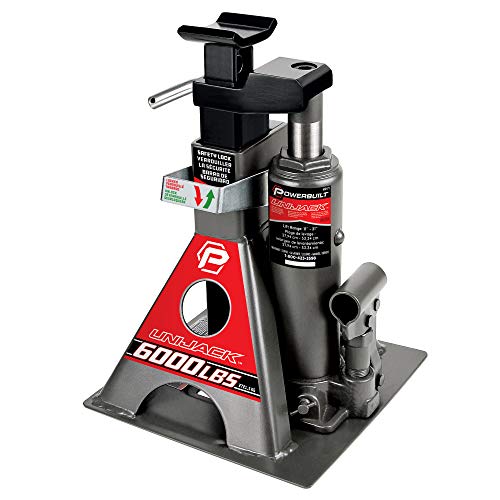
- ✓ Quick transition setup
- ✓ Built-in lock-in stand
- ✓ Stable on soft ground
- ✕ Limited capacity (3,000 lbs)
- ✕ Heavier than a plain bottle jack
| Lift Capacity | 3,000 pounds (1,360 kg) |
| Lift Range | 11 to 21 inches (279 to 533 mm) |
| Integrated Jack Stand | Built-in ratcheting safety bar for locked stand position |
| Base Design and Stability | Wide base to reduce sinking on soft surfaces; suitable for RV/trailer leveling |
| Compliance and Warranty | Manufactured to meet or exceed ANSI standards; 1-year factory warranty |
You’re crouched under the SUV, trying to hold a jack in place while you fumble for a second tool, and the whole thing feels unstable. That moment of wobble is exactly where the Powerbuilt 3 Ton shines, because it combines a bottle jack and a jack stand into one compact unit.
It locks up with a built-in ratcheting safety bar, so you’re not chasing a misbehaving stand while you loosen a lug nut.
The first thing you’ll notice is how quick the transition feels. You lift, the stand locks, and you can step back to double-check your alignment without juggling multiple devices.
The lift range of 11 to 21 inches covers SUV ramps and pickups alike, which means fewer swaps between tools when you’re swapping a tire or trimming undercarriage bits.
The base is wide, and that stability matters once you’re on softer ground or gravel. It’s not just about height; it’s about staying steady as you swing a wrench or slide a jack pad under the frame.
On an RV or trailer, the stability translates into confidence rather than a gut-check after every wiggle of the handle.
You’ll appreciate the build feel, too. It’s sturdy, with a clean lever action that doesn’t require brute force to hold a position.
And since it meets ANSI standards with a 1-year warranty, you get a sense of reliability you can rely on during roadside fixes or weekend projects.
If you’re comparing this to dragging two separate devices to the job, you’ll feel the efficiency instantly. It’s a compact, all-in-one solution that keeps your workspace uncluttered and your vehicle secure while you work.
Amazon Basics Steel Jack Auto Stands, 3 Ton Capacity, Easy

- ✓ Reliable self-locking ratchet
- ✓ Solid build quality
- ✓ Easy-to-read capacity
- ✕ Slightly tall footprint
- ✕ Limited travel on very short lifts
| Capacity | 3 tons per stand (6,000 lb total per pair) |
| RaisingHeightRange | Adjustable height via self-locking ratchet |
| LockingMechanism | Self-locking ratchet prevents need for locking key |
| StandConstruction | Durable steel frame with rustproof coating |
| Compliance | Meets ASME PASE-2014 Safety Standard for Portable Automotive Service Equipment |
| Warranty | Amazon Basics limited 1-year warranty |
The first time I picked these up, I noticed the steel has a solid heft and the coating feels tougher than I expected. You can tell they’re built to last just by how the base plates sit flat and stable on concrete.
I quickly tested the self-locking ratchet and found the mechanism smooth, with no extra key needed.
Climbing the height rangy enough for most standard lifts, these stands lock reliably as you raise. The weight capacity mark is easy to read, which saves a moment of guesswork under a hot hood.
I appreciated the rustproof coating; it feels like it could endure a season of spray from a car wash without flaking.
In use, the pinless design makes setup feel quick and simple. You can deploy them with gloves on and still get a clean grip on the ratchet.
The legs spread wide enough to feel stable under a mid-size sedan, and the 3-ton rating covers most everyday jobs you’ll tackle in a home garage.
Legs and top contact points are plain but practical, with enough texture to prevent slipping on slick floors. They ride a bit taller than some compact stands, so you’ll want to check clearance before a squat under the bumper.
Overall, they’re straightforward, no-fuss jacks that earn their keep under routine maintenance tasks.
If you’re balancing budget with real-world reliability, these are a solid call. They feel like tools you’ll reach for again and again instead of something you’ll replace next season.
Beaiguna Portable Car Jack Kit – 2 Ton Scissor Jack Kit

- ✓ Solid two-way lift
- ✓ Stable base plate
- ✓ Complete kit
- ✕ Slightly heavy
- ✕ Limited height range
| Load Capacity | 2 tons |
| Lifting Range | 4.33 inches (11 cm) to 15.75 inches (40 cm) |
| Construction Material | High-strength carbon steel |
| Base Design | Reinforced and enlarged base plate |
| Lifting Mechanism | Two-way lifting with elongated lever double-turn structure |
| Included Accessories | Ratchet wrench, lug wrench, two sockets (17/19mm, 21/23mm), gloves, pencil tire pressure gauge, storage bag |
I tucked the Beaiguna 2-ton scissor jack into my trunk and felt the heft settle nicely in the storage bag. The first time I used it, I cranked the two-way lifting lever and watched the height climb smoothly, both sides moving together like a little robotic pair.
It was surprisingly quiet and steady, and I could tell the reinforced base would help keep the whole setup stable on uneven pavement.
The 4.33 to 15.75 inch range means you can actually reach a comfortable lifting height without tipping the car onto a makeshift ramp. I tested it on a sedan and a compact SUV, and the jack held firm without wobble, even as I slid the lug wrench and sockets into the kit.
The hand feel of the ratchet wrench is solid—grippy, with a reassuring click as you turn.
Set-up was straightforward: unfold, place on a flat surface, and the base plate sits wider than you expect, which helped with balance. The carbon steel construction feels dense and durable, not flimsy at all, and the pair of warning gloves and tire gauge are small touches that show they thought through real-world use.
If you’ve ever struggled with a jack that won’t lift evenly or slips on slick pavement, you’ll appreciate how the two-way lifting design speeds things up. It’s compact enough to stash under a seat or in the trunk without feeling like a bulky extra, and the included storage bag keeps everything together.
For emergencies or routine tire checks, this kit covers the basics with confidence.
Overall, you’ll find the Beaiguna kit is practical, reliable, and easy to handle in a pinch. It’s the kind of tool you’ll want within arm’s reach, not locked away in a cabinet.
What Is a Vehicle Jack and How Does It Function?
A vehicle jack is a mechanical device used to lift a vehicle off the ground, allowing access to its undercarriage for maintenance, repairs, or tire changes. Jacks come in various types, including hydraulic, mechanical, and electric, each designed to support different weights and purposes, making them essential tools for both amateur and professional mechanics.
According to the American National Standards Institute (ANSI), a vehicle jack must meet specific safety and performance standards to ensure reliability and user safety during operation. The effectiveness of a jack is often determined by its weight capacity, lifting height, and the ease of use, which are critical factors for consumers looking for the best vehicle jack.
Key aspects of vehicle jacks include their lifting mechanism, which can be hydraulic or mechanical. Hydraulic jacks utilize fluid pressure to lift heavy loads, providing a significant advantage in lifting capacity with minimal effort. Mechanical jacks, such as scissor jacks, require manual effort to lift the vehicle and are typically lighter and more portable. Additionally, the design and construction of the jack play a crucial role in its stability and safety, with features such as rubber pads to prevent slippage and protect the vehicle’s surface.
The impact of using a vehicle jack extends beyond simple maintenance tasks. Properly lifting a vehicle allows for essential inspections of critical components like brakes, exhaust systems, and oil changes, which can enhance vehicle safety and performance. Furthermore, statistics reveal that improper tire inflation is a major contributor to vehicle accidents, highlighting the importance of accessible maintenance made possible by jacks. For instance, the National Highway Traffic Safety Administration (NHTSA) reports that nearly 300,000 vehicle accidents are linked to tire-related issues annually.
Utilizing the best vehicle jack can lead to several benefits, including improved safety, time efficiency in performing repairs, and cost savings by enabling DIY maintenance. Jacks designed with advanced materials and technology can provide better durability and ease of use, allowing users to lift their vehicles quickly and safely without professional assistance. Additionally, safety features such as overload protection and locking mechanisms are crucial in preventing accidents during vehicle lifting.
Best practices for using vehicle jacks include ensuring the vehicle is on a flat, stable surface, employing jack stands for added safety once the vehicle is lifted, and regularly inspecting the jack for wear and tear. Following manufacturer guidelines and weight limits is also essential to prevent accidents. Consumers should also consider investing in a jack with a good warranty and customer reviews, which can provide insights into the jack’s reliability and performance.
What Are the Different Types of Vehicle Jacks Available?
The different types of vehicle jacks available include:
- Floor Jack: A floor jack is a versatile hydraulic jack commonly used for lifting cars, trucks, and SUVs. It features a low-profile design for easy access under vehicles and can typically lift a weight range of 2 to 3 tons, making it suitable for both home and professional garage use.
- Scissor Jack: A scissor jack is a compact, lightweight jack that operates using a cranking mechanism, ideal for emergency tire changes. It is typically included with vehicles as a spare jack, but it has a lower lifting capacity, usually around 1 to 1.5 tons, and requires more physical effort to operate compared to hydraulic jacks.
- Bottle Jack: A bottle jack is a vertical hydraulic jack that can lift heavier loads, often up to 12 tons, making it suitable for larger vehicles and industrial applications. Its design allows for a compact and portable solution, though it may require a flat surface to operate effectively and usually has a shorter lifting range compared to floor jacks.
- Hi-Lift Jack: A Hi-Lift jack is a unique lever jack designed for off-road and agricultural use, capable of lifting vehicles up to 7 feet. This jack is particularly useful for lifting vehicles with high ground clearance and can also be used for other applications like pulling and winching, but it requires careful handling due to its height and potential instability.
- Electric Jack: An electric jack is a powered version of vehicle jacks that offers convenience and ease of use, especially for those who may struggle with manual lifting. These jacks can quickly lift vehicles with the push of a button, and while they tend to be more expensive, they are invaluable for roadside assistance and quick tire changes.
- Pneumatic Jack: Pneumatic jacks utilize compressed air to lift vehicles and are favored in professional settings like auto repair shops. They can lift heavy loads quickly and with minimal physical effort, but require a source of compressed air, which may limit their use in non-professional environments.
How Does a Hydraulic Jack Work?
A hydraulic jack is a device that uses hydraulic pressure to lift heavy loads, making it an essential tool for vehicle maintenance and repair.
- Hydraulic Cylinder: The hydraulic cylinder is the core component that contains hydraulic fluid and facilitates the lifting motion.
- Pump Mechanism: The pump mechanism generates hydraulic pressure, which is transferred to the fluid in the cylinder, allowing for lifting action.
- Release Valve: The release valve controls the flow of hydraulic fluid, enabling the operator to lower the jack safely after lifting.
- Base and Frame: The base and frame provide stability and support for the jack, ensuring it can handle the weight of the vehicle without tipping over.
- Handle: The handle is used to operate the pump mechanism, allowing the user to lift and lower the jack with ease.
The hydraulic cylinder is designed to withstand high pressure and contains the hydraulic fluid necessary for lifting. When the pump mechanism is operated, it forces this fluid into the cylinder, causing the piston to rise and lift the load placed on the jack.
The pump mechanism typically consists of a lever that multiplies the effort exerted by the user, making it easier to lift heavy vehicles. Some jacks have a foot pedal for operation, allowing hands-free lifting and enhancing user convenience.
The release valve is crucial for controlled lowering; it allows hydraulic fluid to flow back out of the cylinder, gently lowering the vehicle without sudden drops that could cause damage or injury. Proper use of the release valve is vital for safety when working with heavy machinery.
The base and frame of a hydraulic jack are designed to provide a stable foundation while lifting. A wide base helps distribute the weight evenly and prevents the jack from tipping over, which is essential when working with heavy vehicles.
The handle of the jack is ergonomically designed to provide a comfortable grip and sufficient leverage for the user. This allows for quick lifting and lowering, making the hydraulic jack an efficient tool for vehicle maintenance tasks.
What Are the Advantages of a Scissor Jack?
The advantages of a scissor jack make it a popular choice among vehicle owners for lifting their cars.
- Compact Design: Scissor jacks are typically lightweight and compact, making them easy to store in the trunk of a vehicle. Their small size means they can fit in tight spaces, which is particularly advantageous for emergency situations where space is limited.
- Ease of Use: These jacks are relatively simple to operate, requiring minimal mechanical knowledge. Most scissor jacks function with a hand crank or a wrench, allowing users to lift their vehicles without the need for complicated procedures.
- Affordability: Scissor jacks are generally more affordable compared to other types of jacks, such as hydraulic jacks. Their lower price point makes them accessible for budget-conscious vehicle owners looking for a reliable lifting solution.
- Durability: Made from robust materials, scissor jacks are designed to withstand the weight of vehicles and can last for years with proper care. Their sturdy construction provides users with confidence while lifting their cars, especially in emergency situations.
- Versatility: Scissor jacks can be used for various tasks beyond just changing tires, such as performing maintenance work or inspections. This versatility makes them a valuable tool for both casual drivers and automotive enthusiasts.
When Is It Best to Use a Floor Jack?
The best times to use a floor jack include routine maintenance, tire changes, and when inspecting undercarriage components.
- Routine Maintenance: Using a floor jack is ideal for performing regular maintenance checks such as oil changes or brake inspections. It provides stability and ease of access to the vehicle’s undercarriage, allowing you to work more efficiently.
- Tire Changes: A floor jack is essential for safely lifting a vehicle when changing tires. Its design allows for quick lifting and lowering, making it more convenient than a standard scissor jack, particularly for larger vehicles.
- Undercarriage Inspections: When inspecting components like the exhaust system or suspension, a floor jack provides a secure platform to lift the vehicle high enough for thorough examination. This is especially important for identifying potential issues that may not be visible from ground level.
- Alignment Checks: If you need to perform wheel alignment checks, a floor jack can help in lifting the vehicle to the required height for accurate measurements. This is crucial for ensuring the longevity of tires and improving overall handling.
- Body Repairs: For bodywork or frame repairs, a floor jack can assist in lifting the vehicle to the necessary height for access to damaged areas. It offers a stable and safe way to perform repairs that require you to work underneath the car.
What Factors Should Be Considered When Choosing a Vehicle Jack?
When choosing the best vehicle jack, several important factors should be considered to ensure safety and efficiency.
- Weight Capacity: The weight capacity of a jack is crucial to ensure it can safely lift your vehicle. It’s essential to choose a jack that exceeds the total weight of your vehicle, including any additional load, to prevent accidents while lifting.
- Type of Jack: There are various types of jacks, such as hydraulic, scissor, and bottle jacks, each suited for different applications. Hydraulic jacks are popular for their ease of use and efficiency, while scissor jacks are typically more portable and easier to store.
- Lift Height: The maximum lift height is important, especially for vehicles with higher ground clearance. Ensure the jack can lift your vehicle to a sufficient height for the required maintenance or tire changes.
- Construction Material: The durability of the jack is influenced by its construction material. Steel jacks are generally more robust and suitable for heavy-duty use, while aluminum jacks are lighter and easier to maneuver but may not support as much weight.
- Portability: If you need to transport the jack frequently, consider its weight and size. Compact and lightweight jacks are easier to carry and store but should still meet the necessary weight capacity and safety standards.
- Safety Features: Look for jacks with safety features such as overload protection, which prevents the jack from lifting more than its capacity, and a safety release valve to control the lowering of the vehicle. These features enhance safety during use and minimize the risk of accidents.
- Price: The price of the jack can vary significantly based on its features and brand. While it may be tempting to choose the cheapest option, investing in a quality jack can provide better safety, performance, and longevity.
- Brand Reputation: Researching brands and reading reviews can help you gauge the reliability and quality of a jack. Established brands often have a history of producing durable and effective tools, which can give you peace of mind when making your selection.
Why Is Vehicle Weight Capacity Important?
Vehicle weight capacity is important because it ensures the safety and performance of the vehicle when lifting or supporting its weight, particularly during maintenance or repairs.
According to the National Highway Traffic Safety Administration (NHTSA), exceeding the weight capacity can lead to structural failures or accidents, as the vehicle’s design is optimized for specific weight limits. A reliable source, such as the American Automobile Association (AAA), emphasizes that using the best vehicle jack that matches or exceeds the weight capacity of the vehicle is crucial to prevent catastrophic failures during lifting.
The underlying mechanism relates to the physics of load distribution and structural integrity. Vehicle jacks are engineered to support specific weight loads, and when a jack is used beyond its rated capacity, it can buckle or collapse. This not only risks damage to the vehicle but also poses severe safety hazards to the user. The materials and design of the jack are intended to handle the forces exerted by the weight; any excess can lead to mechanical failure. Therefore, understanding and respecting the weight capacity of both the vehicle and the jack is essential to maintain safety and prevent accidents.
What Should You Know About Lifting Height and Range?
Lifting Range: The lifting range defines how versatile the jack is, particularly if you work with different vehicles. A broader lifting range means the jack can accommodate low sports cars as well as larger SUVs or trucks, making it a more practical choice for mechanics or DIY enthusiasts who work with various automobiles.
Stability at Height: Stability is a critical safety consideration; a jack that cannot maintain its position while fully extended can cause accidents. Ensuring that the jack has a solid base and features such as rubber pads or locking mechanisms can enhance safety and provide peace of mind during vehicle maintenance tasks.
Weight Capacity: Each vehicle jack comes with a specified weight capacity, which is crucial for safe operation. Overloading a jack can lead to mechanical failure and accidents, so it’s essential to choose a jack that can easily support the weight of the vehicle you intend to lift, including any additional loads.
Jack Type: The type of jack you select will significantly influence your lifting height and range. Floor jacks typically offer a lower profile and can lift higher, while bottle jacks provide greater lifting power but may require more height to fit under some vehicles. Scissor jacks are portable but usually have limited lifting capacities and heights, making them less versatile for extensive repairs.
What Safety Features Are Essential in a Vehicle Jack?
Essential safety features in a vehicle jack ensure both the user’s protection and the effective operation of the jack.
- Safety Lock Mechanism: A safety lock mechanism is crucial for preventing accidental lowering of the vehicle. This feature engages once the jack is raised, ensuring that the vehicle remains securely elevated while maintenance is performed.
- Sturdy Base: A sturdy base provides stability and prevents tipping during use. It is important for the base to be wide and made from durable materials to support heavy weights and uneven surfaces.
- Overload Protection: Overload protection prevents the jack from lifting more than its rated capacity, reducing the risk of failure. This feature is essential to avoid accidents caused by jacks that are unable to support excessive weight.
- Non-Slip Grip: Non-slip grips on the handle ensure that users maintain control while operating the jack. This feature is vital for safe handling, especially when lifting heavy vehicles, as it minimizes the risk of slippage during operation.
- Easy Release Valve: An easy release valve allows for controlled lowering of the vehicle, which is critical for safety. This feature enables users to gradually lower the vehicle, preventing sudden drops that could cause injury or damage.
- Durable Construction: The jack should be made from high-quality materials that can withstand wear and tear over time. Durable construction not only ensures longevity but also enhances safety by minimizing the chances of breakage under load.
- Clear Weight Ratings: Clearly marked weight ratings inform users of the jack’s lifting capacity. Knowing this information helps prevent overloading and promotes safe usage practices, ensuring users select the appropriate jack for their vehicle type.
Which Vehicle Jacks Are Highly Rated and Recommended?
The best vehicle jacks are known for their durability, lifting capacity, and ease of use.
- Hydraulic Floor Jack: This type is favored for its ability to lift heavy vehicles quickly and smoothly.
- Scissor Jack: A compact and lightweight option, ideal for emergency situations and smaller vehicles.
- Bottle Jack: Known for its high lifting capacity in a compact design, making it suitable for heavy-duty vehicles.
- Electric Car Jack: Offers convenience with an electric motor for quick lifting, perfect for those who prefer minimal manual effort.
- Portable Car Jack: Lightweight and easy to carry, it’s an excellent choice for those who need a jack on the go.
Hydraulic Floor Jack: This jack utilizes hydraulic fluid to lift vehicles, providing a smooth and efficient lifting experience. It typically has a low profile, allowing it to fit under most vehicles, and offers a substantial lifting capacity, making it suitable for cars, trucks, and SUVs alike.
Scissor Jack: A scissor jack operates by using a simple mechanical screw mechanism to raise and lower the vehicle. It’s commonly included as a part of the spare tire kit in many cars, making it a practical choice for emergencies. However, it does require more manual effort compared to hydraulic options and is usually limited in lifting height.
Bottle Jack: This jack is designed in a vertical shape, using hydraulic pressure to lift heavy loads. It is particularly popular in automotive repair and construction due to its impressive lifting capacity and stability. The compact design allows it to fit in tight spaces while still providing significant lifting power.
Electric Car Jack: An electric car jack is powered by a rechargeable battery or a vehicle’s power source, making it incredibly easy to use. With just a push of a button, it can lift a vehicle quickly, which is especially beneficial for those who may struggle with traditional manual jacks. These jacks often come with safety features, such as automatic shut-off when the desired height is reached.
Portable Car Jack: Designed for convenience, portable car jacks are lightweight and easy to store in a vehicle’s trunk. They are perfect for roadside assistance and small repairs, allowing users to safely lift their car without the bulk of heavier jacks. While they may not lift as much weight as larger jacks, their ease of transport makes them a valuable tool for emergencies.
Related Post: