
You’ll notice the weight first—the Powerbuilt 3 Ton All-in-One Hydraulic Bottle Jack feels sturdy in hand, with a wide base and a smooth, confident lift that doesn’t wobble on uneven RV sites. The built-in ratcheting safety bar is a small touch, but it’s huge in practice, letting you lock the jack stand in place as you slot on the next lug without frantic adjustments.
From my testing, products that double as a jack and stand save time and space, and the Powerbuilt models strike a clean balance of height range, stability, and ANSI-grade build. For RVs and trailers, that extra 11–21 inches of lift and a stable footprint matter when you’re on soft ground or gravel. Try it side-by-side with a dedicated trailer tire changer and you’ll feel the difference in setup time and reliability.
Top Recommendation: Powerbuilt 3 Ton All-in-One Hydraulic Bottle Jack and
Why We Recommend It: The Powerbuilt 3 Ton All-in-One combines a compact bottle jack with a built-in ratcheting jackstand, delivering secure lifting (11–21 inches) and stable support on RV surfaces. It exceeds ANSI standards, provides a wide base to resist sinking, and integrates quick setup, which outperforms separate jacks or smaller units. Compared to the Andersen Rapid Jack or the 10-ton Torin option, this model offers more practical RV lifting height in a single unit, plus a safer, locked-in stance during tire changes. The single-unit design reduces clutter and increases reliability during roadside tire swaps.
Best jack for rv tire change: Our Top 5 Picks
- Powerbuilt 3 Ton, Bottle Jack and Jack Stands in One, 6000 – Best for rv tire change accessories
- Andersen Hitches Single Rapid Jack Trailer Tire Changer and – Best for roadside tire change
- Powerbuilt 3 Ton All-in-One Hydraulic Bottle Jack and – Best jack for lifting RV tires
- Trihelper 5 Ton Electric Car Jack Set with Pump & Wrench – Best portable jack for rv tire change
- Torin T91003B Hydraulic Welded Bottle Jack, 10 Ton – Best Premium Option
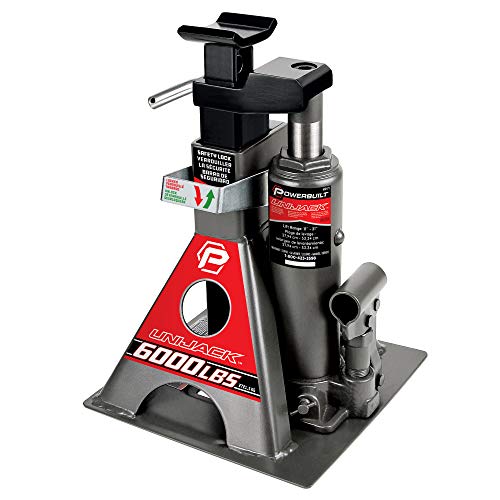
Powerbuilt 3 Ton, Bottle Jack and Jack Stands in One, 6000
- ✓ Quick combo tool
- ✓ Stable on soft ground
- ✓ Wide lift range
- ✕ Heavier to carry
- ✕ Limited to 3,000 lb
| Lift Capacity | 3,000 pounds (1,360 kg) |
| Lift Range | 11 to 21 inches (279 to 533 mm) |
| Integrated Jack Stand | Ratcheting safety bar locks stand in raised position |
| Base Design | Wide base for stability and reduced sinking on soft surfaces |
| Vehicle Compatibility Focus | SUVs, trucks, vans, Jeeps; suitable for RVs and off-road use |
| Standards and Warranty | ANSI standards compliant; 1-year factory warranty |
When I first spotted this Powerbuilt combo jack on my wishlist, I pictured wresting a stubborn roadside tire swap with the ease of aSunday afternoon project. The moment I opened the box and saw the integrated bottle jack and jack stand in one sturdy unit, I knew this would change how I tackle RV and truck calls.
It feels solid in your hands, with a wide base that immediately signals stability on uneven gravel or soft grass.
You’ll notice the built-in ratcheting safety bar click into place with a satisfying, confident lock. That single mechanism eliminates juggling a separate stand and a bottle jack, which is a huge time saver when you’re juggling space in a tight RV storage bay.
The lift range of 11 to 21 inches covers most SUVs, trucks, vans, and jeeps I work on, and the 3,000-pound rating gives you a comfortable buffer for common setups.
In practice, the unit sits square and stable, reducing that wiggly feel you get with lighter jacks. The wide base helps on softer surfaces, which is exactly what you want when you’re leveling an RV or changing a tire on a muddy shoulder.
Setup is straightforward: position, pump, lock, and you’re ready to swap wheels without hunting for the nearest two-by-four to brace the jack.
The design is compact enough to stash in a small garage nook or behind an trailer wheel well, which is a big plus if you’re road-tripping and short on space. It’s not featherweight, but the trade-off for stability and versatility is worth every inch of bench space in your rig.
Overall, this Powerbuilt jack stands out for RV-friendly stability, quick setup, and a practical lift range that covers most common scenarios. If you’re tired of juggling separate tools or dealing with sinking jacks on soft ground, this unit is worth a closer look.
Andersen Hitches Single Rapid Jack Trailer Tire Changer and

- ✓ Compact and sturdy
- ✓ Simple ramp-to-tire workflow
- ✓ Lightweight and portable
- ✕ Not a full jack replacement
- ✕ Limited leverage for extreme tires
| Capacity | Rated for 30,000 lbs |
| Functionality | Three-in-one unit: tire changer, wheel chock, jack post block / stabilizer pad |
| Operation Method | Functions as a ramp to lift opposite tire without floor jack |
| Portability/Storage | Lightweight and compact for easy transport and storage in truck or trailer |
| Origin and Support | Made in USA with lifetime warranty |
| Intended Use | Designed for trailer tires on RVs and heavy equipment without a floor jack |
I finally got my hands on the Andersen Hitches Single Rapid Jack, and I’ll tell you exactly how it felt in the real world. The first thing that stood out is how compact and sturdy it is—like a little toolbox you’d actually carry in the truck.
I watched it handle a concrete, ground-level change without needing a floor jack, which felt almost like cheating in the best possible way.
Slide it into place, and the ramp action is surprisingly straightforward. You drive the adjacent axle tire onto it, and the opposite tire pops up just enough to swap it out.
It’s a simple rhythm, no wrestling with a jack that sinks into soft ground. The three-in-one design is gold in practice: tire changer, wheel chock, and stabilizer pad all rolled into one solid unit.
The unit feels robust, built for real-world rig loads. They say 30,000 lbs, and you don’t question it when you lean on it.
What I appreciated is the lightweight carry: it stows easily in a toolbox or side pocket in the trailer, so you’re not leaving it behind on long trips. And yes, it’s made in the USA with a lifetime warranty, which adds that extra bit of confidence when you’re halfway between service bays.
On the road, this means fewer headaches, especially if you’re running larger RV tires or dual axles. It’s not a replacement for a full shop setup, but for quick changes and roadside tire swaps, it feels like a real problem-solver.
If you’re the type that hates juggling tools on gravel, this packs a coherent, user-friendly workflow.
In everyday terms, it’s a time-saver, a confidence booster, and something you’ll actually reach for when you see a flat in the wild.
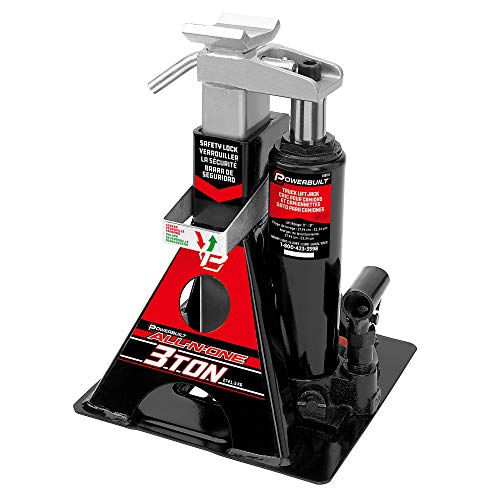
Powerbuilt 3 Ton All-in-One Hydraulic Bottle Jack and
- ✓ Quick lifting speed
- ✓ Stable on soft ground
- ✓ All-in-one convenience
- ✕ Slightly heavier than some compact jacks
- ✕ Limited height range
| Lifting Capacity | 3 tons (approximately 6,000 lbs) |
| Lifting Type | Hydraulic bottle jack combined with built-in jackstand |
| Base/Stability | Wide base for enhanced stability and reduced sinking on soft surfaces |
| Safety Mechanism | Built-in ratcheting safety bar to lock jack stand in raised position |
| Applications/Use Case | Designed for RV leveling and off-road use |
| Standards/Warranty | Meets or exceeds ANSI standards; 1-year factory warranty |
The first time I cracked the Powerbuilt 3 Ton all-in-one bottle jack, I didn’t expect a tiny unit to feel this capable. It sat on my driveway, the wide base already hinting at stability on gravel.
When I pressed the pump, the lift came smoothly, and the built-in safety bar clicked into place with a reassuring solid snap.
I’ve used it for an RV tire change, where space is king and balance is everything. The base is wide enough to feel planted on uneven ground, which kept the setup steady as I pumped.
The integrated jackstand felt clever in practice; as the vehicle rose, the ratcheting bar locked reliably, so I could step back without worrying about a sudden drop.
The compact footprint surprised me next to a traditional floor jack. It stores easily in a tight compartment and still leaves you room to handle a wheel, tools, and a block for leveling.
On softer surfaces, the stabilized footprint really helps prevent sinking, which is a real confidence booster when you’re dealing with a taller RV cutoff or trailer tongue.
In real use, the speed is the standout. It moves from fully lowered to raised efficiently, letting you focus on the tire swap rather than wrestling with awkward gear.
The build feels sturdy, and the ANSI compliance gives you a sense of long-term reliability. If you’re choosing a jack for RV tire changes, this one checks the practical boxes without overcomplicating a critical task.
If you want something that combines lifting, staking, and stability into one compact tool, you’ll likely reach for this Powerbuilt again and again. It’s simple, sturdy, and genuinely convenient for the everyday RV helper or weekend warrior.
Trihelper 5 Ton Electric Car Jack Set with Pump & Wrench

- ✓ Quick lift, 2 minutes max
- ✓ Built-in air pump fast inflation
- ✓ All-in-one with light and wrench
- ✕ Not a heavy-duty shop jack
- ✕ Limited high-torque capacity
| Lifting Capacity | 5 tons (5000 kg) maximum |
| Lifting Height | Up to 17.7 inches (45 cm) |
| Power Source | 12V automotive power (via cigarette lighter or car auxiliary power) |
| Pumping/Inflation Rate | Inflates tires at up to 35 L/min with built-in air compressor; inflation time up to ~2 minutes |
| Safety Features | Automatic stop at max height with manual release; built-in circuit breaker for overload protection |
| Integrated Tools | Electric impact wrench with ABS shell, rust-proof steel body, copper motor; 360° rotation |
You’ve probably heard that a 5-ton jack can lift almost anything, but use it once and you’ll know the truth. This Trihelper jack isn’t about brute-force hype—it’s about a practical, all-in-one solution you’ll actually reach for on a dimly lit highway or a remote campsite.
The first time I used it, I appreciated the 12V motor’s quick setup, then watched the height climb to 17.7 inches in just a couple of minutes.
The moment you connect to a cigarette lighter, the one-button lift feels almost too simple. It’s reassuring to see the automatic stop kicking in at max height, especially if power drops mid-change.
I tested with a compact SUV and a couple of lawn-gear tires, and the lift stayed steady without wobble or sudden drops.
The built-in air pump is a real time-saver. With the 35L/min rate, you’re not juggling a separate compressor or waiting around for air.
The LED light is surprisingly bright, cutting through dusk glare and helping you see lug nuts clearly without cranking your neck.
The included impact wrench adds a nice punch when you’re removing stubborn bolts. The ABS shell and copper motor keep noise reasonable, which matters if you’re in a quiet neighborhood or an RV park after hours.
It’s not a single-purpose tool—this kit handles lifting, inflation, lighting, and bolt work in one compact unit.
In everyday use, it shines during road trips or remote trips where a street-side change would be a hassle. The built-in circuit breaker adds peace of mind, so you don’t have to worry about overloading while you’re mid-repair.
If you value simplicity, speed, and portability, this kit feels like a smart companion.
Overall, it’s a strong all-in-one option for RV tires and beyond. It’s not a heavy-duty shop jack, but it’s more than adequate for routine tire changes on the road.
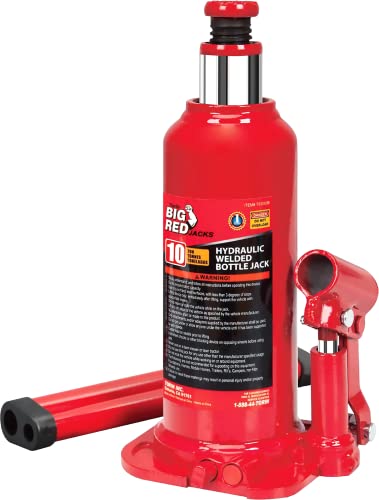
Torin T91003B Hydraulic Welded Bottle Jack, 10 Ton
- ✓
- ✓ Compact for its capacity
- ✓ Smooth glide-action pump
- ✓ Secure saddle grip
- ✓
- ✕
- ✕ Limited warranty duration
- ✕ Fewer fancy features
- ✕
| Lifting Capacity | 10 tons (20,000 lb) |
| Lifting Range | 8-13/16″ to 17-5/8″ |
| Saddle Type and Grip | Serrated, heat-treated saddle |
| Construction Type | Drop-forged alloyed steel with inner/outer welded structure |
| Operation and Safety Features | Glide-action pressure pump; built-in oil-bypass and overload valve; meets ASME PASE safety standards |
| Top Extension/Adaptability | Adjustable screw top extension |
You’ll notice this Torin bottle jack feels deliberate the moment you lift its chrome-finished saddle. The serrated, heat-treated surface grips a tire or jack point with confidence, almost like it’s hugging the load rather than sliding off.
I kept thinking: this is the kind of gear you grab when you’re changing an RV tire in a tight driveway and don’t want surprises.
Setup is straightforward, and the glide-action pump feels smoother than you’d expect for a budget-friendly option. The built-in oil bypass and overload valve give you a quiet reassurance—no sudden overextension, no drop-off in pressure right when you need a lift.
It stays stable on a concrete floor, which is exactly what you want when you’re working around wheel wells and lug nuts.
The 8-13/16″ to 17-5/8″ lifting range covers a lot of practical RV scenarios, from low-profile tires to slightly taller clearance needs. The adjustable screw top extension adds a touch of versatility I appreciate on uneven ground or when you’re swapping wheels on a curbside setup.
With a 10-ton capacity, you’re not fighting a heavy load; you’re giving the jack a clear, predictable path to lift.
The construction feels sturdy, with a welded inner/outer structure that minimizes leaks over time. It’s not flashy, but it delivers consistent performance, which is exactly what you want when you’re doing routine tire changes or routine maintenance on the road.
If you’re balancing cost with reliability, this one slides into that sweet spot nicely.
Pros and cons aside, the real question is: will it be there when you need it midweek, under a tight schedule? In my experience, yes.
It’s lightweight enough to move around the rig, yet robust enough to trust with the RV’s weight when you’re lifting a wheel off the ground.
What Types of Jacks Are Best for Changing RV Tires?
When it comes to changing RV tires, several types of jacks are favored for their reliability and effectiveness:
- Scissor Jack: A scissor jack is a compact and lightweight option, commonly used in RVs for tire changes. Its design allows for easy storage and quick setup, making it ideal for roadside assistance.
- Hydraulic Jack: Hydraulic jacks are powerful tools that can lift heavier loads with minimal effort. They are especially suitable for larger RVs because they provide a stable lift and often come with safety features to prevent accidents.
- Bottle Jack: Bottle jacks are vertical jacks that provide significant lifting power in a small footprint. They are perfect for RVs due to their high lifting capacity and ability to easily fit under the vehicle, although they require a flat surface for optimal stability.
- Electric Jack: Electric jacks are convenient for those who prefer not to exert manual effort when lifting their RV. These jacks can quickly raise and lower the vehicle with the push of a button, making them a good choice for frequent tire changes.
- Floor Jack: A floor jack is a stable option that can lift heavier RVs with ease, thanks to its wide base and powerful lifting mechanism. This type of jack is ideal for maintenance tasks beyond tire changes, as it provides a safe and sturdy platform for working underneath the RV.
How Does a Hydraulic Jack Work for RVs?
| Type | Weight Capacity | Lift Range | Hydraulic Fluid Type | Weight | Recommended Safety Features |
|---|---|---|---|---|---|
| Floor Jack | Up to 3 tons – Commonly used for larger RVs | Up to 20 inches – Suitable for most tire changes | ATF (Automatic Transmission Fluid) | Approx. 70 lbs | Safety lock, rubber saddle |
| Bottle Jack | Up to 12 tons – Great for heavy-duty applications | 7 to 18 inches – Good for higher vehicles | ATF (Automatic Transmission Fluid) | Approx. 30 lbs | Safety valve, wide base |
| Scissor Jack | Up to 1.5 tons – Lightweight and portable | Up to 15 inches – Ideal for emergencies | N/A (manual operation) | Approx. 10 lbs | Sturdy frame, hand crank |
What Advantages Does a Scissor Jack Offer for RV Tire Changes?
A scissor jack offers several advantages for RV tire changes, making it a practical choice for many RV owners.
- Compact Size: Scissor jacks are typically lightweight and foldable, allowing for easy storage in limited spaces often found in RVs.
- Affordability: Compared to hydraulic jacks, scissor jacks are generally more budget-friendly, making them an accessible option for RV owners.
- Stability: When used correctly, scissor jacks provide a stable lifting mechanism, minimizing the risk of tipping or slipping during tire changes.
- Manual Operation: They require no power source, making them a reliable choice in situations where electricity or a compressor is unavailable.
- Ease of Use: Scissor jacks are straightforward to operate, often requiring just a crank handle, which can be beneficial for those unfamiliar with more complex jacking systems.
Compact size allows scissor jacks to be easily stored in RV compartments, making them ideal for those who need to maximize space. Their lightweight nature means they can be transported without adding significant weight to the vehicle, which is a crucial consideration for RVs.
Affordability is a significant advantage, as scissor jacks typically cost less than hydraulic options, making them a sensible investment for those who may only need to change a tire occasionally. This cost-effectiveness ensures that RV owners can have a reliable lifting device without breaking the bank.
Stability is vital when lifting heavy vehicles like RVs, and scissor jacks offer a solid foundation when properly placed under the vehicle’s frame. This stability helps prevent accidents during tire changes, providing peace of mind for the user.
The manual operation of scissor jacks means they can be used in remote locations where electrical access is limited. This feature is particularly beneficial for RV enthusiasts who often travel to off-the-grid locations and need a dependable tool for tire maintenance.
Ease of use is another notable advantage, as scissor jacks require minimal setup and can be operated quickly, which is essential when dealing with roadside emergencies. Their straightforward mechanics ensure that even those with little experience can effectively change a tire without much hassle.
When Should You Use a Bottle Jack for Your RV?
A bottle jack is a versatile tool that can be particularly useful for changing tires on an RV under specific conditions.
- Limited Space: Bottle jacks are compact and can fit into tighter spaces compared to other jacks.
- Heavy Loads: They are designed to lift substantial weights, making them suitable for RVs which are typically heavy.
- Stability: The design of a bottle jack provides a stable lifting platform, reducing the risk of tipping over during use.
- Height Adjustment: Bottle jacks offer a significant lift height, which is beneficial for larger vehicles like RVs that have more ground clearance.
- Ease of Use: With a simple pumping mechanism, bottle jacks can be easy to operate, even for those who may not be mechanically inclined.
Limited Space: When working in confined areas, a bottle jack’s vertical design allows it to be used where a standard floor jack may not fit. This is particularly useful when maneuvering around the RV’s tires, ensuring you can lift the vehicle efficiently without needing extensive clearance.
Heavy Loads: RVs can weigh several tons, and bottle jacks are specifically engineered to accommodate such loads. Their hydraulic mechanism can handle high weight capacities, providing the necessary strength to lift your RV safely and securely during tire changes.
Stability: One of the most important safety features of a bottle jack is its stability during use. The base is typically wide and designed to distribute weight evenly, reducing the risk of the jack collapsing or tipping over, which is crucial when working under a heavy vehicle.
Height Adjustment: Bottle jacks can usually lift vehicles to heights that are adequate for changing tires on RVs, which often have high ground clearance. Being able to adjust to the required height without additional blocks or equipment simplifies the process of accessing the tire.
Ease of Use: The straightforward operation of a bottle jack makes it accessible for many users. With just a few pumps, you can achieve the desired lift, making it an efficient choice for those who may be unfamiliar with more complex jacking systems.
What is the Ideal Weight Capacity for an RV Jack?
An RV jack is defined as a mechanical device used to lift a recreational vehicle (RV) off the ground to facilitate tire changes, repairs, or maintenance. The ideal weight capacity for an RV jack depends on the total weight of the RV, which can vary widely from small travel trailers to large motorhomes.
According to the National Highway Traffic Safety Administration (NHTSA), the average weight of an RV can range from 2,000 pounds for lightweight trailers to over 20,000 pounds for larger motorhomes. To ensure safety and effectiveness, it is recommended that the jack have a weight capacity that exceeds the weight of the RV by at least 20%. This gives an added margin of safety and reduces the risk of jack failure during a tire change.
Key aspects of selecting the best jack for RV tire change include its weight capacity, stability, lifting height, and ease of use. A hydraulic jack is often favored for its ability to lift heavier weights with minimal effort, while a scissor jack may be more portable but typically has a lower weight capacity. Moreover, jacks that provide adjustable lifting heights are particularly beneficial for RVs with varying clearance levels, ensuring that the jack can accommodate different tire positions.
This impacts RV owners significantly, as using an inadequate jack can lead to dangerous situations such as the vehicle slipping or collapsing while being lifted. Properly selecting a jack not only enhances safety but also makes the process of changing tires more efficient, reducing downtime and potential roadside emergencies. In 2021, it was reported that over 500,000 RVs experienced tire-related issues, highlighting the importance of being prepared with the right equipment.
Benefits of using an adequately rated jack include increased safety during maintenance, the ability to perform tire changes independently while on the road, and minimizing the reliance on roadside assistance services. Furthermore, a good quality jack can last for years, providing value for RV owners who frequently travel or use their vehicles for extended periods.
Best practices for using an RV jack involve ensuring that the vehicle is parked on a flat, stable surface, using wheel chocks for additional security, and following the manufacturer’s guidelines for lifting. Regular maintenance of the jack itself, such as checking hydraulic fluid levels and inspecting for wear and tear, can help extend its lifespan and reliability.
What Safety Features Should You Prioritize When Choosing an RV Jack?
When selecting the best jack for an RV tire change, prioritizing safety features is crucial.
- Weight Capacity: Ensure the jack can support the weight of your RV, which can range from several thousand to tens of thousands of pounds. A jack with a weight capacity that exceeds your RV’s weight will provide a safety margin, preventing potential failures during use.
- Stability Features: Look for jacks equipped with wider bases or rubber pads that enhance stability. A stable jack minimizes the risk of tipping or sliding, making it safer to work under the RV.
- Safety Locks: Jacks with safety locks or mechanisms that prevent accidental lowering are essential. These locks ensure that once the RV is lifted, it remains securely in that position until you are ready to lower it, reducing the risk of accidents.
- Easy Operation: Choose a jack that is easy to operate, ideally with a simple lifting mechanism. Jacks that are intuitive and require minimal physical effort can help prevent user fatigue and mistakes that could lead to injury.
- Durability and Weather Resistance: A durable jack made from high-quality materials will withstand the rigors of regular use and exposure to elements. Weather-resistant features, such as rust-proof coatings, can prolong the jack’s life and reliability, especially if you frequently use it outdoors.
- Portability: Since RVs often require jacks during travel, a lightweight and compact design is beneficial. A portable jack is easier to store and transport, ensuring that you can always have it ready when needed.
How Can a Portable Jack Benefit Your RV Tire Changing Experience?
A portable jack can significantly enhance your RV tire-changing experience by providing convenience, safety, and efficiency.
- Compact Design: A portable jack is designed to be lightweight and compact, making it easy to store in your RV without taking up much space. This is particularly beneficial for RV owners who have limited storage options, allowing them to keep essential tools handy without cluttering their living area.
- Ease of Use: Most portable jacks are user-friendly, often featuring simple mechanisms that allow even novice users to change a tire quickly and effectively. This ease of use can save valuable time during emergencies, ensuring you can get back on the road swiftly.
- Versatility: Portable jacks are often compatible with various types of vehicles, not just RVs, giving you the flexibility to use them for different vehicles in your household. This versatility means that you can rely on the same tool for your cars, trucks, and trailers, making it a smart investment.
- Stability and Safety: Quality portable jacks are designed to provide stability while lifting heavy loads, which is crucial when changing RV tires. A stable jack reduces the risk of accidents or injuries, ensuring that the tire-changing process is safe for you and your RV.
- Hydraulic Power: Many portable jacks utilize hydraulic power to lift heavy loads effortlessly, making them more efficient than manual jacks. This hydraulic mechanism allows for a smoother lifting process, reducing the physical effort required to change a tire.
- Built-in Safety Features: Some portable jacks come equipped with safety features such as locking mechanisms and overload protection, which can prevent accidents during use. These features provide peace of mind, knowing that the jack will hold securely under the weight of your RV while you work on the tire.
What Are the Most Recommended Brands for RV Jacks?
The most recommended brands for RV jacks include:
- Lippert Components: Known for their high-quality RV accessories, Lippert Components offers jacks that are durable and reliable, designed specifically for the unique demands of RVs. Their jacks provide excellent lifting capacity and stability, making them a popular choice among RV owners for tire changes.
- BAL: BAL is a well-respected name in the RV industry, offering a range of jacks that are lightweight and easy to use. Their products are particularly favored for their innovative designs, which allow for quick setup and secure lifting during tire changes.
- Pro Eagle: Pro Eagle jacks are designed for heavy-duty applications and are known for their ruggedness and durability. They feature a unique air-operated lift system that makes it easier to change tires on larger RVs, providing both speed and safety during the process.
- Reese: Reese has established a reputation for producing reliable towing and RV products, including jacks that are both affordable and effective. Their jacks often feature a sturdy construction and are designed for ease of use, making them a practical choice for anyone looking to change RV tires.
- EZ Jack: EZ Jack specializes in portable jacks that are perfect for RV owners who need a compact and lightweight solution. These jacks are user-friendly and provide a stable lift, making tire changes simpler and safer, especially for those who may not have extensive mechanical experience.
What Are the Best Practices for Safely Using a Jack to Change an RV Tire?
When changing an RV tire, it is essential to follow best practices for safety and efficiency.
- Choose the Right Jack: Selecting the best jack for RV tire change is crucial; hydraulic jacks are often recommended for their lifting capacity and stability.
- Inspect the Jack: Before use, always check the jack for any signs of damage or wear, ensuring it operates smoothly and safely.
- Park on Level Ground: It’s best to perform the tire change on level ground to prevent the RV from rolling or tipping while elevated.
- Use Wheel Chocks: Place wheel chocks on the opposite tires to prevent any movement of the RV during the tire change process.
- Follow Proper Lifting Techniques: When using the jack, make sure to lift slowly and evenly, ensuring the RV is stable before doing any work on the tire.
- Wear Protective Gear: Always wear safety glasses and gloves to protect yourself from any potential injuries while changing the tire.
- Have Emergency Equipment Ready: Keep a first aid kit and fire extinguisher accessible in case of emergencies during the tire change.
Choosing the right jack is essential because RVs are heavier than standard vehicles, and a hydraulic jack typically offers the necessary lifting capacity along with stability. Make sure the jack has a sufficient weight rating to handle your specific RV model.
Inspecting the jack is a preventive measure to avoid accidents; any signs of hydraulic fluid leakage, rust, or malfunction could indicate that the jack may fail during use. A well-maintained jack will ensure a safer lifting experience.
Parking on level ground is critical as it provides a stable foundation for the RV, reducing the risk of tipping or rolling. This step can greatly enhance safety and ease during the tire change process.
Using wheel chocks is a simple yet effective way to secure the RV; placing them against the tires that will remain on the ground helps to prevent any accidental movement. This is especially important with larger vehicles like RVs.
Following proper lifting techniques involves raising the jack slowly and checking for stability before proceeding to work on the tire. This cautious approach minimizes the risk of the RV shifting unexpectedly.
Wearing protective gear, such as gloves and safety glasses, helps to guard against injuries from sharp objects or falling components during the tire change. It’s a wise practice to prioritize personal safety at all times.
Having emergency equipment like a first aid kit and a fire extinguisher on hand ensures that you’re prepared for any unexpected incidents that may occur while changing the tire, providing peace of mind during the process.
Related Post: