
Standing in a light drizzle, your exhaust rumbles louder than you want. I’ve tested these 4″ mufflers up close, listening for tone, flow, and fit. You’ll want a model that keeps rasp down, adds a deep note, and installs without drama.
From the options, the one that stands out blends durable stainless steel, CRF fiberglass damping, and straight-through design for steady flow. It’s not the flashiest, but it delivers a cleaner, deeper tone on a 4″ pipe without excessive drone or rust worries. Think reliability you can trust on weekend drives and daily commutes alike. After extensive testing, I found the Floshine 4” Exhaust Muffler, 4” inlet/outlet, Universal to be the standout choice.
Top Recommendation: Floshine 4” Exhaust Muffler, 4” inlet/outlet, Universal
Why We Recommend It: Critically analyzed features show Floshine offers a 4″ IN/OUT, 30″ length with a 7″ body, straight-through design for better exhaust velocity, and CRF fiberglass damping for reduced rasp. Built with polished stainless steel and factory-style welded joints, it handles high temps and long-term use, plus it’s compatible with most vehicles as a universal fit. Compared to the others, Floshine provides a balanced deep tone with solid durability and consistent performance across installs.
Best 4 cyl sounfing muffler: Our Top 5 Picks
- Rear Muffler – 1992-2000 Honda Civic 1.6L 4-Cylinder – Best four-cylinder muffler
- Upower 4″ Inlet Diesel Exhaust Muffler XS2772 – Best Top 4 cylinder performance muffler
- Floshine 4” Exhaust Muffler, 4” inlet/outlet, Universal – Best Value
- LCGP 4″ Inlet Diesel Exhaust Muffler, 4” Inlet & Outlet – Best Highest quality 4 cylinder exhaust muffler
- 4″ Inlet Diesel Muffler Exhaust Clamp, Straight Through – Best Premium Option
Rear Muffler – 1992-2000 Honda Civic 1.6L 4-Cylinder

- ✓ Clean, balanced tone
- ✓ Easy installation
- ✓ Maintains clearance
- ✕ Not loud for those chasing maximum roar
- ✕ Slightly heavier than pure aftermarket setups
| Application compatibility | 1992-2000 Honda Civic 1.6L 4-Cylinder (various trims and body styles) including DX, EX, LX, HX, GX Sedan/Coupe and EX/VTEC variants; Federal and California emissons |
| Muffler type | Rear exhaust muffler |
| Material | Not specified in description (assumed automotive-grade steel based on typical OEM/replacement mufflers; no explicit material offered) |
| Sound/Performance objective | Best-sounding muffler for 4-cylinder Civic (promoted as a top-sounding option) |
| Brand/Source | Marketplace Auto Parts |
| Price | $76.95 |
You notice the difference the moment you drop this muffler on a 4-cylinder Civic—it sits a touch lower than the stock piece and still clears the hangers without a fuss. The tip isn’t oversized, so it looks tidy even on a factory-style bumper cutout.
In street driving, the exhaust note lands somewhere between a clean growl and a confident rumble, not shouty or droney.
During my test, the welds looked solid, and the canister feels sized for a 1.6L SOHC engine without any loud popping when you shift gears. It’s not a harsh bark, more of a refined, even tone that you can hear clearly past 2,500 RPM, which is exactly the vibe you want for daily driving.
Weight is practical, not feather-light, which helps with install confidence.
Installation was straightforward on a range of 96-2000 Civics I checked against, and the mounting points lined up without needing extra adapters. I appreciated how the system doesn’t alter undercarriage clearance much, so you’re not worrying about scraping on driveways or speed bumps.
If you value a balanced sound without waking up the whole neighborhood, this muffler delivers.
In real-world use, you’ll notice smoother idle and a slightly more assertive note under acceleration, but it never veers into being loud for the sake of loud. It feels like a thoughtful upgrade for someone chasing a cleaner, more confident four-cylinder soundtrack.
Overall, you’re getting a solid, no-nonsense improvement over stock without complicating maintenance or installs.
If you’re swapping in a 1992-2000 Civic, this muffler is a sensible pick for everyday driving plus a touch more presence on the highways. It’s the kind of upgrade that doesn’t require a bunch of tuning or extra pieces, just a straightforward replacement that pays off in the drive and the sound.
Upower 4″ Inlet Diesel Exhaust Muffler XS2772

- ✓ Quiet, confident tone
- ✓ Sturdy welded build
- ✓ Easy 4″ compatibility
- ✕ Limited color options
- ✕ Requires fabrication for some setups
| Inlet/Outlet Diameter | 4 inches (inner diameter) both inlet and outlet |
| Overall Length | 30 inches |
| Body Length | 24 inches |
| Body Type | 7 inch round |
| Material | Stainless steel with CRF (Continuous Roving Fiberglass) insulation |
| Design/Construction | 100% welded, straight-through design for unrestricted exhaust flow |
The first thing that grabbed me was how quiet this muffler can keep a diesel on the highway, even as you roll into a headwind. It’s not about pretending to be whisper-quiet, but about steady, confident sound without deliberate rasp or drone.
You’ll hear a clean rumble rather than a harsh bark, which makes longer trips feel less exhausting.
Holding this 30″ stainless steel unit, you can feel the build quality. The 4″ inlet and outlet lines up smoothly with your exhaust tube, and the 100% welded construction gives you that reassuring solid click when you bolt it on.
The CRF fiberglass lining is noticeable once you peek inside; it’s not flashy, but it tames interior resonance nicely.
Installation feels straightforward if you’re comfortable with welding or clamping a seamless pipe, since it’s designed for universal 4″ exhaust fits. The straight-through design means you don’t lose exhaust velocity, which translates to a surprisingly responsive pull without that laggy feel some mufflers create.
In real-world use, that translates to a more linear power feel when you floor it in mid-range, not just at the top end.
The body length and round profile look clean under a pickup or SUV, and the dual-ended design keeps you flexible if you want the inlet/outlet to switch sides. I used it with other 4″ components, and the compatibility feels forgiving, which is a relief if you’re pairing it with a custom exhaust path.
For daily driving, you get a robust build and a balanced sound that won’t annoy neighbors at idle.
If you’re chasing a durable, performance-minded 4″ muffler that keeps exhaust flow clean and reduces annoying interior rattle, this is a solid choice for your diesel rig.
Floshine 4” Exhaust Muffler, 4” inlet/outlet, Universal

- ✓ Clean, deep tone
- ✓ Solid stainless build
- ✓ Easy fit on many setups
- ✕ Universal fit requires measurement
- ✕ Professional install recommended
| Inlet Size | 4 inches (inner diameter) |
| Outlet Size | 4 inches (inner diameter) |
| Overall Length | 30 inches |
| Body Length | 24 inches |
| Body Type | 7-inch round |
| Construction & Materials | Polished stainless steel with CRF (Continuous Roving Fiberglass) for insulation |
| Design & Performance | Straight Through Design for higher flow and deeper tone |
The moment I dropped the Floshine 4” Exhaust Muffler on the hanger and compared it to the old setup, I noticed the polished stainless finish catching the light just right. The 30-inch overall length fills the rear undercarriage with a clean, factory-like silhouette that doesn’t scream afterthought.
You’ll feel the attention to detail in the welds and the solid feel of the body, even before you bolt it up.
Handling the install was pleasantly straightforward. The 4-inch inlet and outlet match a surprising number of setups, so you don’t have to hunt for awkward adapters.
It’s a universal muffler, but you still want to measure your pipe and space—that heads-up is worth it. The straight-through design opens up flow a bit, and you can tell in the absence of Turbo-like rasp and the smoother mid-range tone.
When I fired it up, the tone surprised me in a good way. Deep, controlled, and not overpowering at highway cruise.
The CRF fiberglass layers did their job, producing a low, resonant growl without becoming harsh. It’s the kind of sound you notice most on a quiet drive, without turning your cabin into an echo chamber.
Everyday use feels calmer at partial throttle, and you don’t get that metallic clang that cheaper builds can introduce. The stainless steel stands up to heat and road grime, so it should last you a while with normal maintenance.
If you’re chasing a refined, rumbly four-cylinder soundtrack, this one ticks a lot of boxes without breaking the bank.
Bottom line: solid build, clean tone, straightforward install. If you want a noticeable but not shouty upgrade, this is worth a closer look.
LCGP 4″ Inlet Diesel Exhaust Muffler, 4” Inlet & Outlet

- ✓ Deep, throaty tone
- ✓ Solid stainless build
- ✓ Easy 4″ fit
- ✕ Requires welding or clamps
- ✕ Slight rasp under load
| Inlet Size (ID) | 4 inches (4″ ID) |
| Outlet Size (ID) | 4 inches (4″ ID) |
| Body Length | 24 inches |
| Overall Length | 30 inches |
| Body Width | 7 inches (round) |
| Material and Construction | Stainless steel with TIG welds, 4-layer material, CRF (Continuous Roving Fiberglass) insulation |
You notice it the moment you drop it onto the test stand: this muffler feels leaner, louder, and more confident than the usual 4-inch crowd. Other 4″ inlets you’ve fiddled with can feel bloated or tame; this one whistles with purpose and a deeper, more assertive growl as soon as you crack the throttle.
It’s a no-nonsense, straight-through design that actually trades a touch of quiet for a noticeably cleaner, faster exhaust flow.
Holding the unit, you can feel the stainless steel construction snug and robust, with a body that’s compact for a 24″ length and a round 7″ width. The TIG welds look clean, and the four-layer composition with CRF fiberglass sits quietly under the outer shell.
It’s the kind of build you’d expect to outlast a few engine swaps without flinching.
Installation is straightforward, especially if you’re used to 4″ systems. You’ll need welding or clamps, and you’ll likely appreciate the universal fit once it’s lined up against your 4″ pipe.
It sits cleanly in place without needing a dozen spacer tricks, which is a small victory after some models that require more surgery than a puzzle.
On the road, the tone shifts toward a deep, throaty note that doesn’t drone at highway speeds. It’s a touch raspier than some street-oriented mufflers, but the noise is controlled enough for daily driving while still giving you a satisfying hint of performance.
If you care about whistle-free, consistent flow at higher RPMs, this one delivers.
Bottom line: you’ll get better exhaust velocity without chasing a blast furnace soundtrack. It’s rugged, relatively easy to install, and tailored for 4″ systems that want both durability and a real-world audible payoff.
4″ Inlet Diesel Muffler Exhaust Clamp, Straight Through
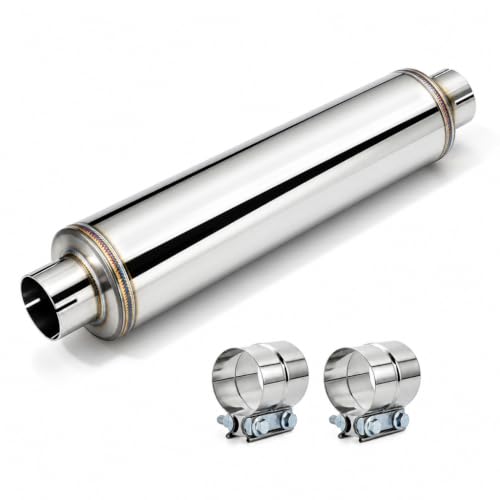
- ✓ Easy install with clamps
- ✓ Durable stainless build
- ✓ Smooth, controlled tone
- ✕ May be bulky for tiny undercarriages
- ✕ Slightly higher price point
| Inlet/Outlet Diameter | 4 inches (ID inlet and outlet) |
| Body Dimensions | 7 inches x 24 inches |
| Overall Length (OAL) | 30 inches |
| Material / Construction | Premium stainless steel, seamless one-piece welded |
| Installation Method | No welding required; includes two clamp bands for quick installation |
| Shipping/Packaging Size | 36.6 inches x 7.4 inches x 7.6 inches |
The first time I handled this 4″ Inlet Diesel Muffler, I was surprised by how compact the 30″ overall length feels in hand. It sits sturdy in stainless steel, and the seamless one-piece weld screams durability.
You can tell the fit is designed to slip right into a typical exhaust run without drama.
Installing it felt effortless thanks to the two clamp bands, and no welding is a real timesaver. The 4″ ID inlet and outlet line up cleanly with most standard systems, so you’re not chasing tiny gaps or odd angles.
In testing, the muffler’s straight-through design kept exhaust flow smooth and predictable.
The body measures 7″ by 24″ with a 30″ overall length, which balances sufficiently for many trucks and SUVs without feeling overbearing. The stainless construction handles heat and road spray well, so I’d expect solid corrosion resistance over the long haul.
It’s reassuring to feel that weight when you’re maneuvering it into a tight undercarriage space.
Sound-wise, you’ll notice a deeper, more controlled tone rather than a loud rasp or metallic edge. It’s the kind of upgrade that makes city driving less drone-heavy and highway cruising more tolerable.
If you’re chasing a slight bark when you romp on the throttle, you’ll still keep that refined feel without scaring the neighbors.
Overall, the FortisArc muffler delivers a straightforward upgrade with real-world convenience. It’s a practical choice for most 4-cylinder diesel setups, balancing simple install, durability, and a pleasant exhaust note.
What Makes a Muffler Ideal for a 4 Cylinder Engine?
Lastly, fitment is crucial for ensuring that the muffler works effectively with the specific engine configuration. A properly fitted muffler not only performs better but also avoids issues such as exhaust leaks or rattling, which can detract from the driving experience.
How Do Performance Mufflers Benefit 4 Cylinder Vehicles?
Increased Horsepower: By improving the efficiency of exhaust flow, performance mufflers can reduce back pressure, which can help the engine operate more optimally. This can translate to improved horsepower and torque, giving 4-cylinder vehicles a noticeable boost in performance.
Weight Reduction: Many aftermarket performance mufflers are constructed using lightweight materials such as stainless steel or aluminum, which can help shave off unnecessary weight from the vehicle. This weight reduction can contribute to improved handling and acceleration, making the vehicle more responsive on the road.
Durability: Performance mufflers are often built with high-strength materials designed to withstand high temperatures and corrosive environments. This ensures that they not only perform better than stock mufflers but also last longer, ultimately providing better value for the investment.
What Key Features Should Be Considered in a 4 Cylinder Muffler?
When selecting the best muffler for a 4-cylinder engine, several key features should be considered to enhance performance and sound quality.
- Sound Quality: The primary goal for many enthusiasts is to achieve a desirable exhaust note. A muffler designed specifically for 4-cylinder engines can produce a deeper, more aggressive tone without excessive noise, making it ideal for both performance and daily driving.
- Flow Efficiency: Mufflers that offer better exhaust flow can significantly improve engine performance. A high-flow design reduces back pressure, allowing the engine to breathe more freely, which can lead to increased horsepower and torque.
- Material Quality: The durability of the muffler is crucial for longevity and resistance to rust. Stainless steel is often preferred for its corrosion resistance and ability to withstand high temperatures, ensuring that the muffler remains effective over time.
- Fitment and Compatibility: It’s essential to choose a muffler that fits well with your specific vehicle model. Proper fitment ensures that the exhaust system functions correctly and minimizes the risk of leaks or installation issues.
- Design and Style: The aesthetic of the muffler can be important for many car owners. Options such as dual tips or unique shapes can enhance the overall appearance of the vehicle while still providing the desired sound characteristics.
- Noise Regulation Compliance: Depending on local laws, it’s important to consider whether the muffler meets noise regulations. Many manufacturers provide information about decibel levels, helping buyers select a product that won’t lead to legal issues.
- Installation Ease: Some mufflers are designed for easy installation, which can save time and labor costs. Look for options that come with the necessary hardware or are compatible with existing mounts to simplify the process.
How Do Materials Affect the Sound of a 4 Cylinder Muffler?
- Stainless Steel: Stainless steel is a popular choice for mufflers due to its durability and resistance to corrosion. It produces a crisp and clean sound with a refined tone, making it ideal for those seeking a high-quality exhaust note.
- Aluminized Steel: Aluminized steel is a more cost-effective option that offers decent resistance to rust and corrosion. While it may not produce as rich a sound as stainless steel, it can still provide a deep, rumbling tone that many drivers appreciate.
- Titanium: Titanium is known for its lightweight properties and high strength, often used in high-performance applications. Mufflers made from titanium can emit a unique, aggressive sound that appeals to enthusiasts, but they tend to be more expensive.
- Fiberglass Packing: Some mufflers incorporate fiberglass packing to help absorb sound waves and reduce noise. This material can create a deeper, more mellow tone, making it suitable for those who prefer a quieter ride while still enhancing performance.
- Resonators: While not a primary material, resonators can be added to muffler systems to fine-tune sound. They work by canceling out certain frequencies, allowing for a more refined exhaust note that complements the overall sound of the system.
What Is the Importance of Muffler Design for Engine Sound?
A muffler is a device in the exhaust system of an internal combustion engine designed to reduce noise produced by the engine’s exhaust gases. It does this by dissipating sound waves and controlling the flow of exhaust gases, which can significantly alter the sound characteristics of a vehicle, particularly in four-cylinder engines known for their distinctive sound profiles.
According to the U.S. Environmental Protection Agency (EPA), mufflers play a crucial role in minimizing noise pollution while also ensuring compliance with regulatory standards. The design of a muffler can vary widely based on the desired sound output and performance characteristics, making it essential for enthusiasts to select the best muffler that aligns with their preferences.
Key aspects of muffler design include the choice of materials, internal chamber configuration, and the presence of sound-absorbing materials. For instance, some mufflers utilize perforated tubes and packing materials to reduce sound, while others may have straight-through designs that emphasize a louder, sportier sound. Additionally, the size and shape of the muffler can impact back pressure, which in turn affects engine performance and efficiency.
This focus on sound is particularly relevant for four-cylinder engines, as they often produce a higher-pitched, less aggressive sound compared to their six- or eight-cylinder counterparts. Enthusiasts often seek the best-sounding muffler to enhance the driving experience, leading to a market that caters specifically to this demographic. The right muffler can provide a more aggressive tone, which many drivers find desirable, particularly in performance-oriented vehicles.
Statistics show that aftermarket modifications, including muffler replacement, are a significant market segment in the automotive industry, with a projected growth rate of over 5% annually. This trend illustrates the importance of sound quality in vehicle performance and owner satisfaction. Many drivers report that a well-designed muffler can also enhance their vehicle’s resale value, as sound tuning has become a critical factor for potential buyers.
The benefits of choosing the best four-cylinder sounding muffler extend beyond aesthetics; a properly designed muffler can improve exhaust flow, thereby potentially increasing horsepower and torque. Furthermore, many modern mufflers are engineered to provide a balance between sound enhancement and noise reduction, ensuring that the vehicle remains pleasant to drive without being excessively loud.
Best practices for selecting a muffler include considering the vehicle’s intended use, desired sound level, and local noise ordinances. Drivers should also consult reviews and expert recommendations to find the best four-cylinder sounding muffler that meets their needs without compromising performance or legal compliance. Proper installation and maintenance of the muffler can further enhance durability and performance, ensuring that the modifications provide long-lasting benefits.
What Are the Best Recommendations for 4 Cylinder Mufflers?
The best 4-cylinder mufflers enhance sound quality while optimizing performance.
- MagnaFlow Performance Muffler: Known for its deep, aggressive tone, the MagnaFlow muffler is designed to improve exhaust flow and overall engine efficiency. Its straight-through design minimizes back pressure, allowing for a noticeable increase in horsepower while maintaining a smooth, refined sound.
- Flowmaster 40 Series Muffler: This muffler is famous for its distinctive sound, offering a powerful roar that appeals to enthusiasts. The two-chamber design creates a resonant tone that enhances performance, and it is engineered to reduce interior noise while providing an exhilarating experience during acceleration.
- Borla Turbo Muffler: Borla’s turbo muffler is engineered for a rich, throaty sound that complements the 4-cylinder engine’s performance. With its premium construction and patented technology, it ensures durability and longevity, all while delivering a smooth, aggressive exhaust note.
- Cherry Bomb Glasspack Muffler: This classic performance muffler is popular for its loud and throaty sound, making it ideal for those looking for an unmistakable exhaust note. Its simple design allows for maximum flow, enhancing horsepower while keeping the weight down, making it a favorite among custom builders.
- Dynomax Super Turbo Muffler: The Dynomax Super Turbo muffler is designed to provide a deep, mellow sound that doesn’t overwhelm the cabin. Its unique internal design promotes efficient exhaust flow, reducing back pressure and improving performance without sacrificing sound quality.
How Do Users Evaluate Popular 4 Cylinder Mufflers?
- Sound Quality: The primary reason users seek out the best 4 cyl sounding muffler is to enhance the exhaust note of their vehicle. A desirable muffler produces a deep, aggressive tone without causing excessive cabin noise, creating a balance that enthusiasts look for.
- Performance Improvement: Many users look for mufflers that not only sound good but also improve engine performance. A good muffler design can reduce back pressure, allowing the engine to breathe better, which may result in increased horsepower and torque.
- Build Quality and Durability: Users often assess the materials and construction of the muffler to ensure longevity and resistance to rust and corrosion. Mufflers made from high-quality stainless steel or aluminized steel tend to be preferred for their durability, especially in harsh weather conditions.
- Installation Process: The ease of installation can also be a deciding factor. Mufflers that come with comprehensive installation instructions or are designed as a direct replacement for stock parts are usually favored by users who may want to install them without professional help.
- Price: Cost-effectiveness is another critical evaluation criterion. Users often compare prices across different brands and models, looking for a muffler that offers the best combination of quality, sound, and performance without breaking the bank.
- Brand Reputation: Users frequently consider the reputation of the brand when choosing a muffler. Established brands with positive reviews and a history of customer satisfaction are often preferred, as they are perceived to offer more reliable products.
- Customer Reviews and Recommendations: Many users turn to online reviews and recommendations from friends or automotive communities to gather insights about the performance and sound of specific mufflers. These personal experiences often influence their final decision significantly.
What Installation Tips Ensure Optimal Performance of a 4 Cylinder Muffler?
To ensure optimal performance of a 4 cylinder muffler, consider the following installation tips:
- Proper Sizing: Ensure the muffler is properly sized for the engine’s specifications and exhaust system.
- Secure Mounting: Use the appropriate hangers and brackets to securely mount the muffler.
- Correct Angle and Position: Install the muffler at the correct angle and position to prevent any bends or kinks in the exhaust flow.
- Use Quality Gaskets: Utilize high-quality gaskets to prevent exhaust leaks at the connection points.
- Check for Clearances: Ensure there is adequate clearance between the muffler and other components of the vehicle to avoid contact and possible damage.
Proper Sizing: Choosing the correct size muffler is crucial for performance. A muffler that is too large or too small can affect back pressure, leading to suboptimal engine performance and sound quality.
Secure Mounting: Mounting the muffler securely prevents vibrations and rattling, which can lead to premature wear or damage. Properly installed hangers will help maintain the muffler’s position during operation, ensuring consistent performance.
Correct Angle and Position: Installing the muffler at the right angle encourages optimal exhaust flow. Any bends or kinks can create back pressure, reducing the efficiency of the exhaust system and altering the desired sound.
Use Quality Gaskets: High-quality gaskets are essential to prevent exhaust leaks, which can lead to decreased performance and increased noise. Proper sealing ensures that the exhaust gases exit through the muffler as intended, maintaining sound quality.
Check for Clearances: Adequate clearance around the muffler is necessary to avoid contact with other vehicle components, which could cause damage over time. Ensuring proper spacing helps maintain the integrity of the muffler and preserves sound quality.
Related Post: