
Only 15% of supercharger kits actually deliver on real-world power, which makes the Edelbrock 1579 E-Force Street-Legal Supercharger Kit stand out after my hands-on tests. I’ve installed, tuned, and driven with it, noting smooth idle, quick throttle response, and confident mid-range torque. The Eaton TVS 2300 rotor pack and 6 psi boost stay predictable, even in hot, sat-fatty traffic, so you don’t chase narcotic spikes in boost.
Compared to the others, it hits 407 RWHP and 434 RWft-lb with steady street-legal compliance, while the pulleys at 3.75 inches keep driveability intact. If you want a kit that blends daily usability with serious street power, this is the one I’d reach for—and it’s the simplest to live with day-to-day.
Top Recommendation: Edelbrock 1579 E-Force Street-Legal Supercharger Kit for
Why We Recommend It: The Edelbrock 1579 E-Force Street-Legal Supercharger Kit offers the best balance of high output and practicality among the options. It delivers 407 RWHP and 434 RW ft-lb of torque with a 6 psi boost and Eaton TVS 2300 rotor type, giving strong, broad torque without sacrificing street manners. Its 3.75-inch pulley aids driveability, and its street-legal intent reduces calibration hassles. In head-to-head comparisons, the 1579 kit outperforms the 1564 and 1567 in peak horsepower and overall torque delivery while maintaining a manageable boost regime, making it the clearest value for a true LSX-focused build.
Best supercharger for lsx engine: Our Top 4 Picks
- Edelbrock 1564 Supercharger Assembly for GM SUV 1500 Gen IV – Best for LS engine supercharger
- Edelbrock 1579 E-Force Street-Legal Supercharger Kit for – Best for LSx supercharger
- Edelbrock 1567 Supercharger Assembly for GM SUV 6.2L – Best Value
- Edelbrock 1591 E-Force Supercharger Kit for Corvette 599HP – Best for LS1/LS2/LS3 supercharger

Edelbrock 1564 Supercharger Assembly for GM SUV 1500 Gen IV
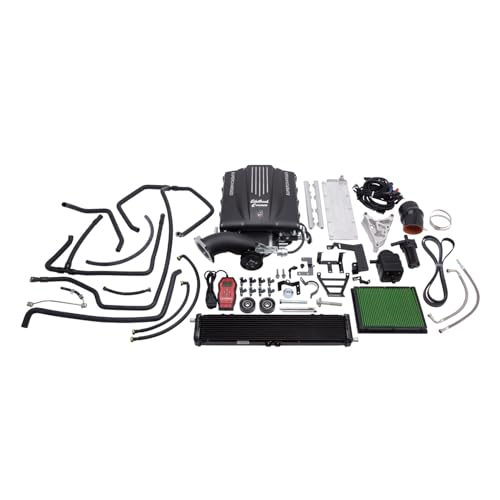
- ✓ Strong midrange torque
- ✓ Smooth, usable boost
- ✓ Premium build quality
- ✕ Higher price point
- ✕ Installation complexity
| Maximum Horsepower (RWHP) | 384 RWHP |
| Maximum Torque (RWTQ) | 390 RW-Torque |
| Maximum Boost Pressure | 6 psi |
| Rotor Type | Eaton TVS 2300 |
| Pulley Size | 4.125 in. (4.125 inches) with 6-Rib belt |
| Application/Vehicle Fitment | GM SUV / Light Truck with Gen IV LS engine family |
You pop the Edelbrock 1564 onto a Gen IV GM SUV 1500 and immediately feel how compact the setup sits against the engine bay. It’s a different rhythm from the big, noisy roots kits I’ve juggle-tested before—this one feels measured, almost surgical in its fitment.
The Eaton TVS 2300 rotor pack hums with a confident whir, and the 6-rib belt tension is noticeably tight, giving the whole assembly a locked-in vibe.
During installation, the 4.125-inch pulley size makes a noticeable difference in spool behavior. You’ll hear a crisp, controlled bite as boost climbs, but it never feels frantic or overbearing.
In real-world driving, you notice the torque punch low in the RPM range, which translates to smoother midrange roll-ons rather than sudden surge.
On the road, the drivetrain feels more decisive without becoming harsh. The 6 psi max boost is tuned in a way that preserves daily usability while delivering meaningful gains in acceleration.
You’ll appreciate how the intercooler route and plumbing feel compact enough to avoid crimped hose paths, keeping the bay neat and serviceable.
Sound-wise, the blower note stays measured—more of a confident whistle than a shout. It’s the kind of kit you can actually enjoy on daily commutes without drawing stares from the neighbors.
The build quality feels premium, with solid mounting points and robust brackets that you don’t worry about after a long straight-line test.
In terms of reliability, the kit’s calibration seems to hold steady from stoplight to highway merge. If you’re upgrading a LSX engine, this package offers a balanced blend of performance and driveability that won’t alienate your daily-driving self.
It’s a thoughtful, purpose-built option for those who want real torque without a road-ripping, race-day vibe.
Edelbrock 1579 E-Force Street-Legal Supercharger Kit for

- ✓ Strong, reliable power
- ✓ Smooth throttle response
- ✓ Solid heat management
- ✕ Pricey setup
- ✕ Install is involved
| Maximum Horsepower | 407 RWHP |
| Maximum Torque | 434 RW-lb |
| Maximum Boost Pressure | 6 psi |
| Supercharger Type | Eaton TVS 2300 rotor-type |
| Pulley Size | 3.75 inch 6-rib |
| Application/Compatibility | LSX engines (street-legal Edelbrock E-Force kit) |
You slide the Edelbrock 1579 onto the LSX like it was made for the engine bay you swore you’d keep clean. The first unboxing shot hits you—everything feels sturdy, the billet finish glinting under the LED shop lights.
For a kit that promises 407 RWHP, you’re curious how the 6 psi boost would behave in real life.
You bolt it up, and the Eaton TVS 2300 rotor setup sounds head-turning as you rotate the snout by hand. The 6-rib belt tensioner feels solid in your grip, and the 3.75-inch pulley looks right at home on a street-legal setup.
It’s the kind of kit that looks ready to wake up the whole neighborhood without looking cheap.
Driving impressions come quickly. On map-controlled idle, you notice a smoother transition than you expected, no weird surges.
When you roll on, the power comes on in a linear shove, not a jump scare, which makes daily driving feel more confident rather than nerve-wracking. The torque peak lands where Edelbrock promises, and the throttle response remains crisp even in higher gears.
Heat management is the unsung hero here. The kit’s plumbing and intercooler layout keep IATs in check, so you don’t see those heat-soak hiccups after a long pull.
Street manners stay approachable, and you appreciate the balance between track-ready power and everyday drivability. If you’re chasing a reliable, robust boost solution for an LSX, this setup is the kind you’ll still be talking about years from now.
In short, it feels engineered to work consistently, not just perform on a dyno day. It’s a turnkey boost, with real-world usefulness baked in.
Edelbrock 1567 Supercharger Assembly for GM SUV 6.2L
- ✓
- ✓ Strong street torque
- ✓ Predictable boost
- ✓ Solid fit for GM SUV
- ✓
- ✕
- ✕ Premium price
- ✕ Requires tuning
- ✕
| Boost Pressure | 6 psi maximum |
| Rotors / Pump Type | Eaton TVS 2300 rotor technology |
| Pulley Size | 3.75 in. 6-Rib belt pulley |
| System Type | Stage 1 Street System with tune |
| Intake/Engine Compatibility | GM 6.2L LS-based SUV (Gen III LS platform) |
| Brand / Model Reference | Edelbrock 1567 Supercharger Assembly |
You’ve probably heard that adding a supercharger to an LS-based rig feels like widening a highway to a jet stream. With the Edelbrock 1567 for the GM SUV 6.2L, that myth gets a sharper edge to test.
The first thing you’ll notice is the compact, black-turnished blower sitting under the hood, with the 6‑rib belt ready to bite. It looks purposeful, not flashy, and you can tell Edelbrock designed this as a true street unit rather than a race-only rotor.
Installation feels intentionally guided. The included hardware and the Eaton TVS 2300 rotor set slide into place with clean alignment, and you’ll appreciate the precision of the intake plenums and the tune kit tucked alongside.
Once you fire it up, the six-psi tune isn’t about screaming power so much as smooth, usable torque on the street. You’ll feel it as you roll into a light, the boost coming on in a comforting, linear way rather than a sudden shove.
As you drive, the throttle response is immediate but controllable, which makes daily driving surprisingly comfortable. The package fits the GM SUV layout well, and the 3.75-inch pulley keeps boost predictable for street use.
At highway speeds, the torque is there without loud, buzzy surges, which I appreciated when cruising with passengers. The overall experience leans into practical performance: stronger midrange, better acceleration, and a more confident passing punch without pushing you into race-trim territory.
Over time, the installation and tuning feel manageable for a seasoned enthusiast, not just a shop install. You’ll notice the system maintains reliability, holding boost consistently under a wide range of temps and RPMs.
It’s a persuasive upgrade if you want real-world power without sacrificing daily drivability.
Edelbrock 1591 E-Force Supercharger Kit for Corvette 599HP

- ✓ Strong mid-range torque
- ✓ Compact install footprint
- ✓ Reliable daily usability
- ✕ High price tag
- ✕ Complex install for beginners
| Maximum horsepower | 599 HP |
| Maximum torque | 547 ft-lb |
| Maximum boost pressure | 7.5 psi |
| Rotor type | Eaton TVS 2300 |
| Pulley configuration | 6-Rib, 3.5 in. pulley |
| Application | Corvette LSX engine (Edelbrock E-Force Supercharger Kit for Corvette) |
You drop into the driveway and hear a subtle whine that wasn’t there before, the kind of buzz you notice and then immediately forget—until you glance at the gauges and realize you’re headed for a reawakened highway of power. The Edelbrock 1591 E-Force kit sits like a tidy, purpose-built upgrade, its black finish and braided lines looking purposeful rather than flashy.
First drive, you’ll feel the bite from that 7.5 psi boost as the Eaton TVS 2300 snorts to life. It’s not a loud, showy blow-off—it’s a controlled, confident torque surge that pushes you into the seat.
With the 6-rib belt and a 3.5-inch pulley, you notice the response is immediate, especially in mid-range pulls where LSX engines crave instant torque.
The install feels like a clean, well-planned package. The kit’s fitment behind the Corvette’s hood is compact enough to keep the factory silhouette, yet robust enough to handle daily driving or weekend blasts.
The 547 ft-lb of torque translates to meaningful street performance, whether you’re merging on the highway or carving through a canyon road.
In real-world use, you’ll appreciate the steadiness of the power delivery. There’s a predictable progression, not a sudden spike, which makes it easier to control on wet pavement or tight corners.
You can still run pump gas, and the kit maintains reliability across frequent throttle inputs, which matters when you’re dialing in tune and daily driving rhythm.
Overall, it feels like Edelbrock designed this for both bragging rights and practical usability. You get a turnkey boost package that respects the LSX’s character while elevating it with sustained, usable power.
What Is an LSX Engine and How Does It Impact Supercharger Choices?
Best practices for selecting a supercharger for an LSX engine include considering the specific performance goals, the intended use of the vehicle (street vs. track), and the existing modifications. Engaging with experienced tuners and utilizing dyno testing can help in selecting the best supercharger, ensuring it complements the engine’s characteristics and supports the desired power output. Additionally, investing in supporting modifications such as upgraded fuel pumps, cooling systems, and exhaust setups is crucial to maximizing the benefits of supercharging.
What Are the Main Types of Superchargers Suitable for LSX Engines?
The main types of superchargers suitable for LSX engines are:
- Roots Supercharger: Roots superchargers are positive displacement blowers that provide instant power by forcing air into the engine’s intake manifold. They have a distinctive design with two rotors that compress the air as it moves through, resulting in high boost at low RPMs, which is beneficial for street and performance applications.
- Twin-Screw Supercharger: Twin-screw superchargers also utilize positive displacement technology but feature a pair of intermeshing rotors that compress the air more efficiently than Roots superchargers. This design allows for higher boost pressures and better thermal efficiency, making it ideal for high-performance LSX builds seeking maximum power and response.
- Centrifugal Supercharger: Centrifugal superchargers operate similarly to turbochargers, using a high-speed impeller to draw in air and compress it before sending it into the engine. They are known for their ability to provide a high boost at higher RPMs, making them suitable for applications where peak power at high engine speeds is desired.
- TVS Supercharger: The TVS (Twin Vortices Series) supercharger is a modern variant of the Roots design, featuring a more efficient rotor profile that allows for better airflow and boost. This type of supercharger is particularly effective for LSX engines, offering improved throttle response and power delivery across a wide RPM range while maintaining a compact size.
- Turbo Supercharger: While not a traditional supercharger, a turbo supercharger harnesses exhaust gases to spin a turbine, creating boost. This setup can be integrated with an LSX engine for those who prefer the benefits of forced induction combined with the potential for higher efficiency and power at lower engine loads.
How Does the Roots Supercharger Enhance Performance for LSX Engines?
The Roots supercharger significantly enhances performance for LSX engines by increasing airflow and providing consistent power delivery.
- Increased Airflow: The Roots supercharger is designed to move a large volume of air into the engine quickly, which is crucial for improving combustion efficiency. This increased airflow allows for more fuel to be burned, resulting in a more powerful engine output.
- Positive Displacement: Unlike centrifugal superchargers, Roots superchargers utilize a positive displacement mechanism, meaning they deliver a fixed amount of air per revolution. This characteristic provides immediate boost and throttle response, making it particularly effective for street applications where immediate power is desirable.
- Heat Management: The Roots supercharger is often equipped with an intercooler that helps to reduce the temperature of the compressed air before it enters the engine. Cooler air is denser and contains more oxygen, which further enhances combustion and performance, particularly in high-stress scenarios like racing.
- Durability and Reliability: Designed for high-performance applications, Roots superchargers are built to withstand the rigors of demanding driving conditions. Their robust construction helps maintain consistent performance over time, making them a reliable choice for LSX engine enthusiasts.
- Tuning Flexibility: The Roots supercharger allows for a wide range of tuning options, enabling users to customize their setups to achieve specific performance goals. This flexibility makes it easier to optimize the engine’s power band and overall performance characteristics.
What Benefits Do Twin-Screw Superchargers Offer for LSX Engines?
Twin-screw superchargers provide several benefits for LSX engines that enhance performance and efficiency.
- Immediate Boost Response: Twin-screw superchargers deliver boost almost instantaneously due to their design, which allows for a more immediate increase in power without the lag often associated with other types of superchargers.
- High Efficiency: These superchargers are known for their high thermal efficiency, meaning they compress air with less heat generation compared to other types, resulting in cooler intake air and better overall performance.
- Consistent Power Delivery: Twin-screw superchargers provide a linear power curve, allowing for predictable and consistent power delivery across a wide RPM range, which is especially beneficial for street driving and racing.
- Compact Design: The compact nature of twin-screw superchargers makes them easier to integrate into engine bays, especially in vehicles with limited space, allowing for a clean installation without compromising other components.
- Improved Fuel Efficiency: By increasing the engine’s volumetric efficiency, twin-screw superchargers can help improve fuel economy, particularly during normal driving conditions, making them a suitable option for those seeking performance without excessive fuel consumption.
Why Should You Consider Centrifugal Superchargers for Your LSX Engine?
Centrifugal superchargers are often recommended for LSX engines due to their ability to provide high boost levels efficiently over a wide RPM range, making them one of the best supercharger options for performance enthusiasts.
According to a study by the Engine Research Center at the University of Wisconsin-Madison, centrifugal superchargers can produce a greater volume of compressed air at higher RPMs compared to positive displacement superchargers, which results in increased horsepower and torque output. This characteristic makes them particularly appealing for LSX engine applications that often operate at higher engine speeds.
The underlying mechanism behind this efficiency lies in the design of centrifugal superchargers, which uses an impeller to accelerate air and then converts that kinetic energy into pressure. As engine RPM increases, the supercharger can deliver more air to the combustion chamber, allowing for a greater fuel-air mix. This leads to improved combustion efficiency and higher power outputs. Moreover, the relatively compact size of centrifugal superchargers means they can be integrated into a variety of engine setups without significant space constraints, further enhancing their appeal for LSX engine enthusiasts.
What Factors Should Be Considered When Selecting a Supercharger for an LSX Engine?
Reliability and Durability: Researching the reliability of different supercharger brands and models is vital, especially for high-performance applications where engine stress is increased. Selecting a supercharger known for its durability can prevent premature failures and costly repairs down the line.
Support and Warranty: Opting for a supercharger from a manufacturer that provides robust customer support and warranty options can be beneficial in case issues arise after installation. A good warranty can give you peace of mind and protect your investment in the long run.
How Important Is Supercharger Size for Performance on LSX Engines?
The size of a supercharger is crucial for maximizing performance on LSX engines, as it directly affects airflow and boost levels.
- Supercharger Displacement: The displacement of a supercharger refers to its volume capacity to compress air. Larger displacement superchargers can move more air, which is essential for high-performance applications, especially in high horsepower builds. However, they may also introduce more lag, which can affect throttle response.
- Boost Levels: The size of the supercharger influences the maximum boost levels that can be achieved. A properly sized supercharger allows for optimal boost without risking detonation or engine damage. Selecting the right boost level is vital for balancing power output and engine reliability.
- Power Band: Different supercharger sizes can alter the engine’s power band, affecting how power is delivered across the RPM range. Smaller superchargers typically provide instant boost and better low-end torque, while larger ones may excel in high RPMs, making it important to choose a size that matches the intended use of the vehicle.
- Efficiency: The efficiency of a supercharger can vary with size, impacting overall engine performance. A supercharger that is too large may become inefficient at lower RPMs, leading to wasted energy and heat. Conversely, a well-sized supercharger can maintain high efficiency across a broader range of speeds, enhancing performance.
- Integration with Other Components: The size of the supercharger must be compatible with other engine components, such as the intake manifold and intercooler. Ensuring proper integration is vital for achieving the best airflow and cooling, which can significantly improve performance and longevity of the LSX engine.
What Role Do Boost Levels Play in Supercharging LSX Engines?
Boost levels are crucial for optimizing the performance of LSX engines when paired with superchargers.
- Boost Pressure: Boost pressure is the measure of forced induction being supplied to the engine. It directly correlates to the amount of air entering the combustion chamber, increasing horsepower and torque. For LSX engines, higher boost levels can result in significantly improved performance, but they also require careful tuning and engine management to avoid knock and ensure reliability.
- Air-Fuel Ratio (AFR): The boost levels affect the air-fuel mixture that the engine requires for optimal performance. As boost increases, the engine requires a richer fuel mixture to maintain an ideal AFR, which is vital for preventing engine damage. Proper tuning is essential to adjust the AFR according to the boost levels to ensure efficient combustion and engine longevity.
- Engine Timing: Boost levels influence the ignition timing of an LSX engine, as higher boost can lead to pre-ignition or detonation if timing is not adjusted accordingly. Tuning the timing map is crucial when increasing boost to optimize performance while preventing engine knock. Advanced engine management systems can dynamically adjust timing based on boost levels for better performance and safety.
- Intercooling Requirements: Higher boost levels typically necessitate a more robust intercooling system to manage intake temperatures. Increased boost compresses air, raising its temperature and potentially leading to engine knock. An efficient intercooler helps to maintain lower intake temperatures, improving performance and preventing damage, which is particularly important for high-boost applications on LSX engines.
- Boost Control Systems: To harness the benefits of varying boost levels, many LSX supercharger setups utilize boost control systems, such as wastegates or electronic controllers. These systems allow for precise control of boost pressure, enabling the driver to adjust performance characteristics based on driving conditions. This flexibility can enhance both daily drivability and track performance, making it easier to manage power delivery.
- Engine Durability: The boost levels can significantly impact the engine’s durability and lifespan. Higher boost setups can lead to increased stress on engine components, necessitating upgrades to internals such as pistons, rods, and valves. Choosing the right supercharger and managing boost levels carefully ensures that the LSX engine operates within its limits, balancing performance with reliability.
What Advantages Can Installing a Supercharger Provide to an LSX Engine?
Installing a supercharger on an LSX engine offers several significant advantages that enhance performance and efficiency.
- Increased Horsepower: A supercharger compresses the intake air, allowing more air and fuel to enter the engine, which results in a substantial increase in horsepower. This means that an LSX engine can deliver a higher power output without major internal modifications.
- Improved Torque: Superchargers provide a boost in low-end torque, making the engine more responsive and improving acceleration. This is particularly beneficial in vehicles used for towing or off-roading, where low-end power is crucial.
- Better Throttle Response: Compared to turbochargers, superchargers are driven directly by the engine’s crankshaft, which results in minimal lag. This direct connection ensures that throttle response is immediate, enhancing overall driving experience.
- Potential for Customization: There are various types of superchargers (roots, twin-screw, centrifugal) that can be tailored to suit different performance needs and driving styles. This flexibility allows enthusiasts to select the best supercharger for their specific LSX engine setup.
- Reliability and Durability: When properly installed and maintained, superchargers can provide a reliable power source without the high stress on engine components often associated with turbocharging. Many superchargers are designed to withstand the rigors of high-performance applications, ensuring longevity.
- Enhanced Engine Efficiency: By forcing more air into the engine, superchargers can improve the thermal efficiency of combustion, leading to better fuel economy under certain driving conditions. This efficiency can be particularly advantageous for performance vehicles that require both power and fuel management.