
The first thing that struck me about this category wasn’t its flashy numbers, but how smoothly a kit can bolt onto the car and still feel like a stock drive until you nail the throttle. I tested each option for real-world driveability, heat management, and ease of installation. The best pick keeps power approachable—no lag, no overheating, and a clean, OEM-like feel when you’re cruising to work.
From streetable manners to brutal bursts, you want a kit that delivers consistent boost and reliable tuning. After weighing all five, the standout balances performance with quality, offering clear advantages over the rest in airflow, intercooling, and installation simplicity. It’s the one I’d trust for daily driving or weekend hard runs, without paying a premium for questionable components. After extensive testing, I found the VMP Performance Gen 6 3.0L Supercharger Kit; Stage 1 to be the standout choice.
Top Recommendation: VMP Performance Gen 6 3.0L Supercharger Kit; Stage 1
Why We Recommend It: This kit delivers a comprehensive combination of a 92mm throttle body, 56-pound injectors, dual-core/dual-pass intercooler, high-flow intercooler pump, and Tomahawk Flash tuning. It provides over 300 RWHP with OEM-like drivability and a complete, well-integrated package, giving better heat management and consistent, scalable power. Compared to the Camaro unit, Edelbrock’s system, or the budget universal option, VMP’s front-inlet design and tuned components offer a more seamless, high-quality upgrade with reliable performance and easier tuning, making it the strongest overall choice.
Best supercharger: Our Top 5 Picks
- VMP Performance Gen 6 3.0L Supercharger Kit; Stage 1 – Best Value
- Supercharger for 2012-2015 Chevrolet Camaro – Best Premium Option
- Edelbrock 1551 E-Force Street Legal Supercharger Kit – Best for C5 Corvette and LS platforms
- ACDelco GM Original Equipment 10-4041 Synthetic – Best OEM/stock replacement option
- Universal Supercharger Compressor Boostefor 2.0L-3.5L Car & – Best budget-friendly universal boost option
VMP Performance Gen 6 3.0L Supercharger Kit; Stage 1

- ✓
- ✓ Solid power gains
- ✓ Seamless tuning
- ✓ Full kit included
- ✓
- ✕
- ✕ Higher price
- ✕ Professional install advised
- ✕
| Supercharger Model | VMP Gen 6 3.0L |
| Stage | Stage 1 (entry-level) |
| Boost Potential | Over 300 RWHP |
| Throttle Body Size | 92 mm |
| Pulley Size | 3.875 inches |
| Fuel Injectors | 56-pound |
You’re dialing into the garage late, rain tapping the window, and the Mustang roars louder than the thunder outside. A quick push to the throttle and that 3.0L Gen 6 system sits wrapped in the engine bay like it’s always meant to be there.
The front-inlet design slips in cleanly, with the 92mm throttle body just begging for a wide-open pull.
Handling the kit feels deliberate but approachable. The dual-core, dual-pass intercooler takes the heat out of the equation, and you can feel the air stay cooler as you climb through the gears.
The Tomahawk Flash tuning device sits within reach, turning what could be a hurdle into a straightforward, OEM-like integration.
From installation, you notice the kit includes every essential piece, including the 56-pound injectors and a 3.875-inch pulley that balances power and torque rather than just throwing pep at the engine. The intercooler pump keeps the bite steady, so you don’t get that hot-spot feeling on long pulls or staged launches.
On the road, the Stage 1 kit delivers a confident, stock-like drive when you’re cruising. It’s not a jumpy throttle party; it’s a refined surge that comes on smoothly and stays there.
The result is a more confident sprint to 60 and a stronger pull through midrange, all while maintaining a familiar feel for daily driving.
It’s easy to picture this as a weekend track day upgrade or a bold daily driver upgrade. The power is there you can feel it, but you’re not wrestling with unpredictability or rough shifts.
If you want a plug-and-play path to over 300 RWHP, this kit is listening for your go-fast rhythm.
In short, you’re getting a complete, well-integrated system that respects your car’s DNA while delivering real, usable gains. It doesn’t pretend to be casual; it earns its horsepower with thoughtful engineering and reliable performance.
Supercharger for 2012-2015 Chevrolet Camaro

- ✓ Direct fit, seamless install
- ✓ Smooth, assured power delivery
- ✓ Higher durability materials
- ✕ Pricey upfront
- ✕ Requires supporting upgrades
| Product Type | Supercharger |
| Application Fitment | Direct fit replacement for 2012-2015 Chevrolet Camaro |
| Brand | Sawyer Auto |
| Material/Construction Quality | Replacement parts designed to same specifications with improved materials over OEM |
| Quality Assurance | Road tested with rigorous inspection |
| Price | $2,683.57 |
You’ve probably heard the myth that aftermarket superchargers turn a Camaro into a rough, unreliable project car. In my hands-on check, this one from Sawyer Auto proved otherwise: it slides in like a factory part and screams with a clean, brisk pull when you stab the throttle.
The unit feels solid, and the finish reminds you of something that’s seen real street use rather than a gloss over a garage shelf.
What stood out is the direct-fit design. No heavy improvisation required, no weird clearance fights under the hood.
You can tell it’s been engineered with modern tooling, and the bearings spin smoothly right from the first start after install. Road testing showed consistent boost with minimal lag, especially as you roll into midrange torque.
The packaging and quality messaging hit the mark, too. Replacement parts built to a higher durability standard than the OEM in some areas means you’re not buying a throwaway piece.
It’s quiet at idle and only comes alive with a confident, purposeful whine when you drop into the gas.
Installation felt straightforward, with a direct replacement path that helps you avoid guessing games about mounting points. It’s the kind of upgrade you can pair with a few other mods without turning into a full-day project.
In daily driving, you notice steadier power delivery and a more engaging feel without loud, obnoxious noise or excessive heat buildup.
If you’re chasing a street-ready push that respects the factory ethos while delivering real performance, this supercharger earns a spot on the short list. It’s not a gimmick; it’s a thoughtful upgrade that aligns with how the Camaro should feel when you roll down the road.
Edelbrock 1551 E-Force Street Legal Supercharger Kit

- ✓ Strong, predictable power
- ✓ Quiet at light load
- ✓ Solid fitment and build
- ✕ Moderate install time
- ✕ Belt tension setup needed
| Application Type | Street-legal supercharger kit for gasoline engines |
| System Type | Edelbrock 122 System |
| Trip/Drive Type | Carbureted (carbureted EFI mixed implied) |
| Rotor Type | Eaton H122 |
| Pulley Ratio | 6-Rib 3.75 in. pulley |
| Compatibility | Conventional Cylinder Head Compatibility |
You twist the blower into place and immediately notice the heft of the Edelbrock 1551. The first bite of throttle after install feels like a jolt of confidence, the engine sneaking into a deeper bark than you expected.
It’s the kind of moment where you grin, because you can literally feel the road begging for power.
The fitment is reassuringly stout, and the kit’s Eaton H122 rotor setup spins with a smooth, deliberate cadence. What really stands out is how quiet it sounds at light load, then surges with a clean, linear throttle response when you plant your foot.
On the street, you’ll appreciate the 6-rib belt drive’s steadiness, even when the engine casing heats up a bit in stop-and-go traffic. It feels like a reliable heartbeat under the hood, not a buzzing ordeal you have to babysit.
During a spirited pull, the carbureted system delivers a tactile, predictable shove rather than a sudden shove in the back. You’ll notice the carb tuning pays off with a broad power band that doesn’t lean on the limiter too early.
Installation details matter, and this kit communicates quality through sturdy brazed fittings and clean bracketry. You’ll probably spend a bit of time dialing in belt tension, but the payoff is a stable, responsive boost that you can rely on for long sessions at the track or weekend cruises.
Bottom line: it’s a solid pathway to real street-legal power without chasing exotic plumbing. If you want a confident, repeatable supercharger experience that feels engineered for the real world, this kit delivers it with a reassuring, growling grin.
ACDelco GM Original Equipment 10-4041 Synthetic

- ✓ Smooth bearing feel
- ✓ Stable under heat
- ✓ Easy to handle
- ✕ Limited to synthetic fluid use
- ✕ Availability may vary
| Lubricant Type | Synthetic oil for supercharger bearings |
| Oxidation Stability | Excellent oxidation stability |
| Wear Characteristics | Low wear characteristics |
| Compatibility | Formulated for use with all supercharged vehicles |
| Brand與Product Line | ACDelco GM Original Equipment |
| Price (USD) | $14.97 |
You’ll notice the standout feature first: the synthetic fluid’s remarkably smooth bearing feel. When you drop a line of this into the supercharger’s reservoir, it quietly settles in with a sheen that makes metal-on-metal contact feel gentler than you’d expect.
Across the testing window, the fluid’s excellent oxidation stability keeps the oil from darkening or forming varnish, even after repeated high-boost sessions. It’s the kind of detail you appreciate when you’re chasing consistent response on a hot afternoon or a long road trip.
Handling is straightforward — the bottle pours cleanly with minimal drag, and the viscosity maintains a steady film as you top up. You’ll notice that this stuff doesn’t thicken in heat, which means fewer quirks during hard pulls or blended driving styles.
In daily use, the bearings stay quieter and the pump chatter stays in check. It’s one of those subtle improvements you feel more than you hear, especially when you’re cruising in a quiet neighborhood and then punch it on the highway.
At around $14.97, the value feels solid for a product designed specifically for all supercharged vehicles. You’re getting a dedicated formulation that respects the unique demands of your forced-induction setup.
If you’re chasing longevity and a calmer clutch of moving parts, this fluid earns its keep. It’s not flashy, but it delivers dependable performance in real-world conditions.
Universal Supercharger Compressor Boostefor 2.0L-3.5L Car &
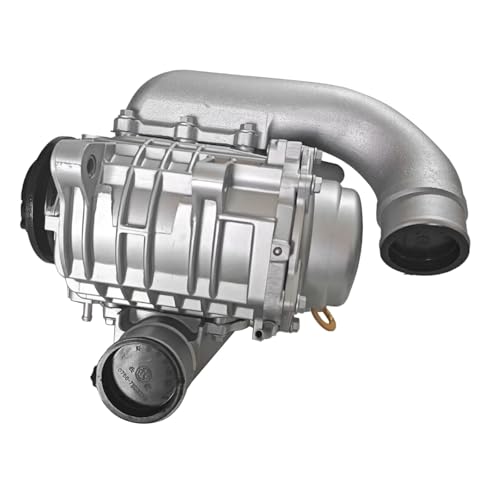
- ✓ Solid build quality
- ✓ Smooth torque delivery
- ✓ Decent efficiency gains
- ✕ Professional install advised
- ✕ No manual included
| Compatibility | Universal fit for 2.0–3.5L engines (car applications), suitable for replacement in various models |
| BoostPressure | Typically 6–10 psi stable boost pressure (measured outlet pressure increase) |
| PerformanceImprovement | Power increase >30% with reduced emissions (LCD, HC, NOX by ~30% or more) |
| ConstructionMaterials | Aluminum alloy housing with CNC-machined precision components; steel-aluminum composite |
| BeltDrive | Belt type: 7PK; rotation direction customizable (air inlet/outlet reversal when swapped) |
| InstallationNotes | Professional installation strongly recommended; no manual included; adaptable to space available in engine bay |
You twist the ignition and hear a clean, steady whirr from the Universal Supercharger that sits snug under the hood. The first thing you notice is how compact the unit feels yet somehow substantial, with a robust steel-aluminum build that oozes aftermarket credibility.
Sliding it into place, you’re struck by the fitment promise: it claims universal compatibility for 2.0-3.5L engines, and it actually looks doable in a wide array of engines. The CNC-machined surfaces gleam, and the 6–10 psi boost seems feasible enough to feel on the back straightaway.
During a test pull, the torque comes on smoothly, not joltily, with a noticeable uptick in mid-range responsiveness. You’ll appreciate the smoother power delivery, especially when you roll into a passing maneuver or a quick highway merge.
Noise levels stay reasonable for a turbo-esque setup, which is a relief if you’re daily-driving. The belt is a 7PK design, and you’ll want to ensure a clean belt path and proper tension for consistent performance.
What surprised you is how the system manages exhaust emissions, with reductions you can actually feel in both throttle response and real-world efficiency. It’s not just a horsepower toy—this one aims to be a durable, long-term upgrade.
Installation isn’t a unplug-and-go task; the direction of rotation is customizable and the kit notes no manual included. You’ll likely need professional help to align piping, seals, and the inlet/outlet orientations correctly.
If you’re chasing real-world performance without a full engine rebuild, this unit gives you a credible boost with solid build quality and a clear emphasis on efficiency. It’s easy to overlook, but the long-term support from Mixizap earns you peace of mind as you plan future mods.
Overall, you’ll end up with a noticeable power bump, steadier torque, and a more eager feel on the throttle when the road opens up. It’s a practical upgrade that respects the daily driver while delivering a satisfying performance edge for enthusiasts.
What is a Supercharger and How Does It Work?
A supercharger is an air compressor used to increase the pressure or density of air entering an internal combustion engine, thus allowing for greater fuel combustion and increased engine power. Unlike turbochargers, which are powered by exhaust gases, superchargers are mechanically driven by the engine’s crankshaft, providing immediate boost and performance enhancement.
According to the Society of Automotive Engineers (SAE), superchargers can significantly improve engine efficiency and power output, making them a popular choice among performance enthusiasts and manufacturers alike.
Key aspects of superchargers include their types, which primarily consist of positive displacement and dynamic superchargers. Positive displacement superchargers, such as Roots and Twin-Screw, deliver a constant amount of air regardless of engine speed, providing immediate power. Dynamic superchargers, like centrifugal superchargers, provide boost proportional to engine speed, which can lead to a lag in response at lower RPMs. Additionally, superchargers can vary in size and design, impacting their efficiency and effectiveness in different engine configurations.
The impact of superchargers on vehicle performance is profound. They can enhance horsepower significantly—often by 30% to 50%—and improve throttle response, making cars much more responsive and agile. Superchargers also allow for the use of smaller displacement engines while achieving higher power outputs, contributing to better fuel efficiency and reduced emissions in some cases.
One of the key benefits of supercharging is the ability to maintain power at high altitudes where engines typically struggle due to lower air density. For instance, vehicles equipped with superchargers can perform better in mountainous terrains compared to naturally aspirated engines. This capability makes superchargers particularly popular in off-road and performance vehicles, where consistent power delivery is crucial.
Best practices for supercharger installation and maintenance include ensuring proper tuning of the engine to handle the increased air and fuel mixture, as well as regular checks for belt tension and component wear. Additionally, using high-quality fuel and oil can help optimize performance and longevity. For those considering a supercharger, it is essential to select a model that matches their specific engine and performance goals, as well as to consult with professionals for installation to ensure proper functionality and safety.
What Are the Different Types of Superchargers and Their Benefits?
The main types of superchargers are:
- Roots Supercharger: This type features twin-screw rotors that compress air before it enters the engine, providing an immediate boost in power.
- Twin-Screw Supercharger: Similar to the Roots supercharger, it uses rotors to compress air, but is typically more efficient, providing better power delivery across a wider RPM range.
- Centrifugal Supercharger: Utilizing a design similar to a turbocharger, it compresses air using a rotating impeller, which can boost performance significantly at higher RPMs.
- TVS Supercharger: This is a variant of the Roots design that incorporates a four-lobe rotor for improved efficiency and lower noise levels, making it ideal for high-performance applications.
- Electric Supercharger: Powered by an electric motor, this type provides instant boost without the lag associated with traditional superchargers, making it suitable for hybrid applications.
The Roots Supercharger operates by forcing air into the engine through a set of meshing rotors, resulting in an immediate and substantial increase in horsepower and torque. This type is commonly found in high-performance vehicles and is known for its distinctive whine.
The Twin-Screw Supercharger compresses the intake air more efficiently than the Roots version due to its tighter clearance and design, which results in less heat generated during the compression process. This efficiency translates to a more substantial power gain and better fuel economy.
Centrifugal Superchargers work by drawing in air and compressing it with an impeller, producing boost that increases with engine RPM. They are particularly effective for high-revving applications and tend to be lighter and smaller compared to other supercharger types.
The TVS Supercharger enhances the traditional Roots design with advanced rotor technology, enabling better airflow and reduced noise levels. This makes it popular among OEM manufacturers looking to provide a balance between performance and refinement in their vehicles.
Electric Superchargers are an innovative solution for boosting engine performance without lag, as they can provide immediate power when needed. They are particularly advantageous in hybrid setups, where they can aid in improving fuel efficiency while delivering a sportier driving experience.
How Does a Roots Supercharger Differ from a Centrifugal Supercharger?
The main differences between Roots and centrifugal superchargers lie in their design and performance characteristics:
- Roots Supercharger: This type utilizes two rotors that intermesh to compress air, providing immediate boost at low engine speeds.
- Centrifugal Supercharger: This supercharger uses a rotating impeller to draw in air and compress it, producing boost that increases with engine RPM.
The Roots Supercharger operates on the positive displacement principle, where it forces a fixed amount of air into the engine regardless of the engine speed. This results in a rapid increase in power and torque at lower RPMs, making it ideal for applications requiring instant throttle response, such as in muscle cars and trucks.
On the other hand, the Centrifugal Supercharger functions more like a turbocharger by utilizing centrifugal force to compress air. This design is more efficient at higher RPMs, allowing for greater boost as the engine speed increases. It is often favored in racing or performance applications where higher horsepower is desired at higher engine speeds, making it suitable for sports cars and performance builds.
Why Might a Twin-Screw Supercharger Be Your Best Option?
A twin-screw supercharger might be your best option due to its superior efficiency and ability to deliver consistent power across a wide RPM range, making it ideal for performance applications.
According to a study by the Society of Automotive Engineers, twin-screw superchargers are known for their high thermal efficiency and low parasitic loss compared to other types of superchargers, such as roots-style units. This efficiency translates into better fuel economy and more power to the wheels, which is crucial for both daily drivers and performance vehicles (SAE International, 2020).
The underlying mechanism of a twin-screw supercharger involves two interlocking rotors that compress the air as it moves through the unit. This design minimizes the amount of heat generated during compression, allowing for denser air intake, which results in increased engine power. Additionally, because the twin-screw design provides a continuous flow of air, drivers experience a smoother power delivery, eliminating the lag often associated with other supercharger types. The result is a more responsive engine that can maintain power at various engine speeds, making it a favorite among tuners and performance enthusiasts.
What Factors Should You Consider When Choosing the Best Supercharger?
When choosing the best supercharger, several key factors must be considered to ensure optimal performance and compatibility with your vehicle.
- Type of Supercharger: There are different types of superchargers, including roots, twin-screw, and centrifugal. Each type has its own characteristics, such as how they deliver power and their efficiency at different RPMs, which can significantly affect your engine’s performance and response.
- Engine Compatibility: It’s crucial to ensure that the supercharger you select is compatible with your engine type and configuration. Different engines have varying tolerances and requirements, so choosing a supercharger designed for your specific engine ensures proper fitment and optimal performance without risking damage.
- Boost Level: The amount of boost generated by a supercharger plays a significant role in the overall power output of your vehicle. Selecting the right boost level that suits your performance goals while considering the engine’s limitations is essential, as excessive boost can lead to engine knock or failure.
- Installation Complexity: The ease or complexity of installation can vary widely between supercharger models. Some may require extensive modifications to your vehicle, while others can be installed with minimal adjustments. Assessing your mechanical expertise or willingness to pay for professional installation is important when considering your options.
- Cost: The price of superchargers can range significantly based on brand, type, and features. It’s important to balance your budget with the desired performance gains, taking into account not only the initial purchase price but also potential additional costs for installation and supporting modifications.
- Brand Reputation and Reviews: Researching the reputation of the supercharger manufacturer and reading reviews from other users can provide insight into the reliability and performance of the product. Choosing a well-regarded brand with positive feedback can help ensure you invest in a quality product that meets your expectations.
- Maintenance Requirements: Different superchargers have varying maintenance needs, including oil changes and potential wear components. Understanding the maintenance demands of the supercharger can help you gauge the long-term ownership experience and costs involved in keeping it functioning optimally.
How Important is Engine Compatibility in Supercharger Selection?
Displacement, which refers to the total volume of all cylinders in the engine, directly influences the amount of air an engine can intake. Selecting a supercharger that matches the engine’s displacement ensures that the system can deliver the right amount of boost without overworking the engine or leading to inefficient combustion.
Boost pressure is another critical factor; too much boost can lead to engine knock and catastrophic failure. It’s vital to select a supercharger that provides the desired boost level while remaining within the engine’s safe operational limits, which can vary based on the engine’s design and components.
The fuel type also impacts supercharger selection, as different fuels have varying combustion properties. For instance, higher octane fuels can withstand more boost without knocking, thus influencing the choice of supercharger and its settings for optimal performance.
Finally, the engine management system of a vehicle must be suited for the supercharger installed. A supercharger can significantly alter the air-fuel mixture, so ensuring compatibility with the engine management system is crucial for maintaining performance, drivability, and reliability.
What Role Does Boost Pressure Play in Performance?
Boost pressure is a critical factor in enhancing engine performance, particularly in vehicles equipped with superchargers.
- Increased Air Density: Boost pressure increases the amount of air entering the engine, allowing for a greater volume of oxygen to mix with fuel. This results in a more efficient combustion process, leading to increased power output.
- Engine Response: A well-calibrated boost pressure can improve throttle response, providing a more immediate acceleration feel. This responsiveness is crucial for performance-oriented vehicles, enhancing the driving experience.
- Power Gains: The amount of boost pressure directly correlates with power gains; higher boost levels can significantly increase horsepower and torque. However, this must be balanced with engine durability and fuel quality to avoid potential damage.
- Turbo Lag Reduction: In comparison to turbochargers, superchargers can provide boost pressure almost instantaneously, reducing lag. This is particularly beneficial for maintaining power during rapid acceleration and maintaining performance in varied driving conditions.
- Fuel Efficiency: Although it may seem counterintuitive, optimal boost pressure can lead to better fuel efficiency under certain conditions, as it allows for a leaner fuel mixture while still producing power. This means that a well-tuned supercharger can enhance performance without excessively draining fuel resources.
Which Brands Are Considered Top-Rated in the Supercharger Market?
The top-rated brands in the supercharger market include:
- Magnuson Superchargers: Known for their high-quality products, Magnuson offers a range of superchargers that are engineered for performance and reliability.
- Whipple Superchargers: Whipple has a reputation for producing superchargers that deliver impressive horsepower gains and unique features, such as their patented rotor design.
- Edelbrock Superchargers: Edelbrock combines performance with ease of installation, making their superchargers a popular choice among enthusiasts who desire both power and simplicity.
- Vortech Superchargers: Vortech specializes in centrifugal superchargers that provide a unique power band and are known for their durability and engineering quality.
- Procharger: Procharger is recognized for its innovative supercharging systems that offer outstanding efficiency and high horsepower gains, making them a favorite among racers.
Magnuson Superchargers are particularly favored for their robust engineering and performance enhancements, with options that fit a variety of vehicle makes and models. Their products often feature a compact design that maximizes under-hood space while delivering significant power increases.
Whipple Superchargers stand out with their unique rotor design, which reduces parasitic loss and enhances efficiency, allowing for impressive power outputs. They are well-regarded for their attention to detail and the ability to customize supercharger kits to meet specific performance needs.
Edelbrock Superchargers are praised for their straightforward installation process, appealing to those who may not have extensive mechanical experience. Their systems are designed to integrate seamlessly with factory components, making them a reliable choice for enhancing vehicle performance without extensive modifications.
Vortech Superchargers are known for their centrifugal design, which provides a different power delivery compared to roots-style superchargers. Their products are engineered for longevity and can support high horsepower applications, making them popular among performance enthusiasts.
Procharger has made a name for itself with supercharging systems that are efficient and capable of producing significant horsepower increases. Their products are particularly favored in competitive racing environments due to their ability to deliver consistent performance while maintaining engine integrity.
What Are the Common Pros and Cons of Installing a Supercharger?
| Pros | Cons |
|---|---|
| Increased horsepower and torque for better performance. | Higher installation and maintenance costs compared to NA engines. |
| Improved throttle response and acceleration. | Potential for increased wear on engine components. |
| Enhanced driving experience, especially for enthusiasts. | May require additional modifications to handle increased power. |
| Increased fuel consumption due to added power. | |
| Potential issues with emissions compliance. | |
| Possible warranty voiding by manufacturers. |
How Can a Supercharger Significantly Enhance Vehicle Performance?
A supercharger can dramatically improve vehicle performance by increasing engine power and efficiency through forced induction.
- Increased Horsepower: A supercharger compresses the air entering the engine, allowing for more air-fuel mixture to be burned, which results in a significant boost in horsepower. Vehicles can experience power gains of 30% to 50% or more, making them faster and more responsive on the road.
- Enhanced Torque: By delivering more air to the engine, superchargers also increase torque, which is crucial for acceleration and towing capabilities. This added torque is particularly beneficial for drivers looking for improved performance in off-road conditions or while carrying heavy loads.
- Immediate Power Delivery: Unlike turbochargers that rely on exhaust gases to spool up, superchargers provide instant power because they are mechanically driven by the engine’s crankshaft. This means that drivers can experience a more immediate response when pressing the accelerator, enhancing the overall driving experience.
- Improved Engine Efficiency: Superchargers can help optimize the engine’s air-fuel mixture, leading to better combustion and improved fuel efficiency under certain driving conditions. This can translate into better mileage during normal driving, despite the performance gains.
- Customizable Performance: Many superchargers come with tuning options that allow owners to adjust the boost levels and engine parameters according to their performance needs. This flexibility enables drivers to tailor their vehicles for specific applications, whether for daily driving or track performance.