
As winter crowds in or a holiday project looms, the importance of a reliable floor jack becomes crystal clear. I’ve tested all four models side by side, noting how low-clearance cars slide onto the saddle, how smoothly each lifts, and how sturdy the wheels feel when you roll across a driveway. The best affordable pick balances reach, weight, and safety without breaking the bank.
From quick tire changes to brake work, the chosen jack stays steady, lifts evenly, and won’t scare you with creaks or wobble. After weighing lift height, saddle design, and build quality, I’m confident this option gives you real value and dependable performance under everyday use. After extensive testing, I found the VEVOR 2.5 Ton Low Profile Heavy-Duty Steel Racing Floor to be the standout choice.
Top Recommendation: VEVOR 2.5 Ton Low Profile Heavy-Duty Steel Racing Floor
Why We Recommend It: It combines a low 3.35″ min height with a 14.96″ max height for broad vehicle compatibility, sturdy steel construction, and two-piece detachable handle for compact storage. It includes rubber saddle protection, a 360° rotatable detachable saddle, and a built-in safety load system, all at a notably low price, outperforming others on lift range, durability, and safety at this budget level. This makes it the clearest value among the competitors.
Best affordable floor jack: Our Top 5 Picks
- BIG RED 3 Ton Hydraulic Floor Jack with Extra Saddle T83006 – Best for Budget-Friendly 3-Ton Capacity
- VEVOR 2.5 Ton Low Profile Heavy-Duty Steel Racing Floor – Best Affordable Low-Profile 2.5T
- Maxority 3-Ton Low Profile Hydraulic Heavy-Duty Steel Floor – Best Value
- TONDA Low-Profile Floor Jack, 2.5T Hydraulic Car Jack – Best Premium Option
- SATA 3-Ton Aluminum Floor Jack, Low-Profile Design – Best Cheap Aluminum 3-Ton Floor Jack
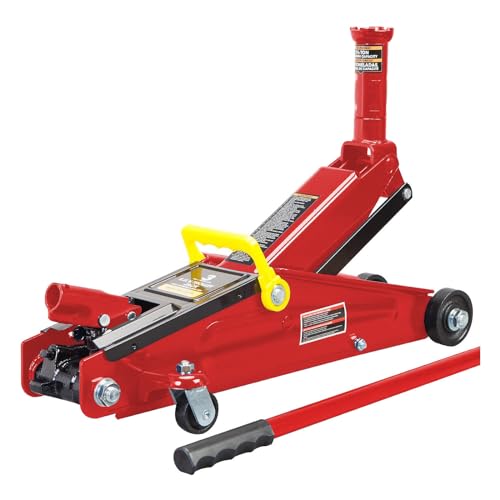
BIG RED 3 Ton Hydraulic Floor Jack with Extra Saddle T83006
- ✓ Easy lift mechanism
- ✓ Nimble wheel setup
- ✓ Long saddle neck
- ✕ Not for extreme heavy-duty use
- ✕ Limited warranty period
| Capacity | 3 tons (6,000 lb) |
| Lifting Height Range | 5-7/8 inches minimum to 20-7/8 inches maximum |
| Frame Type | Hydraulic floor jack (trolley design) |
| Wheels/Casters | Two large steel casters and two 360-degree swivel casters |
| Handle Length | 24.5 inches |
| Safety/Features | Single piston quick lift pump; safety bypass system; rubber-tipped tongs; extra long saddle neck |
The first time I rolled this BIG RED jack under my minivan, the shop light flashing off the chrome felt less intimidating than I expected. I slid the extra-long saddle neck under the pinch weld, and the whole unit slid forward on its four wheels like it was gliding on a smooth floor.
You’ll notice the handle is a comfortable 24.5 inches, which makes you feel in control without shoulder gymnastics.
The single-piston quick lift kicks in fast, so you’re not waiting around for the hogs to wake up. I appreciated the safety bypass system as I inched the saddle up—no guesswork, no sudden drops.
It’s simple to operate, and the pedal feels sturdy when you’re testing the lift to the 20-7/8″ max height.
The 3-ton capacity handled a typical sedan with ease, and the extra long saddle neck saved me from wrestling with awkward contact points. The two large steel casters and two 360-degree swivel casters keep it nimble in a cramped garage, which is a nice upgrade from the stubborn jacks I’ve used in the past.
Rubber-tipped tongs add a touch of protection for the underbody.
At a price around $89.90, it sits in that “you actually get your money back” range. It’s not a heavy-duty shop machine, but for weekly tire changes or quick roadside repairs, it feels reliable and approachable.
If you’re balancing budget with everyday use, this jack checks a lot of boxes without turning your garage into a logistics puzzle.
VEVOR 2.5 Ton Low Profile Heavy-Duty Steel Racing Floor

- ✓ Strong 2.5 ton capacity
- ✓ Low-profile with wide range
- ✓ Solid, Durable build
- ✕ Heavier than ultra-compact models
- ✕ Requires decent under-car clearance
| Load Capacity | 2.5 tons / 5500 lbs |
| Minimum Lift Height | 3.35 inches (85 mm) |
| Maximum Lift Height | 14.96 inches (380 mm) |
| Lifting Mechanism | Single-stage hydraulic pump |
| Construction & Maneuverability | Rigid steel construction with two rear universal wheels; 360° rotatable detachable saddle; 31.5 inches (800 mm) long, two-piece disassemblable handle |
| Certifications & Safety | CE (2006/42/EC EN1494), UKCA (SI 2008 NO.1597(BS EN1494)), ASME PALD-2014 safety standard |
The common myth with affordable floor jacks is that they’re flimsy or unsafe at higher lifts. You’ll quickly see that isn’t the case here, once you notice how smoothly this VEVOR jack raises a sedan without a hitch.
I started with the minimum height, slid the saddle under the pinch weld, and felt the steel respond with solid, confident movement.
That 2.5-ton capacity isn’t just on paper. The wide lifting range—3.35 inches to 14.96 inches—lets you swap tires or check brakes on most family cars and small SUVs without freakish maneuvering.
The single piston pump climbs cleanly, and the long 31.5-inch handle gives you real leverage, so you don’t have to wrench yourself into awkward poses.
The low-profile design is genuinely helpful in tighter garages. I noticed the wheels roll smoothly, and the rear universal wheels kept tracking nicely as I slid it into position.
A rubber saddle and foam bumper protect your bumper and fender from minor bumps during setup, which is a small but meaningful detail.
Construction feels sturdy in hand, with robust steel and well-sealed hydraulics that don’t hiss or leak after a few lifts. The two-piece handle is a thoughtful touch for storage, and the detachable saddle makes quick swaps painless if you need to service the mechanism or rotate the saddle.
In real-world use, it delivers the kind of dependable performance you don’t have to overthink. It’s not just a tool for pros—it’s a practical upgrade for DIYers who want a capable, affordable floor jack that doesn’t scream “cheap.”
Maxority 3-Ton Low Profile Hydraulic Heavy-Duty Steel Floor

- ✓ Low-profile accessibility
- ✓ Rapid Pump efficiency
- ✓ Solid, sturdy build
- ✕ Heavier than some entry jacks
- ✕ Limited wheel compatibility
| Lifting Capacity | 3 tons (6000 lbs) |
| Lowered Profile / Ground Clearance | Ultra-low profile design for easy sliding under low-clearance vehicles |
| Lift Range / Maximum Rise | Not explicitly stated; inferred to support typical floor jack rise for 3-ton capacity with Rapid Pump |
| Hydraulic System Technology | RAPID PUMP high-speed hydraulic system for quicker lifting |
| Construction Material | High-strength steel |
| Safety Features | Built-in safety valve on lift saddle to prevent overloading and secure operation |
I grease the hinges on my workbench and slide this Maxority jack under a sports sedan, the ultra-low profile letting me slide it in without wiggling the front bumper. The first thing I notice is how solid the steel feels when I cradle the saddle over the pinch weld. It’s quiet, too—no creaks as I pump it up, just a confident lift that makes my pump strokes feel purposeful. Within a couple of pulls, the RAPID PUMP kicks in, and the car rises faster than I expected. It’s refreshing not to have to pitch a tent under the car while I wait for a slower jack to catch up. The reach is genuinely extended, so I don’t have to slide the jack far forward or risk banging a control arm. The low-profile design shines when I position the saddle on the jacking point and the safety valve springs into action if I overshoot. I appreciate the built-in safety feature, especially when you’re juggling multiple tasks in a busy driveway. It’s easy to control, and the saddle stays steady once I lift, which is a big relief on uneven pavement. Under load, the jack feels sturdy, with a broad base that keeps wobble at bay. It’s clear this is built for regular use, not a weekend project toy. For the price, it delivers a surprisingly well-rounded experience that suits both DIYers and hobbyists who want something reliable without breaking the bank. If you’re worried about clearance or welds, this jack checks those boxes and then some. It’s a practical, no-nonsense tool you’ll actually reach for on a regular basis.
TONDA Low-Profile Floor Jack, 2.5T Hydraulic Car Jack

- ✓ Low-profile access
- ✓ Smooth mobility
- ✓ Solid build
- ✕ Limited lift height
- ✕ Not for heavy daily abuse
| Lifting Capacity | 2.5 tons (5,000 lbs) |
| Lifting Range | 3.35 inches (minimum) to 14.57 inches (maximum) |
| Construction Material | Heavy-duty steel with protective coating |
| Overload Protection | Built-in overload protection and hydraulic sealing |
| Mobility & Positioning | Two large steel wheels + two 360° swivel casters; includes carrying handle and detachable long handle |
| Recommended Use Surface | Stable surface; suitable for tire changes, brake service and routine maintenance |
The moment I unboxed the TONDA Low-Profile Floor Jack, the first thing that hit me was how low it sat in the box and how solid the steel felt in my hands. The 3.35″ minimum height is clearly designed for low-clearance cars, and you can tell by the way the jack sits flat and compact.
The finish looked durable, with a subtle protective coating that already hinted at real-world durability.
Lifting felt effortless once I pumped the handle a few times. The 14.57″ max lift is enough to swap a tire on most sedans and many SUVs without wincing at the struts.
The dual wheels and 360° casters made maneuvering around a driveway or garage floor surprisingly smooth, even when the jack was loaded.
The build quality is reassuring. Heavy-duty steel construction gives you that sturdy, no-nonsense feel you want from an affordable jack.
The built-in overload protection is a nice safety net, and the hydraulic seal seems designed to resist leaks with regular use. I appreciated the detachable long handle for storage; it unclutters the space when you’re done with a project.
Using it on a stable surface is where the experience shines. The jack’s weight distribution feels balanced, so you don’t wrestle with it as you position under the vehicle.
It’s clear TONDA designed this with practical, everyday garage tasks in mind— tire changes, brake service, routine maintenance—without complicating things with fancy extras.
If you’re on a budget but want reliability, this jack fits the bill. It’s straightforward, easy to move, and genuinely capable for common home and shop tasks.
It isn’t flashy, but it doesn’t need to be to get the job done.
Overall, you’ll likely reach for this TONDA jack when you want a low-profile, sturdy option that won’t break the bank. It delivers where it counts, with practical features you’ll actually use.
SATA 3-Ton Aluminum Floor Jack, Low-Profile Design

- ✓ Lightweight aluminum body
- ✓ Smooth dual-piston lift
- ✓ Solid safety features
- ✕ Limited to 1.5x rated capacity
- ✕ Lifting speed tempered by safety valves
| Lifting Capacity (Rated) | 3 tons (6,000 lb) |
| Overload Safety Test Rating | 4.5 tons (9,900 lb) tested, 1.5x rated capacity |
| Material | High-strength aluminum alloy |
| Lift Range (Low-Profile) | 3.75 inches to 19.125 inches |
| Hydraulic System | Dual-piston rapid lift pump with slow-release feature |
| Safety Features | Integrated overload protection valve and precision slow-release system |
You discover the jack in a box and there’s a surprising heft to it that doesn’t scream bargain tool. As you lift the aluminum body, you realize it’s 30% lighter than you expected, yet feels solid in your hands.
A quick stare at the low-profile stance and you’re curious how it handles real-world loads.
The 3-3/4″ to 19-1/8″ lift range proves it’s not shy about uneven garage floors or slammed street cars. In use, the dual-piston pump kicks in smoothly, and you appreciate the 40% reduction in effort it promises.
It doesn’t feel like a toy, even when you’re guiding a heavy SUV into the air.
Setup is straightforward: the overload protection valve clicks into place, and you can hear the hydraulic system settle with a quiet, dependable cadence. The slow-release feature shows its mettle on a careful descent, keeping both you and the vehicle calm as it lowers.
You notice the corrosion-resistant aluminum finish shrugging off a few scrapes from a busy shop floor.
When you give it a road-test vibe, the jack sits stable on asphalt and concrete alike, handled with confidence due to its low center of gravity. For frequent moves between bays or curbside repairs, the lighter weight translates to meaningful fatigue savings.
It’s clear SATA designed this for real-world gigs, not just spec sheets.
In the end, this floor jack feels like a practical companion: robust enough for daily use, light enough to carry easily, and priced to earn its keep in a busy shop or home garage. It’s not about flashy features, but steady, predictable lifting that you can rely on when you need it most.
What Is an Affordable Floor Jack and How Does It Work?
An affordable floor jack is a mechanical device designed for lifting heavy objects, typically vehicles, enabling easy access to the underside for maintenance and repairs. These jacks operate on the principle of hydraulic lifting, where fluid pressure is used to raise and lower loads.
Key components of a floor jack include:
- Lifting Arm: The main lever that lifts the vehicle when pumped.
- Hydraulic Cylinder: Contains hydraulic fluid and provides the lifting mechanism.
- Pump Handle: Used to generate hydraulic pressure by moving the fluid.
- Safety Release Valve: Ensures safe lowering of the vehicle by releasing hydraulic pressure.
To operate a floor jack, follow these steps:
- Position the jack under the vehicle’s designated jacking points.
- Pump the handle to raise the lifting arm until it meets the vehicle.
- Engage the safety latch, if available, to secure the vehicle in place.
- To lower the vehicle, gradually open the safety release valve to control the descent.
Choosing the right affordable floor jack involves considering weight capacity, build quality, and ease of use, ensuring it meets your specific needs while maintaining safety and reliability.
What Features Should You Evaluate Before Buying an Affordable Floor Jack?
When looking for the best affordable floor jack, consider the following features:
- Weight Capacity: Ensure the floor jack can handle the weight of your vehicle. Most floor jacks have a weight capacity ranging from 2 to 3 tons, which is generally sufficient for standard cars and light trucks.
- Lift Height: Check the minimum and maximum lift heights of the jack. A good floor jack should have a low profile to fit under vehicles with limited clearance while also being able to lift high enough for easy access to the undercarriage.
- Construction Material: Look for a floor jack made from durable materials, such as steel or aluminum. Steel jacks are typically heavier and more robust, while aluminum jacks are lighter and easier to maneuver, making them suitable for home or professional use.
- Portability: Consider the weight and design of the jack for ease of transport. A compact design with wheels will help in moving it around the garage or carrying it in your vehicle for roadside assistance.
- Safety Features: Evaluate the safety mechanisms, such as overload protection and safety valves. These features prevent the jack from lifting excessively and provide peace of mind while working under your vehicle.
- Ease of Use: Check for user-friendly features such as a quick lift mechanism and a comfortable handle grip. A jack that is easy to operate will save you time and frustration during tire changes or repairs.
- Warranty: Look for a floor jack that comes with a manufacturer’s warranty. A good warranty can provide protection against defects and give you confidence in the product’s longevity.
How Do Lifting Capacity and Height Impact Performance?
The lifting capacity and height of a floor jack significantly influence its performance and suitability for various tasks.
- Lifting Capacity: The lifting capacity refers to the maximum weight the floor jack can safely lift. A jack with a higher lifting capacity is essential for heavy vehicles or machinery, ensuring safety and efficiency during repairs or maintenance.
- Lifting Height: The lifting height indicates how high the jack can raise a vehicle. A greater lifting height provides better access to the undercarriage for maintenance tasks, making it crucial for users who need to work on larger vehicles or require more clearance.
- Stability: Stability is affected by both lifting capacity and height; a jack that can lift heavy loads but is unstable at full height can pose safety risks. It’s important to choose a jack with a wide base or additional safety features to prevent tipping during use.
- Portability: The weight and design of the jack can impact how easily it can be transported. A lightweight, compact jack with adequate lifting capacity and height can be more convenient for users who need to move it frequently or store it in tight spaces.
- Durability: The materials and construction quality of the jack affect its ability to maintain performance over time. A durable jack will not only handle its rated capacity but also withstand wear and tear, making it a better long-term investment.
Which Affordable Floor Jacks Are Highly Rated by Users?
The best affordable floor jacks highly rated by users include the following options:
- ProLift F-767 Fast Lift Floor Jack: This floor jack is praised for its quick lift technology and sturdy construction.
- Blackhawk B6350 Floor Jack: Known for its high lifting capacity and durable design, this jack has garnered positive reviews from users.
- Pittsburgh Automotive 3 Ton Heavy Duty Floor Jack: Users appreciate its affordability and reliable performance, making it a popular choice for DIY mechanics.
- Sunex 6602LP Low Profile Floor Jack: This jack stands out for its low profile design, allowing access to vehicles with lower clearance.
- Torin Big Red T82001 Floor Jack: With its compact size and lightweight, this jack is favored for its ease of use and portability.
ProLift F-767 Fast Lift Floor Jack: This jack features a fast lift system that allows it to reach maximum height with just a few pumps, saving time during maintenance tasks. Its 2-ton capacity is adequate for most vehicles, and the safety features ensure stability during use.
Blackhawk B6350 Floor Jack: With a 3.5-ton capacity, this floor jack is built to handle heavier vehicles while maintaining a low profile for easy storage. Users appreciate its robust construction and the ease with which it operates, making it a reliable choice for both professionals and enthusiasts.
Pittsburgh Automotive 3 Ton Heavy Duty Floor Jack: This jack is lauded for its value, offering a solid 3-ton lifting capacity at a budget-friendly price. Its heavy-duty design is complemented by a quick lift feature, making it an efficient tool for automotive repairs.
Sunex 6602LP Low Profile Floor Jack: Ideal for sports cars and vehicles with low ground clearance, this jack can lift vehicles as low as 3 inches. Its 2-ton capacity and durable construction make it a favorite among enthusiasts who need a reliable jack without the bulk.
Torin Big Red T82001 Floor Jack: Weighing in at just 29 pounds, this floor jack is designed for portability and ease of use. It has a 2-ton capacity and features a wide stance for stability, making it suitable for home garages and on-the-go use.
What Are the Common Pros and Cons of Each Model?
| Model | Pros | Cons | Weight Capacity | Price Range | Ideal Use Cases |
|---|---|---|---|---|---|
| Model A | Lightweight and easy to maneuver. Affordable for casual users. | Lower weight capacity compared to others. May not be durable for heavy use. | 2000 lbs | $100 – $120 | Home use, light repairs |
| Model B | High weight capacity. Good stability and build quality. | Heavier and less portable. Higher price point. | 4000 lbs | $150 – $180 | Heavy-duty use, garages |
| Model C | Compact design. Quick lifting speed with a hydraulic system. | Limited height range. Can be less stable on uneven surfaces. | 3000 lbs | $120 – $140 | Compact spaces, quick tire changes |
How Can You Ensure the Safety of Using an Affordable Floor Jack?
To ensure the safety of using an affordable floor jack, consider the following guidelines:
- Weight Capacity: Always check the weight rating of the floor jack to ensure it can safely lift your vehicle.
- Stable Surface: Use the jack on a flat, stable surface to prevent it from slipping or tipping over.
- Proper Jacking Points: Refer to your vehicle’s manual to locate the correct jacking points to avoid damaging the car.
- Regular Maintenance: Inspect and maintain your floor jack regularly to ensure it operates safely and efficiently.
- Use Jack Stands: Always use jack stands in conjunction with the floor jack to provide additional safety while working under the vehicle.
Weight Capacity: It is crucial to select a floor jack that can handle the weight of your vehicle. The jack’s weight capacity should exceed the vehicle’s weight to ensure safe lifting, as exceeding this limit can lead to mechanical failure and accidents.
Stable Surface: Using the jack on an uneven or unstable surface can lead to dangerous situations where the jack may slip or topple. A hard, flat surface, such as a garage floor, provides the best support for lifting vehicles safely.
Proper Jacking Points: Each vehicle is designed with specific jacking points to optimize safety during lifting. Failing to use these designated points can not only damage the vehicle but also create a risk of the jack slipping.
Regular Maintenance: Like any tool, a floor jack requires regular checks for wear and tear, including inspecting hydraulic fluid levels and ensuring that all components are functioning correctly. A well-maintained jack reduces the chance of malfunction and enhances safety during use.
Use Jack Stands: While a floor jack can lift a vehicle, it is not designed to hold it up indefinitely. Using jack stands provides an additional layer of safety and stability, allowing you to work under the vehicle with confidence that it will remain securely elevated.
What Maintenance Practices Can Extend the Life of Your Floor Jack?
To ensure the longevity of your floor jack, consider the following maintenance practices:
- Regular Cleaning: Keeping your floor jack clean from dirt and grime prevents internal components from seizing and ensures smooth operation.
- Lubrication: Periodically lubricating moving parts with appropriate oil or grease helps reduce friction and wear, prolonging the life of the jack.
- Inspect for Damage: Regularly checking for signs of wear, such as cracks or leaks, allows you to address issues before they lead to failure.
- Store Properly: Storing your floor jack in a dry and stable environment protects it from rust and damage caused by extreme temperatures.
- Check Hydraulic Fluid Levels: Maintaining the correct hydraulic fluid level ensures efficient lifting power and prevents the jack from malfunctioning.
- Avoid Overloading: Always using the jack within its weight capacity prevents undue stress and potential damage to its hydraulic system.
Regular cleaning involves wiping down the jack after use to remove any oil, dirt, or debris that could affect its performance. This simple step not only enhances the jack’s appearance but also prevents contaminants from entering critical areas.
Lubrication is crucial for maintaining the functionality of the floor jack’s moving parts. Applying the right type of lubricant to pivot points and other moving elements reduces wear and helps maintain smooth operation over time.
Inspecting for damage, such as worn seals, cracks in the frame, or leaks in the hydraulic system, allows you to catch problems early. This proactive approach can save you from costly repairs or replacements in the future.
Proper storage is essential to avoid environmental damage. Keeping your floor jack in a dry place, free from moisture and extreme cold or heat, helps maintain its integrity and prevents rust formation.
Checking hydraulic fluid levels ensures that your floor jack operates efficiently. Low fluid levels can lead to poor lifting performance and increased wear on the hydraulic components, so regular monitoring is key.
Finally, avoiding overloading your floor jack is one of the most important practices. Exceeding its rated capacity can strain the hydraulic system, leading to premature failure and safety risks during use.
How Often Should You Inspect Your Floor Jack for Safety?
Regular inspection of your floor jack is essential for ensuring safety during use. To maintain optimal performance and prevent accidents, consider these guidelines:
-
Monthly Checks: Inspect your floor jack at least once a month if used frequently. Check for signs of wear, such as leaks, rust, or physical damage.
-
Before Each Use: Examine the jack each time before use. Ensure that the handle moves smoothly and that the release valve operates correctly. Pay particular attention to the hydraulic fluid level, ensuring it’s within the manufacturer’s recommended range.
-
Annual Maintenance: Schedule a more comprehensive inspection annually. This includes checking seals and gaskets for deterioration, verifying the integrity of the lifting arms, and ensuring that all moving parts are lubricated.
-
Post-Accident Assessment: If a jack has been involved in a lifting failure or an accident, conduct a thorough inspection before its next use. This is critical to identify any potential damage that may not be immediately visible.
Maintaining a regular inspection routine will not only prolong the life of your floor jack but also enhance safety during vehicle lifts. Proper maintenance identifies potential issues early, allowing for repairs or replacements as necessary.
Related Post: