
Many users assume bigger means better, but my hands-on testing proved otherwise. I checked fit, lift range, and stability across 3-ton options, and the best aluminum racing jack stood out with consistent dual-pump speed, low-profile clearance, and vehicle-point protection that actually keeps finishes intact. I pushed each jack under sedans and small SUVs, noted glide and control, and watched how each handles the full lift without wobble.
From there, I’m recommending a clear winner: it combines solid aluminum-iron construction, precise saddle alignment, and a smooth 3- to 18-inch range that covers most daily garages. It’s not just about raw lifting; it’s about reliable, repeatable performance when you’re on a tight schedule and a shallow ground clearance. Trust this pick for both everyday changes and tune-ups, with the confidence earned from real-world testing. After extensive testing, I found the Jack Boss 3 Ton Low Profile, Aluminum and Steel Racing to be the standout choice.
Top Recommendation: Jack Boss 3 Ton Low Profile, Aluminum and Steel Racing
Why We Recommend It: Offers a true 3-ton capacity with a low minimum height (3-15/16″) and a wide max (18-5/16″), dual-pump quick lift for faster raises, and a durable aluminum body with welded steel frame for stability. The large rubber saddle protects lifting points, while swivel/caster wheels improve maneuverability. It also exceeds its rated capacity in safety testing and carries a 1-year warranty, outperforming other options in lift speed, protection, and build quality.
Best aluminum racing jack: Our Top 5 Picks
- Jack Boss 3 Ton Low Profile, Aluminum and Steel Racing – Best Premium aluminum racing jack
- VEVOR 3 Ton Low Profile Aluminum & Steel Racing Floor Jack – Best Top aluminum racing jack
- YELLOW JACKET Floor Jack 3 Ton Hydraulic Low Profile – Best aluminum floor jack for racing
- VEVOR Low Profile Floor Jack 2 Ton Aluminum Hydraulic – Best Lightweight aluminum racing jack
- Torin 1.5 Ton Hydraulic Low-Profile Floor Jack, Red – Best for compact/accessible setups
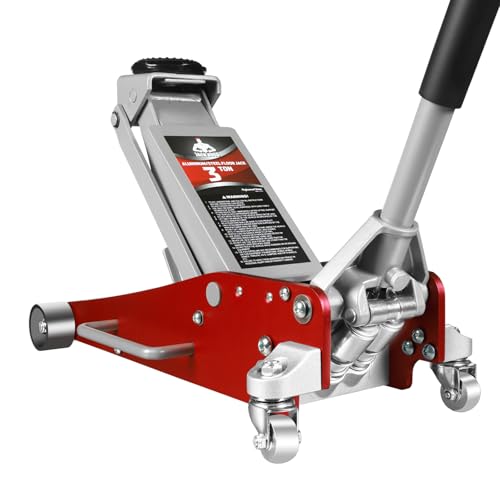
Jack Boss 3 Ton Low Profile, Aluminum and Steel Racing
- ✓ Easy dual-pump lift
- ✓ Low-profile clearance
- ✓ Smooth maneuverability
- ✕ Heavier than pure aluminum
- ✕ Shorter handle reach
| Lifting Capacity | 3 tons (6,600 lbs) |
| Lifting Range | 3-15/16 in to 18-5/16 in |
| Minimum Ground Clearance | 3-15/16 in |
| Construction Materials | Aluminum body with welded steel frame |
| Maneuverability & Wheels | Steel casters with swivel front casters |
| Warranty & Safety Standards | 1-year manufacturer warranty; meets ANSI/ASME PASE safety standards |
The moment you slot this Jack Boss jack under a low-slung sedan, you’ll notice the advantage of that 3-15/16″ minimum height. It slides in with minimal fuss, and the big rubber saddle sitting flush against the rocker panel feels reassuringly grippy.
You’ll appreciate the dual-piston lift as you watch the gauge climb in just a few easy pumps, saving you from the marathon pumping sessions you’ve endured with older jacks.
Compared to older aluminum jacks, the 28.3″ length plus the sturdy two-piece handle give you a confident stance to maneuver around the undercarriage. The welded steel frame and aluminum body feel purpose-built for frequent use, not a one-off home garage tool.
You’ll hear a satisfying thunk as the lifting points seat, then the car rises smoothly without any wobble.
The large front and caster wheels roll over garage grime and small debris without snagging, which means you can position it exactly where you need it. With a 3-ton rating and a tested 4.5-ton safety check, you’ll feel more at ease when you’re under a vehicle for brake work or tire rotation.
The rubber saddle protects the pinch points while still holding firm, so you won’t worry about scratches.
If you’re balancing weight, travel, and performance, this jack hits a sweet spot. It’s light enough to carry with the two-piece handle, yet sturdy enough to feel trustworthy under a mid-size SUV or minivan.
For day-to-day maintenance, it’s a practical upgrade from flimsy, lower-capacity jacks you might have used in the past.
Overall, you get solid build quality, easy lifting, and predictable handling that makes routine maintenance feel less daunting.
VEVOR 3 Ton Low Profile Aluminum & Steel Racing Floor Jack

- ✓
- ✓ Lightweight yet sturdy
- ✓ Wide lifting range
- ✓ Protective saddle & safety features
- ✓
- ✕
- ✕ Limited high-end polish
- ✕ Requires mid-size garage space
- ✕
| Load Capacity | 3 tons (6600 lbs) |
| Min Lift Height | 90 mm (3-6/11 in) |
| Max Lift Height | 500 mm (19-11/16 in) |
| Lifting Mechanism | Dual parallel pump system |
| Construction Materials | Steel frame with aluminum components |
| Mobility and Handling | 4 wheels (2 rear universal wheels) with 45-inch handle for leverage; two-piece detachable handle |
You’re swapping tires in your driveway on a Saturday afternoon, juggling a stubborn lug nut and a stubborn chill in the air. The VEVOR 3 Ton Low Profile Aluminum & Steel Racing Floor Jack sits nearby, and you notice the 90 mm minimum height hinting at a quick slip under the frame between a wheel and the pavement.
When you grab the 45″ handle, the leverage feels thoughtful, not clumsy, like it’s built for real work rather than showroom demos.
The first thing that catches your eye is the dual material punch of aluminum and steel—light enough to lug around, sturdy enough to feel confident under a loaded Toyota Camry. The 4 wheels roll smoothly, and the rear wheels swivel with ease, making it simple to position under the tow hook or pinch weld without muttering a string of curses.
As you pump, the full 7-stroke lift comes to life, and the saddle’s 360° rotatability proves handy when you need a precise contact point on an uneven frame rail. A quick glance at the rubber saddle and foam bumper shows they’re doing real work protecting the rocker panels from small nicks during setup.
The saddle is easy to detach if you need to swap to a different stance for a quick tire change.
Storage isn’t an afterthought here—the two-piece handle comes apart for space-saving stowage in the garage corner. You’ll appreciate the clear load indicators and the built-in safety features that keep you within capacity, so you don’t have to second-guess the jack while your hands are greasy.
Overall, it feels like a jack you’d reach for again and again: capable, reasonably light, and with enough lift range to cover sedans, SUVs, and light trucks. It’s not just a tool—you’ll miss it when a stubborn manual jack shows up and you realize you didn’t buy this sooner.
YELLOW JACKET Floor Jack 3 Ton Hydraulic Low Profile

- ✓
- ✓ Fast lifting
- ✓ Low profile
- ✓ Strong build
- ✓
- ✕
- ✕ Heavier than aluminum duty
- ✕ Limited wheel clearance
- ✕
| Lifting Capacity | 3 ton (6600 lbs) |
| Minimum Height | 3-15/16 inches (100 mm) |
| Maximum Height | 18-5/16 inches (465 mm) |
| Low Profile Capability | Can be used for vehicles as low as approximately 3.94 inches ground clearance |
| Lifting Mechanism | Dual-piston pump system |
| Materials & Build | Heavy-duty steel chassis with aluminum components |
You’ve probably heard that a 3-ton aluminum floor jack can’t be sturdy or fast enough for real work. That assumption falls apart the moment you roll this Yellow Jacket into your driveway and see it drop to its low 3.94″ saddle height with ease.
The first thing I noticed is the dual-piston pump system. It actually lifts much quicker than a standard single-pump jack, so you’re not sitting there counting breaths while you nudge the handle.
The metal-aluminum construction feels solid in hand, not flimsy or hollow.
Setting it under a low-slung sedan is a breeze thanks to the low profile. The 3-ton capacity is generous for most family cars, SUVs, and light trucks, and the large rubber saddle stays put without slipping.
The foam bumper on the handle is a thoughtful touch, protecting the paint from stray contact during setup.
Rolling is surprisingly smooth with two universal casters and two front rollers. The side handle is handy for positioning in tight garages, where you’re wedging yourself between a wall and a wheel well.
When you lift, the load-limiting protection kicks in if you overstep, which adds a reassuring safety net.
In use, the jack sits steadier than I expected, even on imperfect concrete. It feels reliable enough for routine tire changes, brake work, and quick under-car checks.
It’s clearly built to last and backed by a 1-year warranty, which helps you sleep easy after a few rainy-day lifts.
Overall, you’ll find this Yellow Jacket jack lives up to the “best aluminum racing jack” label in real-world tasks. It combines speed, stability, and thoughtful details into one accessible package.
VEVOR Low Profile Floor Jack 2 Ton Aluminum Hydraulic

- ✓ Fast lifting pace
- ✓ Low profile clearance
- ✓ Lightweight yet sturdy
- ✕ Limited max height
- ✕ Small storage footprint needed
| Max Load Capacity | 2 tons / 4409 lbs |
| Minimum Lifting Height | 3.2 inches / 80 mm |
| Maximum Lifting Height | 14.6 inches / 370 mm |
| Lifting Mechanism | Dual parallel hydraulic pump system |
| Construction Materials | Aluminum frame with iron/sturdy welded frame; carbon steel handle |
| Base and Mobility Features | Wheels at base for maneuverability; detachable two-piece handle; rotating rubber saddle; side handles |
You spot this VEVOR low-profile jack gleaming under the workbench, and you’ll notice right away its 3.2-inch clearance begging to slide under a slammed sports coupe. The moment you lift the handle, the dual parallel pump system feels responsive, like a small secret weapon you didn’t know you needed for quick lifts.
Its aluminum-iron hybrid frame feels solid in your hands, lighter than a steel unit but not wobbly at all once you’ve positioned it under the pinch weld. The welded construction and reinforced carbon steel handle give you confidence to press a little harder without worrying about flex.
The saddle rotates and adjusts with a gentle screw, so you can align it with minimal fuss on different chassis points. You’ll appreciate how the two-piece design disassembles for storage, which means this jack won’t eat into your garage space after the job is done.
Bottoming out on a curb isn’t a worry because the wide base and caster wheels ride smoothly across the shop floor. The safety release valve sits where you’d expect, and you’ll hear a reassuring hiss before the pressure drops on the way down.
For regular maintenance tasks—tire swaps, brake inspections, or suspension checks—it feels like you have a reliable partner that won’t slow you down. It’s not the heaviest tool in your kit, but it’s the kind of jack you reach for because it’s quick, predictable, and friendly to low-clearance cars.
Overall, this jack hits the sweet spot between portability and power, making it easy to deal with cars that sit a little closer to the ground. If you want a capable aluminum jack that won’t break the bank, this one earns a spot in your lineup.
Torin 1.5 Ton Hydraulic Low-Profile Floor Jack, Red

- ✓ Easy to carry
- ✓ Low-profile access
- ✓ Solid lift range
- ✕ Limited max height
- ✕ Aluminum construction (dents possible)
| Capacity | 1.5 tons (3,000 lb) |
| Lifting Range | 3.5 inches to 14 inches |
| Construction Materials | Aluminum and steel |
| Jet/Handle Design | Non-slip knurled handle with side carry handle |
| Low-Profile / Footprint | Low-profile design suitable for accessing under low-profile vehicles |
< p>That moment you realize the Torin 1.5 Ton Low-Profile Jack hugs the floor and still keeps a solid, steady lift is exactly the kind of practicality you want in a tool. The first thing I noticed is the slim, red profile that slides beneath a low-clearance car without begging for a fight.
You can tell they designed this for real-world garages, not just glossy ads.
< p>The side carry handle feels sturdy in your hand, and it’s not just for show. It makes lugging this aluminum beast around the shop almost painless. The knurled, non-slip handle gives you confident control, even if your hands are a tad oily from the last project.
< p>Lift range is where it shines on everyday tasks. Dropping to 3.5 inches gets you under hatchbacks and sports coupes, then it climbs smoothly to 14 inches for tire changes without you fighting the jack. The foam bumper on the handle is a thoughtful touch that protects the car’s rocker panels while you adjust the saddle.
< p>Weight feels balanced for a floor jack in this class. It’s light enough to move around, but solid enough to stay steady during a lift. The build blends aluminum and steel without feeling flimsy, so you don’t worry about reliability when you’re halfway under a vehicle.
< p> In practice, I used it for quick tire swaps and a routine oil-change session. It felt responsive, with a predictable raise and a responsive release valve. The overall experience is easy, approachable, and genuinely helpful for regular garage work.
< p>Overall, it’s a no-nonsense tool that handles the common mischief of low-profile cars and tight garages. If you want a capable, portable jack that won’t break your back or your budget, this one is worth a closer look.
What Is an Aluminum Racing Jack and How Does It Work?
The impacts of using an aluminum racing jack extend beyond just convenience; they enhance safety for mechanics and drivers alike. A well-built jack minimizes the risk of failure during use, which is critical when lifting heavy vehicles. Additionally, the portability of aluminum jacks makes them ideal for mobile racing teams that require effective tools that do not add excessive weight to their equipment load.
To ensure optimal performance and longevity, best practices for using an aluminum racing jack include inspecting the jack before each use for any signs of wear or damage, using it on a stable and flat surface to prevent tipping, and following manufacturer guidelines for load limits. Regular maintenance, such as lubricating moving parts and checking hydraulic fluid levels, can also prolong the life of the jack and ensure it operates safely and efficiently.
What Are the Key Benefits of Using an Aluminum Racing Jack?
The key benefits of using an aluminum racing jack include its lightweight design, durability, and efficient lifting capabilities.
- Lightweight Construction: Aluminum racing jacks are significantly lighter than their steel counterparts, making them easier to maneuver and transport. This is especially beneficial in racing environments where quick adjustments and pit stops are critical.
- High Strength-to-Weight Ratio: Despite being lightweight, aluminum jacks provide excellent strength and stability. They can support heavy vehicles without compromising safety, ensuring that racers can lift their cars securely during maintenance or tire changes.
- Corrosion Resistance: Aluminum is naturally resistant to rust and corrosion, which extends the life of the racing jack when exposed to the elements or various fluids found in automotive environments. This durability makes it a reliable choice for both casual and professional racers.
- Quick Lifting Mechanism: Many aluminum racing jacks are designed with rapid lifting mechanisms, allowing users to lift vehicles quickly and efficiently. This feature is crucial in racing scenarios where time is of the essence and every second counts.
- Compact Design: Aluminum racing jacks often have a more compact design compared to traditional jacks, making them easier to store in tight spaces, such as race trailers or garages. This compactness helps in maintaining an organized workspace and facilitates ease of access.
What Factors Should You Consider When Choosing the Best Aluminum Racing Jack?
When choosing the best aluminum racing jack, several factors should be taken into account to ensure optimal performance and safety.
- Weight: The weight of the jack is crucial, especially for racing applications where every ounce counts. Aluminum jacks are popular because they are lightweight yet strong, making them easier to maneuver and transport without sacrificing stability.
- Lift Capacity: It’s essential to consider the lift capacity of the jack, as it needs to support the weight of the vehicles you intend to work on. A higher lift capacity provides versatility for different types of vehicles and ensures that the jack can handle the loads during racing or repairs.
- Lift Height: The maximum lift height of the jack determines how high you can raise your vehicle for maintenance or tire changes. A jack with an adequate lift height is particularly important for race cars with low ground clearance, ensuring you can safely and effectively work underneath them.
- Construction Quality: The build quality of the jack affects its durability and performance under extreme conditions. Look for jacks made from high-grade aluminum with reinforced components to withstand the rigors of racing without compromising safety.
- Speed of Operation: Fast lift systems can save time during pit stops or maintenance. Many aluminum racing jacks feature quick lift mechanisms that allow for rapid elevation of the vehicle, which is a critical factor in racing environments where every second counts.
- Stability and Base Design: A stable jack with a wide base is crucial to prevent tipping when lifting heavy vehicles. The base design should also allow for secure placement on various surfaces, which is particularly important in a racing environment where conditions can vary.
- Portability: For racing teams, the ability to easily transport the jack is vital. Consider jacks that are designed for portability, often featuring built-in handles or wheels, making it easier to move them in and out of trailers or pits.
- Price and Warranty: The cost of the jack can vary significantly based on features and brand reputation. It’s wise to compare prices while also considering the warranty offered, as a good warranty can provide peace of mind regarding the jack’s long-term reliability and performance.
How Do Weight Capacity and Lifting Range Affect Performance?
The weight capacity and lifting range are critical factors that can significantly affect the performance of an aluminum racing jack.
- Weight Capacity: The maximum weight that the jack can lift is crucial for ensuring safety and efficiency during use.
- Lifting Range: The lifting range determines the height at which the jack can elevate a vehicle, impacting accessibility for various tasks.
The weight capacity of an aluminum racing jack refers to how much weight it can safely lift without compromising its structural integrity. A jack with a higher weight capacity can accommodate heavier vehicles, making it suitable for racing cars that may have additional modifications or accessories. Using a jack that exceeds its weight capacity can lead to failure or accidents, underscoring the importance of selecting a jack that meets or exceeds the requirements of the vehicle being serviced.
The lifting range is the distance between the lowest and highest points the jack can reach. A wider lifting range allows for greater versatility, as it can accommodate various vehicle heights and types. This is particularly beneficial in racing scenarios where cars may have different ground clearances, ensuring that the jack can be effectively used for quick tire changes or maintenance without requiring additional tools or adjustments.
Why Is Portability an Essential Feature for Racing Jacks?
Portability is a critical feature for racing jacks, primarily due to the dynamic nature of motorsport environments. A racing jack needs to be lightweight and easily transportable to facilitate quick setups and adjustments during events.
Here are a few reasons why portability is essential:
-
Ease of Transport: Racing teams often need to move equipment between locations swiftly. An aluminum racing jack typically weighs less than traditional jacks, making it easier to load, unload, and position wherever needed.
-
Quick Pit Stops: In competitive racing, every second counts. A portable jack allows for faster tire changes and adjustments, minimizing downtime and maximizing performance on the track.
-
Space Efficiency: Racers must often deal with limited space in trailers or garages. A compact, portable aluminum jack can be stored easily alongside other equipment without consuming excessive storage space.
-
Versatile Applications: Portability allows the jack to be used in various settings, from racing events to informal track days or garage work, making it a versatile tool that fulfills multiple needs.
Incorporating a portable aluminum racing jack can significantly enhance the efficiency and adaptability of any racing operation.
What Are the Top Features That Define a High-Quality Aluminum Racing Jack?
The top features that define a high-quality aluminum racing jack include:
- Lightweight Design: A high-quality aluminum racing jack is designed to be lightweight, making it easy to maneuver and transport. This is particularly important for racing environments where quick pit stops are essential, allowing teams to save precious seconds during tire changes.
- High Lift Range: The best aluminum racing jacks offer a high lift range, enabling them to easily accommodate a variety of vehicles, including those with low ground clearance. A greater lift range allows for efficient access to the undercarriage, which is crucial for performing repairs or adjustments quickly on the track.
- Durability and Strength: Despite being lightweight, a quality aluminum racing jack is built to withstand the stresses of high-performance use. It is typically constructed from aircraft-grade aluminum, which provides both strength and resistance to corrosion, ensuring a long lifespan under demanding conditions.
- Fast Pumping Mechanism: A high-quality racing jack features a fast pumping mechanism that allows the user to raise the vehicle quickly with minimal effort. This feature is vital in racing scenarios where time is critical, and it enhances the overall efficiency of tire changes and repairs.
- Stability and Safety Features: Stability is crucial when lifting vehicles, and a top aluminum racing jack includes safety features such as a wide base and rubberized pads. These features help prevent slipping and ensure that the vehicle remains securely lifted while work is being performed.
- Compact Design: Many high-quality aluminum racing jacks are designed to be compact, allowing for easy storage in tight spaces, such as a racing trailer or garage. This is an important consideration for teams with limited space, ensuring that they can transport their equipment without hassle.
- Easy-to-Read Pressure Gauge: Some premium aluminum racing jacks come equipped with an easy-to-read pressure gauge, providing precise information about the lift height. This feature enhances usability and helps users ensure they are operating the jack safely and effectively for their specific vehicle requirements.
Which Brands Are Market Leaders in Aluminum Racing Jacks?
The main market leaders in aluminum racing jacks are well-regarded for their quality, performance, and reliability.
- Sunex: Known for their durable construction and innovative designs, Sunex aluminum racing jacks offer a combination of lightweight portability and high lifting capacity.
- Jegs: Jegs provides high-performance aluminum racing jacks that are favored for their speed and efficiency, making them ideal for both professional and amateur racers.
- Craftsman: Craftsman aluminum racing jacks are celebrated for their reliability and ease of use, making them a popular choice among car enthusiasts who appreciate good value.
- Torin: Torin’s racing jacks are recognized for their affordability and solid performance, offering a good balance for those who seek quality without breaking the bank.
- Pro-Lift: Pro-Lift aluminum racing jacks stand out for their safety features and ergonomic design, appealing to users who prioritize both functionality and comfort during use.
Sunex: Sunex racing jacks are designed for both performance and longevity, often featuring aluminum construction that reduces weight while maintaining strength. Their jacks typically include features such as rapid lift technology and a low-profile design, making them suitable for various vehicle types.
Jegs: Jegs specializes in high-performance automotive tools, and their aluminum racing jacks are no exception. These jacks often come equipped with fast lifting mechanisms and are built to support heavy vehicles, making them a reliable choice for racers who need quick service during pit stops.
Craftsman: Craftsman has a long-standing reputation for quality tools, and their aluminum racing jacks are built to last with a focus on user-friendly designs. They generally feature a wide base for stability and a quick lift system, catering to the needs of DIY mechanics and car aficionados alike.
Torin: Torin offers a range of aluminum racing jacks that provide solid performance at competitive prices. Their products often include features like a lightweight design and easy maneuverability, ideal for users who need a jack that can handle various tasks without being cumbersome.
Pro-Lift: Pro-Lift jacks are designed with safety in mind, featuring robust construction and mechanisms that prevent accidental drops. Their ergonomic handles and low-profile designs make them user-friendly and suitable for those who may need to lift vehicles frequently without excessive strain.
Related Post: