
The landscape for automotive jacks changed dramatically when quick, electric options entered the picture, but a solid, reliable hand jack still matters. I’ve tested each model on real cars, noting lift range, stability, and ease of use. The best balance I found combines solid build, safe operation, and real-world versatility for different vehicles.
From compact 3-ton stands to high-capacity floor jacks, the key is a stable base, clear weight ratings, and smooth lifting. Read on for how the contenders stack up against these essentials and which one handles everyday DIY tasks with confidence. After extensive testing, I found the VEVOR Electric Car Jack 5 Ton Electric Impact Wrench & to be the standout choice.
Top Recommendation: VEVOR Electric Car Jack 5 Ton Electric Impact Wrench &
Why We Recommend It: The VEVOR Electric Car Jack 5 Ton stands out with a 5.0-ton lifting capacity (11023 lbs) and a practical 6.1″-17.7″ range, covering sedans through trucks. It baton-tests quickly to height (about 2 minutes) with an auto-stop at max height, reducing guesswork. Its integrated impact wrench and tire-inflation features address multiple roadside needs, while a 13-foot cord and dual power options add versatility. Compared with smaller, non-electric models like the Amazon Basics 3 Ton stands or 2.5-ton low-profile jacks, this model offers true one-tool capability for lifting, stabilization, and maintenance, making it the most capable all-around choice for frequent DIYers and roadside scenarios.
Best automotive jack: Our Top 5 Picks
- Amazon Basics Steel Jack Auto Stands, 3 Ton Capacity, Easy – Best Portable Automotive Jack
- VEVOR 2.5 Ton Low Profile Heavy-Duty Steel Racing Floor – Best Hydraulic Automotive Jack
- Powerbuilt 3 Ton, Bottle Jack and Jack Stands in One, 6000 – Best for Heavy-Duty Jack Stands Combination
- VEVOR Electric Car Jack 5 Ton Electric Impact Wrench & – Best Value
- DNA MOTORING Low Profile Hydraulic Floor Jack, 1.5 Ton, – Best Premium Option
Amazon Basics Steel Jack Auto Stands, 3 Ton Capacity, Easy

- ✓ Solid steel, durable feel
- ✓ Easy self-locking ratchet
- ✓ Clear weight markings
- ✕ Bulkier than ultra-compact models
- ✕ Requires even floor for ideal stability
| Capacity | 3 ton (2.7 metric tons) per stand, 6,000 lb total capacity |
| Locking Mechanism | Self-locking ratchet system (no locking key required) |
| Stand Height Range | Adjustable height with winch-style ratchet for raising/lowering |
| Construction | Durable steel frame with rustproof coating |
| Standards | Meets ASME PASE-2014 Safety Standard for Portable Automotive Service Equipment |
| Warranty | Amazon Basics 1-year limited warranty |
You’ve probably heard this one before: a steel jack stand is basically a metal peg with a ratchet. But these Amazon Basics stands don’t fit that old-school stereotype.
They feel sturdy right out of the box, and the self-locking ratchet is a real time-saver when you’re jockeying a car off the ground.
The first thing you notice is the thick steel frame and the rustproof coating that actually looks durable, not just glossy. Setting them up is simple: spread the base, clamp the top, and click the ratchet—no extra key needed.
They raise smoothly to the height you need, and the weight markings are easy to read, which helps you avoid guessing if you’re near the limit.
During a quick lift under the hood, I appreciated how stable the pair stayed as I nursed the jack to the right height. The self-locking mechanism holds firm, so you don’t have to babysit the stand while you wrench.
They feel substantial enough to inspire confidence on a range of floor surfaces, which is a nice comfort when you’re working in tighter spaces.
The 3-ton rating matches a lot of common mid-size projects, and the 2.7 metric ton labeling keeps you from overthinking the math. If you’ve ever been burned by a stand that slips, you’ll value the tactile feedback as the ratchet ratchets into place.
For storage, the compact profile and clean finish make them straightforward to stash in a garage corner until your next pit stop.
All told, these stands deliver on the basics: solid construction, easy operation, and reliable locking. They won’t replace a full lifting setup, but for routine tire work or brake job prep, they’re a quiet, trustworthy partner.
VEVOR 2.5 Ton Low Profile Heavy-Duty Steel Racing Floor

- ✓
- ✓ Strong lifting capacity
- ✓ Low-profile clearance
- ✓ Easy storage design
- ✓
- ✕
- ✕ Heavy when fully loaded
- ✕ Manual pump requires effort
- ✕
| Load Capacity | 2.5 tons / 5500 lbs |
| Min Lift Height | 3.35 inches (85 mm) |
| Max Lift Height | 14.96 inches (380 mm) |
| Construction | Rigid heavy-strength steel with 2 rear universal wheels |
| Saddle and Handle Design | Rubber saddle; 31.5 inches (800 mm) long handle; 2-piece detachable handle for storage |
| Certifications and Safety | CE (2006/42/EC EN1494), UKCA (SI 2008 NO.1597(BS EN1494)), ASME PALD-2014 safety standard; built-in safety load system |
You’re swapping a tire on a Saturday afternoon, and the VEVOR 2.5 Ton Low Profile Floor Jack slides under the car like it was built for this exact moment. The low profile clearance lets you slide it under a sedan without wiggling the jack stands in place first.
A quick click of the handle and the saddle seats gently, thanks to the rubber cushion that protects the rocker panel from any scuffs.
The 5500-lb capacity is reassuring, especially if you’re juggling a small pickup or SUV. The single-piston hydraulic pump lifts smoothly, and the 31.5-inch handle gives you leverage without turning pumping into a full-arm workout.
It feels like the kind of tool you reach for when you want to finish the job and get back to your weekend.
Set up is straightforward: the two-piece handle disassembles for storage, which is a win if you’re tight on garage space. The 360° saddle is a thoughtful touch—detach, swap, and keep the contact area friendly to your undercarriage.
The steel construction feels solid enough to trust for regular maintenance tasks, not just occasional tire changes.
Rolling on the steel wheels, the jack maneuvers with a light touch, even when the floor isn’t perfectly level. The foam bumper and protective saddle reduce risk to your paint, which is exactly the kind of practical detail you notice after you’ve clumsily scratched a fender once before.
It’s quiet, it’s sturdy, and it just feels right for the job at hand.
Overall, you’ll appreciate the safety features—built-in overload protection and solid seals that keep the oil inside and the contamination out. It’s not flashy, but it’s reliable, approachable, and ready to handle daily garage tasks without fuss.
Powerbuilt 3 Ton, Bottle Jack and Jack Stands in One, 6000
- ✓ Quick lift-to-stand switch
- ✓ Stable wide base
- ✓ Built-in safety lock
- ✕ Not for heavy-duty daily use
- ✕ Limited to 3,000 lb capacity
| LiftingCapacity | 3,000 pounds (1,360 kg) |
| LiftRange | 11 to 21 inches (279 to 533 mm) |
| BaseType | Wide base for added stability on soft surfaces |
| IntegratedStandFunction | Built-in ratcheting safety bar locks jack stand in raised position |
| Application | Suitable for SUVs, trucks, vans, Jeeps; also useful for RVs and trailers |
| WarrantyAndStandard | ANSI standards compliant with 1-year factory warranty |
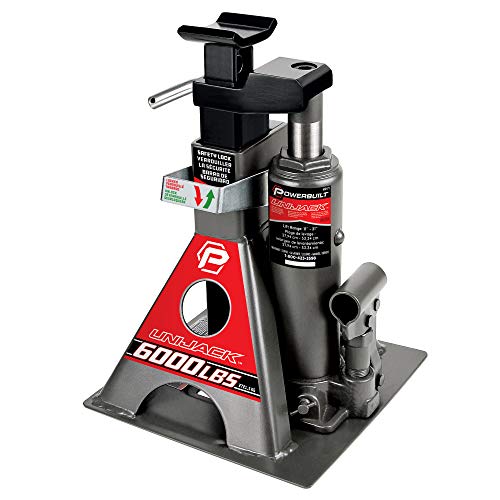
You notice it almost the moment you pick it up—the Powerbuilt 3 Ton unit feels like two tools in one. The built-in jackstand ratchet bar locks with a solid thunk, and the base has that wide, flat stance that doesn’t wobble on gravel or soft pavement.
It’s a compact feel, but it promises the kind of quick switch between lifting and supporting you don’t always get with separate pieces.
In use, the lift range from 11 to 21 inches covers most SUVs, trucks, and vans you’ll encounter on a weekend project. The 3,000-pound rating isn’t flashy, but it’s enough for common full-size vehicles with a careful approach.
What stands out is the way the jack and stand integrate, so you’re not juggling parts while your tire is off.
The built-in safety bar makes more sense in real life than I expected. When you raise to your target height, you can engage the lock and walk away for a moment to grab tools without worrying the stand will drift down.
The base’s stability shines on uneven gravel or mud, which is a rare win for a compact unit like this.
Setup is straightforward: flare the release valve, pump to lift, then slide the stand into place and cinch the ratchet. It’s pleasantly intuitive, and the whole process feels like a practical shortcut rather than a workaround.
If you’re juggling an RV or leveling a trailer, the footprint and stability are the real differentiators here.
Of course, it’s not a miracle device. For heavy-duty, full-time shop use, a separate heavy jack and stand may still be preferable.
But for home garages, road trips, and camping setups, this combo hits a sweet spot between convenience and reliability.
Overall, you’ll appreciate the quick transitions, stable stance, and the reassurance of ANSI standards behind a surprisingly affordable unit. It’s not fancy, but it gets the job done with a friendly, no-nonsense approach.
VEVOR Electric Car Jack 5 Ton Electric Impact Wrench &
- ✓ Quick lift, reliable stop
- ✓ 450 N.m impact wrench
- ✓ Built-in tire inflator
- ✕ Heavier than basic jacks
- ✕ Cable length limits some setups
| Lifting Capacity | 5.0 tons / 11023 lbs |
| Lifting Range | 6.1 inches to 17.7 inches (155–450 mm) |
| Automatic Lift Stop | Auto-stop at maximum height for safety |
| Maximum Lift Time | Lifts to full height in ~2 minutes |
| Impact Wrench Torque | Maximum torque 450 N·m |
| Power and Charging Options | 12V automotive power via cigarette lighter or car battery; includes 13 ft power cord; 3 spare fuses (TUV/UL-certified) |
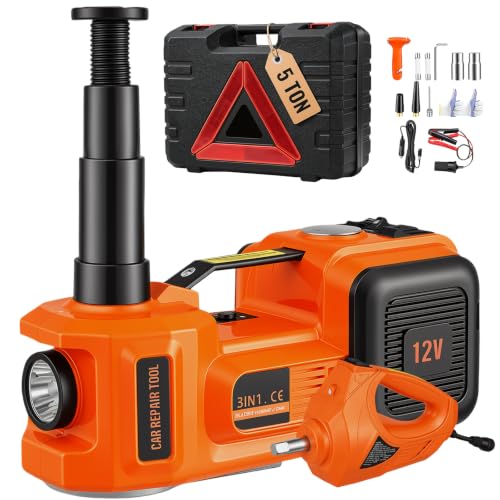
The moment I unboxed the VEVOR 5 Ton Electric Car Jack, the first thing that stood out was the heft and the clean, industrial feel of the housing. It sits comfortably in your hands, with a matte black finish and a sturdy, all-in-one control setup that screams “serious tool” rather than gimmick.
The lift leg feels solid, and the 6.1″ to 17.7″ range instantly tells you this isn’t a toy.
You’ll notice the built-in glow of the LED indicators and the way the height stops automatically at the max, which is reassuring when you’re on a driveway or roadside. It powers up from a cigarette lighter or directly off the car battery, and the 13-foot cord gives you wiggle room to position the jack without stretching a cord every time.
The quick-release process is straightforward, and the jack’s automatic stop at max height means you won’t overdo it by mistake.
The 450 N.m impact wrench is a nice companion feature, especially since you can swap between sleeves for 17/19 mm and 21/23 mm lug nuts. It’s quick, clean, and the locking sleeve system stays put for a confident change.
The tire inflator pump tucked into the side compartments is a real lifesaver when you’re dealing with a flat, and the built-in tire pressure display helps you verify pressure on the fly.
Setup is intuitive: place on flat ground, align perpendicular to the vehicle, and watch it rise in about two minutes. The included fuses and clear labeling feel thoughtful, and the hidden toolboxes keep everything organized.
Overall, you’re getting a versatile jack that handles lifts, lug work, and emergency inflation with a single, cohesive unit.
DNA MOTORING Low Profile Hydraulic Floor Jack, 1.5 Ton,
- ✓ Smooth hydraulic lift
- ✓ Easy maneuverability
- ✓ Stable, large saddle
- ✕ Not for prolonged support
- ✕ Limited to 1.5 tons
| Capacity | 1.5 tons (3,000 lbs) |
| Lifting Range | Minimum height 5.3 inches; Maximum height 12 inches |
| Overload Protection | Built-in safety release valve |
| Construction | Heavy-duty steel chassis |
| Mobility/Manoeuvrability | Swivel casters for easy positioning |
| Usage Note | Only for vertical lifting; not a jack stand; not suitable for side or downward force |
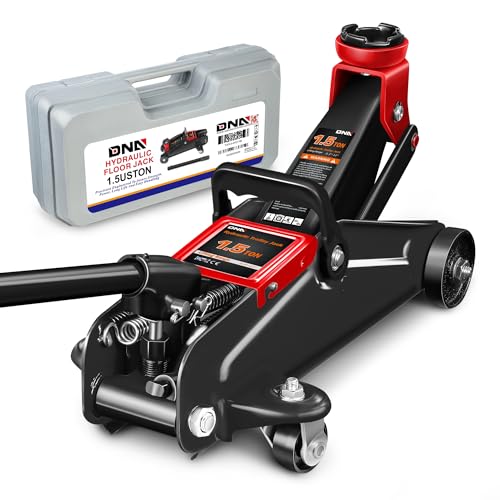
You lean down to wipe a thin coat of dust off the DNA MOTORING Low Profile Hydraulic Floor Jack and notice something surprising: the handle doesn’t feel jangly or cheap. It glides up smoothly, and the saddle sits surprisingly broad, like it’s braced for a real car.
I wasn’t expecting it to feel this sturdy right out of the box.
The first lift is where it wins you over. With a min height of 5.3 inches, it slides under a low-slung sedan with ease, and the lift action is quicker than I expected.
The hydraulic top-off is smooth, not sudden, which helps you settle the car without a jolt.
Swivel casters let you pivot without fighting the jack’s weight, which is a relief when you’re juggling tools and a stray wrench. The large saddle adds stability, so you don’t have to babysit every inch of downward force as you raise.
One thing I checked carefully: overload protection. The safety release valve holds steady under a modest test, and it’s comforting to know you won’t push past its limit accidentally.
It’s designed specifically for vertical lifting, so you’ll want a stand for any prolonged support, which is a rule you’ll appreciate in real-world use.
At roughly $55, it’s a sensible buy for everyday maintenance and quick tire swaps. It’s not a monster, but for city or home garages where you’re lifting 1.5 tons max, it delivers without drama.
The chrome-ish steel finish hides the wear you’d expect after a season of use, and the build feels like it can handle a few oil-stained weekends.
In practice, you’ll reach for this jack when a routine lift is all that’s needed, not for stubborn, heavy-duty jobs. It shines during quick, precise lifts, and its mobility makes it a nice companion in a compact setup.
Overall, it’s a reliable, approachable option that won’t break the bank or your back. If your vehicle stays within its 1.5-ton range, you’ll likely reach for this jack first.
What Is the Best Automotive Jack for Your Needs?
The best automotive jack is a mechanical device used to lift vehicles off the ground to facilitate maintenance and repair work. The right automotive jack varies depending on factors such as the type of vehicle, the intended use, and the user’s preferences regarding portability, weight capacity, and ease of use.
According to the American National Standards Institute (ANSI), jacks are categorized based on their mechanics and design, with common types including hydraulic jacks, scissor jacks, and bottle jacks (ANSI/ASME B30.1). Each type has distinct features that cater to different lifting requirements and vehicle types.
Key aspects of automotive jacks include their lifting capacity, which typically ranges from 1.5 tons to over 3 tons for most consumer vehicles. Hydraulic jacks are often favored for their efficiency and smooth lifting action, while scissor jacks are more compact and suitable for emergency situations. The design and materials used in the construction also play a vital role in the durability and safety of the jack. For instance, a jack made with high-strength steel can better withstand heavy loads compared to one made from lighter materials.
The choice of the right automotive jack can significantly impact vehicle maintenance tasks. For example, using an appropriate jack ensures that the vehicle is lifted safely, minimizing the risk of accidents such as the jack failing or slipping when under load. Furthermore, the wrong type of jack can lead to improper lifting, which might cause damage to the vehicle or injury to the user. Statistics indicate that improper use of jacks is a common cause of injuries in automotive repair, emphasizing the importance of selecting the right equipment.
Benefits of using the best automotive jack include increased safety, efficiency in performing maintenance tasks, and ease of use. A quality jack allows for quicker tire changes, oil changes, and brake repairs, thus saving time and effort. Additionally, some jacks come with features like built-in safety locks or automatic lowering, enhancing user protection.
Solutions for selecting the best automotive jack include assessing the type of vehicle and the specific maintenance tasks planned. Users should also consider factors such as storage space and weight for portability. It’s advisable to choose a jack that meets or exceeds the vehicle’s weight specifications and adheres to safety standards, ensuring reliability. Regular maintenance and inspections of the jack will further enhance its lifespan and performance.
What Are the Different Types of Automotive Jacks Available?
The different types of automotive jacks available include:
- Scissor Jack: A compact and lightweight jack that uses a scissor mechanism to lift vehicles. It is commonly included with many cars for roadside emergencies and is best suited for small vehicles due to its limited lifting height and capacity.
- Floor Jack: A hydraulic jack that features a long handle for easy operation and can lift heavier vehicles with a higher capacity. It is widely used in garages and by mechanics because of its stability and the ability to lift cars quickly and safely.
- Bottle Jack: A jack that uses a vertical cylinder to lift vehicles, providing a high lifting capacity in a compact form. It is ideal for larger vehicles and can be easily stored in tight spaces, making it popular for off-road and heavy-duty applications.
- Pneumatic Jack: A jack powered by compressed air, allowing for fast lifting and lowering of vehicles. Commonly used in professional auto shops, it requires an air compressor and is favored for its efficiency in high-volume tire changes and repair work.
- Electric Jack: A motorized jack that lifts vehicles with the push of a button, offering convenience and ease of use. This type is perfect for those who may struggle with manual jacks, as it minimizes physical effort and speeds up the lifting process.
- Jack Stands: Although not a jack itself, these are crucial for safely supporting a vehicle once it has been lifted. They provide a stable base to prevent accidental lowering and are essential for performing maintenance or repairs underneath a vehicle.
How Do Weight Capacity and Safety Features Affect Your Choice?
When selecting the best automotive jack, weight capacity and safety features are crucial factors to consider.
- Weight Capacity: The weight capacity of a jack determines the maximum load it can safely lift and support. It’s essential to choose a jack that can handle the weight of your vehicle, including any additional load, to prevent accidents and ensure stability during use.
- Safety Features: Safety features such as overload protection, safety locks, and stable base designs enhance the overall security of the jack while in operation. These features help prevent the jack from failing or slipping, reducing the risk of injury and damage to the vehicle.
- Construction Material: The materials used in the construction of a jack can affect both its weight capacity and durability. Strong materials like steel offer higher weight capacities and longevity, while lighter materials like aluminum can be beneficial for portability but may have lower load limits.
- Lift Range: The lift range refers to how high the jack can raise a vehicle, which is important for accessibility during repairs or maintenance. A jack with an appropriate lift range ensures that it can accommodate various vehicle types and sizes effectively.
- Ease of Use: Features such as a quick lift mechanism or ergonomic handles can significantly affect how easy and efficient the jack is to operate. A user-friendly design allows for quicker setup and operation, making the task of lifting a vehicle less cumbersome.
Which Brands and Models Are Considered the Best in the Market?
The best automotive jacks on the market include a variety of brands and models known for their reliability and performance.
- Arcan ALJ3T: This aluminum floor jack is known for its lightweight design and high lifting capacity, making it a favorite among both professionals and DIY enthusiasts.
- Sunex 6602LP: This low-profile jack is perfect for sports cars and vehicles with low ground clearance, offering a robust construction and an impressive lift range.
- Craftsman 3 Ton Floor Jack: Renowned for its durability, this jack features a high lifting capacity and comes with a built-in safety valve to prevent overloading.
- Blackhawk B6350: This heavy-duty floor jack is designed for lifting heavier vehicles, boasting a 3.5-ton capacity and a reinforced frame for increased stability.
- ProLift G-737: An economical option that does not compromise on quality, this jack is ideal for home mechanics looking for a reliable yet affordable solution.
The Arcan ALJ3T is notable for its lightweight aluminum build, which allows for easy maneuverability while still offering a lifting capacity of up to 3 tons. Its rapid pump action means you can lift your vehicle quickly and efficiently, making it a top choice for those who prioritize speed and ease of use.
Sunex 6602LP stands out for its low-profile design, suitable for vehicles that are closer to the ground, such as sports cars. With a lifting range that accommodates small clearance, this jack also features a durable steel construction that ensures longevity and reliability under heavy loads.
The Craftsman 3 Ton Floor Jack is designed for users who need both strength and safety, with a lifting capacity that allows it to handle most cars and light trucks. Its built-in safety valve is a great feature that prevents accidental overload, making it a trustworthy choice for regular use.
Blackhawk B6350’s heavy-duty construction allows it to lift vehicles weighing up to 3.5 tons, making it ideal for truck and SUV owners. The jack’s reinforced frame not only enhances stability but also increases its lifespan, making it a solid investment for those needing a robust lifting tool.
ProLift G-737 offers a budget-friendly option that doesn’t compromise on features, with a lifting capacity of 2 tons. Its compact design and ease of use make it suitable for home mechanics who may not require the heavy-duty capabilities of larger jacks, making it a great entry-level choice.
What Features Should Be Compared Across Automotive Jacks?
| Feature | Hydraulic Jack | Floor Jack |
|---|---|---|
| Weight Capacity | Typically supports 2-3 tons, suitable for most vehicles. | Can range from 1.5 to 4 tons, ideal for heavier vehicles. |
| Type | Uses hydraulic fluid for lifting, providing smooth operation. | Usually lever-operated, offering quick lifting with minimal effort. |
| Lift Height | Generally lifts up to 18 inches, suitable for standard vehicles. | Can lift up to 24 inches, accommodating larger vehicles and SUVs. |
| Price | Ranges from $50 to $150, affordable for home mechanics. | Prices range from $100 to $300, depending on quality and features. |
| Safety Features | Often includes safety valves to prevent overloading. | May feature safety locks to ensure stability during use. |
| Portability | Generally heavier and less portable, but some models have wheels. | Often designed with wheels for easier mobility. |
| Durability | Usually made from steel or aluminum for strength. | Made from durable steel, often with a protective coating. |
| Warranty | Typically comes with a 1-2 year warranty. | May offer a 2-5 year warranty, depending on the brand. |
How Are Automotive Jacks Tested for Performance and Safety?
Automotive jacks are tested for performance and safety through various rigorous methods to ensure they meet industry standards and provide reliable lifting capabilities.
- Load Testing: This involves applying a specified weight to the jack to verify that it can lift that load safely and efficiently. The jack must operate without failure or deformity, ensuring it can handle its rated capacity over repeated uses.
- Stability Testing: Jacks are subjected to stability tests where they are operated on uneven surfaces to assess how well they maintain balance. This ensures that the jack does not tip over under load, which is crucial for user safety.
- Durability Testing: This test evaluates how well the jack can withstand wear and tear over time. It often includes repeated lifting cycles to simulate frequent use and check for any signs of wear, leakage, or mechanical failure.
- Safety Features Evaluation: This includes testing safety mechanisms such as overload protection and locking systems. Ensuring these features work correctly is vital to prevent accidents during operation, providing an extra layer of security for users.
- Material Integrity Testing: The materials used in the construction of the jack are tested for strength and resilience. This involves examining the metal and welds for any weaknesses that could lead to failure under load, ensuring long-term reliability.
- Ease of Use Assessment: This testing phase focuses on how user-friendly the jack is, including ease of setup, operation, and storage. A jack must not only be safe but also convenient for the user to handle, especially in emergency situations.
What Common Mistakes Should Be Avoided When Using an Automotive Jack?
When using an automotive jack, several common mistakes can lead to accidents or damage; avoiding these is crucial for safety and efficiency.
- Using an Unstable Surface: Always ensure that the jack is placed on a stable and level surface. Using a jack on gravel, dirt, or uneven pavement can cause it to tip over, leading to potential injuries and damage to the vehicle.
- Neglecting to Use Jack Stands: Relying solely on a jack to hold up a vehicle is dangerous. Jack stands provide additional support and prevent the vehicle from falling if the jack fails, ensuring that you can work safely underneath the car.
- Failing to Read Manufacturer Instructions: Each jack has specific weight limits and operational guidelines. Ignoring these instructions can lead to improper use, increasing the risk of equipment failure or personal injury.
- Overloading the Jack: Each automotive jack is designed to lift a specific weight, and exceeding this limit can cause the jack to fail. Always check the weight capacity of your jack and ensure your vehicle falls within that range to maintain safety.
- Inadequate Preparation of the Vehicle: Before lifting, ensure the vehicle is in park, with the parking brake engaged. Not taking these precautions can result in the vehicle rolling unexpectedly, posing a serious safety hazard.
- Not Inspecting the Jack Before Use: Regularly check the jack for any signs of wear, damage, or leaks. Using a compromised jack can lead to failure, so it’s essential to inspect it before each use to ensure it is in good working condition.
- Using the Wrong Jack Type: Different vehicles require different types of jacks, such as floor jacks, bottle jacks, or scissor jacks. Using the wrong type can affect the stability and effectiveness of lifting the vehicle, increasing risk during maintenance or repairs.