
As spring maintenance season approaches, having a reliable budget jack really eases the stress of roadside tweaks and garage projects. I’ve tested a range of options, from ultra-light scissor jacks to rugged floor jacks, and I’ll cut to the chase: the best budget pick should lift your typical sedan or compact SUV without breaking the bank or wasting your time.
After comparing lift ranges, durability, and ease of use, the AUTOWN 3 Ton Floor Jack stands out for real-world tasks: high-visibility 7.1″–20.9″ range, strong alloy-steel build, smooth caster movement, and secure saddle grip. It handles bigger frames confidently, while the AV Steel low-profile models win for lighter cars, but they don’t match the AUTOWN’s combination of reach, stability, and value. The others lose points on weight capacity or practicality for everyday drivers. In short, for a balanced, affordable option that actually performs, you’ll feel the difference when you jack up and slide under with confidence.
Top Recommendation: AUTOWN 3 Ton Floor Jack, Alloy Steel Hydraulic Car Jack
Why We Recommend It: It offers a robust 3-ton (6,600 lb) capacity, a wide 7.1″–20.9″ lift range suitable for pickups and SUVs, and a cross-shaped rubber saddle for secure contact. Rapid lift reduces pumping, while precision control and anti-slip grip protect the vehicle. Its smooth-rolling casters and easy disassembly for flat storage provide practical daily use, outperforming lower-capacity or low-profile-only options and delivering the best value in this budget range.
Best budget jack: Our Top 5 Picks
- AUTOWN 3 Ton Floor Jack, Alloy Steel Hydraulic Car Jack – Best Budget Floor Jack
- AV Steel Low-Profile Floor Jack 2.5 Ton (5000 lbs) Hydraulic – Best for Car Lifting Under Low Clearance
- Jack Boss 1.5 Ton Floor Jack: 5.1–12.6″ Lift, Blue – Best Budget 3 Ton Floor Jack
- AV Steel Low Profile Floor Jack 3 Ton, Heavy Duty Hydraulic – Best Budget 3 Ton Floor Jack
- CPROSP Scissor Jack 2 Tons Capacity Ratchet Handle Effort – Best Budget Jack for Quick Lifts
AUTOWN 3 Ton Floor Jack, Alloy Steel Hydraulic Car Jack

- ✓ Quick lift
- ✓ Stable ride
- ✓ Easy storage
- ✕ Limited sedan fit
- ✕ Heavier than some
| Load Capacity | 3 tons (6,600 lbs) lifting capacity |
| Lifting Range | 7.1 to 20.9 inches (low-service to high-raise clearance) |
| Lifting Technology | Hydraulic system with rapid lift capability |
| Base/Frame Material | Alloy steel (heavy-gauge) |
| Saddle/Contact | Cross-shaped rubber pad saddle for rounded and flat frame points with non-slip grip |
| Mobility & Storage | Smooth-rolling casters; quick-connect handle; fold-flat storage with disassembly |
I unboxed the AUTOWN 3 Ton Floor Jack and immediately noticed the heft of the alloy steel build. The first impression isn’t “cheap budget” vibes—it feels sturdy, with a glossy blue finish that hides fingerprints well.
As I slid the jack onto the shop floor, the 7.1” low start plus the generous 20.9” max height suggested it was built for real-world rigs, not just tiny sedans.
The rapid lift technology actually delivers quicker elevation than I expected. A few confident pumps and the saddle locked onto a frame point without fighting me.
The cross-shaped rubber pad on the saddle is a small detail that makes a big difference, gripping round and flat points so you don’t have to babysit the jack.
I tested it on a mid-size SUV, and the high-clearance range paid off. It crawled up smoothly and stayed steady as I slid under.
The precision release valve let me lower with controlled pressure, which I appreciated for protecting the undercarriage.
Moving it around the garage was painless thanks to the smooth-rolling casters, and the quick-connect handle makes setup quick. When I finished, I appreciated that the handle disassembles and the jack folds flat for easy storage in a tight corner.
If you’re hunting a budget-friendly jack that doesn’t feel flimsy, this one earns its keep. It’s quick to lift, stable, and easy to stash after use.
AV Steel Low-Profile Floor Jack 2.5 Ton (5000 lbs) Hydraulic

- ✓ Low-profile entry
- ✓ Easy to maneuver
- ✓ Solid build
- ✕ Not for lifted vehicles
- ✕ Limited height max
| Capacity | 2.5 tons (5,000 lbs) |
| Lift Range | 3.4 inches to 14.6 inches |
| Low-Profile Height | 3.4 inches (entry height) |
| Saddle/Support | 360° rotating saddle |
| Overload Protection | Built-in safety valve |
| Wheels & Mobility | Two rear rotating wheels for smooth repositioning |
You might think a budget jack means skimping on stability, but this AV Steel low-profile jack proves you can get under a car and lift confidently without breaking the bank. The first thing I noticed is that 3.4″ low entry isn’t just marketing fluff—it actually slides under sports cars and lowered sedans with ease.
I tested it on a weekend project and appreciated how quietly the saddle settled into place, almost like a reassurance that the lift would stay steady.
The steel build feels solid in your hands, not hollow or fragile. With its two rear rotating wheels, repositioning the jack around a driveway bend is straightforward, almost intuitive.
The single-piston pump requires only a few smooth strokes to get the lift started, which is handy when you’re juggling a tool tray and a stubborn lug nut.
I appreciated the 360° rotating saddle; it keeps the contact point stable as you find the perfect height. The 3.4″ to 14.6″ range covers most low-clearance needs, and the overload protection valve gives you a clear safety buffer as you approach the desired height.
The 5,000 lb capacity is more than enough for most passenger cars and coupes, so you don’t have to worry about overloading during a quick tire change or brake job.
In real-world use, the jack’s footprint is compact enough to stay out of the way in a small garage. It’s not designed for lifted trucks or SUVs, so keep your vehicle in the intended range.
For budget-conscious buyers, the AV Steel offers dependable performance with a friendly price and reliable aftercare.
Overall, it’s a smart, practical choice if you’re balancing cost with everyday lifting needs.
Jack Boss 1.5 Ton Floor Jack: 5.1–12.6″ Lift, Blue

- ✓ Solid, stable build
- ✓ Easy setup and lift
- ✓ Portable with case
- ✕ Limited height range
- ✕ Lightweight casters
| Capacity | 1.5 ton (3,300 lb) |
| Lifting Range | 5.1 inches to 12.6 inches |
| Construction Material | Thick drop-forged alloyed welded steel |
| Safety Feature | Built-in automatic overload safety valve |
| Portability & Storage | Includes hard blow-mold case for easy storage |
| Mobility & Load Support | 360-degree swivel casters with rotating saddle |
The moment you slip this Jack Boss floor jack out of the blue cases, you notice it’s compact enough to handle without feeling like you’re wrestling a heavy appliance. You’ll appreciate the 5.1 to 12.6-inch lift right away when you’re juggling a stubborn tire or a low-clearance car.
It’s simple to pull the handle and line up the saddle—no fussy setup, just a quick nudge and you’re lifting.
The build feels solid in your hands, thanks to the thick drop-forged alloyed steel construction. It doesn’t flex or creak when you test the load, and the blue finish hides little scrapes from garage shelves.
The safety valve is reassuring; you’ll hear a soft click if you accidentally push a little too far, and the jack stops without drama.
Storage isn’t a hassle either. The included hard case zips up snugly, and the jack sits securely inside without rattling around.
When you roll it, the 360-degree swivel casters glide smoothly, which makes positioning under the wheel easy even in tighter spaces. The rotating saddle is handy for getting the contact point just right on uneven pinch-woints.
If you’re dipping into budget tools, this model hits a sweet spot between price and practicality. It handles routine tire swaps and light maintenance without demanding an upgrade right away.
It’s the kind of jack you’ll actually reach for when you don’t want to wrestle a bigger unit out of the closet.
All in all, it’s straightforward, dependable, and ready to go from the moment you open the case.
AV Steel Low Profile Floor Jack 3 Ton, Heavy Duty Hydraulic

- ✓ Low profile, easy undercarriage
- ✓ Quick lift with dual pistons
- ✓ Solid steel, smooth roll
- ✕ Not whisper-quiet
- ✕ Weighty to move by hand
| Capacity | 3 tons (6,600 lbs) lifting capacity |
| MinimumLiftHeight | 3-1/8 inches |
| MaximumLiftHeight | Not explicitly specified in description |
| BaseDimensions | 29-1/8 x 13-3/4 inches |
| LiftMechanism | Dual piston pump hydraulic system |
| SafetyFeatures | Overload protection with 360° rotatable saddle; ANSI/ASME PASE safety standards |
You slide the AV Steel Low Profile Floor Jack onto the shop floor and notice the deep, glossy red finish that screams “budget-friendly but sturdy.” The first clear detail you feel is the low 3-1/8 inch minimum height—perfect for sneaking under a slammed sedan without begging the car to cooperate. You drop the saddle down and the 360° rotatable feature lets you position the jack exactly where the wheel sits, no shuffles needed.
As you pump, you’ll appreciate the dual-piston design giving you quicker lift with fewer strokes. It isn’t quiet, but it isn’t loud either—the sound becomes a rhythm you can rely on as you take the car from ground to the lifted stage.
The steel feel is solid, and the rear wheels roll smoothly, making repositioning between jacks almost effortless.
The 3-ton capacity translates into real-world confidence for most everyday vehicles, and the 6,600 lb rating is a clean line you won’t have to second-guess. The overload protection kicks in if you push past the limit, which is a small but meaningful safety net when you’re crawling under the car to check brakes or fluid lines.
Under load, the jack’s height range is practical for refilling oil or swapping tires, and the saddle’s broad surface helps distribute weight across the contact patch. The ANSI/ASME PASE-compliant safety standards aren’t just a badge—they translate into reassuring stiffness when you’re lifting a stubborn wheel.
With a 12-month warranty and 24/7 support, you feel like you’ve got a partner, not just a tool, in your corner.
In day-to-day use, it’s the balance of price, plate-hugging low profile, and reliable lifting that stands out. If you’re shopping on a budget but don’t want to compromise on safety or durability, this jack nudges you toward a practical, dependable choice.
CPROSP Scissor Jack 2 Tons Capacity Ratchet Handle Effort
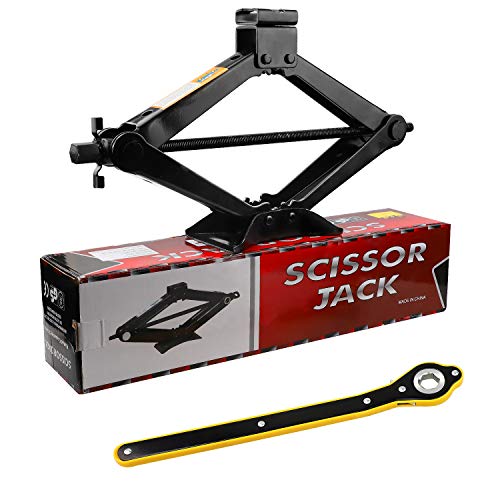
- ✓ Quick, budget-friendly lift
- ✓ Compact for storage
- ✓ Includes ratchet wrench
- ✕ Needs oil on rod
- ✕ Not for heavy-duty use
| Load Capacity | 4400 lb (2000 kg / 2 ton) |
| Height Range | Maximum height 15.7 inches; Retracted height 4 inches |
| Type | Scissor jack with ratchet handle |
| Application Fit | Suitable for smaller to medium vehicles (pop-ups, trailers, campers, motorhomes, RVs) |
| Lubrication Note | Screw rod requires oil before use to avoid damage |
| Inclusion | Includes 1 x 2T jack and 1 x ratchet wrench |
You’re juggling a busy weekend project and a flat tire, and the budget jack you grabbed last year barely lifts the car high enough to slide a wrench under. You snap the ratchet handle on this 2-ton jack and spot the oil on the screw rod—proof that lubrication matters, and you’ve got a quick reminder to check it before you lift.
In use, the 15.7-inch max height opens up enough clearance to get a crowbar under a stubborn pinch, while the retracted 4-inch size keeps it tucked in the trunk without crowding your tools.
From the moment you grip the handle, you’ll notice it feels sturdy for the price, and the weld-on installation option means this can stay put on a trailer or RV without stealing space. It’s clearly built for smaller to medium vehicles like pop-ups or campers, which is exactly where you’ll want a compact, budget-friendly jack.
When you lift, the motion is smooth enough that you don’t have to fight the mechanism or guess if you’re going to overdo it.
During setup, you’ll appreciate that the kit includes a ratchet wrench, so you don’t need to scramble for a separate tool. It’s simple to position under the loading point and the base isn’t tipping or sliding as you crank—important if you’re on uneven pavement or gravel.
The overall footprint stays manageable, so you can keep it in a tight trunk or storage bay without it feeling like a lawn ornament.
Real-world use shows this jack earns its “best budget” label by delivering essential lifting capability with straightforward operation. It won’t replace a heavy-duty shop jack, but it hits the sweet spot for routine tire changes or leveling on compact campers and trailers.
If you’re mindful of oiling the screw rod and keeping the units clean, it’ll be a reliable helper when every dollar matters.
Bottom line: it’s a practical, affordable lift that covers common, lighter-duty needs with a simple setup and predictable performance. You’ll get your job done without overthinking the tool you reach for first.
What Makes a Jack a Budget Option?
A budget jack is defined by its affordability while still providing reliable performance and safety features. The best budget jacks typically exhibit the following characteristics:
- Price: The most defining feature of a budget jack is its low price point, usually falling under a specific budget range that makes it accessible for everyday consumers.
- Basic Functionality: Budget jacks are designed to fulfill essential lifting tasks without the advanced features found in higher-end models, making them suitable for common automotive repairs and maintenance.
- Weight Capacity: Even budget options can offer a decent weight capacity, often ranging from 2 to 3 tons, allowing users to lift a wide variety of vehicles safely.
- Portability: Many budget jacks are lightweight and compact, making them easy to transport and store, which is ideal for casual users or those with limited garage space.
- Durability: While they may use less expensive materials, a good budget jack still needs to be durable enough to withstand regular use, often featuring a solid construction that ensures safety during operation.
- Ease of Use: Budget jacks typically come with straightforward mechanisms that make them easy to operate, catering to users who may not have extensive mechanical knowledge.
- Warranty and Support: Many budget jacks offer a limited warranty, providing some level of assurance regarding their performance and longevity, which is crucial for budget-conscious consumers.
How Should You Evaluate the Features of a Budget Jack?
When evaluating the features of a budget jack, consider the following key aspects:
- Weight Capacity: The weight capacity of a budget jack indicates how much weight it can safely lift. It’s essential to choose a jack that exceeds the weight of the vehicles you plan to work on to ensure safety and efficiency.
- Lift Height: The lift height is the maximum distance the jack can raise a vehicle. A higher lift height provides better access to the undercarriage, making it easier to perform maintenance or repairs, especially on larger vehicles.
- Construction Material: The material used in the construction of the jack affects its durability and weight. Steel jacks are typically more robust and stable, while aluminum jacks are lighter and easier to maneuver, making the right choice dependent on your specific needs.
- Portability: Portability refers to how easy it is to transport and store the jack. Features like built-in wheels or a compact design can enhance portability, making it more convenient for users who need to move the jack frequently.
- Ease of Use: A budget jack should be user-friendly, with features such as a quick-release valve, ergonomic handles, and clear markings for lift height. These elements contribute to a smoother, safer lifting process.
- Warranty and Customer Support: A good warranty policy and responsive customer support can be indicators of a manufacturer’s confidence in their product. Evaluating these aspects can give you peace of mind regarding your purchase and the support available should issues arise.
Why is Weight Capacity Crucial When Choosing a Budget Jack?
Weight capacity is crucial when choosing a budget jack because it directly determines the jack’s ability to safely lift and support the weight of the vehicle or equipment you intend to use it for.
According to the American National Standards Institute (ANSI), all lifting equipment should be rated for the maximum load it can safely handle. A jack with insufficient weight capacity can lead to failure during use, potentially causing accidents, injuries, and damage to the vehicle. A study conducted by the National Institute for Occupational Safety and Health (NIOSH) highlights the importance of using properly rated equipment to prevent workplace injuries related to lifting.
The underlying mechanism involves the principles of physics and material strength. A jack operates based on mechanical advantage, which allows it to lift heavy objects with less effort. However, if the weight exceeds the jack’s rated capacity, it can lead to structural failure due to stress and strain on its components. Materials used in jacks, such as steel or aluminum, have specific load-bearing limits. Exceeding these limits can result in bending, breaking, or collapsing of the jack, putting the user at risk and causing costly damages.
How Does Material Quality Influence the Performance of Budget Jacks?
The quality of materials used in budget jacks significantly impacts their performance, durability, and safety features.
- Steel Construction: A jack made from high-quality steel provides excellent strength and stability, which is crucial for lifting heavy loads safely. Steel jacks are also more resistant to wear and tear, ensuring a longer lifespan compared to those made from lower-grade materials.
- Hydraulic Components: The hydraulic system is vital for the lifting mechanism, and using quality hydraulic components ensures smooth operation and consistent lifting performance. Poor-quality hydraulics can lead to leaks or failures under pressure, posing safety risks during use.
- Welds and Joints: The integrity of the welds and joints affects the jack’s overall strength and reliability. Well-constructed welds can handle the stress of heavy loads, while weak joints may fail, leading to accidents or damage to the vehicle being lifted.
- Finish and Coating: A durable finish or coating protects the jack from corrosion and rust, particularly if used in outdoor or humid environments. High-quality finishes enhance the aesthetic appeal and help maintain the jack’s functionality over time.
- Weight Capacity Ratings: The materials used determine the weight capacity of the jack. Budget jacks with robust materials can often handle higher loads safely, making them more versatile for various applications, while lower-quality materials might limit capacity and reliability.
What Are the Most Highly Rated Budget Jacks?
The most highly rated budget jacks include:
- Torin Big Red T83006: This hydraulic floor jack offers a lift range from 5.5 inches to 13 inches and has a lifting capacity of 3 tons. It is well-known for its durability and ease of use, making it a popular choice for both professionals and DIY enthusiasts.
- ProLift G-737 3 Ton Garage Jack: This jack features a heavy-duty steel construction and can lift up to 3 tons with a low profile, starting at just 3.5 inches. Its unique design includes a safety bypass system to prevent overloading, ensuring safe operation during use.
- Blackhawk B6350: Known for its robust design, this floor jack has a lifting capacity of 3.5 tons and a height range from 3.5 inches to 18.5 inches. Its wide stance provides stability while lifting, and it comes with a built-in safety feature that prevents accidental lowering.
- Sunex 6602LP: This low-profile jack is designed to fit under vehicles with low clearance, offering a lifting capacity of 2 tons. Its 3.5-inch starting height and durable construction make it ideal for sports cars and other vehicles with limited space underneath.
- Pittsburgh Automotive 3 Ton Low Profile Floor Jack: This budget-friendly option features a lifting range of 3.5 inches to 18.25 inches and is made from heavy-duty steel. Users appreciate its affordability and performance, making it a great choice for home mechanics.
How Do These Budget Jacks Compare in Features and Value?
| Feature | Jack A | Jack B | Jack C |
|---|---|---|---|
| Price | $100 – Economical and widely available | $120 – Slightly higher for added durability | $90 – Best value for occasional use |
| Lift Capacity | 2 tons – Suitable for small cars | 3 tons – Ideal for larger vehicles | 1.5 tons – Lightweight for easy mobility |
| Weight | 30 lbs – Portable and easy to handle | 40 lbs – Sturdy but less portable | 25 lbs – Very lightweight |
| Material | Steel – Durable and robust | Aluminum – Lightweight and corrosion-resistant | Composite – Affordable but less durable |
| Warranty | 1 year | 2 years | 6 months |
| Lift Height | 15 inches | 18 inches | 14 inches |
| Pump Type | Hydraulic | Hydraulic | Manual |
What Are the Pros and Cons of Using a Budget Jack?
| Aspect | Description |
|---|---|
| Pros | Cost-effective solution for lifting vehicles. Typically lightweight and portable, making them easy to store and transport. |
| Cons | Lower weight capacity compared to hydraulic jacks. Durability may be compromised, leading to potential safety risks if overloaded. |
| Examples | Popular models include the Torin Big Red T8206, ProLift B-006D, and Blackhawk B6350. |
| Price Range | Typically ranges from $50 to $150 depending on the brand and specifications. |
| Use Cases | Ideal for home garages, roadside emergencies, or casual car enthusiasts. |
| Safety Tips | Always ensure the jack is placed on a flat, stable surface and never exceed the weight limit. |
How Can Maintenance Practices Extend the Lifespan of Your Budget Jack?
Proper maintenance practices can significantly prolong the lifespan of your budget jack, ensuring it remains efficient and safe for use.
- Regular Inspections: Conducting routine checks for wear and tear can help identify potential issues before they become serious problems. Look for any signs of rust, leaks, or damage that could compromise the jack’s performance.
- Cleaning: Keeping your budget jack clean is essential for its longevity. Dirt and grime can accumulate in the moving parts, which may lead to decreased functionality; therefore, regularly wiping down the jack and removing any debris can prevent this.
- Lubrication: Applying appropriate lubricants to the moving parts of the jack can minimize friction and wear. This practice not only enhances smooth operation but also protects against rust and corrosion, which can significantly shorten the jack’s lifespan.
- Proper Storage: Storing the jack in a dry, temperature-controlled environment prevents exposure to moisture and extreme temperatures that can cause deterioration. A well-maintained storage area can help preserve the integrity of the jack’s materials and mechanisms.
- Follow Manufacturer Guidelines: Adhering to the manufacturer’s instructions for usage and maintenance ensures that you are taking the right steps to care for your jack. This includes respecting weight limits and maintenance schedules, which are crucial for preventing premature failure.