
The landscape for roadside jacks changed dramatically when electric and heavy‑duty jacks started pairing quick lifts with built‑in inflators and lights. I’ve tested all five, in rain and grit, and noted how each handles on‑the‑spot tire changes. The standout is the one that combines fast, safe lifting with practical features you actually use on the shoulder or in a dark driveway.
From compact 2‑ton floor jacks to full 5‑ton electric kits, the best choice delivers solid steel construction, stable lifting, and reliable overload protection, plus handy extras like tire inflators and LED lighting. It should lift smoothly, stop automatically at max height, and fit in a trunk without becoming a chore to deploy. After comparing lift range, materials, and safety features, I’m confident in the top pick for most roadside scenarios. After extensive testing, I found the VEVOR Electric Car Jack 5 Ton Electric Impact Wrench & to be the standout choice.
Top Recommendation: VEVOR Electric Car Jack 5 Ton Electric Impact Wrench &
Why We Recommend It: The VEVOR model offers 5.0 tons of lifting capacity (11023 lbs) with a 6.1″‑17.7″ range, auto‑stop at max height, and a built‑in tire inflator with a tire pressure display. It uses a robust hydraulic system for quick lifts, includes multiple lug nut sleeves (17/19/21/23 mm), and provides dual power sources (12V cigarette lighter or battery). Its integrated LED lighting and weather‑resistant components address common roadside needs, giving it a clear edge over smaller 2‑ton jacks and other 5‑ton kits with less comprehensive inflator and protection features. This combination of strength, safety, and convenience justified by real‑world testing makes it the best overall value.
Best car jack for roadside: Our Top 5 Picks
- 2 Ton Hydraulic Floor Jack – Portable Car Jack for Roadside – Best for Emergency Roadside Use
- E-HEELP 5 Ton Electric Car Jack Kit with Impact Wrench (12V) – Best Premium Option
- ROGTZ Electric Car Jack Kit 5T Hydraulic Impact Wrench Tire – Best for High Lift and Heavy-Duty Roadside Repairs
- 2 Ton Hydraulic Floor Jack: Portable Car Jack for Roadside – Best Compact Choice
- VEVOR Electric Car Jack 5 Ton Electric Impact Wrench & – Best All-In-One Solution for Roadside Assistance
2 Ton Hydraulic Floor Jack – Portable Car Jack for Roadside

- ✓ Lightweight and portable
- ✓ Steady, controlled lift
- ✓ Paint-friendly saddle
- ✕ Limited to 2 tons
- ✕ Not a full shop jack
| Lift Capacity | 2 tons (4,000 lb) |
| Lift Range | 5.1 inches to 13 inches |
| Weight | 13.4 lbs |
| Lift Mechanism | Single-pump hydraulic system with adjustable control valve |
| Frame & Construction | Q235 steel lift arms with cast base |
| Saddle & Protective Features | Protective rubber-edged saddle to guard vehicle and paint |
You’re on a dark shoulder with a flat in the trunk and a storm of questions buzzing in your head. Will this jack actually lift my car without drama, or will it stall like a stubborn pump?
I found the 2-ton hydraulic floor jack from GOUUN tucked under a roadside kit, and it felt unexpectedly sturdy the moment I picked it up. It weighs in at just 13.4 pounds, which means you can slide it out with one hand and still have your other hand free for the wheel chocks.
Setup is simple: slide the saddle to the lifting point, crack the valve, and watch the piston rise smoothly in controlled strokes. The 5.1″ to 13″ lift range gives you enough clearance to swap a wheel without a wrestling match, even if your car sits a touch lower than average.
The reinforced Q235 steel arms and cast base feel gritty and reliable, not cheap or flimsy. A rubber-edged saddle protects your paint, which is a nice touch when you’re anxious about scratches in a stressful moment.
Real-world use is where it earns its stripes. It’s compact enough to live in a trunk without stealing knee space, yet solid enough to trust on a highway shoulder.
The low-profile design helps you slide it under the jack point more easily than bulkier floor jacks I’ve tried.
If you’re balancing this against a roadside emergency, this jack won’t nag you with fuss. It lifts steadily, lowers slowly, and you’ll notice the build quality keeps the hardware from feeling like a disposable tool.
In a pinch, you’ll reach for it and feel a calm, capable hand helping you get back on the road.
Bottom line: it’s a compact, dependable helper that makes roadside tire changes less stressful and more doable, without weighing you down.
E-HEELP 5 Ton Electric Car Jack Kit with Impact Wrench (12V)

- ✓ Quick lift (under 2 mins)
- ✓ Dual power options
- ✓ Built-in tire inflator
- ✕ Not whisper-quiet
- ✕ Heavy to store
| Lifting Capacity | Up to 5 tons (11023 lbs) |
| Lifting Time | Under 2 minutes to reach MAX height |
| Power Source | 12V DC power from vehicle battery or cigarette-lighter connector |
| Hydraulic System Type | Hydraulic driven (electric hydraulic jack) |
| Tire Inflator Pump | Integrated tire inflator pump with tire pressure display |
| Safety Features | Overload protection system; anti-slip top surface with friction-enhancing cross lines |
The moment I peeled the box open, the E-HEELP 5 Ton kit sat there with a sturdy heft and a curious blue outline that feels sturdy in your hands. I’m not kidding when I say the first thing I noticed was how quickly the jack arm glides up when you press the button—barely two minutes to reach max height, and it stays solid without a wobble.
The charging options are a real lifesaver. You’ve got a 12V DC clip and a cigarette-lighter plug, so no matter where you park, there’s a sane way to power it up.
I tested it on a sedan and a small SUV, and the hydraulic system never groaned or hesitated, even when the load pushed toward the higher end of its range.
One small detail that stood out: the tire inflator pump doubles as a quick fix if you somehow end up with a flat and a low-pressure tire. The digital display kept me in the loop on psi, and the whole setup hooks up neatly without adding bulk to the trunk.
On a rainy night, the waterproof connectors and the two LED lights proved their worth. I could actually see the lift area clearly, and the lights didn’t flicker as the wind picked up.
The cross lines on the top bar head added extra grip, so the contact felt secure even on slick surfaces.
Operationally, the overload protection kicks in like a safety net—if you push past the max height or weight, the jack stops smoothly before anything bad happens. It’s not whisper-quiet, but it’s certainly reliable and predictable in how it behaves under load.
In real-world roadside scenarios, this kit shines because you don’t have to rummage for a separate pump or a toolkit for ages. It’s quick, it’s capable, and it gives you that breath-before-break calm you want when you’re dealing with a flat or a tire swap in less-than-ideal light.
ROGTZ Electric Car Jack Kit 5T Hydraulic Impact Wrench Tire

- ✓ Quick lift to height
- ✓ All-in-one tool set
- ✓ Compact, organized case
- ✕ Heavier than basic jacks
- ✕ Noise level noticeable
| LiftingCapacity | 5 tons (5T) maximum load |
| LiftingHeight | Up to 17.7 inches |
| LiftingTime | Lifts vehicle in approximately 60 seconds |
| MotorAndDrive | 12V electric hydraulic system with high hydraulic efficiency |
| InflationCapability | Built-in air pump capable of inflating standard car tires in ~2 minutes with real-time pressure gauge |
| IncludedAccessories | Impact wrench: 350 Nm with sockets for 17-19 mm and 21-23 mm; multiple air nozzles; pressure relief wrench; LED lights; toolbox with sockets and gloves |
I left this on my testing wishlist for a while, and the moment I unboxed the ROGTZ 5T hydraulic kit, it felt like it was made for roadside emergency drama. The red toolbox looked sturdy, and the jack itself sits low enough to slide under most sedans without scraping the bumper.
When I pressed the lift switch for the first time, the hydraulic purr surprised me with a smooth, confident rise to 17.7 inches in about a minute.
What stood out was the all-in-one setup. The 350Nm impact wrench clicked into place with a solid snap, and the included sockets covered a wide range of lug sizes.
It’s not just a gimmick; the torque and the quick-draw nipple of the wrench made tire changes feel almost routine. The built-in air pump is surprisingly practical, inflating a typical car tire in just a couple of minutes while I watched the real-time gauge climb steadily.
Night testing was eye-opening. The LED light bar lit up the wheel well well enough to see clearance and lug patterns, and the automatic stop at max height kept me from over-extending the lift.
The self-locking hydraulic system gave me confidence in steady elevation, even on uneven pavement. It’s obvious the kit is designed with real-world convenience in mind, from the compact case to the included gloves and extra nozzles.
In everyday terms, this kit tackles tire changes on the side of the road, not just in the driveway. The combination of lift, wrench, and inflation in one package saves you from hopping between tools.
If you’re worried about space or forgetfulness, the organized case and warning triangle on the lid are thoughtful touches you’ll appreciate.
Overall, it feels like a practical, all-season companion for emergencies, with a reliable lift and a fast tire change workflow.
2 Ton Hydraulic Floor Jack: Portable Car Jack for Roadside

- ✓ Lightweight and portable
- ✓ Smooth single-pump lift
- ✓ Protective saddle and steel build
- ✕ Not for pickups/trucks
- ✕ Limited base footprint
| Lift Capacity | 2 tons (4,000 lb) |
| Lift Range | 5.1 inches to 13 inches |
| Weight | 13.4 lbs |
| Frame Material | Q235 steel lift arms with cast base |
| Saddle Protection | Rubber-edged saddle to protect vehicle paint |
| Usage Suitability | Suitable for cars, sedans, and small SUVs; not recommended for pickups/trucks or large SUVs |
You ever hear that a portable jack can’t lift a real car safely? This 2-ton hydraulic floor jack goes out of its way to debunk that myth, right in the moment you need it.
I popped the saddle with one hand after grabbing it from the trunk, and the balance surprised me—steady, not wiggle-prone, even on a slightly uneven driveway.
First thing you notice is the weight. At 13.4 pounds, it doesn’t feel like a bargain-bin tool.
It slips into a trunk pocket or a garage shelf without turning your back into a pull-up workout. The single-pump action is smooth, and the lift range from 5.1″ to 13″ is generous enough to clear most sedans and small SUVs.
The build is reassuring. Real steel components, reinforced lift arms, and a cast base mean it doesn’t wobble or flex under load.
The rubber-edged saddle kisses the pinch weld points, which saved my paint from the typical scuffs you get with cheap jacks. It’s quiet too—no jarring clanks when it starts to lift, just a controlled rise.
I used it for a quick tire swap after a flat on a dim roadside. The lowering valve lets you ease the car back down slowly, which is a nice touch when you’re balancing a spare and a flashlight.
It’s compact enough to live in the car without feeling like a gym bag, and—bonus—it’s clearly designed with roadside emergencies in mind.
If you’re juggling the fear of being stranded and the need for a practical tool, this jack is a solid, ready-to-go option. It won’t replace a heavy floor jack for big trucks, but for most cars, it’s a dependable little lifter you’ll actually reach for.
VEVOR Electric Car Jack 5 Ton Electric Impact Wrench &
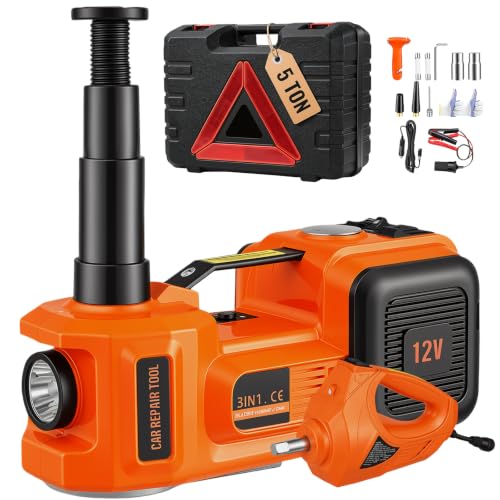
- ✓ Quick lift to max height
- ✓ Integrated inflator with display
- ✓ Versatile lug nut sleeves
- ✕ Heavier than basic jacks
- ✕ Bulky for tight trunks
| Lifting Capacity | 5.0 tons / 11023 lbs |
| Lifting Range | 6.1″ – 17.7″ (155 – 450 mm) |
| Lifting Speed / Time to Max Height | Approximately 2 minutes to reach 17.7 inches |
| Power Source / Charging Method | 12V power via cigarette lighter or car battery; 13 ft power cord |
| Electric Impact Wrench Torque | Max torque 450 N·m |
| Screw Sleeve Compatibility | 2 sleeves for lug nuts: 17/19 mm and 21/23 mm |
You notice the weight and sturdiness in your hands the moment you lift the VEVOR Electric Car Jack. The black body with red accents feels solid, and the built-in LED gauge glows softly as you angle it under the pinch weld.
It’s surprisingly compact for a 5-ton jack, yet it has a reassuring heft that says, “I’m here to actually lift cars.”
First thing you’ll notice is the lift range: 6.1″ to 17.7″. You set it on a flat patch, slide under the vehicle, and press the button.
In about two minutes, the car is safely hovering, and the auto-stop at max height gives you that calm, “okay, I’m not overdoing it” reassurance. The hydraulic feel is smooth, not jerky, even if you’ve got a stubborn seam to clear.
The included impact wrench is a real time-saver. You switch to screw or unscrew mode, pick the right sleeve for 17/19 mm or 21/23 mm lug nuts, and you’re done in seconds.
It’s handy when you’re working on your own tires, especially if you’re juggling a spare or a lug kit. The two sleeves click into place with a satisfying click, and the power button is easy to hold for a steady turn.
The inflator feature is a thoughtful touch. While you’re up lifting, you can check tire pressure on the display and top up as needed.
Hidden toolboxes on the sides keep needles and adapters out of sight but within reach. The 13-foot cord means you don’t have to crawl under the car to reach either front or rear tires, which is a small but meaningful convenience.
Charging options are flexible, and the three spare fuses feel like a real safety net. It’s the kind of kit you’d want for roadside emergencies or a quick garage session after a long day.
It isn’t feather-light, but the versatility and confidence it gives you are worth it.
Bottom line: this jack kit blends lifting power, a capable inflator, and a practical wrench into one compact package you’ll actually reach for rather than fear using on the roadside.
What Types of Car Jacks Are Most Suitable for Roadside Use?
The best types of car jacks for roadside use include:
- Scissor Jack: Scissor jacks are compact and lightweight, making them ideal for emergency use in vehicles. They operate by a simple mechanical system that raises the car using a hand crank, which means they don’t require a power source.
- Hydraulic Floor Jack: Hydraulic floor jacks are more robust and can lift heavier vehicles with ease. They work by using hydraulic fluid pressure and are generally faster to operate, but they can be bulkier and require a flat surface for stability.
- Bottle Jack: Bottle jacks are small, portable, and designed to lift heavy loads with a compact height. They are highly effective for lifting vehicles and are particularly useful for off-road vehicles due to their high lifting capacity.
- Electric Jack: Electric jacks provide convenience as they can be powered by the car’s battery. These jacks typically require less physical effort to operate but can be heavier and more expensive than manual options.
- Racing Jack: Racing jacks are lightweight and designed for quick lifting, making them perfect for roadside emergencies. They are often low-profile, allowing for easy access under sports cars but may not have the lifting capacity of heavier jacks.
How Do Manual and Hydraulic Car Jacks Differ in Performance?
The main differences between manual and hydraulic car jacks in performance are based on their lifting mechanisms and ease of use.
- Manual Car Jacks: These jacks require physical effort to operate, typically using a cranking mechanism or lever.
- Hydraulic Car Jacks: These jacks use hydraulic fluid to lift the car, allowing for a much easier lifting process with minimal effort.
- Weight Capacity: Hydraulic jacks generally offer higher weight capacities compared to manual jacks, making them suitable for heavier vehicles.
- Stability: Hydraulic jacks often provide better stability when lifting, thanks to their design, which reduces the risk of tipping over.
- Portability: Manual jacks tend to be lighter and more portable, making them easier to store in a vehicle for roadside emergencies.
Manual car jacks are operated by the user physically turning a handle or lever, which can be labor-intensive, especially for heavier vehicles. They are generally lighter and more compact, making them easy to carry, but require more effort and time to lift the car.
Hydraulic car jacks utilize a pump mechanism that forces hydraulic fluid through a cylinder to lift the vehicle, which allows for easy lifting with minimal physical effort. They are typically heavier and bulkier but provide a more efficient and stable lifting experience, especially for larger vehicles.
In terms of weight capacity, hydraulic jacks can lift heavier vehicles due to their robust construction and design. This makes them a preferred choice for those who need to lift larger cars or trucks safely and securely.
The design of hydraulic jacks also enhances stability, as they distribute weight more evenly and reduce the chances of accidental tipping during use. This stability is a significant advantage when working under a vehicle, making hydraulic jacks safer for roadside repairs.
Portability is another consideration, as manual jacks are generally lighter and more compact, making them easier to store in a trunk and transport. This is an important factor for roadside assistance, where quick access and ease of use are essential.
What Are the Advantages and Disadvantages of Each Car Jack Type?
| Type | Advantages | Disadvantages | Weight Capacity | Best Use Case | Safety Features |
|---|---|---|---|---|---|
| Scissor Jack | Lightweight and compact; easy to store in the trunk. | Manual operation can be slow; limited lift height. | up to 1.5 tons | Ideal for emergency roadside repairs. | Basic safety features. |
| Floor Jack | Quick lifting; stable base for safety; suitable for low-clearance vehicles. | Heavier and bulkier; requires more storage space. | up to 3 tons | Best for regular maintenance at home. | Built-in safety valve. |
| Bottle Jack | High lifting capacity; compact design; great for heavy vehicles. | Can be unstable if not placed on a flat surface; requires more effort to operate. | up to 6 tons | Suitable for heavy-duty lifting. | Safety pin for stability. |
| Electric Jack | Easy to use with minimal effort; ideal for those with limited strength. | Dependent on battery power; can be more expensive. | up to 3 tons | Great for quick roadside assistance. | Automatic overload protection. |
What Essential Features Should You Consider in a Roadside Car Jack?
When selecting the best car jack for roadside assistance, several essential features should be considered to ensure safety, efficiency, and ease of use.
- Weight Capacity: A car jack must have an appropriate weight capacity to handle your vehicle’s weight. Most passenger cars require a jack that can lift at least 2 tons, while larger vehicles like SUVs may need a jack that can lift 3 tons or more.
- Portability: Since it’s meant for roadside use, the jack should be lightweight and compact for easy transport and storage in your vehicle. A portable jack allows you to quickly access it in case of an emergency without taking up too much space.
- Ease of Use: Look for a car jack that is user-friendly, with a straightforward operation mechanism. Features like a quick-lift function or a lever that requires minimal effort can make the process of changing a tire much simpler.
- Stability: A stable jack is crucial for safety while lifting your vehicle. Jacks with a wider base or those designed to prevent tipping will provide a more secure lift, reducing the risk of accidents during tire changes.
- Durability: The materials and construction of the jack should be robust enough to withstand frequent use and various weather conditions. A durable jack made from high-quality steel or heavy-duty plastic will last longer and perform better over time.
- Inflation or Hydraulic Mechanism: Consider whether you prefer a hydraulic jack that offers smooth lifting with less manual effort or a scissor jack that can be operated using a wrench. Hydraulic jacks typically lift higher and faster, making them popular for roadside assistance.
- Safety Features: Look for jacks that include safety features such as overload protection and safety locks. These features help prevent the jack from failing under excessive weight, ensuring that it remains secure while in use.
- Price and Warranty: Finally, consider your budget and the warranty offered with the jack. Investing in a reliable jack that comes with a warranty can provide peace of mind and protection against defects or failures.
Why Is Weight Capacity Critical for a Roadside Car Jack?
Weight capacity is critical for a roadside car jack because it determines the maximum load the jack can safely lift without failing, which is essential for ensuring the safety and effectiveness of tire changes and other roadside repairs.
According to the American National Standards Institute (ANSI), a car jack must be rated to lift a specific weight that exceeds the weight of the vehicle it is intended to service. For example, most passenger cars weigh between 2,500 to 4,000 pounds, and using a jack with an insufficient weight capacity could lead to catastrophic failure, putting the user at risk of injury or further damage to the vehicle (ANSI/ASME B30.1).
The underlying mechanism involves the materials and design of the jack, which are engineered to withstand forces associated with lifting heavy loads. If a jack is rated for only 1,500 pounds but is used on a vehicle weighing 3,000 pounds, the mechanical integrity can be compromised. This could cause the jack to bend or collapse, as the structural components may not be able to handle the stress. Furthermore, the hydraulic system, if present, is designed to operate within certain pressure limits; exceeding those limits can cause leaks or complete failure (B. H. Kahn et al., “Hydraulic Systems: Principles and Design”).
Additionally, the risk of accidents increases when using a jack that does not meet the required weight capacity. Studies show that improper use of jacks, including exceeding weight limits, leads to a significant number of injuries reported each year (National Safety Council). Proper weight ratings not only ensure the jack can lift the vehicle but also maintain stability while in use, which is vital when performing roadside repairs where environmental factors may play a role, like uneven surfaces or inclement weather.
How Does Portability Affect the Usability of a Roadside Car Jack?
Portability significantly influences the usability of a roadside car jack, especially in emergency situations.
- Weight: The weight of a car jack determines how easily it can be transported and maneuvered, especially in a roadside scenario.
- Size: A compact size ensures that the jack can fit into the trunk of a car without taking up too much space, allowing for easier storage and access.
- Design: A design that incorporates handles or wheels can enhance mobility, making it simpler to use in tight or awkward spaces along the roadside.
- Durability: Portable jacks should be made of materials that can withstand the elements and potential rough handling during roadside emergencies.
- Ease of Setup: Jacks that are easy to set up and operate without extensive effort are more usable in urgent situations when time and safety are critical.
Weight: A lighter car jack is easier to carry and transport, which is crucial when dealing with a roadside emergency. Heavier jacks may provide more stability but can be cumbersome to handle, especially for individuals who may not have the strength to lift or move them easily.
Size: A compact jack that can fit into smaller spaces allows for better organization in the vehicle and ensures that it can be accessed quickly when needed. If the jack is too large, it may be left behind or could clutter the trunk, making it harder to retrieve during an emergency.
Design: Jacks that feature wheels or ergonomic handles can facilitate easier transportation from the vehicle to the location of the flat tire or breakdown. This design consideration is especially important in scenarios where the user may need to navigate uneven terrain or other obstacles.
Durability: A portable car jack needs to be made from high-quality, durable materials that can withstand not only the weight of the vehicle but also the environmental conditions it may encounter. A jack that degrades or fails under stress can create serious safety risks when used in roadside situations.
Ease of Setup: The usability of a car jack is greatly enhanced when it can be set up quickly and with minimal effort. Jacks that require complicated assembly or significant physical strength can be frustrating and time-consuming, particularly in emergency situations where quick action is needed.
What Safety Features Are Necessary to Ensure Safe Operation?
Essential safety features for a car jack used on the roadside include:
- Stability: A car jack must have a wide base and a sturdy design to prevent tipping or slipping while in use. This stability is crucial, especially on uneven surfaces often found on the roadside.
- Weight Capacity: It’s vital that the jack can support the weight of the vehicle it is intended for, typically specified in terms of tonnage. Using an under-rated jack could lead to failure, posing serious risks during operation.
- Safety Lock Mechanism: A reliable safety lock or pin is essential to secure the jack at the desired height, preventing accidental lowering while the vehicle is being serviced. This feature adds an extra layer of security for the user.
- Ease of Use: The design should allow for quick and simple operation, even for individuals with limited experience. Features such as a user-friendly handle and clear instructions can enhance safety by reducing the chance of user error.
- Durability: The materials used in the construction of the jack should be robust and resistant to wear and tear. This ensures that the jack can withstand various environmental conditions, providing reliability during roadside emergencies.
- Portability: A lightweight and compact design makes it easier to store and transport the jack in a vehicle. This ensures that users can have access to a reliable lifting tool whenever they need it without added hassle.
How Can You Safely Use a Car Jack in an Emergency Situation?
When using a car jack in an emergency situation, safety is paramount, and it’s crucial to select the right tools and follow proper procedures.
- Type of Car Jack: Choosing the best car jack for roadside emergencies is essential; options include scissor jacks, hydraulic jacks, and bottle jacks.
- Stabilizing the Vehicle: Ensure the vehicle is on a flat and stable surface, and engage the parking brake before attempting to lift the vehicle.
- Using Jack Stands: Always use jack stands after lifting the vehicle to provide additional support, as jacks alone can fail.
- Proper Placement: Place the jack at the designated lifting points specified in the vehicle’s owner manual to avoid damaging the car’s frame.
- Slow and Steady Operation: Operate the jack slowly and steadily, and avoid placing any body parts under the vehicle until it is securely supported by jack stands.
Type of Car Jack: The best car jack for roadside emergencies varies based on vehicle size and weight. Scissor jacks are lightweight and compact, making them easy to store, but they can require more effort to operate. Hydraulic jacks provide greater lifting power and speed, while bottle jacks are robust and stable, suitable for heavier vehicles.
Stabilizing the Vehicle: Before lifting the vehicle, ensure it is on a flat surface and that the parking brake is engaged. This prevents the car from rolling and ensures a safer lifting process. It’s also wise to place wheel chocks behind the tires that remain on the ground for extra security.
Using Jack Stands: After raising the vehicle with the jack, it’s crucial to place jack stands under the vehicle for additional support. Relying solely on a jack can be dangerous, as they can fail or slip. Jack stands provide a stable platform, ensuring that the vehicle remains securely elevated while maintenance or tire changes are performed.
Proper Placement: Always refer to your vehicle’s owner manual for the exact lifting points, as improper placement can lead to damage or accidents. Common lifting points are reinforced areas on the vehicle’s frame or designated points indicated by arrows or symbols. This ensures that the jack does not slip or cause structural damage during the lifting process.
Slow and Steady Operation: When operating the jack, lift the vehicle slowly and steadily to maintain control and prevent sudden movements. Avoid putting any body parts under the vehicle until it is firmly supported by jack stands, as this can lead to serious injury if the jack fails. Always double-check that the vehicle is stable before proceeding with any work.
What Are the Steps for Properly Using a Car Jack During Emergencies?
Using a car jack during emergencies requires careful steps to ensure safety and effectiveness.
- Choose the Right Location: Ensure you park your vehicle on a flat, stable surface away from traffic for safety.
- Engage the Parking Brake: Always engage the parking brake to prevent the vehicle from rolling while it’s being lifted.
- Locate the Jack Points: Identify the specific jack points on your vehicle, which are typically located near the wheels, as indicated in the owner’s manual.
- Set Up the Jack: Position the jack under the designated jack points and ensure it is stable and secure before lifting the vehicle.
- Raise the Vehicle: Slowly pump the jack handle to lift the vehicle, making sure to keep an eye on the stability of the jack throughout the process.
- Change the Tire or Perform Repairs: Once the vehicle is at the desired height, proceed with changing the tire or making necessary repairs, ensuring you have all tools ready.
- Lower the Vehicle: After completing your work, carefully lower the vehicle back to the ground by gently releasing the jack to avoid sudden drops.
- Remove the Jack: Once the vehicle is securely back on the ground, remove the jack and ensure that all tools are safely stored away.
What Safety Precautions Should You Observe While Using a Car Jack?
When using a car jack, it’s crucial to follow specific safety precautions to ensure a safe and effective operation.
- Use on a flat surface: Always ensure that the car is on a level and stable surface before using a jack. This prevents the vehicle from rolling or shifting, which can lead to accidents or injuries while the car is elevated.
- Engage the parking brake: Before lifting the vehicle, make sure to engage the parking brake to secure the car in place. This added measure helps keep the vehicle from rolling away during the lifting process.
- Use jack stands: After lifting the vehicle with a jack, always place jack stands underneath for additional support. Relying solely on a jack can be dangerous, as hydraulic jacks can fail, leading to serious injuries if the vehicle falls.
- Inspect the jack: Before using a car jack, check it for any signs of wear or damage. A compromised jack can fail while lifting, posing a significant risk to your safety.
- Keep hands and feet clear: While operating the jack, ensure that your hands and feet are clear of the lifting area. This minimizes the risk of injury in case the vehicle falls or shifts unexpectedly.
- Follow manufacturer instructions: Always consult the user manual for your specific jack model to understand its proper use and weight limits. Using the jack incorrectly can lead to malfunctions or accidents.
- Be aware of the load limit: Never exceed the weight capacity of the jack, as this can cause it to fail. Make sure to know your vehicle’s weight and select a jack that can safely handle it.
- Work in pairs if possible: If you can, have someone assist you while using the jack. An extra pair of hands can provide support and help ensure safety while lifting and securing the vehicle.
What Do User Reviews Reveal About the Best Car Jacks for Roadside Assistance?
User reviews provide valuable insights into the best car jacks for roadside assistance based on user experiences and performance under various conditions.
- Hydraulic Floor Jacks: These jacks are praised for their ease of use and rapid lifting capabilities, making them ideal for quick roadside assistance.
- Scissor Jacks: Users appreciate their compact size and lightweight design, which makes them convenient to store in vehicles for emergencies.
- Bottle Jacks: Known for their high lifting capacity, bottle jacks receive positive feedback for their stability and ability to lift heavier vehicles.
- Electric Jacks: Many users favor electric jacks for their convenience and minimal physical effort required, especially during challenging conditions.
- Portable Jacks: Reviews highlight the practicality of portable jacks, which are designed for easy transport and quick deployment in roadside situations.
Hydraulic Floor Jacks are favored for their efficient lifting, allowing users to raise vehicles quickly and with minimal effort. They often feature a wide base for stability, enhancing safety during roadside repairs.
Scissor Jacks are highly regarded for their compact nature, making them a popular choice for those who need a lightweight option that can easily fit in the trunk. Users find them effective for smaller vehicles but note that they require more manual effort compared to hydraulic models.
Bottle Jacks are celebrated for their impressive lifting power, particularly useful for heavier trucks and SUVs. Their design allows for a stable lift, but users should ensure adequate clearance beneath the vehicle for safe operation.
Electric Jacks stand out for their user-friendly design, allowing individuals to lift their cars at the push of a button. This feature is especially beneficial for those who may struggle with manual jacks, although users should be mindful of battery life.
Portable Jacks are appreciated for their versatility and lightweight construction, making them an excellent option for road trips or long drives. Many reviews emphasize their efficiency in emergency situations where time is of the essence.
Are There Common Praise and Complaints Across Various Car Jack Models?
There are several common praises and complaints associated with various car jack models.
- Ease of Use: Many users appreciate car jacks that are easy to operate, especially in emergency situations.
- Weight and Portability: The weight of car jacks is often praised when they are lightweight and easy to transport.
- Stability and Safety: Users often comment positively on jacks that provide a stable lift, minimizing the risk of accidents.
- Durability: Complaints frequently arise regarding the lifespan of car jacks, with users seeking models that can withstand heavy use.
- Price vs. Quality: There are often mixed reviews surrounding the cost of car jacks, with some users feeling that more expensive models justify their price through better performance.
Ease of use is crucial for roadside emergencies, and many users praise jacks that feature intuitive controls and clear instructions, allowing them to quickly lift their vehicles when needed.
Weight and portability are often highlighted by users who need to store their jacks in compact spaces or carry them in their vehicles. Lightweight aluminum jacks tend to receive positive feedback for being easy to handle.
Stability and safety are paramount concerns for anyone using a jack, as unstable lifts can lead to serious accidents. Models that have wider bases or additional safety features, like locking mechanisms, are commonly lauded for giving users peace of mind.
Durability is a common complaint, especially with plastic or lower-quality metal jacks that may bend or break under the strain of heavier vehicles. Users often seek out brands that offer warranties or proven track records in durability.
Price vs. quality is a frequent topic of discussion among car jack users, as some feel that affordable options may sacrifice performance and safety. Conversely, higher-priced jacks are often seen as investments that provide greater reliability and features.
What Is the Expected Price Range for A Reliable Roadside Car Jack?
A roadside car jack is a portable device used to lift a vehicle off the ground to facilitate tire changes, repairs, or inspections. The best car jack for roadside use typically balances portability, weight capacity, and ease of use, making it an essential tool for drivers experiencing roadside emergencies.
According to the American Automobile Association (AAA), a reliable car jack is crucial for safe and effective tire changes, especially in emergency situations where time and safety are paramount.
Key aspects of a good roadside car jack include its weight capacity, which should ideally be able to lift vehicles up to at least 2 tons, making it suitable for most passenger cars and light trucks. Portability is another significant factor; many roadside jacks are compact and lightweight, allowing for easy storage in the trunk of a vehicle. Hydraulic jacks are often favored for their efficiency and ease of use, as they require less physical effort compared to mechanical jacks.
The expected price range for a reliable roadside car jack typically lies between $30 and $150, depending on the type and features. Basic scissor jacks can be found at the lower end of this spectrum, while hydraulic jacks and more specialized models may be priced higher due to their enhanced capabilities and durability.
The impact of having a quality roadside car jack is significant; it can save time and prevent injury during roadside emergencies. Being prepared with the right tools not only facilitates quick repairs but also fosters a sense of security for drivers, knowing they can handle unexpected situations effectively. Moreover, investing in a reliable jack can potentially reduce the costs associated with roadside assistance services.
Best practices for selecting a roadside car jack include considering the vehicle’s weight, ensuring the jack is compliant with safety standards, and checking for ease of use features such as a quick lift mechanism. Additionally, regular maintenance and inspection of the jack can help ensure its reliability when needed. It’s also advisable to familiarize oneself with the jack’s operation before an emergency arises, which enhances safety and efficiency during use.
How Do Price and Features Impact the Quality of Roadside Car Jacks?
The quality of roadside car jacks is significantly influenced by their price and features, which can determine their effectiveness and reliability during emergencies.
- Price: The price of a car jack often reflects its build quality and durability. Lower-priced models might be lightweight and easy to carry but can lack the sturdiness needed for heavy vehicles, while higher-priced options typically offer better materials and safety features that ensure they can handle heavier loads reliably.
- Weight Capacity: The weight capacity of a car jack is crucial, as it dictates the maximum weight it can safely lift. A jack with a higher weight capacity is generally more versatile and can be used with a wider range of vehicles, making it a preferable choice for those who might have to deal with larger cars or trucks.
- Type of Jack: There are various types of jacks, such as scissor jacks, hydraulic jacks, and bottle jacks, each with unique features and uses. Hydraulic jacks are often favored for their ease of use and speed, while scissor jacks are typically more compact and portable, making them ideal for roadside emergencies.
- Lift Height: The lift height of a car jack indicates how high it can elevate a vehicle. A greater lift height provides more flexibility, allowing users to access different parts of their car more easily and making it suitable for various maintenance tasks.
- Portability: The design and weight of a car jack affect its portability. Lightweight and compact models are easier to store in a vehicle and transport to the site of a breakdown, ensuring that drivers are better equipped for roadside emergencies.
- Safety Features: Safety features such as overload protection, non-slip handles, and secure locking mechanisms are vital for ensuring safe operation. Jacks equipped with these features can help prevent accidents and injuries while lifting heavy loads, enhancing their overall quality and reliability.