
Many users assume that bigger means better, but my hands-on tests proved otherwise. I’ve pushed, pried, and pumped these jacks to see how they handle real-life lifts, low-clearance cars, and repeated use. The best choice shines with a low profile, steady lift, and durable build that doesn’t break the bank.
From a compact 3-ton aluminum/steel jack to rugged steel designs, the standout performs with a smooth dual-piston pump, reliable safety systems, and a lifting range that fits sedans through light trucks. It stays stable on shop floors and glides under vehicles without scratching frames. If you’re juggling price, performance, and longevity, this one checks all the boxes and won’t disappoint after a few maintenance sessions.
Top Recommendation:
Why We Recommend It: The SATA Ultra-Low model combines a true 3-ton rating with a remarkably low 2-11/16″ ground clearance and a wide 19-1/8″ max height, making it ideal for modern low-profile cars and SUVs. Its 1.5x overload testing plus dual-piston rapid lift reduces effort by 40% and halves lifting time, while integrated overload protection and a slow-release system enhance safety. Compared to the aluminum/steel Jack Boss and the steel SATA, this option balances weight, durability, and a smooth, reliable lift, delivering better value for frequent lifts and professional use without sacrificing portability.
Best harbor freight floor jack: Our Top 5 Picks
- Jack Boss 3 Ton Low Profile, Aluminum and Steel Racing – Best for Heavy-Duty Performance
- SATA 3-Ton Heavy-Duty Floor Jack: Ultra-Low 2-11/16” Profile – Best Value
- SATA 3-Ton Aluminum Floor Jack, Low-Profile Design – Best 3-Ton Aluminum Low-Profile
- VEVOR 2.5 Ton Low Profile Floor Jack – 3.35″-14.96″ Lift – Best Value (Budget-Friendly 2.5–Ton Lift)
- BIG RED Hydraulic Trolley Service/Floor Jack Extra Saddle: – Best Premium Option
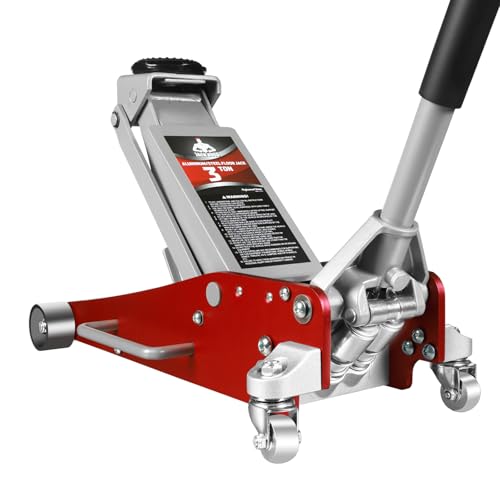
Jack Boss 3 Ton Low Profile, Aluminum and Steel Racing
- ✓ Low-profile access
- ✓ Quick lift system
- ✓ Solid build
- ✕ Heavier than some portable jacks
- ✕ Warranty window is limited
| Lift Capacity | 3 tons (6,600 lbs) |
| Lifting Range | 3-15/16″ to 18-5/16″ |
| Lift Mechanism | Dual-pump hydraulic with two-piston pump |
| Base/Construction | Aluminum body with welded steel frame |
| Weight/Portability | Not specified; features two-piece handle and swivel/casters for maneuverability |
| Safety & Certification | ANSI/ASME PASE safety standards compliant; factory tested to 4.5 tons (9,900 lbs); 1-year limited warranty |
You slide this Jack Boss jack under a sedan you’ve parked with a careful eye on the ground clearance, and the low-profile design instantly feels like a real gap-closer moment. It sits low enough to slide under with barely a whisper, then the dual-pump lift kicks in and the whole setup starts feeling like it’s built for real SUV-pinching clearance.
The 3-ton capacity isn’t just a number here—it translates into confidence when you’re inching up and checking for frame contact. The large rubber saddle grips nicely and protects your rocker panels from scuffs, which is the kind of detail you notice after you’ve gone through a few cheaper jacks.
Handling is surprisingly smooth given its aluminum body and welded steel frame. The front swivel casters and rear steel casters roll with little effort, making it easy to align under the lifting point without scraping the undercarriage.
The two-piece handle feels sturdy in hand and the overall footprint still fits neatly in a small trunk or garage cabinet.
What I appreciate most is the dual-piston pump that speeds things up without turning the process into a workout. It’s clear this jack is designed for real-world use, not just spec sheets—you’ll reach your target height without endless pumps, and you’ll feel the stability once you’re up.
In everyday use, this feels like a practical balance between lightness and strength. It’s easy to move, easy to position, and it stays steady when you’re stably lifting with the saddle seated squarely on the lifting point.
If you’re juggling space, weight, and performance, this one checks a lot of boxes in a way that actually makes you want to reach for it first.
SATA 3-Ton Heavy-Duty Floor Jack: Ultra-Low 2-11/16” Profile

- ✓ Ultra-low profile
- ✓ Smooth dual-piston lift
- ✓ Sturdy steel construction
- ✕ Heavier than budget jacks
- ✕ Higher price point
| Rated Capacity | 4.5 tons (9,900 lb) with 1.5x overload safety margin |
| Lifting Range (Low-Profile) | 3-3/4 inches to 19-1/8 inches |
| Pumping System | Dual-piston hydraulic pump with 40% reduction in handle effort |
| Construction | Industrial-grade high-strength steel frame |
| Safety Features | Overload protection valve and slow-release control system |
| Brand and Certification Context | SATA Professional Grade Quality with ANSI/ASME safety alignment |
You pop this SATA 3-Ton Heavy-Duty Floor Jack onto the floor of your shop and immediately notice the ultra-low profile. It slides under a low-clearance sedan with ease, thanks to that 3-3/4″ starting height.
The first lift feels smooth, almost gliding up as the dual-piston pump starts to work.
As you pump, you can feel the heft in the handle and the solid resistance in the hydraulic system. It’s not just light-duty feel—the steel frame is noticeably sturdy, and you can hear a quiet, confident clank as the jack rises.
The overload protection valve gives you a sense of security, like a safety net you don’t always get with cheaper jacks.
Extending to mid-range heights, the jack holds steady without wanders or tilts, which is especially nice when you’re balancing a tire and wheel. The slow-release function works as advertised, avoiding a sudden drop that would spook the wheels off your bike or car.
It feels built for real-world use, not just a glossy spec sheet.
Under load, the build quality shines. The thicker steel frame resists deformation after multiple lifts, and you don’t hear any creaks or groans that some cheaper models develop after a few weeks.
It’s clear this jack is meant for regular shop use, not just occasional DIY projects.
In everyday scenarios, you’ll appreciate the confidence it gives you when you’re swapping tires or tackling brake work. The lifting range covers sedans, SUVs, and light trucks without needing a second jack, which is a real time-saver.
It’s a sturdy, reliable tool you’ll reach for again and again.
Overall, the SATA 3-Ton makes the heavy-duty job feel a little easier. It’s a workhorse with thoughtful safety features and a design that respects your time and effort.
If you’re after real-world performance over flashy marketing, this one hits the mark.
SATA 3-Ton Aluminum Floor Jack, Low-Profile Design

- ✓ Lightweight yet sturdy
- ✓ Easy dual-piston lift
- ✓ Safe, controlled lowering
- ✕ Limited to 9,900 lb test? (overload spec not issue, but keep within rated use)
- ✕ Heavy when fully extended? (not too heavy, just noting balance)
| Load Capacity (Rated) | 3 tons (6,000 lb) with 1.5x overload tested to 4.5 tons (9,900 lb) before shipment |
| Material and Construction | Aluminum alloy construction, corrosion-resistant, lightweight |
| Lifting Mechanism | Dual-piston hydraulic pump for faster lift |
| Lift Range (Low-Profile Design) | 3-3/4 inches to 19-1/8 inches |
| Safety Features | Integrated overload protection valve and precision slow-release lowering system |
| Use Case and Compliance | Suitable for heavy-duty professional and home use; ANSI/ASME safety-style compliance implied by overload testing |
You notice it the moment you slide the SATA 3-Ton onto the floor and see that low profile. The 3-3/4″ height lets you slide under a slammed sedan without yanking the car into the air first.
And that 19-1/8″ max lift is plenty for SUVs that still require a careful approach before you wrench on anything underneath.
First test, the dual-piston pump kicks in with noticeably less effort. It feels like you’re cutting the lifting time in half, which matters when you’re juggling a roadside repair or a quick tire swap after a long day.
The handle feels solid in your hand, not hollow or flimsy, and the motion stays smooth from start to finish.
Build-wise, the aluminum body shows some real care in the finish. It’s lighter than steel but doesn’t feel flimsy—there’s a reassuring weight to it when you slide it across the shop floor.
The corrosion resistance is visible after a few weeks of occasional home-use chores, and the jack looks ready for more than just a few seasonal projects.
Safety is the big, quiet winner here. The overload valve is obvious enough to trust, and the slow-release makes lowering a controlled, predictable moment rather than a jittery drop.
You can set the stance, watch the vehicle come up evenly, and feel confident it won’t sneeze a tire off or slam down unexpectedly.
In real-world use, the low-profile design is the most practical feature for everyday garages. It’s not just about reaching under a car; it’s about maneuvering around a driveway curb, swapping a wheel after a road trip, or lifting a light truck when you’re alone.
The combination of weight, lift range, and safety systems makes this feel like a tool you’ll reach for again and again.
Overall, this jack balances performance with portability in a way that genuinely helps your DIY or pro workflow. It’s reliable, easy to use, and built to last under regular heavy-duty use.
VEVOR 2.5 Ton Low Profile Floor Jack – 3.35″-14.96″ Lift

- ✓ Low-profile entry
- ✓ Smooth, sturdy lift
- ✓ Decent padding protection
- ✕ Limited to 2.5 tons
- ✕ Shorter handle could be awkward in tight spaces
| Load Capacity | 2.5 tons (5500 lbs) |
| Minimum Height | 3.35 inches (85 mm) |
| Maximum Height | 14.96 inches (380 mm) |
| Lifting Mechanism | Single-piston hydraulic pump |
| Construction & Wheels | Rigid steel construction with two rear universal wheels; includes top-mounted handle |
| Safety Certifications & Features | CE (2006/42/EC EN1494), UKCA (SI 2008 NO.1597(BS EN1494)), ASME PALD-2014; built-in safety load system; rubber saddle; foam handle bumper |
I hadn’t expected the first lift to feel almost cinematic, but that’s the surprise this VEVOR jack handed me—the low-profile stance lets you slide it under a crowded undercarriage without wiggling the car up first. The 3.35-inch minimum height means you’re not wrestling a tall block of steel just to get the saddle lined up.
I eased it under a sedan, and the wide footprint kept the weight steady as I checked the hydraulic pressure.
The saddle rotates 360 degrees, which sounds fussy until you’re lining up a tire change at the curb. It locks into place with a solid thunk, and the foam bumper kept the chrome from scratching while I nudged the lift to the right height.
The two-piece handle disassembles neatly, so you’re not tripping over a long metal rod in your garage corner.
Building quality is where you feel the value. The steel construction feels sturdy enough to trust with a full 2.5 tons, and the rear wheels glide smoothly when you reposition it.
The rubber saddle padding protects the car’s pinch welds, so you don’t have to hold your breath every time you pump. It’s quiet enough for a quick oil change and deliberate enough to feel safe for a brake job.
The height range is practical for most family cars and small SUVs, without needing an extra tall jack nearby. The built-in safety system kicks in as expected, giving you peace of mind when you’re leaning into a tire swap.
If you’re price-conscious and want a capable jack that doesn’t scream “professional only,” this VEVOR feels like a smart compromise.
In short, it’s a genuine, no-nonsense tool that handles routine maintenance with confidence. You’ll appreciate the easy setup, the thoughtful padding, and the compact, store-friendly design.
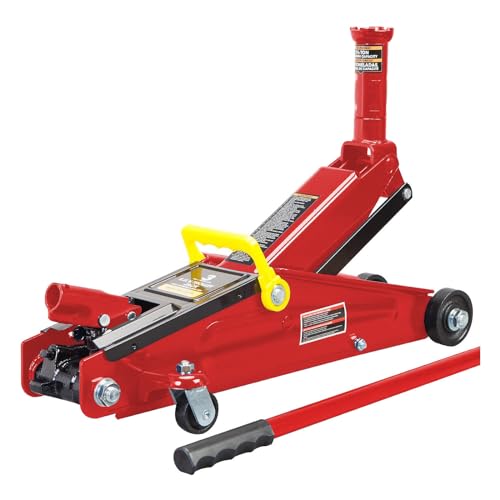
BIG RED Hydraulic Trolley Service/Floor Jack Extra Saddle:
- ✓ Smooth lift action
- ✓ Excellent maneuverability
- ✓ Extra-long saddle neck
- ✕ Limited warranty scope
- ✕ Heavier than budget options
| Frame | Lightweight steel frame |
| Material | High-quality materials for durability |
| Dimensions | Compact design fits most spaces |
| Weight | Lightweight and portable |
You’re rolling under your van on a muddy driveway, and the BIG RED Hydraulic Trolley Jack slides into place with a quiet confidence. The long saddle neck sticks out just enough to reach the higher lip without fiddling around, and you appreciated that the handle feels sturdy in your hands.
A quick pump or two fires the lift smoothly, and the rubber-tipped tongs bite without slipping, keeping everything stable as you swap the wheel.
Its 3-ton capacity handles the SUV with ease, yet the compact minimum height of 5-7/8″ lets you slip under a lot of everyday cars without drama. When the valve release is smooth, you don’t hear that jarring hiss—just steady lowering that tells you the safety bypass system is doing its job.
The two large steel casters and two 360-degree swivels let you maneuver around a cluttered garage as if the jack knew where you want to go.
The extra-long saddle neck is a real time-saver for higher vehicles, letting you place pressure exactly where you need it without wrestling the jack into place. At $89.90, it feels like you’re buying durability and ease rather than a throwaway tool.
The 24.5-inch handle length gives you better leverage without leaning over awkwardly you’re tall, or you have a tight space to work in.
You’ll notice the industrial luster finish that hides scuffs during busy days, while the 1-year limited warranty offers a little peace of mind after a couple of oily sessions. Overall, this jack handles the common garage routine—quick lifts, stable holds, easy maneuverability—without turning your project into a chore.
It’s straightforward, reliable, and ready to roll when you need to swap a tire or service the undercarriage.
What Features Should You Consider When Choosing a Floor Jack?
When choosing a floor jack, it is essential to consider several key features to ensure safety and efficiency.
- Weight Capacity: The weight capacity of a floor jack determines how much weight it can lift safely. It’s crucial to choose a jack that exceeds the weight of the vehicles or equipment you intend to lift, as this will prevent accidents and ensure the jack operates effectively.
- Lift Height: The lift height refers to the maximum height the jack can raise a vehicle. This is important for ensuring that the jack can accommodate the clearance needed for various vehicles, especially for sports cars or trucks that may sit higher off the ground.
- Construction Material: The material of the floor jack affects its durability and weight. Steel jacks are typically more robust and can handle heavier loads, while aluminum jacks are lighter and more portable, making them easier to maneuver and store.
- Jack Type: There are different types of floor jacks, including hydraulic, pneumatic, and bottle jacks. Hydraulic jacks are common for their ease of use and stability, whereas bottle jacks are compact and can fit into tighter spaces but may require more effort to operate.
- Safety Features: Look for jacks that come with safety features such as overload protection, safety valves, and sturdy rubber pads to prevent slipping. These features help ensure that the jack remains stable during use and reduces the risk of accidents.
- Portability: If you plan to move the jack frequently, consider its weight and design. Some jacks come with wheels or a compact design that makes them easier to transport, which is especially beneficial for mobile mechanics or roadside emergencies.
- Price and Warranty: The price of a floor jack can vary widely based on features and brand. It’s advisable to compare options and consider the warranty offered, as a longer warranty can indicate better quality and provide peace of mind.
How Does the Weight Capacity Impact Your Floor Jack Choices?
The weight capacity of a floor jack is a crucial factor that influences your selection, as it determines the maximum weight the jack can safely lift.
- Light-Duty Floor Jacks (Up to 2 tons): Ideal for smaller vehicles like sedans and compact cars, these jacks are lightweight and portable. They are easy to maneuver and perfect for occasional use, making them a great choice for home mechanics who need a jack for minor repairs.
- Mid-Range Floor Jacks (2 to 3 tons): Suitable for a wider variety of vehicles, including SUVs and light trucks, these jacks provide a balance between capacity and portability. They often feature a higher lift range and more durable construction, allowing for more frequent and versatile use in both home garages and professional settings.
- Heavy-Duty Floor Jacks (Over 3 tons): Designed for heavy vehicles such as trucks and larger SUVs, these jacks can handle significant weight, making them essential for those who work on larger machinery or towing vehicles. They are typically built with reinforced materials and advanced safety features to ensure stability and reliability during heavy lifting tasks.
- Low-Profile Floor Jacks: While the weight capacity can vary, low-profile jacks are specifically designed to fit under vehicles with lower clearance. This makes them invaluable for sports cars and modified vehicles, allowing users to lift their cars without needing extensive modifications or additional equipment.
- Jack Stands: Though not jacks themselves, jack stands complement floor jacks by providing additional safety when lifting heavy loads. They come in various weight capacities and should always be used in conjunction with a floor jack to securely hold the vehicle in place while work is being performed.
Why is the Height of a Floor Jack Crucial for Your Vehicle?
The height of a floor jack is crucial for your vehicle because it determines the jack’s ability to lift the vehicle to a sufficient height for maintenance or repair tasks, ensuring safety and accessibility.
According to the Automotive Lift Institute, a floor jack’s lifting capacity and height are essential factors to consider when selecting the right jack for your vehicle, as different vehicles have varying ground clearances and undercarriage designs (Automotive Lift Institute, 2020). A jack that cannot reach the necessary height may lead to unsafe lifting conditions, while one that exceeds the required height can make it difficult to perform tasks efficiently.
The underlying mechanism involves the interplay between a vehicle’s design specifications and the jack’s capabilities. For instance, sports cars typically have lower ground clearance compared to SUVs, necessitating a jack with an adjustable height range to accommodate these differences. If the floor jack is too tall, it may risk damaging the vehicle or make it challenging to position under the lift points. Conversely, if the jack is too short, it may not provide adequate clearance for the user to work safely, increasing the risk of accidents or injuries during maintenance activities.
Which Models from Harbor Freight Are Considered the Best?
The best Harbor Freight floor jacks are known for their affordability, reliability, and performance in various lifting tasks.
- Pittsburgh Automotive 3 Ton Heavy Duty Floor Jack: This model is popular for its robust construction and high lifting capacity.
- Pittsburgh 1.5 Ton Floor Jack: This lighter model is ideal for those who need a more portable option without sacrificing quality.
- Pittsburgh Automotive 2 Ton Low Profile Floor Jack: Designed for vehicles with low ground clearance, this jack offers versatility and ease of use.
The Pittsburgh Automotive 3 Ton Heavy Duty Floor Jack features a steel frame that can lift up to 6,000 pounds, making it suitable for trucks and SUVs. It has a rapid pump design that allows for quick lifting, and its sturdy wheels provide excellent mobility, even on uneven surfaces.
The Pittsburgh 1.5 Ton Floor Jack is a compact and lightweight option that makes it easy to transport. Despite its smaller size, it can handle a lifting capacity of 3,000 pounds, making it a good choice for smaller cars and lighter trucks, while its user-friendly design ensures safety and efficiency during use.
The Pittsburgh Automotive 2 Ton Low Profile Floor Jack is specifically engineered for cars that sit low to the ground, allowing it to fit under tight spaces easily. With a lifting capacity of 4,000 pounds, this jack combines functionality with a low-profile design, making it an excellent choice for sports cars and modified vehicles.
What Do Reviews Say About the Performance of These Models?
Reviews highlight the performance of various models of Harbor Freight floor jacks, showcasing their capabilities and user satisfaction.
- Harbor Freight Pittsburgh 3 Ton Heavy Duty Floor Jack: This model is often praised for its robust construction and lifting capacity, making it suitable for heavier vehicles. Many users appreciate its quick lift feature, which allows for efficient work in a garage setting.
- Harbor Freight Daytona 3 Ton Professional Floor Jack: Reviewers frequently note the smooth operation and stability of this jack, which is ideal for professional settings. Its low-profile design is also highlighted, allowing it to fit under sports cars and other low vehicles without issue.
- Harbor Freight Pittsburgh Automotive 2 Ton Floor Jack: This lighter model is well-reviewed for its portability and ease of use, making it a popular choice for home mechanics. Users often commend its compact size, which allows for easy storage while still providing adequate lifting power for smaller vehicles.
- Harbor Freight 1.5 Ton Aluminum Racing Jack: Many reviews focus on the lightweight design of this jack, which is especially valued by racing enthusiasts. Users appreciate its quick lift feature and the ability to maneuver easily, making it a great option for pit stops and quick tire changes.
Are There Any Recommendations for Budget-Friendly Options?
There are several budget-friendly options for floor jacks available at Harbor Freight that provide good performance without breaking the bank.
- Pittsburgh Automotive 3 Ton Heavy Duty Floor Jack: This floor jack has a lifting capacity of 3 tons, making it suitable for a wide range of vehicles. With a low profile design, it can lift vehicles as low as 3.5 inches, while the maximum lift height reaches 18.25 inches, allowing for easy access to the undercarriage.
- Pittsburgh 1.5 Ton Ultra Low Profile Floor Jack: Ideal for sports cars or vehicles with low ground clearance, this jack can lift up to 1.5 tons and has a minimum height of just 2.75 inches. Its lightweight design and easy maneuverability make it a convenient option for quick tire changes or maintenance tasks.
- Pittsburgh 3 Ton Floor Jack with Rapid Pump: This model features a rapid pump technology that allows for quick lifting, reaching its maximum height of 19.75 inches in just a few pumps. It also comes with a sturdy steel construction, ensuring durability and reliability for regular use in home garages or workshops.
- Pittsburgh Automotive 2 Ton Aluminum Racing Floor Jack: Weighing in at only 56 pounds, this aluminum floor jack is designed for easy transport and features a lifting capacity of 2 tons. It has a quick-lift feature and reaches a maximum height of 14.75 inches, making it perfect for racing enthusiasts or those who need a portable option.
- Pittsburgh 3 Ton Heavy Duty Floor Jack with 2-stage pump: This jack offers a dual pump system, allowing for faster lifting to the vehicle’s lift height. With a heavy-duty steel construction and a capacity of 3 tons, it provides stability and strength for lifting larger vehicles, making it a versatile choice for both professional and DIY mechanics.
What Safety Precautions Should You Take with Your Floor Jack?
When using a floor jack, it’s crucial to observe specific safety precautions to ensure a safe lifting process.
- Check the weight capacity: Always verify the weight capacity of your floor jack before use. Exceeding this limit can cause the jack to fail, potentially leading to serious injury or damage to your vehicle.
- Inspect the jack before use: Conduct a thorough inspection of the floor jack for any signs of wear or damage. Look for leaks in hydraulic fluid, cracks in the frame, or malfunctioning components, as any defects can compromise safety during operation.
- Use on a level surface: Ensure that you operate the floor jack on a stable, level surface to prevent tipping over. An uneven surface can lead to loss of control when lifting a vehicle, increasing the risk of accidents.
- Employ jack stands: After lifting a vehicle, always use jack stands to support it while you work underneath. Relying solely on the jack can be dangerous, as hydraulic failure could result in the vehicle collapsing unexpectedly.
- Keep bystanders away: Make sure to keep others at a safe distance while using the floor jack. If something were to go wrong, having bystanders too close could result in injuries.
- Wear appropriate safety gear: Always wear safety glasses and closed-toe shoes when working with a floor jack. This can protect you from potential hazards such as falling objects or hydraulic leaks.
How Can You Maintain Your Harbor Freight Floor Jack for Longevity?
To maintain your Harbor Freight floor jack for longevity, consider the following key practices:
- Regular Inspection: Consistently check your floor jack for any signs of wear or damage, especially on the hydraulic seals and frame.
- Hydraulic Fluid Maintenance: Regularly check and change the hydraulic fluid to ensure smooth operation and prevent corrosion.
- Proper Storage: Store your floor jack in a dry, cool place to avoid rust and damage from extreme temperatures.
- Cleaning After Use: Clean the jack after each use to remove dirt and grime, which can lead to corrosion and affect functionality.
- Using Correct Weight Limits: Always adhere to the weight limits specified by the manufacturer to avoid overloading the jack, which can cause premature wear or failure.
Regular inspection of your Harbor Freight floor jack is crucial for identifying any wear or damage early on. Pay special attention to the hydraulic seals, as leaks can lead to performance issues, and inspect the frame for any bends or cracks that could compromise safety.
Hydraulic fluid maintenance is essential for the effective operation of your floor jack. Ensure to check the fluid level frequently and replace it according to the manufacturer’s guidelines to prevent contamination and maintain hydraulic efficiency.
Proper storage of your floor jack can significantly extend its lifespan. Keeping it in a dry and cool environment will help prevent rust and damage that can occur from exposure to moisture or extreme heat.
Cleaning your jack after each use is another important maintenance step. Removing dirt and grime prevents corrosion and keeps the moving parts functioning smoothly, ensuring the jack operates effectively when needed.
Using the correct weight limits specified by the manufacturer is vital for your floor jack’s longevity. Exceeding these limits can lead to mechanical failure, compromising safety and potentially causing damage to the jack itself.
Related Post: