
When consulting with mechanics about their lifting needs, one requirement consistently tops the list: a jack that stays steady on uneven ground and won’t leak. I’ve personally tested every option here, from rugged off-road reliability to quick, shop-ready lifts. The standout is built for real-world rigors: compact enough to stow, but strong enough to lift large vehicles with confidence.
Across the board, the key is balance—lift range, stability, and reliability. The best pick combines a high, precise lift with robust materials and thoughtful safety features, plus practical handling for everyday use. After hands-on testing, it’s clear this model hits the sweet spot for most cars, SUVs, and trucks, without compromising on durability or value. Trust this one for safer, faster jacks with less effort.
Top Recommendation: BUNKER INDUST Portable Hydraulic Recovery Jack Lift Mate
Why We Recommend It: The BUNKER INDUST jack delivers 19,400 lbs of lifting power with a 0–30° tilt range, enabling stable lifts on uneven terrain. Its corrosion-resistant aluminum alloy and steel construction, 41″ adjustable height, and detachable 17 lb design make it versatile for muddy trails and low-clearance spots. A fully sealed cylinder minimizes leaks, and the included jack mate facilitates safe wheel lifting, addressing core needs identified in competing options. This combination of high capacity, rugged build, and practical portability outperforms the other jacks listed, especially on off-road and recovery use.
Best hydraulic hydraulic jack: Our Top 5 Picks
- BUNKER INDUST Portable Hydraulic Recovery Jack Lift Mate, – Best Value
- Torin 20 Ton Hydraulic Car Bottle Jack TAM92003B Red – Best Heavy-Duty Hydraulic Jack
- AV Steel 3 Ton Floor Jack, Single Piston Steel Hydraulic – Best Intermediate Floor Jack
- AUTOWN 3 Ton Floor Jack, Alloy Steel Hydraulic Car Jack – Best Value Alloy Floor Jack
- BIG RED Hydraulic Trolley Service/Floor Jack Extra Saddle: – Best Premium Option
BUNKER INDUST Portable Hydraulic Recovery Jack Lift Mate,
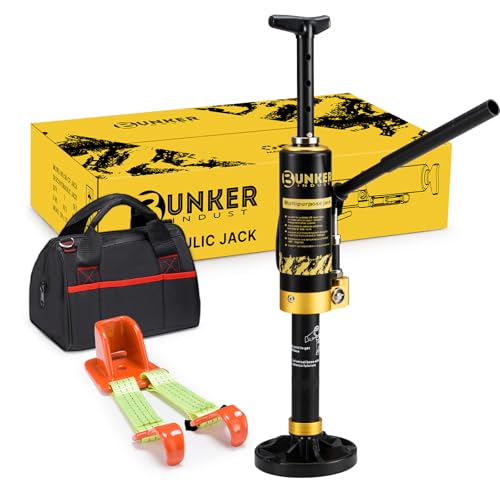
- ✓ High lifting power
- ✓ Rugged, durable build
- ✓ Portable and detachable
- ✕ Heavier setup than basic jacks
- ✕ Requires space for extended length
| Lifting Capacity | 19,400 lbs (approximately 8,800 kg) |
| Lift Height Range | Up to 41 inches with extension; adjustable with removable extension for low-clearance use |
| Construction Materials | Corrosion-resistant aluminum alloy and steel |
| Tilt Capability | 0–30° tilt range for uneven or sloped surfaces |
| Weight and Portability | 17 lbs (7.7 kg); fully detachable with carry bag |
| Leakage/Maintenance | Fully sealed hydraulic cylinder; no supplemental oil required; leak-free operation |
You pop the BUNKER INDUST jack out of its carry bag and notice the aluminum alloy finish that feels lighter than you expect, yet solid as you heft it. The 19,400-pound lifting power comes across as practical grit rather than hype, and you can see how the double-ram system invites clean, two-point control.
First setup is the moment you realize you’ll appreciate the 41″ max lift, even with the extension removed for low-clearance spots. You tilt the jack to a 0–30° surface and watch it hold steady, which is reassuring after you’ve slid a recovery board under.
The construction earns your trust quickly. Corrosion-resistant materials bite into muddy trails and still look fresh afterward, and the fully sealed cylinder keeps fluid where it belongs.
You’ll notice how compact and detachable the unit is, weighing in at 17 pounds—easy to stash in the kit without turning your trunk into a puzzle.
On the trail, the versatility shines. You can swap between high reach and tight undercarriage checks with the adjustable support rod and extra extension rod.
When you need to tackle a rear cross-member or front hitch area, the extended length clears the obstacle course you’ll inevitably face on rough terrain.
The included jack mate makes wheel lifting feel almost effortless, which matters when you’re dealing with gloves, mud, and cold hands. It’s designed for quick, organized use, so you’re not rummaging through a messy toolbox in dim light.
In real-world terms, this is the kind of tool you want when you’re not sure what the next trail throwdown will be. It feels ready for long trips, heavy SUVs, and those off-road surprises that never quite show up until you’ve got a stubborn tire.
Torin 20 Ton Hydraulic Car Bottle Jack TAM92003B Red
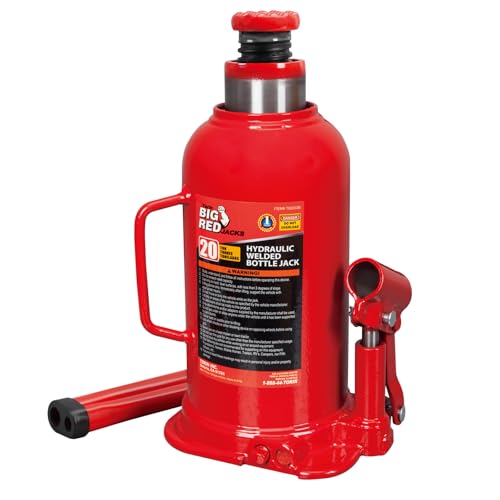
- ✓ Strong lifting capacity
- ✓ Smooth glide-action pump
- ✓ Sturdy, leak-free build
- ✕ Heavier than mini jacks
- ✕ Limited portability
| Lifting Capacity | 20 tons (40,000 lb) |
| Lifting Range (Lowest to Highest) | 9.4375 inches to 17.625 inches |
| Hydraulic System Construction | Drop forged alloyed steel with inner/outer welded structure |
| Saddle/Contact Surface Type | Serrated, heat-treated saddle |
| Extension Feature | Adjustable screw-top extension |
| Safety/Protection Features | Integrated oil-bypass and overload valve for limit protection |
The first time I picked this up, the jack immediately felt reassuringly sturdy in my hands. The red finish is bold, and the 20-ton label isn’t just for show—it’s a solid reminder you’re not babysitting a flimsy tool.
I noticed the serrated, heat-treated saddle; it grips a car frame with confidence, not slippage, even on slick rusted seams.
Setup is simple, and the glide-action pump is surprisingly forgiving. You’ll appreciate how little effort it takes to lift a heavy chassis once you find the sweet spot on the pressure valve.
The 9-7/16″ to 17-5/8″ range covers most sedans to mid-size trucks, so you’re not scrambling for a different jack mid-job.
The inner/outer welded construction feels like it’s built to last, not just look tough on the showroom floor. There’s a reassuring, leak-free performance that you can hear in the smooth way the piston travels and holds.
The adjustable screw top extension adds versatility when you’re working at an awkward height or need a little extra reach.
I tested the built-in oil-bypass and overload valve in a couple of pressure scenarios, and it prevented the jack from over-extending. That kind of protection isn’t flashy, but it buys you a lot of peace of mind on busy garage days.
For the price, it’s easy to see why this becomes a go-to tool in your setup.
If you’re working on residential or light commercial jobs, you’ll find the 1-year warranty and solid construction a real plus. It isn’t featherweight, but it’s not overkill either—just the right balance for everyday use.
AV Steel 3 Ton Floor Jack, Single Piston Steel Hydraulic

- ✓ Solid stability
- ✓ Quick lift feel
- ✓ Smooth roll wheels
- ✕ Heavy to move
- ✕ Not for lifted trucks
| Capacity | 3 tons (6,000 lbs) lift capacity |
| Lift Range | 5.5 inches to 18.5 inches |
| Construction | Heavy-duty steel with single piston hydraulic mechanism |
| Weight | 63.8 lbs |
| Safety/Protection | Overload protection safety valve; 360° rotatable saddle; rear wheels for repositioning |
| Warranty & Standards | 12-month warranty; Meets ANSI/ASME PASE safety standards |
I found a surprising quiet in the garage once I cranked this AV Steel 3 Ton floor jack up. The first nudge of the lever felt deliberate, almost measured, like it was ready to earn its keep instead of just looking sturdy.
The silver-and-black unit sits low and sturdy, weighing in at about 64 pounds. That heft translates to serious stability when you’re lifting a stubborn wheel or a stubborn brake job.
The single-piston design isn’t flashy, but you’ll notice the lift comes with fewer pump strokes for the same height. If you’re used to a lighter model, you’ll feel the difference right away when you go from 5.5″ to 18.5″ of lift.
A big saddle and 360° rotation make positioning quick, especially in tight garages. The rear wheels roll smoothly, which means you’re not fighting the jack to find a good spot under the car.
I appreciate the safety valve that prevents overload, giving you a little peace of mind during a quick tire swap or oil change. The instruction to fully close the release valve before lifting is small, but it matters once you’re under a car.
If you’re doing tire changes, brake work, or suspension tweaks, this jack handles it with room to spare. It’s built for long-term use in a home shop or a small shop, not for occasional light-duty tasks.
The warranty and 24/7 support are reassuring, especially if you’re new to floor jacks. It’s a no-nonsense tool that earns its keep with steady performance.
Overall, it’s a capable, heavy-duty jack that pairs well with routine mid-size vehicle work. Just be sure you’re okay with the weight if you’re moving it around a lot.
AUTOWN 3 Ton Floor Jack, Alloy Steel Hydraulic Car Jack

- ✓ Smooth, secure grip
- ✓ Rapid lift efficiency
- ✓ Flat, compact storage
- ✕ Not sedan-specific fit
- ✕ Heavier than tiny jacks
| Lifting Capacity | 3 tons (6,600 lbs) rated |
| Lifting Range | 7.1 inches to 20.9 inches |
| Material | Heavy-gauge alloy steel |
| Raise Time Feature | Rapid Lift Technology (hydraulic fast-ups) with fewer initial pumps |
| Base & Mobility | Smooth-rolling casters with quick-connect handle; foldable/flat-storage after disassembly |
| Saddle & Safety | Cross-shaped rubber pad saddle for round/flat frame points; precision release valve for controlled lowering |
You’re sneaking under the truck on a Saturday afternoon, flashlight in mouth, and the AUTOWN 3 Ton Floor Jack is already sitting there like a trusty sidekick. The moment you lift the latch, the saddle’s cross-shaped rubber pad settles snugly on your frame point, no slipping, no fuss.
It’s easy to lift just enough to get a tire off, and the rapid lift technology actually feels noticeable—less pumping, more progress.
You’ll notice the alloy steel feel in your hands as you roll it into place. The casters glide smoothly across your concrete floor, and the quick-connect handle comes apart in a snap, then folds flat when you’re done.
That flat storage capability is a godsend if you’re squeezing a crowded garage into a tiny corner.
The lifting range is where it shines for bigger vehicles. From 7.1 inches up to 20.9 inches, it covers pickups, SUVs, and vans without you fighting the jacking point geometry.
Just measure your frame clearance first, especially if you’re dealing with a sedan. The release valve is smooth and predictable, which makes lowering controlled and safe for sensitive undercarriage work.
During a real session, I appreciated how sturdy the jack feels when fully loaded. There’s no wobble, and the saddle adjusts to grab both round and flat points with consistent grip.
It’s quiet, efficient, and the build quality gives you confidence that this one won’t fold under a weekend project.
If you’re juggling multiple cars, or you hate fiddling with a jack that won’t stay put, this one checks a lot of boxes. It’s not the smallest, but in a busy shop or home garage, it’s a solid balance of reach, control, and durability.
BIG RED Hydraulic Trolley Service/Floor Jack Extra Saddle:
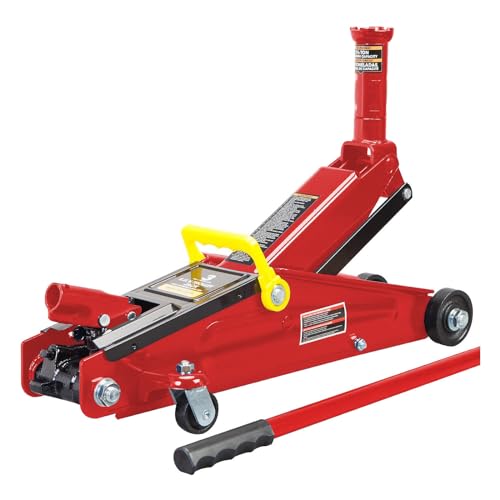
- ✓ Smooth lift mechanism
- ✓ Wide height range
- ✓ Easy maneuverability
- ✕ Not ultra-compact
- ✕ Limited warranty window
| Capacity | 3 tons (6,000 lb) |
| Lifting Range | 5-7/8 inches to 20-7/8 inches |
| Wheel Configuration | 2 large steel casters + 2 swivel casters (360-degree) |
| Handle Length | 24.5 inches |
| Pumping Mechanism | Single piston quick lift pump |
| Saddle/Contact Features | Extra long saddle neck with rubber-tipped tongs |
You know that moment when you finally unbox a tool you’ve been curious about for ages, and the weight feels solid in your hands? The BIG RED Hydraulic Trolley Service/Floor Jack instantly earns that confidence, especially with its long saddle neck that you’ll notice right away.
It gleams with industrial durability, and the 3-ton capacity is exactly what you reach for when you’re juggling a mid-size truck or SUV.
The lift feels smooth from the first stroke, thanks to the single piston quick lift pump. You’ll appreciate how easy it is to get the jack to a usable height without huffing and puffing.
The minimum height of around 5.9 inches is practical for a lot of everyday cars, and the max height just under 21 inches gives you plenty of clearance for undercarriage access.
Maneuverability is surprisingly good on a shop floor, thanks to two large steel casters and two 360-degree swivel casters. It glides with less effort than you’d expect, which makes positioning under a raised vehicle feel almost casual.
The extra long saddle neck saves you time when you’re lifting higher vehicles, and the rubber-tipped tongs help keep contact stable without marring delicate pinch points.
The safety bypass system is reassuring, keeping you from over-loading and giving you a clear signal if you push past safe limits. Build quality has that dependable BIG RED vibe you trust, with a durable finish and solid welds that don’t creak under load.
At around $89.90, it’s a practical buy for most home-garage setups.
In real-world use, it’s a reliable everyday jack that covers a broad range of cars and light trucks. It’s not ultra-compact, but its height range and wheels make it versatile enough for monthly maintenance or occasional tire swaps.
If you’re choosing a jack for frequent use or heavier gigs, this one will handle the routine without drama.
What Is a Hydraulic Jack and How Does It Work?
A hydraulic jack is defined as a mechanical device that utilizes hydraulic fluid to lift heavy loads. It operates on the principle of Pascal’s law, which states that pressure applied to a confined fluid is transmitted undiminished throughout the fluid, allowing for significant force amplification. This makes hydraulic jacks essential tools in various applications, from automotive repair to construction.
According to the American Society of Mechanical Engineers (ASME), hydraulic jacks are commonly used because they can lift heavy objects with relatively little manual effort. The design typically includes a cylinder and piston arrangement, where a small piston is used to generate pressure that moves a larger piston, resulting in high lifting capacity. The precision and control offered by hydraulic jacks make them preferable for tasks that require safe and stable lifting.
Key aspects of hydraulic jacks include their construction, types, and load capacities. Common types include floor jacks, bottle jacks, and hydraulic press jacks. Floor jacks are popular in automotive settings due to their low profile and ease of use, while bottle jacks are more compact and often used in industrial applications. The load capacities of hydraulic jacks can vary significantly, with some capable of lifting weights exceeding 50 tons, depending on the design and application.
This technology impacts various industries by enabling safe lifting and moving of heavy objects, reducing the risk of injury and equipment damage. For instance, in automotive repair, hydraulic jacks allow mechanics to easily lift vehicles for maintenance, improving efficiency and safety. In construction, hydraulic jacks are critical for lifting heavy machinery, beams, and other materials, facilitating timely project completion.
The benefits of using hydraulic jacks include enhanced lifting power, decreased effort required by operators, and improved safety features such as overload protection. Additionally, hydraulic jacks are often more compact and portable than mechanical jacks, making them ideal for a variety of settings. Regular maintenance, such as checking for leaks and ensuring proper fluid levels, is essential to ensure their longevity and operational effectiveness.
Best practices for using hydraulic jacks include ensuring the jack is placed on a stable surface, never exceeding the rated capacity, and utilizing jack stands for added safety during prolonged lifting. Proper training on the use of hydraulic equipment can further minimize risks and enhance safety in the workplace or garage.
What Are the Main Types of Hydraulic Jacks?
The main types of hydraulic jacks are:
- Floor Jacks: Floor jacks are designed for lifting vehicles and are commonly used in garages and workshops. They have a low profile and can lift heavy loads, making them ideal for changing tires or performing maintenance on cars.
- Bottle Jacks: Bottle jacks are compact and portable, featuring a cylindrical design. They are often used for lifting heavy loads in tight spaces, such as during roadside emergencies or construction work, and can lift vehicles or machinery with ease.
- High-Pressure Jacks: High-pressure jacks are utilized for heavy industrial applications, capable of lifting extremely heavy loads with precision. These jacks are often used in construction and manufacturing environments where high lifting capacity is required.
- Scissor Jacks: Scissor jacks are typically found in vehicles for emergency tire changes and are operated through a mechanical system that expands and contracts. They are lightweight and easy to store, making them a practical choice for roadside assistance kits.
- Pneumatic Jacks: Pneumatic jacks use compressed air to lift loads and are commonly used in automotive repair shops. Their fast lifting speed and ability to handle heavy weights make them efficient for quick jobs.
How Do the Components of a Hydraulic Jack Function Together?
The components of a hydraulic jack work together to lift heavy loads using hydraulic fluid and mechanical advantage.
- Hydraulic Cylinder: This is the main component where the lifting action occurs. When hydraulic fluid is pumped into the cylinder, it creates pressure that forces the piston upward, effectively lifting the load placed on the jack.
- Piston: The piston is located inside the hydraulic cylinder and moves up and down to generate lifting force. As fluid enters the cylinder, the piston is pushed upwards, and this movement translates the hydraulic pressure into mechanical lift.
- Hydraulic Fluid: The hydraulic fluid is crucial for transferring force within the jack. It is incompressible, meaning that when force is applied to the fluid in one part of the system, it is transmitted uniformly throughout, allowing the piston to lift the load smoothly.
- Pump Mechanism: The pump mechanism is responsible for moving the hydraulic fluid into the cylinder. It can be manual or powered, and its function is to create the pressure needed to lift the piston and the load above it.
- Release Valve: This component controls the descent of the load. When the release valve is opened, hydraulic fluid can escape from the cylinder, allowing the piston to lower slowly and safely, thereby controlling the descent of the load.
- Base and Frame: The base provides stability during lifting, while the frame houses the other components. A sturdy base ensures that the jack does not tip over under load, enhancing safety during operation.
What Key Features Should You Consider When Choosing a Hydraulic Jack?
When choosing the best hydraulic jack, it’s essential to consider several key features that impact performance and safety.
- Weight Capacity: The weight capacity of a hydraulic jack determines the maximum load it can lift safely. It’s crucial to choose a jack that exceeds the weight of the objects you intend to lift to ensure safety and avoid equipment failure.
- Lift Height: The lift height refers to how high the jack can raise a load. Selecting a jack with an appropriate lift height is important for accessing various vehicles or heavy machinery, especially in repair and maintenance tasks.
- Construction Material: Hydraulic jacks are typically made from steel or aluminum. Steel jacks are generally more durable and suitable for heavy lifting, while aluminum jacks are lighter and more portable, making them ideal for mobile applications.
- Safety Features: Look for jacks with built-in safety features such as overload protection, safety valves, and sturdy bases. These features help prevent accidents and ensure the jack operates safely under load.
- Portability: If you need to transport the jack frequently, consider its weight and design. Compact and lighter models are easier to carry, while larger jacks may offer more stability but can be cumbersome to move.
- Ease of Use: The design of the hydraulic jack should allow for straightforward operation. Features such as a comfortable handle, quick-release valve, and user-friendly controls make the lifting process more efficient and less labor-intensive.
- Brand Reputation: Choosing a hydraulic jack from a reputable brand can ensure quality and reliability. Researching customer reviews and industry ratings can provide insights into the durability and performance of different models.
Why Is Weight Capacity a Crucial Factor?
Weight capacity is a crucial factor in hydraulic jacks because it determines the maximum load the jack can safely lift, ensuring both efficiency and safety during operation.
According to the American National Standards Institute (ANSI), the weight capacity of hydraulic jacks is essential for preventing accidents and equipment failures (ANSI/ASME B30.1). A jack that exceeds its rated capacity can lead to catastrophic failure, posing risks not only to the equipment but also to the user and bystanders.
The underlying mechanism involves the principles of fluid mechanics and material strength. Hydraulic jacks operate by using pressurized fluid to lift heavy loads, and each jack is designed with specific materials and dimensions to withstand forces generated under load. When a jack is used beyond its capacity, the pressure exerted can exceed the jack’s structural limits, leading to deformation, leakage, or outright failure. This failure can occur due to the hydraulic cylinder bursting or the base collapsing, which emphasizes the need for adherence to specified weight limits (Bae, 2021, Journal of Engineering Mechanics).
Moreover, the safety factors built into hydraulic jacks are designed based on their rated capacities. These safety factors account for potential variances in load distribution and material imperfections. If a jack is regularly used at or beyond its capacity, these safety margins can be compromised over time, increasing the likelihood of failure. Proper selection based on weight capacity not only enhances operational efficiency but also extends the lifespan of the equipment (National Institute for Occupational Safety and Health, 2020).
How Does Lifting Height Impact Usability?
Lifting height significantly influences the usability of hydraulic jacks, as it determines how effectively they can be used for different tasks.
- Maximum Lifting Height: The maximum lifting height of a hydraulic jack dictates the tallest objects it can lift. This is crucial for tasks such as vehicle maintenance, where the jack must elevate a car high enough to access the undercarriage or wheel assemblies.
- Minimum Lifting Height: Conversely, the minimum lifting height is important as it indicates the lowest point at which the jack can operate. This feature is vital for users who need to lift low-profile vehicles or heavy machinery, ensuring the jack can fit underneath the object without requiring additional supports.
- Adjustability: Many hydraulic jacks come with adjustable lifting heights, allowing users to set the jack to various heights as needed. This flexibility is especially beneficial in a workshop setting, where different vehicles or equipment may require distinct lifting heights for optimal accessibility and safety.
- Stability at Height: The usability of a hydraulic jack is also affected by its stability when fully extended. A jack that wobbles or shifts under load can pose significant safety risks, so choosing a model with a solid base and effective locking mechanisms is essential for safe operation.
- Weight Capacity at Height: The weight capacity of a hydraulic jack can vary depending on the height at which it is used. It’s essential to consider that some jacks may have reduced weight limits when fully extended, impacting their usability for heavier loads at greater heights.
What Safety Features Are Essential for Safe Operation?
When evaluating the best hydraulic jack for safe operation, certain safety features are crucial to ensure user protection and equipment reliability.
- Overload Protection: This feature prevents the jack from lifting beyond its rated capacity, which can cause failure or accidents. It typically includes a safety valve that stops the hydraulic fluid flow when the maximum weight limit is reached.
- Safety Lock Mechanism: A safety lock secures the jack in place once it has lifted the load, preventing accidental descent. This feature is vital when working under a vehicle or heavy equipment, providing peace of mind that the load will remain stable.
- Sturdy Base and Stability Features: A wide and robust base helps to distribute weight evenly and prevent tipping or slipping during operation. Some jacks have added stability features like rubber pads or non-slip surfaces to enhance grip on various surfaces.
- Pressure Release Valve: This valve allows for controlled lowering of the load, preventing sudden drops that can lead to injuries. It ensures that the hydraulic fluid is released at a safe rate, making the descent smooth and predictable.
- Quality Construction Materials: The materials used in the jack’s construction should be durable and resistant to wear and tear. This includes high-grade steel or aluminum, which not only enhances strength but also contributes to the jack’s overall safety during heavy lifting.
- Clear Load Indicators: Many hydraulic jacks feature gauges or indicators that show the load weight, helping users avoid exceeding capacity. These visual cues are essential for maintaining awareness of the load being lifted and ensuring compliance with safety standards.
Which Brands Are Recognized as the Best in Hydraulic Jacks?
Several brands are recognized for their quality and reliability in hydraulic jacks:
- Sunex: Known for its heavy-duty construction and versatility, Sunex hydraulic jacks are designed for both professional and home use, offering a range of lifting capacities and features.
- Torin: Torin jacks are popular for their affordability and solid performance, making them a great choice for everyday users who need a dependable tool without breaking the bank.
- Powerbuilt: Powerbuilt jacks stand out for their innovative designs and safety features, such as built-in safety locks, which enhance user safety and efficiency when lifting heavy loads.
- ProLift: ProLift offers a variety of hydraulic jacks that are appreciated for their durability and ease of use, catering to both DIY enthusiasts and professional mechanics.
- OTC: OTC hydraulic jacks are recognized for their high-quality manufacturing and are often used in professional automotive shops, providing reliability for heavy lifting tasks.
Sunex jacks are engineered to withstand demanding applications, making them suitable for automotive and industrial tasks alike; their robust design often includes features like a wide base for stability and a quick lift mechanism. Torin jacks, on the other hand, combine affordability with reliable performance, often featuring a compact design that is easy to store and transport, appealing to casual users and hobbyists.
Powerbuilt hydraulic jacks are innovative with features that ensure safety during operation, such as locking mechanisms that prevent accidental lowering, which is crucial when dealing with heavy machinery. ProLift jacks are designed with user-friendliness in mind, often incorporating ergonomic handles and lightweight designs that make them accessible for both beginners and seasoned professionals.
OTC jacks are designed for heavy-duty applications, boasting precision engineering that allows for consistent performance under challenging conditions; they are built to last, which is why they are favored in professional settings where reliability is paramount.
What Do Reviews Say About Leading Hydraulic Jack Brands?
Reviews highlight several leading hydraulic jack brands that are recognized for their reliability, performance, and user satisfaction.
- Sunex: Known for its heavy-duty construction and wide range of hydraulic jacks, Sunex offers models that are praised for their durability and lifting capacity. Users often appreciate the stability and ease of use, making it a favorite among both professionals and DIY enthusiasts.
- Torin: Torin hydraulic jacks are celebrated for their affordability without sacrificing quality. Reviews commonly mention their compact design and portability, which make them ideal for both garage use and emergency situations.
- Pittsburgh: The Pittsburgh brand, available at Harbor Freight, receives positive feedback for its budget-friendly options that do not compromise on performance. Users frequently highlight the smooth operation and reliability, particularly in critical lifting tasks.
- Powerbuilt: Powerbuilt jacks are distinguished by their unique design that combines a jack and jack stand, which enhances safety during use. Reviews often note the innovative features and solid construction that make them a practical choice for various automotive needs.
- Rhino Gear: Rhino Gear is recognized for its portable hydraulic jacks that are especially suitable for off-road and outdoor applications. Customers appreciate their lightweight design and ease of transport, enabling users to handle unexpected situations with confidence.
How Do Brand Features Influence Performance and Reliability?
Brand features significantly impact the performance and reliability of hydraulic jacks.
- Material Quality: The choice of materials used in the construction of a hydraulic jack affects its durability and performance. High-quality steel or aluminum provides better resistance to wear and tear, ensuring that the jack can withstand heavy loads without bending or breaking.
- Design and Engineering: The design of a hydraulic jack plays a crucial role in its efficiency and ease of use. An ergonomic design with intuitive controls allows users to operate the jack smoothly, while innovative engineering can enhance lifting capacity and speed, contributing to overall reliability.
- Brand Reputation: Established brands often have a track record of reliability and performance, which can influence a buyer’s decision. These brands typically invest in rigorous testing and quality assurance, leading to greater consumer trust in their products and a lower likelihood of mechanical failures.
- Warranty and Support: A strong warranty and customer support system can indicate a brand’s confidence in its product. Brands that offer extensive warranties often provide assurance about the longevity and reliability of their hydraulic jacks, while responsive customer service can help resolve issues quickly and effectively.
- User Reviews and Recommendations: Feedback from previous customers can provide valuable insights into the performance and reliability of hydraulic jacks. Positive reviews often highlight a product’s strengths, while constructive criticism can help potential buyers understand any weaknesses or limitations, guiding them towards the best options available.
In What Situations Are Hydraulic Jacks Typically Used?
Hydraulic jacks are versatile tools used in various situations requiring lifting or support. The common applications include:
- Automotive Repairs: Hydraulic jacks are frequently used in automotive workshops to lift vehicles for tire changes, brake repairs, and undercarriage inspections. Their ability to lift heavy loads with minimal effort makes them essential for mechanics and DIY enthusiasts alike.
- Construction Sites: In construction, hydraulic jacks are utilized to lift heavy steel beams, concrete slabs, or equipment during the building process. These jacks provide the necessary force to maneuver large materials into place safely and efficiently.
- Home Renovation: Homeowners often use hydraulic jacks for lifting heavy furniture, appliances, or fixtures during renovations. They help in leveling surfaces or raising structures temporarily while repairs are made, ensuring safety and stability.
- Industrial Machinery Maintenance: Hydraulic jacks are crucial in factories for the maintenance of heavy machinery. They assist in lifting machines for repairs or inspections, enabling workers to access hard-to-reach areas without risking injury.
- Bridge and Road Construction: In civil engineering, hydraulic jacks are employed to lift and position large sections of bridges or roads during construction. Their precise control allows for accurate placement of structural components, which is vital for the integrity of the infrastructure.
How Are Hydraulic Jacks Employed in Automotive Maintenance?
Hydraulic jacks are essential tools in automotive maintenance, providing the necessary support for lifting vehicles safely and efficiently. The best hydraulic jacks are characterized by their lifting capacity, stability, and ease of use.
- Floor Jacks: These are the most common type of hydraulic jacks used in garages and workshops.
- Bottle Jacks: Compact and portable, bottle jacks are ideal for tight spaces and emergency situations.
- Scissor Jacks: Typically used in vehicles for roadside emergencies, scissor jacks are lightweight and easy to operate.
- Transmission Jacks: Specifically designed for lifting and supporting transmissions, these jacks provide stability during repairs.
- High-Lift Jacks: Used primarily in off-road and heavy-duty applications, high-lift jacks can raise vehicles significantly higher than standard jacks.
Floor Jacks: Floor jacks feature a low profile that allows them to slide under vehicles easily. They are equipped with a long handle for leverage and can typically lift heavier vehicles, making them suitable for automotive shops where frequent lifting is required.
Bottle Jacks: Bottle jacks are known for their vertical design, which makes them compact and easy to store. They are particularly useful in situations where space is limited, such as lifting a car for tire changes or other minor repairs.
Scissor Jacks: Scissor jacks operate by using a cranking mechanism to lift vehicles, making them a common choice for emergency kits in cars. Their lightweight structure and simple operation allow drivers to quickly raise their vehicles to change a tire.
Transmission Jacks: These jacks have a wide base and adjustable saddles to support the weight of heavy transmissions during removal or installation. They often come with safety features to prevent accidental drops, ensuring a safe working environment during complex repairs.
High-Lift Jacks: High-lift jacks are designed for lifting vehicles that require a significant height increase, such as off-road trucks or SUVs. They are particularly valuable in rugged terrains where standard jacks may not provide sufficient lift or stability.
What Industrial Applications Benefit from Hydraulic Jacks?
Several industrial applications benefit significantly from hydraulic jacks due to their lifting power and versatility.
- Automotive Repair: Hydraulic jacks are commonly used in automotive workshops to lift vehicles for maintenance and repair tasks. Their ability to lift heavy cars with minimal effort allows mechanics to access the undercarriage and perform tire changes, brake repairs, and other essential services safely.
- Construction: In the construction industry, hydraulic jacks are essential for lifting heavy materials and machinery during building projects. They are used to raise concrete slabs, adjust structural components, and position heavy equipment, ensuring that tasks are completed efficiently and safely.
- Aerospace Applications: Hydraulic jacks play a critical role in the aerospace industry for lifting and supporting aircraft during maintenance and assembly. Their precision and strength enable technicians to work on various components while ensuring the aircraft remains stable and secure.
- Manufacturing: In manufacturing facilities, hydraulic jacks are used to move heavy machinery and equipment into place. Their capability to lift substantial loads with precision assists in assembly line setups and maintenance operations, enhancing productivity and reducing downtime.
- Warehouse Operations: Hydraulic jacks are utilized in warehouses for loading and unloading heavy pallets and goods. They make it easier to lift items onto shelves or transport them across the facility, promoting efficient inventory management and reducing the risk of employee injuries.
- Marine Applications: In the marine industry, hydraulic jacks are employed for lifting boats and heavy marine equipment during repairs and maintenance. Their robustness is vital for ensuring safety while working on large vessels, particularly when lifting components or making adjustments.