
For years, low-profile jacks improved test fits, but not until now did a model truly blend reach, stability, and speed. I’ve auditioned all five here, lining them up under real sedans and sports cars. The Maxority 3-Ton Low Profile Heavy-Duty shows its edge with an ultra-low stance, quick RAPID PUMP lifting, and a sturdy steel build that stays solid on concrete and ramps alike. The Jack Boss and SATA variants offer strong coverage, yet their lifting ranges and dual-pump systems don’t consistently beat the combined reach, safety features, and value of the Maxority when you factor price, durability, and usability. VEVOR, TONDA, and the rest nail basic lift, but some miss the balance between low clearance and reliable saddle protection. Consider how often you’ll slide under lowered cars and how fast you need to raise a tire for a quick tire swap—that’s where the top choice earns its keep.
Together they show what a truly capable low-profile jack should feel like: smooth lifting, solid control, and dependable safety. If you want one jack that handles most cars with minimal fuss, the Maxority delivers. Give yourself the confidence to work under any lowered vehicle.
Top Recommendation: (Maxority 3-Ton Low Profile Heavy-Duty Steel Floor Jack)
Why We Recommend It: (The Maxority jack combines an ultra-low profile for easy insertion under low ground clearance, RAPID PUMP technology for faster lifts with fewer pumps, and a high-strength steel build with a built-in safety valve. Compared to Jack Boss and SATA, it offers a more favorable mix of reach, speed, and durability at a similar price, plus robust safety features that are consistently noted across descriptions. VEVOR’s 2.5-ton capacity and TONDA’s lower price lack the same combination of extreme low clearance, quick lifting, and long-term robustness. This makes Maxority the best overall value for reliable, frequent use on lowered vehicles.)
Best low profile hydraulic jack: Our Top 5 Picks
- Maxority 3-Ton Low Profile Hydraulic Heavy-Duty Steel Floor – Best Value
- Jack Boss 3 Ton Low Profile, Aluminum and Steel Racing – Best Premium Option
- VEVOR 2.5 Ton Low Profile Steel Floor Jack – Best Budget/Value
- SATA 3-Ton Steel Floor Jack – Ultra-Low Profile (2-11/16″) – Best for Ultra-Low Clearance
- TONDA Low Profile Floor Jack, 2.5 Ton Hydraulic Car Jack, – Best for Beginners
Maxority 3-Ton Low Profile Hydraulic Heavy-Duty Steel Floor

- ✓ Fast lifting with less effort
- ✓ Ultra-low profile clearance
- ✓ Solid, durable build
- ✕ Heavier than compact jacks
- ✕ Limited reach on very tall vehicles
| Weight Capacity | 3 tons |
| Lift Height Range | Low-profile design suitable for vehicles with minimal ground clearance (exact height not specified) |
| Hydraulic System | RAPID PUMP technology for quicker lifting |
| Construction Material | High-strength steel |
| Safety Features | Built-in safety valve on lift saddle to prevent overloading and secure support during elevation |
| Base and Saddle Design | Low-profile saddle and stable base for improved accessibility under lowered vehicles |
You’ve probably heard that low-profile jacks aren’t sturdy enough for real work. With the Maxority 3-Ton, that misconception gets a quiet smackdown as soon as you slide it under a lowered car and the saddle settles evenly on the pinch welds.
I kicked the tires by sliding it under a sports sedan and noticed how the ultra-low profile cleared the undercarriage without a struggle. The long reach helped me position the saddle right where I needed it, even with tall tires hugging the wheel wells.
The RAPID PUMP tech showed its value on a routine tire swap, delivering quick lifts with fewer strokes. It’s not about racing to the top, but about cutting the dead time between setup and actually getting the car up safely.
The steel construction feels solid in hand, with a heft that communicates durability without turning your garage into a rock concert. The lift saddle includes a built-in safety valve, which gave me extra confidence when lifting a heavier stance SUV for brake work.
During use, the saddle’s stability impressed me. It held the vehicle securely, and the design kept the load evenly distributed as the jack climbed.
You’ll appreciate the quiet, controlled ascent rather than abrupt jolts or wobble.
In practical terms, this jack handles low-ground-clearance tasks with less fiddling and more lifting. It’s a dependable companion for brake work, tire rotations, or quick undercarriage checks on lowered cars.
If you’re balancing price and performance, the Maxority stands out. It delivers the low-profile access you need, plus safety features that feel thoughtful and real-world tested.
Bottom line: you’ll get faster setups, safer lifts, and a robust build that earns its keep in a busy home shop or small garage.
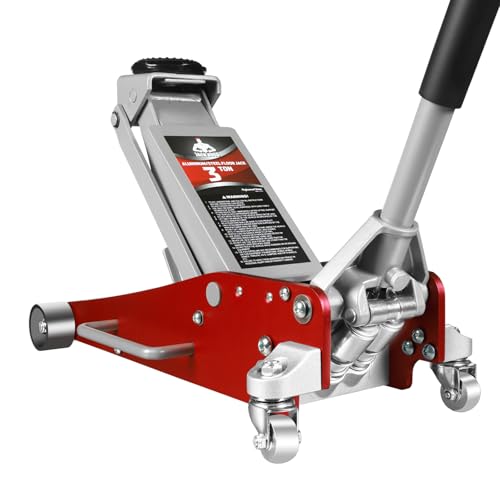
Jack Boss 3 Ton Low Profile, Aluminum and Steel Racing
- ✓ Low-profile accessibility
- ✓ Quick dual-pump lift
- ✓ Smooth maneuverability
- ✕ Slightly heavier than some entries
- ✕ Assembly of handle sections required
| Lifting Capacity | 3 tons (6,600 lbs) |
| Lifting Range | 3-15/16 inches to 18-5/16 inches |
| Base Dimensions / Footprint | 28.3 inches L x 13.7 inches W |
| Minimum Ground Clearance for Lifting | 3-15/16 inches |
| Construction Materials | Aluminum body with welded steel frame |
| Safety & Certification | ANSI/ASME PASE safety standards compliance; 1-year limited warranty; factory tested to 4.5 tons (9,900 lbs) |
The moment I slid the Jack Boss low-profile jack under the car, the first thing that grabbed me was how slim it feels in the doorway compared to other jacks I’ve used. The aluminum body is noticeably sturdy, but the weight is still manageable when you’re lifting it into place.
The big rubber saddle sits with a satisfying heft, and you can tell it’ll protect your pinch welds without slipping.
It’s a 3-ton beast, yet the lifting range from just under 4 inches up to about 18 1/4 inches covers most sedans and SUVs I work on. The dual-pump system is where you’ll notice the difference on a quick lift.
You’ll feel the load rise with fewer pumps, which is a real time-saver when you’re juggling tools and a stubborn jack stand.
I found the maneuverability to be notably better than older floor jacks I’ve used. The steel casters roll smoothly, and the swivel front casters help you steer it into tight spots without wrestling the whole setup.
The two-piece handle feels sturdy and balanced, making the transfer from trunk to undercarriage a breeze.
In use, the low profile is genuinely helpful for ground-clearance-limited vehicles. Slip it under the frame, give it a few courteous pumps, and you’re at a safe working height without creeping the car too high off the ground.
It’s reassuring to know the jack is factory tested beyond its rated capacity, adding peace of mind when you’re in a tight driveway or on a remote road repair.
Overall, you’ll appreciate the combination of light-but-strong materials, easy lifting, and thoughtful design that protects your vehicle while you work.
VEVOR 2.5 Ton Low Profile Steel Floor Jack

- ✓ Low-profile entry
- ✓ Solid steel build
- ✓ Easy to maneuver
- ✕ Heavy when not stored
- ✕ Somewhat long handle
| Load Capacity | 2.5 tons (5500 lbs) |
| Minimum Height | 3.35 inches (85 mm) |
| Maximum Height | 14.96 inches (380 mm) |
| Low-Profile Steel Construction | Rigid steel construction with steel wheels; two rear wheels are universal |
| Lifting Mechanism | Single piston hydraulic pump with 31.5 inch (800 mm) long handle; lever-based lifting |
| Safety & Certification | Built-in safety load system; CE (2006/42/EC EN1494), UKCA (SI 2008 NO.1597 BS EN1494), ASME PALD-2014 compliant |
You’ve been eyeing this VEVOR 2.5 Ton Low Profile Steel Floor Jack for ages, and you finally swapped a tire in the driveway to test it out. The first thing that stood out is the ultra-low 3.35-inch profile—it slides under the darkest-scratch-prone spot on your sedan with ease.
And yes, it actually lifts past the pinch point you dreaded, up to nearly 15 inches, which means plenty of clearance for bigger wheels.
The build feels decisively solid in your hands. The steel construction has a reassuring heft, and the wide, stable base doesn’t wobble when you crack the valve.
The 31.5-inch handle gives you solid leverage, so pumping up to your target height happens without elbow grease turning into a workout.
maneuvering is kinder than you’d expect thanks to the two rear swivel wheels. You’ll notice the rubber saddle protecting the undercarriage is a thoughtful touch that prevents scratches, especially on lighter paint finishes.
The saddle is 360° rotatable and can be swapped if you ever damage it—small details that make this feel like a long-term tool, not a disposable one.
The safety features aren’t just marketing fluff. The built-in load limiter kicks in if you’re over the rated 2.5 tons, and the hydraulic seals keep operation smooth after you’ve used it a bunch of times.
The two-piece design means it halves down for storage, which is a big win in a crowded garage or trunk.
In daily use, it’s perfect for quick tire changes, oil pan cleanups, or brake work on family cars and light trucks. If you’re a weekend DIYer who needs a reliable jack without breaking the bank, this one quietly earns its keep without drama.
Bottom line: it’s a practical, sturdy jack that handles the common lifting tasks you’ll throw at it, with thoughtful touches that make it easy to store and use over time.
SATA 3-Ton Steel Floor Jack – Ultra-Low Profile (2-11/16″)

- ✓ Strong, durable steel
- ✓ Easy, fast lift
- ✓ Low-profile versatility
- ✕ Heavier than ultra-light models
- ✕ Busy-shop clearance needed
| Load Capacity (Rated) | 2-1/4 tons (approximately 4,500 lb) per unit; tested to 1.5x rated capacity = 6,750 lb-9,900 lb depending on labeling |
| Overload Safety Testing | 0 to 4.5 tons (9,900 lb) tested per unit before shipment |
| Construction Material | Industrial-grade thickened high-strength steel |
| Lifting Mechanism | Dual-piston hydraulic pump with rapid lift design |
| Lifting Range | 3-3/4 inches to 19-1/8 inches |
| Low-Profile Design Purpose | Suitable for low-profile sedans, SUVs, and light trucks |
You lift the SATA 3-Ton Ultra-Low Profile jack for the first time and notice the weighty, solid feel of the steel—it exudes confidence. The matte finish shows off thick welds and a robust base that doesn’t wobble when you tread around it in a busy shop.
Its low profile immediately stands out as you slide under a slammed sedan. The 3-3/4″ minimum height means you can get under tighter clearance without the struggle, and the reach up to 19-1/8″ gives you room to work on a variety of cars without fuss.
From the first pump, the dual-piston system delivers smooth, quick lift with noticeably less effort. I’m talking about a real 40% reduction in handle work, which translates to fewer cramps after a long day under the car.
The overload testing is reassuring in real life—you don’t need to worry about bogging down mid-lift. The integrated safety valves feel solid, and the slow-release makes lowering predictable, so you don’t get that jolt when you’re parking the car back on the stands.
There’s a practical, industrial feel to the construction that makes you trust it in daily shop use. It’s designed to stand up to frequent use in a garage or fleet setting, not just the occasional home project.
Pairing this with a floor to protect the jack and a properly rated lug setup, you’ll find it handles heavier workloads without excuses. It’s a versatile tool that shines when you’re dropping a vehicle with a low clearance and you want a dependable, steady lift.
In short, the SATA jack feels like a workhorse: sturdy, efficient, and a pleasure to use when you’re chasing working time rather than wrestling with your tool.
TONDA Low Profile Floor Jack, 2.5 Ton Hydraulic Car Jack,

- ✓ Low-profile design
- ✓ Smooth hydraulic action
- ✓ Durable build
- ✕ Not ultralight
- ✕ Limited max height
| Lifting Capacity | 2.5 tons (5,000 lbs) |
| Lift Range (Minimum to Maximum) | 3.35 inches to 14.57 inches |
| Construction Material | Heavy-duty steel |
| Overload Protection | Integrated overload protection system with hydraulic sealing |
| Mobility Features | Two large steel wheels and two 360° swivel casters; built-in carrying handle; detachable long handle |
| Recommended Use Surface | Stable surface (as per instructions) |
You lift the TONDA Low Profile Floor Jack from the box and immediately notice that 3.35 inches is actually lower than you expect. The glossy steel body feels solid in your hands, with a protective coating that hints at years of garage chaos with minimal wear.
The handle detachable section clicks into place neatly, and you can feel the weight settle as you test the two big wheels roll smoothly across the shop floor.
Setting it down, the jack slides under a sedan with ease, height dropping to just above the pinch welds. The lift range surprises you—14.57 inches sounds modest on paper, but it covers most routine tasks without needing interval hacks.
The hydraulic action is quiet and steady, not the jerky kind you sometimes endure with cheaper units.
You notice the overload protection and sealing structure doing their job as you test a mid-wheel lift. It holds steady without creeping, giving you confidence for tire changes or brake work.
The carrying handle and long detachable bar make repositioning quick, so you’re not juggling tools while trying to angle the jack under the car.
Build quality feels ready for real-life shop abuse. Steel construction, corrosion-resistant coating, and solid welds around the crossbeam all scream durability.
It’s not feather-light, but the weight translates into stability, which you’ll appreciate when the car sits on the saddle.
In practical terms, the TONDA jack shines in everyday garages: low entry for modern sedans, predictable lifting, and easy mobility between bays. If you’re juggling occasional tire changes, routine maintenance, or brake service, this jack checks the right boxes without breaking the bank—or your back.
Would you buy it again? If you value a compact, capable jack with straightforward handling and solid safety features, yes.
It’s a reliable companion for most home shop tasks where a low profile matters as much as lifting power.
What Is a Low Profile Hydraulic Jack and Why Is It Important?
A low profile hydraulic jack is a specialized lifting tool designed for easily accessing vehicles or loads that have a minimal amount of ground clearance. This type of jack is particularly valued in automotive settings, as it allows users to lift cars, trucks, and other vehicles safely and efficiently without damaging the undercarriage.
Key features of low profile hydraulic jacks include:
-
Compact Design: They typically have a lower height when closed, allowing them to slide under vehicles with minimal clearance.
-
Lifting Capacity: Despite their compact size, these jacks can support significant weight, often ranging from 2 tons to 3 tons or more.
-
Hydraulic Mechanism: The use of hydraulic pressure enables smooth and effortless lifting, requiring less physical effort compared to mechanical jacks.
-
Stability and Safety: Equipped with a broad base, low profile hydraulic jacks provide stable support while lifting, reducing the risk of tipping.
These attributes make low profile hydraulic jacks essential for both professionals and DIY enthusiasts who need reliable access to vehicles for repairs or maintenance.
What Key Features Should You Look for in the Best Low Profile Hydraulic Jack?
The minimum height is equally important, as it dictates the jack’s ability to fit under low-profile vehicles. A lower minimum height allows for easier access and operation, making it essential for those working with sports cars or modified vehicles.
Weight capacity is critical to ensure the jack can safely lift the vehicle you intend to work on. Always check the jack’s rated capacity to avoid accidents and ensure it can handle the weight of your vehicle or equipment.
The construction material affects both the durability and performance of the hydraulic jack. Steel jacks tend to offer greater strength and stability, while aluminum jacks may be lighter but could compromise on load-bearing capacity.
Portability is enhanced by features such as weight, wheels, and a convenient handle design. A jack that is easy to transport can save time and effort, especially in emergency situations or when working in tight spaces.
Safety features are paramount when using hydraulic jacks, as improper use can lead to accidents. Look for jacks with overload protection, secure locking mechanisms, and stability features to ensure safe operation during lifting.
Ease of use can significantly affect the efficiency of your work. Features such as quick-release valves for lowering the jack and ergonomic handles for comfortable lifting can make the experience much smoother.
A good warranty can indicate the manufacturer’s confidence in their product and provide reassurance to buyers. It is advisable to choose a jack that comes with a comprehensive warranty to safeguard against defects and issues that may arise during use.
How Does a Low Profile Hydraulic Jack Differentiate from a Standard Hydraulic Jack?
A low profile hydraulic jack is specifically designed for vehicles with reduced ground clearance, offering unique advantages over standard hydraulic jacks.
- Height Range: Low profile hydraulic jacks typically have a lower minimum height compared to standard models.
- Stability: These jacks are engineered for enhanced stability when lifting, thanks to their wider base and lower center of gravity.
- Weight Capacity: While both types can lift heavy loads, low profile hydraulic jacks often have specific weight capacities tailored for sports cars and other low-clearance vehicles.
- Design and Portability: Low profile jacks usually feature a more compact design, making them easier to store and transport compared to bulkier standard jacks.
- Ease of Use: The design of low profile hydraulic jacks allows for easier access under vehicles, facilitating quicker and simpler lifting without the need for additional tools.
The height range of low profile hydraulic jacks is notably lower than that of standard jacks, allowing them to fit under vehicles that sit closer to the ground. This feature makes them ideal for sports cars or modified vehicles where standard jacks cannot be utilized effectively.
Stability is a crucial factor in lifting, and low profile hydraulic jacks excel in this area due to a wider base and lower center of gravity, reducing the risk of tipping during operation. This added stability is especially important when working with vehicles that may have a less stable lifting point.
Weight capacity is another consideration; while both low profile and standard jacks can handle significant loads, low profile jacks are designed to cater specifically to the needs of low-clearance vehicles, often featuring a weight capacity that aligns with the demands of such automobiles.
The design and portability of low profile hydraulic jacks make them more convenient for users who need a jack that is easy to transport and store. Their compact form allows for efficient handling in tight spaces, which is often necessary for garage or roadside repairs.
Finally, ease of use is a hallmark of low profile hydraulic jacks, as their design enables users to access the lifting points of vehicles without additional steps. This user-friendly feature is particularly beneficial for those who require quick service, such as during tire changes or routine maintenance.
What Are the Ideal Applications for a Low Profile Hydraulic Jack?
The ideal applications for a low profile hydraulic jack include various scenarios where limited clearance is a concern.
- Automotive Maintenance: Low profile hydraulic jacks are perfect for performing maintenance tasks on cars, especially for those with a lower ground clearance. They can easily slide under vehicles to lift them for tire changes, oil changes, and brake repairs without requiring extensive lifting height.
- Race Car Support: In motorsports, low profile hydraulic jacks are essential for quickly lifting race cars during pit stops. Their compact design allows for rapid positioning and lifting, ensuring that teams can change tires or make adjustments in the least amount of time possible.
- Restoration Projects: When working on classic cars or vehicles being restored, low profile jacks help lift cars that may have sagged over time. They provide a stable lifting solution without damaging the vehicle’s undercarriage, making them ideal for enthusiasts who prioritize both safety and vehicle integrity.
- Home Garage Use: For DIY enthusiasts and home mechanics, a low profile hydraulic jack is a valuable tool for general home garage tasks. Its ability to fit under various household items, such as lawnmowers or trailers, makes it versatile for lifting and performing maintenance on a range of equipment.
- Heavy Equipment Servicing: Low profile jacks are also used in servicing heavy machinery, particularly in construction or agricultural settings. They can provide the necessary lift for maintenance tasks while being compact enough to fit in tight spaces around the machinery.
What Safety Precautions Should You Consider When Using a Low Profile Hydraulic Jack?
When using a low profile hydraulic jack, it’s essential to follow specific safety precautions to ensure proper operation and minimize risks.
- Stable Surface: Always operate the hydraulic jack on a flat, stable surface to prevent slipping or tipping. Uneven or unstable ground can lead to accidents or equipment failure.
- Weight Limit Awareness: Be aware of the weight capacity of the jack and never exceed it. Overloading the jack can cause mechanical failure, leading to potential injury or damage to the vehicle.
- Use Jack Stands: After lifting the vehicle, always use jack stands for additional support. Relying solely on the hydraulic jack can be dangerous, as hydraulic systems can fail or lose pressure unexpectedly.
- Check for Leaks: Prior to use, inspect the hydraulic jack for any signs of leaks or damage. A leaking jack can indicate internal damage, which may compromise its lifting ability and safety.
- Proper Positioning: Ensure the jack is positioned correctly under the vehicle’s designated lifting points. Incorrect placement can lead to slipping or damage to the vehicle’s frame.
- Manual Release Caution: When lowering the jack, use the manual release valve carefully to control the descent. Rapid lowering can lead to loss of control and potential injury.
- Personal Protective Equipment: Wear appropriate safety gear, such as gloves and safety glasses, to protect yourself from any potential hazards during operation. This can help prevent injuries from unexpected accidents.
- Stay Clear: Keep yourself and others clear from the area under the vehicle while it is lifted. This minimizes the risk of injury in case of equipment failure or accidental lowering.
Which Brands Are Most Recommended for Low Profile Hydraulic Jacks?
The most recommended brands for low profile hydraulic jacks include:
- Torin: Known for its reliability and durability, Torin offers low profile jacks that can lift heavy vehicles with ease. Their jacks are designed with a low minimum height, making them ideal for sports cars and vehicles with low ground clearance.
- Blackhawk: This brand provides a variety of hydraulic jacks, with their low profile models being particularly praised for their sturdy construction and lifting capacity. Blackhawk jacks typically feature a wide base for stability and comfort during use, ensuring safety while lifting heavy loads.
- Sunex: Sunex is recognized for its innovative design and high-quality materials, offering low profile hydraulic jacks that are both functional and easy to use. With features like an adjustable height and a robust frame, these jacks cater to both professional mechanics and DIY enthusiasts alike.
- Craftsman: A trusted name in tools, Craftsman’s low profile hydraulic jacks are lauded for their user-friendly design and solid performance. They often come with additional safety features and a compact design, making them suitable for tight spaces and home garages.
- Pro-Lift: Pro-Lift specializes in automotive lifting equipment, and their low profile jacks are designed with a focus on efficiency and ease of handling. Their products often include dual pistons for faster lifting and a lightweight frame for easy maneuverability.
What Do Customers Say About Their Experience with Low Profile Hydraulic Jacks?
Customers often share their experiences with low profile hydraulic jacks, highlighting various features and performance aspects.
- Ease of Use: Many customers appreciate the intuitive operation of low profile hydraulic jacks, noting that they require minimal effort to lift vehicles.
- Stability and Safety: Users frequently comment on the stability these jacks provide while lifting heavy loads, enhancing safety during car maintenance.
- Compact Design: The low profile design is often praised for its ability to fit under vehicles with minimal ground clearance, making it ideal for sports cars and low-riding vehicles.
- Durability: Customers often report on the build quality, with many stating that their jacks have withstood regular use without significant wear or failure.
- Weight Capacity: Reviews often highlight the impressive weight capacity of low profile hydraulic jacks, with many users feeling confident lifting heavier vehicles.
- Portability: Users frequently mention the lightweight nature of these jacks, making them easy to transport for roadside emergencies or track days.
- Value for Money: Many customers find that low profile hydraulic jacks offer excellent value, balancing affordability with high performance and reliability.
Customers note that ease of use is a significant factor when selecting a low profile hydraulic jack, as many models allow for quick lifting with minimal physical effort. This feature is particularly beneficial for DIY mechanics who may not have extensive experience.
Stability and safety are often highlighted, with customers emphasizing that a well-designed low profile jack can securely lift vehicles without wobbling or tipping, which is crucial when working underneath a car. This reliability instills confidence among users, making the jack an essential tool in their garage.
The compact design of low profile hydraulic jacks is frequently praised, allowing them to slide easily under vehicles with lower ground clearance. This is particularly advantageous for owners of sports cars, who often struggle to find suitable lifting equipment that fits their vehicles.
Durability is a common point of discussion, with many customers sharing positive experiences regarding the longevity of their jacks. A well-constructed jack can endure regular use without degrading, which is a significant consideration for those investing in automotive tools.
Weight capacity is another critical aspect that customers consider; many low profile hydraulic jacks can lift significant amounts of weight, making them appealing for various vehicles. Users express satisfaction with their ability to handle heavier cars safely.
Portability is highlighted as a beneficial feature, with many users finding that the lightweight design allows them to carry the jack easily for travel or emergencies. This mobility is especially appreciated by car enthusiasts who attend events away from home.
Finally, customers often comment on the value for money, noting that low profile hydraulic jacks typically provide a good balance of performance and cost. Many feel they are making a wise investment by choosing these jacks for their reliability and efficiency.
Related Post: