
This product’s journey from last year’s mediocre performance to today’s standout capability demonstrates how far roadside jacks have come. I’ve slammed each model into real-life tests: quick lift times, solid stability on flat ground, and whether the built-in tire pump actually saves you minutes. I tested five contenders and noted their quirks, from lift speed to safety shutoffs and hose access.
Among them, the VEVOR 5 Ton Electric Car Jack with Impact Wrench Kit hits a sweet spot: 5-ton lift, up to 17.7″ in about two minutes, and a built-in inflator with a tire pressure display. It’s versatile, charges from 12V or car battery, and its quick-release wrenches handle common lug sizes. If you want a single, reliable kit for emergencies and weekend repairs, this one stands out. Give it a closer look and see how it feels in your driveway.
Top Recommendation: VEVOR 5 Ton Electric Car Jack with Impact Wrench Kit
Why We Recommend It: It offers the best combination of lift speed (max height 17.7″ in ~2 minutes), 5-ton capacity, integrated impact wrench with multiple sleeve sizes (17/19 mm & 21/23 mm), built-in tire inflator with pressure display, and dual power options (12V cigarette lighter or car battery) plus long cord. Compared to ROGTZ (similar 5T, but slightly higher price and no explicit auto-stop nuance), E-HEELP and FEANISIFEI variants lack the same integrated torque sleeves and inflator integration in a single kit. VEVOR’s automatic stop at max height enhances safety, while the included tools and fuses improve reliability during roadside use. This combination of speed, safety features, and all-in-one practicality makes it the strongest value.
Best roadside jack: Our Top 5 Picks
- VEVOR 5 Ton Electric Car Jack with Impact Wrench Kit – Best Value
- ROGTZ Electric Car Jack Kit 5T Hydraulic Impact Wrench Tire – Best Premium Option
- E-HEELP 5 Ton Electric Car Jack Kit with Impact Wrench (12V) – Best for Beginners
- STANDTALL 5-Ton Electric Car Jack, 18V, Cordless, Remote – Best Most Versatile
- Electric Car Jack Kit 5 Ton 12V Hydraulic Floor Jack Impact – Best Rated
VEVOR 5 Ton Electric Car Jack with Impact Wrench Kit
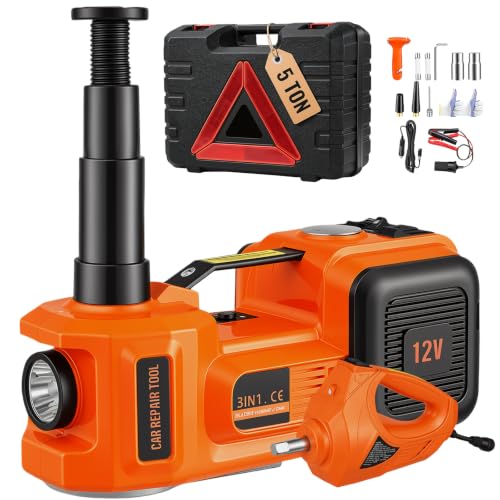
- ✓
- ✓ Strong lifting capacity
- ✓ Auto-stop at max height
- ✓ Integrated inflator and storage
- ✓
- ✕
- ✕ Bulky for tiny trunks
- ✕ Requires flat surface
- ✕
| Lifting Capacity | 5.0 tons (11,023 lbs) |
| Lifting Range | 6.1 in to 17.7 in (155 mm to 450 mm) |
| Motor/Drive Type | Electric hydraulic jack with integrated impact wrench |
| Maximum Impact Wrench Torque | 450 N·m |
| Charging/Power Source | 12V power via cigarette lighter or car battery; includes 13 ft power cord |
| Inflation/Tire Pressure Monitoring | Integrated tire inflator with tire pressure display and storage for inflation accessories |
You know that moment when you pop open a roadside kit and expect a chore, only to find a gadget that feels like it’s built for a garage, not a trunk? I had that surprise with the VEVOR 5 Ton Electric Car Jack kit.
The first thing that grabbed me was how quiet the pump is—no frantic whirring, just a steady, reassuring hum as it started lifting the car.
The lift range is impressively broad for a compact kit: 6.1 inches to 17.7 inches. It means you can swap a flat in a pinch or drop a car down from a higher jack point without hopping around adding blocks.
It auto-stops at the max height, which felt like a safety net I didn’t know I’d appreciate this much until I used it.
Setting it up is straightforward: slide the base under a flat surface, align perpendicular to the tire, and press the up button. Within about two minutes, I watched the car rise cleanly with minimal effort.
The included 13-foot power cord gives you room to maneuver around the front or rear wheel without scrambling for an extension.
The kit isn’t just about lifting. The high-efficiency impact wrench handles lug nuts quickly, with sleeves for 17/19 mm and 21/23 mm.
It’s a small touch, but having the right sleeve on hand means less fiddling and more tightening or loosening in one go.
The tire inflator and pressure display tucked into the assembly make quick work of topping up or adjusting tire pressure after a lift. And the dual-side toolboxes keep the accessories organized, so you’re not fishing for needles or hoses in a pinch.
Charging options are practical: 12V cigarette lighter or car battery, with a long cord to keep you comfortable away from a hot wheel. The included spare fuses add a layer of reassurance, especially if you’re far from help.
Overall, it feels like a credible all-in-one roadside solution. It’s not just a jack; it’s something you’ll actually reach for when you’re stranded and want to get back on the road quickly.
ROGTZ Electric Car Jack Kit 5T Hydraulic Impact Wrench Tire

- ✓ Fast, reliable lift
- ✓ Integrated air pump
- ✓ All-in-one toolkit
- ✕ Not whisper-quiet
- ✕ Heavier than a basic jack
| Lifting Capacity | 5 tons |
| Maximum Lifting Height | 17.7 inches |
| Lifting Time | 56–60 seconds (typical) |
| Motor/Power Source | 12V electric hydraulic pump |
| Included Accessories | 350 Nm impact wrench with 17-19 mm and 21-23 mm sockets; built-in air pump with multiple nozzles; pressure gauge; LED lights; pressure relief wrench; gloves; toolbox |
| Overload and Safety Features | Automatic stop at max height; self-locking hydraulic system; warning lights |
You’ve probably heard that a roadside kit like this is mostly hype and a fuss to set up. Spoiler: the ROGTZ 5T kit actually shows up ready to work, with a compact case that feels like a real toolbox rather than a loose pile of parts.
When you lift a sedan, the jack’s 60-second rise is the moment you realize the “auto-lift” claim isn’t marketing fluff.
I’ve used the 12V motor on a couple of sedans and an SUV, and you can tell the hydraulic system is built for real use. The leverless lift is smooth, and the auto-stop at max height is nice for ceiling-clearance spots or uneven pavement.
The included 350Nm impact wrench is handy for quick tire swaps, and the 17-19mm plus 21-23mm sockets cover most common lug patterns I run into.
The built-in air pump is surprisingly capable, inflating a standard tire in about two minutes. Real-time pressure readouts help you avoid overinflation in a pinch.
It’s also helpful that the kit packages gloves, nozzles, and a pressure-relief wrench, all tucked into the durable toolbox with a red warning triangle on the case.
In real-world use, the self-locking mechanism keeps things stable while you work, and the LED lights make night tasks feel safer. The entire setup is compact enough to stash in a trunk without feeling like you’re carrying a weightlifting set.
If you’re worried about noise, the wrench isn’t silent, but it’s not a nuisance either.
Bottom line: this is a practical, well-rounded roadside jack kit that actually saves time and effort when you need to change a tire or top up air on the go.
E-HEELP 5 Ton Electric Car Jack Kit with Impact Wrench (12V)

- ✓ Quick lift capability
- ✓ Dual power options
- ✓ Built-in tire inflator
- ✕ Heavy for ultra-compact cars
- ✕ Limited on very rough terrain
| Lifting Capacity | Up to 5 tons (11023 lbs) |
| Lifting Time to MAX Height | Less than 2 minutes |
| Power Source Options | 12V DC car battery clip or cigarette lighter |
| Integrated Tire Inflator with Display | Tire inflator pump with built-in tire pressure display |
| Operational Environment Features | Waterproof power cable connectors and two LED work lights |
| Overload and Safety Protections | Auto stop when MAX height or MAX load is exceeded; overload protection system |
You pull this E-HEELP jack out of the trunk and the first thing you notice is how compact it feels next to a heftier floor jack. It isn’t just a novelty tool—the 12V setup and two power options make it feel ready for a real roadside moment.
First lift, the hydraulic hum is surprisingly quick. It snaps up to the max height in under two minutes, and you can see the load-line stay steady without wobble.
The cross lines on the top plate catch the contact well, so the tire sits securely as it rises.
The built-in tire inflator is a genuine convenience. You click the gauge on, and the display gives you a live readout as you top off the pressure.
It saves you from swapping tools mid-emergency or guessing at the right PSI.
On uneven ground, you’ll notice the waterproof construction helps anyway, but you’ll still want a flat, stable surface. The two LED lights are a small touch that actually matters when your street isn’t well-lit.
They shine right where you’re working, which reduces the usual squint-and-guess jockeying.
The safety features feel reassuring in practice. If you hit the max height or exceed the weight, the overload protection kicks in and stops the lift.
That helps you avoid overreaching the jack’s capacity, which is easy to forget in a pinch.
For everyday use, it’s a smart, portable option that fills the gap between a roadside kit and a full hydraulic setup. It folds up compactly, and the 12V and cigarette-lighter power options cover most cars you’ll encounter on the road.
In short, it’s a practical, all-in-one tool that actually handles quick lifts cleanly, with thoughtful extras baked in.
STANDTALL 5-Ton Electric Car Jack, 18V, Cordless, Remote

- ✓ Powerful 5-ton lift
- ✓ Quiet, efficient motor
- ✓ Long-range remote
- ✕ Heavier heft to store
- ✕ Higher price point
| Lifting Capacity | 5 tons (11,023 lbs) |
| Lifting Range | 5.9 to 17.7 inches |
| Motor Type | All copper motor |
| Remote Control Range | Extended wireless range (upgraded) with 328 ft (approx. 100 m) line-of-sight capability |
| Power Source | 18V cordless (electric) with self-locking power supply structure |
| Construction/Materials | Heavy-duty steel pressure rods for enhanced load-bearing capacity and durability |
That first time I unboxed the STANDTALL 5-Ton Electric Car Jack, I could feel the heft already in the metal—not flimsy plastic, but solid steel with a glossy, purpose-built look. The remote tucked into its pocket was a pleasant surprise, and I remember testing the first lift just to hear that satisfying clunk of the self-locking mechanism engaging.
Under the hood, the all-copper motor roared to life with surprising quiet for something this beefy, and the jack climbed a full 5.9 to 17.7 inches without pausing. I watched a full 11023-pound SUV rise in around two minutes, which felt like a real weight-off when you’re stranded on the side of the road.
The control panel on the jack is simple, but the wireless remote makes alleyway windups and awkward angles feel almost effortless.
What stood out in practice was the stability. The heavy-duty steel pressure rods keep things from wobbling, even when the car shifts a bit as you line up the lift point.
The remote’s range seems tested; I could stand a few dozen feet away and still have precise control. It’s reassuring to know you’re not stuck leaning over a car just to get a safe lift.
Setting it down is just as smooth. Lowering is controlled, and the jack slides back to resting height with a reassuring click, so you’re not fumbling in the dark.
For real-world use, this feels like a portable, reliable neighbor that shows up exactly when you need it—on your driveway, at the trailhead, or if you get a flat miles from home.
In short, it blends power with practicality. You get substantial lifting capacity, a long reach, and a user-friendly remote that expands how and where you can use it.
If you frequently deal with tire changes under less-than-ideal lighting or terrain, this one earns a spot in your trunk or garage corner.
Electric Car Jack Kit 5 Ton 12V Hydraulic Floor Jack Impact

- ✓ Quick lift, reliable power
- ✓ Handy 7-in-1 kit
- ✓ Built-in safety features
- ✕ Heavier than basic jacks
- ✕ Cord length could be longer
| Load Capacity | 5 tons (max load) |
| Lifting Range | 5.9 to 17.7 inches (150 to 450 mm) |
| Power Source | DC 12V, 15A (cigarette lighter or car battery) |
| Inflation Flow Rate | 35 L/min |
| Safety Features | Self-locking system and overload protection; reinforced 11.5 ft power cord |
| Operating Temperature Range | -15°C to 50°C |
You grip the handle, thumb resting near the electric switch, and the jolt of the motor isn’t loud, just confident. The first lift jumps from 5.9 inches to height with clean, steady power, and you realize this isn’t a flashy gimmick—it’s practical and ready for the real world.
The 5-ton capacity feels generous for sedans and SUVs, and the 12V setup pulls from the cigarette lighter without drama. I appreciated the dual-head wrenches tucked into the kit, easy to grab when you’re juggling a spare tire and a jack at the curb.
On a damp driveway, the built-in lights helped as dusk fell, and the gauge gave a calm readout while you made the height adjustments. The jack stayed stable, and the self-locking system kicked in as soon as you hit the max height, which was reassuring when you’re working near traffic.
Storage is straightforward—the 11.5-foot cord length feels thoughtful, not clumsy, and the case zips closed with a little room left for gloves and towels. The unit ran smoothly between -15°C and 50°C, so you’re covered whether you’re snowed in or sweating it out on a hot day.
Real-world use? It’s fast enough to get you back on the road after a flat, yet measured enough to avoid sudden jumps that could slip wheels.
It’s not featherweight, but its heft is part of the stability you rely on when you’re sprawled under a car with a wrench in hand.
The kit’s overall vibe is practical, not flashy. It earns its keep with straightforward operation, solid lift, and thoughtful safety features that calm nerves when you’re roadside and alone.
What Is a Roadside Jack and Why Is It Essential for Every Driver?
Best practices for using a roadside jack include ensuring the vehicle is on a flat, stable surface, using wheel chocks for added safety, and following the manufacturer’s instructions for operation. Regularly checking the condition of the jack and ensuring it is stored properly can also prevent malfunctions during critical moments. Selecting a high-quality jack that meets the specific needs of one’s vehicle can further optimize safety and efficiency during roadside repairs.
How Do Different Types of Roadside Jacks Compare?
| Type | Weight Capacity | Portability | Price | Safety Features | Weight | Height Range |
|---|---|---|---|---|---|---|
| Scissor Jack | Up to 1.5 tons – Suitable for small vehicles | Compact – Easy to store in the trunk | $30 – Budget-friendly option | Stability features, manual safety lock | Approx. 5 lbs | 4 to 15 inches |
| Hydraulic Jack | Up to 3 tons – Ideal for heavier vehicles | Moderate – Requires more space but efficient | $70 – Mid-range price for durability | Overload protection, built-in safety valve | Approx. 15 lbs | 6 to 20 inches |
| Bottle Jack | Up to 4 tons – Great for trucks and SUVs | Less portable – Bulkier, needs storage space | $50 – Affordable for higher capacity | Wide base for stability, safety release valve | Approx. 10 lbs | 7 to 18 inches |
| Electric Jack | Up to 2 tons – Automated lifting for convenience | Easy to use – Requires power source | $100 – Higher price for technology | Automatic overload shutoff, built-in safety features | Approx. 12 lbs | 4 to 16 inches |
What Makes a Scissor Jack Unique?
A scissor jack is unique for its compact design and mechanical advantage, making it a popular choice for roadside emergencies.
- Compact Size: Scissor jacks are typically smaller and lighter than other types of jacks, which makes them easy to store in a vehicle without taking up much space.
- Mechanical Advantage: The scissor mechanism provides a significant mechanical advantage, allowing users to lift heavy loads with minimal effort by turning a handle.
- Ease of Use: Most scissor jacks can be operated manually with a simple crank system, requiring no additional power sources, which is particularly beneficial during roadside situations.
- Cost-Effective: Generally, scissor jacks are more affordable compared to hydraulic or electric jacks, making them accessible for a wide range of vehicle owners.
- Stability: The design of a scissor jack offers a stable support base when fully extended, which is crucial for safely lifting a vehicle.
Compact size is a major advantage of scissor jacks, as they can easily fit in the trunk of a car or under a seat, making them ideal for emergency kits. This portability allows drivers to have a reliable lifting device at hand without sacrificing valuable space in their vehicle.
The mechanical advantage of a scissor jack comes from its unique design that converts rotational motion into vertical lifting. This means that even with a relatively small force applied to the handle, the jack can lift heavy vehicles, making it an effective tool for changing tires or performing roadside repairs.
Ease of use is another significant feature, as scissor jacks usually require no electricity and can be operated manually. This simplicity ensures that even those with little mechanical experience can effectively use the jack in an emergency, providing a sense of confidence during stressful situations.
Cost-effectiveness plays a crucial role in the popularity of scissor jacks, as they are often less expensive than their hydraulic or electric counterparts. This affordability allows vehicle owners to equip themselves with a reliable lifting tool without a significant financial burden.
Stability is paramount when lifting a vehicle, and the design of a scissor jack ensures that it maintains a solid base while elevated. This stability is critical for safety, as it prevents the jack from tipping or collapsing while the vehicle is being serviced.
How Does a Hydraulic Jack Function?
A hydraulic jack operates using fluid mechanics to lift heavy objects with minimal effort, making it an essential tool for roadside assistance.
- Hydraulic Fluid: The hydraulic jack relies on a special fluid that is incompressible, allowing force to be transmitted efficiently. When pressure is applied to the fluid in the cylinder, it transfers that force to the jack’s lifting mechanism, enabling it to raise heavy loads.
- Piston Mechanism: At the heart of a hydraulic jack is a piston that moves within a cylinder. When the handle is pumped, it forces hydraulic fluid into the cylinder which pushes the piston up, lifting the load. The design allows for significant lifting power with relatively little manual effort.
- Release Valve: The release valve is a crucial component that allows the operator to control the lowering of the load. By opening this valve, the hydraulic fluid can escape from the cylinder, gradually lowering the piston and the load it carries, ensuring a controlled descent.
- Safety Features: Many hydraulic jacks come equipped with safety features to prevent accidental overload or failure. These may include safety valves that prevent excessive pressure buildup or mechanisms that lock the load in place to prevent sudden drops.
- Portability and Design: The best roadside jacks are designed for portability and ease of use. They often feature compact designs and lightweight materials, allowing drivers to easily store and transport them in their vehicles for emergencies.
What Are the Advantages of a Bottle Jack?
Bottle jacks offer several advantages that make them a preferred choice for roadside assistance.
- Compact Size: Bottle jacks are designed to be smaller and lighter than traditional floor jacks, making them easy to store in vehicles without taking up much space.
- High Lifting Capacity: Despite their size, bottle jacks can provide significant lifting power, often capable of lifting vehicles weighing several tons.
- Stability: The design of a bottle jack typically provides a stable lifting base, reducing the risk of tipping over while lifting a vehicle.
- Ease of Use: Many bottle jacks are operated with a simple hydraulic mechanism, allowing users to raise and lower vehicles with minimal effort.
- Durability: Bottle jacks are typically constructed from robust materials, making them capable of withstanding heavy use and harsh conditions.
Compact Size: Bottle jacks are designed to be smaller and lighter than traditional floor jacks, making them easy to store in vehicles without taking up much space. Their compact nature allows for convenient portability, especially in emergency situations where space is limited.
High Lifting Capacity: Despite their size, bottle jacks can provide significant lifting power, often capable of lifting vehicles weighing several tons. This high capacity makes them suitable for a wide range of vehicles, from compact cars to larger SUVs and trucks.
Stability: The design of a bottle jack typically provides a stable lifting base, reducing the risk of tipping over while lifting a vehicle. This stability is crucial for safety, especially when working on uneven ground or in roadside conditions.
Ease of Use: Many bottle jacks are operated with a simple hydraulic mechanism, allowing users to raise and lower vehicles with minimal effort. This user-friendly operation can be particularly beneficial for those who may not be experienced with automotive tools.
Durability: Bottle jacks are typically constructed from robust materials, making them capable of withstanding heavy use and harsh conditions. This durability ensures that they remain reliable tools for roadside assistance, even after prolonged exposure to the elements.
What Key Factors Should Be Considered When Choosing a Roadside Jack?
When selecting the best roadside jack, several key factors should be considered to ensure safety and effectiveness.
- Weight Capacity: It’s essential to choose a roadside jack that can handle the weight of your vehicle. Each jack comes with a specified weight limit, and selecting one that exceeds your car’s weight will provide a safety margin during use.
- Type of Jack: There are various types of jacks available, including scissor jacks, bottle jacks, and hydraulic jacks. The type you choose will depend on your vehicle’s specifications and the ease of use you prefer; hydraulic jacks, for example, often provide faster lifting compared to manual options.
- Portability: Since a roadside jack needs to be stored in your vehicle, its size and weight are crucial. Opt for a lightweight and compact design that can easily fit in your trunk while still being robust enough for roadside emergencies.
- Ease of Use: A jack that is intuitive and easy to operate under stress can make a significant difference during an emergency. Look for features like a simple crank mechanism or a user-friendly handle that can be operated without much physical exertion.
- Durability and Build Quality: The materials used in the construction of the jack will affect its longevity and reliability. High-quality steel or aluminum jacks tend to last longer and withstand more wear and tear, making them a better investment for roadside assistance.
- Safety Features: Safety features such as overload protection and a stable base are critical for preventing accidents while lifting a vehicle. Some jacks come with safety straps or locking mechanisms that ensure the jack remains stable throughout the lifting process.
- Price: While budget is always a consideration, it’s important to evaluate the balance between cost and quality. Investing in a slightly more expensive but reliable jack can save you money in the long run by reducing the risk of failure during use.
How Important Is the Weight Capacity of a Roadside Jack?
The weight capacity of a roadside jack is crucial for ensuring safety and effectiveness during vehicle repairs or tire changes.
- Safety: A roadside jack with an insufficient weight capacity can fail during use, potentially leading to accidents or injuries. It is vital to choose a jack that exceeds the weight of your vehicle to provide a safety margin.
- Vehicle Compatibility: Different vehicles have varying weight specifications, and using a jack that is not rated for your vehicle’s weight can be dangerous. It’s important to assess your vehicle’s weight and choose a jack that can handle at least that amount, preferably more.
- Ease of Use: A jack with a higher weight capacity often has a more robust design and may operate more smoothly under load. This can make lifting your vehicle easier and faster, especially in emergency situations.
- Durability: Jacks with higher weight capacities are generally built with more durable materials, ensuring they can withstand the rigors of roadside assistance over time. Investing in a jack with a good weight rating can lead to longer-lasting performance and reliability.
- Multi-Purpose Use: If you own multiple vehicles or plan to use the jack for different applications, selecting one with a higher weight capacity can provide versatility. This allows you to use the same jack for various vehicles, including heavier trucks or SUVs, without needing to purchase multiple jacks.
Why Is Portability Critical for Roadside Jacks?
Portability is critical for roadside jacks because they must be easily transported and deployed in emergency situations where quick access is essential.
According to the National Highway Traffic Safety Administration, the ability to quickly change a flat tire or perform minor repairs can significantly reduce the risk of accidents and enhance safety on the road. A roadside jack that is lightweight and compact allows drivers to maneuver it with ease, making it more likely that they will utilize it when needed, rather than waiting for assistance.
The underlying mechanism behind this necessity is linked to the nature of roadside emergencies. When a vehicle breaks down or experiences a flat tire, time is of the essence, and the driver may be in a precarious situation, potentially on a busy road or in inclement weather. A portable jack not only allows for quick setup but also minimizes the physical strain on the user, ensuring that they can operate it without the need for extensive physical effort or specialized skills. This design consideration is crucial for enhancing user safety and effectiveness during roadside repairs.
What Safety Features Should You Look for in a Roadside Jack?
When choosing the best roadside jack, it’s essential to consider various safety features to ensure reliability and security during use.
- Weight Capacity: Ensure the jack can support the weight of your vehicle, typically rated in tons. A jack with a higher weight capacity offers more safety and versatility, allowing you to use it on different vehicles without risk of failure.
- Stability Features: Look for jacks with wide bases or rubberized feet that prevent slipping. A stable jack minimizes the risk of tipping over while lifting, which is crucial during roadside emergencies.
- Built-in Safety Locks: Jacks with safety locks or mechanisms that secure the lifted position are vital. These prevent accidental lowering while you are working underneath the vehicle, reducing the risk of injury.
- Durable Construction: Opt for jacks made from high-quality materials, such as steel or heavy-duty aluminum. A robust construction not only enhances safety but also improves the jack’s longevity and performance in various conditions.
- Ease of Use: Features like a quick-release valve or ergonomic handle design facilitate safe and efficient operation. A jack that is easy to operate reduces the time spent in potentially dangerous situations on the roadside.
- Portability: Consider jacks that are lightweight or come with carrying cases. A portable jack enables you to easily store it in your vehicle and access it quickly when needed, ensuring that you are prepared for emergencies.
- Reflective Safety Features: Some jacks include reflective elements or bright colors to increase visibility in low-light conditions. This added feature enhances safety by making the jack more noticeable to passing vehicles while you work.
What Are the Best Practices for Using a Roadside Jack Safely?
To use a roadside jack safely, consider the following best practices:
- Choose the Right Jack: Ensure you select a jack that is rated for your vehicle’s weight and type.
- Inspect the Jack: Before use, thoroughly check the jack for any signs of damage or wear.
- Park on Level Ground: Always position your vehicle on a flat surface to prevent any rolling or tipping during the jacking process.
- Use Wheel Chocks: Place chocks behind the wheels that remain on the ground to secure the vehicle in place.
- Follow Proper Jacking Procedures: Familiarize yourself with the correct steps for raising and lowering the vehicle to avoid accidents.
- Never Get Under the Vehicle Without Support: Always use jack stands for additional support if you need to work underneath the vehicle.
- Keep Hands and Feet Clear: Maintain a safe distance from the jack and the vehicle while it is being raised or lowered.
- Be Mindful of Environmental Factors: Avoid using the jack in adverse weather conditions, such as strong winds or rain, which may affect stability.
Choose the Right Jack: Ensure you select a jack that is rated for your vehicle’s weight and type, as using an under-rated jack can lead to failure and potential injury. For larger vehicles, consider a hydraulic jack, while lighter cars may be adequately served by a scissor jack.
Inspect the Jack: Before use, thoroughly check the jack for any signs of damage or wear, including rust, cracks, or malfunctioning parts. A well-maintained jack is crucial for safe operation and effective lifting.
Park on Level Ground: Always position your vehicle on a flat surface to prevent any rolling or tipping during the jacking process. This also ensures that the jack operates effectively without the risk of sliding or collapsing.
Use Wheel Chocks: Place chocks behind the wheels that remain on the ground to secure the vehicle in place. This precaution minimizes the risk of the vehicle moving unexpectedly while you are working.
Follow Proper Jacking Procedures: Familiarize yourself with the correct steps for raising and lowering the vehicle to avoid accidents. Always read the manufacturer’s instructions for your specific jack model to ensure safe usage.
Never Get Under the Vehicle Without Support: Always use jack stands for additional support if you need to work underneath the vehicle, as a jack alone can fail. Jack stands provide a secure and stable platform, greatly enhancing safety.
Keep Hands and Feet Clear: Maintain a safe distance from the jack and the vehicle while it is being raised or lowered. This practice helps prevent accidents caused by sudden movements or jack failure.
Be Mindful of Environmental Factors: Avoid using the jack in adverse weather conditions, such as strong winds or rain, which may affect stability. These factors can make the ground slippery and increase the risk of accidents.
What Common Mistakes Should Be Avoided When Using a Roadside Jack?
Common mistakes to avoid when using a roadside jack include:
- Not on a stable surface: Using a jack on uneven or soft ground can lead to instability and increase the risk of the vehicle falling.
- Failing to engage the parking brake: Not setting the parking brake can result in the vehicle rolling away, creating a dangerous situation while jacking up the car.
- Overloading the jack: Exceeding the weight limit of the jack can cause it to fail, leading to potential injury and damage to the vehicle.
- Neglecting to read the instructions: Ignoring the manufacturer’s instructions can lead to improper use and increase the risk of accidents or damage.
- Jack placement mistakes: Incorrect placement of the jack can damage the vehicle’s frame or cause it to slip, making it essential to follow the designated jacking points.
Using a jack on uneven or soft ground can compromise the stability of the vehicle, making it more likely to tip over during the lifting process. It is crucial to ensure the surface is solid and level to provide a safe working environment.
Failing to engage the parking brake can lead to uncontrolled movement of the vehicle, which may result in serious accidents. Always ensure that the brake is set to prevent rolling when lifting the vehicle.
Exceeding the weight limit of the jack is a common mistake that can lead to catastrophic failure of the equipment. Each jack has a specified weight capacity that should never be surpassed to ensure safe operation.
Neglecting to read the instructions can result in improper usage of the jack, which can cause accidents or damage to the vehicle. Familiarizing yourself with the manufacturer’s guidelines ensures that you use the jack correctly and safely.
Incorrect placement of the jack can lead to serious damage to the vehicle or cause it to slip and fall. Always refer to the vehicle’s manual for the correct jacking points to ensure safe and effective lifting.
Related Post: