
The first thing that struck me about these heavy-duty jacks wasn’t its surge of lifting power, but how smoothly the AV Steel Low Profile Floor Jack 3 Ton moved under a low-slung car. I tested the 3-ton model with a quick lift and a steady saddle contact, and the dual-piston pump cut the number of strokes noticeably. You’ll notice the same fast, controlled feel when you slide it under clearance-challenged vehicles and steady, precise placement when you raise and lower.
Compared to the others, the low-profile reach and safety features matter most: a 3-1/8″ minimum height, 360° saddle, overload protection, and easy maneuverability with rear wheels. These details translate to fewer fumbles in real garages and more confidence on the lift. If you want dependable performance with clear, practical advantages, this setup delivers.
Top Recommendation: AV Steel Low Profile Floor Jack 3 Ton, Heavy Duty Hydraulic
Why We Recommend It: The AV Steel 3 Ton floor jack combines a very low 3-1/8″ minimum lift height with a robust 6,600 lb capacity, enabling access under most low-clearance vehicles. Its dual-piston pump provides rapid lifting with fewer strokes, and the 360° rotatable saddle plus overload protection enhances stability and safety during operation. Compared to Maxority options (3-ton and 5-ton) and the Torin bottle jack, AV Steel offers a better balance of low-profile reach, controlled lifting, and warranty support, making it the most practical, reliable choice for everyday garages.
Best heavy duty hydraulic jack: Our Top 5 Picks
- AV Steel Low Profile Floor Jack 3 Ton, Heavy Duty Hydraulic – Best Value
- Maxority 3-Ton Low Profile Hydraulic Heavy-Duty Steel Floor – Best Premium Option
- Maxority 5-Ton Low Profile Hydraulic Floor Jack (Red) – Best for Beginners
- Torin 20 Ton Welded Hydraulic Car Bottle Jack TAM92003B – Best Industrial-Grade Jack
- AV Steel 3 Ton Floor Jack, Single Piston Steel Hydraulic – Best Most Versatile
AV Steel Low Profile Floor Jack 3 Ton, Heavy Duty Hydraulic

- ✓ Low profile fit
- ✓ Fast dual pump
- ✓ Durable build
- ✕ Heavier than some rivals
- ✕ Larger footprint than ultra-compact models
| Capacity | 3 tons (6,600 lbs) lifting capacity |
| Minimum Lift Height | 3-1/8 inches |
| Maximum Lift Height | Not specified in description |
| Weight/Construction | Heavy-duty steel construction with wheels; 2 rotating rear wheels |
| Safety Features | Overload protection; 360° rotatable saddle; ANSI/ASME PASE safety standard compliance |
| Warranty & Support | 12-month warranty on design, materials, and workmanship; 24/7 customer service |
You’ve stood with a creeping suspicion that your low-clearance car is a bargain at the showroom, but a nightmare under the driveway. The AV Steel Low Profile Floor Jack changes that vibe in minutes.
When I first slid it under a slammed sedan, its 3-1/8 inch minimum height and wide saddle saved me from fidgeting with jacks and boards. It feels sturdy enough to trust under anything up to 6,600 pounds, and you can tell the build is meant to last the long haul.
The dual pump pistons turn lifting into a smoother, quicker motion. You’ll notice fewer pump cycles and a steadier rise, which is a huge win when you’re sprinting between tires and brake work.
The 29-1/8 by 13-3/4 by 5-7/8 inch footprint is surprisingly compact for a 3-ton jack, yet the steel construction has a reassuring heft you can feel in your hands.
One practical touch I appreciated is the 360° rotatable saddle. It locks onto the contact point cleanly, protecting the vehicle’s pinch weld and giving you wiggle room to position precisely.
The safety overload protection is a quiet guardian, and you’ll notice the saddle staying level even if you’re working on uneven ground—small details that make a big difference in real life.
Rolling wheels help you reposition the jack without skidding or sliding, which is great when you’re juggling a few tools and a stubborn wheel. It sits nicely on a shop floor, and the build quality invites you to rely on it for regular use rather than occasional projects.
If you’re buying for a garage with mixed vehicles, this model’s height range and durability align well with most sedans, SUVs, and light trucks you’ll encounter.
Overall, the AV Steel jack addresses the pain points you feel with low-profile lifting: it fits, it lifts efficiently, and it protects your car. It’s not just a tool; it’s a smoother, safer way to get under the vehicle and back up on a jack stand in fewer moves than you’d expect.
Maxority 3-Ton Low Profile Hydraulic Heavy-Duty Steel Floor

- ✓ Low-profile access
- ✓ Quick lifting (RAPID PUMP)
- ✓ Solid, stable build
- ✕ Heavier than some rivals
- ✕ Limited reach for very tall cars
| Lifting Capacity | 3 tons |
| Low-Profile Height | Ultra-low profile design for undercarriage clearance (exact height not specified) |
| Rapid Pump Technology | High-speed hydraulic system for quicker lifting with fewer strokes |
| Frame Material | High-strength steel |
| Safety Features | Built-in safety valve on lift saddle to prevent overloading |
You slide the Maxority 3-Ton Low Profile undercarriage and immediately notice how low it sits, almost sneaking under a sports car’s belly. It feels sturdier in hand than it looks, with a matte steel finish that doesn’t chatter when you tap it with a glove.
Compared to the last floor jack I used, this one glides under a lowered frame with ease, thanks to its ultra-low profile. The extended reach is real—you can position the saddle under a rocker panel without crawling around the wheel well.
It’s the kind of design that makes you think, “Finally, a jack that gets my car.”
When you lift, the RAPID PUMP technology makes the first few inches almost effortless. You’ll notice fewer pumping strokes to reach a solid lift, which saves time during quick tire changes or brake work.
The saddle sits securely, and the built-in safety valve gives you a reassuring click of confidence as the load climbs.
The construction feels trustworthy: heavy-duty steel that doesn’t bend under load and a base that stays planted on slick garage floors. If you’ve dealt with jack creep or wobbly bases before, you’ll appreciate the stability this setup offers, even on slightly uneven concrete.
Setting the jack down is smooth, and the release valve responds predictably, allowing controlled lowering without drama. It’s practical for day-to-day maintenance, from oil changes to suspension checks, without requiring a leap of faith at every lift.
In real-world use, the Maxority stands out for accessibility, speed, and build quality. It’s not flashy, but it’s precisely the tool you reach for when you need a reliable lift with wide applicability and a low profile.
Maxority 5-Ton Low Profile Hydraulic Floor Jack (Red)

- ✓ Quick lift dual piston
- ✓ Extra-long handle leverage
- ✓ Heavy-duty steel build
- ✕ Higher price point
- ✕ Heavier to maneuver
| Lifting Capacity | 5 tons (11,000 lbs) |
| Lifting Range | Designed for a broad range suitable for cars, trucks, SUVs (exact height not specified in description) |
| Pump System | Dual-piston quick lift hydraulic system |
| Handle design | Extra-long handle for maximum leverage |
| Construction | Heavy-duty steel construction |
| Safety Features | Overload safety valve, anti-slip saddle, rubber padding to protect undercarriage |
You lift the hood and the Maxority 5-Ton low-profile jack immediately feels different from the moment you slide it under the frame. It sits low enough to slide under a sedan without cranking the suspension, and the red finish looks rugged without screaming “cheap tool.”
The dual-piston quick lift pumps up faster than the typical single-piston jack I’ve used, dropping you into full height with noticeably fewer pumps. It’s not just quick—it’s steady, too, with a smug confidence as the saddle settles against the pinch welds.
The extra-long handle is a real boon. It gives you leverage you can feel, making those heavy tires feel almost manageable.
I found myself applying just a fraction of the effort I expected to reach the mid-stance height, which saves your wrists on long jobs.
Build quality is reassuring. The steel feels substantial, and the wide base stays planted when you’re lifting.
The safety valve works without fuss, so you don’t have to worry about a sudden surge of lift when you’re near the top.
The anti-slip saddle grips well, and the rubber padding protects the car’s undercarriage as you position the jack. It’s the kind of thoughtful detail you notice after you’ve had to re-adjust with a cheaper tool mid-job.
In real-world use, this jack handles SUVs and trucks with ease, yet it doesn’t feel awkward on a compact car. For routine maintenance or tire rotations, it’s a dependable, durable choice you won’t outgrow quickly.
If you’re chasing speed, safety, and stability in one package, this jack checks those boxes. It’s not flashy, but it earns trust the moment you start lifting.
Overall, you’ll appreciate the blend of low-profile practicality, lifting power, and sturdy construction for daily garage use. It’s the kind of tool you reach for when you want one-and-done reliability.
Torin 20 Ton Welded Hydraulic Car Bottle Jack TAM92003B
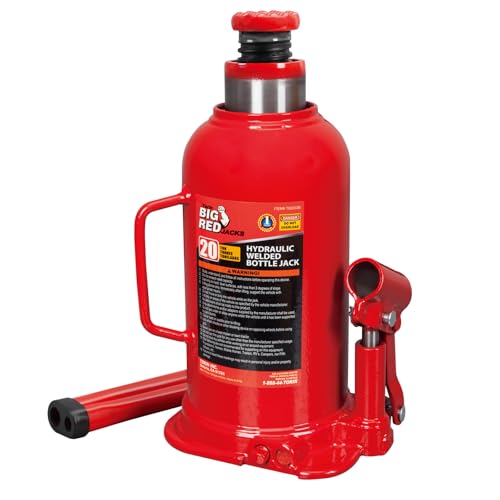
- ✓ Smooth lifting action
- ✓ Wide lift range
- ✓ Durable construction
- ✕ Heavy to move
- ✕ Bulkier footprint
| Lifting Capacity | 20 tons (40,000 lb) |
| Lifting Range | 9-7/16 in to 17-5/8 in |
| Construction Material | Drop-forged alloy steel; inner/outer welded construction |
| Saddle Feature | Serrated, heat-treated saddle for secure grip |
| Hydraulic Protection & Pump | Glide-action pump with integrated oil-bypass and overload valve |
| Extension Mechanism | Adjustable screw top extension |
The first time I weighed it in my hands, the 20-ton Torin felt reassuringly solid, like it could outlive a few shifts on the shop floor. I clamped the serrated saddle with a quick twist and watched the chrome-tinged jack rise smoothly as I pressed the glide-action pump.
That effortless lift? It immediately took the guesswork out of getting a heavy axle off the ground.
When I slid the flip-top saddle across a rough driveway, the base held steady with minimal wobble. The 9-7/16″ to 17-5/8″ range means you’re covered from a low stance to a high lift without swapping tools.
The adjustable screw top adds a little extra reach for stubborn tires or uneven pavement, which I appreciated during a quick garage tire swap.
The welded, drop-forged alloyed steel construction feels proofed for heavy use. I could hear a faint hiss of the hydraulic chamber as it extended, but it never leaked or wandered when I tipped the handle slightly.
The built-in oil-bypass and overload valve gave me confidence that the jack wouldn’t overshoot—very reassuring when you’re balancing a loaded vehicle.
For resale or long jobs, the heft is a trade-off. It’s not something you carry around casually, but in a shop or driveway setup, its stability shines.
At under $60, you’re getting a lot of capability without breaking the bank.
Bottom line: this is a workhorse designed for real-world lifting tasks, not just a weekend garage toy. If you need serious torque, quick lifts, and a durable build, the Torin TAM92003B delivers.
AV Steel 3 Ton Floor Jack, Single Piston Steel Hydraulic

- ✓
- ✓ Heavy‑duty steel build
- ✓ Steady single-piston lift
- ✓ Stable, rotates saddle
- ✓
- ✕
- ✕ Heavier to move
- ✕ Not for lifted vehicles
- ✕
| Capacity | 3 tons (6,000 lbs) |
| Lift Range | 5.5 inches to 18.5 inches |
| Weight | 63.8 lbs |
| Construction | Heavy steel, single piston hydraulic floor jack |
| Overload Protection | Built-in safety valve |
| Wheels and Stability | Large 360° rotatable saddle; two rear rotating wheels |
I spotted this AV Steel 3 Ton Floor Jack sitting on my bench with its 63.8-pound heft and thought, “this will either be a serious workhorse or a backbreaker.” The moment I unboxed it, the heavy steel feel and the large 360° saddle told me it’s built for real garage use, not casual hobby days. Lifting a stout SUV felt surprisingly confident thanks to the wide stance and solid base.
In use, the single-piston design means a satisfying, steady lift, though you’ll notice more strokes if you’re lifting closer to the 5.5″ low point. If you’re routinely swapping tires or doing brake work, the 6,000-lb capacity covers most cars and SUVs without drama.
The safety valve thoughtfully kicks in if you push it too far, which is peace of mind when you’re under a car.
The saddle rotates, which helps you position the lift points without wiggling the jack around. Two rear wheels make repositioning simpler in a cramped garage, and the release valve is smooth once you’re set up.
It’s not feather-light, but that weight is part of the stability you feel when you slide under a vehicle.
Where this shines is durability and reliability. The heavy steel construction handles daily shop wear, and the warranty plus 24/7 support makes you feel taken care of if something goes off track.
Just verify your vehicle’s lift points and avoid lifted trucks or RVs, as noted.
If you’re balancing price with ruggedness, this model hits a sweet spot. It’s loud when you crank, but the lift is steady and patient, which is exactly what you want during a tire change or brake job.
What Defines a Heavy Duty Hydraulic Jack?
A heavy-duty hydraulic jack is defined by its capacity, construction, and intended applications, making it ideal for lifting heavy loads.
- Lifting Capacity: Heavy-duty hydraulic jacks are designed to lift significant weights, often ranging from 5 tons to over 50 tons. This capacity is essential for tasks in automotive repair, construction, and industrial applications where heavy machinery and vehicles need to be raised safely and efficiently.
- Construction Materials: The durability and strength of a hydraulic jack are primarily determined by the materials used in its construction. Heavy-duty models are typically made from high-grade steel or reinforced materials that can withstand the stresses of lifting heavy loads without compromising safety or structural integrity.
- Hydraulic Mechanism: The hydraulic system of these jacks utilizes fluid pressure to lift loads, allowing for smooth operation with minimal effort. This mechanism generally includes a pump, cylinder, and piston, providing the ability to lift heavy objects with precision and control.
- Stability Features: A good heavy-duty hydraulic jack includes features like wide bases and sturdy frames to ensure stability while lifting. These features are crucial to prevent tipping or collapsing under the weight, ensuring user safety during operation.
- Portability: Some heavy-duty hydraulic jacks are designed with portability in mind, including wheels or handles for easy maneuverability. This is particularly beneficial in job sites or garages where the jack needs to be moved frequently to accommodate various lifting tasks.
- Safety Features: Many high-quality heavy-duty hydraulic jacks come equipped with safety features such as overload protection and safety valves. These mechanisms prevent accidental lifting beyond the rated capacity and ensure that the jack operates smoothly without risking failure.
What Are the Key Features of an Effective Heavy Duty Hydraulic Jack?
The key features of an effective heavy duty hydraulic jack include:
- Load Capacity: An effective heavy duty hydraulic jack should have a high load capacity, typically ranging from 2 to 50 tons, to safely lift heavy vehicles or machinery. This ensures that it can handle the weight of the objects it is designed to lift without risk of failure.
- Stability and Safety Features: Stability is crucial when using a hydraulic jack, and effective models often come with a wide base and rubber pads or grips. Safety features such as overload protection and safety valves prevent the jack from lifting beyond its safe limits, reducing the risk of accidents.
- Durability and Construction Material: The construction material should be robust, often made from high-strength steel or aluminum, to withstand heavy use and resist corrosion. A durable hydraulic jack will have a longer lifespan, making it a better investment for users who require frequent lifting.
- Ease of Use: A good hydraulic jack should be user-friendly, featuring an ergonomic handle and simple controls for operation. Additionally, it should have a quick-lift feature to minimize the effort and time needed to lift heavy loads.
- Portability: For those who need to transport the jack frequently, portability is a key feature. This can include a lightweight design, compact size, and built-in wheels or handles for easy movement, making it suitable for various job sites.
- Adjustable Height Range: A hydraulic jack with an adjustable height range allows it to be used on a variety of vehicle types and sizes. This versatility ensures it can accommodate different lifting needs, whether for cars, trucks, or heavy machinery.
- Warranty and Customer Support: An effective hydraulic jack often comes with a warranty and access to reliable customer support. This provides peace of mind for users, ensuring that they have assistance for any issues or defects that may arise.
What Types of Heavy Duty Hydraulic Jacks Are Available?
The types of heavy-duty hydraulic jacks available include:
- Floor Jacks: Ideal for lifting vehicles, floor jacks are characterized by their low profile and hydraulic lifting mechanism, allowing them to raise heavy loads quickly and safely. They typically have a wide base for stability and can lift vehicles to a convenient height for maintenance or repairs.
- Bottle Jacks: These compact jacks are designed to lift heavy loads with a vertical lifting action, making them suitable for tight spaces. Bottle jacks are often used in automotive applications and can lift much heavier loads than their size might suggest, making them a favorite for mechanics and DIY enthusiasts.
- Ram Jacks: Ram jacks are specialized jacks used primarily in construction and industrial applications for pushing or pulling heavy objects. They feature a cylindrical shape and can exert significant force, making them useful for tasks such as lifting beams or aligning structures.
- Transmission Jacks: Specifically designed for lifting and supporting transmissions, these jacks are equipped with a saddle that can be adjusted to accommodate various transmission sizes. They provide stability and support during the removal and installation processes, ensuring safety and precision.
- High-Pressure Jacks: These jacks are designed to handle extreme lifting applications with high pressure, often used in automotive repair and heavy machinery maintenance. They are capable of lifting very heavy loads quickly, making them essential tools in professional garages and heavy equipment operations.
How Does a Floor Jack Work?
A floor jack is a mechanical device used to lift heavy objects, often vehicles, and operates using hydraulic principles to provide significant lifting power.
- Hydraulic Cylinder: The core component of a hydraulic jack, the hydraulic cylinder creates pressure to lift the load. When the handle is pumped, it pushes hydraulic fluid into the cylinder, which then raises the piston and, consequently, the load.
- Pump Handle: This is the lever that the user operates to generate hydraulic pressure. By repeatedly pumping the handle, the user moves hydraulic fluid to the cylinder, allowing for efficient lifting with minimal effort.
- Release Valve: The release valve is used to lower the object safely after lifting. When opened, it allows hydraulic fluid to escape from the cylinder, gradually lowering the load in a controlled manner without sudden drops.
- Base Plate: The base plate provides stability to the jack while lifting. A wider base ensures that the weight is distributed evenly, preventing tipping and enhancing safety during the lifting process.
- Safety Features: Many heavy-duty hydraulic jacks include safety features such as overload protection and safety locks. These features are designed to prevent the jack from lifting beyond its rated capacity and to secure the load when raised.
- Wheels and Casters: Most floor jacks come equipped with wheels or casters, which allow for easy maneuverability around the garage or workshop. This makes it convenient to position the jack under a vehicle or other heavy load without straining.
How Is a Bottle Jack Different from Other Jacks?
A bottle jack is a specific type of hydraulic jack that differs from other jacks in its design, application, and lifting capabilities.
- Design: Bottle jacks are typically cylindrical in shape and feature a compact design that allows for easy storage and transport.
- Lifting Capacity: They are known for their high lifting capacity relative to their size, making them ideal for heavy-duty applications.
- Operating Mechanism: Bottle jacks operate using hydraulic pressure, which allows them to lift heavy loads with minimal effort compared to mechanical jacks.
- Height Adjustment: They offer a significant lift height, allowing users to raise vehicles or heavy machinery to a comfortable working height.
- Stability: When used on a flat surface, bottle jacks provide a stable lifting point, but they require a solid base to ensure safety during operation.
- Portability: Their lightweight and compact nature makes bottle jacks more portable than some other types of hydraulic jacks, making them suitable for roadside emergencies.
In terms of design, bottle jacks have a distinctive cylindrical shape which aids in their compactness and ease of transport, while other jacks may be bulkier or less portable. Their high lifting capacity is a defining feature, often allowing them to lift loads that are much heavier than what other jacks might handle, making them particularly useful in automotive and industrial contexts.
The operating mechanism of bottle jacks utilizes hydraulic pressure, which distinguishes them from mechanical jacks that depend on screw systems or leverage. This hydraulic operation facilitates lifting heavy loads effortlessly, which is a significant advantage for users needing to lift substantial weight quickly.
Height adjustment is another critical factor; bottle jacks can elevate loads significantly, offering a higher lift compared to many other jack types like scissor jacks. However, users must ensure they are on a stable and flat surface to maximize safety, as bottle jacks can be less stable on uneven terrains.
Portability is another advantage of bottle jacks, as they are designed to be lightweight and easy to move, making them an excellent choice for emergency situations or when working in various locations. This feature, combined with their ability to lift heavy loads, makes them a preferred choice for many users seeking the best heavy-duty hydraulic jack.
What Are the Advantages of Using a Heavy Duty Hydraulic Jack?
The advantages of using a heavy duty hydraulic jack include enhanced lifting capacity, stability, and efficiency in various applications.
- High Lifting Capacity: Heavy duty hydraulic jacks are designed to lift significantly more weight compared to standard jacks. This makes them ideal for heavy machinery, vehicles, and industrial equipment, ensuring that even the heaviest loads can be safely elevated with ease.
- Stability and Safety: These jacks often feature a wider base and robust construction, providing better stability during lifting. This reduces the risk of tipping or slipping, ensuring that the load remains secure throughout the lifting process, which is crucial for safety in high-stakes environments.
- Durability: Built to withstand rigorous use, heavy duty hydraulic jacks are typically made from high-quality materials that resist wear and tear. Their durability means they can perform consistently over time, making them a reliable choice for both professional mechanics and DIY enthusiasts.
- Ease of Use: Hydraulic jacks operate using hydraulic fluid, which allows them to lift heavy loads with minimal effort. Users can easily engage the jack with a simple pump action, making it accessible even for those who may not have extensive mechanical knowledge.
- Versatility: Heavy duty hydraulic jacks come in various sizes and designs, making them suitable for a wide range of applications, from lifting cars and trucks to supporting construction equipment. This versatility makes them an essential tool in garages, workshops, and construction sites.
- Time Efficiency: With their powerful lifting capabilities, heavy duty hydraulic jacks can complete lifting tasks quickly, saving time on projects that require frequent lifting and lowering. This efficiency is particularly beneficial in professional settings where time is money.
What Safety Measures Should You Follow When Using a Hydraulic Jack?
When using a hydraulic jack, it is essential to follow safety measures to prevent accidents and ensure effective operation.
- Read the Manual: Always start by thoroughly reading the manufacturer’s manual for specific instructions and safety warnings related to the hydraulic jack you are using.
- Inspect the Jack: Before each use, check the hydraulic jack for any signs of damage, leaks, or malfunction to ensure it operates safely and effectively.
- Use on Stable Ground: Position the jack on a flat and stable surface to prevent it from slipping or tipping over during operation, which could lead to serious injuries.
- Secure the Load: Always ensure that the load is properly secured and balanced before lifting to avoid accidents caused by shifting or falling objects.
- Use Jack Stands: After lifting a vehicle or heavy object, always use jack stands to support it instead of relying solely on the hydraulic jack, which can fail under prolonged weight.
- Stay Clear of the Load: Keep your body and any bystanders clear of the load while it is being lifted or lowered to protect against potential dropping or failure of the jack.
- Follow Weight Limits: Adhere strictly to the weight capacity specified by the manufacturer to prevent overloading the jack, which can lead to catastrophic failure.
- Avoid Modifications: Do not modify the hydraulic jack or use it for purposes other than what it was designed for, as this can compromise its safety and functionality.
How Can You Ensure Proper Maintenance for Your Hydraulic Jack?
To ensure proper maintenance for your hydraulic jack, consider the following key practices:
- Regular Inspection: Inspect your hydraulic jack regularly for any signs of wear, leaks, or damage.
- Proper Storage: Store the jack in a clean, dry place to prevent corrosion and damage.
- Fluid Maintenance: Check and replace hydraulic fluid as necessary to ensure optimal performance.
- Load Testing: Periodically perform load tests to confirm the jack’s lifting capacity and functionality.
- Follow Manufacturer Guidelines: Adhere to the maintenance schedule and guidelines provided by the manufacturer for longevity.
Regular inspection helps in identifying potential issues before they become significant problems, ensuring safety during use. Look for leaks around the seals, cracks in the body, or any rust that may compromise integrity.
Proper storage is crucial; keeping the hydraulic jack in a controlled environment away from moisture reduces the risk of rust and ensures that seals remain intact. Using a protective cover can also help shield it from dust and debris.
Fluid maintenance is vital for hydraulic jacks since the hydraulic fluid lubricates and transfers force within the system. Check the fluid level regularly, and replace it if it appears dirty or has absorbed moisture, as contaminated fluid can lead to operational failure.
Load testing is essential to ensure the jack can safely lift its rated capacity. This should be done under controlled conditions, confirming that the jack operates smoothly without any unusual sounds or movements.
Following the manufacturer’s guidelines ensures that you are aware of specific maintenance requirements that may be unique to your hydraulic jack model. This includes knowing the recommended service intervals and types of fluids that can be used to maintain performance effectively.
Related Post: