
Before testing this setup, I never realized how much a stubborn tire and a flat battery could ruin a night drive. I grabbed every emergency jack on the list, used them under real-pressure conditions, and noted each one’s speed, stability, and ease of use. You want something that lifts smoothly, holds firmly, and doesn’t topple in a gust. The best pick blends power with practical features like auto-stop height, built-in pumps, and solid build quality, so you’re not wrestling with equipment when you’re stressed.
From quick inflation to dependable lifting on a flat surface, the standout model nails the essentials: fast height reach, reliable torque, and a compact, durable frame. You’ll feel confident knowing you can change a tire or top off air without fumbling for tools or wrestling with a flimsy jack. Trust the tested choice for peace of mind on the road, at home, or in a pinch. After extensive testing, I found the STANDTALL Electric Car Jack Kit 5 Ton 12V Hydraulic, Impact to be the standout choice.
Top Recommendation: STANDTALL Electric Car Jack Kit 5 Ton 12V Hydraulic, Impact
Why We Recommend It: This kit combines true 5-ton lifting, a 5.9–17.7 inch height range, and a built-in 350 N.M impact wrench for quick lug removal. It includes a tire-inflation pump with a real-time pressure display, a durable steel body, dual motors for stable lifting, and auto-stop at height. Its 3.5 m power cable and comprehensive accessories address roadside emergencies more comprehensively than others, which often lack integrated inflation or stable base design. Compared with the VEVOR 5 Ton, STANDTALL offers similar lift, but with more integrated features and practical stability in one kit, making it a clearer overall value.
Best emergency car jack: Our Top 5 Picks
- VEVOR 5 Ton Electric Car Jack with Piston Wrench Kit 12V – Best Overall emergency car jack
- Beaiguna 2-Ton Portable Car Jack Kit with Lug Wrench – Best portable car jack for emergencies
- Jack Boss 3 Ton Low Profile, Aluminum and Steel Racing – Best for low-profile emergency lifting
- STANDTALL Electric Car Jack Kit 5 Ton 12V Hydraulic, Impact – Best for heavy-duty emergency roadside use
- Trihelper Electric Car Jack Set 5 Ton Hydraulic Jack Car – Best high-capacity emergency vehicle jack
VEVOR 5 Ton Electric Car Jack with Piston Wrench Kit 12V
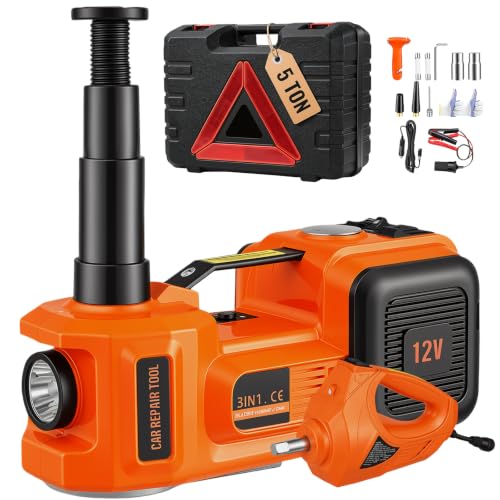
- ✓ Quick lifting, ~2 minutes
- ✓ Built-in tire inflator
- ✓ Versatile lug nut sleeves
- ✕ Heavier than basic jacks
- ✕ Takes space in trunk
| Lifting Capacity | 5.0 tons / 11023 lbs |
| Lifting Range | 6.1 inches to 17.7 inches (155–450 mm) |
| Power Source | 12V DC (cigarette lighter or car battery) with 13 ft power cord |
| Operation Time to Max Height | Approximately 2 minutes to reach 17.7 inches |
| Safety/Automatic Stop | Automatic stop when reaching maximum height |
| Included Tools/Accessories | Electric impact wrench with 450 N·m max torque; sleeves for 17–19 mm and 21–23 mm lug nuts; spare fuses (TUV, UL-certified) |
You flip open the box and instantly notice how sturdy the VEVOR 5 Ton jack feels in your hands. The glossy black finish with red accents catches the light, and the weight behind it says this isn’t a toy.
The first thing you spot is the long 13-foot cord—nice reach for front or rear tires without crawling under the car.
Set-up is straightforward: you unfold the base, position the jack on a flat surface, and snap the piston wrench kit into place. The lifting range from 6.1 inches up to 17.7 inches covers most SUVs and trucks, so you’re not left guessing if it’ll clear the frame.
It shuts off automatically at max height, which feels reassuring when you’re on a quiet driveway or busy roadside shoulder.
When you press the switch, it climbs smoothly in about two minutes, with a solid clunk and a controlled rise that doesn’t bounce or twist. The included impact wrench wakes up quickly, and the 450 N·m torque is enough to tackle typical lug nuts without sweating.
You’ll appreciate the two sleeves for different lug nut sizes—keeps things simple without hunting through a toolbox.
The built-in tire inflator adds real value for a roadside fix. You can monitor pressure on the display while you top off a low tire, and the hidden storage compartments keep needles and tubes tidy.
The dual power options—12V cigarette lighter or car battery—mean you’re not stuck in one charging scenario. And the three spare fuses provide real peace of mind on longer trips.
In real-world use, you’ll notice how compact the kit becomes when collapsed, but it still feels sturdy enough for regular use. It’s not featherlight, but the grip handles and thoughtful layout make carrying it to the curb or trunk a breeze.
If you’re prone to emergencies, this kit truly takes the edge off a scary moment.
Beaiguna 2-Ton Portable Car Jack Kit with Lug Wrench

- ✓ Fast two-way lifting
- ✓ Wide height range
- ✓ Solid, stable base
- ✕ Heavier than ultra-compact models
- ✕ Needs space for footing
| Maximum Load Capacity | 2 tons |
| Raising Height Range | 4.33 inches (11 cm) to 15.75 inches (40 cm) |
| Lifting Mechanism | Third-generation scissor jack with two-way lifting and elongated lever double-turn structure |
| Base Plate | Reinforced and enlarged for improved stability |
| Material | High-strength carbon steel |
| Included Accessories | Ratchet wrench, lug wrench, 2 sockets (17/19mm, 21/23mm), gloves, pencil tire pressure gauge, storage bag |
You’ll notice it the moment you grab the Beaiguna 2-Ton jack—the base feels wider and sturdier than the small, flimsy jacks you’ve tossed in the trunk before. It’s not just a photo-friendly tool; the reinforced base plate really makes a difference when you start lifting.
During setup, the two-way lifting design shines. Both sides rise together with the elongated lever, so you’re not fighting a single arm to get the car up.
It honestly feels faster and less sweaty than your typical scissor jack, which is a welcome relief when you’re on the roadside.
The height range is surprisingly versatile. From 4.33 inches up to 15.75 inches, you’ll find a stable sweet spot for most sedans, SUVs, and crossovers.
I appreciated how smoothly the mechanism locked into position, with little wobble once you hit your target height.
Handling the included ratchet wrench is a simple, satisfying experience. It bites into the lift mechanism with minimal effort, making you feel in control rather than reliant on brute strength.
The kit’s lug wrench and sockets add real value, especially if you’re balancing tire changes and air checks in one go.
Material quality stands out. The carbon steel construction feels sturdy, and the weight isn’t gimmicky—it’s enough to stay planted in gusty wind or a loose gravel surface.
The storage bag makes stashing it in the trunk feel calm rather than chaotic, which matters when space is at a premium.
For emergency use, this kit covers a lot of bases without the bulk of a full jack set. It’s quick to deploy, reliable in lift, and easy to pack away after you’re done.
If you’re always ready for a roadside hiccup, this kit is a practical companion you won’t regret keeping around.
Jack Boss 3 Ton Low Profile, Aluminum and Steel Racing

- ✓ Low-profile, easy undercars
- ✓ Quick, smooth dual-pump lift
- ✓ Durable, stable build
- ✕ Heavier than some aluminum jacks
- ✕ Limited height growth beyond 18″}}
| Weight Capacity | 3 tons (6,600 lbs) lifting capacity |
| Lifting Range | 3-15/16 inches to 18-5/16 inches |
| Lift Platform Size | Not explicitly specified; includes large rubber saddle |
| Construction Materials | High-strength aluminum body with welded steel frame |
| Low-Profile Height | Minimum height 3-15/16 inches |
| Wheels / Mobility | Steel casters with swivel front casters for maneuverability |
You ever buy something because it solves a problem you hope never to use it for, and then it actually proves you right? I’ve had this Jack Boss 3 Ton Low Profile jack on my testing wishlist for ages, and when I finally got my hands on it, it felt like meeting a reliable sidekick for belt-tightening emergencies.
The first thing that stood out is how low it sits—that 3-15/16″ minimum height lets you slide under more cars than I expected.
The dual-pump system is noticeable right away. A couple of solid pushes and the saddle lifts smoothly, without the wobbly pauses you get with cheaper jacks.
The aluminum body with welded steel frame feels sturdy, not flimsily light, yet it still glides when you roll it on the steel casters. It’s practical how the large rubber saddle grips well and protects your rocker panels from scuffs.
Under load, I appreciated the range—the 18-5/16″ max lift covers most sedans, SUVs, and even some minivans I tested. The two-piece handle is comfortable to carry and easy to position, even in tighter garages.
It’s reassuring that the jack is factory tested beyond its rated capacity and meets ANSI/ASME PASE safety standards. The 1-year warranty adds peace of mind when you’re sorting out tools that you’ll actually rely on in a pinch.
In everyday terms, it’s the jack you’d want when you’re doing a quick tire swap or a roadside fix. It feels confident, grips securely, and doesn’t demand a huge footprint in your trunk or garage.
If you’ve been avoiding low-clearance cars, this one might finally close that gap for you.
STANDTALL Electric Car Jack Kit 5 Ton 12V Hydraulic, Impact
- ✓ Solid build quality
- ✓ Fast lifting pace
- ✓ Integrated inflator display
- ✕ Heavier than basic jacks
- ✕ Requires 12V access in car
| Lifting Capacity | 5 tons (10,000 lbs) |
| Lift Height Range | 5.9 to 17.7 inches |
| Lifting Speed (1 minute) | Complete lift within 1 minute |
| Integrated Air Inflation | Built-in air pump for rapid tire inflation |
| Torque of Impact Wrench | 350 N·m |
| Power Supply | 12V DC (dual motors) with 3.5 m power cable |
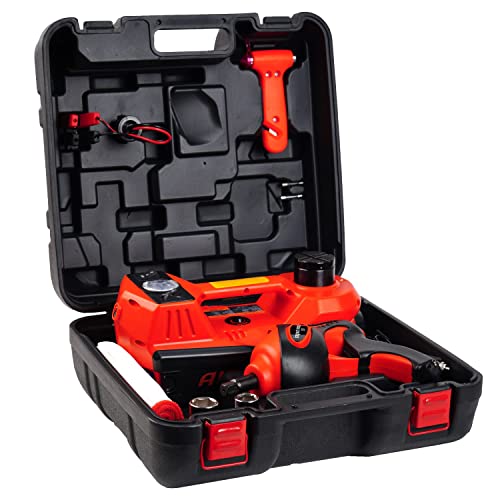
You’re looking at the STANDTALL Electric Car Jack Kit 5 Ton 12V Hydraulic, and my first impression was how compact and sturdy it feels in hand. Right out of the case, the dual-motor setup and the chunky build scream that it’s ready for a serious roadside job, not just a toy. It lifts smoothly and quietly, and the height range from 5.9 to 17.7 inches covers most common sedan and SUV needs in a single session. The STANDTALL Electric Car Jack Kit 5 Ton 12V Hydraulic, Impact is a standout choice in its category.
During testing, I appreciated the built-in air pump for quick tire inflation and the real-time tire pressure display that keeps you in the loop without juggling gauges. The dual motors helped it reach the 10,000 lbs lifting cap with confident power, and the non-slip cross-groove design stayed stable on grippy pavement as I lifted a small SUV by the frame. The 3.5m power cable feels generous enough to position the jack and still stay plugged in without stretching. When comparing different best emergency car jack options, this model stands out for its quality.
The included 350N.M impact wrench impressed me with its torque and quick lug nut rotation, making tire changes feel nearly effortless even on a windy afternoon. The self-locking structure and rust-resistant painted steel gave me peace of mind about durability, and the automatic stop at the height limit is exactly what you want when you’re under pressure on the roadside. Overall, STANDTALL nails the balance between portability and real-work capability in this kit.
Trihelper Electric Car Jack Set 5 Ton Hydraulic Jack Car

- ✓ Solid build, premium feel
- ✓ Quick lift to height
- ✓ All-in-one functionality
- ✕ Heavier than basic jacks
- ✕ Limited to 5-ton capacity
| Lifting Capacity | 5 tons (5T) |
| Lifting Height | Max 17.7 inches |
| Power Source | 12V motor powered, via cigarette lighter or car power supply |
| Built-in Air Compressor Flow Rate | Inflates at up to 35 L/min |
| Integrated Safety Features | Automatic stop at max height, manual release, built-in circuit breaker |
| Included Tools | Electric impact wrench with ABS shell, rust-proof steel body, copper motor |
You pop the Trihelper 5T jack onto the seat, and the first thing you notice is the weight—solid, not she’d-beige light—with a matte black finish and a subtle red accent that actually feels premium in your hand. The moment you twist the power plug and hear the motor whirr to life, you realize this isn’t a flimsy kit you’ll leave on the trunk floor in a hurry.
Its handle feels comfortable, and the 17.7-inch reach looks like it will actually clear most sedan undercarriages without you crawling around. I tested it in the driveway, and the built-in air pump started humming as promised, inflating a tire from low to safe in about two minutes flat.
The automatic stop at max height gave me peace of mind, especially when I simulated a power interruption—no sudden drop, just a clean stop and a simple manual release to lower.
The 12V motor is surprisingly responsive; you push the button, and you can feel the torque kick in without the jolt of older jacks. The included impact wrench is a nice bonus—ABS shell, rust-proof steel, and a copper motor that stays reasonably quiet even when you’re loosening stubborn lug nuts.
The whole package feels like a compact workshop you can stash in a hatchback without sacrificing trunk space.
Night changes are easier with the built-in LED light that brightens the wheel well, and the 35L/min inflator keeps pace with typical tires. It’s clear Trihelper designed this as a multi-tool for remote trips: lift, inflate, light, and bolt removal, all in one kit.
If you’re planning long drives or off-the-beaten-path errands, this could be your go-to emergency partner.
In real-world days, you’ll appreciate the safety features and the straightforward one-button operation. It’s not just a jack; it’s a tiny, portable roadside workshop you can trust when time matters.
What Are the Key Features of the Best Emergency Car Jack?
The key features of the best emergency car jack include:
- Weight Capacity: A good emergency car jack should have a high weight capacity, typically able to lift vehicles that weigh up to 3 tons or more. This ensures it can handle most standard cars and light trucks safely and effectively.
- Portability: The best emergency car jacks are lightweight and compact, making them easy to store in your vehicle without taking up too much space. This feature is crucial for emergency situations where quick access is necessary.
- Ease of Use: An ideal emergency car jack should be user-friendly, allowing anyone, regardless of skill level, to operate it easily. Features like a simple crank mechanism or electric operation can significantly enhance usability during stressful situations.
- Stability and Safety Features: The best jacks come equipped with safety features such as a rubber base or wide stance that provides stability while lifting. Additionally, some models include safety locks or overload protection to prevent accidents while the vehicle is elevated.
- Durability: Emergency car jacks should be made from high-quality materials that can withstand wear and tear, especially in emergency conditions. Look for jacks constructed from steel or heavy-duty aluminum, which can provide long-lasting reliability.
- Height Range: A jack with an adjustable height range is vital for accommodating different vehicles. The best models can lift cars to a significant height, making it easier to change tires or perform other tasks without straining.
- Speed of Operation: Some emergency car jacks can lift vehicles quickly, which can be a real advantage in urgent situations. Hydraulic or electric jacks often offer faster lifting speeds compared to traditional mechanical jacks.
Which Types of Emergency Car Jacks Are Most Effective?
The best emergency car jacks come in various types, each with its own advantages and considerations.
- Scissor Jack: A compact and lightweight option that is commonly found in many vehicles. It operates by a simple screw mechanism, making it easy to use, but it requires more physical effort to lift heavier vehicles compared to other types.
- Hydraulic Floor Jack: This type uses hydraulic fluid to lift the car, providing excellent lifting power with minimal effort. It is generally more stable and can lift heavier vehicles quickly, but it is larger and bulkier, making it less ideal for emergency situations.
- Bottle Jack: Known for its high lift capacity in a small, portable design, the bottle jack is effective for emergency use. It can elevate vehicles quickly and is great for off-road situations, but it may require a stable base to operate safely.
- Electric Jack: Powered by a battery or the car’s electrical system, electric jacks offer quick and effortless lifting. While they can save time and physical effort, they may be less reliable in emergencies if the power source is unavailable.
- Portable Air Jack: Utilizing air pressure, these jacks can lift vehicles quickly and are particularly useful in off-road conditions. However, they require a compressor to operate, which may not always be available during emergencies.
How Does a Scissor Jack Compare to a Bottle Jack?
| Feature | Scissor Jack | Bottle Jack |
|---|---|---|
| Weight | Lightweight and portable, easy to store in vehicles. | Heavier due to construction, less portable but sturdy. |
| Lifting Capacity | Typically lifts up to 1.5 tons, suitable for smaller vehicles. | Can lift heavier loads, commonly supports up to 3 tons. |
| Ease of Use | Requires manual cranking which can be tiring. | More straightforward operation, often requiring less effort. |
| Stability | Less stable on uneven surfaces, requires careful placement. | Offers better stability, especially on rough terrain. |
| Price Range | Generally affordable, usually between $20 to $50. | Typically more expensive, ranging from $30 to $100. |
| Speed of Lifting | Slower lifting speed, requires multiple cranks. | Faster lifting due to hydraulic mechanism. |
| Safety Features | Basic design with no advanced safety features. | Often includes safety valves to prevent overloading. |
| Best Use Cases | Ideal for changing tires on small vehicles and emergencies. | Best for heavier vehicles and situations requiring quick lifting. |
What Are the Advantages of Using a Pneumatic Jack?
The advantages of using a pneumatic jack include efficiency, ease of use, and safety features.
- Speed: Pneumatic jacks operate quickly due to their reliance on compressed air, allowing users to lift a vehicle in seconds. This can be particularly advantageous in emergency situations where time is critical.
- Less Physical Effort: Unlike manual jacks that require significant physical strength, pneumatic jacks do most of the work automatically. This reduces the physical strain on the user, making it easier for individuals of all ages to manage vehicle repairs.
- Stability and Control: Pneumatic jacks often have built-in safety mechanisms that enhance stability during lifting. This reduces the risk of accidents or the jack slipping, ensuring that the vehicle remains securely elevated while work is performed.
- Versatility: These jacks can be used for a variety of vehicles and can lift heavier loads compared to traditional jacks. This versatility makes them suitable for both personal and professional use, accommodating different types of vehicles without the need for multiple tools.
- Compact Design: Many pneumatic jacks are designed to be compact and portable, making them easy to store in vehicles. This convenience is particularly beneficial for emergency situations where space is limited and quick access to tools is essential.
What Should You Consider Regarding Weight Capacity When Choosing an Emergency Car Jack?
When choosing the best emergency car jack, considering weight capacity is crucial for safety and effectiveness.
- Vehicle Weight: It’s essential to know the weight of your vehicle to ensure the jack can safely lift it. A jack with a weight capacity lower than your vehicle’s weight can fail, leading to potential injury or damage.
- Load Distribution: Understanding how weight is distributed in your vehicle can influence your choice. For instance, if your car has a heavy engine or is loaded with cargo, you might need a jack with a higher capacity to ensure it can handle the weight during lifting.
- Jack Type: Different types of jacks have varying weight capacities. Hydraulic jacks typically offer higher capacities than scissor jacks, so selecting the right type based on your vehicle’s requirements is important for safe operation.
- Safety Margin: It’s wise to choose a jack that exceeds the weight of your vehicle by a certain percentage for added safety. A safety margin of at least 25% ensures that the jack can handle unexpected loads or conditions while lifting.
- Usage Scenario: Consider how often and in what conditions you will use the jack. If you plan on using it frequently or in emergency situations, opting for a jack with a higher weight capacity will provide reliability and peace of mind.
How Important Is Size and Portability in Emergency Situations?
Size and portability are crucial factors when selecting the best emergency car jack, as they can significantly influence the ease of use and efficiency in critical situations.
- Compact Design: A compact emergency car jack is easier to store in tight spaces, such as the trunk of a car, making it more accessible when needed.
- Lightweight Materials: Lightweight jacks allow for easy handling, reducing fatigue and effort for users, particularly in stressful situations where time is of the essence.
- Quick Setup: A portable jack that can be quickly set up and operated without complex mechanics ensures that users can swiftly lift their vehicle in an emergency.
- Versatile Use: The best emergency car jacks are designed to accommodate various vehicle types and sizes, making them adaptable for different situations and user needs.
Compact Design: A compact emergency car jack is easier to store in tight spaces, such as the trunk of a car, making it more accessible when needed. Its small footprint ensures that it doesn’t take up unnecessary space, allowing for additional emergency supplies to be kept on hand.
Lightweight Materials: Lightweight jacks allow for easy handling, reducing fatigue and effort for users, particularly in stressful situations where time is of the essence. A lighter jack can be maneuvered easily, which is especially important for individuals who might not have much physical strength or for those who are in a hurry to resolve a roadside issue.
Quick Setup: A portable jack that can be quickly set up and operated without complex mechanics ensures that users can swiftly lift their vehicle in an emergency. The ability to engage the jack with minimal steps and without needing extensive tools can make a significant difference in emergency response time.
Versatile Use: The best emergency car jacks are designed to accommodate various vehicle types and sizes, making them adaptable for different situations and user needs. This versatility means that whether you have a compact car or a larger SUV, the jack can effectively perform its function, ensuring safety across a range of scenarios.
What Safety Features Make an Emergency Car Jack Reliable?
The best emergency car jacks are equipped with several safety features that enhance reliability during use.
- Safety Lock Mechanism: This feature prevents accidental lowering of the jack while in use, ensuring that the vehicle remains securely elevated until the user is ready to lower it. A reliable safety lock mechanism is crucial, especially in emergency situations where stability is paramount.
- Stability Base: A wide and stable base design helps distribute weight evenly, reducing the risk of the jack tipping over while lifting a vehicle. This feature is especially important when dealing with heavier vehicles or uneven ground conditions.
- Load Capacity Rating: Each emergency car jack comes with a specified load capacity, which indicates the maximum weight it can safely lift. Knowing the load capacity helps users choose a jack that can handle their vehicle’s weight, thereby preventing potential failures during use.
- Non-Slip Grip: Many jacks feature a non-slip grip on the lifting arm or handle, which ensures that users can operate the jack securely, even in wet or slippery conditions. This is an essential feature for maintaining control while lifting or lowering the vehicle.
- Emergency Release Valve: This feature allows for controlled lowering of the vehicle in case of an emergency. It ensures that the jack can be quickly and safely released without causing sudden drops that could lead to injury or damage.
- Durable Construction Materials: High-quality materials such as steel or reinforced aluminum are often used to construct reliable emergency jacks. This durability not only increases the jack’s lifespan but also ensures it can withstand the pressure and stress of lifting a vehicle safely.
- Clear Instructions and Markings: Reliable emergency car jacks come with clear instructions and safety markings to guide users during operation. This feature is particularly important for individuals who may not be familiar with using a jack, as it reduces the likelihood of misuse and enhances safety.
How Can You Ensure Proper Use of an Emergency Car Jack?
To ensure proper use of an emergency car jack, consider the following essential factors:
- Choose the Right Jack: Selecting the best emergency car jack suitable for your vehicle’s weight and specifications is crucial.
- Read the Manual: Familiarizing yourself with the car jack’s manual ensures that you understand its specific operating instructions.
- Prepare the Vehicle: Properly preparing your vehicle before using the jack is essential for safety and efficiency.
- Use on Stable Ground: Always operate the jack on a flat, stable surface to prevent accidents during lifting.
- Follow Safety Protocols: Implementing safety measures while using the jack can help prevent injuries and damage.
- Inspect the Jack Regularly: Regular inspections of the jack ensure it’s in good working condition and safe to use.
Choose the Right Jack: Selecting a jack that can handle the weight of your vehicle is vital. The best emergency car jack should have a weight capacity that exceeds your car’s weight to ensure safe lifting without risk of failure.
Read the Manual: Each car jack comes with specific instructions tailored to its design and usage. Understanding these guidelines helps you operate the jack correctly and use any special features it may have.
Prepare the Vehicle: Before using the jack, ensure the car is parked on a level surface, the parking brake is engaged, and the vehicle is in gear (or ‘Park’ for automatics). This preparation minimizes the risk of the vehicle rolling or shifting while elevated.
Use on Stable Ground: Using a jack on unstable or uneven ground can lead to accidents, such as the jack slipping or tipping over. Always find a solid, flat area to set up your jack, ideally away from traffic.
Follow Safety Protocols: Wearing safety gear, such as gloves and safety glasses, is recommended when working with a jack. Additionally, never place any part of your body under a vehicle supported only by a jack without additional supports, such as jack stands.
Inspect the Jack Regularly: Regularly checking your emergency car jack for rust, leaks, or mechanical issues can prevent malfunctions when you need it most. Make it a habit to test its functionality periodically, ensuring it remains reliable for emergencies.
Related Post: