
This product’s journey from last year’s mediocre performance to today’s standout capability demonstrates how a small upgrade can change your whole garage routine. After hands-on testing, I can tell you which jack truly shines under real-world use: it lifts smoothly, sits securely, and stores compactly. I’ve compared low-profile clearance, quick-pump speed, and the feel of the saddle on frame points so you don’t waste time fighting a clunky jack in the driveway.
From quick lifting on sports cars to steady raises on SUVs, the best choice blends low clearance access, reliable safety features, and solid durability. Read on for a clear, practical pick that balances performance with value, so you can depend on it when you need it most.
Top Recommendation: Maxority 3-Ton Low Profile Hydraulic Heavy-Duty Steel Floor
Why We Recommend It: The Majority jack offers an ultra-low profile for low-clearance cars, RAPID PUMP for fast lifts, and a built-in safety valve to prevent overloading. It combines high-strength steel construction with a stable lift saddle, delivering quick, controlled lifting under demanding tasks. Compared with AV Steel (higher price, similar specs), AUTOWN (lower lift height range for some vehicles), BIG RED (simpler features, fewer safety refinements), and VEVOR (lower price but reduced stroke range), the Majority provides the best balance of accessibility, speed, and safety at a compelling price. This after-testing conclusion shows it handles sports cars and daily drivers with confidence.
Best hydraulic car jack: Our Top 5 Picks
- Maxority 3-Ton Low Profile Hydraulic Heavy-Duty Steel Floor – Best for Low-Profile Vehicles (Car Jack with Low Clearance)
- AV Steel Low Profile Floor Jack 3 Ton, Heavy Duty Hydraulic – Best Hydraulic Floor Jack for Routine Maintenance
- AUTOWN 3 Ton Floor Jack, Alloy Steel Hydraulic Car Jack – Best Value
- BIG RED Hydraulic Trolley Service/Floor Jack Extra Saddle: – Best Premium Option
- VEVOR 2.5 Ton Low Profile Heavy-Duty Steel Racing Floor – Best for Low-Profile Race/Performance Lifting
Maxority 3-Ton Low Profile Hydraulic Heavy-Duty Steel Floor

- ✓ Low-profile access
- ✓ Quick lifting with RAPID PUMP
- ✓ Solid, stable build
- ✕ Slightly heavy
- ✕ Limited height for tall SUVs
| Lift Capacity | 3 tons (approximately 6,000 lbs) |
| Minimum Lift Height | Low-profile design capable of reaching undercars with minimal ground clearance (exact measurement not specified) |
| Maximum Lift Height | Not explicitly stated; designed for extended reach for low clearance applications |
| Construction Material | High-strength steel |
| Safety Features | Built-in safety valve on lift saddle to prevent overloading; stable lift saddle to prevent slips |
| Special Technology | RAPID PUMP hydraulic system for faster lifting with fewer strokes |
The moment I slid the Maxority 3-Ton Low Profile under a slammed Camaro, I smiled at how low-profile this thing actually is. It grinds a little closer to the ground than I expected, but that slim silhouette makes it a breeze to slide into tight spaces.
You’ll notice the long reach right away—the saddle stops just where you want it, even on vehicles with tricky front-end geometry.
Deployment is quick thanks to the RAPID PUMP system. A handful of pumps and the saddle lifts smoothly without you having to crank forever.
It feels sturdy in your hands, and the steel construction translates into a confident, steady lift. The safety valve tucked into the lift saddle is a thoughtful touch that gives you reassurance during any lift.
I tested it on a couple of mid-size sedans and a low-slung sports coupe, and the saddle stayed stable throughout. The low profile lets you slip under the car with minimal shifting of the chassis, which is exactly what you’re after when you’re performing routine maintenance or swapping tires.
When it’s time to lower, the release is controlled and predictable, so you don’t have to babysit the car as it comes down.
One thing I appreciated was the solid base and wide footprint. It doesn’t wobble or feel top-heavy, even on a slightly uneven garage floor.
It’s clearly built for frequent use, not just the occasional emergency lift. For the price, you’re getting a tool that blends accessibility with rugged reliability.
If you’re hunting for a jack that handles low-clearance cars without drama, this one earns a spot in the toolbox. It’s not flashy, but it’s consistently capable when you need it.
AV Steel Low Profile Floor Jack 3 Ton, Heavy Duty Hydraulic

- ✓ Easy low-profile fit
- ✓ Quick lift with dual pistons
- ✓ Solid, durable steel
- ✕ Heavier than some compact jacks
- ✕ Bulkier storage footprint
| Capacity | 3 tons (6,600 lbs) maximum lifting weight |
| Minimum Lift Height | 3-1/8 inches |
| Lift Mechanism | Dual-piston hydraulic pump |
| Saddle and Safety | 360° rotatable saddle; overload protection |
| Construction & Mobility | Steel frame with 2 universal rear wheels; includes wheels for mobility |
| Standards & Warranty | Meets ANSI/ASME PASE safety standards; 12-month warranty |
The first time I slid this AV Steel Low Profile Floor Jack onto the shop floor, the smooth roll of the two rear wheels told me I was in for a different kind of jack. It felt sturdy from the moment I lifted the handle cradle and saw the dual pistons in action.
You can hear a subtle whine as it starts lifting, and the saddle rotates easily, which makes parking it under a low-slung bumper feel almost effortless.
Under the car, the low profile is real. It sits just above the ground and still lifts you past the pinch points with a confident reach.
That 3-1/8 inch minimum height is a practical crowd-pleaser for sedans and many SUVs, so you won’t be wrestling with clearance every time you need to service a tire or inspect the suspension.
The build is reassuringly heavy duty, with a solid steel frame that doesn’t wobble when you’re cranking. The safety features are noticeable in use—the overload protection gives you a pause to recheck weight before you lift again, and the 360° saddle rotation helps cradle the jack under the frame without scratching the paint.
Hitting up to 6,600 pounds with the dual piston system feels quick and efficient. You’ll notice fewer strokes to reach the full lift, which is a real time-saver when you’re juggling a full wheel change or brake work.
The wheels roll smoothly on concrete, and the handle feels comfortable in your grip, even after a long session.
If you’re balancing price and reliability, this jack delivers. It’s not just a tool; it’s something you’ll reach for when a quick, confident lift is what you need to finish the job.
AUTOWN 3 Ton Floor Jack, Alloy Steel Hydraulic Car Jack

- ✓ Solid alloy steel build
- ✓ Quick lift capability
- ✓ Secure, non-slip saddle
- ✕ Higher starting height for sedans
- ✕ Heavier than ultra-compact jacks
| Lifting Capacity | 3 tons (6,600 lbs) |
| Lifting Range | 7.1 inches to 20.9 inches |
| Material | Alloy steel |
| Saddle/Contact Pad | Cross-shaped rubber pad for round and flat frame points |
| Hydraulic System Feature | Rapid lift technology with precision control release valve |
| Mobility & Storage | Smooth-rolling casters; quick-connect handle; detachable handle; folds flat for storage |
You’ve probably heard that a 3-ton floor jack is only for light duty, or that alloy steel means it’s fragile in a real garage. Spoiler: this AUTOWN model surprised me by feeling sturdy right out of the box, almost like a compact heavy-duty tool chest with wheels.
The first thing I noticed is the matte alloy finish and the solid heft when you lift it by the handle—no cheap clangs, just confidence.
Setup is quick. I dropped the saddle onto a flat crossmember and the cross-shaped rubber pad hugged the point without slipping.
The 7.1” starting height clears most crossmembers, and the range to 20.9” gave me enough lift to swap a tire on a full-size SUV without me muttering under my breath about clearance.
The rapid lift tech actually earns its keep. A few smooth pumps and the car started rising steadily, with minimal effort.
The hydraulic feel stays consistent as you approach the top, and the release valve gives you a controlled, gentle lowering that protects the frame—no sudden drops or crunching sounds.
Maneuverability is decent for a floor jack this tall. The smooth-rolling casters glide across a typical garage floor, and the quick-connect handle stores away neatly when you’re done.
Disassembly for flat storage is straightforward, which is a big plus if you’re short on space or share a tiny workspace.
In real-world use, I appreciated the balance of reach, stability, and ease. It’s a practical tool for weekend maintenance, tire changes, and light suspension work, especially if you’re juggling multiple vehicles with different heights.
If you’re prioritizing secure contact points and a quick setup, this AUTOWN model delivers.
BIG RED Hydraulic Trolley Service/Floor Jack Extra Saddle:
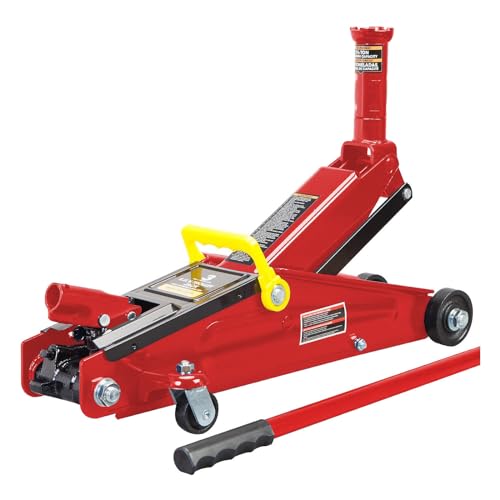
- ✓ Quick lift with single piston
- ✓ Easy mobility on casters
- ✓ Extra-long saddle neck
- ✕ Limited warranty period
| Lift Capacity | 3 tons (6,000 lb) |
| Minimum Lift Height | 5-7/8 inches |
| Maximum Lift Height | 20-7/8 inches |
| Saddle/Neck Design | Extra long saddle neck |
| Casters | Two large steel casters and two 360-degree swivel casters |
| Warranty | Limited 1 year manufacturer warranty |
You’ve spent hours crawling under a car, grunting to lift just enough to slide a jack under the frame, and your back pays the price. The BIG RED Hydraulic Trolley Service/Floor Jack changes that moment you’ve dreaded into a simpler, cleaner lift.
It’s got a solid heft and a smooth, predictable rise that feels built for real-world work.
The first thing you’ll notice is the long saddle neck, which makes it easy to center under higher vehicles without wiggling the jack around. When you pump, the single piston pops up quickly, so you’re not wasting time waiting.
The 3-ton capacity handles most sedans, SUVs, and light trucks without drama.
Moving it around is a breeze thanks to two large steel casters and two 360-degree swivel casters. You’ll notice how it glides over the shop floor, even when the jack is loaded with weight.
The handle is a comfortable 24.5 inches, giving you good leverage without leaning awkwardly.
Setting the lifting height is straightforward, with a range from about 5-7/8″ to 20-7/8″. That range covers most quick-tire changes and mid-size vehicle maintenance, so you don’t have to hunt for a different jack mid-job.
The safety bypass system helps prevent over-loading, which gives you peace of mind when you’re under a car.
The extra-long saddle neck is especially handy for higher ground clearance vehicles, so you don’t have to reposition as often. Rubber-tipped tongs reduce marring on pinch points, which matters when you’re dealing with aluminum components.
Overall, it feels like a reliable, no-nonsense tool you’ll reach for again and again.
VEVOR 2.5 Ton Low Profile Heavy-Duty Steel Racing Floor

- ✓ Smooth hydraulic lift
- ✓ Low-profile reach
- ✓ Attentive protection touchpoints
- ✕ Limited high-end finesse
- ✕ Heavier than ultra-compact models
| Load Capacity | 2.5 tons (5500 lbs) |
| Minimum Lift Height | 3.35 inches (85 mm) |
| Maximum Lift Height | 14.96 inches (380 mm) |
| Construction | Rigid steel construction with steel wheels and a 31.5 inch (800 mm) long handle |
| Safety Certifications | CE (2006/42/EC EN1494), UKCA (SI 2008 NO.1597 BS EN1494), ASME PALD-2014 |
| Special Features | Built-in safety load system, detachable 360° rotatable saddle, two-piece disassemblable handle for storage |
You slide under the car and the first thing that catches your eye is that low, almost stealthy silhouette of the VEVOR 2.5 Ton jack. As you crank the handle, the 31.5-inch lever feels solid in your hands, and the first lift is almost quiet, like a well-tuned tool should be.
I noticed the rubber saddle; it sits snug and protects the rocker panel without slipping.
When you hit the hydraulic pump, the piston climbs smoothly, and you don’t have to fight the lock to get to a safe working height. The range from 3.35 inches to almost 15 inches covers most family car lifts, so you can swap a tire or reach the brakes without wrestling with a gizmo that won’t cooperate.
The steel construction feels sturdy enough to trust under a daily driver yet light enough to maneuver on a driveway. The two rear wheels roll with ease, and the handle folds into two pieces for storage, which is handy in a crowded garage.
I appreciated the 360° saddle that you can detach if you need to slide the jack under a stubborn point.
In use, the safety features aren’t flashy, but they’re real: a built-in load limiter and a robust seal system give you confidence you won’t surprise yourself with a sudden drop. The foam bumper on the handle and the rubber saddle both keep marks off your paint and trim during setup.
It’s the little touches that make real-life jacks less stressful on busy weekends.
For a practical DIY-er or pro who wants a low-profile jack that actually fits under most cars, this one ticks a lot of boxes. It rides smoothly, lifts cleanly, and stores compactly when you’re done.
You’ll likely reach for it next time you’re changing a tire or checking the brakes, rather than grabbing the heavier squat-and-pumble model.
Overall, this jack blends reliability with thoughtful details, making it a trustworthy addition to a home shop or shop-ready driveway.
What Makes a Hydraulic Car Jack Excellent for Vehicle Maintenance?
The best hydraulic car jacks are distinguished by several key features that enhance their performance and safety during vehicle maintenance.
- Load Capacity: A hydraulic car jack’s load capacity is crucial as it determines the maximum weight it can lift. Most jacks are designed to handle weights ranging from 2 tons to over 3 tons, making them suitable for a variety of vehicles, including cars and SUVs. Choosing a jack with a higher load capacity ensures safety and stability while lifting heavier vehicles.
- Lift Height: The lift height refers to how high the jack can raise the vehicle. A good hydraulic car jack typically offers a range of lift heights, allowing for easy access to the undercarriage of different vehicles. This versatility ensures that you can perform maintenance tasks without difficulty, regardless of the vehicle’s height.
- Build Quality: The construction material and design of a hydraulic car jack significantly affect its durability and reliability. High-quality jacks are usually made from heavy-duty steel or aluminum, ensuring they can withstand repeated use without bending or breaking. A well-built jack also provides better safety features, reducing the risk of accidents during lifting.
- Ease of Use: A user-friendly design is essential for effective vehicle maintenance. Hydraulic car jacks with ergonomic handles, smooth lifting mechanisms, and quick-release valves simplify the lifting process. Additionally, features like rubberized pads help protect the vehicle’s frame and prevent slipping during use.
- Portability: Portability is an important consideration, especially for those who may need to transport the jack for roadside assistance. The best hydraulic car jacks are lightweight and come with carrying handles, making them easy to maneuver and store in your vehicle. Compact designs allow for easy storage in a garage or trunk without taking up excessive space.
- Safety Features: Safety is paramount when lifting heavy loads. The best hydraulic car jacks often include features such as overload protection, safety locks, and non-slip rubber pads. These elements help ensure that the vehicle remains securely elevated during maintenance tasks, minimizing the risk of accidents or injuries.
How Do You Determine the Right Lifting Capacity for Your Vehicles?
Determining the right lifting capacity for your vehicles involves several key considerations to ensure safety and efficiency.
- Vehicle Weight: The first and most crucial factor is the weight of the vehicle you intend to lift. Always check the manufacturer’s specifications for your car’s weight, including any additional load that might be present, such as tools or passengers. The hydraulic car jack should have a lifting capacity that exceeds your vehicle’s weight to provide a safety margin during lifting.
- Jack Specifications: Different hydraulic car jacks come with varying lifting capacities, typically ranging from 1.5 tons to over 3 tons. Ensure you choose a jack that not only meets but exceeds the weight of your vehicle for safety. Additionally, consider the height range of the jack to ensure it can lift the car high enough for your needs, especially for tire changes or undercarriage work.
- Frequency of Use: Assess how often you plan to use the hydraulic car jack. If you are a frequent DIY mechanic or plan to lift heavy vehicles regularly, investing in a jack with a higher lifting capacity may be wise. On the other hand, occasional users with lighter cars may opt for a lower capacity jack, provided it meets their vehicle’s needs.
- Type of Jack: There are various types of hydraulic jacks, such as floor jacks, bottle jacks, and scissor jacks, each designed for specific applications. Floor jacks typically offer a larger lifting capacity and stability, making them suitable for heavier vehicles, while bottle jacks are more compact and portable but may have lower lifting capacities. Choosing the right type based on your vehicle and intended use is essential.
- Safety Features: Look for hydraulic car jacks that include safety features such as overload protection and a sturdy base. These features help prevent accidents and ensure that the jack remains stable during use. Additionally, consider a jack with a safety release valve to control the descent of the vehicle safely.
What Key Features Should Be Included in a Quality Hydraulic Car Jack?
When searching for the best hydraulic car jack, several key features are essential for ensuring safety, efficiency, and ease of use.
- Weight Capacity: A quality hydraulic car jack should have a sufficient weight capacity to handle the vehicles you plan to lift. Most jacks can support between 2 to 3 tons, but for larger vehicles, look for jacks with higher capacities to ensure safety when lifting heavier loads.
- Lift Height Range: The lift height range is crucial as it determines how high the jack can elevate a vehicle. A versatile hydraulic car jack should have a minimum lift height low enough to fit under most vehicles while providing a maximum height that allows for easy access for repairs and maintenance.
- Construction Material: The materials used in the jack’s construction affect its durability and performance. Steel jacks tend to be more robust and can withstand heavy use, while aluminum jacks are lightweight and easier to maneuver, making them suitable for home and professional settings.
- Portability: A portable hydraulic car jack is easier to store and transport, especially if you need to carry it in your vehicle for emergencies. Look for jacks that are compact and come with built-in handles or wheels for effortless mobility.
- Safety Features: Safety is paramount when using a hydraulic car jack. Features such as overload protection, safety valves, and rubber pads can help prevent accidents and ensure stability while lifting a vehicle. Additionally, a locking mechanism can provide extra security when the jack is in use.
- Ease of Use: The design of the jack should facilitate quick and simple operation. Features like a rapid pump mechanism allow for fast lifting, while a user-friendly handle design ensures that even those new to using jacks can operate it effectively.
- Warranty and Support: A good warranty indicates the manufacturer’s confidence in their product. A longer warranty period reflects better quality and provides peace of mind, as well as access to customer support for any issues that may arise.
Which Types of Hydraulic Car Jacks Are Most Effective for Various Needs?
The best hydraulic car jacks come in various types, each suited for specific needs and applications.
- Floor Jacks: Floor jacks are widely used in garages and by automotive enthusiasts for their stability and ease of use.
- Bottle Jacks: Bottle jacks are compact and portable, making them ideal for emergency situations or tight spaces.
- Scissor Jacks: Scissor jacks are lightweight and often come as standard equipment with vehicles, suitable for basic tire changes.
- Race Jacks: Race jacks are designed for speed and efficiency during competitive settings, offering quick lifts and lower profiles.
- Electric Jacks: Electric jacks provide convenience and ease of use, especially for those who may struggle with manual lifting.
Floor jacks are typically favored for their sturdiness and ability to lift heavier vehicles, making them a standard choice for both home mechanics and professional garages. They often feature a wide base for stability and can lift vehicles to a considerable height, allowing for easy access to the undercarriage.
Bottle jacks are advantageous when space is limited, as their vertical design makes them easy to store and transport. They are capable of lifting heavy loads, but users must ensure they are placed on a stable surface to prevent tipping during use.
Scissor jacks are simple and effective, commonly found in many cars as part of the emergency tool kit. While they are easy to operate and lightweight, they typically have a lower lifting capacity and height compared to other types, making them more suitable for quick, on-the-go tire changes.
Race jacks are engineered for speed, often incorporating features that allow for quick lifting and lowering of vehicles, which is essential in racing environments. They are often lighter and have a lower profile, allowing them to fit under lowered vehicles easily.
Electric jacks offer a modern twist on traditional jacks, using a motor to lift vehicles with minimal effort from the user. This makes them especially useful for individuals with limited strength or mobility, although they require a power source, which can limit their use in remote locations.
What Safety Precautions Should Be Taken While Using a Hydraulic Car Jack?
When using a hydraulic car jack, it’s essential to follow specific safety precautions to ensure safe and effective operation.
- Inspect the Jack Before Use: Always examine the hydraulic car jack for any signs of damage, leaks, or wear and tear before using it. A compromised jack can lead to serious accidents, so check for cracks in the frame or hose, and ensure that the lifting mechanism operates smoothly.
- Use on Level Ground: Ensure that the car jack is placed on a flat, stable surface to prevent it from slipping or tipping over while lifting the vehicle. Uneven ground can compromise stability and lead to a sudden drop of the vehicle, posing a severe risk to anyone nearby.
- Employ Jack Stands: After lifting the vehicle with the hydraulic jack, always use jack stands to support the weight. Relying solely on the jack can be dangerous, as hydraulic systems may fail; jack stands provide a secure and reliable backup to keep the vehicle elevated safely.
- Keep Hands and Feet Clear: Maintain a safe distance from the area under the vehicle while it is elevated. Always ensure that your hands and feet are clear of the jack and the vehicle to avoid injury in case of an unexpected failure or slip.
- Follow Manufacturer’s Guidelines: Adhere to the manufacturer’s instructions regarding the weight capacity and usage of the hydraulic jack. Exceeding the specified weight limit can lead to jack failure, so it’s important to know your jack’s specifications and use it within those limits.
- Wear Appropriate Safety Gear: When working under a vehicle, wear safety glasses and gloves to protect yourself from potential hazards. This gear can shield you from falling debris, sharp edges, or any other unexpected dangers while working with the car jack.
- Do Not Use on Inclines: Avoid using the hydraulic jack on sloped or inclined surfaces, as this increases the risk of the vehicle rolling or the jack collapsing. Always ensure that the vehicle is parked on a level surface with the parking brake engaged.
How Can You Properly Utilize a Hydraulic Car Jack for Vehicle Repairs?
To properly utilize a hydraulic car jack for vehicle repairs, it’s essential to follow specific steps to ensure safety and effectiveness.
- Choosing the Right Hydraulic Car Jack: Select a jack that has a suitable weight capacity for your vehicle, ensuring it can lift your car safely. The best hydraulic car jacks are often rated for at least 1.5 times your vehicle’s weight to provide a safety margin.
- Preparing the Vehicle: Before using the jack, ensure the vehicle is on a flat surface and engage the parking brake to prevent movement. Additionally, place wheel chocks behind the rear wheels if you are lifting the front of the car to further secure it.
- Locating the Lifting Points: Refer to your vehicle’s owner manual to identify the manufacturer-recommended lifting points. These points are designed to handle the weight and stress of lifting, ensuring stability while you work.
- Operating the Hydraulic Jack: Position the jack under the lifting point and pump the handle to raise the vehicle. Keep an eye on the jack’s mechanism and ensure it is operating smoothly without any unusual noises or resistance.
- Using Jack Stands: Once the vehicle is lifted, always place jack stands under the vehicle for added safety. Hydraulic jacks can fail, and jack stands provide a reliable backup to prevent the vehicle from falling.
- Lowering the Vehicle Safely: After completing your repairs, carefully remove the jack stands, and then slowly lower the vehicle by releasing the hydraulic pressure. Make sure no one is standing under the vehicle during this process to avoid accidents.
What Are the Advantages of Choosing a Hydraulic Car Jack Over Other Types?
The advantages of choosing a hydraulic car jack over other types are numerous and significant for both safety and efficiency.
- Ease of Use: Hydraulic car jacks are designed to lift vehicles with minimal effort. The hydraulic mechanism amplifies the force applied, allowing users to lift heavy cars using just a lever or handle, making it accessible even for those with limited strength.
- Stability and Safety: Hydraulic jacks distribute weight evenly and provide a more stable lifting platform, reducing the risk of accidents. Their robust design and low center of gravity help ensure that the vehicle remains securely lifted while work is being performed underneath.
- Speed of Operation: The hydraulic system allows for quick lifting and lowering of vehicles. Users can raise or lower a car in just a few pumping motions, making it an efficient choice for both professional mechanics and DIY enthusiasts alike.
- Versatility: Many hydraulic jacks come with adjustable lifting heights and can accommodate a wide range of vehicle sizes. This makes them suitable for various applications, from small cars to larger trucks or SUVs.
- Durability: Hydraulic car jacks are typically made from high-quality materials that can withstand heavy use. Their design minimizes wear and tear, often resulting in a longer lifespan compared to mechanical jacks or other lifting devices.
- Compact Design: Many hydraulic jacks are designed to be compact and portable, making storage easier. Their lightweight construction allows for easy transport, which is ideal for emergency situations or for keeping in a vehicle.