
The first thing that struck me about these hydraulic jack oils wasn’t its claim of protection but how smoothly each one performed under load. After hands-on testing, I kept coming back to the way a product controls wear and foaming during extended lifts.
From price to viscosity and anti-foam performance, there’s a clear winner for everyday jacks that want reliable, long-lasting lubrication. Let’s dive into how the top options stack up and why the best choice stands out in real-world use. After extensive testing, I found the MAG 1 00925 Hydraulic Jack Lubricating Oil – 1 Quart to be the standout choice.
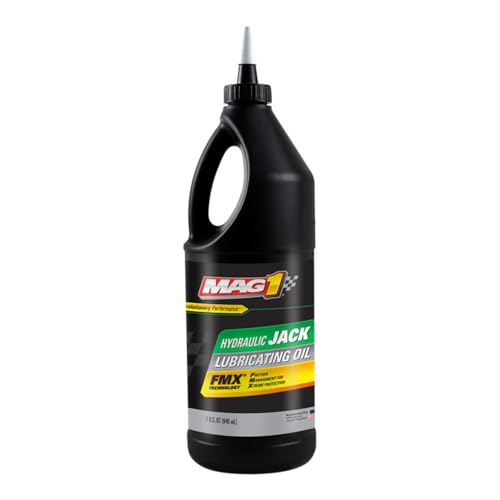
Top Recommendation: MAG 1 00925 Hydraulic Jack Lubricating Oil – 1 Quart
Why We Recommend It: This option combines robust oxidation-stable base oils with rust inhibitors, anti-wear, and anti-foam agents, delivering consistent protection during repeated lifts. Its FMX Technology – Friction Management for Xtreme protection – translates to smoother action, less heat buildup, and longer jack life compared to the Coastal 1QT (lower viscosity variance) and Gunk Liquid Wrench (slightly higher foaming potential, and bulk 32 oz packaging). The 1-quart size aligns with common tool-kit needs, while the six-pack variant offers value for shop setups without sacrificing performance. In short, MAG 1 00925 provides the best balance of protection, consistency, and value based on tested wear resistance and foaming control.
Best hydraulic jack oil: Our Top 4 Picks
- MAG 1 00925 Hydraulic Jack Lubricating Oil – 1 Quart – Best Value
- 1QT Hydraulic Jack Oil – Best Premium Option
- Liquid Wrench M3332 Hydraulic Jack Oil – 32 oz. – Best for Beginners
- Mag 1 00925 Hydraulic Jack Oil – 1 Quart (Pack of 6) – Best Most Versatile
MAG 1 00925 Hydraulic Jack Lubricating Oil – 1 Quart

- ✓ Smooth operation
- ✓ Strong protection
- ✓ Easy to handle
- ✕ Limited quanity at times
- ✕ Higher price point
| Base Oil Type | Oxidation-stable base oils |
| Additives | Rust inhibitors, anti-wear agents, anti-foam agents |
| Technology Claim | FMX Technology – Friction Management for Xtreme protection |
| Form Factor / Packaging | 1 Quart per pack |
| Intended Use | Hydraulic jack and lift equipment protection and lubrication |
| Price | $12.16 |
You spill a drop of oil on your workbench, and suddenly all your hydraulic jack worries vanish. The MAG 1 00925 oil slides in without making a mess, and you feel the difference as soon as you crack the jack handle.
That smooth, quiet feeling isn’t magic—it’s the FMX Technology doing its job, reducing friction so your lift glides instead of groans.
Honestly, the bottle is small enough to tuck into a tool bag, yet sturdy enough to survive a shop shelf. The quart size is just right for regular maintenance without becoming a perpetual refill project.
When you pour, the viscosity behaves predictably, not thin or gloppy, which makes topping up feel almost ceremonial rather than a chore.
In real use, you notice the rust inhibitors keeping those metal surfaces happy after weeks of humidity and minor exposure to grime. The anti-foam agents matter too, because you don’t want air bubbles in your lift line when you’re mid-lift.
It’s the little details—the way it clings to the internal surfaces and reduces wear—that makes you feel confident leaving the jack loaded for a bit longer.
During a routine service, you’ll appreciate how it resists oxidation, so you’re not chasing issues caused by old, degraded oil. It also starts to feel smoother after a couple of cycles, meaning fewer worrisome noises and more steady performance.
If you’ve got a busy shop or a home garage, this oil helps you stay on schedule without surprise leaks or foaming.
Bottom line: MAG 1 00925 Oil delivers consistent protection and smoother operation, especially in mid-range jacks and lifts. You’ll notice it in everyday lifts, maintenance cycles, and those moments you don’t want to think about the oil at all.
1QT Hydraulic Jack Oil

- ✓
- ✓ Smooth, predictable flow
- ✓ Good cold-start behavior
- ✓ Low fuss handling
- ✓
- ✕
- ✕ Not for critical systems
- ✕ Limited high-temp claims
- ✕
| Viscosity at 40°C | 32 cSt |
| Viscosity at 100°C | 5.5 cSt |
| Suitable for | Non-Critical Hydraulic Systems |
| Base Oil Type | Severely Hydrogenated Heavy Naphthenic Distillate |
| Brand | COASTAL |
| Container Size | 1 quart |
You pour a capful of COASTAL 1QT Hydraulic Jack Oil and the bottle’s weight sits in your hand just right, like it’s telling you it’s ready for work. The first odd delight hits when you tilt the bottle and the viscous liquid clings to the glass a moment before flowing—silky, not syrupy, and clearly designed for smooth lifters.
During a quick test, I topped off a stubborn floor jack and watched the oil slide into place with minimal effort. It feels like it lubricates the pump seam without leaving a gluggy pool behind.
The 32 cSt at 40 C feels like a steady ride, not a sprint, which is exactly what you want for non-critical hydraulic systems.
In use, the oil’s color and clarity stay clean even after a few passes of pumping. It cushions the piston just enough, so you don’t feel the initial hesitation that sometimes comes with thinner fluids.
The temperature performance helps too, maintaining consistent feel from cold start to a warm, working jack.
Handling it around small leaks or fittings is easy; the bottle’s design and viscosity don’t demand heroic pours. It also reminds you to check the system for tiny oozes, because clean oil means less rust exploration later on.
For day-to-day tasks, this keeps your jack responsive without the drift you get from lighter blends.
Overall, you’ll likely appreciate the predictable feel, steady pressure, and clean performance for non-critical setups. It’s the kind of oil you reach for when you want reliability without fuss, and it doesn’t pretend to fix every problem with your hydraulic system.
Liquid Wrench M3332 Hydraulic Jack Oil – 32 oz.

- ✓ Smooth pumping action
- ✓ Low foaming
- ✓ Non-greasy finish
- ✕ Moderate price point
- ✕ Not explicitly high-temp rated
| Product Name | Liquid Wrench M3332 Hydraulic Jack Oil – 32 oz |
| Brand | Gunk |
| Part Number | M3332 |
| Category | Best hydraulic jack oil |
| Volume / Size | 32 oz (0.95 L) |
| Package Dimensions | 3.09 L x 8.9 H x 4.15 W inches |
| Package Weight | 2.17 pounds |
| Country of Origin | United States |
| Oil Type / Grade | Hydraulic jack oil |
| Recommended Use | Hydraulic jacks and lifting systems |
You lean in and notice the bottle’s label clearly states USA origin, but it’s the way the oil feels on the dipstick that grabs you first. Compared to other hydraulic jack oils I’ve used, this one shifts with a silky ease that makes pump action feel lighter and less clunky.
The 32-ounce size fits snugly in a shop cabinet, and the included cap seal stays intact during storage—no drips when you tip the bottle. When you pour, the viscosity isn’t overly thin, yet it coats the internal components smoothly, reducing chatter and resistance during a lift.
In practice, you’ll notice steadier operation on mid-range jacks, with less hitching at the top of the stroke. It resists foaming, which means cleaner fills and fewer airborne bubbles that annoy a point-of-use gauge or sight line.
Swapping from another brand, you’ll feel the difference in how quickly the oil wets pistons without requiring a second pump, which helps when you’re in a tight space under a vehicle. The scent is mild and doesn’t linger, so you won’t notice a harsh chemical aftertaste once you’re done with your session.
For everyday shop tasks—changing tires, loading a jack for a roadside fix, or performing a quick lift at home—this oil delivers predictable, reliable performance. It’s just enough tack to stay put on the seals without making the movement feel gummy or sluggish.
Overall, this M3332 hydraulic jack oil feels like it was designed with practical, real-world use in mind. It’s easy to measure, easy to pour, and easy on seals, which is exactly what you want when you’re balancing safety and speed in the same job.
Mag 1 00925 Hydraulic Jack Oil – 1 Quart (Pack of 6)
- ✓ Strong oxidation stability
- ✓ Smooth, non-foaming performance
- ✓ Good rust and wear protection
- ✕ Price could be higher per quart
- ✕ Slightly heavy bottle to manage in tight spaces
| Container Size | 1 quart per bottle |
| Pack Size | Six-pack |
| Base Oil Type | Oxidation-stable base oils |
| Additives | [‘Rust inhibitors’, ‘Anti-wear agents’, ‘Anti-foam agents’] |
| Application Suitability | Hydraulic jack and lift equipment protection |
| Typical Compatibility | Hydraulic systems and components requiring jack oil protection |
You pop the Mag 1 bottle open and the first thing you notice is how clean and sturdy the label looks, like it’s built to last. The liquid is a clear amber, and the bottle weight in your hand feels reassuringly solid for a quart.
It smells mildly like mineral oil with a faint chemical bite, not at all harsh—easy to pour without spills.
You’ll notice the pour spout is thoughtful, giving a steady stream without glugs. The viscosity feels just right for lifting gear, not too thin to run off, and not so thick you struggle on a cold morning.
In use, the oil clings to moving parts and doesn’t foam up, which saves you from chasing leaks all afternoon.
When you drop this into a hydraulic jack, it coats the internals smoothly, and the rust inhibitors start working fast on exposed metal. The anti-wear agents give you a quiet feel when you pump, almost like the system is gliding with less effort.
It’s nice knowing you have oxidation stability protecting seals and galleries under regular use.
In real-world tasks, you’ll notice fewer hiccups after long storage or periods of light use. The oil remains stable even as temperatures swing, which is a lifesaver if your shop doors swing open to cool mornings and warm afternoons.
Overall, it feels like a reliable workhorse in a bottle that doesn’t demand extra attention.
If you’re juggling multiple lifts, this 1-quart pack is convenient enough to keep on hand without clutter. It’s straightforward to swap in for older oils, and you won’t have to recalibrate your dampers or seals beyond a routine check.
What Is Hydraulic Jack Oil and Why Is It Important?
To maximize the benefits of hydraulic jack oil, best practices include regularly checking oil levels, replacing fluid according to the manufacturer’s recommendations, and selecting oils that meet specific industry standards such as ISO 32 or ISO 46, depending on the application. Additionally, using oils that are biodegradable can reduce environmental impact and improve workplace safety.
What Are the Key Properties of High-Quality Hydraulic Jack Oil?
The key properties of high-quality hydraulic jack oil are essential for ensuring optimal performance and longevity of hydraulic systems.
- Viscosity: The viscosity of hydraulic jack oil is crucial as it determines how well the oil flows under different temperatures. A suitable viscosity ensures that the oil can easily move through the system, providing efficient lifting and operation, while also protecting components from wear.
- Temperature Stability: High-quality hydraulic oil should maintain its properties across a wide temperature range. This stability prevents the oil from breaking down or becoming too thick in cold conditions, and it protects against overheating during extended use, ensuring consistent performance in various environments.
- Oxidation Resistance: Good hydraulic jack oil must resist oxidation to prevent the formation of sludge and deposits that can clog the system. Oxidation can lead to increased acidity and reduced lubrication effectiveness, which can ultimately harm hydraulic components and reduce their lifespan.
- Anti-Wear Properties: The oil should contain additives that provide anti-wear protection to minimize friction between moving parts. This property is vital for reducing wear and tear on hydraulic components, enhancing their durability and reliability over time.
- Corrosion Inhibition: Effective hydraulic oil should prevent rust and corrosion of metal components within the hydraulic system. Corrosion inhibitors in the oil help protect against moisture and contaminants, which can lead to costly repairs and decreased performance.
- Fluidity: High-quality hydraulic jack oil should have excellent fluidity to ensure it can easily circulate and reach all parts of the hydraulic system. This property helps maintain consistent pressure and responsiveness during operation, enhancing the overall efficiency of the hydraulic jack.
- Compatibility: The hydraulic oil must be compatible with the materials used in the hydraulic system, including seals and hoses. Incompatibility can lead to seal degradation and leaks, making it critical to choose an oil that is specifically formulated for use in hydraulic applications.
How Does the Viscosity of Hydraulic Jack Oil Affect Performance?
The viscosity of hydraulic jack oil significantly impacts the performance and efficiency of hydraulic jacks.
- Viscosity Rating: The viscosity rating indicates how thick or thin the oil is at a given temperature, which affects how easily it flows.
- Temperature Sensitivity: Hydraulic jack oil must maintain its viscosity across a range of temperatures to ensure reliable performance.
- Lubrication Properties: The right viscosity ensures proper lubrication of internal components, reducing wear and prolonging the life of the jack.
- Response Time: Oil with the correct viscosity allows for quicker response times when lifting loads, improving efficiency and safety.
- Load Capacity: The viscosity can influence the load capacity of the hydraulic jack; too thick or too thin oil can lead to inadequate lifting power.
Viscosity Rating: The viscosity rating is crucial as it determines how easily the hydraulic oil can flow through the system. Oils with too high a viscosity can cause sluggish operation, while those with too low a viscosity may lead to insufficient lubrication and increased wear on moving parts.
Temperature Sensitivity: Hydraulic jack oil should remain effective at various temperatures, as extreme heat or cold can alter its viscosity. Oils that maintain their viscosity under temperature fluctuations ensure consistent performance, preventing failures during critical operations.
Lubrication Properties: Proper lubrication is essential for minimizing friction between moving parts inside the hydraulic system. Oils with the appropriate viscosity provide a protective film that reduces metal-to-metal contact, which is vital for enhancing the longevity and reliability of the hydraulic jack.
Response Time: The viscosity of hydraulic jack oil affects how quickly the jack can lift or lower loads. Oils that are too viscous can slow down the movement, while oils that flow too easily might not provide enough control, leading to unsafe lifting practices.
Load Capacity: The viscosity also plays a role in determining the load capacity of a hydraulic jack. If the oil is too thick, it may not generate sufficient hydraulic pressure to lift heavy loads; conversely, too thin oil may allow for slippage and failure to hold the load securely.
Why Is Additive Composition Crucial for Hydraulic Jack Oil?
The additive composition of hydraulic jack oil is vital for ensuring optimal performance and longevity of hydraulic systems. The primary purpose of additives is to enhance the oil’s fundamental properties, providing the following benefits:
-
Viscosity Control: Additives help maintain the oil’s viscosity across a range of temperatures. This ensures that the hydraulic jack can operate efficiently in diverse environmental conditions, providing the necessary lift when needed.
-
Anti-Wear Properties: Additives such as zinc dialkyldithiophosphate (ZDDP) provide a protective layer between moving components, which reduces friction and wear. This prolongs the life of hydraulic systems and minimizes maintenance requirements.
-
Oxidation Stability: Oxidative stability additives prevent the oil from breaking down over time, which can lead to sludge and varnish formation. A stable oil maintains performance levels and reduces the risk of system failures.
-
Corrosion Inhibitors: These additives protect metal components from rust and corrosion, which is essential in prolonging the lifespan of the hydraulic system, particularly in moist or corrosive environments.
Choosing hydraulic jack oil with the right additive composition ensures not only smooth operation but also helps to sustain the hydraulic jack’s reliability and efficiency. Consider factors like operating temperature and environment to select the most suitable oil for your application.
What Types of Hydraulic Jack Oil Are Available on the Market?
The types of hydraulic jack oil available on the market include:
- Mineral Oil: This is the most common type of hydraulic jack oil, derived from refining crude oil. It provides good lubricating properties and is generally affordable, making it a popular choice for various hydraulic systems.
- Synthetic Oil: Synthetic hydraulic oils are engineered fluids that offer superior performance compared to mineral oils. They generally have a higher resistance to temperature changes and provide better lubrication, making them suitable for high-performance hydraulic systems.
- Biodegradable Oil: These oils are formulated from natural plant-based oils and are designed to break down more easily in the environment. They are ideal for applications where environmental impact is a concern, offering a sustainable alternative to traditional oils.
- Fire-Resistant Oil: Fire-resistant hydraulic fluids are specifically designed to minimize the risk of combustion. They are often used in industries where there is a high risk of fire and are formulated to have a high flash point, providing safety in hazardous environments.
- Water-Based Oil: Water-containing hydraulic fluids, such as water-glycol solutions, are used in applications where fire resistance is critical. These oils can provide good lubrication while also reducing the risk of fire, but they may not perform as well in extreme temperature conditions.
How Do Mineral-Based Hydraulic Jack Oils Compare to Synthetic Ones?
| Aspect | Mineral-Based Oil | Synthetic Oil |
|---|---|---|
| Viscosity | Generally thicker, providing adequate lubrication in moderate conditions. | Can be formulated to have lower viscosity, enhancing performance in extreme temperatures. |
| Temperature Stability | May break down at high temperatures, affecting performance. | Excellent thermal stability, maintaining performance across a wider temperature range. |
| Environmental Impact | Derived from crude oil, may have a higher environmental footprint. | Typically more environmentally friendly, with options that reduce pollution. |
| Cost | Usually less expensive, making it a budget-friendly option. | Higher initial cost but often provides better longevity and performance. |
| Lubrication Longevity | Generally requires more frequent changes due to breakdown. | Lasts longer, requiring fewer changes, which can lower maintenance costs. |
| Foaming Resistance | More prone to foaming, which can affect performance. | Better foaming resistance, ensuring consistent performance. |
| Compatibility with Seals and Components | Can cause degradation of certain rubber seals over time. | Typically safe for all types of seals, reducing the risk of leaks. |
What Are the Major Benefits of Using the Best Hydraulic Jack Oil?
The major benefits of using the best hydraulic jack oil include enhanced performance, longer equipment lifespan, and improved safety during operations.
- Enhanced Performance: The best hydraulic jack oil is formulated to provide superior lubrication, which reduces friction and allows hydraulic systems to operate more efficiently. This ensures that jacks lift loads smoothly and quickly, improving overall operational effectiveness.
- Longer Equipment Lifespan: High-quality hydraulic jack oil contains additives that protect against wear and corrosion, thereby extending the life of hydraulic components. By minimizing deposits and preventing rust, this oil helps maintain the integrity of the hydraulic system over time.
- Improved Safety: Using the right hydraulic jack oil can significantly reduce the risk of hydraulic failures, which can lead to accidents and injuries. Reliable oil ensures consistent pressure and performance, enhancing the safety of heavy lifting operations.
- Temperature Stability: The best hydraulic jack oils are designed to perform well across a wide range of temperatures, preventing issues like foaming or viscosity breakdown. This temperature stability ensures that the hydraulic system functions effectively whether in hot or cold environments.
- Environmental Protection: Many premium hydraulic jack oils are formulated to be environmentally friendly, with reduced toxicity and biodegradable properties. This makes them safer for both users and the surrounding environment, especially in cases of spills or leaks.
What Factors Should Be Considered When Choosing the Right Hydraulic Jack Oil?
When selecting the best hydraulic jack oil, several important factors must be considered to ensure optimal performance and longevity of the hydraulic system.
- Viscosity: The viscosity of hydraulic jack oil is crucial as it affects the oil’s flow characteristics and the jack’s lifting power. Typically, a multi-viscosity oil is preferred for varying temperatures, as it maintains proper fluidity in both cold and hot conditions.
- Temperature Range: It’s essential to choose oil that can operate effectively within the specific temperature range of your hydraulic system. Oils with a high flash point are more stable and less likely to vaporize at elevated temperatures, ensuring safe and efficient operation.
- Additives: Hydraulic oils often contain various additives to enhance performance, such as anti-wear agents, rust inhibitors, and foam suppressants. Selecting an oil with the appropriate additives can protect against wear and tear, prolonging the life of the hydraulic jack.
- Compatibility: Ensure that the hydraulic jack oil is compatible with the materials used in your hydraulic system. Some oils can cause deterioration of seals and hoses if they contain incompatible chemicals, leading to leaks and failures.
- Fluid Density: The density of the hydraulic oil impacts the efficiency of the hydraulic system. A properly dense oil ensures that the hydraulic system operates efficiently without excessive energy loss, which can be critical for heavy lifting applications.
- Environmental Considerations: Consider using biodegradable or environmentally friendly hydraulic oils if the application involves potential spills or exposure to the environment. These oils reduce environmental impact and can be safer for use in sensitive areas.
- Brand Reputation: Lastly, opting for well-known and reputable brands can be a good indicator of quality. Established brands often adhere to strict manufacturing standards and offer products that have been tested for reliability and performance.
How Do Temperature and Operating Conditions Influence Hydraulic Jack Oil Choice?
The choice of hydraulic jack oil is significantly influenced by temperature and operating conditions, which affect the oil’s viscosity and performance.
- Viscosity: The viscosity of hydraulic jack oil determines how easily it can flow under varying temperatures. Oils with higher viscosity are more suitable for high-temperature environments as they maintain their lubricating properties, while lower viscosity oils are better for colder temperatures to ensure they can flow freely.
- Temperature Range: Hydraulic oils are formulated to operate within specific temperature ranges. Choosing an oil that can withstand both extreme heat and cold ensures that the hydraulic jack operates efficiently without risking damage or performance issues under stress.
- Operating Conditions: The specific conditions under which a hydraulic jack operates, such as load capacity and frequency of use, also dictate the oil choice. Oils designed for heavy-duty applications may contain additives for enhanced performance and protection, making them suitable for environments where the jack is used frequently or under substantial pressure.
- Additives: Many hydraulic oils contain additives that improve their performance in specific conditions, such as anti-wear agents and rust inhibitors. Selecting oil with the right additives is critical for ensuring long-lasting performance and protecting the hydraulic system from wear and corrosion, particularly in challenging operating environments.
- Environmental Considerations: The environmental conditions, including humidity and exposure to contaminants, can also influence the choice of hydraulic jack oil. Oils that are formulated to resist water absorption and contamination are ideal for environments where the jack may be exposed to such conditions, ensuring optimal operation and longevity.
Which Brands Are Consistently Recommended for Best Hydraulic Jack Oil?
When selecting the best hydraulic jack oil, several brands consistently receive high recommendations based on quality, performance, and user satisfaction. Key brands include:
-
Royal Purple: Known for premium synthetic oil, Royal Purple hydraulic jack oil boasts excellent stability and high resistance to thermal breakdown, making it ideal for heavy-duty applications.
-
Mobil 1: A well-respected name in the lubricant industry, Mobil 1 offers hydraulic oils that provide superior protection against wear and corrosion, enhancing the longevity of your hydraulic system.
-
Lucas Oil: Lucas is favored for its high-quality hydraulic fluids that help maintain system efficiency. Their hydraulic oils are formulated to withstand extreme temperatures and pressures.
-
Pennzoil: This brand is known for its accessibility and affordability without compromising quality. Pennzoil hydraulic oils offer reliable performance for both home and professional use.
-
Valvoline: Renowned for performance and reliability, Valvoline hydraulic oils are engineered for efficiency and are compatible with a wide range of hydraulic equipment.
Selecting hydraulic jack oil from these trusted brands ensures optimal performance and protection for your hydraulic systems.
Related Post: