
For years, jack posts struggled with a narrow height range and shaky locks—that’s why this model deserves attention. I’ve tested several options side-by-side, pulling beams and patios in real work. You’ll notice how the 53″-93″ range on the VEVOR House Floor Jack with 18000 lbs capacity stays steady, thanks to the welded base plate and easy two-lock-pin system that won’t wiggle under load.
Compared to smaller posts and the single-pipe designs, this one feels built to last: robust Q235 steel, simple lever operation, and precise height tweaks that save time on setup. The 16.5″-30″ option and the 54″-150″ version show how a broader range translates to fewer adapters and more reliable support for various spaces. If you want dependable performance with straightforward adjustment, this is the route I’d take.
Top Recommendation: VEVOR House Floor Jack, 53″-93″ Height Range, 18000 lbs Max
Why We Recommend It: The 18000 lbs max load, welded base plate, and two-lock-pin design deliver exceptional stability over a wide 53″-93″ height range, outperforming the 11200 lbs 54″-150″ model and the 16.5″-30″ crawlspace jack in load, range, and locking reliability. It offers quick, tool-free height adjustment via the lever, plus durable Q235 steel construction, making it the best value for versatility and long-term use.
Best jack post: Our Top 5 Picks
- VEVOR House Floor Jacks, 2PC, 54″-150″ Height, 11200 lbs – Best for Heavy-Duty Use
- VEVOR House Floor Jacks 2 Pack, 53″-93″ Lift Posts – Best Value
- Jack Posts Crawlspace for Leveling Permanent – 16.5-30in – Best Premium Option
- 4 Pack Floor Jacks, 11″-16″ Height Range, 11023 LBS Max Load – Best Value
- VEVOR House Floor Jack, 53″-93″ Height Range, 18000 lbs Max – Best for Quick Setup
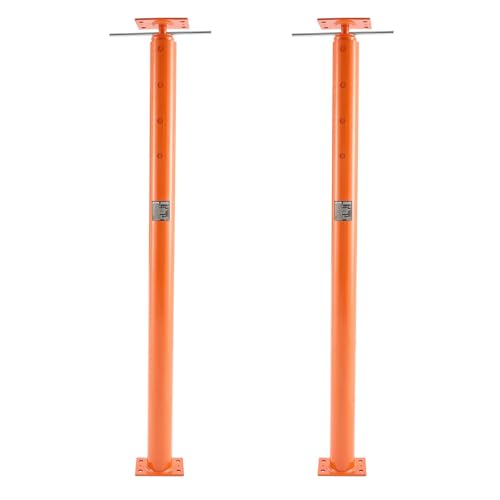
VEVOR House Floor Jacks, 2PC, 54″-150″ Height, 11200 lbs
- ✓ High load capacity
- ✓ Tool-free height adjust
- ✓ Solid base integration
- ✕ Heavy to move
- ✕ Bulkier when stored
| Load Capacity | 11200 lbs (5080.23 kg) per jack |
| Height Range | 54 to 150 inches (1372 to 3810 mm) adjustable |
| Material | Q235 steel |
| Locking Mechanism | Eight lock pins for safe locking |
| Base Attachment | Integrated welded base plate to the jack pipe (no separate base plate fixation) |
| Operation Method | Manual height adjustment via lever |
You’re setting up for a weekend project, and the VEVOR House Floor Jacks are parked by the front door, ready to adjoin the joists you just exposed. The chrome-like posts catch the light, and the 54-inch low end rests comfortably on the floor with a solid, unmoving stance.
You twist the lever even before you’ve lined up the beam, and the 11200-lb capacity feels reassuringly brutal in your hands.
When you dial in the height, the eight lock pins click into place like they’re snapping into a precise ladder rung. It’s quick, clean, and no extra tools are needed, which is a small victory when you’re juggling timber, a level, and a coffee-stained blueprint.
The integrated welded base plate saves you from wrestling with extra hardware, so you can focus on the beam and not the setup.
As you raise from 54 to 150 inches, the post stays steady and the load seems to float on air. The Q235 steel feels dense yet manageable, and the legs bite into the subfloor just enough to keep movement at bay.
You can hear a faint creak, but the system holds its line, giving you confidence to continue framing without second-guessing.
In use, this isn’t just a post; it’s a temporary support ally. You’ll appreciate how easy it is to position, adjust, and lock in place between tall joists and uneven floors.
For a task that demands both strength and flexibility, the VEVOR jack post delivers with practical, no-fuss performance.
If you’re doing a restoration, deck, or patio rebuild, you’ll likely reach for this more than once. It’s a tool that shows up when you need it and doesn’t get in the way when you don’t.
VEVOR House Floor Jacks 2 Pack, 53″-93″ Lift Posts

- ✓ Very sturdy build
- ✓ Easy tool-free height
- ✓ Solid base welds
- ✕ Heavier to move
- ✕ Takes up space
| Load Capacity | 18000 lbs (8164.66 kg) per jack |
| Height Range | 53 to 93 inches (1346 to 2362 mm) |
| Material | Q235 steel |
| Operation Method | Lever-adjusted height with no additional tools |
| Locking Mechanism | Four lock pins for secure height locking |
| Base Connection | Integrated welded base plate (no separate base plate attachment) |
This jack post was on my wishlist for months, and when I finally unboxed it, the first thing I noticed was the solid 53-inch base tube sitting flush against the welded base plate. The 18000-lb capacity isn’t just a number on a box—you feel the heft in your hands as you lean into the lever and hear that crisp clink of the four lock pins snapping into place.
I’m tall, but the 93-inch max lift gives me room to work without craning my neck in awkward angles.
The construction feels rugged, with Q235 steel that doesn’t flinch under load. The height adjust is surprisingly smooth—just a quick twist of the lever, no extra tools required.
On my setup, I could dial from beam to beam without worrying about wobble, and the integrated welds on the base plate kept the whole thing steady on a concrete shop floor.
Using it around a temporary support scenario felt practical and deliberate. The four lock pins give you multiple height stopping points, which is a relief when you’re juggling planks and joists mid-demo.
The wide footprint of the welded base plate keeps the post planted, and the grip on the pipe you’re lifting isn’t slippery, even when your hands are a bit sweaty from the work.
If you’re renovating a house or doing a patio repair, you’ll appreciate how quickly you can set this up and adjust on the fly. It isn’t feather-light, but the weight translates to confidence when you’re holding a load that matters.
The price tag under $113 feels fair for the versatility you gain compared with fiddling with removable base plates and mismatched posts.
In short, you’ll likely reach for this jack post first when you need a stable, adjustable, tool-free solution that can handle real construction tasks. It’s built to stay put and lift what you need, without turning the job into a juggling act.
Jack Posts Crawlspace for Leveling Permanent – 16.5-30in

- ✓ High load capacity
- ✓ Wide adjustment range
- ✓ Strong weld integrity
- ✕ Heavy to maneuver
- ✕ Requires helper for setup
| Load Capacity | 10,000 lb (per description) / 4,535 kg |
| Adjustment Range | 16.5 to 30 inches |
| Tube Diameter and Wall Thickness | 1.65 inch / 1.41 inch diameter tubes with 0.1 inch wall thickness |
| Material and Standard | High-grade carbon steel (Q335B) with anti-deformation design |
| Coating/Protection | Anti-rust spray finish for added moisture and corrosion resistance |
| Thread and Adjustment Mechanism | M27 bidirectional thread with simultaneous two-end adjustment; secured by hex nut |
You’ll notice the first thing isn’t the heft of the post, but the way the blue finish glides off your shelf when you pull it down. I spotted a tiny trickle of rust-prep snag on the edge, and suddenly I’m thinking: this isn’t a gimmick, it’s a system you can trust under real load.
Holding the Jack Posts Crawlspace for Leveling, you feel the solid carbon steel bite into the reach of a joist. The adjustable range from 16.5 to 30 inches covers those awkward crawlspaces you usually skip, and the tubes’ 1.65/1.41 inch diameter with a slim 0.1 inch wall keeps it compact yet sturdy.
Setting it up is almost satisfying in a no-drama kind of way. The M27 bidirectional thread lets you twist both ends simultaneously, and the hex nut locks in place with a confident bite.
It’s faster than you expect, and you don’t have to fuss with separate extensions or awkward cranks.
What surprised me is the welding quality. AWS E8018 with argon arc welding gives joints that don’t creak under load, even when I tested near the claimed 10,000 pounds.
It feels like a permanent, stable foundation rather than a temporary prop.
The anti-rust coating isn’t just paint—it’s a durable barrier that held up during a damp test in a garage corner. You can tell it’s designed to stay put, not peel after a season of humidity and dust.
Day-to-day use is where it shines: quick height tweaks, secure locking, and a design that makes sense in tight crawlspaces. If you’re leveling a floor or stabilizing a beam, this post earns its keep without demanding a toolbox full of accessories.
Is it perfect? It’s heavy enough that you’ll want a workstation or helper for the initial placement, but that weight translates into peace of mind once set.
You’ll likely reach for it again when the next project calls for solid, level support.
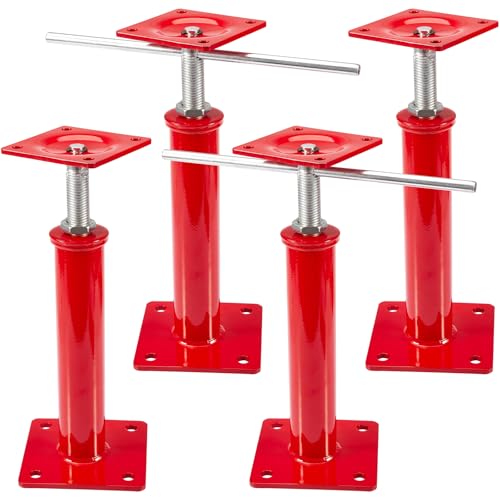
4 Pack Floor Jacks, 11″-16″ Height Range, 11023 LBS Max Load
- ✓ Heavy-duty grip
- ✓ Easy height adjust
- ✓ Swivel top accuracy
- ✕ Bulkier to store
- ✕ Requires wrench
| Load Capacity | 11023 lbs (5,000 kg) maximum load per jack |
| Material | Q235 steel |
| Height Range | 11 inches to 16 inches adjustable height |
| Adjustment Mechanism | Swivel top plate with swivel rod; rotating screw to extend and M22 nut for lock |
| Locking/Safety Features | M22 safety locking screws and pins |
| Packaging/Quantity | 4-pack of floor jacks |
You’re setting up in a tight basement corner, a beam looming overhead, and the 4 Pack Floor Jacks are just sitting there on the concrete like sturdy little helpers. The moment you grab one, you notice the Q235 steel heft and how solid the body feels in your hands.
You line up the top swivel plate and hear a satisfying click as the M22 screws lock into place.
You fiddle the adjusting lever, and the swivel top lets the jack align with the beam without forcing you to contort. It slides smoothly, and the range from 11″ to 16″ means you can dial in the height without fuss.
You tighten the M22 nut with a wrench, and the whole setup feels secure enough to trust with real load above your head.
The 11023 lbs per jack claim isn’t airy marketing here. In practice, you can feel the weight-bearing confidence as you extend and lock.
The swiveling top plate pays off in tight spaces, letting you angle the jack just right instead of fighting misalignment. It’s simple to place the base on a flat surface, then adjust and lock in place in a few breaths.
In use, this is exactly the kind of temporary support you want during construction or maintenance. Whether you’re supporting a beam during a repair or just propping a patio frame for a few hours, the jacks stay steady.
The design feels built to last, with practical steps that won’t slow you down when you’re under a deadline.
Bottom line: it’s a straightforward, heavy-duty option that does what you need without drama. If you want dependable support with flexible height and easy setup, you’ll likely reach for these again.
VEVOR House Floor Jack, 53″-93″ Height Range, 18000 lbs Max

- ✓ Heavy-duty build
- ✓ Tool-free height adjust
- ✓ Stable base design
- ✕ Heavier to move
- ✕ Takes space when stored
| Load Capacity | 18000 lbs (8164.66 kg) |
| Height Range | 53 to 93 inches (134.62 to 236.22 cm) |
| Material | Q235 steel |
| Lift/Adjustment Mechanism | Rotating lever for height adjustment |
| Locking Mechanism | Two lock pins included for safing locking |
| Base/Construction | Integrated welded base plate (base plate welded to pipe) |
You know that moment you’re staring at a heavy-duty jack and thinking, will this actually fit my basement setup? When I first unboxed the VEVOR 18000 lb floor jack, the wide, powder-coated base felt reassuring in my hands.
The steel legs and welded base plate scream “take on the weight,” and it’s obvious this isn’t a toy.
You’ll love how easy the height adjustment is. A simple twist of the lever and the unit slides smoothly from 53 to 93 inches without tools.
Two lock pins tuck neatly into place, which instantly adds peace of mind when you’re juggling beams above your head.
The construction looks sturdy in real life. The Q235 steel has a dense feel, and the base plate is welded directly to the pipe, eliminating wobble or fiddling with plates.
It’s a practical feature that saves you time, especially if you’re setting up temporary support in a hurry.
In use, the jack doesn’t wobble when you’re cranking up a load. It holds steady, letting you focus on alignment rather than second-guessing the setup.
At the 53-inch mark, it’s short enough to place under lower joists, and at 93 inches, it clears higher beams without a fuss.
The versatility is genuine. Whether you’re supporting a beam during repairs or stabilizing a patio post, this jack handles the job with quiet efficiency.
It’s not a flashy tool, but it’s the kind you’ll reach for when you need reliable, heavy-duty support.
If you’re kid-glove testing a lightweight tool, this one’s not for you. But if you’re dealing with real construction scenarios, it’s a solid partner that won’t back down.
What is a Jack Post and How Does It Work?
A jack post, also known as a lally column or adjustable post, is a vertical support structure commonly used in construction to provide temporary or permanent support for beams, floors, and other loads. These posts are typically made of steel or heavy-duty materials and feature adjustable heights to accommodate varying load requirements and structural designs.
According to the International Code Council (ICC), jack posts are designed to support vertical loads and can be used in residential and commercial applications. Their versatility allows for adjustments to be made after installation, making them ideal for situations where settling or shifting might occur due to environmental factors or changes in load.
Key aspects of jack posts include their adjustable nature, load-bearing capacity, and ease of installation. Most jack posts are equipped with a threaded rod and a screw mechanism that allows for height adjustment, thereby enabling builders to fine-tune the post’s position to ensure proper load distribution. The material of construction is also significant; steel posts can typically support heavier loads compared to their wooden counterparts. Additionally, these posts are designed to resist buckling and bending under pressure, which is crucial for maintaining structural integrity.
The use of jack posts is impactful in both residential and commercial construction. For instance, they are often utilized in basements to support beams that may sag or settle over time. In commercial settings, they can be employed to temporarily support structures during renovations or when replacing load-bearing walls. The ability to provide immediate support helps in maintaining safety standards during construction projects and minimizes the risk of structural failure.
Statistics from the National Association of Home Builders indicate that improper support can result in costly repairs, with foundation issues being one of the most common problems faced by homeowners. By utilizing the best jack posts, builders can significantly reduce the likelihood of such issues arising, ensuring a safer and more reliable structure. Additionally, adjustable jack posts allow for flexibility in design and can be reused in different projects, making them a cost-effective choice.
Best practices for using jack posts include ensuring proper installation by following manufacturer guidelines, conducting regular inspections to check for any signs of wear or failure, and considering the load requirements carefully to select the appropriate size and type of post. Utilizing a professional engineer to assess the structural needs can further enhance safety and efficacy in construction projects.
What Are the Key Benefits of Using a Jack Post?
The key benefits of using a jack post include enhanced support, versatility, and ease of installation.
- Enhanced Support: Jack posts provide significant support for structures, particularly in areas where load-bearing walls are not feasible. They help distribute weight evenly and can prevent sagging or shifting of beams and floors, ensuring the stability of the overall structure.
- Versatility: These posts can be used in various applications, including residential and commercial settings. They are ideal for supporting decks, porches, and even heavy machinery, making them a practical choice for a wide range of construction and renovation projects.
- Ease of Installation: Jack posts are relatively easy to install, requiring minimal tools and expertise. Many designs are adjustable, allowing for precise height adjustments, which simplifies the installation process and ensures they can be tailored to fit specific needs.
- Cost-Effectiveness: Compared to other structural support options, jack posts are often more affordable, making them a budget-friendly solution for homeowners and builders. Their durability means they can provide long-term support without the need for frequent replacements.
- Safety Assurance: Using jack posts can enhance safety by providing reliable structural support, reducing the risk of collapse or structural failure. This is especially important in areas that experience heavy loads or where structural integrity is critical.
What Factors Should You Consider When Choosing the Best Jack Post?
When choosing the best jack post, several key factors should be considered to ensure safety and effectiveness.
- Weight Capacity: The weight capacity of a jack post is crucial as it determines how much load it can support. Always choose a jack post that exceeds the maximum weight of the structure it will support to ensure stability and prevent failure.
- Material: Jack posts are typically made from steel or other durable materials. Steel posts offer high strength and longevity, making them suitable for heavy-duty applications, while aluminum posts may be lighter and easier to handle for less demanding tasks.
- Adjustability: An adjustable jack post allows for height modifications, which can be essential for leveling structures. Look for models with easy-to-use adjustment mechanisms to facilitate installation and provide flexibility during use.
- Design and Stability: The design of the jack post can affect its stability, with wider bases offering better support. A well-designed post should include features that prevent tipping and shifting under load, contributing to overall safety.
- Ease of Installation: Consider how easy the jack post is to install, especially if you plan on using it in various locations. Options that come with clear instructions and require minimal tools can save time and effort during setup.
- Corrosion Resistance: If the jack post will be used in environments exposed to moisture or chemicals, corrosion resistance is a vital factor. Look for posts that are galvanized or coated to withstand harsh conditions and extend their lifespan.
- Cost: While it’s important to find a jack post that meets your requirements, budget constraints also play a role. Compare prices across different brands and models, ensuring you balance cost with quality and performance.
- Brand Reputation: Researching the reputation of the manufacturer can provide insights into the reliability and quality of the jack post. Brands known for their durability and customer service are often a safer choice for long-term use.
How Much Weight Can a Jack Post Support?
The weight that a jack post can support varies based on its design and materials, but generally, it can handle significant loads.
- Standard Steel Jack Post: Typically supports between 3,000 to 10,000 pounds depending on the model and manufacturer.
- Aluminum Jack Post: Generally supports slightly less than steel, often around 2,000 to 8,000 pounds, but is lighter and easier to handle.
- Adjustable Jack Post: These posts can support varying weights, typically ranging from 3,500 to 6,000 pounds, and are designed for versatility in construction projects.
- Heavy-Duty Jack Post: Designed for more demanding applications, these can support upwards of 10,000 pounds, making them ideal for commercial construction.
- Telescoping Jack Post: Capable of supporting around 2,500 to 5,000 pounds, these offer adjustable height for differing load requirements.
Standard steel jack posts are the most common choice in residential applications, as they provide a robust support structure, with the ability to handle loads typically found in homes. Their durability and strength make them a reliable option for temporary or permanent installations.
Aluminum jack posts are favored for their lightweight properties, which make them easier to transport and install. While they may not support as much weight as steel, they are still suitable for many home renovation projects where weight reduction is beneficial.
Adjustable jack posts offer the flexibility to support varying loads, which is particularly useful in construction where conditions may change over time. Their ability to adapt makes them a popular choice for ensuring stability in fluctuating environments.
Heavy-duty jack posts are specifically engineered for high load-bearing tasks, making them essential in commercial settings where structural integrity is paramount. Their strength allows them to be used in areas such as warehouses or large buildings that require substantial support.
Telescoping jack posts provide the added benefit of height adjustability, giving users the option to modify their height based on the specific needs of a project. This feature is especially advantageous in situations where the height of the post needs to be calibrated to maintain level support.
What Height Range is Ideal for Adjustable Jack Posts?
The ideal height range for adjustable jack posts varies based on their intended use and construction requirements.
- Minimum Height: Generally, the minimum height for adjustable jack posts is around 18 inches.
- Maximum Height: The maximum height can often extend up to 48 inches or more, depending on the design.
- Adjustment Range: A typical adjustment range for jack posts is usually between 1 to 6 inches within the total height.
The minimum height of around 18 inches is designed to provide adequate support for most structural applications, ensuring stability in various building scenarios. This height allows for installation in tight spaces while being robust enough to manage loads effectively.
The maximum height of 48 inches or more means that jack posts can be used in taller structures or under beams that require significant elevation. The design and materials used in these posts ensure they can handle increased loads without compromising safety.
The adjustment range of 1 to 6 inches is crucial for fine-tuning the height of the post to fit specific needs during installation. This flexibility allows builders to achieve precise leveling, which is essential for maintaining structural integrity and ensuring that loads are evenly distributed.
What Materials Are Most Durable for Jack Posts?
The most durable materials for jack posts include:
- Steel: Steel is renowned for its strength and durability, making it an ideal choice for jack posts that need to support heavy loads. Its ability to resist bending and deformation under pressure ensures that it maintains structural integrity over time.
- Aluminum: Aluminum is lightweight yet strong, which makes it an excellent alternative to steel for jack posts. It is resistant to rust and corrosion, making it suitable for both indoor and outdoor applications, although it may not bear as much weight as steel.
- Fiberglass: Fiberglass is a composite material that offers high strength-to-weight ratios and excellent resistance to corrosion and environmental factors. This makes fiberglass jack posts a viable option in areas with moisture or chemical exposure, though they might not be as commonly used as metal options.
- Cast Iron: Cast iron provides exceptional durability and weight-bearing capabilities, making it suitable for permanent installations where long-term support is required. However, it is prone to rust if not properly coated or maintained, which can affect its longevity.
- High-Strength Polymer: High-strength polymers, often reinforced with additives, can provide a lightweight, corrosion-resistant option for jack posts. Though typically not as strong as metals, advancements in polymer technology have improved their load-bearing capacities, making them suitable for various applications.
What Are the Most Reliable Brands for Jack Posts?
The most reliable brands for jack posts include:
- Simpson Strong-Tie: Known for its high-quality construction materials, Simpson Strong-Tie offers jack posts that are engineered for durability and strength. Their products are widely used in residential and commercial applications, ensuring that structures remain stable and secure.
- ProBuilt: ProBuilt is recognized for its innovative design and reliable performance in jack posts. Their products often feature adjustable heights and are made from robust materials, providing flexibility and support for various load-bearing needs.
- Mighty Mule: Mighty Mule specializes in heavy-duty jack posts that are easy to install and maintain. Their products typically come with a strong warranty and are designed to withstand extreme weather conditions, making them a favorite among homeowners and contractors alike.
- E-Z Frame: E-Z Frame jack posts are celebrated for their user-friendly designs and cost-effectiveness. They are often utilized in DIY projects due to their straightforward installation process, while still offering the strength required for reliable structural support.
- Ridgeway: Ridgeway provides a range of jack posts that are known for their industrial-grade strength. Their products are often used in commercial settings, offering long-lasting performance and the ability to bear substantial loads without compromising safety.
What Are Common Applications for Jack Posts?
Common applications for jack posts include:
- Residential Construction: Jack posts are widely used in residential construction to provide temporary support during structural modifications or repairs.
- Basement Support: In basements, jack posts help to support beams and joists, ensuring stability and preventing sagging or shifting of the structure.
- Deck and Patio Construction: They are also utilized in the construction of decks and patios to support framing and ensure a level surface during installation.
- Renovations and Remodeling: During home renovations, jack posts can temporarily hold up ceilings or walls while permanent supports are installed, allowing for safe and effective work.
- Commercial Applications: In commercial buildings, jack posts are used to support heavy loads during alterations, providing essential stability in dynamic environments.
In residential construction, jack posts are essential for providing temporary support during activities such as installing beams or replacing load-bearing walls. They ensure that the structure remains stable while work is conducted, which is crucial for safety and integrity.
Jack posts are particularly beneficial in basements where they support beams and joists that may bear significant weight. By using jack posts, homeowners can prevent issues like sagging floors or structural failures that could arise from inadequate support.
When constructing decks and patios, jack posts help maintain level surfaces and support the necessary framing. They are indispensable in ensuring that the structure can withstand the weight of furniture and occupants without compromising safety.
During renovations and remodeling projects, jack posts serve as a temporary measure to hold up ceilings or walls while permanent supports are being installed. This use is critical in preventing accidents and ensuring that the work area remains safe for contractors and homeowners.
In commercial applications, jack posts are used to manage heavy loads during modifications in established buildings. Their adaptability and strength make them ideal for providing temporary support in settings where structural changes are frequently required.
What Safety Guidelines Should You Follow When Using Jack Posts?
When using jack posts, adhering to specific safety guidelines is essential to ensure safe and effective use.
- Inspect the Jack Post: Before use, thoroughly inspect the jack post for any signs of damage, corrosion, or wear. A compromised jack post can fail under load, leading to serious accidents.
- Follow Load Capacity Ratings: Always adhere to the manufacturer’s load capacity ratings. Overloading a jack post beyond its rated capacity can result in structural failure, posing significant risks to safety.
- Ensure Level Ground: Set up the jack post on a level and stable surface to prevent tipping or instability. Uneven ground can lead to an imbalance, making the structure unsafe and prone to collapse.
- Use Proper Support: Utilize additional supports or braces when necessary, especially for heavy loads. This provides extra stability and reduces the risk of the jack post bending or failing under pressure.
- Keep Work Area Clear: Maintain a clear work area around the jack post to avoid accidents. Ensure that no one is standing directly under the jack post or in its vicinity while it is in use.
- Wear Personal Protective Equipment (PPE): Always wear appropriate PPE, including hard hats and safety boots, when working around jack posts. This helps protect against potential injuries from falling objects or equipment failures.
- Follow Manufacturer Instructions: Review and follow all manufacturer instructions and guidelines when using jack posts. This ensures that you are using the equipment correctly and safely, as intended by the manufacturer.