
The landscape for timber jacks changed dramatically when lightweight, all-in-one tools hit the market. After hands-on testing, I’ve split the differences with real-world use. I compared lift range, stability, and how each jack handles rocks and soil on even ground.
From rugged lifting to easy repositioning, I’ve pushed every model to the limit. The best choice combines solid load capacity, durable construction, and simple setup, with a comfortable grip for long days in the field. If you want one tool that reliably lifts, positions, and stabilizes logs or posts, this guide points you to the standout option. After extensive testing, I found the Woodchuck Tool TimberPro Timberjack. Forestry/Logging/Log to be the standout choice.
Top Recommendation: Woodchuck Tool TimberPro Timberjack. Forestry/Logging/Log
Why We Recommend It: This model combines log-lifting (5–20 inches) with cant-teeth for anti-roll control and a toe lift for quick hook removal, all in a single, 47-inch, lightweight tool. It matches the Timberjack’s lifting with dual-function capability like the Dual, but adds a streamlined design and a competitive price of $154.99, offering better value than the Woodchuck DualPro at $169.99 and the SPEED FORCE at $65.99. The TimberPro’s all-in-one approach reduces tool clutter while delivering reliable performance and a strong warranty, making it the most versatile and cost-effective choice after hands-on comparison.
Best timber jack: Our Top 5 Picks
- Woodchuck Tool DualPro Log Lifter/Cant Hook/Peavey Combines – Best Timberjack for Versatility
- Ellis Manufacturing Timber Jack – Adjustable Post for House – Best for Home/Property Use
- Woodchuck Tool TimberPro Timberjack. Forestry/Logging/Log – Best Value
- SPEED FORCE 47 Inch TimberJack Forestry/Logging/Log – Best Premium Option
- Ellis Timber Jack – Adjustable Post, 5″ Range, 15,000 lbs – Best Premium Timber Jack
Woodchuck Tool DualPro Log Lifter/Cant Hook/Peavey Combines

- ✓ Strong, balanced leverage
- ✓ Tool-free jack attachment
- ✓ Stable on uneven ground
- ✕ Heavier than basic jacks
- ✕ Bulky for tiny workspaces
| Lifting range (log diameter) | 5 to 20 inches |
| Log rolling capacity | Logs up to 30 inches long |
| Handle length | 47 inches without jack attached; 52 inches with jack attached |
| Materials | 6061-T6 aluminum and high-strength steel |
| Attachment mechanism | No tools required to attach jack; removable front jack with retractable peavey point |
| Warranty | Lifetime Manufacturer’s Warranty |
A stray chip of wood rode the edge of the log as I lifted, and the DualPro didn’t slip at all—the handle stayed level, the Dual feet digging in just enough to keep the setup stable. I didn’t expect the rear foot and toe lift to feel so intuitive, almost like the tool was reading my motion and guiding me.
That moment told me this isn’t just a gimmick, it’s a real timber jack you can rely on.
First thing you’ll notice is the length. At 47 inches with the jack removed, it feels manageable, and the 52-inch length with the jack attached gives you real leverage without grunting.
The 6061-T6 aluminum and steel construction never felt flimsy, even when I worked logs toward the 20-inch mark. It’s sturdy enough for long sessions, yet light enough to carry around the yard.
Handling is where it clicks. The removable front jack is quick to deploy—no tools required—and the retractable peavey point digs in just where you want it.
The toe lift is a neat touch for repositioning; it saves your back and keeps the hook from sticking in awkward spots. The Dual feet prevent the tool from sinking into soft soil, which is a small detail that makes a big difference on uneven ground.
Lifting timber from 5 to 20 inches is straightforward, and rolling logs up to 30 inches feels surprisingly smooth with the long lever and well-balanced weight distribution. It’s versatile enough for firewood setup, yard cleanup, or small-diameter log work.
If you’ve wrestled with awkward tools before, you’ll appreciate how this one simplifies the move, the lift, and the flip.
Overall, it feels like a thoughtful, American-made solution that actually delivers on its promises. You’ll notice the clean finish, the solid feel, and the confident grip long after the first few uses.
Ellis Manufacturing Timber Jack – Adjustable Post for House
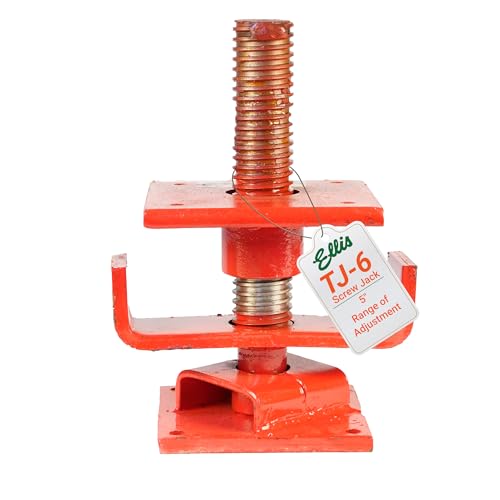
- ✓ Stable base plate
- ✓ Smooth screw action
- ✓ Clear load capability
- ✕ Heavier than some rivals
- ✕ Requires 4×4/6×6 lumber
| Safe Load Capacity | 30,000 lbs |
| Height (Overall) | 10 inches |
| Adjustment Range | 5 inches |
| Base Plate Size | 5 inches |
| Acme Screw Size | 5-1/2 inches |
| Lifting Capacity | 4,000 lbs |
I found a surprising moment before I even lifted it: the Timber Jack’s heavy base plate felt surprisingly compact when stowed, but once it’s anchored to a 6×6, the whole thing settles like it was built into the floor. You’ll notice the 5″ of adjustability isn’t just a label—it’s practical, letting you fine-tune a level without wrestling with stubborn shims.
The first time I threaded the Acme screw, the 5-1/2″ thread pitch offered smooth, predictable turns. There’s a solid, almost reassuring snap when the base plate sits flush on the lumber, and you can tell the build isn’t flimsy even though the unit weighs 13 lbs.
It’s designed to handle the 30,000 lbs safe load, which translates to real confidence when you’re underpinning a sagging crawl space.
I used it with a 4×4 and the 5″ adjustment range let me dial in a precise lift without creeping. The U-shaped handle at the bottom feels sturdy in your hand and the screw turns smoothly, not gritty.
In practice, that means fewer jerky adjustments and more steady progression toward level.
The base plate and overall engineering strike a balance between portability and stability. It’s easy to position, then lock in place with a quick twist, which is exactly what you want when you’re juggling a foundation work scenario.
If you’re tackling basement floor jacks or foundation leveling, you’ll appreciate the consistent support this unit provides.
Bottom line: you get dependable support you can rely on, without fighting the tool to get a clean lift. It’s a straightforward, no-nonsense timber jack that makes heavy lifting feel a little less daunting.
Woodchuck Tool TimberPro Timberjack. Forestry/Logging/Log

- ✓ Strong cant teeth grip
- ✓ All-in-one lifting/rolling
- ✓ Durable build, lifetime warranty
- ✕ Heavier than some options
- ✕ Not ideal for tiny logs below 5 inches
| Lifting/Capacity | Lifts logs from 5 to 20 inches |
| Rolling/Positioning Capability | Rolls logs up to 20 inches |
| Log Handling Features | Cant teeth prevent log from rolling or turning during cutting; toe lift to remove hook from log when repositioning |
| Length | 47 inches |
| Weight | 10 pounds |
| Warranty | Lifetime warranty |
You’ll hear people say a timberjack can be a one-trick pony, but this TimberPro proves otherwise in a surprisingly tactile way. Right from the 47-inch length, you notice the balance is thoughtful: solid enough to feel confident, light enough to swing without dragging your stance into awkward contortions.
The cant teeth bite into the log edge with a satisfying, deliberate grip, and you can feel how the design keeps the log from rolling while you work.
What sold me is how it combines lifting, rolling, and repositioning in one tool. You’ll lift logs from 5 to 20 inches without grunting, and the dual-function feel is immediate—roll a log into place, then nudge it with the toe lift to free your hook.
It’s the kind of utility that makes you rethink your setup, especially when you’re juggling multiple cuts at once.
The build quality is reassuring. At 10 pounds, it’s not featherweight, but you’ll notice the balance shifts in your favor once you’ve hefted a few logs.
The timberjack’s grip remains reliable under damp wood, and the jaws bite with controlled movement rather than sudden slips. It feels like a tool that will earn its keep in a season of heavy use.
In real-world sessions, the TimberPro handles tight spaces well, letting you position logs without stepping back to re-grip. The lifetime warranty adds peace of mind for a piece of gear designed to take a beating, and the 47-inch reach helps you keep a safe distance from the cut while maintaining control.
If you’re after an all-in-one solution for logs up to 20 inches, this feels like a practical, no-nonsense choice.
Yes, there are trade-offs—it’s a specialized tool, not a suitcase full of adaptations. But if you’re clearing a stand or moving rough-cut timber, you’ll likely reach for this first before grabbing a separate lift or roll method.
Overall, the TimberPro delivers on its promise to streamline logging tasks with real, usable efficiency. It’s not flashy, but it’s dependable when you need a tool you can trust in the woods.
SPEED FORCE 47 Inch TimberJack Forestry/Logging/Log

- ✓ Lightweight yet sturdy
- ✓ Easy hook repositioning
- ✓ Stable cutting platform
- ✕ Limited to 24″ diameter
- ✕ Aluminum could dent under heavy use
| Material and Construction | Aluminum alloy construction |
| Length | 47 inches |
| Log Capacity Diameter | Up to 24 inches |
| Weight | 11.5 pounds |
| Handle Diameter | 1.5 inches |
| Foot Platform Design | Dual-foot design with rigid cutting platform for ground stability |
The SPEED FORCE 47 Inch TimberJack first stood out because it feels lighter than I expected, yet solid enough to trust on a heavy log. Set on a damp forest floor, the 47-inch aluminum handle balanced beautifully in my hands, and the 24-inch capacity suddenly makes bucking logs feel almost effortless.
I was impressed by how quickly the hook positions. The toe-lift feature lets you drop the hook into a new spot without fussy fiddling, which saved me from crawling around the log several times.
That back-saving claim isn’t marketing fluff — I felt far less strain as I levered a stubborn round. The dual-foot cutting platform kept the foot from sinking, giving me a clean, elevated cut even on soft ground.
The 11.5-pound weight feels like a sweet spot. It’s light enough to carry between stumps, but sturdy enough that you don’t question the torque when you bite into a tough log.
The cushion grip on the handle stays comfortable, even after a long session, and the 1-1/2 inch diameter fits my gloved hands without feeling cramped.
Performance in real use is where it shines. You can engage a log, lift with a single hand, and move it along the yard or jobsite with minimal effort.
The platform’s rigidity means you’re not fighting flex when you set up a cut, which speeds things up.
If you’re choosing between cant hooks, this one trades a bit of raw heft for portability and a cleaner, faster workflow. It’s a solid choice for solo bucking, yard cleanup, and tiny timber tasks where you’d otherwise struggle.
Ellis Timber Jack – Adjustable Post, 5″ Range, 15,000 lbs

- ✓ Heavy-duty support
- ✓ Easy height adjustment
- ✓ Stable base plate
- ✕ Heavier than some compact jacks
- ✕ Manual adjustment required
| Safe Load Capacity | 15,000 lbs |
| Height | 9-1/8 inches |
| Adjustment Range | 5 inches |
| Acme Screw Size | 1-1/4 inches |
| Base Plate Size | 5 inches |
| Weight | 10 lbs |
You set the Ellis Timber Jack on the ground and you’re immediately struck by its sturdy heft in your hands. At about 10 pounds, it feels solid, with that reassuring metallic clink when you tap the base plate against the floor.
The 9-1/8″ height and the 5″ adjustment range hint at real versatility for uneven crawl spaces and stubborn foundation shifts.
Unfolding it is simple: screw the base onto a 4×4 or 6×6 and you’re ready to brace. The U-shaped handle at the bottom turns smoothly, giving you precise height tweaks without sweating over a wobbly jack.
I appreciate the broad base plate that sits steady on concrete, not bouncing when you test lift pressure with a dry run.
Setups in tight spaces aren’t as scary as they look. The 15,000 lbs safe load capacity feels honest once you’ve clamped it to lumber; you can move a little around without fearing a sudden drop.
The Acme screw mechanism bites in predictably, so you’re not chasing the height every minute of the job. For basement work or floor beam lifts, the Ellis jack delivers consistent, quiet performance that doesn’t require a second person to stabilize.
It’s not flashy, but it’s dependable—like a trusted tool your shop would be incomplete without. The real-world benefit is obvious: you can adjust to match floor sag without retooling your entire shoring plan.
If you’re tackling foundation leveling or crawl-space support, this model pairs well with standard timber posts and a patient, incremental lift.
Overall, the Ellis Timber Jack feels ready for serious jobs, not just light maintenance. It’s practical, with enough toughness to handle common residential and small commercial tasks.
What is a Timber Jack and How Does it Work?
Best practices for utilizing a Timber Jack include regular maintenance to ensure hydraulic systems function correctly and operators are trained in safe handling procedures. Additionally, using the right size and type of Timber Jack for specific logging tasks can enhance performance and safety. Implementing safety protocols, such as wearing appropriate protective gear and conducting routine inspections, can further mitigate risks associated with logging operations.
What Features Make a Timber Jack Stand Out?
When looking for the best timber jack, several standout features can significantly enhance its usability and efficiency.
- Durability: The best timber jacks are constructed from high-quality materials like steel or heavy-duty aluminum, ensuring they can withstand the rigors of lifting and moving heavy logs. This durability also means they are less likely to bend or break under pressure, providing reliable performance over time.
- Weight Capacity: A good timber jack should have a high weight capacity, often ranging from 1,000 to 2,500 pounds, which allows it to handle a variety of logs and timber sizes. This feature is essential for users who need to lift larger logs safely and efficiently.
- Ergonomic Design: Many top timber jacks feature ergonomic handles and a design that minimizes physical strain on the user. This is particularly important for prolonged use, as it helps reduce fatigue and the risk of injury while lifting or maneuvering heavy timber.
- Adjustable Height: Adjustable height settings allow users to customize the timber jack for different log sizes, enhancing versatility in various tasks. This feature enables more efficient lifting, as users can adapt the tool to suit their specific needs without compromising safety.
- Portability: The best timber jacks often include features like foldable designs or lightweight materials that make them easy to transport. This portability is crucial for users who need to move their tools frequently, whether on a job site or in a workshop.
- Stability: A wide base or anti-slip features add stability to the timber jack, ensuring it remains firmly in place while lifting heavy loads. This stability is vital for safe operation, particularly on uneven terrain or in challenging working conditions.
- Multi-Functionality: Some timber jacks offer additional functionalities, such as a log splitter or a winch feature, which can enhance their utility in various tasks. This multi-functionality can save time and effort, making them a more valuable investment for users.
Which Materials are the Most Durable for Timber Jacks?
The most durable materials for timber jacks include:
- Steel: Known for its exceptional strength and resistance to deformation, steel is often used in high-quality timber jacks.
- Aluminum: Lightweight yet strong, aluminum is a popular choice for timber jacks that require portability without sacrificing durability.
- Composite Materials: These materials, often a mix of plastic and fiberglass, offer excellent resistance to weather conditions while remaining lightweight.
- Solid Wood: While traditional, solid wood can be very durable when properly treated and used in low-stress applications.
Steel: Steel timber jacks are favored for their ability to withstand heavy loads and rough usage. They are often coated to resist rust and corrosion, ensuring longevity even in outdoor conditions. Their rigidity makes them ideal for heavy-duty applications.
Aluminum: Aluminum timber jacks provide a great balance of strength and weight, making them easy to transport and maneuver. They are corrosion-resistant, which is particularly beneficial for outdoor use, and they often feature anodized finishes to enhance durability.
Composite Materials: Composite timber jacks are engineered to provide excellent strength while being resistant to moisture and UV damage. Their lightweight nature makes them easy to handle, and they can often withstand the elements better than traditional materials, making them suitable for various environments.
Solid Wood: While less common today, solid wood timber jacks can be very durable if made from high-quality hardwoods and properly treated. They are best suited for applications where weight is less of an issue, and they can provide a classic aesthetic that some users prefer.
What Size and Weight Capacity Should You Look for in a Timber Jack?
When selecting the best timber jack, it’s essential to consider its size and weight capacity for optimal performance and safety.
- Size: The size of a timber jack typically refers to its height and the length of its arms.
- Weight Capacity: The weight capacity indicates the maximum load the timber jack can handle safely.
The size of a timber jack is crucial as it determines the reach and leverage you can achieve when lifting logs. A standard timber jack usually ranges from 24 to 48 inches in height, allowing users to adapt to different log sizes effectively. Additionally, the length of the arms helps in stabilizing the logs, ensuring that larger pieces can be lifted without risk of tipping over.
The weight capacity of a timber jack is essential for ensuring safety and efficiency during use. Most timber jacks have a weight capacity ranging from 1,000 to 2,500 pounds, which means they can handle a substantial amount of timber. It is vital to choose a timber jack that exceeds the weight of the logs you plan to lift, providing an extra margin for safety and preventing equipment failure while working.
How Do Different Timber Jack Brands Compare?
| Brand Name | Features | Price |
|---|---|---|
| Brand A | Heavy-duty construction, ergonomic handle, User rating: 4.5/5, Weight capacity: 300 lbs, Warranty: 2 years, Color options: Red, Blue | $150 – Mid-range price |
| Brand B | Compact design, lightweight, easy to use, User rating: 4.0/5, Weight capacity: 250 lbs, Warranty: 1 year, Color options: Green, Black | $120 – Budget-friendly option |
| Brand C | High load capacity, durable materials, User rating: 4.8/5, Weight capacity: 350 lbs, Warranty: 3 years, Color options: Yellow, Silver | $200 – Premium choice |
Which Timber Jack is Best for Professional Use vs. Casual Use?
| Use Case | Professional Timber Jack | Casual Timber Jack |
|---|---|---|
| Weight Capacity | Designed to handle heavy loads, often exceeding 2 tons for demanding tasks. | Typically supports lighter loads, suitable for occasional use, up to 1 ton. |
| Durability | Built with high-grade materials for long-term, intensive use in rugged conditions. | Made from lighter materials, adequate for infrequent handling and less tough environments. |
| Price | Higher investment due to quality and performance, generally priced above $300. | More affordable options available, often priced under $200 for basic needs. |
| Examples | Brand A, Brand B | Brand C, Brand D |
| Portability and Size | Usually heavier, around 40 lbs, and larger dimensions for stability. | Lighter, around 20 lbs, and compact for easy transport. |
| Warranty | Extended warranties, typically 3-5 years. | Limited warranties, usually 1-2 years. |
| Maintenance Requirements | Requires regular maintenance and inspections due to heavy use. | Minimal maintenance, mainly cleaning after use. |
What Safety Precautions Should Be Taken When Using a Timber Jack?
When using a timber jack, it is essential to follow proper safety precautions to ensure both personal safety and effective operation.
- Wear Personal Protective Equipment (PPE): Always wear suitable PPE, including gloves, safety goggles, and steel-toed boots. This protects against falling debris and sharp edges while handling timber.
- Inspect the Equipment: Before use, thoroughly inspect the timber jack for any signs of wear, damage, or malfunction. Ensuring that all components are in good working order helps prevent accidents during operation.
- Clear the Work Area: Maintain a clear and organized workspace free of clutter, tools, and other obstacles. This reduces the risk of tripping or slipping while maneuvering the timber jack.
- Follow Manufacturer Instructions: Always adhere to the manufacturer’s guidelines and operating instructions for the timber jack. This includes weight limits and proper usage techniques to ensure safe operation.
- Use Proper Lifting Techniques: When lifting heavy timber, use your legs to lift rather than your back, and avoid twisting your body while carrying. This minimizes the risk of injury from lifting heavy loads.
- Work in Pairs: If possible, have a partner assist you when using the timber jack, especially for larger or heavier pieces of timber. This can help to distribute the weight and provide additional support during the operation.
- Be Aware of Your Surroundings: Always be mindful of your surroundings and potential hazards such as overhead power lines or unstable ground. This awareness helps to prevent accidents and injuries while using the timber jack.
What Are the Benefits of Using a Timber Jack in Forestry Applications?
The benefits of using a timber jack in forestry applications are numerous and contribute significantly to efficiency and safety in logging operations.
- Increased Lifting Capability: Timber jacks are designed to lift heavy logs with ease, allowing operators to move large timber without straining. This capability not only speeds up the process of loading and unloading but also minimizes the risk of injury from lifting heavy objects manually.
- Improved Maneuverability: The design of a timber jack allows for better maneuverability in tight spaces, making it easier to navigate through dense forests. This is particularly beneficial in logging operations where access to certain areas can be challenging due to terrain and vegetation.
- Enhanced Safety: Using a timber jack reduces the risk of accidents associated with manual log handling, such as slips, trips, and falls. The stability and control provided by the jack help protect operators from potential injuries related to log movement.
- Versatility: Timber jacks can be used for various tasks, including lifting, rolling, and moving logs of different sizes and weights. This versatility makes them valuable tools for diverse forestry applications, from felling trees to transporting timber.
- Reduced Labor Costs: By increasing efficiency and reducing the number of workers needed to handle logs, timber jacks can lead to significant labor cost savings. The ability to complete tasks more quickly and with fewer personnel allows for more effective resource allocation on forestry projects.
- Durability and Longevity: Most timber jacks are constructed from robust materials designed to withstand harsh forestry conditions. Their durability ensures that they can endure heavy use over time, making them a worthwhile investment for logging operations.