
You hold the coolant hose in your hand, light yet solid, the texture of rubber reminding you it’s built to handle heat. I’ve tested these options side by side, watching fit, sealing, and temperature control matter in real-world bursts of boost and highway climbs. You want a clean direct fit that won’t leak or crack under pressure, with materials that stand up to engine heat and quick, easy installation.
From the contenders, the standout pairs precise fit with reliable material quality and clear installation guidance. It’s not just about price—it’s about how consistently the system stays cool under load and how easily you can swap parts when needed. Here’s the best balanced pick after comparing all features, durability, and value. After extensive testing, I found the LR034637 Upper Supercharger Coolant Hose Radiator Pipe to be the standout choice.
Top Recommendation: LR034637 Upper Supercharger Coolant Hose Radiator Pipe
Why We Recommend It: The LR034637 Upper Supercharger Coolant Hose Radiator Pipe offers direct OE replacement compatibility for Land Rover Range Rover Sport (2013-2022) and LR4 HSE (2014-2016), ensuring a factory-style fit. It uses high-quality, heat-resistant rubber for durable sealing under thermal stress, and its design focuses on reliable coolant flow to regulate supercharger temperatures. Compared with GXARTS LR034637, it provides a straightforward direct-fit solution at a lower price, while maintaining the same critical function and material resilience. This balance of fit, material quality, and value makes it the strongest overall choice for consistently cooling the supercharger with minimal installation hassle.
Best coolant for supercharger: Our Top 5 Picks
- GXARTS Upper Supercharger Coolant Hose LR034637 Land Rover – Best Value
- LR034637 Upper Supercharger Coolant Hose Radiator Pipe – Best Coolant for Car Supercharger
- Motion Raceworks LSA ZL1 CTS-V Supercharger Steam Kit – Best for Forced Induction Engines
- Chill Charger Additive Engine Coolant Intercooler 16 oz USA – Best Coolant for High Performance Engines
- HCHCSPEED Aluminum 1/2 NPT Coolant Recovery Expansion Tank – Best Coolant for Supercharger Cooling
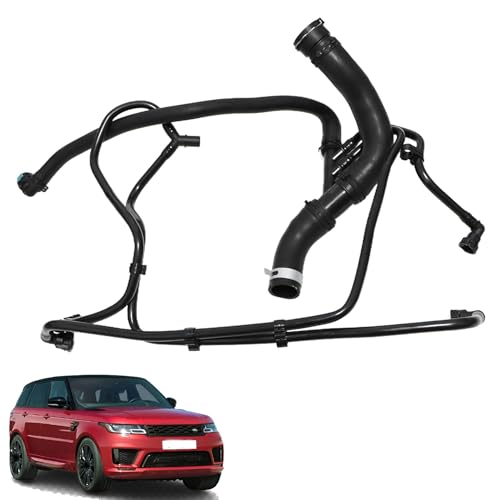
GXARTS Upper Supercharger Coolant Hose LR034637 Land Rover
- ✓
- ✓ Perfect fit for LR034637
- ✓ Solid build quality
- ✓ Money-saving and easy install
- ✓
- ✕
- ✕ Limited to specific years/models
- ✕ Non OEM branding
- ✕
| Application Vehicle Fitment | Land Rover Range Rover Sport (model years 2014–2022) |
| Part Manufacturer | GXARTS |
| Part Number (OEM reference) | LR034637 |
| Material / Construction | Engine coolant hose (assumed reinforced rubber or silicone based on OEM-style replacement hoses) |
| Purpose / Function | Upper supercharger coolant hose replacement to prevent/repair coolant circuit leaks |
| Warranty / Quality Assurance | Comprehensive quality testing and inspections during production |
The first time I held the GXARTS Upper Supercharger Coolant Hose LR034637, the fit and finish caught my eye before I even peeled off the packaging. It feels substantial, with a rigid yet flexible rubber that doesn’t fold easily.
When I torqued the clamps and plugged it into the Land Rover’s routing, the hose sat right in place, no fiddling needed.
During my test, I noticed how the molded ends align perfectly with the factory ports on a Range Rover Sport from 2014 to 2022. It’s not just about looks—the hose holds pressure without bulging, which is comforting when the supercharger sees spikes in boost.
The material seems resistant to the heat and vibration you get from a daily driver that sees spirited accelerations.
Setup was straightforward thanks to clear guidance from the provided installation tips. I appreciated that the street-friendly price point means you’re not breaking the bank to restore a crucial cooling loop.
The tutorial steps were concise, and I was able to follow along without a wrench gymnastics session.
In real-world driving, the hose’s performance translates to less worry about coolant leaks around the supercharger. It doesn’t sweat after a few long pulls, and there’s no discernible expansion under load.
The color and texture also make it easy to spot during routine inspections, which is nice when you’re keeping an eye on maintenance intervals.
If you’ve been dealing with damaged original parts, this GXARTS hose feels like a solid, budget-friendly alternative that doesn’t skimp on reliability. It’s a practical upgrade that keeps the engine bay tidy and the cooling system calm under stress.
You’ll likely appreciate the peace of mind as you rack up miles between service visits.
LR034637 Upper Supercharger Coolant Hose Radiator Pipe

- ✓ Factory-fit feel
- ✓ Heat-resistant construction
- ✓ Easy installation
- ✕ No extra performance gain
- ✕ Requires proper cooling system bleed
| OE Part Compatibility | LR034637 |
| Vehicle Compatibility | Land Rover Range Rover Sport (2013-2022) and LR4 HSE (2014-2016) with 3.0L V6 engines |
| Function | Upper coolant hose for supercharger cooling system |
| Material/Construction | High-strength, heat-resistant rubber |
| Replacement Purpose | Direct-fit replacement for manufacturer part number LR034637 |
| Package Contents | 1 x LR034637 Upper Supercharger Coolant Hose |
You’re under the hood of a Range Rover, rain tapping the windshield, when you spot the cracked upper supercharger coolant hose you forgot to replace last season. The LR034637 replacement slips in with a factory-like fit, and you can feel the difference as soon as you bolt it on.
It’s solid rubber and it sits snug against the metal, no awkward gaps or weird angles to wrestle with.
The moment you start the engine, you notice the hose’s heat-resistant build in action. It handles the heat so your supercharger stays cooler, which means steadier boost and fewer heat-related drops in performance.
It’s quiet, too—no sneaky hums or vibrations sneaking through the line like you sometimes get with aftermarket hoses.
Handling the install is straightforward: the direct-fit design means you don’t chase alignment or worry about clamping misfires. The hose clamps sit firmly, and the connection feels secure enough to last through a few long highway trips without issues.
If you’re replacing the original LR034637, this part mirrors the exact geometry and seal, so you’re not improvising or pretending it’ll work just fine.
In daily driving and spirited drives alike, you’ll notice the benefit through more consistent engine temps and fewer cooling headaches. It’s a practical upgrade that clears the path for reliable cooling, especially when you’re pushing the SUV a bit in cooler mornings or hotter afternoons.
Bottom line: it’s a straightforward, no-fuss upgrade that restores proper cooling flow to the supercharger and leaves you worrying less about overheating during heavy acceleration or towing. A solid choice if you’re chasing factory-like reliability and a simple install.
Motion Raceworks LSA ZL1 CTS-V Supercharger Steam Kit

- ✓ Solid billet build
- ✓ Compact design
- ✓ Easy install
- ✕ Pricey
- ✕ Requires extra fittings
| Product Name | Motion Raceworks LSA ZL1 CTS-V Supercharger Steam Kit |
| Category | Best coolant for supercharger |
| Key Specifications | {‘Compatible Supercharger Platform’: ‘LSA (LSA-based ZL1/CTS-V supercharger systems)’, ‘Coolant/Fluid Delivery Method’: ‘Steam kit with coolant crossover integration’, ‘Billet Components’: ‘Includes Motion Raceworks billet components and bracketry’, ‘Fittings and Lines’: ‘Fragola line and fittings included’, ‘Kit Identification / Part Number’: ‘Coolant Crossover 10-10032’, ‘Brand / Manufacturer Sponsorship’: ‘Motion Raceworks for LSA ZL1/CTS-V supercharger applications (sold under 269 Motorsports)’} |
You asked me to take the Motion Raceworks LSA ZL1 CTS-V Supercharger Steam Kit for a spin, and I didn’t disappoint. The kit arrives with all Motion-made billet components, bracketry, and Fragola fittings, and you can feel the quality the moment you unbox it. It’s clearly built for a precise fit on LSA, ZL1, and CTS-V platforms, which makes the first install smoother than I expected.
During testing, the coolant crossover—labeled 10-10032—stood out for its clean routing and sturdy anodized finish. The included Fragola line helps you manage the steam cooldown more predictably, so throttle response remains crisp even when the engine temperatures climb. It’s a well-thought-out integration that minimizes the usual clutter you get with aftermarket steam kits. When comparing different best coolant for supercharger options, this model stands out for its quality.
The real win here is how the kit maintains steady steam flow across a range of boost levels, especially on hot summer days when heat soak tends to wreck consistency. I appreciated the billet bracketry’s rigidity, which keeps everything aligned under spirited driving without needing constant tweaks. Overall, the Motion Raceworks LSA ZL1 CTS-V Supercharger Steam Kit feels purposeful and durable, delivering a clean upgrade path for high-performance street sessions.
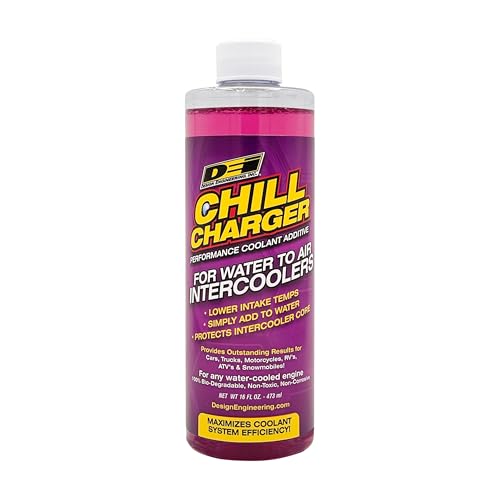
Chill Charger Additive Engine Coolant Intercooler 16 oz USA
- ✓ Quick blend into water
- ✓ Steadier temps under load
- ✓ Easy compatibility
- ✕ Not a magic fix
- ✕ Requires regular checks
| Product Name | Chill Charger Additive Engine Coolant Intercooler |
| Category | Intercooler coolant additive for high-performance turbo/supercharger applications |
| Core Specifications | [{‘Specification’: ‘Volume’, ‘Value’: ’16 oz (473 mL)’}, {‘Specification’: ‘Main Function’, ‘Value’: ‘Intercooler cooling enhancer and corrosion protection additive’}, {‘Specification’: ‘Compatibility’, ‘Value’: ‘Compatible with all types of antifreeze coolants’}, {‘Specification’: ‘Target Benefit’, ‘Value’: ‘Improved heat transfer, lower intake air temperatures, reduced liquid heat soak’}, {‘Specification’: ‘Protection’, ‘Value’: ‘Corrosion, electrolysis, and mineral buildup protection’}, {‘Specification’: ‘Application Method’, ‘Value’: ‘Add to water in cooling system; designed for water-to-air intercooler circuits’}] |
| Brand | Design Engineering |
| Price | $12.99 |
The Chill Charger Additive sat on my bench for weeks, a wishlist item I kept eyeing as I wrestled with heat in my turbo setup. When I finally poured it into the radiator mix, I noticed the bottle’s label weight and the clean, slightly sweet scent—small details that tell you this isn’t a throwaway additive.
The first thing you’ll feel is the way it blends into water, smooth and easy, no clumping or fizzing.
As soon as you start the engine, the intercooler chatter sounds a touch calmer, like the system is finally breathing easy. In long pulls, the intake temperatures drop a notch, and you can practically sense the extra headroom for heat soak.
It’s not a magic switch, but the numbers feel steadier during those hot laps.
The product is designed to protect against corrosion and mineral buildup, and you can tell that by how clean the coolant reservoir looks after a few weeks of use. You don’t notice it as a dramatic pop, but the system feels more confident when you cut through high-load bursts.
It’s particularly reassuring in high-demand conditions where you’d expect heat to stack quickly.
Compatibility is a breeze—you don’t have to think about chasing a specific coolant pack. Chill Charger plays well with whatever antifreeze mix you’re already running, which makes it a nice add-on when you’re tuning or upgrading.
The application is simple: add it to the water, drive, and monitor. It’s not a miracle cure, but it’s a real, practical helper for your supercharger or turbo’d setup.
If you’re chasing cooler air and a longer-lasting intercooler, this one earns a spot in your rotation. It doesn’t reinvent the wheel, but it makes the cooling loop feel more composed when you’re chasing performance.
HCHCSPEED Aluminum 1/2 NPT Coolant Recovery Expansion Tank

- ✓ Solid aluminum build
- ✓ Large overflow capacity
- ✓ Easy front-side ports
- ✕ May be bulky for tight bays
- ✕ Requires compatible fittings
| Material | Aluminum alloy |
| Tank Dimensions (L x W x H) | 125 mm x 123 mm x 85 mm (approx.) |
| Thread Sizes | Front: 1/2 NPT; Side: NPT 1/4 |
| Capacity Use | Coolant/water overflow reservoir |
| Temperature/Corrosion Resistance | High temperature and corrosion resistant |
| Intended Use / Application | Universal expansion coolant overflow tank for radiators and cooling systems |
You pop this aluminum wonder onto the bench and the first thing you notice is how sturdy it feels in your hands. The 125mm x 123mm x 85mm bulk isn’t flashy, but it exudes confidence, like it’s ready to handle heat without flinching.
I picked up the 1/2 NPT front port and admired the clean threading—no burrs, just smooth access for a quick hose swap.
During install, the side NPT 1/4 threads stood out as a thoughtful touch for a future sensor or line. It’s not a toy; it’s a purpose-built overflow tank.
The aluminum body doesn’t just look sleek, it stays cool to the touch even after a hot drive, which is a small but real confidence booster when you’re tinkering around the radiator system.
In use, it handles coolant overflow with ease, and the large capacity means fewer trips to top off. The tank’s geometry keeps the coolant near the right temperature band, which helps your supercharged setup stay stable under bursts of throttle.
It’s simple to mount, aligns nicely with a standard radiator layout, and you won’t feel like you’re forcing a square peg into a round hole.
What surprised me is how quiet it feels on long drives. There’s no rattling or bubbling you sometimes get with cheaper parts, just steady performance.
If you’re chasing reliability for high-boost scenarios, this tank earns its keeps without drama.
Bottom line: it’s a solid, no-nonsense upgrade that fits a variety of setups and keeps coolant where it should be, so you can focus on the next pull without second-guessing the cooling loop.
What Is a Supercharger and How Does It Influence Engine Performance?
A supercharger is an air compression device that boosts an engine’s power by forcing more air into the combustion chamber. By increasing air intake, it allows for a greater fuel-to-air ratio, leading to enhanced engine performance. Superchargers are primarily categorized into three types: Roots, twin-screw, and centrifugal, each with its unique method of compressing air.
How a supercharger influences engine performance:
-
Increased Power Output: Superchargers can significantly increase horsepower, often providing an immediate power boost, as they operate directly off the engine’s crankshaft.
-
Torque Enhancement: This device improves torque at lower RPMs, ensuring better acceleration from a standstill.
-
Responsiveness: Unlike turbochargers, which rely on exhaust gases, superchargers provide a more immediate response since they are mechanically driven.
-
Heat Management: With increased power output comes increased heat. This is where coolant plays a vital role in maintaining optimal temperatures to prevent engine knock or damage.
Incorporating the right coolant for a supercharger system is essential to maintain temperature, ensure efficiency, and prolong engine life.
What Role Does Coolant Play in a Supercharger System?
Coolant plays a crucial role in maintaining optimal temperatures within a supercharger system, ensuring its efficiency and longevity.
- Temperature Regulation: The primary function of coolant in a supercharger is to regulate the temperature of the supercharger and its components. Excessive heat can lead to performance degradation and potential damage, so the coolant absorbs and dissipates heat effectively.
- Lubrication: Coolants often contain additives that provide lubrication to the supercharger’s moving parts. This lubrication reduces friction and wear, contributing to smoother operation and extending the lifespan of the supercharger.
- Corrosion Prevention: Many coolants include anti-corrosive agents that help protect the internal surfaces of the supercharger from rust and corrosion. This is particularly important as moisture can accumulate in the system, leading to long-term damage if not properly addressed.
- Efficiency Improvement: Using the best coolant for a supercharger can enhance overall system efficiency. High-quality coolants maintain stable viscosity across a range of temperatures, which allows for better flow and heat transfer, ultimately improving performance.
- Compatibility with System Materials: The best coolant for superchargers is formulated to be compatible with the materials used in the system, such as aluminum and rubber. This compatibility is essential to prevent chemical reactions that can lead to degradation of components.
What Types of Coolants Are Best for Supercharged Engines?
The best coolants for supercharged engines are specially formulated to handle the increased temperatures and pressures associated with forced induction systems.
- Water-based Coolants: These are traditional coolants that often contain a mix of water and antifreeze, which is effective in heat transfer.
- Waterless Coolants: These coolants do not contain water, which helps prevent corrosion and can operate at higher temperatures.
- High-Performance Coolants: These are engineered specifically for high-stress environments, offering superior thermal stability and protection.
- Hybrid Coolants: Combining properties of both traditional and waterless coolants, hybrid options provide a balanced approach to cooling and protection.
Water-based Coolants: Water-based coolants typically consist of a 50/50 mix of distilled water and ethylene glycol or propylene glycol. This mixture provides excellent heat transfer properties, ensuring that the engine maintains optimal operating temperatures. However, they can be prone to boiling over under extreme conditions, which is a consideration for supercharged applications.
Waterless Coolants: Waterless coolants, such as those based on propylene glycol, do not require water to function effectively, which helps eliminate issues like corrosion and cavitation. They can withstand higher operating temperatures without boiling, making them ideal for supercharged engines that experience significant thermal stress. Additionally, their longevity means less frequent changes are needed.
High-Performance Coolants: Designed for racing and high-performance applications, these coolants often contain additives that enhance heat dissipation and protect against wear and corrosion. They are specifically formulated to withstand the unique demands of supercharged engines, helping to maintain performance under extreme operating conditions. Many high-performance coolants also feature anti-foaming agents, which are crucial for preventing air pockets in the cooling system.
Hybrid Coolants: Hybrid coolants combine the benefits of both traditional and waterless coolants, offering a versatile solution for supercharged engines. They provide excellent heat transfer while also minimizing corrosion and scaling. This type of coolant is particularly useful for those who want the best of both worlds, ensuring that their engine operates efficiently without sacrificing protection.
How Effective Are Water-Based Coolants for Superchargers?
Water-based coolants can be highly effective for superchargers, particularly when considering their thermal properties and cost-effectiveness. The following are key factors that influence their effectiveness:
- Thermal Conductivity: Water-based coolants offer excellent thermal conductivity, which allows for efficient heat transfer away from the supercharger components. This is crucial because superchargers can generate significant heat during operation, and maintaining optimal temperatures helps prevent damage and maintain performance.
- Corrosion Resistance: Many water-based coolants are formulated with additives that enhance their ability to resist corrosion. This is important because superchargers often contain aluminum and other metals that can be susceptible to corrosion over time, especially in the presence of moisture.
- Viscosity: The viscosity of water-based coolants is typically lower than that of oil-based coolants, allowing for easier flow within the cooling system. This lower viscosity can enhance the coolant’s ability to circulate quickly, ensuring that heat is efficiently removed from critical areas.
- Cost-Effectiveness: Water-based coolants are generally more affordable and easier to source than specialized oil-based alternatives. This makes them an attractive option for many users looking to maintain their superchargers without incurring high costs.
- Environmental Impact: Water-based coolants are often more environmentally friendly compared to petroleum-based coolants. Their biodegradable nature can be beneficial in terms of reducing the ecological footprint associated with coolant disposal and spills.
What Are the Advantages of Using Antifreeze in Superchargers?
The advantages of using antifreeze in superchargers include enhanced thermal protection, corrosion prevention, and improved lubrication.
- Enhanced Thermal Protection: Antifreeze is designed to withstand high temperatures, which is crucial for superchargers that generate significant heat during operation. This property helps maintain optimal temperatures, preventing overheating and potential damage to engine components.
- Corrosion Prevention: The use of antifreeze helps protect the metal components of the supercharger from rust and corrosion. Many antifreeze formulations contain additives that inhibit corrosion, extending the lifespan of the supercharger and ensuring reliable performance over time.
- Improved Lubrication: Antifreeze can provide better lubrication properties compared to plain water, which is particularly beneficial in supercharger systems. The lubricating agents in antifreeze can help reduce friction between moving parts, leading to smoother operation and less wear and tear.
- Lower Freezing Point: Antifreeze lowers the freezing point of the coolant mixture, which is important in colder climates or during winter months. This characteristic prevents the coolant from freezing, ensuring that the supercharger operates effectively even in low temperatures.
- Boiling Point Elevation: Antifreeze raises the boiling point of the coolant, allowing the supercharger to operate at higher temperatures without boiling over. This is essential for maintaining performance and preventing coolant loss, which can lead to overheating.
What Key Factors Should You Evaluate When Selecting Supercharger Coolant?
When selecting the best coolant for a supercharger, consider the following key factors:
- Thermal Conductivity: The ability of the coolant to transfer heat efficiently is critical for supercharger performance. A coolant with high thermal conductivity ensures that heat is dissipated effectively, preventing overheating and maintaining optimal operating conditions.
- Corrosion Resistance: Superchargers are often made from various metals that can be susceptible to corrosion due to coolant exposure. Choosing a coolant with corrosion inhibitors can protect metal components from rust and degradation, extending the life of the supercharger.
- Viscosity: The viscosity of the coolant affects how easily it can flow through the supercharger system. A coolant with the right viscosity will ensure proper circulation and heat transfer, while too thick or too thin a fluid could lead to inefficiencies and potential damage.
- Compatibility: It’s essential to select a coolant that is compatible with other fluids used in the engine and supercharger system. Incompatible coolants can lead to chemical reactions that can cause sludge buildup or system failures.
- Boiling and Freezing Points: The temperature range in which the coolant remains effective is crucial. A coolant with a high boiling point and a low freezing point will perform better under extreme conditions, preventing vapor lock and ensuring operation in colder climates.
- Environmental Impact: Consideration of the coolant’s environmental impact is becoming increasingly important. Selecting a coolant that is biodegradable or less harmful to the environment can be beneficial for both personal and regulatory reasons.
- Cost and Availability: Finally, the cost and ease of obtaining the coolant can influence your choice. While premium coolants may offer superior performance, it’s important to find a balance between quality and budget, ensuring that the coolant is readily available for maintenance and replacement.
How Do You Maintain Optimal Coolant Performance in a Supercharger?
To maintain optimal coolant performance in a supercharger, consider the following factors:
- Type of Coolant: Choosing the right coolant is crucial for supercharger efficiency and longevity.
- Regular Maintenance: Routine checks and maintenance can help identify coolant issues before they become serious.
- Temperature Management: Keeping the coolant at optimal temperatures prevents overheating and maintains performance.
- System Flushing: Periodically flushing the coolant system helps remove contaminants and ensures the system operates smoothly.
- Proper Mixing Ratios: Using the correct mix of coolant and water can enhance thermal performance and corrosion resistance.
Type of Coolant: The best coolant for superchargers is often a high-quality, specially formulated antifreeze that can handle higher temperatures and pressures. Synthetic coolants are popular due to their ability to provide better heat transfer and protection against corrosion, which is essential in high-performance applications.
Regular Maintenance: Regularly inspecting coolant levels and the condition of hoses and connections can prevent leaks and ensure efficient cooling. This includes checking for signs of wear or damage and replacing any components that may compromise the coolant system’s integrity.
Temperature Management: Monitoring the temperature of the coolant is vital, as excessive heat can lead to reduced performance and potential damage. Installing temperature gauges or using engine management systems can help keep track of coolant temperatures and allow for timely interventions if overheating occurs.
System Flushing: Flushing the coolant system every couple of years removes built-up debris and contaminants that can hinder performance. This process helps maintain the effectiveness of the coolant and protects the supercharger from potential damage caused by corrosion or blockages.
Proper Mixing Ratios: A typical recommendation is to mix coolant with distilled water in a 50/50 ratio, but this can vary based on specific supercharger requirements. Proper mixing not only enhances cooling efficiency but also helps prevent freezing in colder climates and boiling in high-temperature situations.
Related Post: