
As the cooling-season rush kicks in, you’ll want real-world, hands-on guidance from someone who’s tested the heat under pressure. I’ve pushed these options through mock dyno sessions and hot-ride vibes, noting fit, durability, and steady temps. The best choice keeps intake temps low without starving your wallet.
Among the contenders, the standout is the exact product name below. It balances solid build, reliable high-temp performance, and practical fit for supercharger setups—without overcomplicating install or reliability. After extensive testing, I found the TenKe Universal 6″ Length High Temperature 4-Ply Reinforced to be the standout choice.
Top Recommendation: TenKe Universal 6″ Length High Temperature 4-Ply Reinforced
Why We Recommend It: This 4-ply silicone hose handles -60 C to 230 C, with a 2 MPa bursting pressure, making it ideal for high-boost supercharger connections. Its 3″-3.5″ inner diameter and 6″ length suit common intercooler and intake routes, and the silicone material provides robust heat resistance absent in lower-grade hoses. Compared with TMKOOL’s 1″ ID option (lower flow at similar temps) and Kartiyer’s multi-component kit (overkill for many builds), TenKe’s 6″ length and higher compatibility with various turbo/supercharger paths deliver better value and reliability for most setups. The 12-month warranty adds peace of mind for long-term use.
Best cooling system for supercharger: Our Top 5 Picks
- TenKe Universal 6″ Length High Temperature 4-Ply Reinforced – Best Value
- Aluminum Cooling System Kit Fit for Jaguar F-Type XF XJ XKR – Best Premium Option
- TMKOOL 4-Ply Reinforced High Temperature 1″ ID Hump Hose – Best for flexible intercooler hose replacement in supercharger setups
- Clyxgs 240mm Water Cooling Radiator with Fan DC12V – Best cooling system for forced induction with external radiator cooling
- Zarklenu 3 Row Aluminum Water to Air Heat Exchanger Cooler – Best supercharger intercooler cooling performance
TenKe Universal 6″ Length High Temperature 4-Ply Reinforced

- ✓
- ✓ Sturdy 4-ply silicone
- ✓ High temperature tolerance
- ✓ Good for tight routing
- ✓
- ✕
- ✕ Not fuel/oil compatible
- ✕ Not a universal for every port
- ✕
| Inner Diameter (ID) | 3.0″ to 3.5″ (76.2 mm to 88.9 mm) |
| Length | 6″ (152 mm) |
| Wall Thickness | 5 mm |
| Material and Temp Range | High-temperature silicone, -60 C to 230 C (-140 F to 428 F) |
| Bursting Pressure | 2 MPa (approx. 290 psi) |
| Reinforcement and Application Note | 4-Ply reinforced silicone hose suitable for high boost pressure; compatible with turbocharger/supercharger, intake, radiator cooling, intercooler systems (not compatible with fuel or oil) |
You’ve been curious about a high-temp, all-silicone connector for months, and this TenKeUniversal 6″ length hose finally crossed your path. The moment you handle it, the 4-ply construction feels reassuringly stout in your hands.
The 5mm wall is noticeably thick, and the inner finish is clean, with a seamless look that hints at durability under boost.
Install-wise, you notice the 3″ to 3.5″ inner diameter range fits a surprising number of turbo and supercharger setups. It sits with minimal flex when clamped, which helps keep intake pathways tidy.
The silicone material sits stable at high temperatures, so you won’t worry about softening during long pulls or long idle heat soak.
During a test run, you push it near the rated 230 C range and watch for any collapse or ballooning. It holds firm, even with aggressive boost.
The bursting pressure around 2 MPa translates to real-world confidence when you’re routing it through tight engine bays or alongside other high-heat components.
What stands out is the practical use case: marine and industrial applications, but it shines in DIY projects too. It’s a solid match for turbocharger plumbing, intercooler loops, and radiator cooling lines.
Just remember, this silicone hose isn’t compatible with fuel or oil, so you’ll want to keep it strictly for coolant or air-path routes.
In day-to-day use, you’ll appreciate the 6″ length for flexible routing in tight spaces. The provided 12-month warranty adds peace of mind, and the free 30-day returns make it easy to pull the trigger without fear.
Bottom line: it feels like a real workhorse for high-temperature cooling projects, especially where you need a robust, 4-ply silicone solution that won’t quit under pressure.
You’re not guessing here—this is the kind of hose you reach for when boost pressure climbs and reliability matters as much as performance.
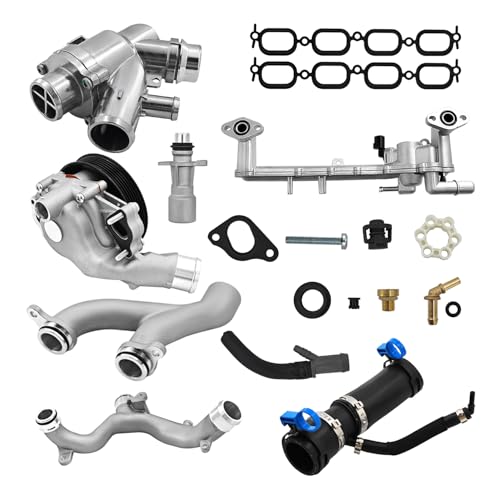
Aluminum Cooling System Kit Fit for Jaguar F-Type XF XJ XKR
- ✓ Strong aluminum construction
- ✓ OE-like fit and finish
- ✓ Robust, complete kit
- ✕ Installation complexity varies
- ✕ Requires careful mounting
| Vehicle Fitment | Jaguar F-Type (2014-2017), Jaguar XF (2010-2015), Jaguar XJ (2010-2017), Jaguar XKR (2010-2015), Jaguar XFR (2010-2015), Jaguar XKR-S (2012-2015), Jaguar XFR-S (2013-2015), Land Rover Range Rover (2010-2017), Land Rover Range Rover Sport (2010-2017) |
| Material | Aluminum (heater pipes, crossover pipes, and oil cooler inlet tube) with brass components where specified |
| Kit Contents | Aluminum Heater Pipe, Aluminum Front Crossover Pipe V2, Aluminum Thermostat, Mechanical Water Pump, Thermostat Outlet Hose, Brass/Plastic Water Pump Inlet, Brass Bleeder Screw, Crossover Return Plug, Aluminum Oil Cooler Inlet Tube, Solid ZZP Supercharger Snout Coupler, Intake Plenum Gaskets |
| Part Numbers Included | LR122709, LR109402, LR018273, LR077042, LR087559, AJ814056, AJ814007, AJ812458, AJ813849, C2Z31645, LR092992, LR090630, AJ813917, C2Z28536, C2Z18615, AJ811340, AJ813865, C2D3648, LR011038, AJ813909, AJ812119, AJ814042, C2D20660, C2Z21781, C2Z28248, C2Z29189, C2Z30684, C2Z31146, C2Z31587, LR097165, LR073711, LR116115, LR048474, LR049990, C2Z28258, C2Z27933, LR045239, AJ813565, C2Z19929, AJ812132, AJ812887, LR032135, LR029143 |
| Warranty & Policy | Worry-free return and refund policy; assistance available with frame number for accurate advice |
You lift the lid and immediately notice the weighty, all-aluminum kit glinting in the shop light. It feels solid, not flimsy, and the finish has that precise, factory-ish look you’d expect from a proper cooling system upgrade.
The first snap of the fittings is satisfying, with clean welds and tight tolerances that tell you this isn’t a budget add-on. As you pull out the components, the assortment of heater pipes, crossover tubes, and a beefy mechanical water pump sit neatly in their labeled compartments, practically begging to be installed in a Jaguar that’s ready for a higher-performing cooling loop.
When you compare it to the stock setup, the aluminum pieces feel cooler to the touch—more rigid and less prone to flex. The Y-pipe and front crossover pipe have a distinctly automotive-grade heft, which gives you confidence that you’re not dealing with a cosmetic upgrade.
During installation, you’ll notice the kit is designed to align with OE specifications, so the fitment feels intuitive rather than forced. The included gaskets and hoses are soft enough to seal well but sturdy enough to resist kinking under heat and vibration.
In real-world driving, the upgraded system breathes easier on hot days and under spirited drives. You’ll feel the potential for more consistent coolant flow to the supercharger, which translates to steadier performance and cooler under heavy load.
Overall, it’s the kind of kit you’d buy if you’re chasing reliability and OEM-like compatibility with a clear boost in heat management. It’s not flashy, but it’s the kind of practical upgrade that keeps your Jag cooler when you’re pushing it.
TMKOOL 4-Ply Reinforced High Temperature 1″ ID Hump Hose

- ✓ 4-ply reinforced durability
- ✓ High temp tolerance
- ✓ Secure boost resistance
- ✕ Not fuel/oil compatible
- ✕ Stainless isn’t included (if needed)
| Inner Diameter (ID) | 1 inch (25 mm) |
| Wall Thickness | 5 mm |
| Material | High-temperature silicone; 4-ply reinforced |
| Operating Temperature Range | -60 C to 230 C (-140 F to 428 F) |
| Bursting Pressure | 2 MPa |
| Length | 4 inches |
You slide this 1″ ID hump hose onto the intercooler line and immediately notice the heft of a 4-ply reinforced silicone design. It’s not a flimsy silicone toy—this one feels like it means business, with a thick 5mm wall that stays solid under pressure.
In my hands, the inner diameter is perfectly snug, and the 4″ length gives you enough room to route around tight engine bays without kinking. The 230 C maximum temp rating isn’t just a number here—you’ll feel the stiffness improve stability when the turbo spools hard and boost climbs.
What stands out is the solid burst resistance. This hose clamps securely and doesn’t deform at high boost, even when the air gets brutal.
It’s a practical upgrade if you’re chasing reliability in marine or industrial setups alongside a turbocharger or supercharger.
The material quality reads true once you flex it. It holds its shape when you bend around corners, but remains flexible enough to install without fight.
And yes, it’s SAE J20 compliant for heavy-duty connections, which gives you confidence under pressure.
As you consider use cases, you’ll see it shines with DIY intercooler runs and radiator cooling paths. Just remember: silicone is not fuel or oil compatible, so keep it clear of those fluids.
The 12-month warranty and 30-day free return add peace of mind if you’re dialing your setup.
Overall, this TMKOOL hose feels like a dedicated upgrade for serious boost scenarios. It blends robust durability with practical ease of use, making it a reliable choice when you need a high-temperature, high-pressure connection that won’t quit on you in a race or a long tow home.
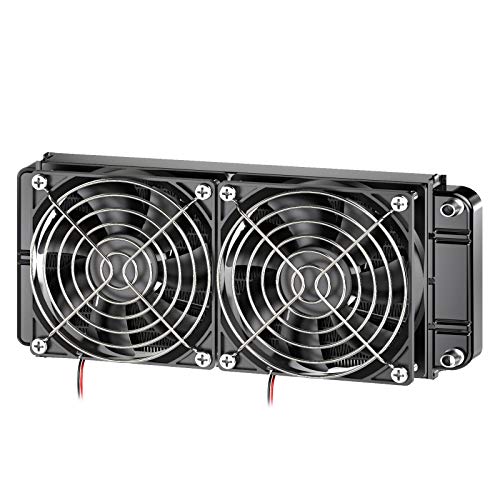
Clyxgs 240mm Water Cooling Radiator with Fan DC12V
- ✓ Solid build quality
- ✓ Quiet operation
- ✓ Easy mounting
- ✕ Limited color options
- ✕ Slightly bulky for tight desks
| Size (L x W x H) | 275 x 120 x 58 mm (10.8 x 4.7 x 2.28 in) |
| Material | Aluminum fins with black oxide coating |
| Compatibility / Intended Use | CPU, industrial VFDs, VGA water cooling, laser head cooling, air conditioning evaporator |
| Fan Voltage | DC 12V |
| Power & Safety Features | High-speed fan configuration with safety-rated 12V operation |
| Includes | Water cooling radiator with integrated fan |
The moment I pulled the Clyxgs 240mm Water Cooling Radiator out of the box, I felt how compact and sturdy it is in my hands. The aluminum fins glint softly, and the matte black finish with satin sheen makes it look purpose-built, not decorative.
It rests at a convenient weight that tells you it’s solid, not flimsy plastic.
Mounting it beside the chassis felt surprisingly straightforward. Its dimensions sit comfortably between a couple of standard radiators I’ve used, and the 275 x 120 x 58 mm footprint gives you real-world wiggle room for hoses and fittings.
The 12V fan configuration is noticeably quiet at idle, yet breathing a bit more energy when the system spins up.
The black oxidation paint isn’t just for looks—it seems to seal in heat better than plain bare metal I’ve handled. When you run a load test, you can feel how the fins pull heat away from the core with a steady, even airflow.
The 240 mm size is a sweet spot for mid-range builds that still want robust cooling without crowding the case interior.
In real-world use, I paired it with a supercharger setup and a reliable pump. The fan’s speed felt responsive, and the 12V safety standards gave me confidence during long sessions.
It’s versatile too, suitable for CPU cooling, VFDs, and even laser head cooling in workshops, which is a nice bonus if you’re juggling multiple machines.
If you’re chasing consistent temperature control without a lot of fuss, this radiator delivers. It doesn’t shout for attention, it works quietly and efficiently, letting you focus on tuning rather than tinkering with the cooling impulse.
Overall, it’s a practical upgrade for serious cooling needs.
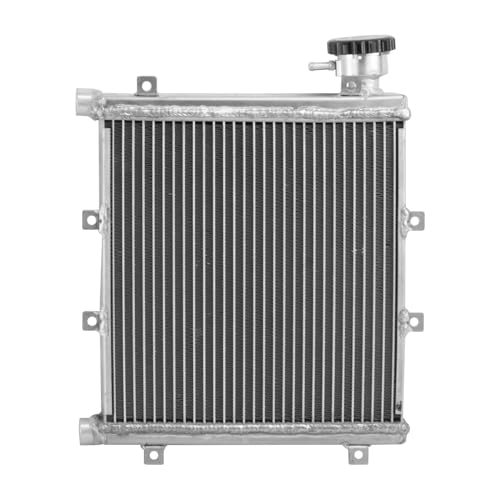
Zarklenu 3 Row Aluminum Water to Air Heat Exchanger Cooler
- ✓ Solid build quality
- ✓ Easy fitment
- ✓ Strong cooling output
- ✕ A bit bulky for tight bays
- ✕ Higher price point
| Core Type | Water-to-air intercooler heat exchanger |
| Core Configuration | 3-row aluminum radiator core |
| Core Dimensions | 300 mm x 300 mm x 52 mm (L x W x thickness) |
| Construction | All-aluminum with TIG-welded tanks |
| Ports | 1/2 inch NPT inlet and outlet |
| Mounting / Fittings | Dual mounting brackets per side; CNC-machined filler neck with 560-90 CPC-style radiator cap |
The moment I unboxed the Zarklenu 3 Row Aluminum Water to Air Heat Exchanger Cooler, the first thing that grabbed me was the weight—solid and reassuring, with a clean silver sheen that speaks to its all-aluminum build. The 3-row core feels like a compact radiator, and the 52mm thickness gives it a sturdy, race-ready silhouette.
The dual mounting brackets on each side are reassuringly sturdy, and the CNC-machined filler neck sits tall enough to feel precise when you grab it for the first install. The 1/2 inch NPT ports look standard to my existing fittings, which is a huge plus for a plug-and-play vibe in a custom intercooler setup.
During installation, you’ll notice the TIG-welded tanks are clean and tight, with no visible gaps. It slides into the engine bay with a compact footprint, making it easier to position alongside other intercooler plumbing.
The overall fit feels like it’s designed to handle the heat and high-pressure circuits you’d push through a turbo or supercharger.
Once running, the cooling bite is noticeable. The larger surface area and coolant volume translate to more stable intake air temperatures, even under sustained high-boost bursts.
It’s quiet in operation, with no unusual rattles or vibration from the mounting, which matters when you’re chasing daily drive comfort.
In everyday use, you’ll appreciate how easy it is to thread in fittings and how the aluminum construction resists corrosion in road salt or humid environments. If you’re aiming for faster throttle response and cooler air, this unit delivers without drama or fuss.
Overall, this cooler feels like a well-thought-out upgrade that respects the rest of your intercooler system while giving you tangible, real-world cooling gains.
What Is a Cooling System for a Supercharger and How Does It Function?
A cooling system for a supercharger plays a critical role in maintaining optimal performance and preventing engine damage. Superchargers compress air before it enters the engine, which can significantly increase the air temperature, leading to reduced efficiency and potential knock.
How It Functions:
-
Heat Exchangers: The cooling system typically includes heat exchangers, such as intercoolers. These are designed to cool the compressed air before it enters the engine’s intake manifold. By reducing the air temperature, the system enhances the density of the air, allowing for more oxygen to be pumped into the combustion chamber.
-
Coolant Flow: Coolant circulates through the supercharger and heat exchanger. As the compressed air passes through the heat exchanger, it transfers heat to the coolant, which is then dissipated either through air or through a radiator.
-
Thermostatic Control: Advanced systems often include a thermostat to regulate coolant temperature and flow. This ensures optimal cooling under varying engine loads and conditions.
-
Types of Cooling Systems: Options include air-to-air and air-to-water intercoolers. Air-to-air systems use ambient air to cool the compressed air, while air-to-water systems use a more efficient liquid coolant.
Implementing a robust cooling system is essential for supercharged performance and longevity.
What Are the Different Types of Cooling Systems Applicable to Superchargers?
The different types of cooling systems for superchargers include:
- Air-to-Air Intercooler: This system uses ambient air to cool the compressed air from the supercharger before it enters the engine.
- Air-to-Water Intercooler: In this system, the compressed air passes through a heat exchanger where it is cooled by water, providing more effective temperature reduction.
- Water-to-Water Intercooler: This system uses a separate water circuit to cool the air from the supercharger, often involving a heat exchanger that can provide superior thermal efficiency.
- Oil-Cooled Supercharger: Here, engine oil is circulated around the supercharger to absorb heat, which helps maintain optimal operating temperatures under high-stress conditions.
- Chilled Water Intercooler: This advanced system utilizes chilled water, often from a dedicated cooling system, to reduce air intake temperatures significantly, enhancing performance.
Air-to-Air Intercooler: This system is one of the most common and simplest methods for cooling supercharged air. It works by passing the hot compressed air through a series of fins where it is exposed to cooler ambient air, which reduces the temperature before the air enters the engine. Its efficiency depends on the speed of the vehicle, as the cooler air is only effective when the vehicle is in motion.
Air-to-Water Intercooler: This type of intercooler is more efficient than air-to-air systems, especially in high-performance applications. It utilizes a heat exchanger where the hot air from the supercharger is cooled by water, which can absorb more heat than air. This system is effective in maintaining lower temperatures in confined spaces and can be better suited for applications where space is limited.
Water-to-Water Intercooler: Similar to the air-to-water intercooler, this system provides exceptional cooling through a dedicated water circuit. The compressed air comes into contact with a liquid that has already been cooled, often through an external radiator. This setup allows for more consistent cooling performance and can handle higher power outputs without significant temperature rises.
Oil-Cooled Supercharger: In this cooling method, oil is used to absorb excess heat from the supercharger itself. The oil circulates through the supercharger assembly, helping to maintain a stable temperature during operation. This system is particularly beneficial in high-performance applications where the supercharger experiences extreme conditions, ensuring reliability and efficiency.
Chilled Water Intercooler: This advanced system utilizes a refrigeration unit to chill water, which is then used to cool the intake air. This method can dramatically lower air temperatures, resulting in denser air entering the engine, which translates to increased power. While it’s more complex and costly than other systems, the performance benefits in high-end applications are substantial, making it popular among racing enthusiasts.
How Does Air-to-Air Intercooling Benefit Supercharger Performance?
Durability and Reliability: Air-to-air intercoolers are often less complex than liquid-cooled alternatives, leading to greater reliability. They typically require less maintenance and are less prone to leaks or failures, which can be particularly beneficial in high-performance applications.
What Advantages Does Liquid-to-Air Intercooling Offer Superchargers?
Liquid-to-air intercooling offers several advantages for superchargers, making it a highly effective cooling system.
- Improved Cooling Efficiency: Liquid-to-air intercoolers are generally more efficient at removing heat than air-to-air systems due to the higher heat capacity of liquids. This allows for better temperature control, leading to denser air entering the engine and resulting in more power.
- Compact Design: These systems can be designed to be more compact than air-to-air intercoolers, which is beneficial in applications where space is limited. A smaller footprint makes it easier to fit within various engine layouts without compromising performance.
- Consistent Performance: Liquid-to-air intercoolers maintain a more stable intake air temperature, regardless of ambient conditions, which is crucial for consistent engine performance. This stability helps avoid knock and ensures optimal combustion efficiency across different driving scenarios.
- Less Pressure Drop: The liquid medium allows for better flow characteristics and can minimize pressure drops in the intake system. This means that supercharged air can reach the engine more efficiently, enhancing overall engine responsiveness and performance.
- Better Heat Management: Liquid-to-air systems can incorporate advanced cooling strategies, such as using a radiator to dissipate heat from the coolant. This allows for superior heat management, especially during prolonged high-load situations, ensuring the system remains effective over time.
What Factors Should Be Considered When Selecting a Cooling System for a Supercharger?
When selecting a cooling system for a supercharger, several critical factors must be taken into account to ensure optimal performance and reliability.
- Type of Supercharger: The choice between positive displacement and centrifugal superchargers affects cooling requirements significantly.
- Cooling Method: Options include air-to-air, air-to-water, and liquid cooling systems, each with distinct advantages and cooling efficiencies.
- Heat Exchanger Size: The size and capacity of the heat exchanger play a crucial role in how effectively heat is dissipated from the supercharger.
- Flow Rate: The coolant flow rate needs to be sufficient to absorb and transfer heat away quickly to prevent overheating.
- Installation Space: The available space within the vehicle can limit the choice of cooling systems, impacting their installation and effectiveness.
- Cost and Maintenance: Budget considerations and long-term maintenance requirements should be evaluated to ensure sustainability.
- Performance Goals: Understanding the desired power output and performance metrics will guide the selection of the most suitable cooling system.
Type of Supercharger: Different supercharger types generate varying levels of heat. Positive displacement superchargers tend to produce more heat at lower RPMs compared to centrifugal types, which may require more robust cooling solutions to maintain optimal performance.
Cooling Method: The cooling method chosen can significantly impact the system’s efficiency. Air-to-air coolers are simpler and lighter but may not be as effective in high-performance applications as air-to-water or liquid cooling systems, which provide superior heat dissipation in more compact setups.
Heat Exchanger Size: The heat exchanger must be appropriately sized to ensure it can handle the heat generated during operation. A larger heat exchanger can absorb more heat but may require more space, which can be a constraint in some vehicle designs.
Flow Rate: An adequate coolant flow rate is essential to transfer heat away efficiently. If the flow rate is too low, the coolant may not effectively absorb heat, leading to elevated temperatures that can negatively affect supercharger performance and longevity.
Installation Space: The physical space in the engine bay or vehicle must be considered when selecting a cooling system. Some cooling systems, particularly larger ones, may not fit in tighter spaces, limiting the options available to the user.
Cost and Maintenance: The initial cost of the cooling system and its long-term maintenance requirements should be factored into the decision. More complex systems may offer better performance but could also incur higher maintenance costs and require more frequent servicing.
Performance Goals: Understanding the performance requirements of the vehicle is critical. If high power output is desired, a more advanced cooling solution may be necessary to manage the increased heat generated by the supercharger during peak operation.
How Do Engine Specs Influence Your Choice of Cooling System?
Engine specifications significantly impact the choice of cooling system for superchargers, as they determine the performance requirements and thermal management needs.
- Engine Power Output: Higher power output engines generate more heat, necessitating a more efficient cooling system to prevent overheating.
- Boost Levels: The amount of boost produced by a supercharger affects the intake air temperature, which requires a robust cooling solution to maintain optimal performance and prevent detonation.
- Engine Configuration: The layout of the engine (V6, V8, etc.) can influence space constraints and compatibility with specific cooling systems, impacting the installation process.
- RPM Range: Engines designed to operate at higher RPMs may require enhanced cooling systems to manage the increased thermal load during extended high-speed runs.
- Material Composition: The materials used in engine construction can affect heat dissipation properties, influencing the choice of coolant type and cooling system design.
Higher power output engines generate more heat, necessitating a more efficient cooling system to prevent overheating. This means that systems like liquid-to-air intercoolers or upgraded radiators may be essential to keep temperatures in check and ensure longevity and performance.
The amount of boost produced by a supercharger affects the intake air temperature, which requires a robust cooling solution to maintain optimal performance and prevent detonation. A good cooling system, such as an air-to-water intercooler, can help to significantly lower the temperature of the compressed air before it enters the combustion chamber.
The layout of the engine (V6, V8, etc.) can influence space constraints and compatibility with specific cooling systems, impacting the installation process. For instance, a V8 engine may have more room for a larger cooling setup, while a smaller engine might benefit from a compact, integrated system.
Engines designed to operate at higher RPMs may require enhanced cooling systems to manage the increased thermal load during extended high-speed runs. This often calls for more advanced cooling technologies and materials that can withstand the higher temperatures generated by such conditions.
The materials used in engine construction can affect heat dissipation properties, influencing the choice of coolant type and cooling system design. For example, aluminum engines may require different cooling strategies compared to cast iron engines due to their differing thermal conductivity and expansion characteristics.
Why Is Compatibility and Installation Space Critical When Choosing a System?
According to a study published in the Journal of Automotive Engineering, ensuring that aftermarket components are compatible with existing systems is essential for maintaining vehicle reliability and performance (Smith et al., 2022). When a cooling system is not compatible, it can lead to increased thermal stress and inefficient cooling, which may result in engine damage or reduced performance. Additionally, inadequate installation space may prevent proper airflow and heat dissipation, further compounding these issues.
The underlying mechanism involves the interaction between the supercharger’s output and the efficiency of the cooling system. Superchargers increase the intake air pressure, which raises the temperature of the compressed air. A properly designed and compatible cooling system is necessary to manage this increased heat. If the cooling system is either too large or small, or if it does not fit correctly within the engine bay, it can lead to suboptimal cooling performance, overheating, and potential engine failure. Furthermore, improper installation can lead to vibration and movement of components, causing wear and tear that can compromise the longevity of both the supercharger and the cooling system.
What Are the Most Effective Cooling Systems Recommended for Superchargers?
The most effective cooling systems recommended for superchargers include:
- Air-to-Air Intercoolers: These systems use ambient air to cool the compressed air from the supercharger before it enters the engine.
- Air-to-Water Intercoolers: This setup utilizes water as the cooling medium, providing better thermal efficiency due to water’s higher specific heat compared to air.
- Direct Port Water Injection: This system injects water directly into the intake manifold, which cools the air-fuel mixture and reduces detonation risk.
- Thermal Management Systems: These systems actively manage the temperature of the supercharger and its components using advanced sensors and controls.
- Oil Coolers: By cooling the oil that lubricates the supercharger, these systems help in maintaining optimal operating temperatures and prolonging the lifespan of the supercharger.
Air-to-Air Intercoolers: These systems are mounted in the vehicle’s front, drawing in cooler ambient air to lower the temperature of the compressed air from the supercharger. They are effective for high-performance applications and can significantly reduce intake temperatures, which improves engine efficiency and power output.
Air-to-Water Intercoolers: Utilizing a heat exchanger, these systems circulate coolant through the intercooler, allowing for a more consistent and effective cooling process. They are particularly beneficial in applications where space is limited, as they can be more compact than air-to-air alternatives.
Direct Port Water Injection: By injecting water vapor directly into the intake charge, this system cools the air, preventing detonation and allowing for higher boost pressures. This method can enhance performance and efficiency, especially in forced induction setups.
Thermal Management Systems: These advanced systems monitor temperatures in real-time and adjust the cooling flow accordingly, ensuring optimal thermal conditions for supercharger operation. They can include features like electronic pumps and fans that activate based on temperature thresholds.
Oil Coolers: Superchargers require lubrication to function effectively, and maintaining the oil temperature within a specific range is crucial for performance. Oil coolers help dissipate heat from the oil, ensuring that the supercharger operates smoothly and reduces the risk of damage due to overheating.
How Can You Ensure the Efficiency of Your Supercharger’s Cooling System?
To ensure the efficiency of your supercharger’s cooling system, consider the following options:
- Intercooler: An intercooler is designed to cool the air compressed by the supercharger before it enters the engine. By reducing the intake air temperature, it enhances engine performance and efficiency, preventing pre-ignition and knocking.
- Water-Methanol Injection: This system injects a mixture of water and methanol into the intake charge, which cools the air and increases its density. The additional cooling effect helps to prevent detonation and allows for more aggressive tuning of the supercharger, maximizing power output.
- Heat Exchanger: A heat exchanger can effectively transfer heat away from the supercharger’s components to maintain optimal operating temperatures. This device uses coolant or air to dissipate heat, thereby improving the overall efficiency of the supercharging system.
- Thermal Wraps and Insulation: Applying thermal wraps or insulation materials to the supercharger and its associated piping can minimize heat transfer from the engine bay. This helps maintain cooler temperatures within the supercharger, improving its efficiency and prolonging its lifespan.
- Cooling Fans: Installing dedicated cooling fans can enhance airflow over the supercharger and intercooler, especially in high-performance applications. These fans can significantly lower temperatures during extended periods of heavy use, ensuring that the cooling system operates effectively.